
Should I choose a reverse tuck end, straight tuck end, or seal end box?
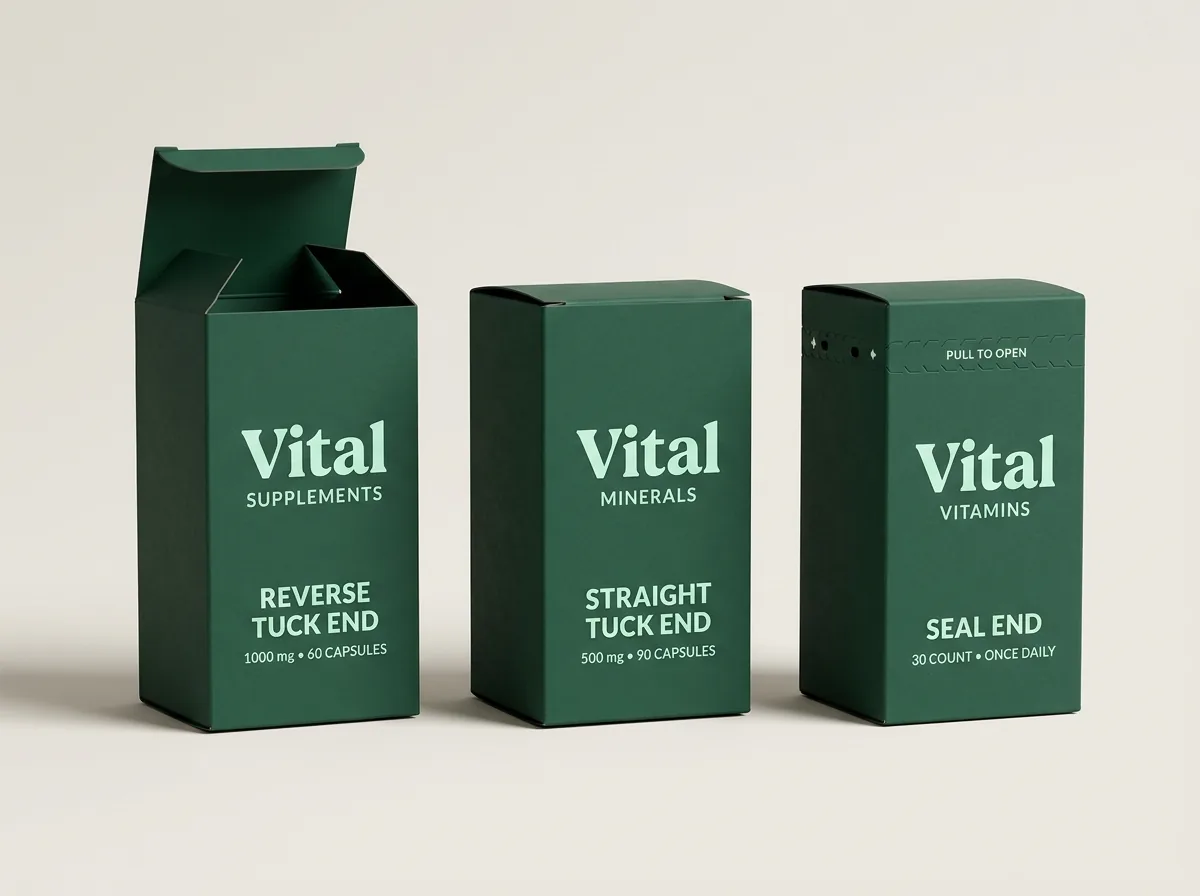
Short answer: Choose a reverse tuck end (RTE) box when you want a re-closable carton for items under 12 oz with 8–15% less paperboard waste on the press sheet. Choose a straight tuck end (STE) box for crease-clean top and bottom front edges, a seal end box for permanent glued tamper resistance, or an auto lock bottom over 12 oz.
On this page
- How do reverse tuck end, straight tuck end, seal end, and auto lock bottom boxes compare
- Why do reverse tuck end boxes reduce paperboard waste by 8% to 15% on the press sheet
- How do front-panel edges and PET windows compare on RTE vs STE cartons
- When should I switch from a reverse tuck end carton to a seal end or auto lock bottom box
- How do I pick the right folding carton style for my product line
- Common mistakes
- FAQs
Request a custom quoteFree dieline & 3D mockup
When sourcing custom reverse tuck end boxes starting at 1,000 units, your choice between a reverse tuck end (RTE, ECMA A20.20.03.01), a straight tuck end (STE, ECMA A20.20.03.03), a glued seal end carton, and an auto lock bottom comes down to four engineering trade-offs: press-sheet board efficiency, front-edge aesthetics, tamper-evident sealing, and product weight. On a reverse tuck end box, the top closure hinges on the back wall while the bottom closure hinges on the front wall. That opposite-panel alternation allows adjacent blanks to interlock head-to-toe on the parent paperboard sheet, reducing board scrap by 8% to 15% compared to straight tuck end layouts. Straight tuck end boxes hinge both closures on the same wall so neither top nor bottom front rim shows a tuck seam, whereas seal end boxes glue full-overlap end flaps shut for dry foods, and auto lock bottom cartons support heavy glass jars over 12 oz.
How do reverse tuck end, straight tuck end, seal end, and auto lock bottom boxes compare?
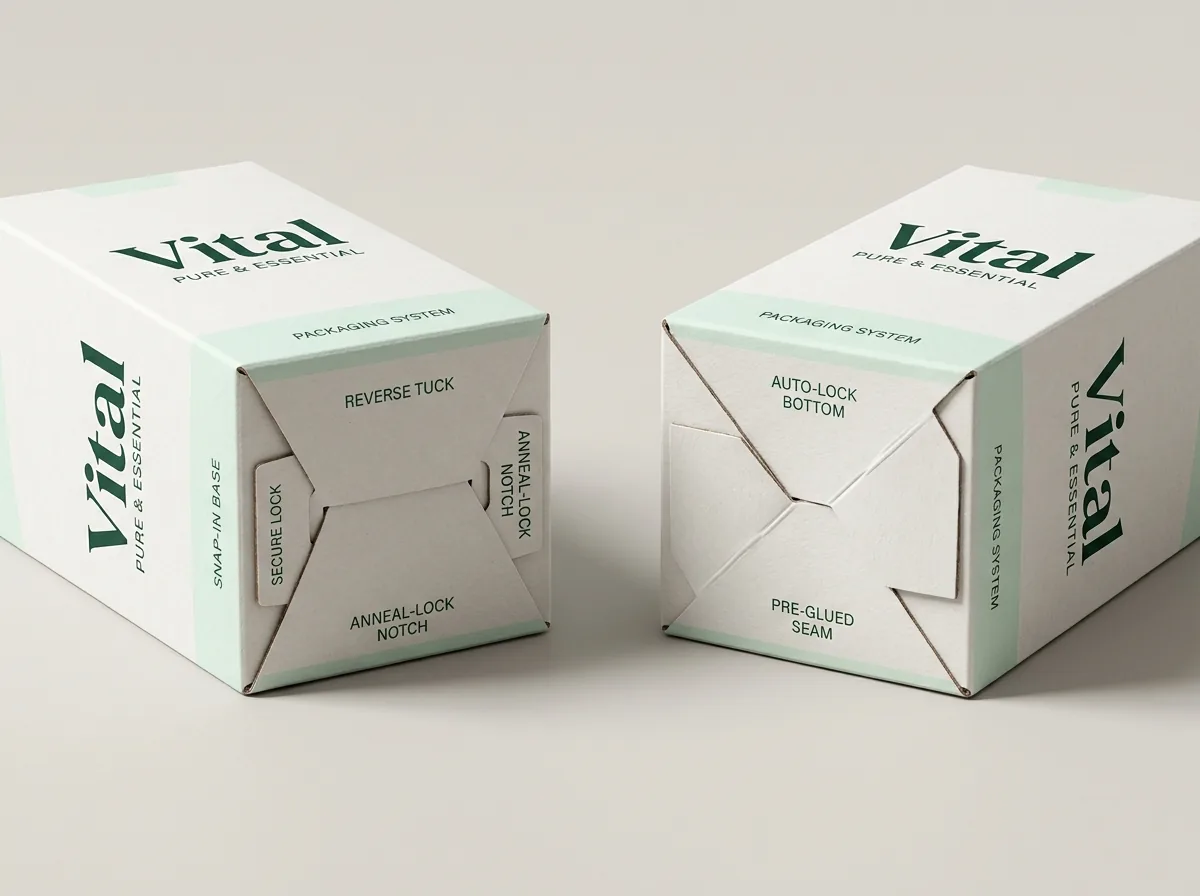
All four styles are die-cut from a single sheet of 16 pt to 24 pt paperboard (or fine E-flute corrugated board) and pre-glued along the longitudinal side seam so they ship flat in master cartons. However, the way the top and bottom end flaps hinge and lock changes both your press-sheet yield and your shelf presentation across custom reverse tuck end boxes, custom straight tuck end boxes, custom seal end boxes, and custom auto lock bottom boxes
| Engineering factor | Reverse Tuck End (RTE) | Straight Tuck End (STE) | Seal End Carton | Auto Lock Bottom |
|---|---|---|---|---|
| ECMA structural code | ECMA A20.20.03.01 | ECMA A20.20.03.03 | ECMA A10.10 / Glued end | ECMA A60.20 (Crash-lock) |
| Top & bottom flap hinges | Opposite walls (Back top, Front bottom) | Same wall (both Front or both Back) | Four overlapping glue flaps at both ends | Top tuck flap + pre-glued 4-flap crash base |
| Parent press-sheet waste | Lowest (interlocks to save 8–15% board) | Standard (flaps sit on same column) | Moderate rectangular layout | Higher (deep diagonal bottom lock flaps) |
| Front display panel edges | Clean bottom fold; top tuck line at upper rim | Clean fold crease at both top and bottom | Clean fold crease at both top and bottom | Clean bottom fold; top tuck line at upper rim |
| Re-closable after opening? | Yes (re-tucks dozens of times) | Yes (re-tucks dozens of times) | No (opens via perforated tear strip) | Yes (top lid re-tucks repeatedly) |
| Safe payload weight limit | Up to 12 oz (with bottom ankle slit locks) | Up to 12 oz (with bottom ankle slit locks) | Up to 3–5 lb (glued top and bottom) | Up to 3–5 lb (interlocked glued base) |
| Primary product categories | OTC medicine, playing cards, tea bags, toys, pens | Luxury serums, perfume atomizers, boutique candles | Dry food pouches, cereal, nutraceutical multipacks | Heavy glass candle jars, 100 ml+ bottles, honey jars |
Why do reverse tuck end boxes reduce paperboard waste by 8% to 15% on the press sheet?
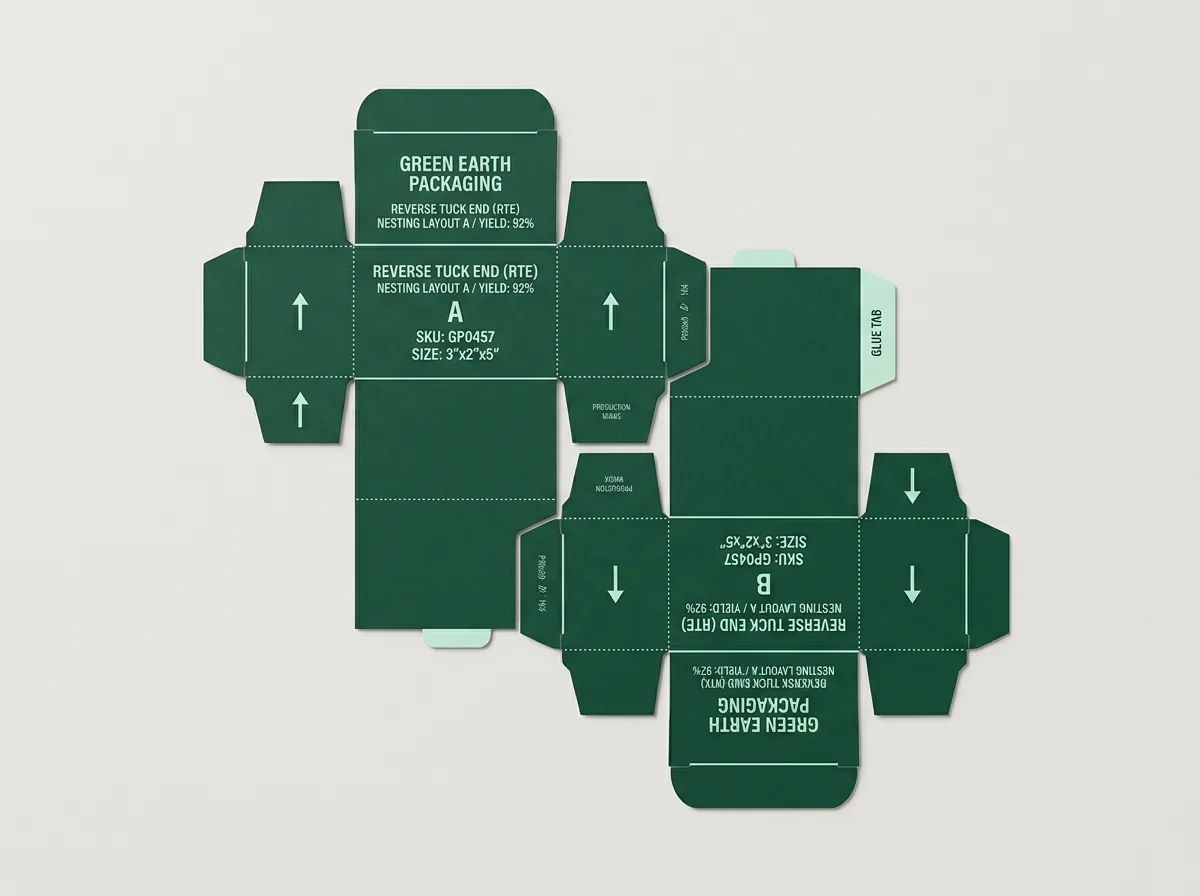
When a carton converter lays out a multi-up cutting die on a 28 × 40 inch parent paperboard sheet, the protruding top and bottom closure panels determine how closely two rows of boxes can sit next to each other. Here is why the opposite-panel geometry of a reverse tuck end box yields more cartons per ton of board
- Head-to-toe interlocking on the die layout: On an RTE blank, the top closure panel extends above the Back wall (Column 1) while the bottom closure panel extends below the Front wall (Column 3). That leaves an open recess above the Front wall and below the Back wall. By stepping the second row of cartons up into that recess, Carton B's top closure nests directly beside Carton A's bottom closure.
- Why Straight Tuck End (STE) blanks cannot interlock the same way: Because an STE blank places both the top closure and the bottom closure on the exact same wall (Column 3), the two tall flaps collide vertically between rows unless you rotate every other blank 180 degrees or leave unprinted scrap corridors.
- Consistent grain direction across every nested carton: Because nested RTE rows do not have to be rotated 90 degrees to fit the sheet, every single carton on the parent sheet maintains horizontal paperboard grain perpendicular to the vertical fold scores, giving uniform sidewall stiffness.
How do front-panel edges and PET windows compare on RTE vs STE cartons?
Does the top tuck seam on a reverse tuck end box affect how your package looks on a retail shelf? Here is how our structural team sets up RTE cartons so the front display panel looks crisp and clean
- Clean bottom shelf edge (front-hinged bottom closure): On a standard reverse tuck end box, we hinge the bottom closure panel on the Front wall so it folds front-to-back. That guarantees the bottom edge resting on the retail shelf is a smooth, unbroken fold crease with no raw cut edge facing shoppers.
- Top tuck seam along the upper front rim: Because the top closure hinges on the Back wall and folds forward, the top tuck flap slides inside the upper edge of the Front wall. When Flood-coated or printed with continuous background color across the top score line, that upper fold line blends cleanly into the top edge of the box.
- Clear PET windows work equally well on RTE and STE: As long as you leave a 0.375 inch (10 mm) paperboard bridge between the window cutout and the top tuck crease, a reverse tuck end box supports front and wraparound corner PET windows for custom toy boxes and custom phone case boxes.
Know your size? Compare pricing across up to 3 quantities.
Request a Quote →When should I switch from a reverse tuck end carton to a seal end or auto lock bottom box?
While reverse tuck end cartons handle the vast majority of light and medium retail SKUs up to 12 ounces, two situations call for a different closure family
- Switch to a Seal End box when you need permanent glued tamper-evidence or sift-proof closure: If you are packing dry food mixes, granular pouches, or high-speed multipacks where all four end flaps should be hot-melt or cold-glued shut (and opened by the consumer pulling a zipper tear strip), choose custom seal end boxes. Note that you can also make a reverse tuck end box tamper-evident simply by applying clear perforated wafer seals over both tuck seams.
- Switch to an Auto Lock Bottom box when your item weighs over 12 ounces or you want 3-second hand assembly: A glass candle tumbler, 100 ml glass bottle, or heavy jar can push open a tuck bottom if dropped. An auto lock bottom (crash-lock base) pre-glues two diagonal bottom panels at the factory so the base locks flat automatically as soon as your packer squeezes the box open.
- Automatic cartoning machine compatibility: If you fill boxes on an automated horizontal or vertical cartoning line, reverse tuck end (RTE) is the global default format because opposing rotary or plough tuckers can close the top and bottom flaps simultaneously from opposite sides of the conveyor.
How do I pick the right folding carton style for my product line?
Use our decision flowchart below, and check our companion guides on how to measure and choose board for reverse tuck end boxes and reverse tuck end box dieline, nesting, and slit locks explained before requesting your quote. Many multi-SKU consumer brands combine two folding carton styles within the same visual identity: for example, using printed reverse tuck end cartons with bottom ankle slit locks for their lightweight 15 ml eye cream tubes, lip balms, and blister packs while pairing an auto lock bottom carton for their heavier 100 ml glass lotion bottles. Because both structures print on the exact same 18 pt to 24 pt white SBS or natural brown kraft board, your Pantone colors, foil stamping, and soft-touch lamination match across the entire retail shelf
- Step 1: Pick Reverse Tuck End (RTE) for medicine blisters, playing cards, tea bags, toys, pens, phone cases, and tubes under 12 oz when you want maximum press-sheet efficiency and a re-closable lid.
- Step 2: Pick Straight Tuck End (STE) when a luxury cosmetic or candle carton has a metallic foil border right along the top front rim and you want both closures tucked toward the back.
- Step 3: Pick Seal End for permanently glued tamper-evident cartons, or Auto Lock Bottom for heavy jars over 12 oz and rapid 3-second hand fulfillment.
- Step 4: Request a free 2D vector dieline and 3D mockup in our quote form to compare press-sheet pricing across styles in 5-7 minutes.
What are the most common mistakes when choosing between RTE, STE, and seal end boxes?
Avoid these five structural mismatches when selecting your folding carton closure
- Paying for a straight tuck end layout on a high-volume medicine, tea bag, or playing card run where a reverse tuck end dieline would cut paperboard waste by 8% to 15%.
- Ordering a glue-closed seal end box when you pack by hand and do not have a hot-melt glue applicator on your fulfillment bench (use an RTE box with wafer seal stickers instead).
- Putting a 16 oz glass candle or heavy jar inside a 16 pt reverse tuck end box instead of upgrading to an auto lock bottom carton.
- Hinging the bottom closure on the back wall instead of the front wall of an RTE carton, which puts the bottom tuck seam on the front shelf edge.
- Assuming an RTE box cannot run on automatic cartoning equipment, when RTE is actually the preferred format for opposing-plough horizontal cartoners.
Get a reverse tuck end dieline at your size
A simplified drawing for planning your design. Your free production dieline comes with your proof, made for your exact size and board.
Packaging for this
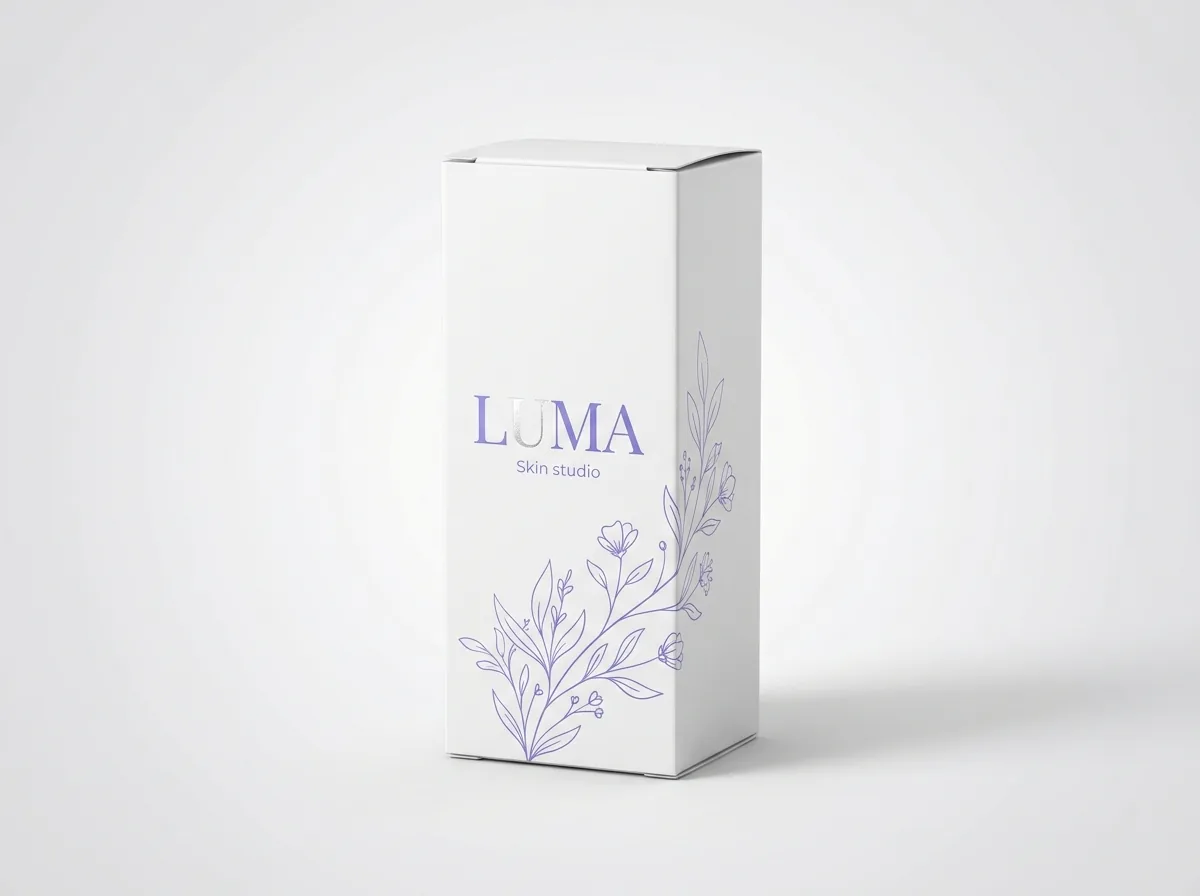
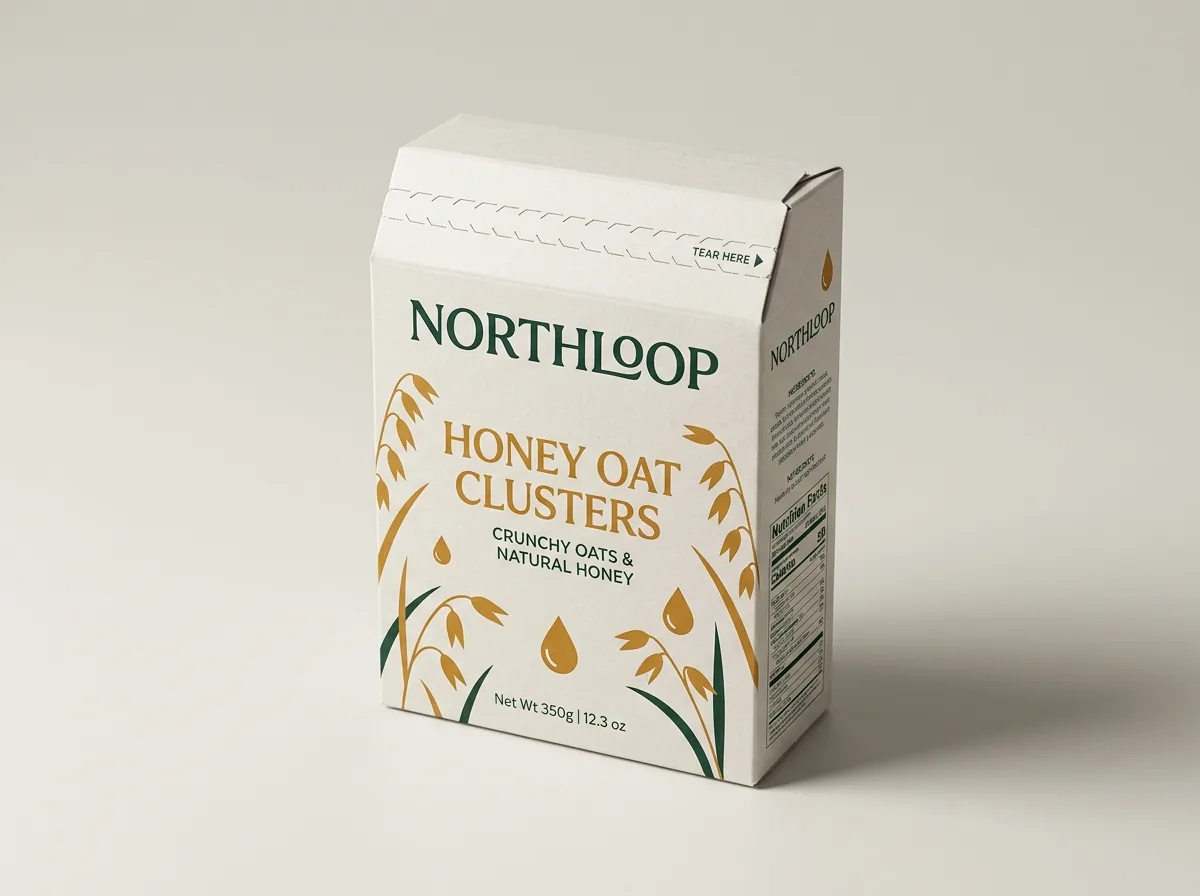
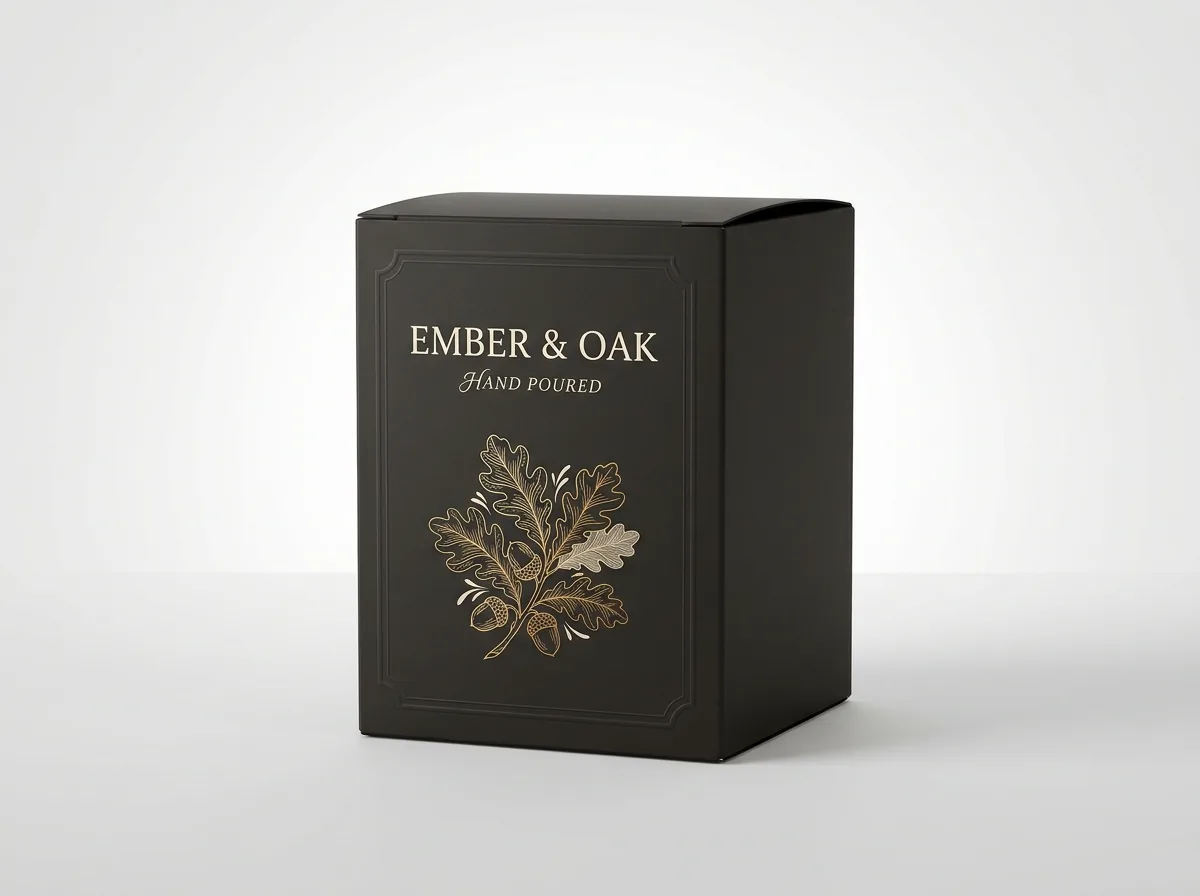
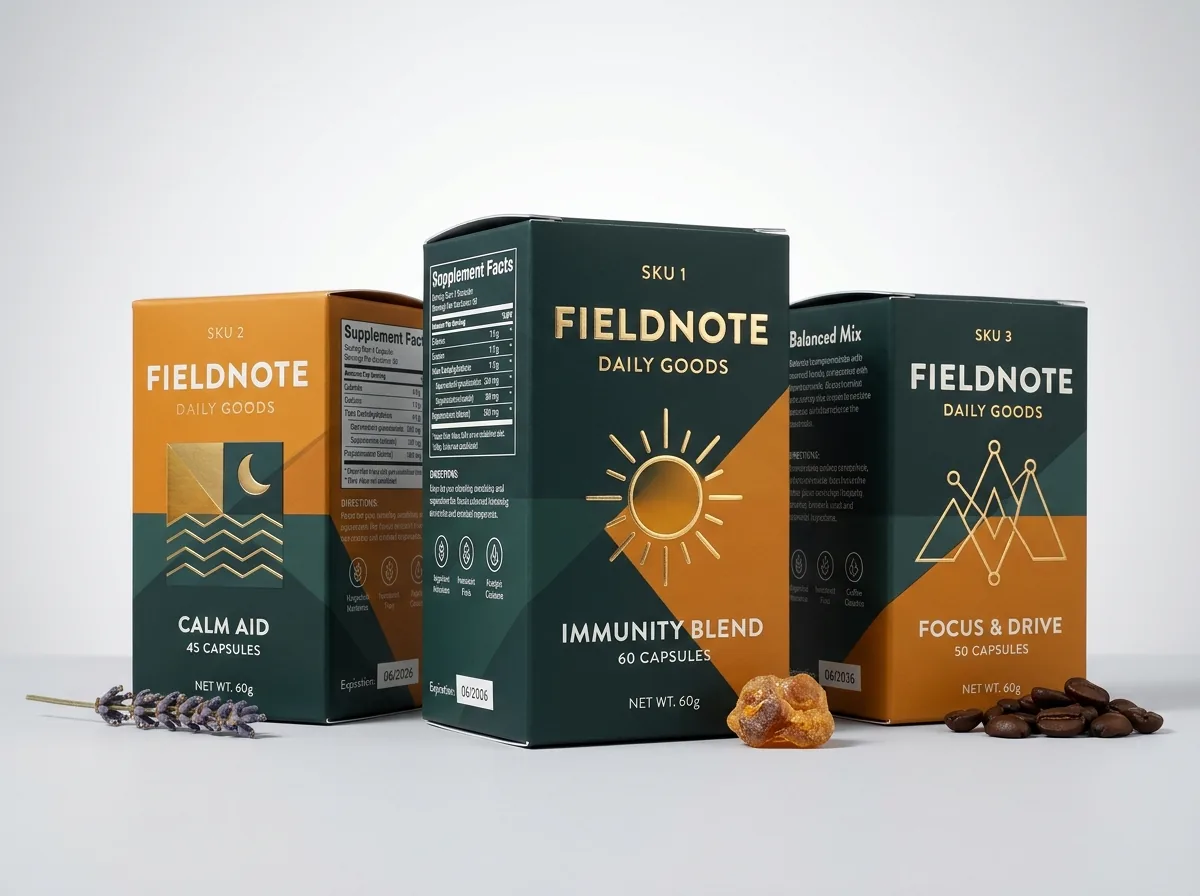
Ready to order reverse tuck end boxes? Compare up to 3 quantities with a free 3D mockup.
Request a Quote →Questions about reverse tuck end boxes
What is the structural difference between a reverse tuck end and a straight tuck end box?
On a reverse tuck end (RTE, ECMA A20.20.03.01) box, the top closure hinges on the back wall (folding back to front) and the bottom closure hinges on the front wall (folding front to back). On a straight tuck end (STE, ECMA A20.20.03.03) box, both closures hinge on the same wall and fold in the same direction.
Do reverse tuck end boxes cost less to produce than straight tuck end boxes?
On medium and large runs, reverse tuck end boxes often yield a lower unit cost because their alternating top and bottom flaps interlock head-to-toe on the parent press sheet, fitting more cartons per sheet and reducing paperboard waste by 8% to 15%.
When should I choose a seal end box instead of a reverse tuck end box?
Choose a seal end box when your product requires a permanently glued, sift-proof, or tamper-evident closure at both ends (such as dry food mixes or high-speed automated packaging lines with hot-melt glue units) and does not need to re-close via a tuck flap.
Can I make a reverse tuck end box tamper-evident for OTC medicine or supplements?
Yes. Most over-the-counter medicine and supplement brands pair a reverse tuck end carton with clear perforated wafer labels (or glue dots) over the top and bottom tuck seams, giving full tamper evidence while preserving a re-closable tuck lid.
Can I switch an existing straight tuck end artwork file to a reverse tuck end dieline?
Yes. Our prepress specialists can transfer your existing four-wall artwork onto a custom reverse tuck end dieline at no charge, adjusting only the top closure hinge position and verifying panel orientation on a 3D mockup before you pay.
Still have a question? Ask a packaging specialist.
Request a Quote →Request your reverse tuck end boxes quote
Tell us your size and quantities, and one dedicated account manager prepares pricing for each tier.
- Free design & AI-to-print studio + 3D mockup
- No die or plate charges · 4–5 day rush available
- Free shipping to all 50 states
- 10% off your first order
We verified ECMA A20.20.03.01 (RTE), A20.20.03.03 (STE), Seal End, and Auto Lock Bottom structural definitions, press-sheet nesting waste reductions (8–15%), and cartoning machine criteria against European Carton Makers Association (ECMA) and Paperboard Packaging Council (PPC) handbooks. A packaging specialist checked every comparison row. Spot something wrong? Tell us and we fix it.
Sources
What changed
- October 25, 2026: First published with 4-style comparison matrix, RTE vs STE press-sheet nesting diagram, shelf-edge comparison, and style selection flowchart.
More guides
New packaging guides by email
Sizes, materials and design tips. Unsubscribe anytime.