
How do I measure my box, tray, or product and choose board for a sleeve box?
Short answer: To size a custom sleeve box, measure the fully assembled outside width (L) and outside height (W) of your inner box, tray, or cured soap bar, then add +0.031 inches (+0.8 mm) for rigid boxes, +0.0625 inches (+1.5 mm) for corrugated mailers, or +0.015 inches (+0.4 mm) for cured soap.
On this page
- What is the 3-step formula for measuring Inside L × W × D on a custom sleeve box
- How much glide clearance do rigid boxes, corrugated mailers, PET trays, and bar soap require
- Should I choose 16 pt, 18 pt, 20 pt, 24 pt paperboard, or E-flute corrugated board for a sleeve
- What are standard custom sleeve box sizes across soap, chocolates, candles, socks, and cards
- How do I verify my custom sleeve box glide fit before full production
- Common mistakes
- FAQs
Request a custom quoteFree dieline & 3D mockup
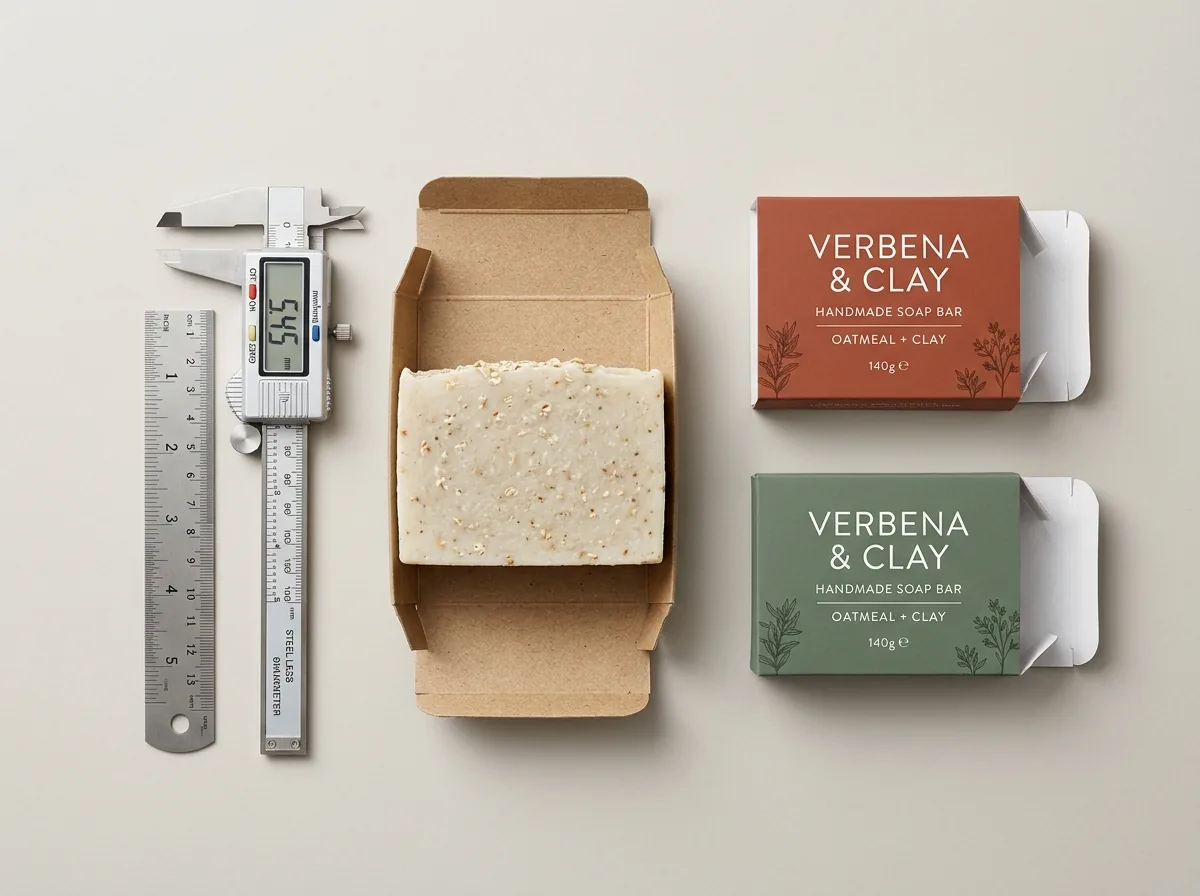
When ordering custom sleeve boxes (ECMA A15.10.00.00 / FEFCO 0501 open-ended packaging sleeves), dimensions are specified from the inside score-to-score opening of the tube in the sequence Length (L) × Width (W) × Sleeve Band Depth (D). Length (L) is the horizontal span across the front display face of the sleeve, Width (W) is the vertical side wall height (the thickness of the object sliding inside), and Depth (D) is the length of the tube along the open slide axis. Because a four-panel sleeve relies on calibrated friction to stay in place while gliding on and off during unboxing, you must measure the actual outside dimensions of your assembled base box, thermoformed PET tray, or fully cured cold-process soap bar with digital calipers. Adding +0.8 mm clearance for smooth rigid boxes or +1.5 mm for corrugated mailers prevents binding, while pairing 18–24 pt cross-score grain board prevents panel sag.
What is the 3-step formula for measuring Inside L × W × D on a custom sleeve box?
Unlike a six-sided folding carton whose end flaps lock the product inside, an open-ended packaging sleeve wraps around four sides of an object and stays positioned purely through dimensional accuracy and hoop tension. Whether you are sliding a sleeve over an unprinted kraft mailer, a clear plastic macaron tray, or a bare bar of handmade soap, follow this three-step engineering sequence
- Step 1: Measure the Outside Width and Outside Height of the assembled item that will slide through the sleeve. Never rely on the nominal inside dimensions printed on a stock mailer box invoice; corrugated flutes and folded corner knuckles add 0.125 to 0.25 inches to the outside of a box. Assemble the actual box or fill the actual tray and measure its widest external horizontal span and external vertical height with digital calipers.
- Step 2: Add material-specific glide clearance to convert your item's outside dimensions into the sleeve's Inside Length (L) and Inside Width (W). Add +0.031 in (+0.8 mm) for square rigid chipboard boxes or metal tins, +0.0625 in (+1.5 mm) for corrugated mailers or flanged PET trays, and +0.015 in (+0.4 mm) for cured cold-process bar soap.
- Step 3: Choose your Sleeve Band Depth (D) along the open slide axis. Decide whether you want a full-coverage open-ended sleeve (85% to 98% of the item's length so the ends sit slightly recessed), a mid-width retail sleeve (50% to 75% of item length, ideal for bar soap so shoppers can see and smell both ends), or a compact belly band (20% to 40% of item length).
How much glide clearance do rigid boxes, corrugated mailers, PET trays, and bar soap require?
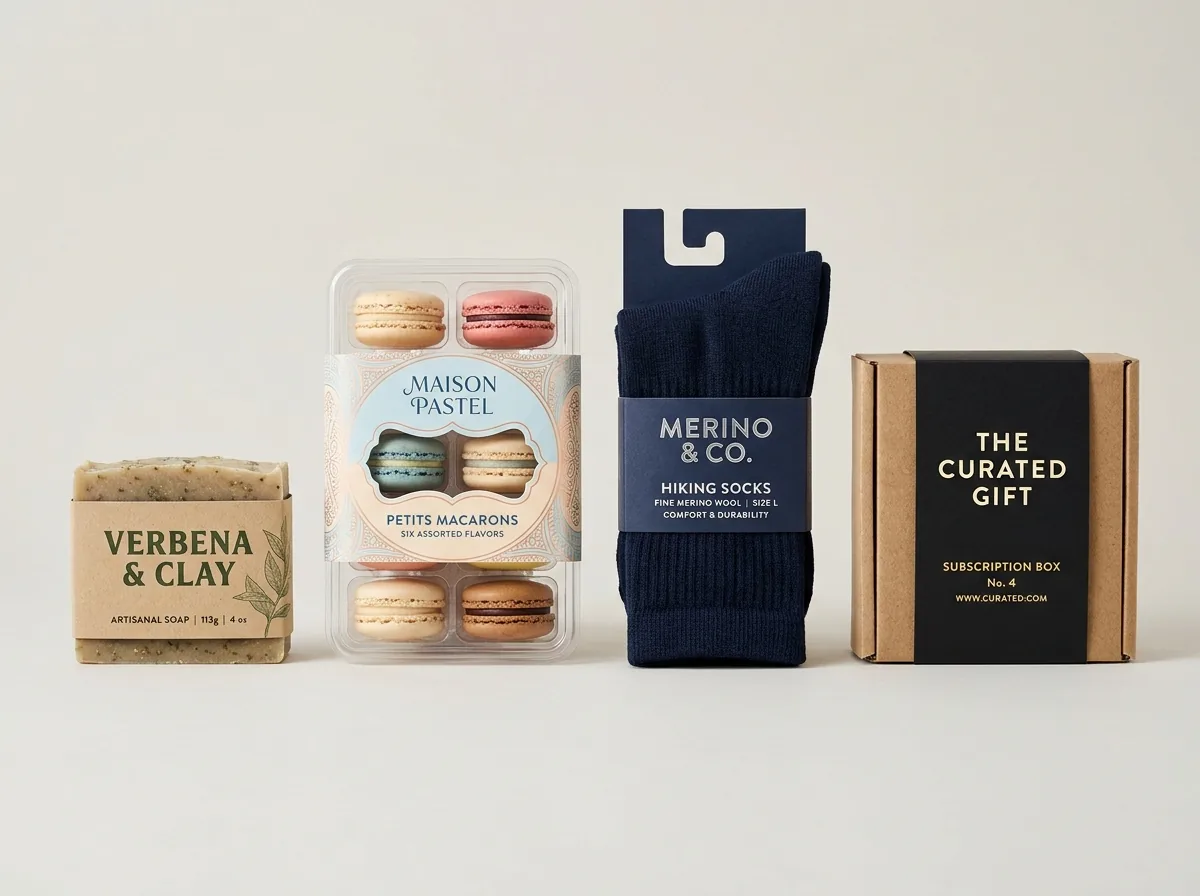
If a sleeve is cut 0.5 mm too tight, workers have to force it over the corners, bowing the top panel and scuffing dark ink along the score lines. If it is cut 1.5 mm too loose on a smooth bar of soap or a rigid gift box, the inner item slides right out on the retail shelf. Because surface friction varies dramatically between matte paper, corrugated kraft, thermoformed PET plastic, cured soap, and knitted cotton socks, use this clearance lookup table to dial in your fit
| Wrapped item or inner container | Inside L & W clearance to add | Recommended Sleeve Depth (D) | Retention & dieline notes |
|---|---|---|---|
| Rigid two-piece or drawer box / metal tin | +0.031 in (+0.8 mm) over outside box | 40% to 98% of box length | Smooth piston glide · Standard 90° scores |
| Corrugated mailer box (E-flute or B-flute) | +0.0625 in (+1.5 mm) over outside knuckles | 35% to 75% of mailer depth | Double-parallel crease scores clear round corners |
| Thermoformed PET tray (macarons, truffles) | +0.047 to +0.0625 in (+1.2 to +1.5 mm) over top lip | 85% to 100% of tray length | Add side lip-lock slots or tapered side walls |
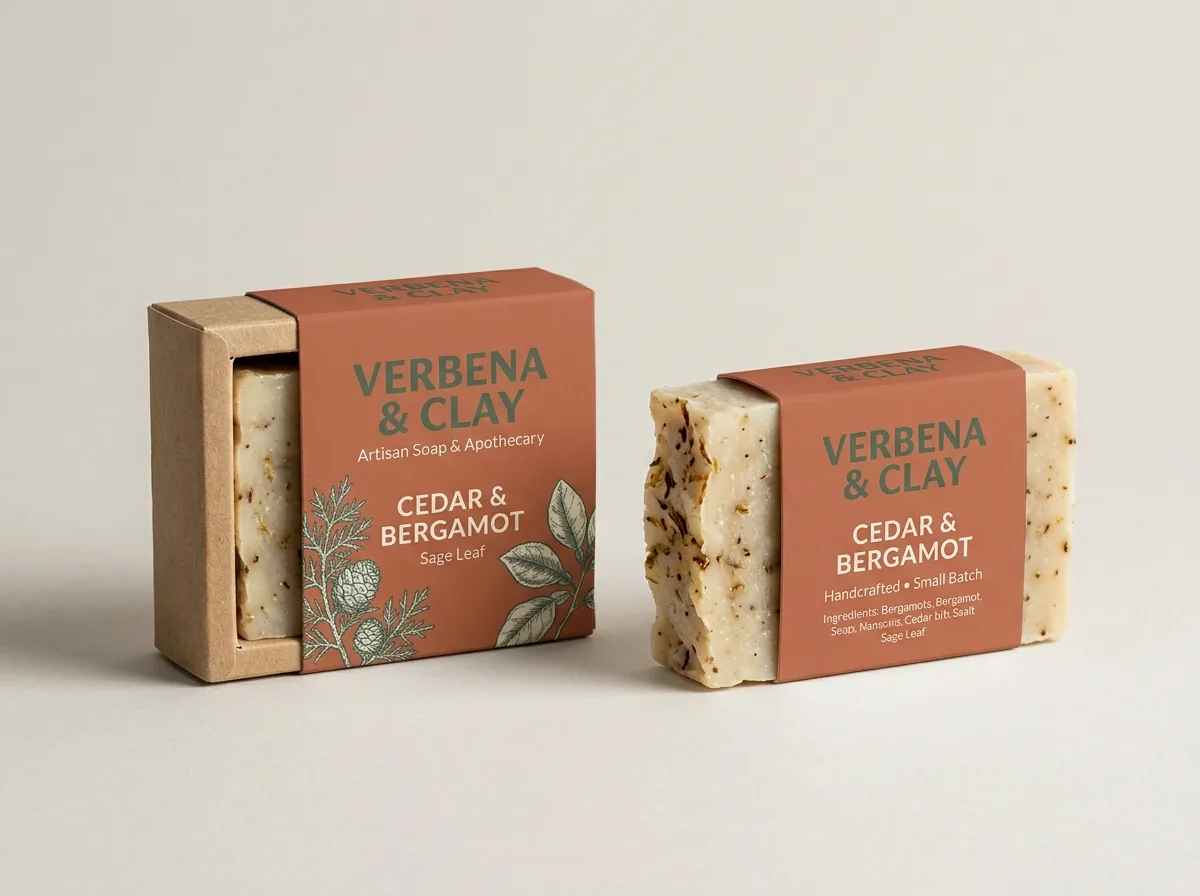
| Cured cold-process or milled bar soap | +0.015 to +0.031 in (+0.4 to +0.8 mm) over cured bar | 55% to 80% of bar length | Leaves both soap ends exposed for scent & texture |
| Folded socks, knitwear, or textile bundle | 0.00 to -0.015 in (snug compression fit) | 30% to 60% of folded length | Soft fabric compresses slightly to lock the band |
| Stationery / greeting card & envelope stack | +0.015 in (+0.4 mm) over compressed stack | 25% to 50% of card height | Pre-glued flat tube or peel-and-seal belly band |
Should I choose 16 pt, 18 pt, 20 pt, 24 pt paperboard, or E-flute corrugated board for a sleeve?
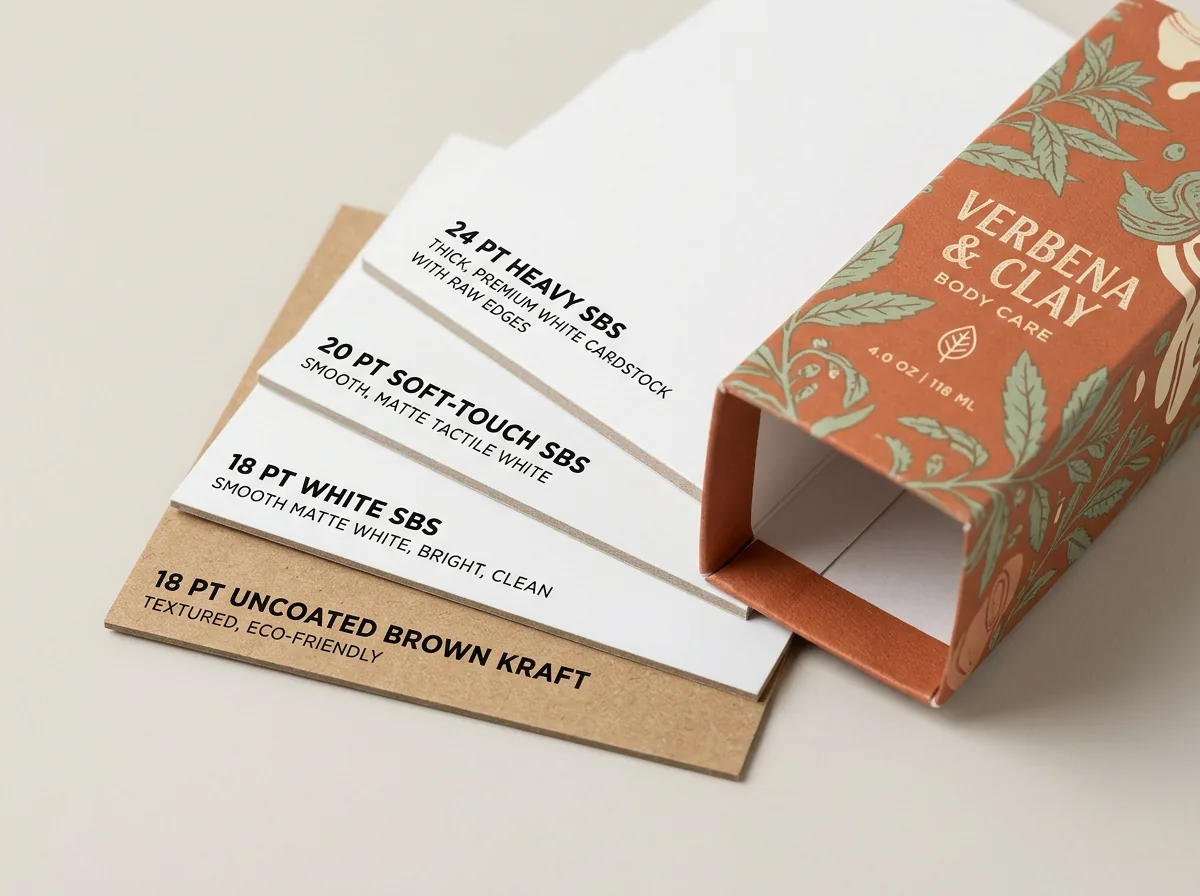
Because an open-ended sleeve has no glued or tucked end flaps to brace its front and back faces, the board caliper you select must span your Inside Length (L) without sagging in the middle. On narrow bar soap wraps or sock belly bands under 4.5 inches wide, 16 pt to 18 pt SBS or natural brown kraft folds with crisp 90-degree edges. Once your front span exceeds 4.5 inches across a chocolate ballotin, a 12-count macaron tray, or an e-commerce mailer box, stepping up to 20 pt or 24 pt paperboard prevents the top panel from bowing inward when stacked. Equally important, we orient the paperboard grain direction perpendicular to the four wrap-around score lines (cross-score hoop grain) so the natural stiffness of the cellulose fibers arches across the top face like a bridge
| Board caliper & stock | Thickness & GSM equivalent | Maximum front span (L) | Ideal custom sleeve applications |
|---|---|---|---|
| 16 pt – 18 pt SBS / Kraft | 0.40–0.45 mm · 310–350 gsm | Up to 4.5 in (114 mm) | Bar soap sleeves, sock belly bands, greeting card wraps, lip balm trios |
| 20 pt SBS / Kraft | 0.50 mm · 375–400 gsm | 4.5 to 7.5 in (114–190 mm) | Chocolate ballotin sleeves, PET macaron trays, bath bomb cradles, tea tins |
| 24 pt Heavy SBS / Kraft | 0.60 mm · 450 gsm | 7.5 to 12.0 in (190–305 mm) | Heavy soy candle boxes, corrugated mailer wraps, luxury gift box sleeves |
| E-Flute Corrugated | 1.60 mm (1/16 in) micro-flute | 8.0 to 16.0+ in (203–406 mm) | Multi-jar gourmet food carriers, heavy glass bottle packs, protective shipping sleeves |
Know your size? Compare pricing across up to 3 quantities.
Request a Quote →What are standard custom sleeve box sizes across soap, chocolates, candles, socks, and cards?
Every CubitPack order includes free custom die-making with zero die or plate charges, so we cut your sleeve to the exact fraction of an inch your product or base box requires. Use these eight proven industry sizes from our custom soap boxes, custom chocolate boxes, custom candle boxes, custom sock boxes, and custom macaron boxes lines as starting benchmarks
| Product or inner container | Inside L × W × Depth D (in) | Inside L × W × Depth D (mm) | Recommended board & finish spec |
|---|---|---|---|
| Artisan bar soap sleeve (4–5 oz bar) | 3.50 × 1.125 × 2.25 in | 89 × 29 × 57 mm | 18 pt Uncoated Kraft or SBS · Optional thumb notch |
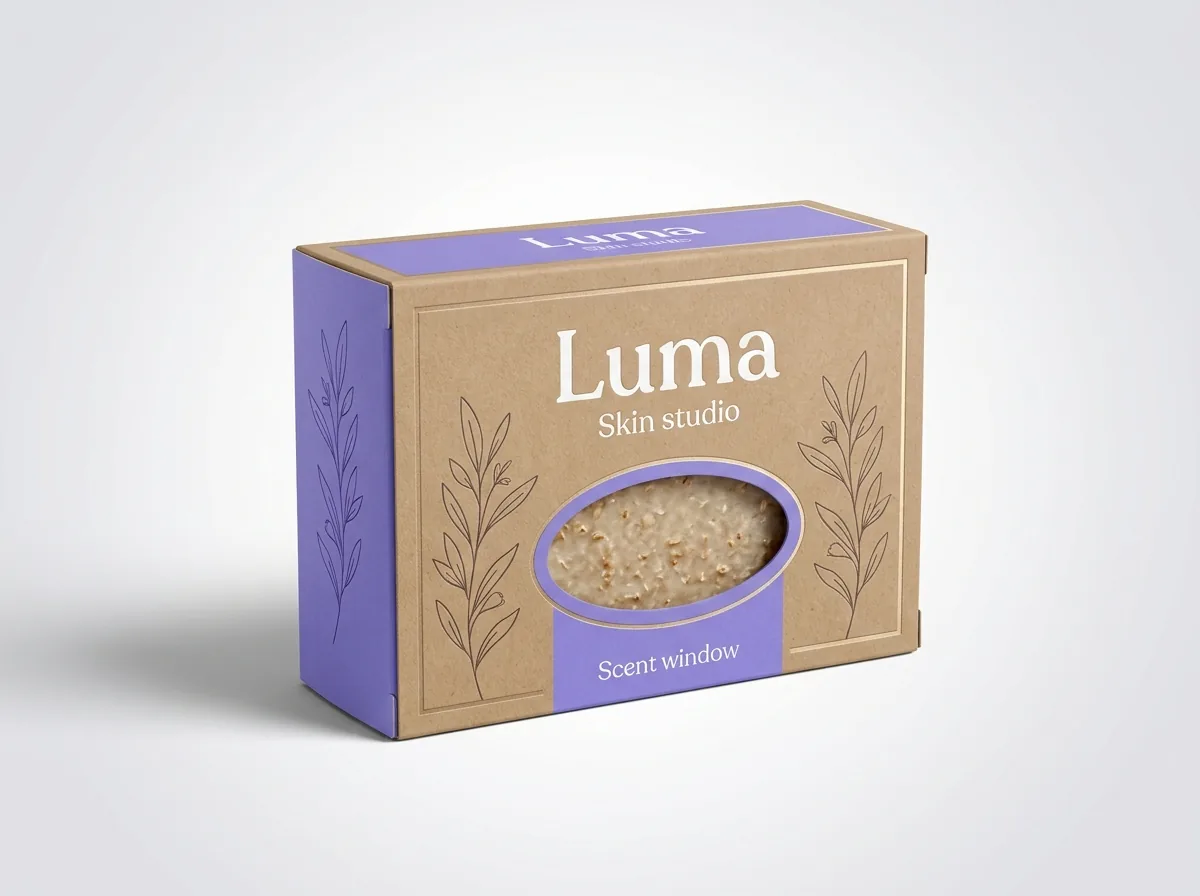
| Full-coverage bar soap sleeve (5 oz bar) | 3.56 × 1.25 × 2.625 in | 90 × 32 × 67 mm | 18 pt SBS · Top die-cut scent peek window |
| 8-piece chocolate ballotin tray sleeve | 6.50 × 1.375 × 3.50 in | 165 × 35 × 89 mm | 20 pt SBS · Soft-touch lamination + gold foil |
| 12-macaron thermoformed PET tray sleeve | 7.25 × 2.00 × 4.25 in | 184 × 51 × 108 mm | 20 pt SBS · Die-cut top window + side lip locks |
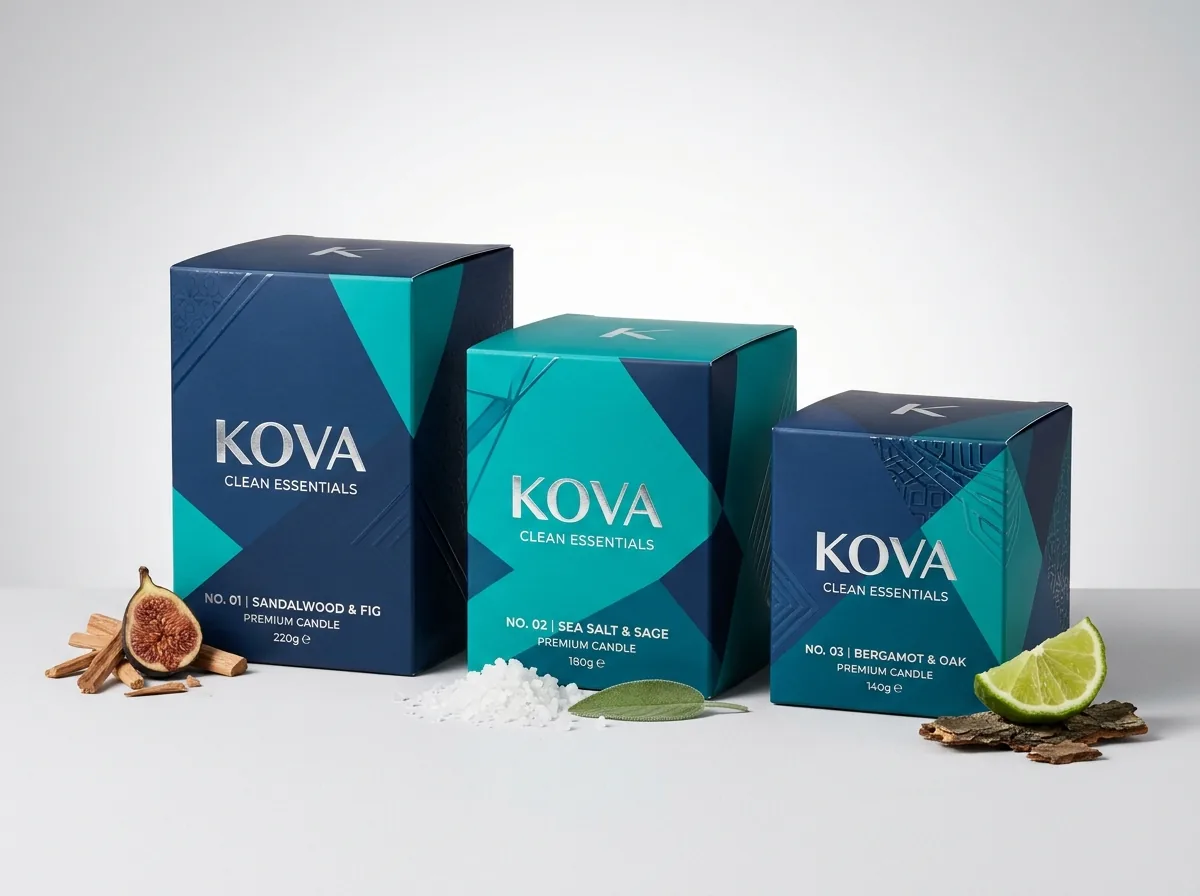
| Soy candle tumbler box sleeve (9 oz jar) | 3.75 × 3.75 × 4.25 in | 95 × 95 × 108 mm | 24 pt SBS · Matte lamination + spot UV |
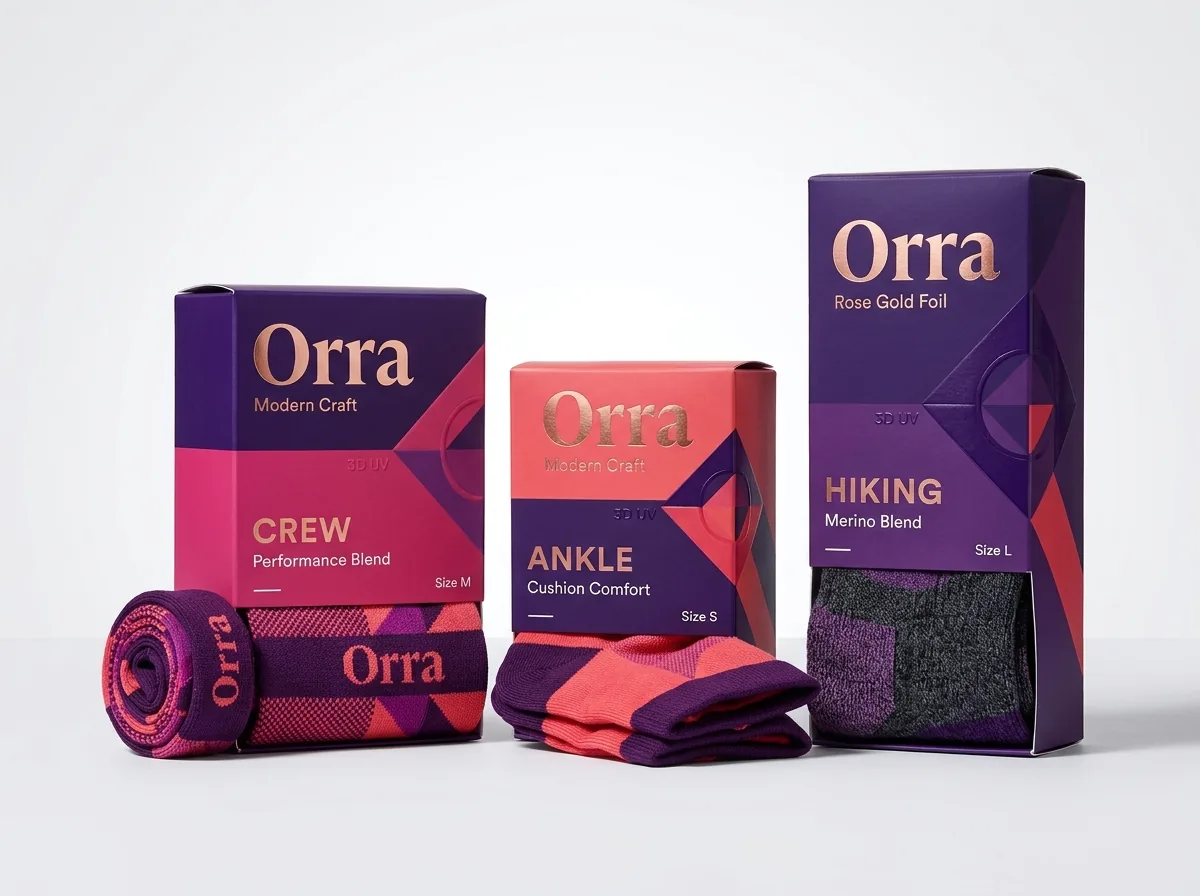
| Crew sock retail belly band (1 pair) | 3.75 × 1.25 × 4.50 in | 95 × 32 × 114 mm | 18 pt SBS · Integrated top euro hang tab |
| Greeting card & envelope bundle sleeve (12 ct) | 5.75 × 0.875 × 3.00 in | 146 × 22 × 76 mm | 18 pt SBS or Kraft · Pre-glued or peel-and-seal |
| Corrugated mailer box branding sleeve | 9.125 × 3.125 × 4.00 in | 232 × 79 × 102 mm | 24 pt SBS · Double-parallel corner scores |
How do I verify my custom sleeve box glide fit before full production?
Once you have measured your base container or product, explore our companion guides on sleeve boxes vs belly bands and tray and sleeve boxes and sleeve box dieline, locking notches, and windows explained. When you order printed packaging sleeves from CubitPack starting at 1,000 units, our specialists check your outside item measurements, add the exact friction-glide clearance, and orient the paperboard grain for maximum hoop stiffness. Because temperature and humidity shifts between a soap-curing room, a refrigerated bakery case, and a dry warehouse can alter container dimensions by 0.5 to 1.0 mm, testing an unprinted or digitally printed structural sample on your actual product before full press production guarantees a smooth, snag-free slide on packing day. Follow this 5-step verification checklist before going to press
- Step 1: Measure 3 to 5 samples of your fully assembled base box, filled thermoformed tray, or cured soap bar using digital calipers across the top, center, and bottom to capture any manufacturing or curing variance.
- Step 2: Enter your target Inside L × W × D, quantity (from 1,000 sleeves), and board stock in our quote form to receive a custom price in 5-7 minutes.
- Step 3: Tell your specialist what material the sleeve slides over (rigid chipboard, corrugated mailer, flanged PET plastic, bare soap, or fabric) so we calibrate the +0.4 to +1.5 mm clearance and add double-parallel corner scores or side lip-lock slots if needed.
- Step 4: Review and approve your free 2D vector dieline proof and interactive 3D mockup before payment to verify window bridges, barcode placement, and panel sequence.
- Step 5: Test a physical structural sample over your actual box, plastic tray, or cured soap bar to confirm a smooth 1-second slide that stays put when held vertically and tilted at 45 degrees.
What are the most common sizing and board mistakes on custom sleeve boxes?
Avoid these five dimensional errors before approving your custom sleeve dieline
- Copying the inside dimensions of a corrugated mailer box instead of measuring its assembled outside width and height (which are 0.125 to 0.25 inches larger due to wall thickness and folded corner knuckles).
- Ordering 0.0 mm size-on-size dimensions over a rigid box or metal tin, causing the sleeve corners to bind, scuff ink, or bow outward.
- Sizing a bar soap sleeve to a freshly poured wet bar without accounting for the 2% to 4% curing shrinkage that occurs over 4 to 6 weeks.
- Choosing thin 14 pt or 16 pt board for an 8-inch-wide mailer box or pastry tray span, which allows the top face of the sleeve to sag inward.
- Confusing Sleeve Band Depth (D, along the open slide axis) with Inside Length (L, across the closed front face), which rotates the open ends 90 degrees.
Get a sleeve dieline at your size
A simplified drawing for planning your design. Your free production dieline comes with your proof, made for your exact size and board.
Packaging for this


Ready to order sleeve boxes? Compare up to 3 quantities with a free 3D mockup.
Request a Quote →Questions about sleeve boxes
Do I give you the outside dimensions of my box or the inside dimensions of the sleeve?
You can give us either! Simply note whether your numbers are the exact outside dimensions of your assembled box, tray, or soap bar, or your desired final inside sleeve dimensions. When you share your item's outside measurements, our team calculates and adds the exact +0.4 to +1.5 mm glide clearance on your free 2D dieline.
Why does my corrugated mailer box need +1.5 mm sleeve clearance while a rigid box only needs +0.8 mm?
A rigid setup box has razor-sharp 90-degree wrapped corners and zero wall flex, so +0.031 in (+0.8 mm) provides a smooth piston-like slide. A folded corrugated mailer box has rounded double-thick corner knuckles and slight flute variation that require +0.0625 in (+1.5 mm) plus double-parallel crease scores to glide smoothly.
How do I measure a tapered plastic macaron or meal tray for a sleeve?
Measure the widest outside width at the top flange lip, the narrower outside width at the bottom base, and the overall vertical height including any clear dome lid. We can either build a rectangular sleeve with side lip-lock slots that grip the top flange or angle the side walls to match your tray's taper.
What does Sleeve Band Depth (D) mean when ordering a custom sleeve box?
Sleeve Band Depth (D) is the length of the paperboard tube measured from one open end to the other along the slide direction. A 1.5-inch Depth (D) creates a narrow belly band across the center of a box, while a 3.5-inch Depth (D) creates a full-coverage soap or chocolate box sleeve.
Can I use one sleeve size across multiple soap scents or box flavors?
Yes. As long as your soap bars or inner trays share the same cross-section (Length × Width), you can split a single 1,000-unit order across multiple printed scent or flavor designs with zero die or plate charges.
Still have a question? Ask a packaging specialist.
Request a Quote →Request your sleeve boxes quote
Tell us your size and quantities, and one dedicated account manager prepares pricing for each tier.
- Free design & AI-to-print studio + 3D mockup
- No die or plate charges · 4–5 day rush available
- Free shipping to all 50 states
- 10% off your first order
We verified ECMA A15.10.00.00 and FEFCO 0501 open-ended sleeve conventions, friction-glide clearances (+0.4 to +1.5 mm), cold-process soap shrinkage allowances, and 16–24 pt caliper spans against European Carton Makers Association (ECMA), FEFCO, and Paperboard Packaging Council (PPC) handbooks. A packaging specialist checked every formula and table row. Spot something wrong? Tell us and we fix it.
Sources
What changed
- October 26, 2026: First published with 3-step outside-to-inside L × W × D sleeve formula, 6-format glide clearance table, 16–24 pt hoop-grain board chart, and 8-category size table.
More guides
New packaging guides by email
Sizes, materials and design tips. Unsubscribe anytime.