
How do auto-lock bottom gable boxes compare to briefcase boxes and bakery tuck cartons?
Short answer: Choose auto-lock bottom gable boxes for grab-and-go boxed lunches, cupcakes, and event favors that need a 2-second pop setup and built-in carry grip without a shopping bag. Choose flat-top briefcase boxes when tall corner bottles or binders need 90-degree ceiling clearance, or flat bakery tuck cartons when stacking 3 to 5 boxes high in delivery vans.
On this page
- How do gable boxes, briefcase boxes, and bakery tuck cartons compare side by side
- When does a flat-top briefcase box beat a sloped gable roof
- How do bakeries and caterers choose between gable carriers and stackable tuck cartons
- Which four questions lock in the right handled or flat carton for your run
- Common mistakes
- FAQs
Request a custom quoteFree dieline & 3D mockup
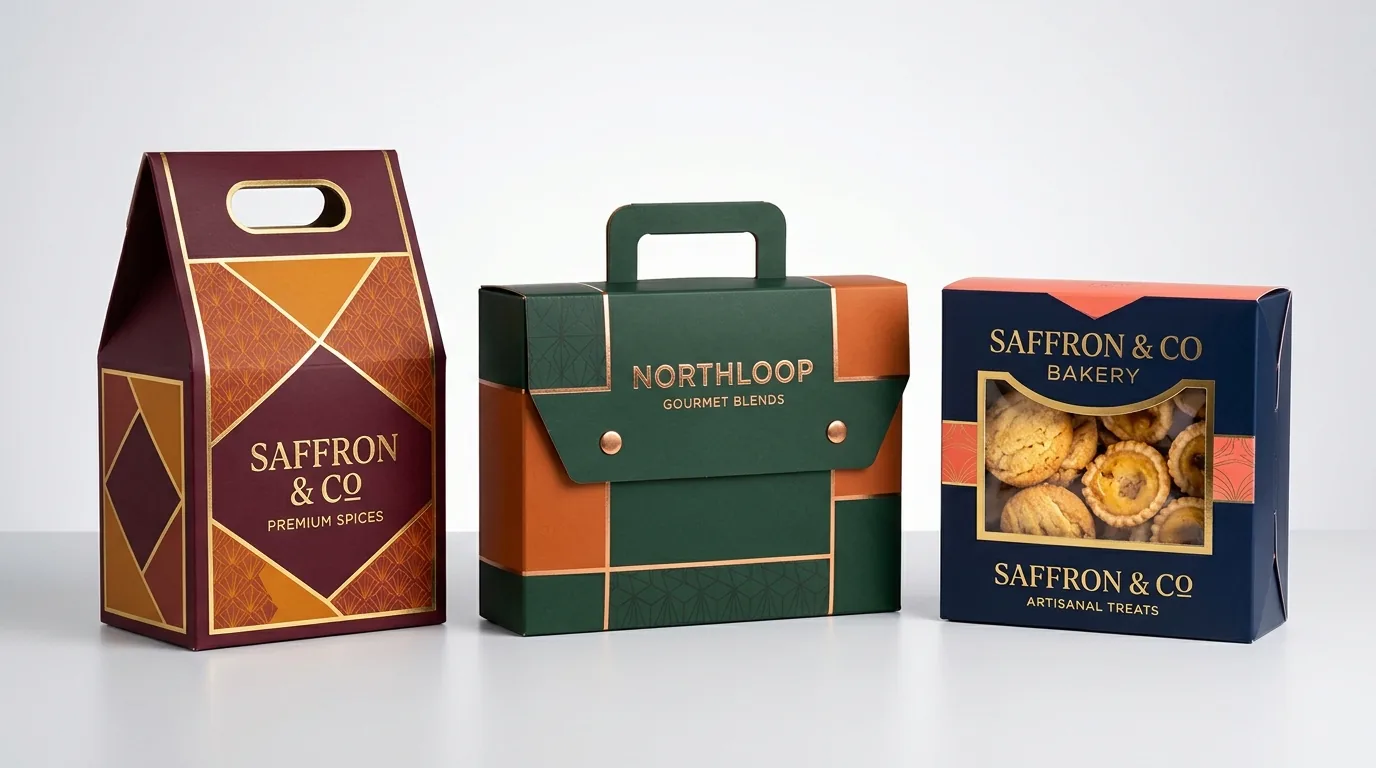
Deciding between custom gable boxes, custom briefcase boxes, and flat-roofed bakery tuck cartons comes down to three real-world operating trade-offs: upper corner headroom, counter setup speed, and multi-layer stacking during refrigerated or van delivery. All three fold from smooth 18 pt to 24 pt printed paperboard (or optional 1.5 mm E-flute micro-corrugated board) and start at 1,000 units, yet their upper closure geometry changes how staff pack them during morning rushes and how guests carry them out the door. Peaked gable cartons eliminate separate paper shopping bags and pop open in two seconds via a pre-glued crash-lock floor, whereas briefcase cartons preserve 100% square corner height beneath a flat lid and handleless bakery tuck boxes stack four layers deep inside cold cases. CubitPack custom-manufactures all three folding carton styles with free CAD dielines, zero die fees, and free US delivery.
How do gable boxes, briefcase boxes, and bakery tuck cartons compare side by side?
While lightweight favors under 8 ounces often compare gable cartons against custom pillow boxes, brands packing heavier 1 to 6 pound bakery assortments, bottle duos, corporate kits, and catered meals almost always weigh peaked gable carriers against attache-style briefcase boxes and standard custom bakery boxes. Because the roof crease on a gable box angles inward at roughly 45 degrees toward the center handle, its sweet spot is wide square-floor goods that sit below the roof score line. Meanwhile, briefcase cartons keep a level horizontal ceiling for square-shouldered jars or folders, and handleless tuck cartons prioritize vertical column stacking in display coolers and vans. Choosing the right structural silhouette upfront also saves backroom storage space and cuts counter packing labor during busy weekend rushes. Review the six structural differences below before locking in your dieline
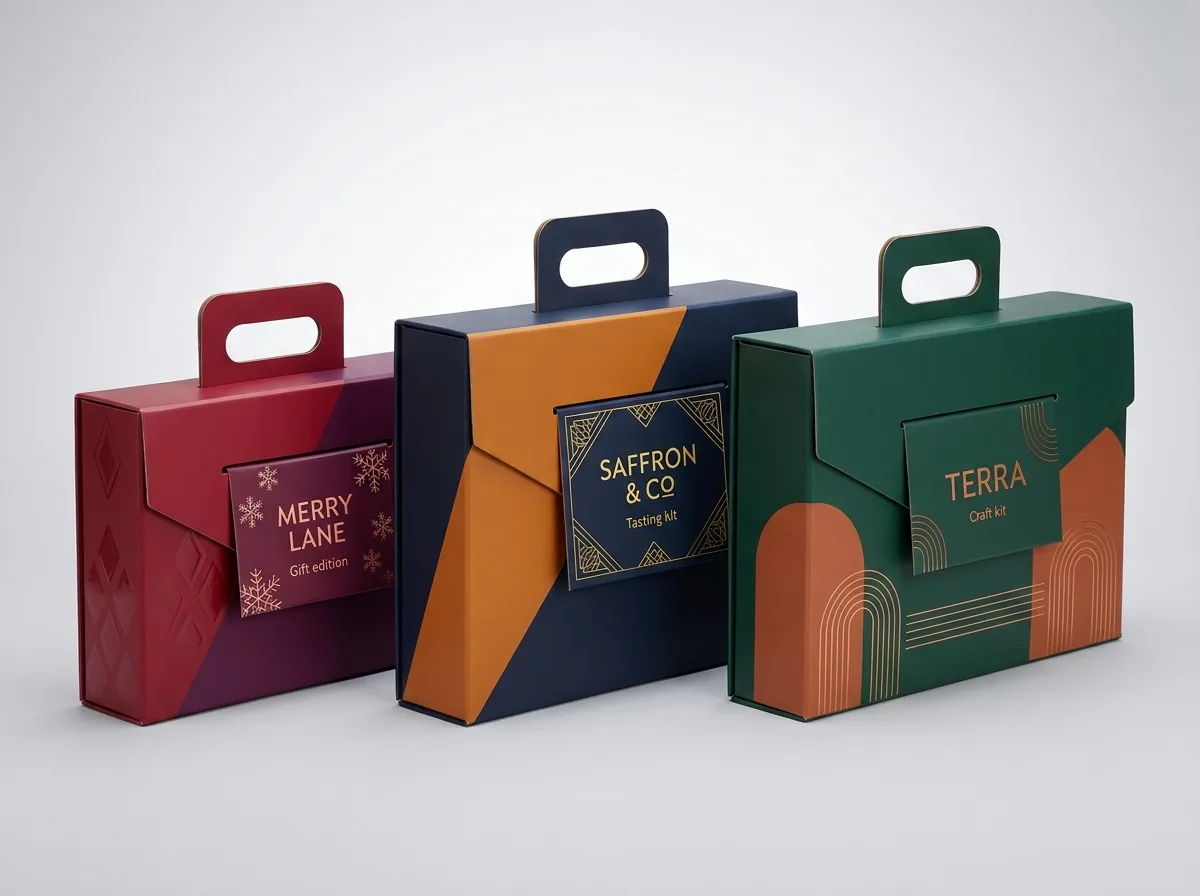
- Eliminating the outer carry bag: A single printed gable or briefcase carton replaces both an inner box and a separate handled paper shopping bag at cafe registers, hotel front desks, and festival booths.
- Sloped eye-level branding: Only a gable carton angles its upper front and back panels at 45 degrees toward standing customers, turning low table displays into upward-facing billboards.
- Reclosable ear-tab convenience: Both gable ear tabs and briefcase tuck flaps let recipients open and reclose the carton cleanly without ripping tamper strips.
| Comparison factor | Auto-lock gable box | Flat-top briefcase box | Flat bakery tuck carton |
|---|---|---|---|
| Carry handle design | Peaked roof panels form a double-ply grip with ear locks | Pop-up center handle rises through a flat horizontal top lid | No built-in handle; carried with two hands or outer bag |
| Upper corner headroom | Tapers inward above the horizontal sidewall crease | 100% square 90-degree corners right to the flat ceiling | 100% square 90-degree corners across the entire tray |
| Counter setup speed | 2–3 sec squeeze crash base + click two ear tabs | 4–6 sec lock bottom, fold front flap, thread handle | 2–3 sec pop auto-corner tray + tuck front flap |
| Van & shelf stacking | Single-tier upright (standing handle blocks stacking) | Stacks flat on its side or when handle folds flush | Stacks 3 to 5 boxes high in cold cases and vans |
| Window placement | Vertical front body wall strictly below roof crease | Wide vertical front attache face | Panoramic top lid wrapping onto the front wall |
| Ideal product match | Cupcakes, boxed lunches, gift hampers, event favors | Twin wine/sauce bottles, flat craft kits, swatch books | Whole pies, 12-count donuts, sheet pastries, cakes |
When does a flat-top briefcase box beat a sloped gable roof?
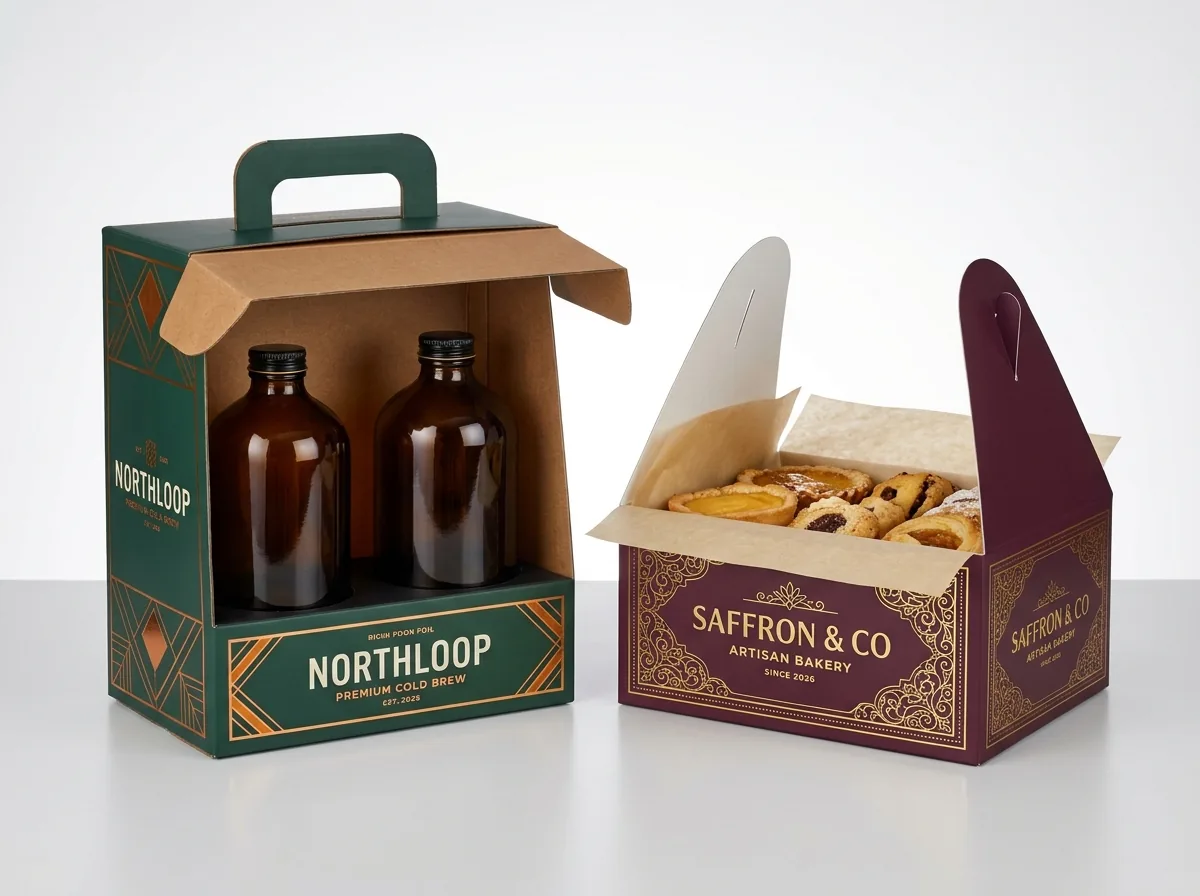
Two product shapes consistently favor custom briefcase boxes over a sloped gable silhouette: tall twin cylinders placed near the outer left and right walls, and flat rectangular books, binders, or board games that fill the box from corner to corner. In a gable carton, placing two 8-inch olive oil bottles side by side forces you to raise the vertical sidewall height all the way to 8.5 inches, which pushes total peak height past 12 inches and wastes board above the center gap. A flat-top briefcase carton caps right at 8.25 inches with a neat pop-up handle slot, trimming board area while keeping bottle shoulders snug against square top corners. That attache geometry also keeps multi-page tasting booklets, fabric swatches, or boxed chocolate bars lying flat against the front wall without leaning backward into an angled roof cavity
- Side-by-side tall bottles & jars: Cold-brew two-packs, hot-sauce trios, and skincare pump sets fit tightly against 90-degree top corners without sloped-roof interference.
- Flat educational, craft & sales kits: Swatch decks, literature folders, kids' art pads, and apparel gift folds slide smoothly into an attache-proportioned briefcase carton.
- Sideways retail shelf stacking: Retailers can lay briefcase cartons flat on their backs or fold flexible collar handles down to stack inventory two or three units deep.
- Wide front uncreased canvas: With no horizontal roof fold splitting the front wall, large architectural illustrations and foil typography run uninterrupted top to bottom.
How do bakeries and caterers choose between gable carriers and stackable tuck cartons?
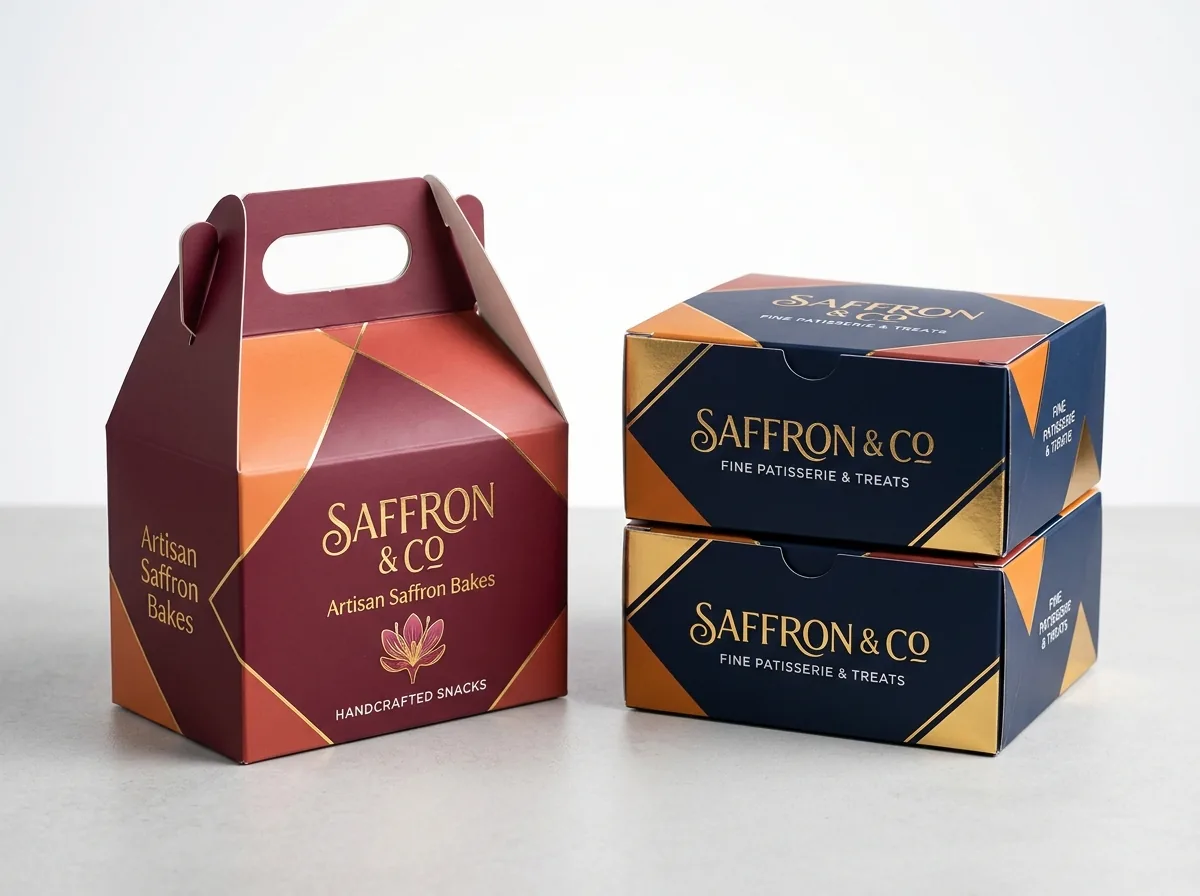
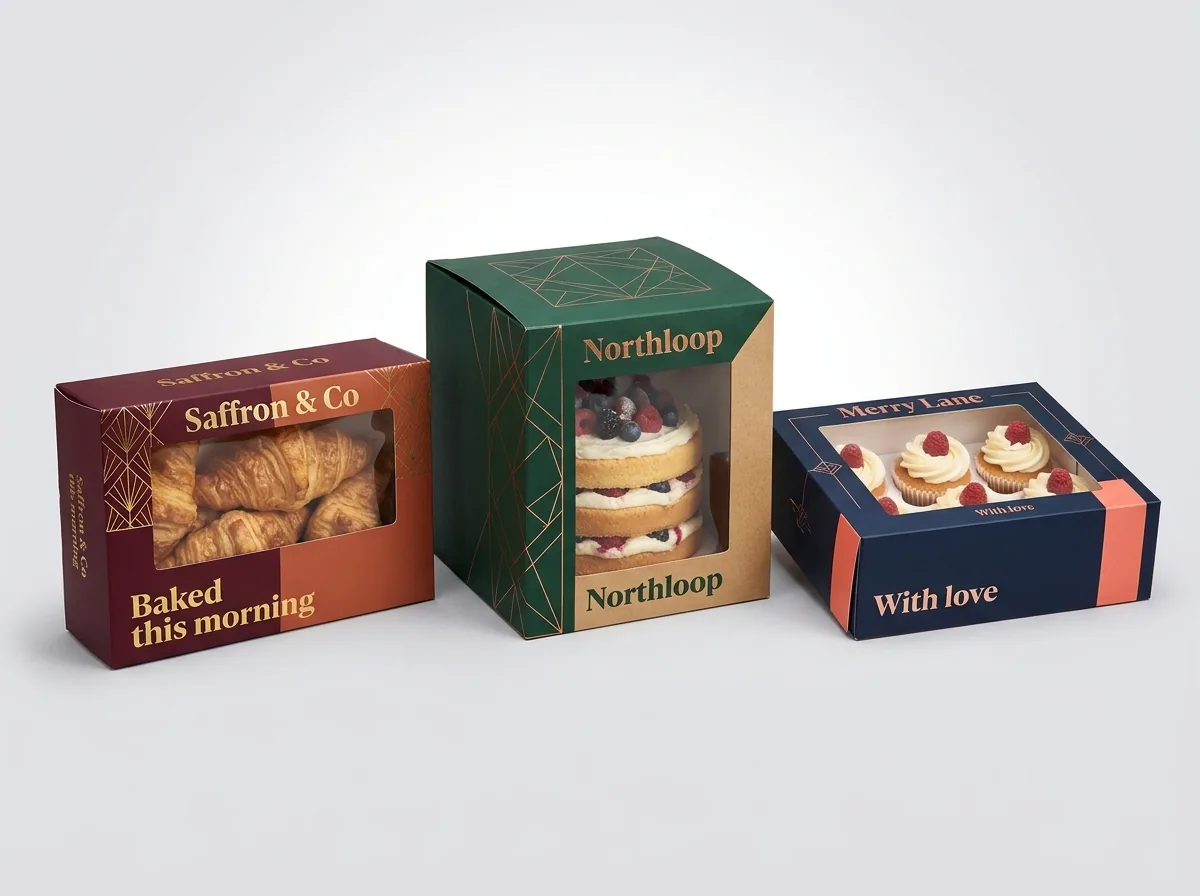
High-volume bakeries, corporate caterers, and gourmet grocers rarely treat handled custom gable cartons and flat-top custom window boxes as either-or rivals; instead, they assign each style to the fulfillment channel it handles fastest. Walk-in morning customers grabbing four cupcakes, a pastry assortment, or a bistro lunch love lifting a single locked gable handle while holding an iced coffee in their other hand, eliminating the inventory clutter and counter packing time of separate twisted-handle kraft shopping bags. Event planners and boutique hotels see the exact same advantage on welcome tables, where upright peaked handles look dressed and gift-ready without hand-tied satin ribbons. Conversely, when a catering driver loads 120 boxed desserts or whole tarts into a delivery van without rigid bus lugs, flat-lid bakery cartons stack four layers high cleanly without crushing standing handles. Compare how operators pair both across custom food boxes, custom cupcake boxes, and custom wedding favor boxes
| Fulfillment scenario | Best carton choice | Operational reason |
|---|---|---|
| Walk-in cafe, farmers market, or festival booth | Auto-lock gable box | One-handed carry grip removes bag cost and speeds checkout |
| Hotel welcome desk & wedding reception favors | Auto-lock gable box | Stands upright as table decor; guests carry favors effortlessly |
| Corporate catering van (single-layer bus totes) | 24 pt / E-flute gable box | Rigid plastic catering crates hold 8–10 gable meals per tier |
| Multi-tier cold case or stacked van pastry delivery | Flat bakery window tuck | Flush horizontal lid supports 3–5 stacked cartons cleanly |
Know your size? Compare pricing across up to 3 quantities.
Request a Quote →Which four questions lock in the right handled or flat carton for your run?
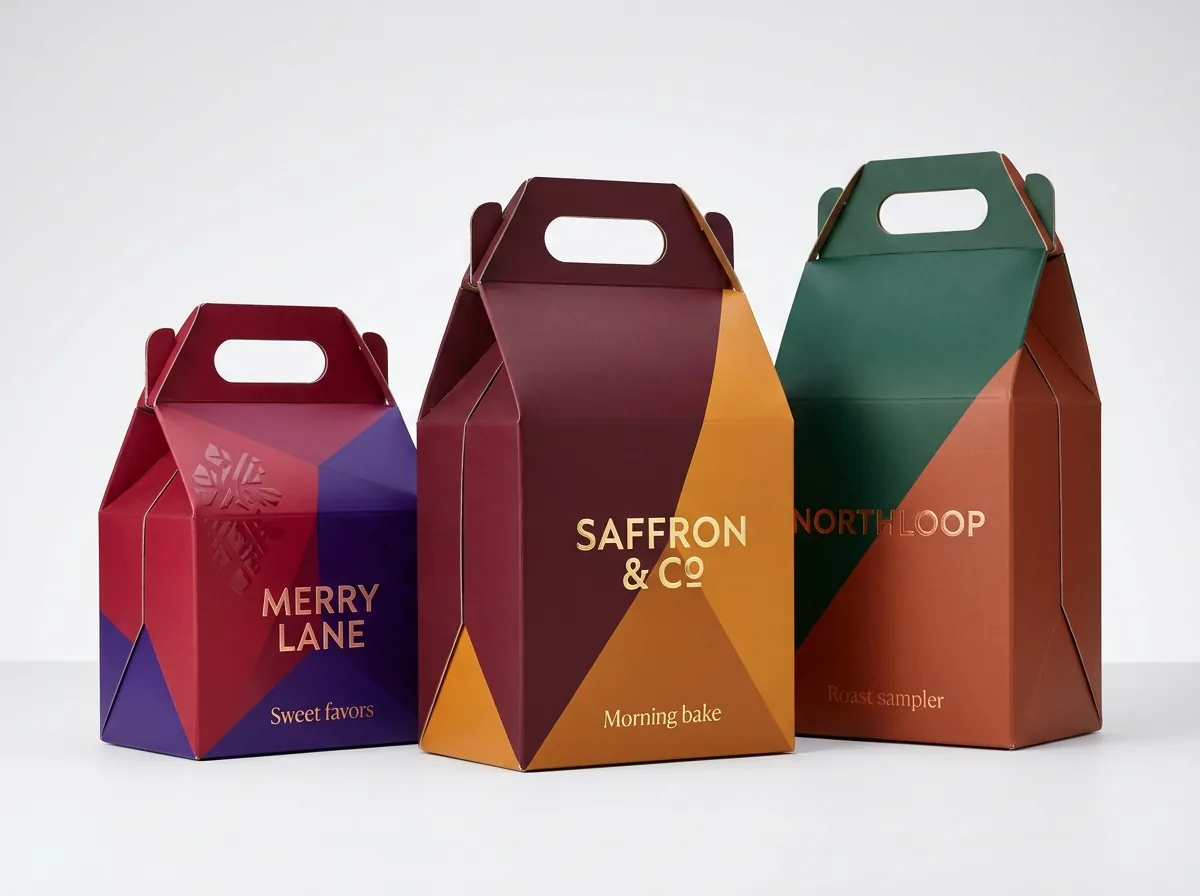
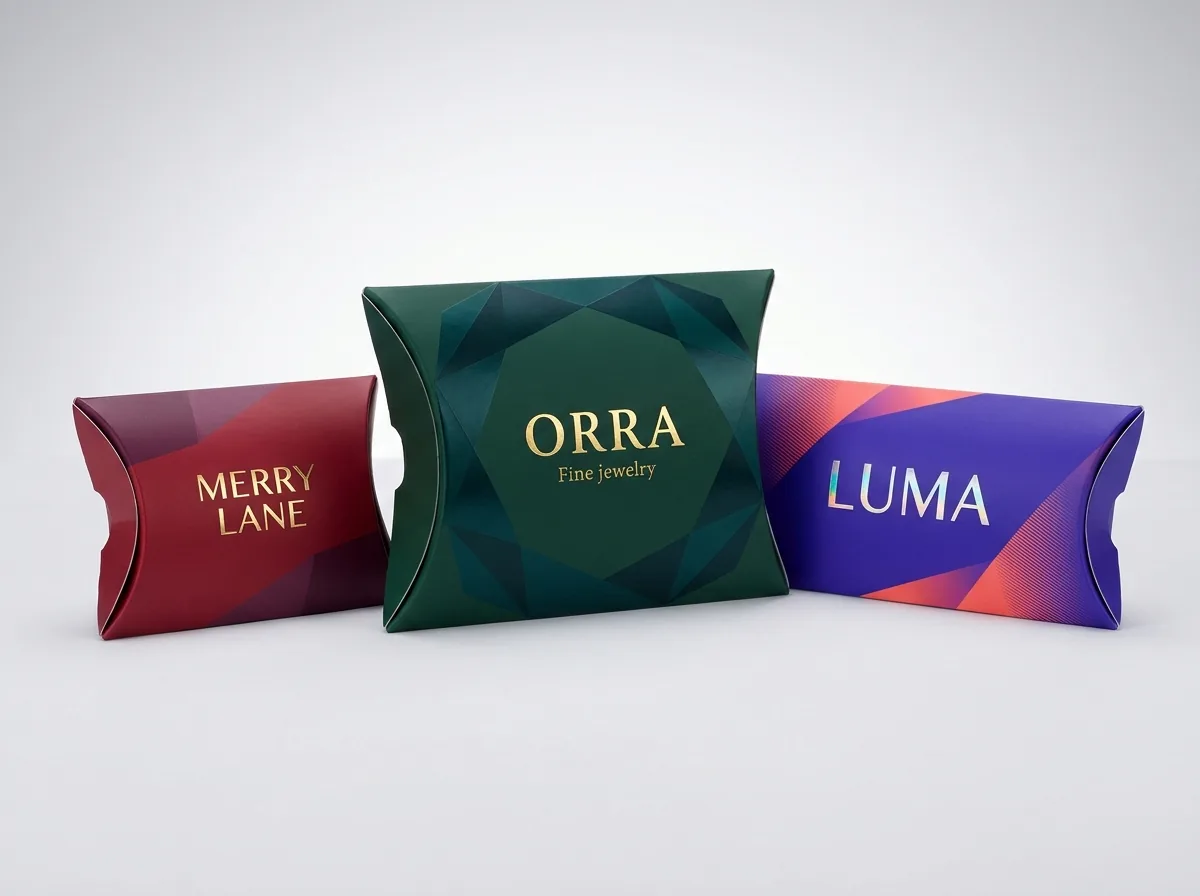
Once you pick your structural winner, dial in exact dimensions with our companion guide on gable box sizes, usable headroom, and handle weight limits, prepare print-ready files with our gable box handle lock tabs, roof gussets, and window dieline guide, or compare ultra-light favor pouches in pillow boxes vs gable boxes and tuck-end cartons. Many multi-location cafes and event caterers keep two coordinated SKUs in rotation: a signature foil-stamped auto-lock gable carrier for walk-in gifting and individual boxed lunches, alongside a matching flat-lid pastry tuck carton for wholesale cafe drop-offs and stacked pastry racks. Because both share identical Pantone inks and board coatings, your brand reads consistently from farmers market tents to refrigerated grocery cases. Run your SKU list through these four quick checkpoints before requesting quotes on custom party favor boxes or custom gift basket boxes
- 1. Will customers walk away holding one box with no bag? Pick an auto-lock gable box (for wide-base food, cupcakes, and hampers) or a briefcase box (for flat kits and tall twin bottles).
- 2. Do outer corner items stand just as tall as center items? If tall bottles sit at both edges, choose a flat-top briefcase carton or add +0.5 in above bottle height to your gable's usable sidewall.
- 3. Must filled boxes stack directly on top of each other without crates? Choose a flat-roofed bakery tuck or auto-lock bottom carton, or transport gable boxes inside stackable catering lugs.
- 4. Ready to compare 3D proofs? Request free CAD dielines starting at 1,000 boxes per style from CubitPack with zero die fees, 10–14 business day turnaround (4–5 rush), and our $50 sample kit credited to your first order.
What style-selection mistakes cost bakeries and gift brands money?
Avoid these five structural mismatches when choosing between gable, briefcase, and flat bakery cartons
- Stacking heavy filled cartons directly on top of standing gable handles during van transit instead of sliding gable boxes into rigid single-layer catering totes.
- Paying for separate printed paper shopping bags AND inner tuck boxes at walk-in cafe counters when one auto-lock gable carton handles both jobs.
- Forcing wide flat swatch binders or hardcover books into a sloped-roof gable box when an attache briefcase carton fits rectangular edges cleanly.
- Putting loose cupcakes inside a handled gable or briefcase box without a die-cut floor insert to prevent sliding while customers walk.
- Trying to mail standalone handled gable or briefcase cartons through automated USPS or UPS sorters without an outer corrugated shipping box.
Packaging for this
Ready to order gable boxes? Compare up to 3 quantities with a free 3D mockup.
Request a Quote →Questions about gable boxes
Is a custom gable box faster to assemble at a busy counter than a briefcase box?
Yes. When ordered with a pre-glued auto-lock (crash-lock) bottom, a gable box pops flat in one squeeze and locks at the peak with two winged ear tabs in roughly 2 to 3 seconds total, whereas folding side dust flaps and threading a briefcase handle typically takes 4 to 6 seconds.
Can I order both auto-lock gable boxes and flat bakery window boxes in matching brand colors?
Yes. Many bakeries and hospitality brands print matching Pantone PMS or CMYK colorways across 1,000+ walk-in gable carriers and 1,000+ stackable delivery tuck cartons on the exact same SBS or natural brown kraft board stock.
Which style holds heavier glass jar gift sets: a gable box or a briefcase box?
A wide-floor gable box built from 24 pt laminated paperboard (up to 4.5 lb) or printed 1.5 mm E-flute micro-corrugated board (5 to 10 lb) carries heavier multi-jar hampers more comfortably because its double-ply peaked handle distributes lift straight down all four vertical walls.
Do custom gable boxes and briefcase boxes ship flat to save backroom storage?
Yes. Both styles ship pre-glued and folded completely flat in master cartons with free shipping across all 50 US states, taking up a fraction of the backroom shelf space required by pre-formed rigid boxes.
Are there extra tooling fees if I add a window to a gable or bakery carton?
No. CubitPack charges zero steel-rule die or printing plate setup fees on custom folding cartons starting at 1,000 units, including front display windows and matching paperboard cavity inserts.
Still have a question? Ask a packaging specialist.
Request a Quote →Request your gable boxes quote
Tell us your size and quantities, and one dedicated account manager prepares pricing for each tier.
- Free design & AI-to-print studio + 3D mockup
- No die or plate charges · 4–5 day rush available
- Free shipping to all 50 states
- 10% off your first order
We compared carrier-handle geometries, upper corner clearances, crash-lock setup times, and transit stacking rules across gable, briefcase, and bakery tuck cartons using ECMA Folding Carton Design Codes, Paperboard Packaging Council (PPC) structural manuals, and FEFCO micro-flute guidelines. Spot something wrong? Tell us and we fix it.
Sources
What changed
- November 6, 2026: First published with 6-row comparison matrix across gable, briefcase, and bakery tuck cartons plus catering vs retail workflow table.
More guides
New packaging guides by email
Sizes, materials and design tips. Unsubscribe anytime.