
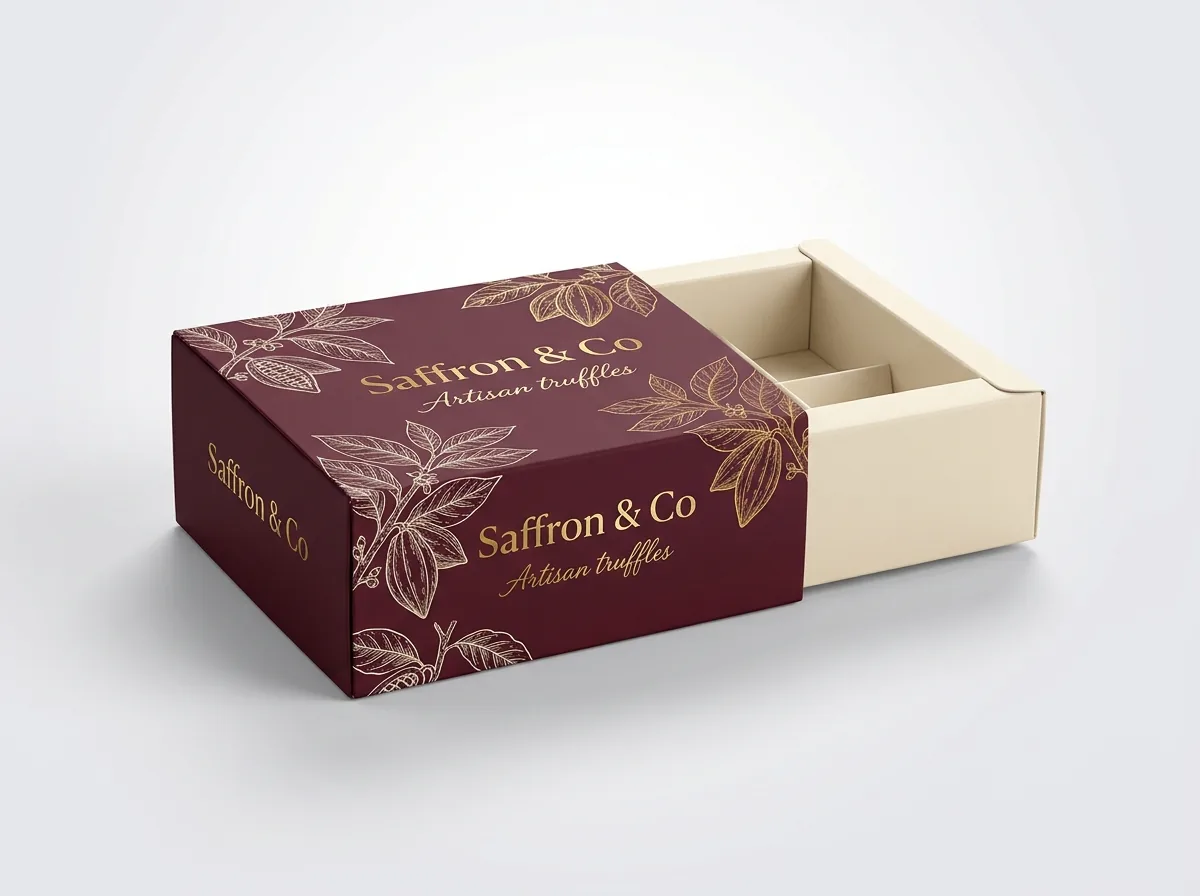
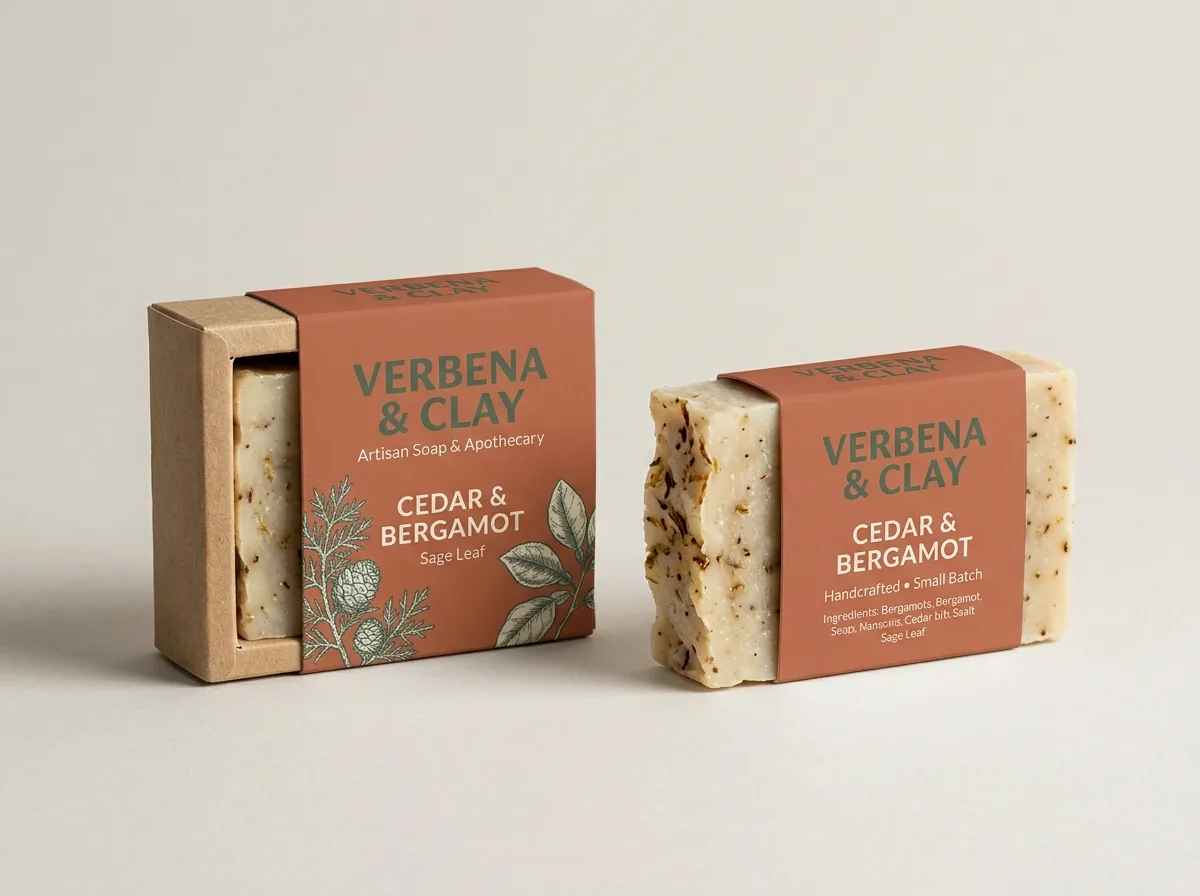
- Two-piece slide unboxing: a sturdy double-wall inner tray glides inside a pre-glued open-ended outer sleeve.
- Uninterrupted 360-degree outer sleeve canvas with optional top window, thumb notch, or cavity divider tray.
- CubitPack makes them from 1,000 boxes in 10–14 business days, with 4–5 day rush available.
- Free design help, no die or plate charges, free US shipping, and a digital proof plus 3D mockup before payment.
Custom Tray and Sleeve Boxes
Custom tray and sleeve boxes (also called sleeve and tray or matchbox-style slide boxes) are two-piece folding cartons where a double-walled open tray slides horizontally inside a four-panel outer sleeve. They create a smooth drawer reveal for chocolates, macarons, soaps, cosmetics, tea, jewelry, and gift cards. Order from 1,000 boxes in 10–14 business days (rush 4–5), with free design help and free US shipping.
What are custom tray and sleeve boxes?
Custom tray and sleeve boxes, known in packaging standards as slide cartons (ECMA E-series and FEFCO 0500), are two-piece paperboard packages that open with a horizontal matchbox glide instead of a hinged tuck lid. The first piece is an open-top rectangular tray whose four walls fold up and roll 180 degrees inward over corner dust flaps to lock into floor slots, creating cushioned double-thick perimeter walls without glue. The second piece is a four-panel outer sleeve glued along one long seam and open at both ends (or closed at one end for a stop-drawer feel). Engineered with a precise 1.5 to 2.5 mm friction clearance between the outer tray walls and the inner sleeve cavity, the tray stays securely in place during transit yet slides out smoothly by hand. At CubitPack, custom tray and sleeve boxes start at 1,000 units and take 10–14 business days.
How is a tray and sleeve box built?
A tray and sleeve box combines two separate die-cut paperboard pieces on one production template: the four-panel tubular sleeve and the rolled double-wall base tray. Whether your team calls them sleeve and tray boxes, custom slide boxes, matchbox style packaging, printed tray and sleeve boxes, custom printed tray and sleeve boxes, tray and sleeve boxes with logo or branded tray and sleeve boxes, every sheet is cut to your exact inside dimensions.
- 1Outer four-panel sleeve
Forms a rectangular tube (top, front, bottom, back) with uninterrupted faces for branding or a top window. - 2Sleeve side glue flap
Bonds the fourth sleeve panel to the first along a bottom corner seam so the top face stays clean. - 3Inner tray floor
Sets the usable inside Length × Width cavity where your chocolates, soaps, or jars rest. - 4Rolled double-layer tray walls
Fold up and roll over corner locking flaps to form rigid double-thick perimeter walls around the product. - 5Engineered glide clearance
A 1.5–2.5 mm tolerance built into the sleeve dieline so the loaded tray slides smoothly without jamming or slipping out.
Tray and sleeve box facts
- Closure
- Two-piece: inner double-wall tray slides inside outer sleeve
- Best for
- Chocolates, macarons, soaps, cosmetics, tea, gift cards
- Window
- Yes, on the top panel of the outer sleeve
- Inserts
- Yes, multi-cavity card dividers or molded trays
- Minimum
- 1,000 boxes
- Turnaround
- 10–14 business days, rush 4–5
- Materials
- White card, kraft board, corrugated, recycled
- Arrives
- Flat (sleeve pre-glued, tray flat)
- Size range
- Any inside L × W × H to order
Tray and sleeve vs sleeve-only vs rigid drawer boxes
| Tray and sleeve | Sleeve | Drawer | |
|---|---|---|---|
| What is included | Two pieces: matching double-wall paperboard tray + outer sleeve | One piece: open-ended paperboard sleeve (wraps an existing box or tray) | Two pieces: thick 2 mm rigid chipboard drawer + paper-wrapped rigid shell |
| Board type | Folding paperboard, kraft card, or thin fluted corrugated | Folding paperboard or natural kraft card | Dense non-bending rigid grayboard wrapped in printed paper |
| How it ships to you | Ships flat to save freight and warehouse space | Ships flat and pre-glued along the seam | Ships pre-assembled in 3D ready to pack immediately |
| Minimum order | From 1,000 boxes | From 1,000 sleeves | From 50 boxes |
| Window support | Open or clear film window on the top face of the sleeve | Cutout or window across the top or front band | Optional clear window on top of the rigid outer shell |
| Often used for | Macarons, chocolates, soaps, cosmetics, tea sets, gift cards | Belly bands over soap bars, meal trays, jars, and plain cartons | Fine jewelry, watches, luxury perfume, keepsake VIP gifts |
Save this comparison
The styles on one sheet. Pin it, or share it with whoever packs your boxes.
Still deciding between styles?
Request a Quote →Is a tray and sleeve box right for my product?
- You want a horizontal slide-drawer unboxing at folding-carton unit economics (from 1,000 boxes)
- Your products sit neatly in a flat row or grid, like macarons, truffles, soap bars, or cosmetic vials
- You want two-tone color contrast between the outer sleeve and the sliding inner tray
- You want a large top window on the sleeve so shoppers see the product lined up inside the tray
- You want two-piece drawer packaging that stores flat in your warehouse before fulfillment
- You already have a primary tray, jar, or plain box and only need a printed outer band: sleeve boxes
- You want a thick, non-bending 2 mm rigid keepsake drawer box with a ribbon pull starting at 50 units: drawer boxes
- You want a one-piece folding carton with tuck flaps on top and bottom: straight tuck end boxes
- You want a separate lift-off telescoping lid over a paperboard or rigid base tray: two-piece boxes
- You need a self-locking corrugated box to mail directly through USPS or UPS without an outer carton: mailer boxes
What are tray and sleeve boxes used for?
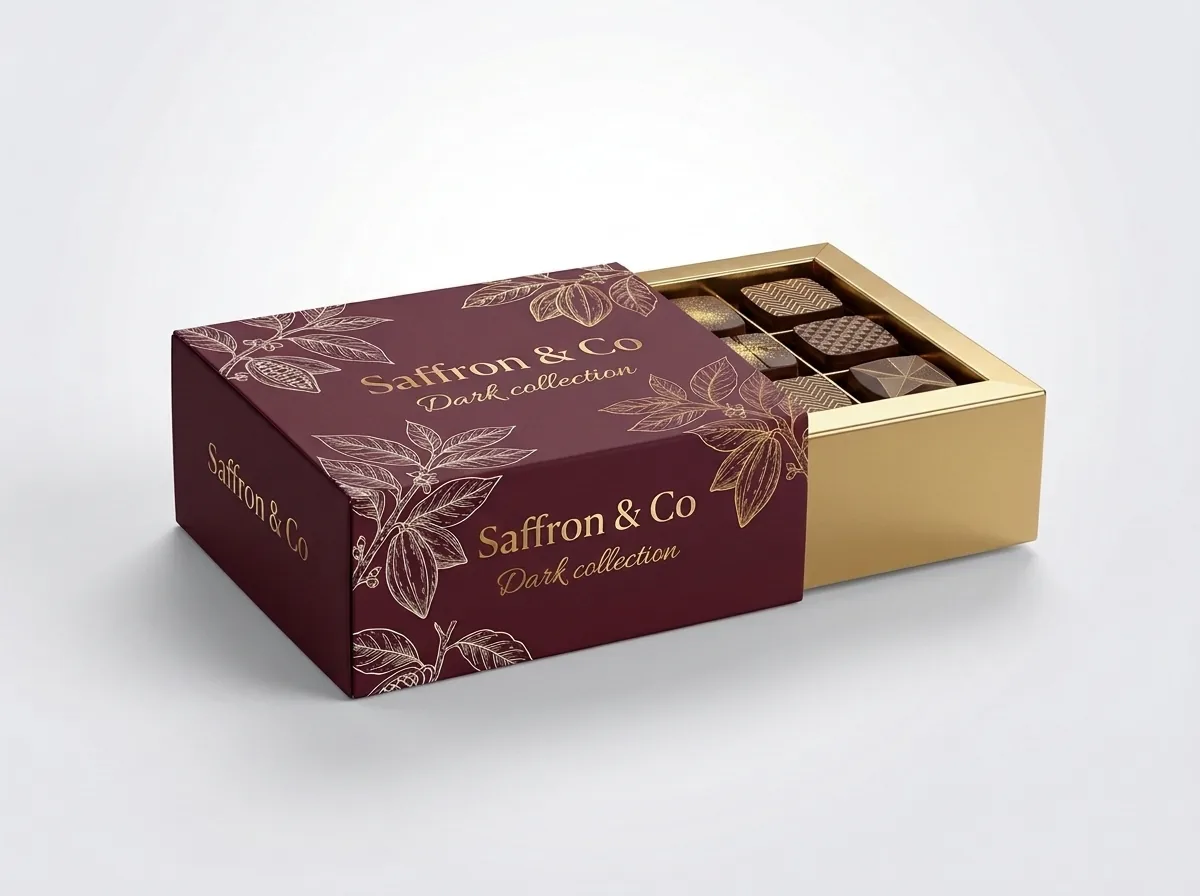
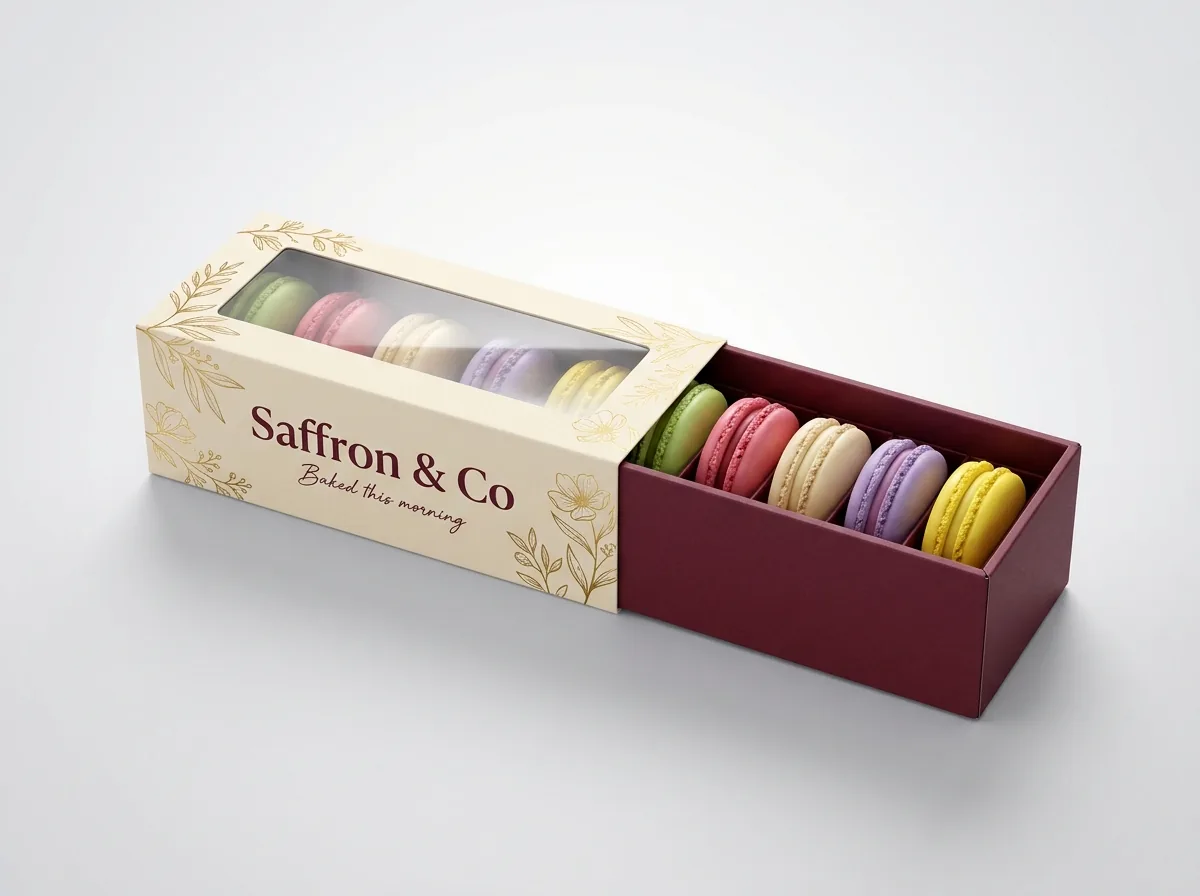
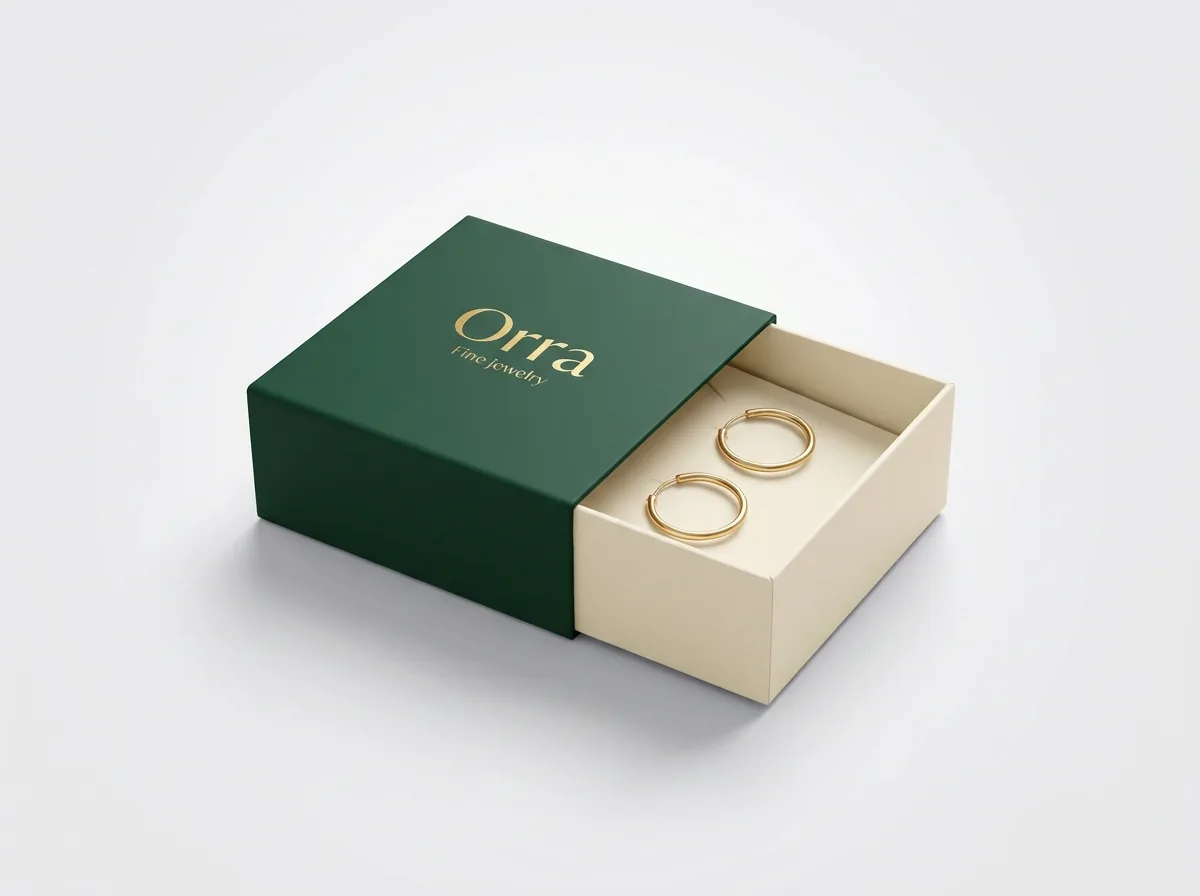
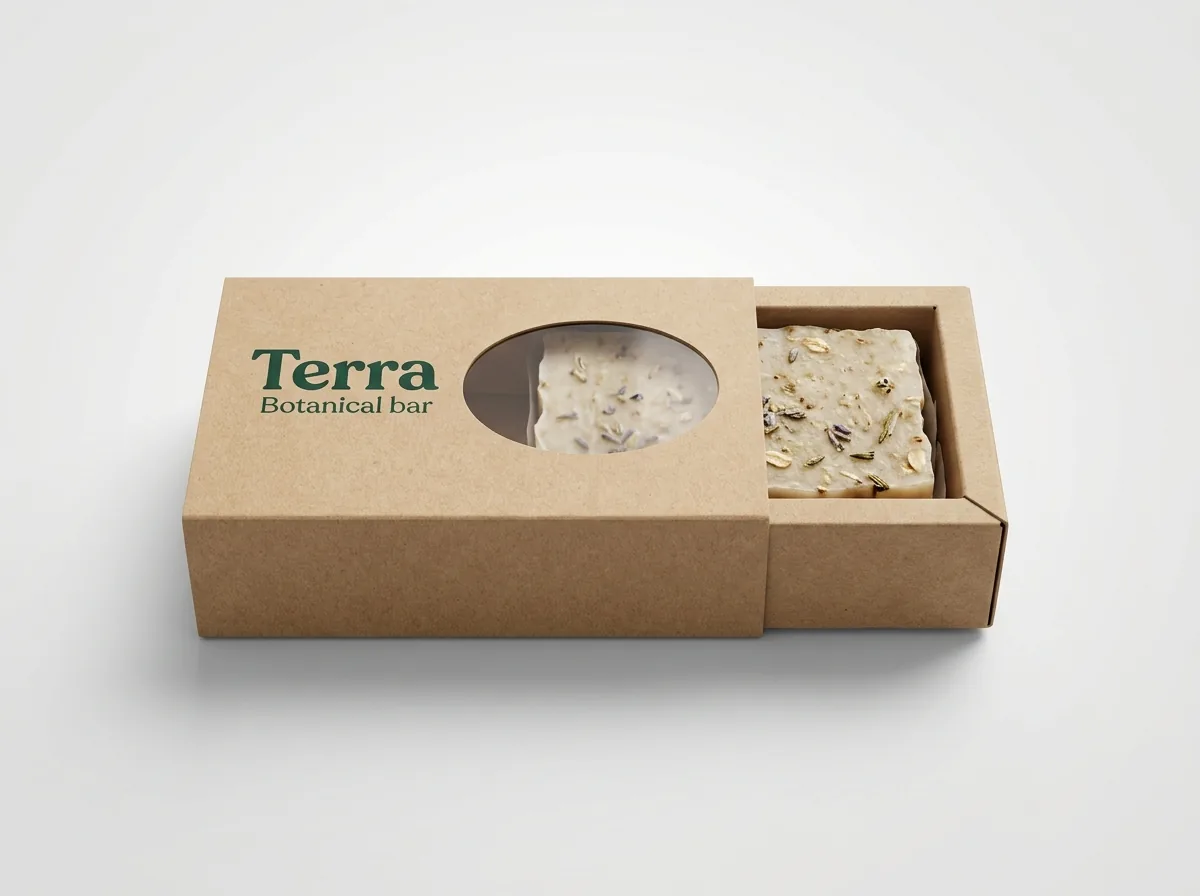
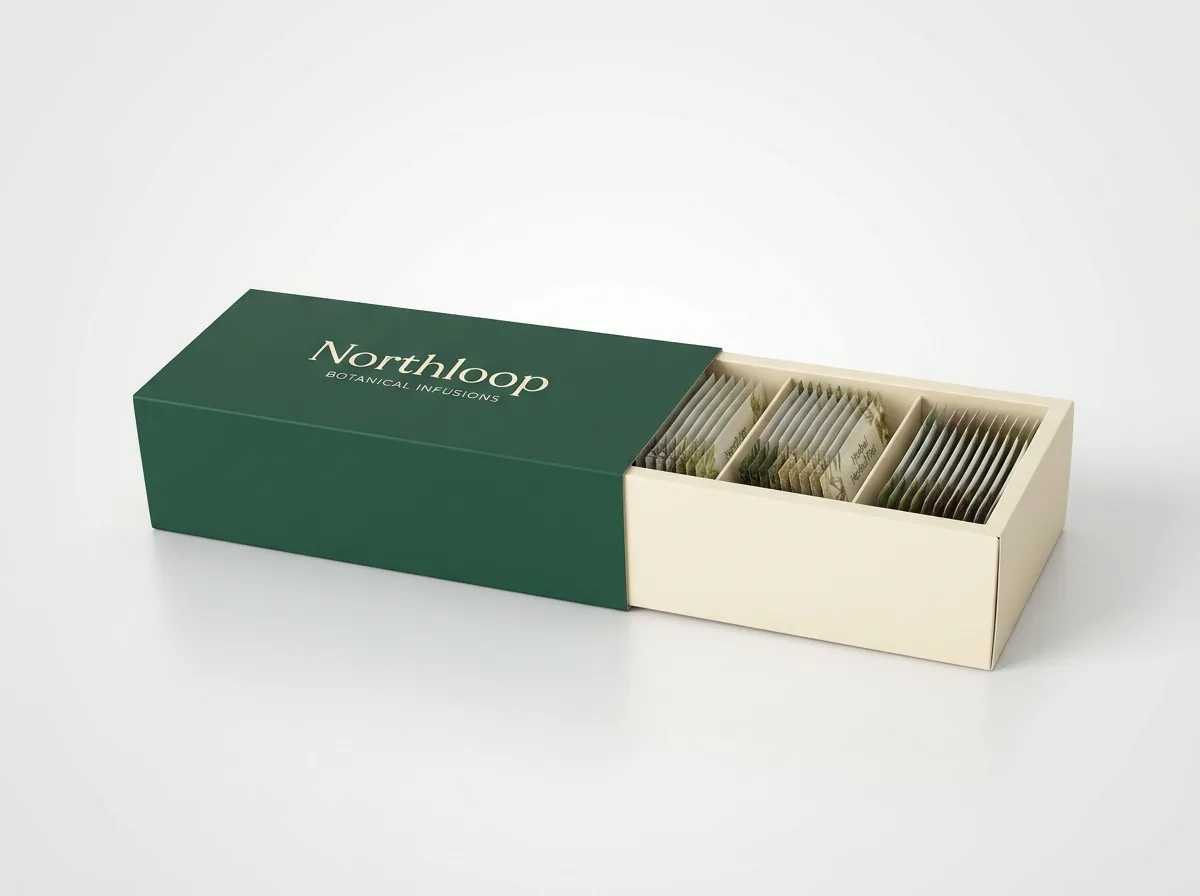
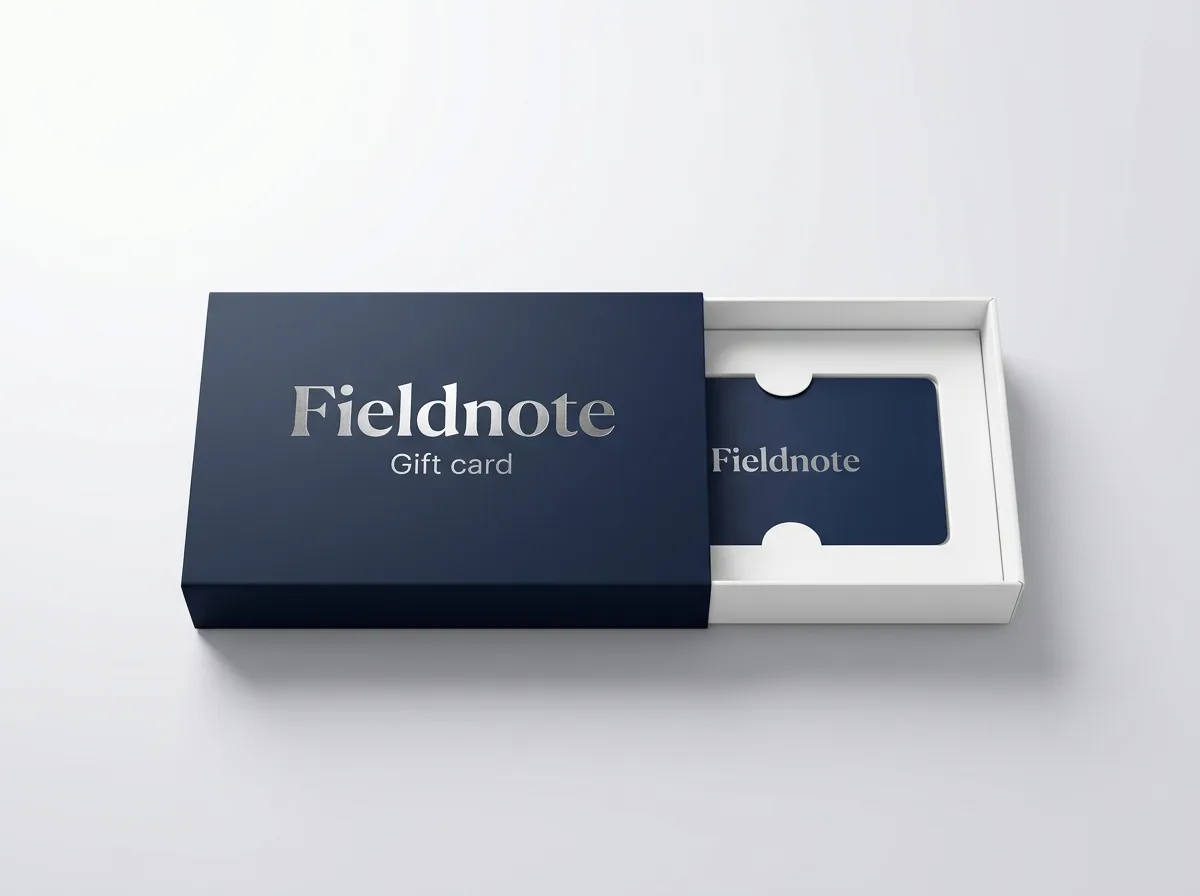
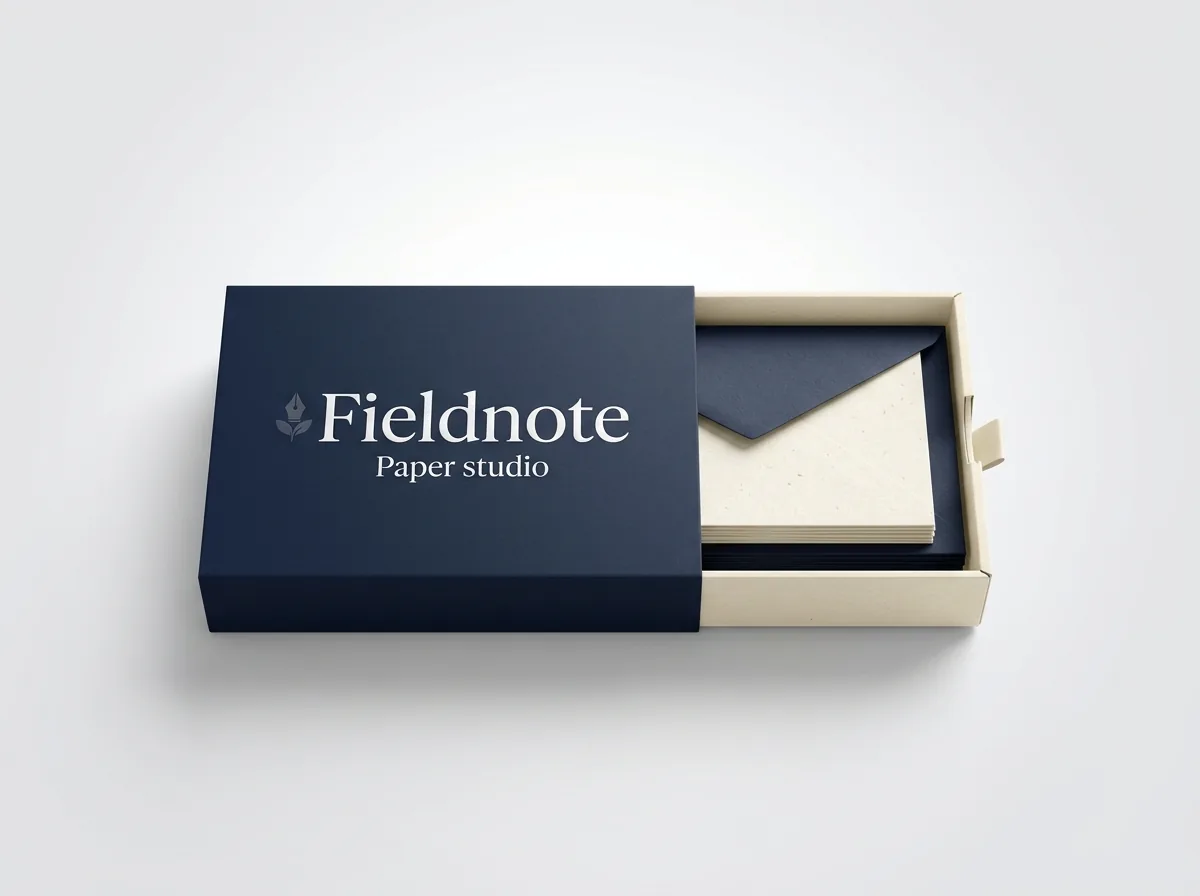
Any retail or gift item that looks best presented in a framed open tray as the outer sleeve slides back. Explore each product page for sizes and ideas.

What are tray and sleeve boxes made of?
Most tray and sleeve boxes pair a smooth white card or natural brown kraft outer sleeve with a matching or contrasting paperboard inner tray, while heavier multi-jar sets step up to E-flute corrugated board.
Which finishes work on a tray and sleeve box?
What can I add to a tray and sleeve box?
Tray and sleeve box specifications
| Spec | Options |
|---|---|
| Construction | Two-piece folding carton: four-panel glued tubular outer sleeve + open-top rolled double-wall paperboard inner tray |
| Board | White card / paperboard, natural brown kraft board, thin E-flute corrugated, recycled |
| Board thickness | Card (paperboard), kraft, corrugated or rigid board matched to product weight |
| Printing | Full color CMYK, Pantone, inside tray printing, two-tone sleeve + tray combinations |
| Lamination | No lamination, matte, gloss, soft-touch |
| Finishes | Foil stamping, embossing, debossing, spot UV |
| Add-ons | Top window, card divider insert, ribbon pull tab, thumb notch, custom cutout |
| Size range | Any inside tray size to order; smallest and largest |
| Quantity | From 1,000 boxes; delivered within ±5% of the order |
| Proofs | Digital proof and 3D mockup before payment; custom prototype or $50 sample kit optional |
| Turnaround | 10–14 business days; rush 4–5 days |
| How boxes ship | Free delivery to all 50 US states; packing format confirmed with your quote |
Ready to quote tray and sleeve boxes? Compare up to 3 quantities with a free 3D mockup.
Request a Quote →What goes on each panel of a tray and sleeve box?
- 1Sleeve top panel
Primary display face: center your brand logo, product name, foil crest, or a die-cut window framing the tray contents. - 2Sleeve front & back walls
Long horizontal side bands: print your flavor or scent name, net weight, and wraparound patterns. - 3Sleeve bottom panel
Flat underside of the outer sleeve: ideal spot for your UPC barcode, nutrition table, ingredients, and batch code. - 4Tray end walls (pull faces)
Visible at both open ends of the sleeve: print a contrasting accent color, monogram, or attach a ribbon pull tab. - 5Tray inside floor & inner rims
Revealed as each item is lifted out: print a hidden thank-you note, flavor map, or repeating botanical pattern.
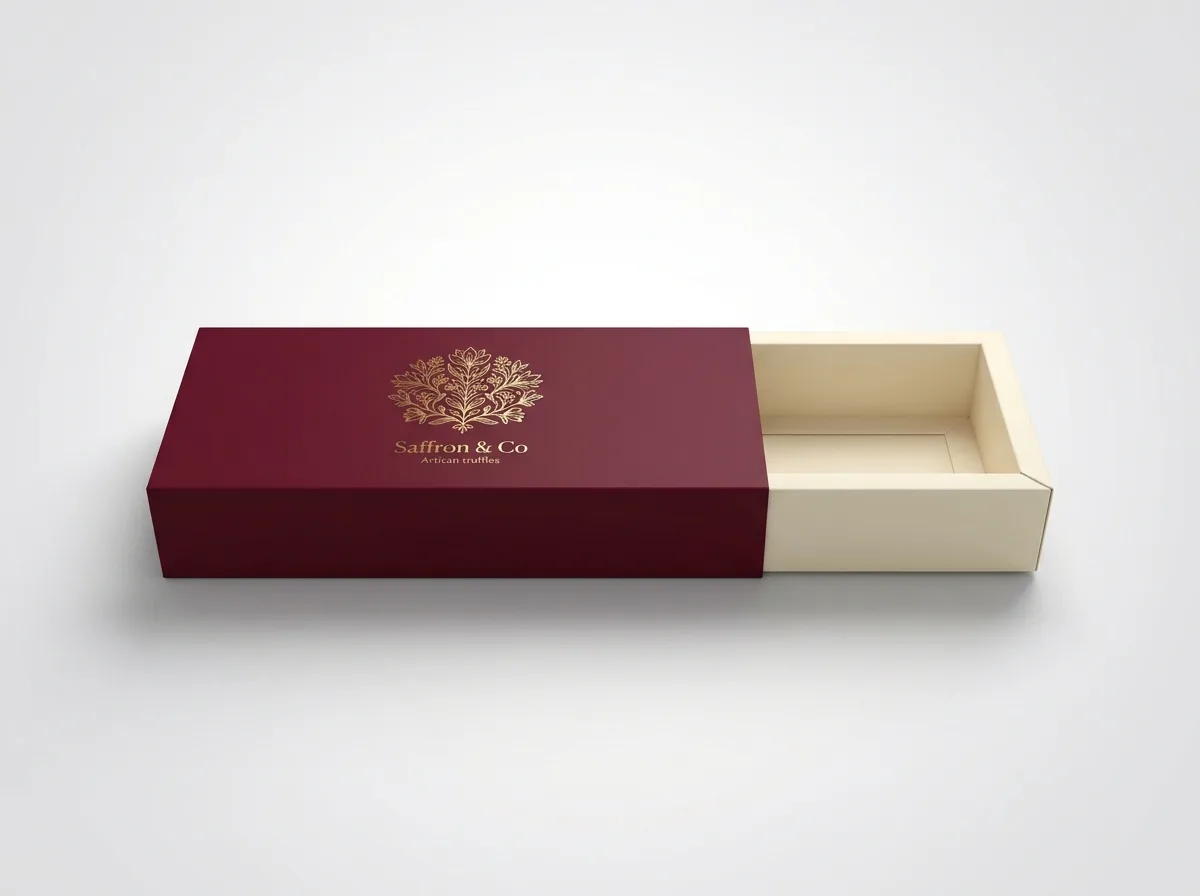
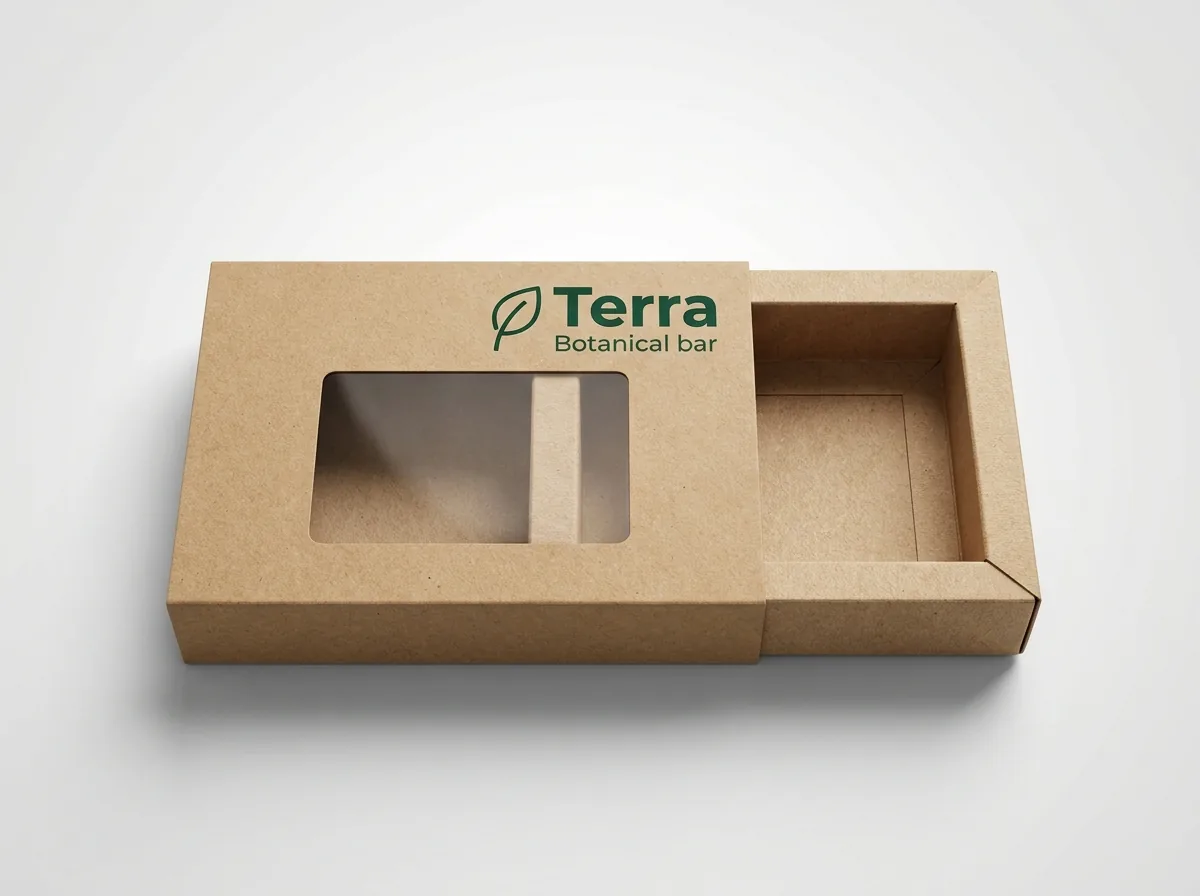
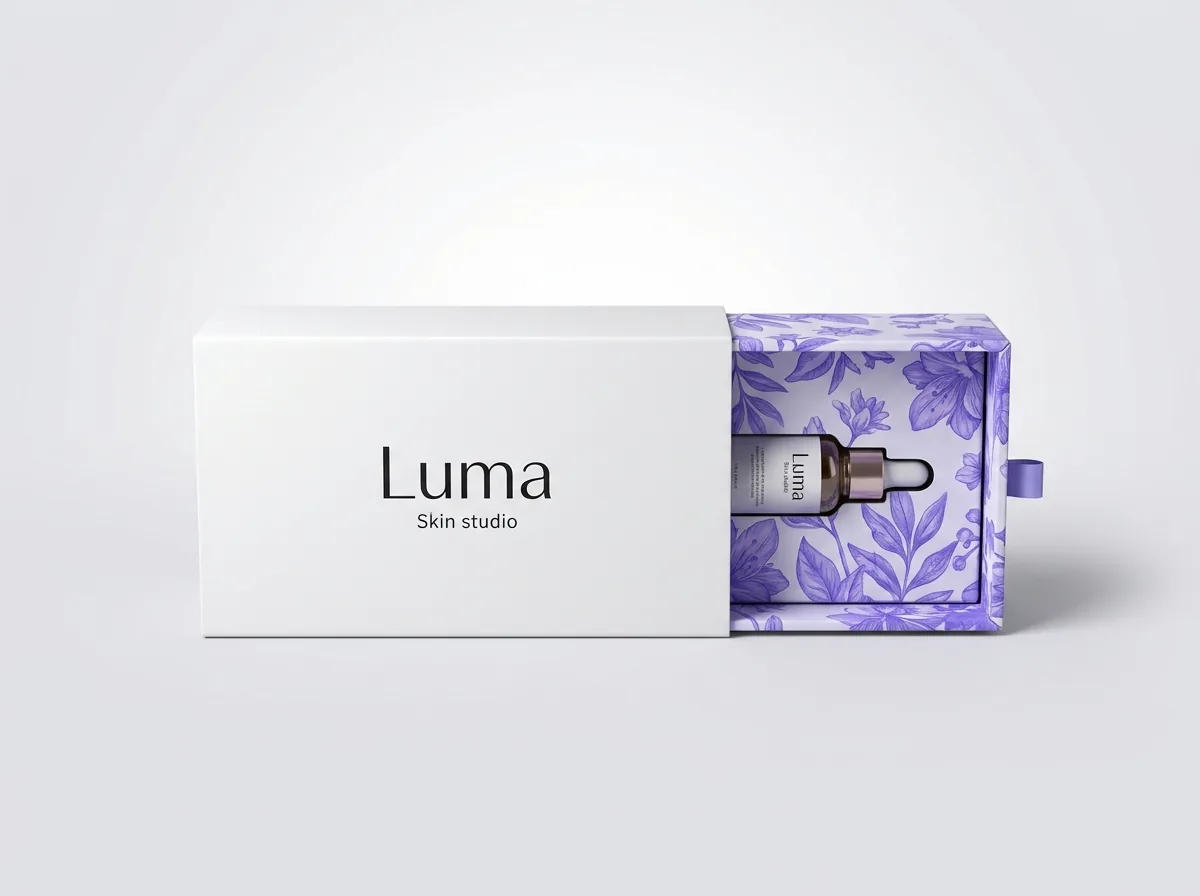
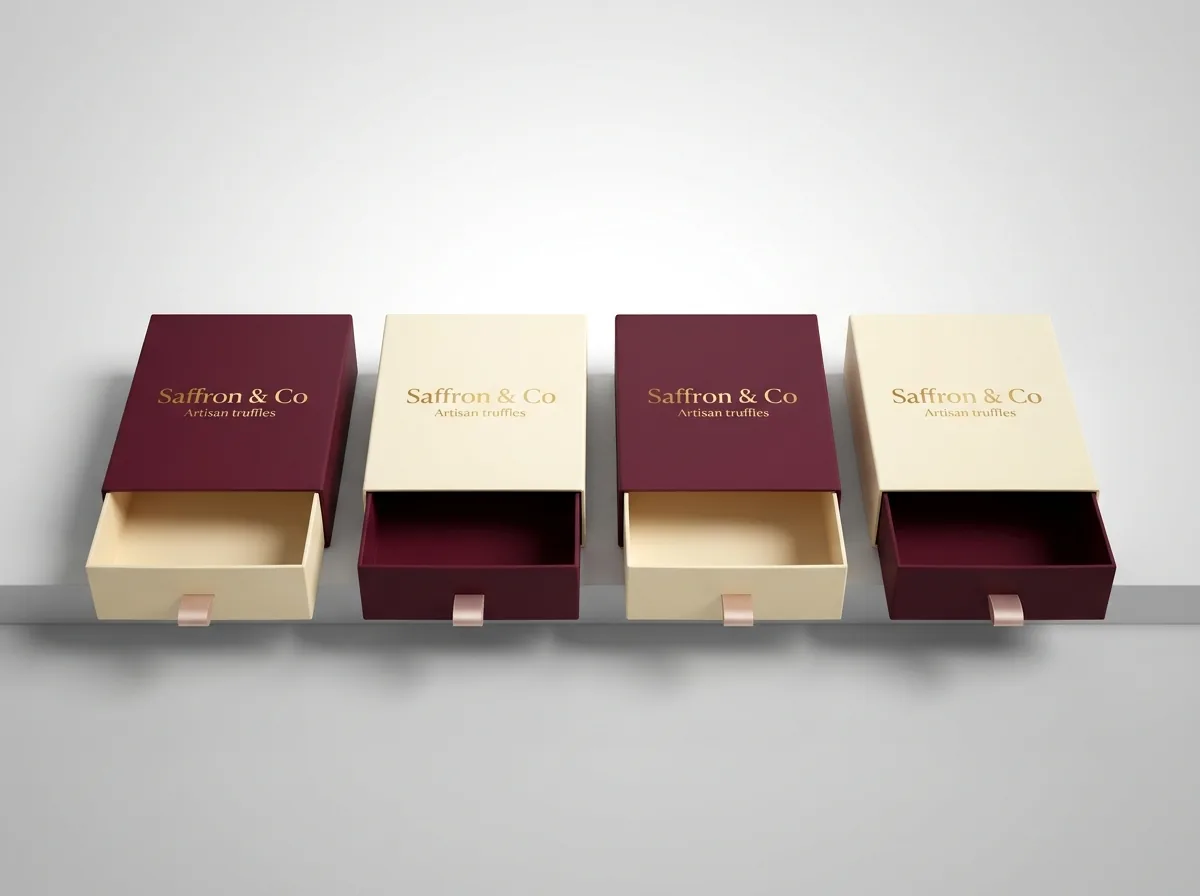
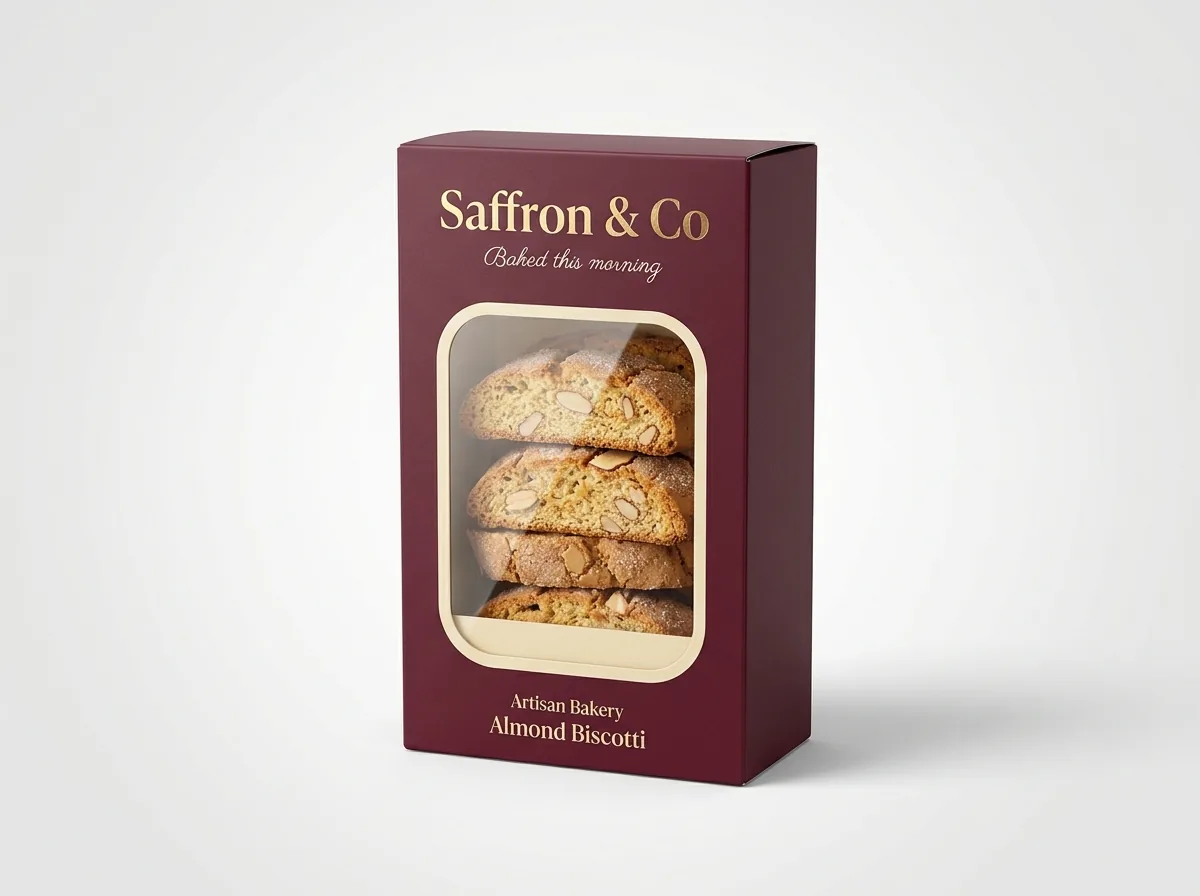
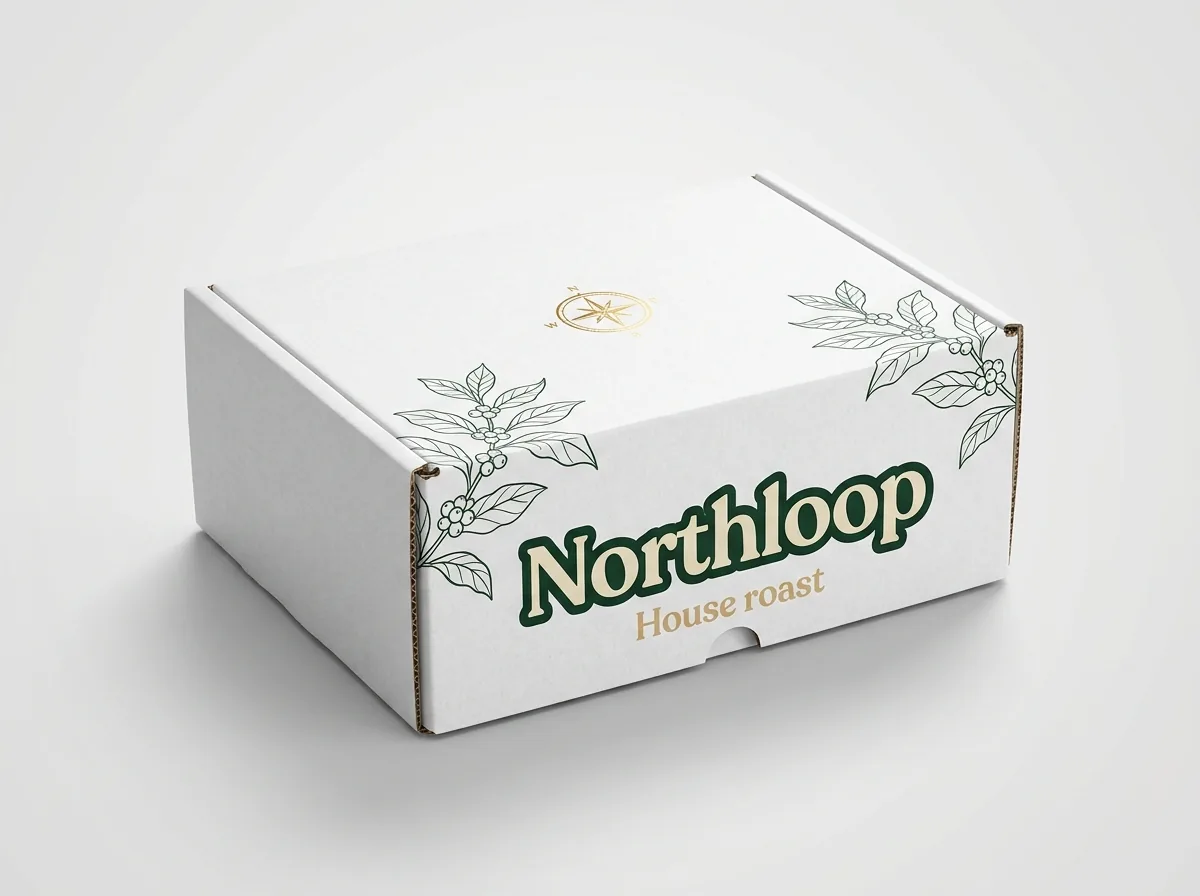
Tray and sleeve box design ideas
Example designs with made-up brands. Your box is made to your design.
What are the most common tray and sleeve box mistakes?
Most issues come from setting zero clearance between the tray and sleeve or forgetting that rolled double tray walls take up perimeter space. Watch out for these five. For buyers ordering wholesale tray and sleeve boxes, bulk custom tray and sleeve boxes, personalized tray and sleeve boxes, custom size tray and sleeve boxes, tray and sleeve boxes with outer four-panel sleeve, tray and sleeve boxes with sleeve side glue flap or tray and sleeve boxes with inner tray floor, watch out for these common sizing and artwork mistakes
- Making the outer sleeve the exact same size as the inner tray with zero glide tolerance. Without a 1.5–2.5 mm clearance, the double-wall tray binds or tears the sleeve.
- Measuring outside sleeve dimensions instead of usable inside tray cavity dimensions. Rolled double-layer tray walls consume 0.15 to 0.25 inches on each side.
- Placing raised 3D embossing on the top rim of the inner tray where it rubs against the inside of the outer sleeve during opening.
- Drawing a top sleeve window too close to the longitudinal fold lines. Keep at least 3/8 inch (9.5 mm) of solid paperboard around any window cutout so the sleeve stays square.
- Shipping loose truffles, macarons, or glass vials inside a wide tray without a cavity divider insert. Add a paperboard divider or thermoformed tray so items stay aligned under the window.
Get a tray and sleeve dieline at your size
A simplified drawing for planning your design. Your free production dieline comes with your proof, made for your exact size and board.
Chat with a designer now
Share your logo, a sketch or an AI image. We'll rebuild every element cleanly onto your box dieline and send a 3D mockup, free.
Made your design with AI?
Generated a concept in Google Gemini, ChatGPT, Claude or Midjourney? Send us your AI image: we rebuild every element onto your box dieline and show you a 3D mockup before you pay, free.Custom vs stock tray and sleeve boxes: which is better?
| Stock (plain) boxes | Custom boxes from CubitPack | |
|---|---|---|
| Branding | Plain, or a label on the front | Your logo and colors, inside and out |
| Fit | Fixed sizes | Made to your exact size |
| Minimum | Any quantity | 1,000 boxes |
| Lead time | Ships right away | 10–14 business days, rush 4–5 |
| Design | None | Free design help, proof and 3D mockup |
Get custom tray and sleeve boxes made to your exact size, with a free 3D mockup before you pay.
Request a Quote →Are tray and sleeve boxes eco-friendly?
Kraft and recycled board
Choose kraft or recycled board for a lower-impact box.FSC paper available
FSC paper and ISO 9001 production are available on request.Food-safe on request
For food, we make it in a certified partner facility. Certificates and lab tests on request.How do I order custom tray and sleeve boxes?
Tell us what you need
Size, quantities or AI conceptCompare volume pricing
Dedicated account managerApprove your proof
Digital proof + 3D mockupMade and shipped
Free to all 50 statesHow much do custom tray and sleeve boxes cost?
The price depends on four things, and every custom quote is free.
Size
Bigger packaging uses more materialQuantity
The unit price drops as you order moreMaterial
The board, film or paper you chooseFinishes
Foil, windows and lamination add costYour first order is 10% off, and we beat written quotes from US competitors for the same specs.
10% off your first order.
Request a Quote →What do I need to send for a quote?
- The product and how many you need
- The inside size, or what goes in it
- A style, or ask us to suggest one
- Your logo or artwork (an AI image is fine)
- Pantone codes, if you have them
- Delivery ZIP code and the date you need it
Can I see a sample first?
Sample kit
Board and finish swatches, sample boxes, labels and bags. Credited to your first order.Digital proof + 3D mockup
See it before you payPrinted sample
Of your own designHow do the boxes ship?
- Free shipping to all 50 states
- Worldwide with DDP prices: duties and taxes included
- Blind and split shipping
- Damaged in transit? We reprint the damaged units free
Why brands choose CubitPack
Dedicated specialist
One account manager from quote to deliveryPantone guaranteed
Clearly off? We reprintReprint or refund
If we get it wrong, you chooseBBB accredited
A US business you can checkTray and sleeve box questions
What is a tray and sleeve box?
A two-piece folding carton made of an open-top double-walled paperboard tray that slides horizontally inside a four-panel tubular outer sleeve, opening like a matchbox or drawer.
What is the difference between a tray and sleeve box and a sleeve box?
A tray and sleeve box includes both the sliding double-wall base tray and the outer sleeve. A sleeve box (or packaging belly band) is only the open-ended outer band used to wrap around an existing container or box.
How is a folding tray and sleeve box different from a rigid drawer box?
A folding tray and sleeve box is die-cut from thin paperboard or fluted card (starting at 1,000 units) and folds flat for storage. A rigid drawer box is built from thick 2 mm non-bending chipboard wrapped in paper (starting at 50 units) and ships pre-assembled in 3D.
How do you keep the inner tray from sliding out on its own?
Our packaging specialists calibrate the outer sleeve cavity with a 1.5 to 2.5 mm friction tolerance over the rolled double-wall tray so the drawer glides smoothly by hand while holding firm under normal handling. You can also add a closed back stop wall or a sticker seal.
Can I add a clear window on the outer sleeve and dividers in the tray?
Yes. A die-cut window (open or patched with clear film) on the top panel of the sleeve is one of the most popular options for macarons, chocolates, soaps, and cosmetics, and we can add a multi-cavity card insert inside the tray.
Can I print different colors on the sleeve and the inner tray?
Yes. Both the outer sleeve and the inner tray can be printed in full-color CMYK or Pantone on the outside and inside, making it easy to create a two-tone drawer reveal.
What is the minimum order quantity?
1,000 boxes for custom paperboard tray and sleeve boxes. If you need a smaller run of 50 to 500 slide-drawer boxes, check our custom rigid drawer boxes.
Can I order multiple flavor or scent designs in one 1,000-box run?
Yes. Select 2 designs or 3+ designs in Step 2 of the quote form and list your flavors or SKUs in the notes. Many brands share one unprinted or logo-printed inner tray across several differently printed outer sleeves.
How long does production take?
Standard turnaround is 10–14 business days after you approve your digital proof and complete payment. Rush production in 4–5 business days is available at an extra cost quoted per order.
How are tray and sleeve boxes delivered?
Your account manager confirms packing details with your written quote.
Still have a question? Ask a packaging specialist.
Request a Quote →Parts of a tray and sleeve box
- Tubular outer sleeve
- The four-panel paperboard cover glued along one long seam and open at the ends so the tray slides inside
- Rolled double-wall tray
- An inner tray whose four walls fold up and roll 180 degrees over corner flaps to lock into the floor without glue
- Glide clearance (tolerance)
- The 1.5–2.5 mm size offset between the outside of the assembled tray and the inside of the sleeve
- Thumb notch
- A small half-moon cutout on the end edge of the sleeve that lets fingers grip the inner tray easily
- Tray locking tabs
- Short tabs at the bottom of the rolled inner tray walls that click into slots in the tray floor
- Cavity divider
- A slotted or folded paperboard insert inside the tray that separates individual truffles, macarons, or bottles
Other box styles
Learn more about tray and sleeve boxes
Get your tray and sleeve boxes price
One dedicated account manager prepares pricing across up to 3 quantities.
- Free design & AI-to-print studio + 3D mockup
- No die or plate charges · 4–5 day rush available
- Free shipping to all 50 states
- 10% off your first order
- Reprint or refund if we get it wrong
The two-piece tray and sleeve (ECMA E-series / FEFCO 0500) construction, rolled double-wall tray mechanics, and 1.5–2.5 mm sleeve glide clearances were verified against European Carton Makers Association standards, FEFCO definitions, and Paperboard Packaging Council guidelines. The dieline is generated directly from the style geometry, and a packaging specialist checked every specification against CubitPack offerings. Spot something wrong? Tell us and we fix it. Tell us if something looks wrong.
Sources
- Two-piece tubular sleeve + rolled double-wall tray geometry and interior Length × Width × Height conventions.
- Double-wall tray caliper buildup, 1.5–2.5 mm sleeve-to-tray glide clearance, and friction-zone finish rules.
- Slide-type box definitions where an inner tray slides inside an open-ended outer sleeve.
What changed
- October 24, 2026: Published with verified two-piece slide carton construction facts, interactive tray-sleeve dieline, 15 studio images, and three supporting guides.