
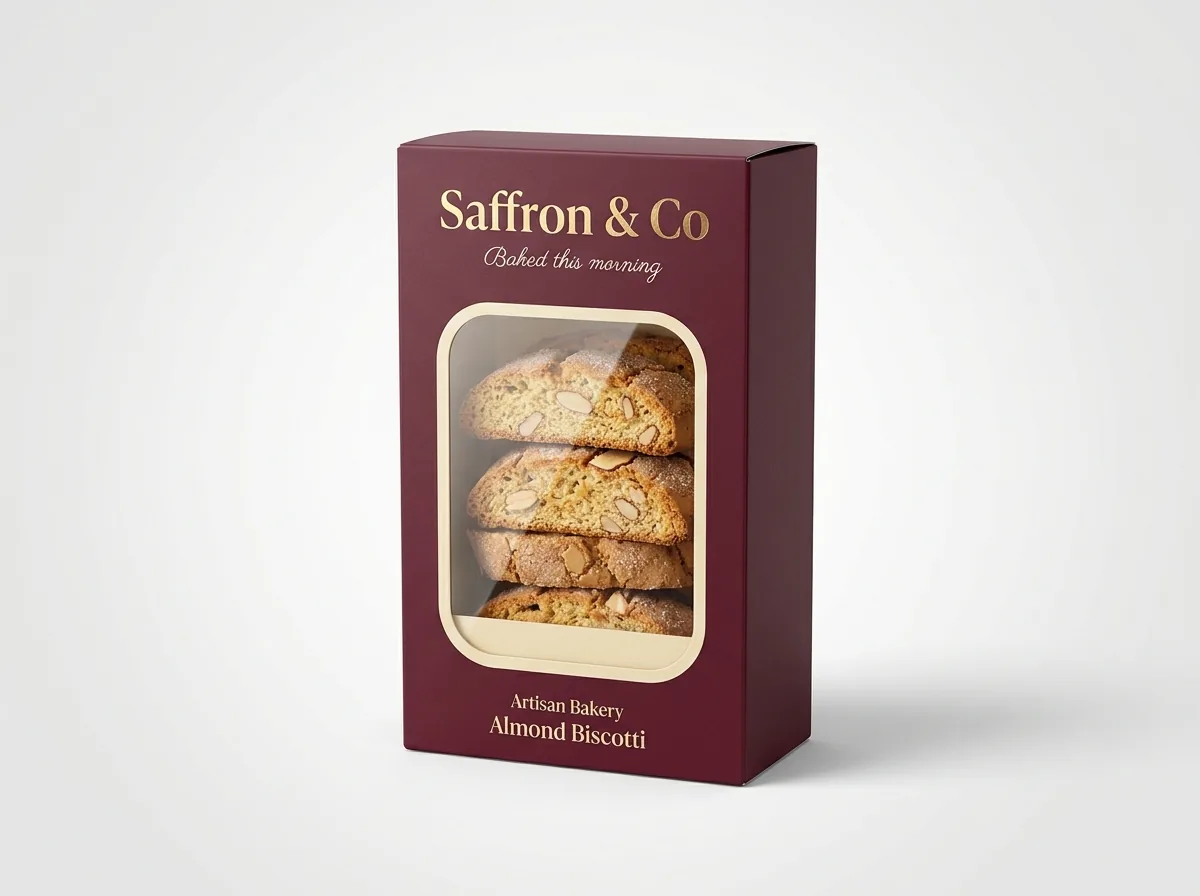
- Custom die-cut window in any shape: rectangle, arch, oval, circle, panoramic corner wrap, or brand silhouette.
- Choose crystal-clear PET film patching for dust protection or a plastic-free open cutout for scent and touch.
- CubitPack makes them from 1,000 boxes in 10–14 business days, with 4–5 day rush available.
- Free design help, no die or plate charges, free US shipping, and a digital proof plus 3D mockup before payment.
Custom Window Boxes
Custom window boxes are folding cartons or corrugated boxes die-cut with a custom display opening on the front, top, or corner panel so shoppers see your real product before opening the package. Choose a food-safe clear PET film patch to seal out dust and moisture, or an open cutout so customers can smell soaps and candles directly. Order from 1,000 boxes in 10–14 business days with free US shipping.
What is a window box?
Custom window boxes are folding cartons or corrugated boxes engineered with a die-cut display aperture on one or more panels so shoppers can inspect the color, frosting, texture, and craftsmanship of the product inside without opening the package. During production, the flat printed sheet is die-cut by a steel-rule cutting die to punch out the exact window shape, such as a rectangle, arch, circle, oval, leaf, or two-sided corner wrap. If the product requires dust, hygiene, or moisture protection, the flat blank passes through a high-speed window-patching machine that applies a narrow track of adhesive around the inside perimeter of the cutout and bonds a crystal-clear polyester (PET) film patch before the side seam is folded and glued. Window openings can be built into straight tuck end, reverse tuck end, auto-lock bottom, tray and sleeve, or bakery cartons.
How a window box is built
A window box pairs a standard folding carton base with a precision die-cut display frame and an optional clear film liner bonded to the inside wall: Whether your team calls them custom boxes with window, die cut window boxes, clear window packaging boxes, bakery window boxes wholesale, custom printed window boxes, window boxes with logo or printed window boxes, every sheet is cut to your exact inside dimensions.
- 1Die-cut window aperture
Punched cleanly by a steel-rule cutting die during flatbed die-cutting. Can sit on a single front or top panel, or crease around a 90-degree vertical score line to create a two-sided panoramic corner window. - 2Structural frame margin (minimum 3/8 in)
At least 3/8 inch (9.5 mm) of solid paperboard surrounds all four sides of the window cutout so the carton walls keep their vertical column strength and never buckle when the top and bottom flaps fold. - 3Clear PET film patch (or open cutout)
For film-patched boxes, a 0.10 to 0.20 mm crystal-clear PET film sheet is cut slightly larger than the opening (with a 1/4 to 3/8 inch overhang) and glued to the inside wall before the carton is side-seam glued. - 4Base carton closure (STE, RTE, ALB, or Sleeve)
Choose a straight or reverse tuck end base for light retail items under 12 oz, an auto-lock bottom for heavier candle jars and bottles up to 3–5 lb, or a lock-corner bakery tray for pastries and cakes. - 5Interior framing insert (optional)
A die-cut paperboard cradle, fluted partition, or thermoformed tray holds bottles, cosmetics, toys, or baked goods centered squarely behind the window opening so nothing shifts out of view in transit.
Window box facts
- Style code
- ECMA A20.20 / FEFCO 0215 + Aperture
- Window options
- Clear PET film patch or open die-cut cutout
- Base structures
- STE, RTE, Auto-lock bottom, Tray & sleeve, Bakery
- Minimum
- 1,000 boxes
- Turnaround
- 10–14 business days (4–5 day rush)
- Board options
- White card, Kraft, Corrugated, Recycled
- Window shapes
- Rectangle, arch, circle, oval, panoramic, custom
- Arrives
- Flat (pre-glued & film-patched)
- Size range
- Any inside L × W × H to order
Window boxes vs solid straight tuck end vs auto-lock bottom boxes
| Window | Straight tuck end | Auto lock bottom | |
|---|---|---|---|
| Product visibility | High: shoppers see the real product through a front, top, or corner cutout | Closed: product stays hidden inside six solid paperboard panels | Closed by default (or add a front window to an auto-lock bottom base) |
| Dust & hygiene barrier | Sealed barrier when patched with clear PET film (or open cutout for scent) | Full 6-sided paperboard enclosure; blocks light and dust | Full enclosure with a pre-glued crash-lock bottom for heavy items |
| Bottom weight support | Matches the base style you choose (tuck end for light items, auto-lock for heavy) | Tuck bottom for light to medium retail items under 12–16 oz | Pre-glued interlocking bottom holds heavy jars, candles, and bottles up to 3–5 lb |
| Front print billboard | Framed border around the window; product itself acts as the hero visual | Full uninterrupted front panel for large typography, foil, and illustrations | Full front panel (or framed around an optional front window) |
| Minimum order | From 1,000 boxes | From 1,000 boxes | From 1,000 boxes |
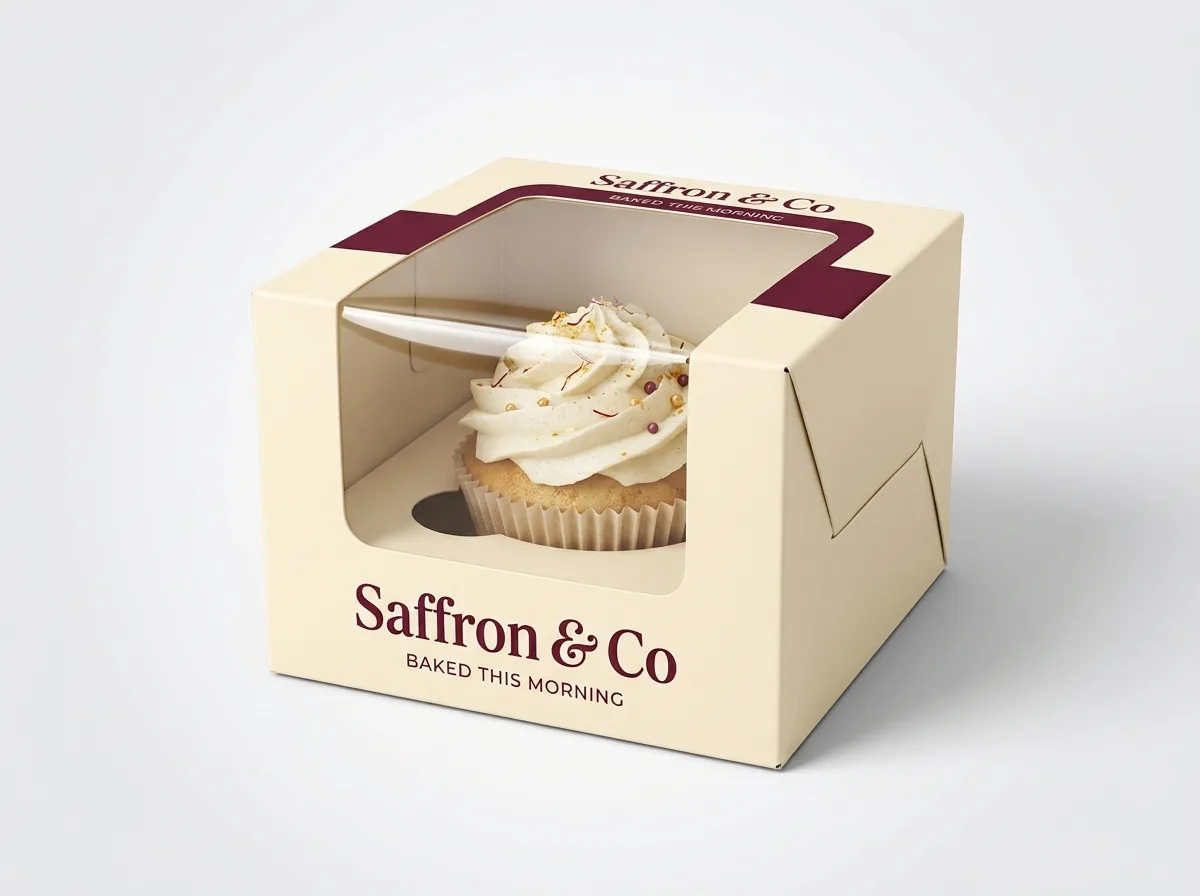
| Often used for | Pastries, soaps, toys, cookies, cosmetics, candy, macarons, cupcakes | Tubes, dropper bottles, supplements, electronics, blister packs | Heavy glass candle jars, sauces, honey jars, beverages, mugs |
Save this comparison
The styles on one sheet. Pin it, or share it with whoever packs your boxes.
Still deciding between styles?
Request a Quote →Is a window box right for my product?
- Your product's natural color, frostings, grain, or label design sells itself on sight
- You sell baked goods, cookies, pastries, or macarons that need a crystal-clear dust shield
- You make handmade bar soap or scented candles where an open window lets shoppers smell the scent
- You sell collectibles, dolls, or toys that benefit from a two-sided corner-wrap display window
- You offer multiple colorways or flavors and want one outer carton design that lets the SKU color show through
- Light-sensitive skincare, retinol serums, or essential oils that must block UV light: Straight tuck end boxes
- Slide-out drawer unboxing where a window sits on an outer sleeve over a double-wall tray: Tray and sleeve boxes
- Heavy glass jars over 16 oz that need a pre-glued crash-lock bottom: Auto-lock bottom boxes
- Direct-to-consumer shipping mailers that travel through parcel carriers without an outer shipper: Mailer boxes
What products use window boxes?
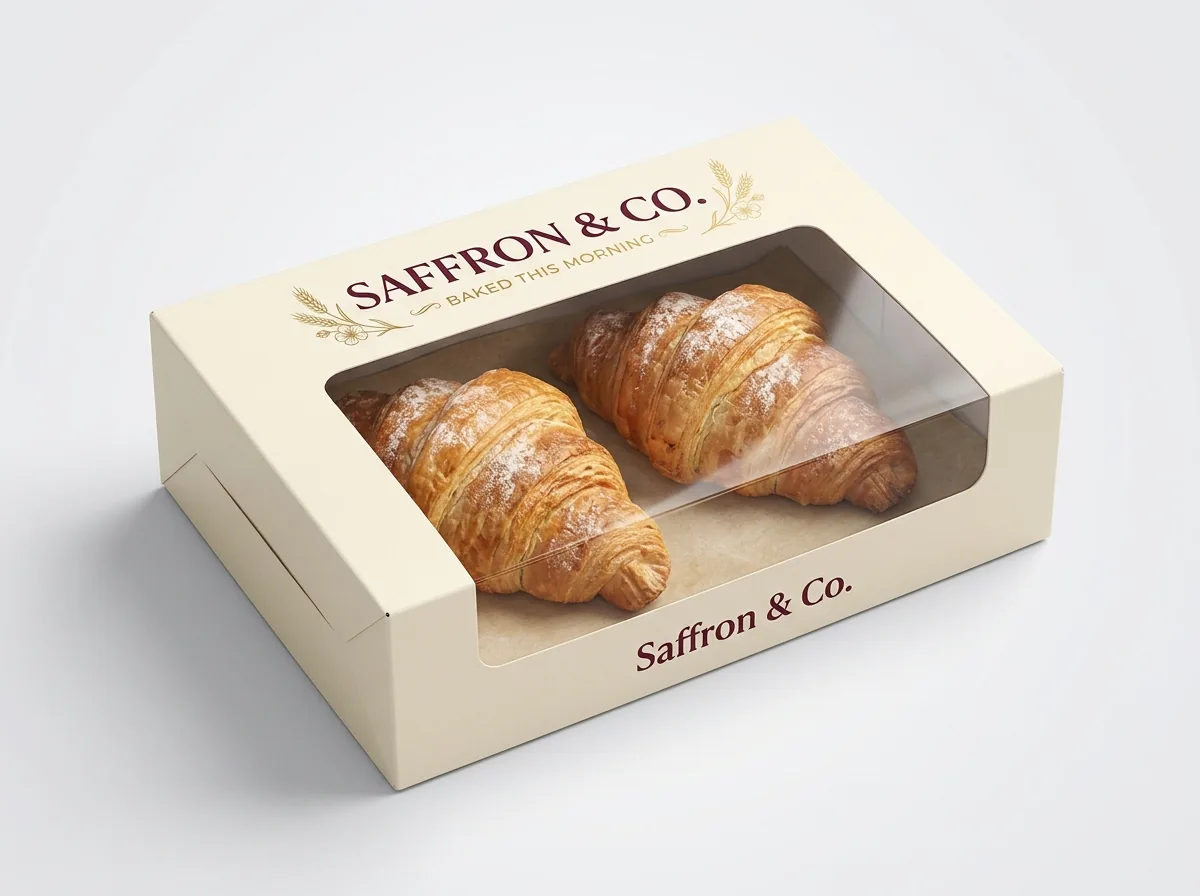
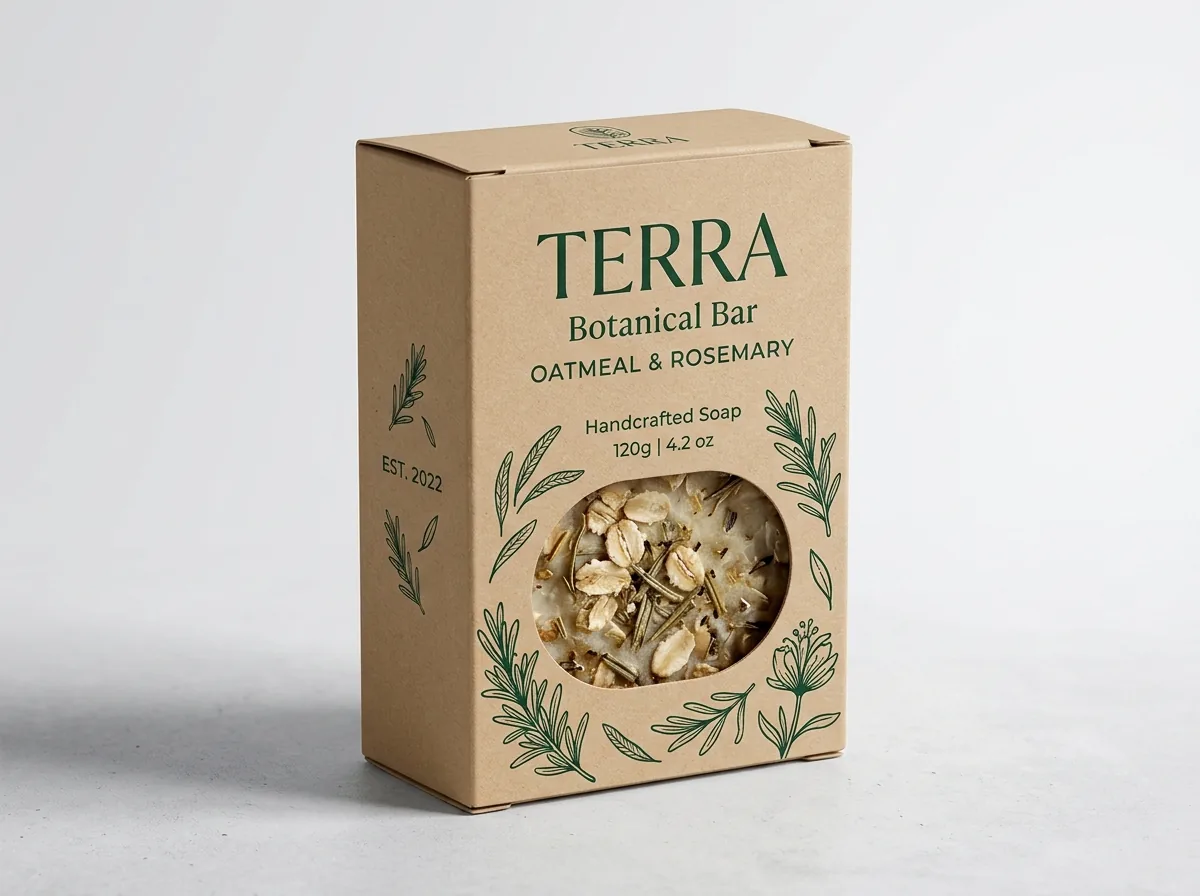
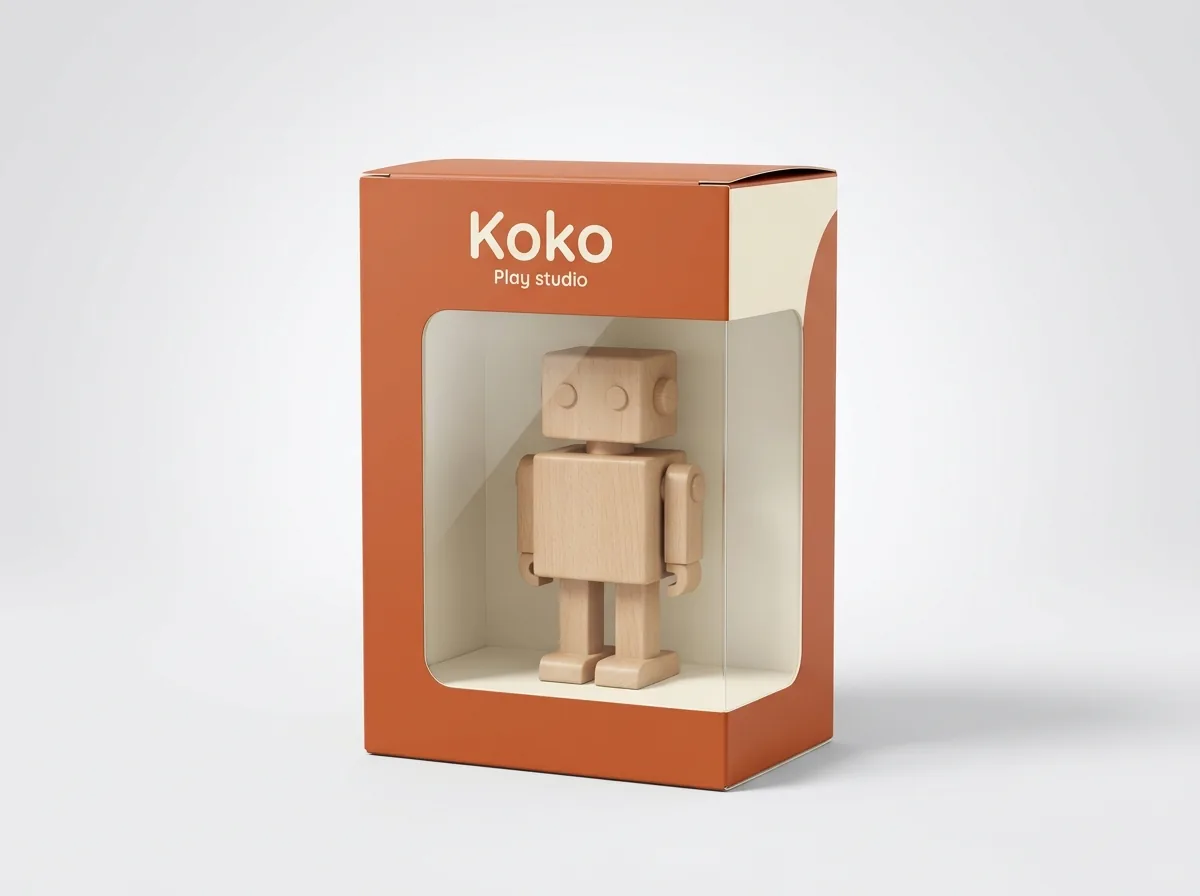
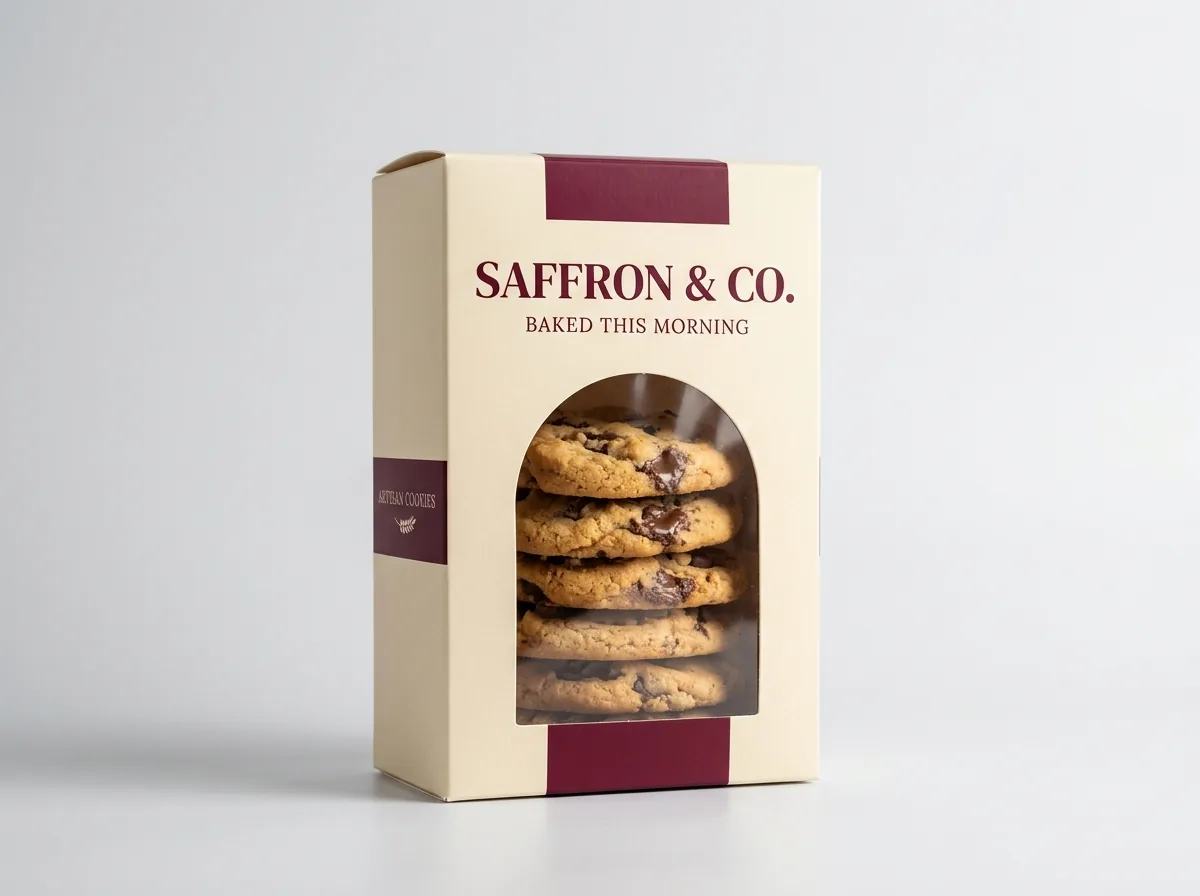
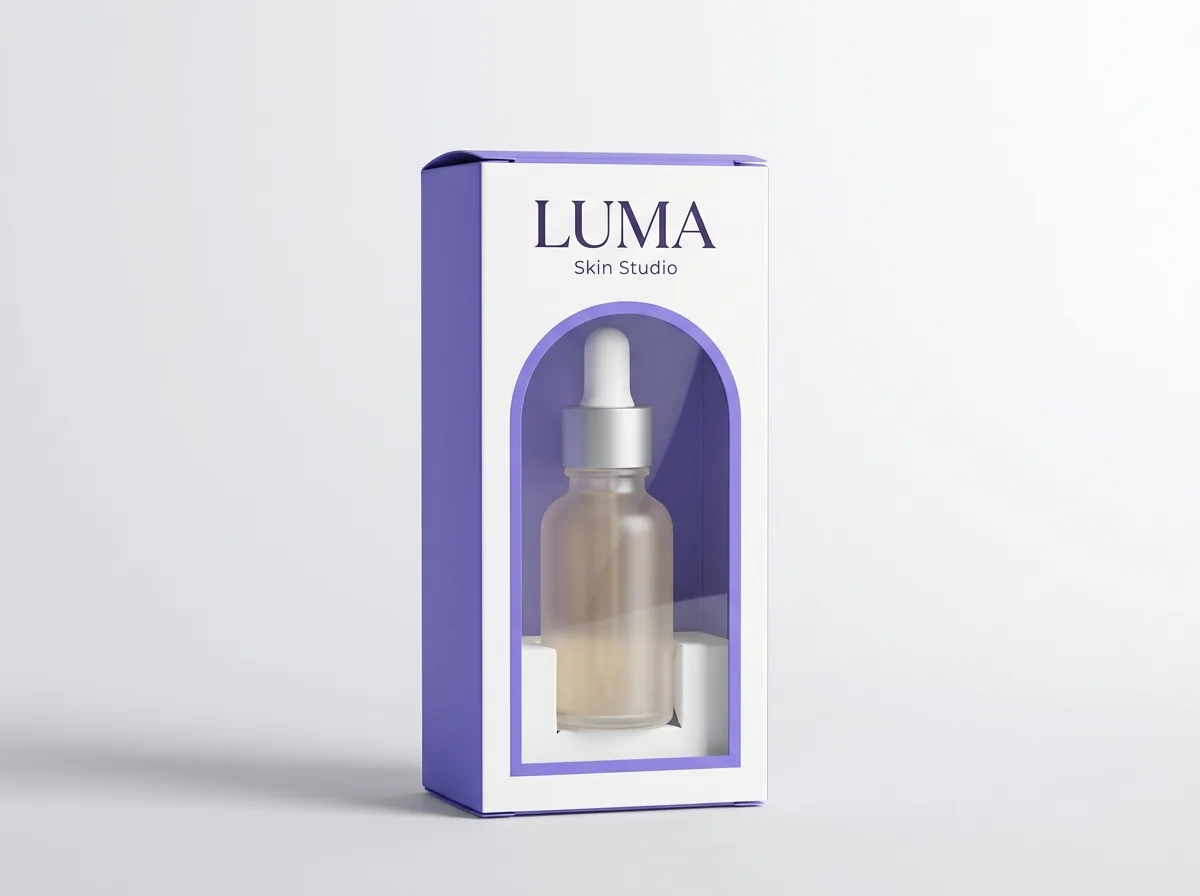
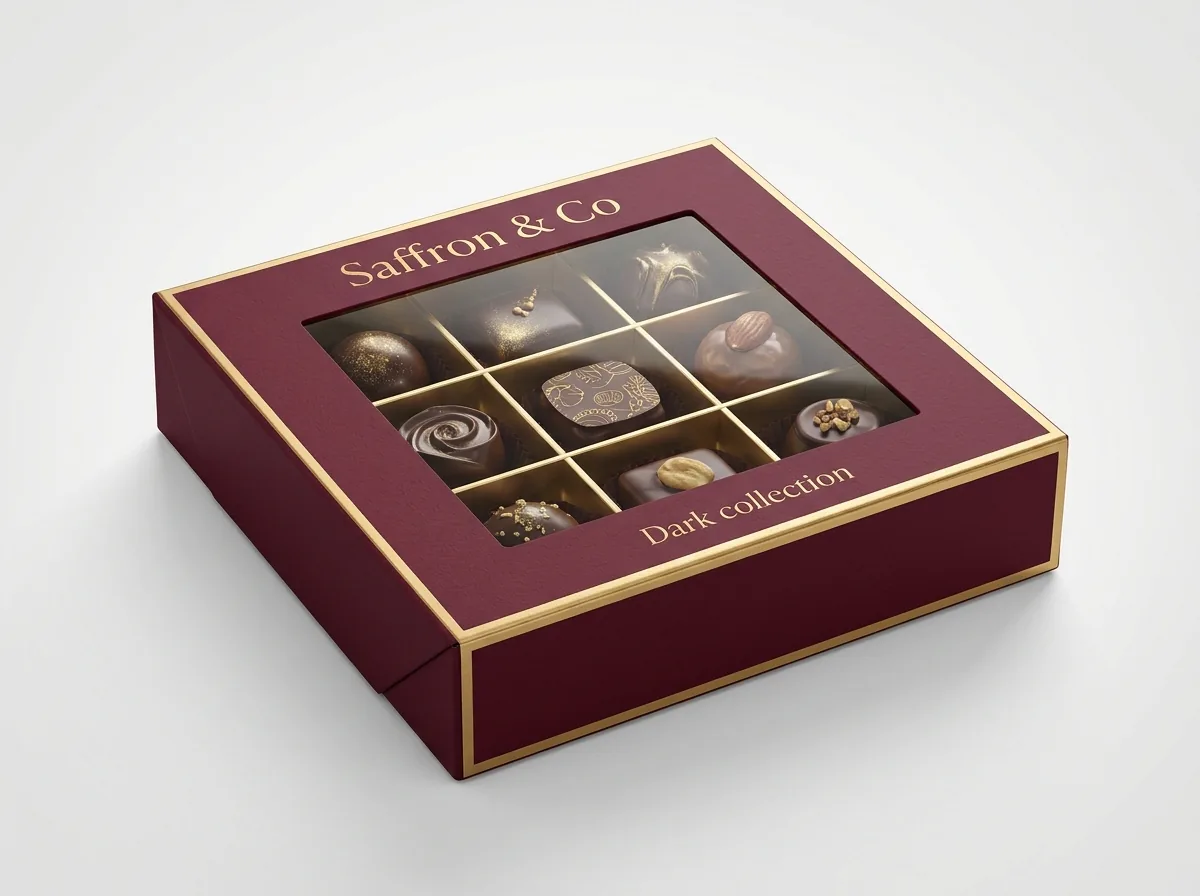
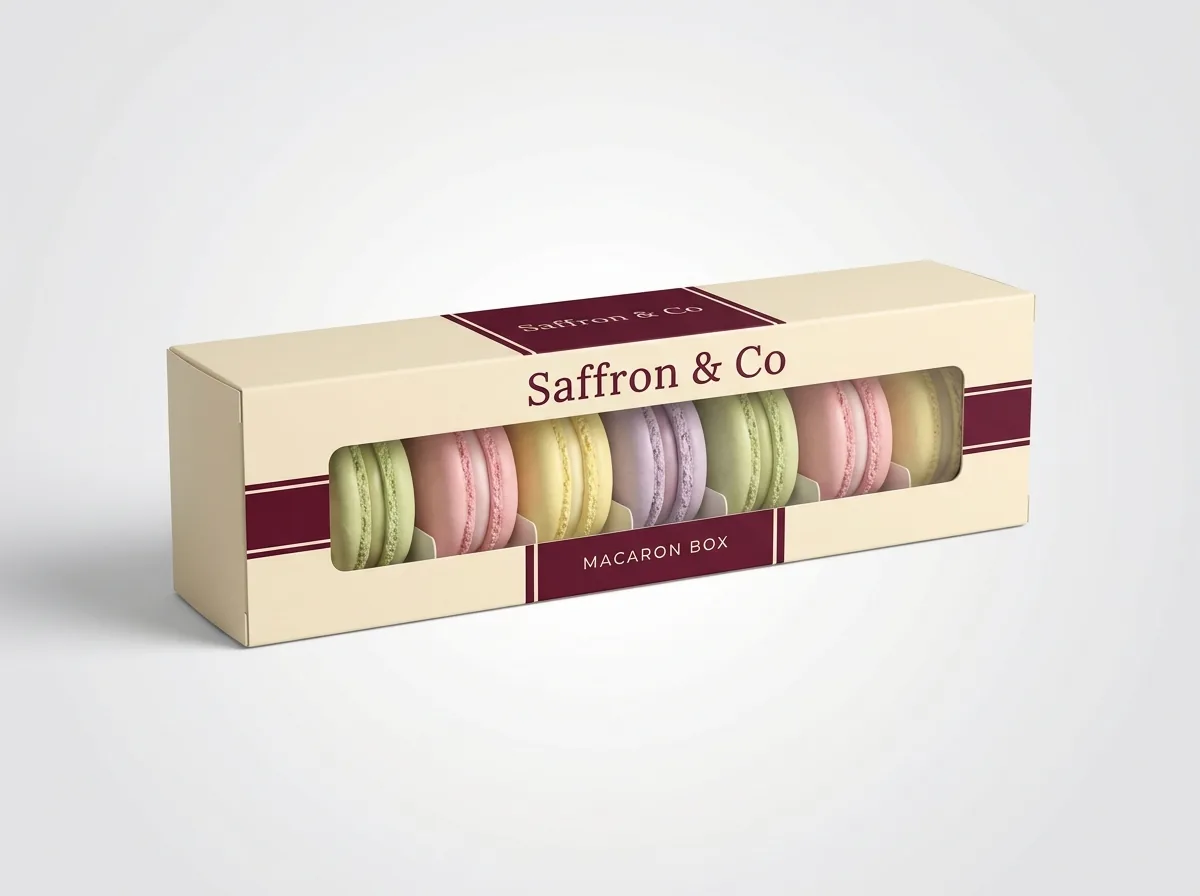
Window boxes are one of the highest-converting retail carton styles for bakery treats, handmade soaps, toys, cookies, cosmetics, candy, macarons, and pastries
What are window boxes made of?
Most retail window boxes are die-cut from smooth coated white paperboard or natural brown kraft board, while larger toy and multi-jar cartons step up to E-flute corrugated board.
Which finishes work on a window box?
What can I add to a window box?
Window box specifications
| Spec | Options |
|---|---|
| Construction | Folding carton or corrugated box with a die-cut display aperture (open cutout or inner clear PET film patch) |
| Base styles | Straight tuck end (STE), Reverse tuck end (RTE), Auto-lock bottom (ALB), Tray & sleeve, Bakery lock-corner |
| Window film | Clear food-safe PET film (0.10–0.20 mm) bonded inside the front wall, or open plastic-free cutout |
| Minimum frame margin | 0.375 in (3/8 in / 9.5 mm) from window cut edge to any score line (0.5 in for corner-wrap windows) |
| Board | White card / paperboard, natural brown kraft board, thin E-flute corrugated, recycled |
| Board thickness | Card (paperboard), kraft, corrugated or rigid board matched to product weight |
| Printing | Full color CMYK, Pantone, optional inside back-wall printing for a stage backdrop behind the product |
| Lamination | No lamination, matte, gloss, soft-touch |
| Finishes | Foil stamping, embossing, debossing, spot UV |
| Size range | Any inside box size and window shape to order; smallest and largest |
| Quantity | From 1,000 boxes; delivered within ±5% of the order |
| Turnaround | 10–14 business days; rush 4–5 days |
| How boxes ship | Flat (pre-glued and film-patched) |
Ready to quote window boxes? Compare up to 3 quantities with a free 3D mockup.
Request a Quote →What goes on each panel of a window box?
- 1Front window frame
Surrounds your die-cut opening: place your brand logo above the window, a foil keyline around the aperture, and the product name or net weight below. - 2Inside back wall & card insert
Visible directly through the front window around your product: print a contrasting color or pattern on the inside back wall or insert cradle to frame the item. - 3Left & right side panels
Solid vertical walls (or continuation of a panoramic corner window): carry ingredients, directions, brand story, and icons. - 4Back panel
Full solid panel opposite the window: holds nutrition facts, regulatory copy, company address, and your UPC barcode. - 5Inside window glue track (keep clear)
A 1/4 to 3/8 inch perimeter on the inside wall around the cutout stays unvarnished so the PET window patch adhesive bonds permanently into the board.
Window box design ideas
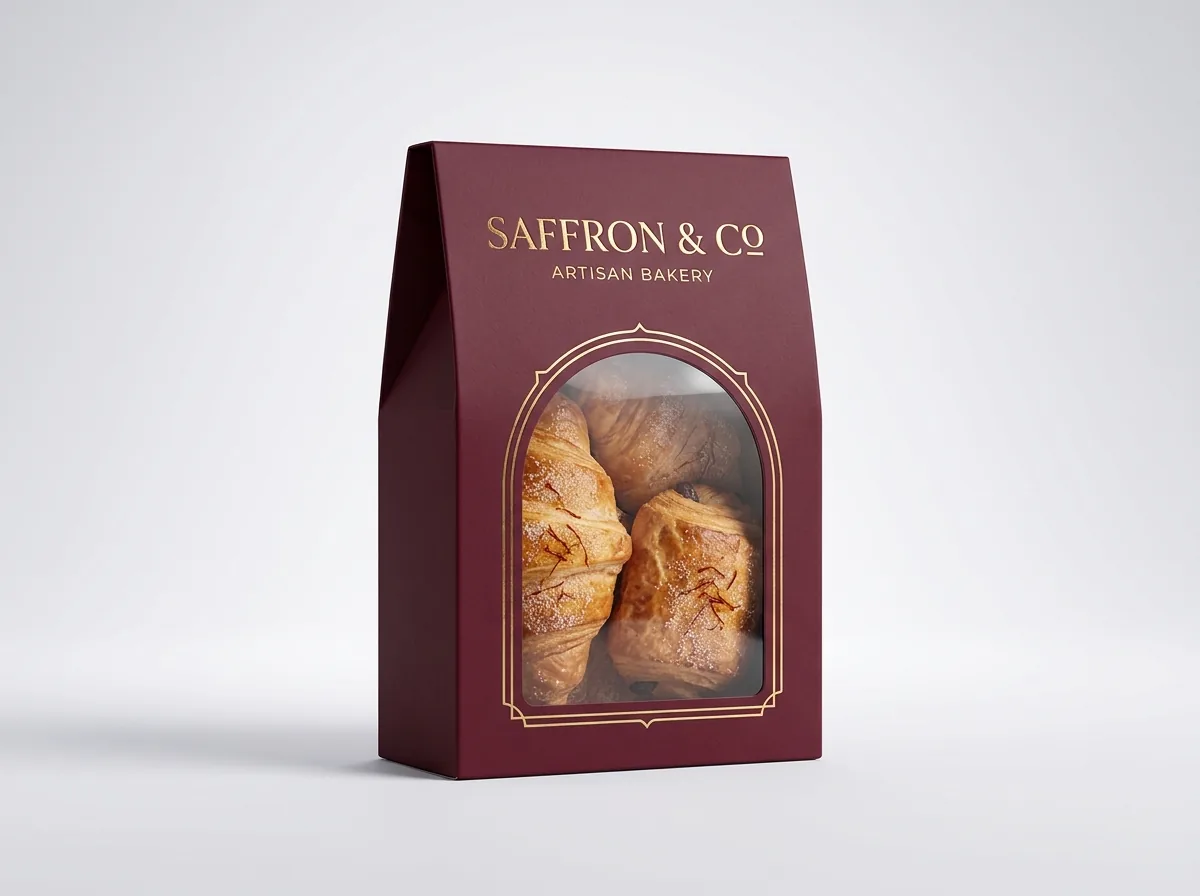
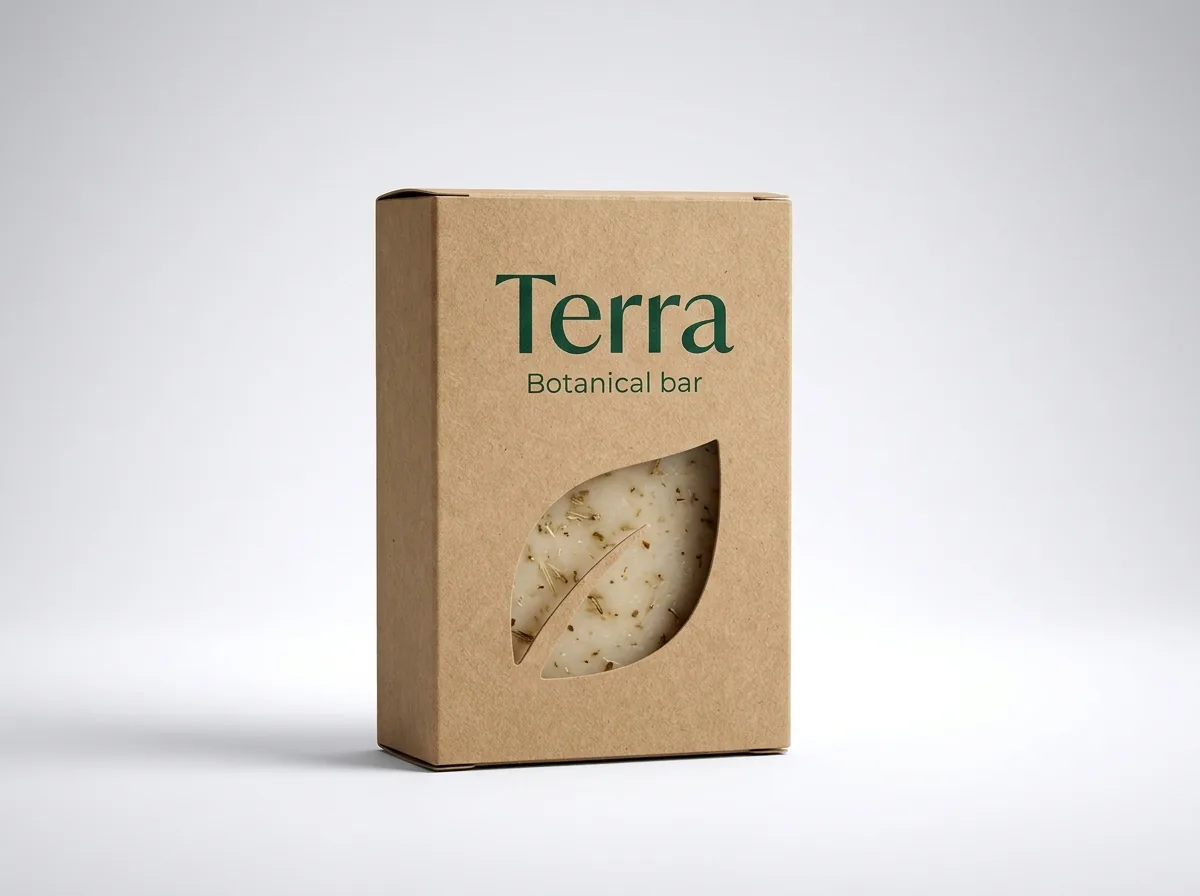
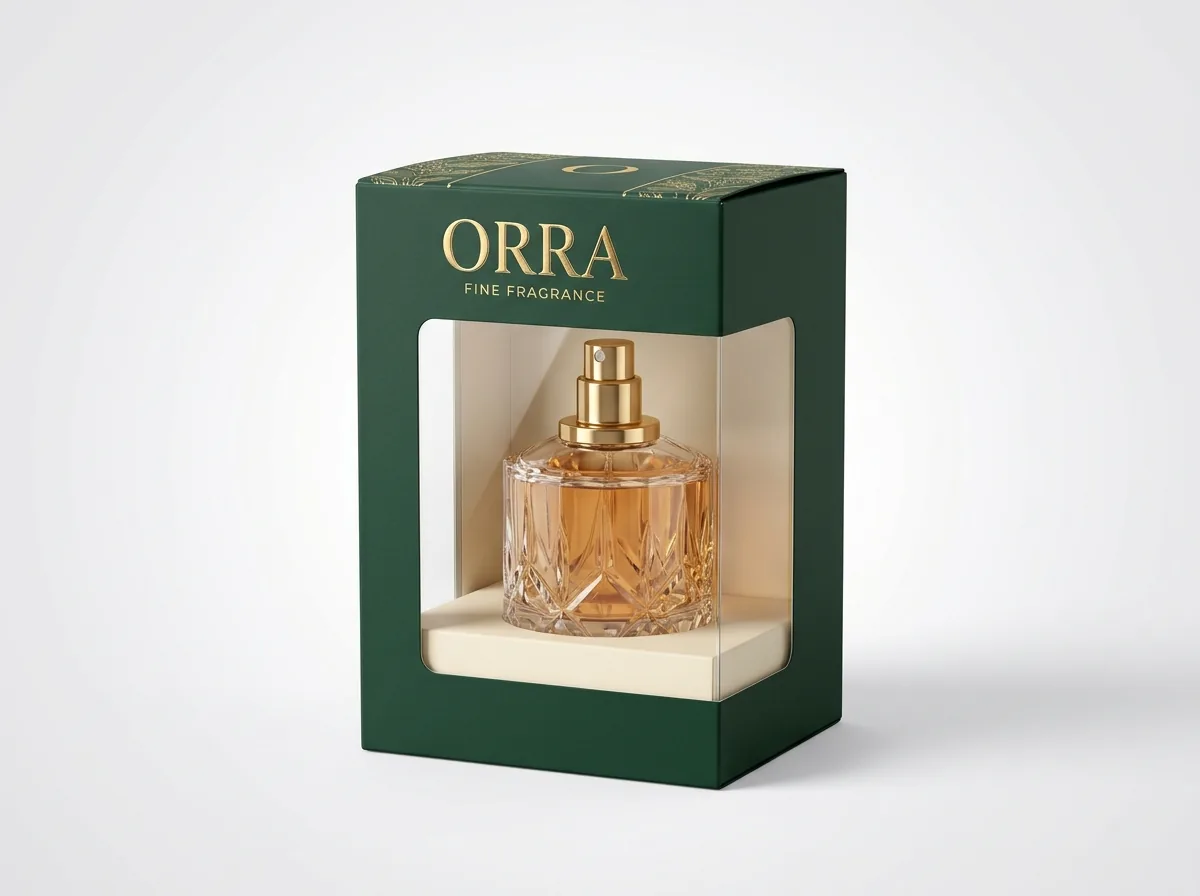
Example designs with made-up brands. Your box is made to your design.
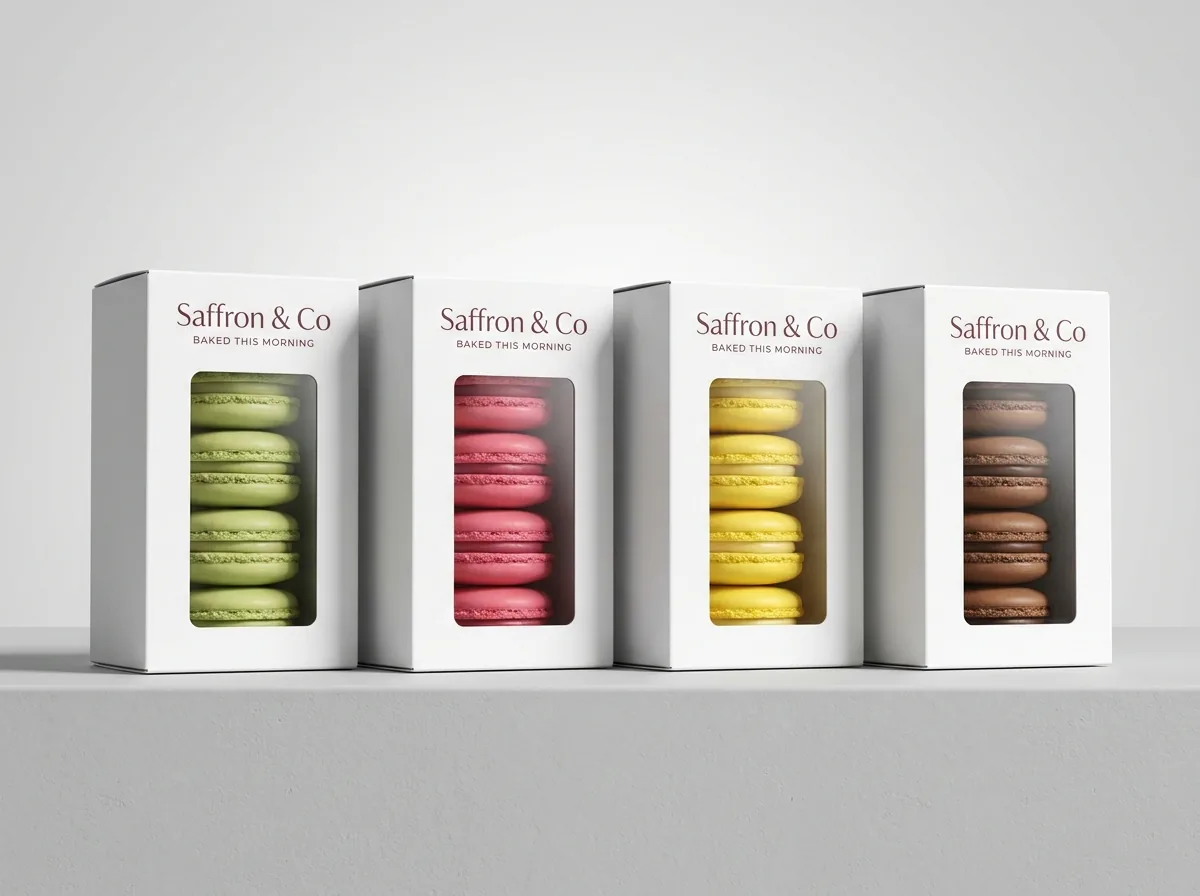
Common mistakes on window boxes (and how we prevent them)
A window cutout removes paperboard from the main load-bearing face of your carton. Our prepress checks prevent these five common structural and artwork mistakes. For buyers ordering branded window boxes, wholesale window boxes, bulk custom window boxes, personalized window boxes, custom size window boxes, window boxes with die-cut window aperture or window boxes with structural frame margin, watch out for these common sizing and artwork mistakes
- Placing a die-cut window closer than 3/8 inch (9.5 mm) to a score line. Thin paperboard bridges buckle during folding and leave no hidden margin for the PET window patch glue track.
- Using an open unpatched window for baked goods, chocolates, or dusty retail shelves where airborne dust or customer fingers can touch the product.
- Packing a small bottle or bar loosely inside a large window carton without a card insert. When the product tips to one side in transit, shoppers only see an empty box through the window.
- Choosing a wide front window for UV-sensitive skincare serums or essential oils packed in clear glass bottles without testing light stability.
- Printing dark text or placing critical logos inside the 1/4 inch zone around a window cutout where steel-rule die registration tolerances can clip the lettering.
Get a window dieline at your size
A simplified drawing for planning your design. Your free production dieline comes with your proof, made for your exact size and board.
Chat with a designer now
Share your logo, a sketch or an AI image. We'll rebuild every element cleanly onto your box dieline and send a 3D mockup, free.
Made your design with AI?
Generated a concept in Google Gemini, ChatGPT, Claude or Midjourney? Send us your AI image: we rebuild every element onto your box dieline and show you a 3D mockup before you pay, free.Custom vs stock window boxes: which is better?
| Stock (plain) boxes | Custom boxes from CubitPack | |
|---|---|---|
| Branding | Plain, or a label on the front | Your logo and colors, inside and out |
| Fit | Fixed sizes | Made to your exact size |
| Minimum | Any quantity | 1,000 boxes |
| Lead time | Ships right away | 10–14 business days, rush 4–5 |
| Design | None | Free design help, proof and 3D mockup |
Get custom window boxes made to your exact size, with a free 3D mockup before you pay.
Request a Quote →Are window boxes eco-friendly?
Kraft and recycled board
Choose kraft or recycled board for a lower-impact box.FSC paper available
FSC paper and ISO 9001 production are available on request.Food-safe on request
For food, we make it in a certified partner facility. Certificates and lab tests on request.How do I order custom window boxes?
Tell us what you need
Size, quantities or AI conceptCompare volume pricing
Dedicated account managerApprove your proof
Digital proof + 3D mockupMade and shipped
Free to all 50 statesHow much do custom window boxes cost?
The price depends on four things, and every custom quote is free.
Size
Bigger packaging uses more materialQuantity
The unit price drops as you order moreMaterial
The board, film or paper you chooseFinishes
Foil, windows and lamination add costYour first order is 10% off, and we beat written quotes from US competitors for the same specs.
10% off your first order.
Request a Quote →What do I need to send for a quote?
- The product and how many you need
- The inside size, or what goes in it
- A style, or ask us to suggest one
- Your logo or artwork (an AI image is fine)
- Pantone codes, if you have them
- Delivery ZIP code and the date you need it
Can I see a sample first?
Sample kit
Board and finish swatches, sample boxes, labels and bags. Credited to your first order.Digital proof + 3D mockup
See it before you payPrinted sample
Of your own designHow do the boxes ship?
- Free shipping to all 50 states
- Worldwide with DDP prices: duties and taxes included
- Blind and split shipping
- Damaged in transit? We reprint the damaged units free
Why brands choose CubitPack
Dedicated specialist
One account manager from quote to deliveryPantone guaranteed
Clearly off? We reprintReprint or refund
If we get it wrong, you chooseBBB accredited
A US business you can checkWindow box questions
Should I choose a clear PET film window or an open die-cut window?
Choose a clear PET film-patched window when your product needs protection from dust, moisture, and customer handling, such as baked goods, chocolates, macarons, cosmetics, and toys. Choose an open die-cut window (no plastic film) when you want shoppers to smell or touch the product directly, such as handmade bar soaps, scented candles in jars, or textured textiles, or when you want 100% plastic-free paperboard packaging.
How close can a die-cut window get to the fold lines of the box?
Keep every edge of your window opening at least 3/8 inch (0.375 in / 9.5 mm) away from all score and fold lines. That 3/8 inch paperboard frame keeps the box walls from bowing when folded and provides hidden surface area on the inside wall for the 1/4 inch adhesive strip that bonds the clear PET film patch.
Can a clear window wrap around the corner of the box onto two panels?
Yes. A panoramic corner window spans across the front panel, crosses the vertical 90-degree score line, and continues onto the left or right side panel (or from the front panel up onto the top lid). Our window-patching line creases the PET film along the fold line so the carton still ships flat and squares open cleanly.
Can you cut the window into a custom shape like our brand icon or a leaf?
Yes. Because every order uses a custom steel-rule cutting die with zero die charges, we can punch rectangles, arches, circles, ovals, droplets, leaves, hearts, or custom brand silhouettes, provided there are no fragile unsupported paper islands or razor-thin points inside the cutout.
Which box bottom style should I pair with a window box?
For light retail items under 12 oz (like soaps, pastries, teas, and 30 ml serum bottles), a straight tuck end (STE) or reverse tuck end (RTE) base is the most economical choice. For heavier items between 12 oz and 3–5 lb (like glass candle jars, honey jars, or beverage bottles), pair your front window with a pre-glued auto-lock bottom.
How do I keep a small bottle or toy centered in the window during shipping?
Select Card insert in Step 2 of the quote form. We engineer a custom die-cut paperboard or corrugated cradle that locks into the base of the carton and holds your product upright and centered directly behind the window opening.
Do window boxes ship flat?
Yes. Whether you choose an open cutout or a clear PET film patch, the film is bonded to the inside wall while the blank is flat, and the carton is side-seam glued into a flat Knocked-Down Flat (KDF) sleeve for compact shipping and storage.
Can I order multiple flavor or scent designs in one 1,000-box run?
Yes. Select 2 designs or 3+ designs in Step 2 of the quote form, or use a single neutral outer carton design where the window lets each flavor or colorway inside identify the SKU.
How long does production take?
Standard turnaround is 10–14 business days after you approve your digital proof and complete payment. Rush production in 4–5 business days is available at an extra cost quoted per order.
How are window boxes packed and delivered?
Your account manager confirms packing details with your written quote, and shipping is free to all 50 US states.
Still have a question? Ask a packaging specialist.
Request a Quote →Parts of a window box
- Window patching
- The automated converting step that glues a clear plastic film sheet over the inside of a die-cut carton opening before folding
- Open die-cut cutout
- A window opening left without plastic film so shoppers can touch the texture or smell soaps and candles directly
- Frame margin (bridge)
- The solid paperboard strip (at least 3/8 inch wide) between the edge of a window cutout and the nearest score line
- Window glue track
- The 1/4 inch adhesive border on the inside wall around the aperture that bonds the clear PET film patch
- Panoramic corner window
- A continuous die-cut and creased film window that wraps 90 degrees across two adjacent walls of a box
- PET window film
- Crystal-clear, food-safe polyester film (0.10–0.20 mm) used for high-clarity retail carton windows
Other box styles
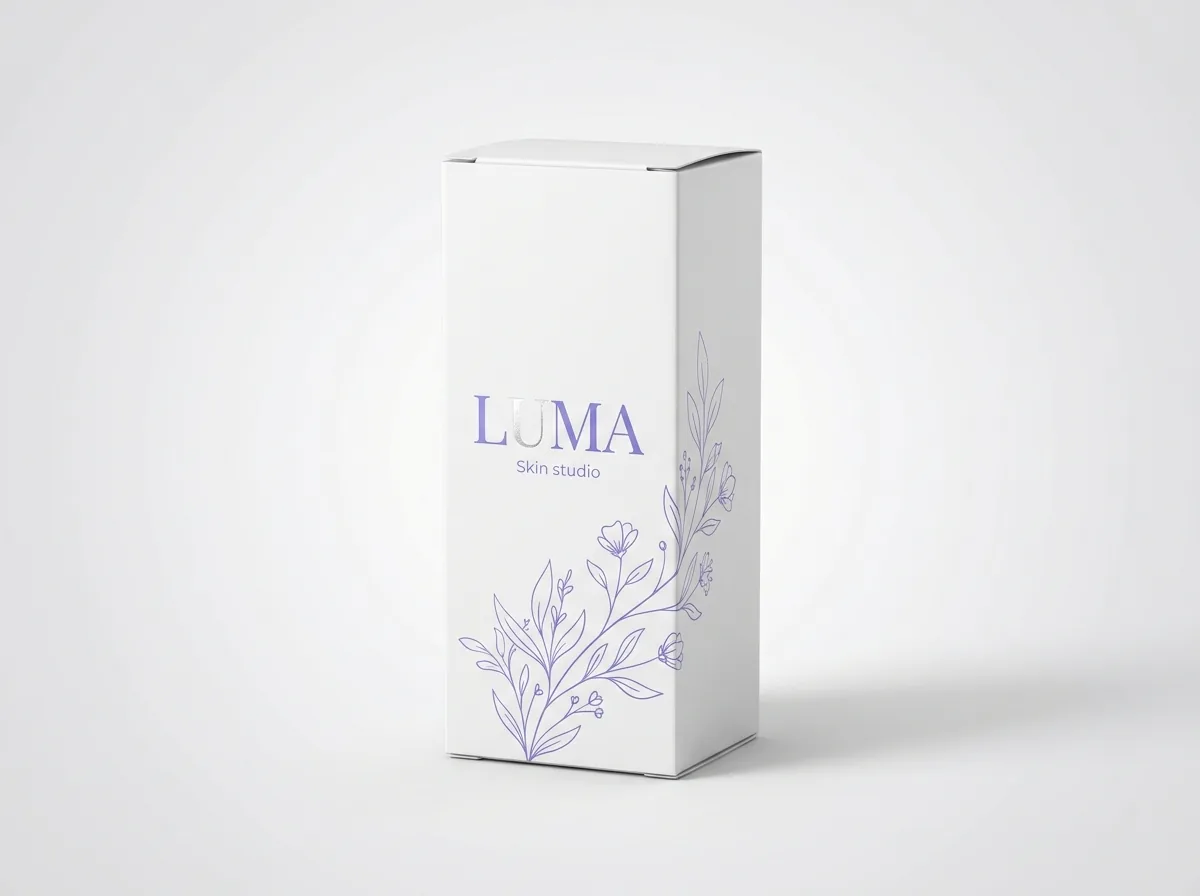
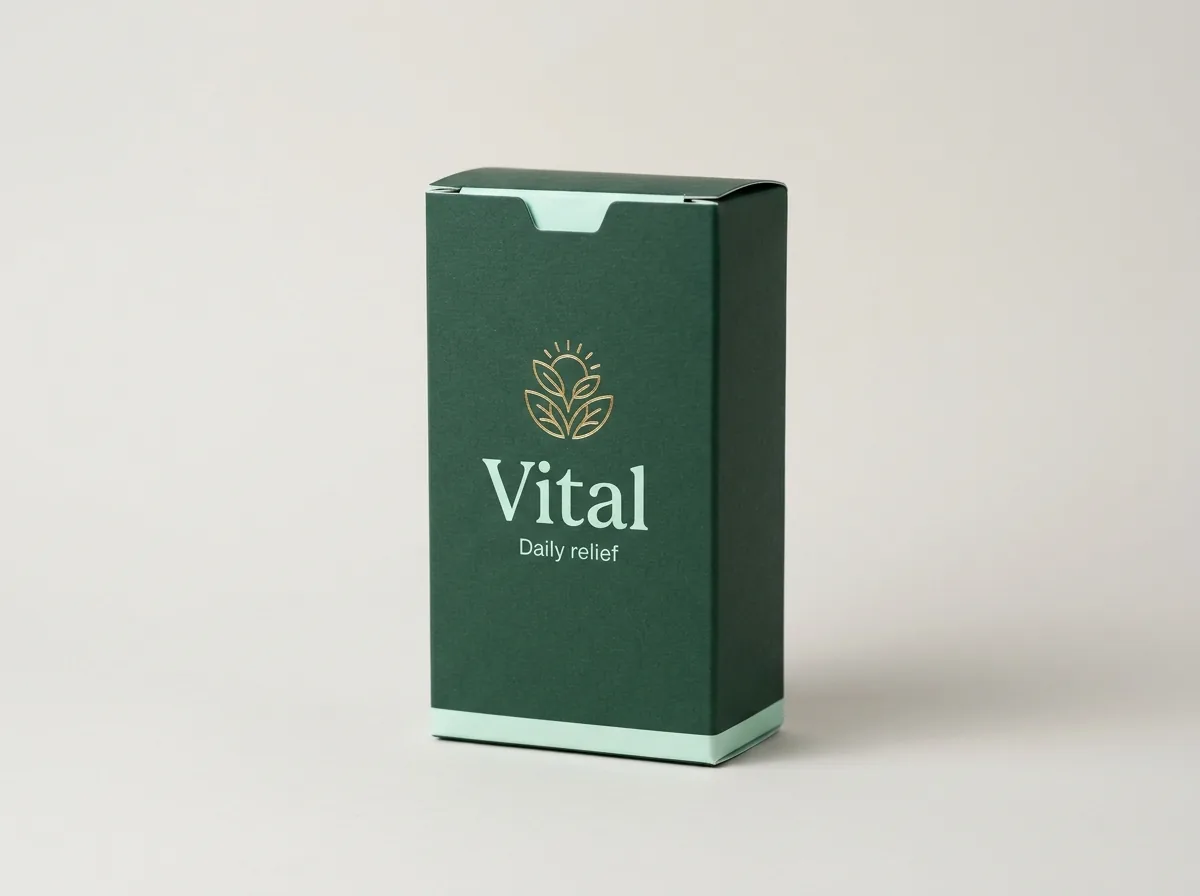
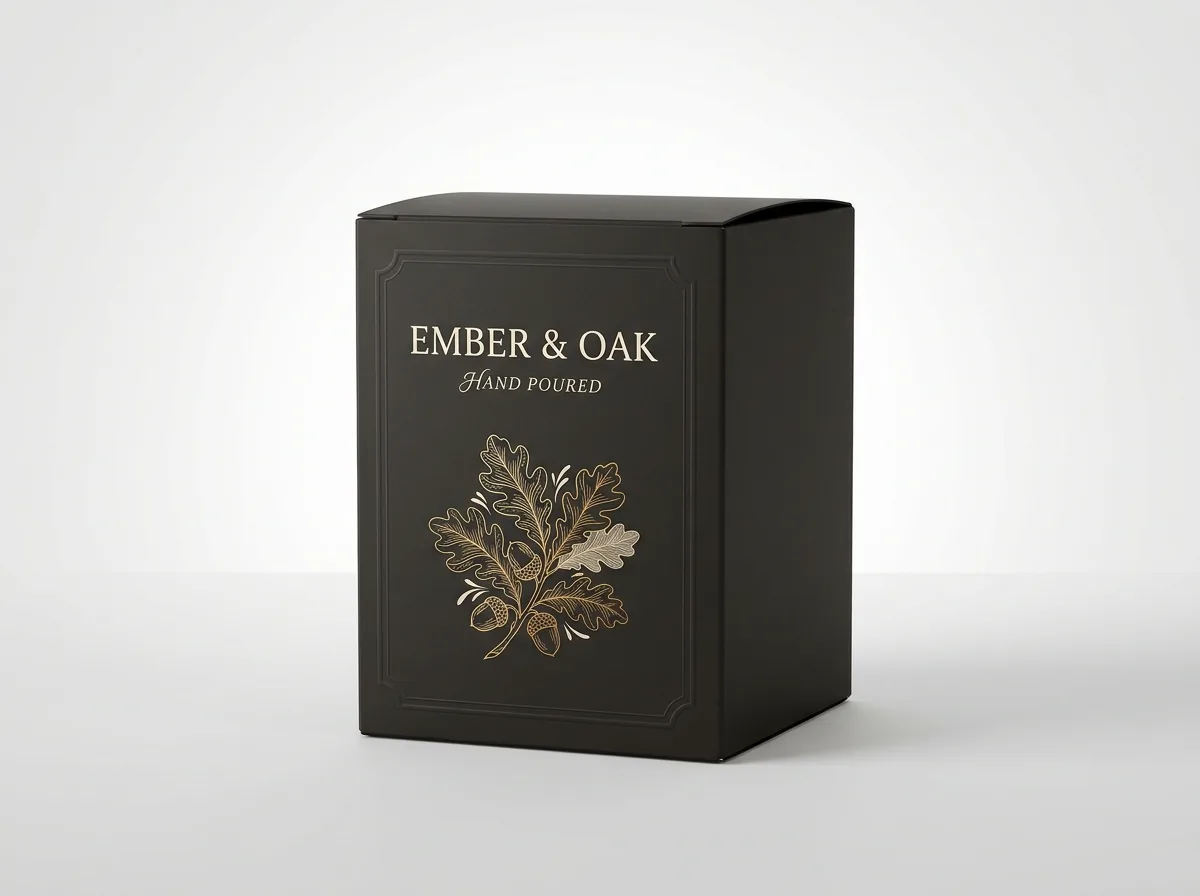
Learn more about window boxes
Get your window boxes price
One dedicated account manager prepares pricing across up to 3 quantities.
- Free design & AI-to-print studio + 3D mockup
- No die or plate charges · 4–5 day rush available
- Free shipping to all 50 states
- 10% off your first order
- Reprint or refund if we get it wrong
Window-patching adhesive margins, 3/8 in score-line keep-out rules, panoramic corner-creasing tolerances, and PET film caliper specifications were verified against Paperboard Packaging Council (PPC) guidelines and European Carton Makers Association (ECMA) folding carton codes. The dieline is generated directly from the style geometry, and a packaging specialist checked every specification against CubitPack offerings. Spot something wrong? Tell us and we fix it. Tell us if something looks wrong.
Sources
- Inline and offline PET window patching processes, 1/4 in adhesive track widths, and 3/8 in score-line keep-out rules.
- Interior Length × Width × Height conventions and structural frame integrity around die-cut apertures.
- Recyclability of paperboard cartons with clear PET window patches versus open plastic-free cutouts.
What changed
- October 24, 2026: Published with verified window-patching construction facts, interactive ste-window dieline, 15 studio images, and three supporting guides.