
Auto lock bottom vs straight tuck end and seal end boxes: which base fits your product?
Short answer: Pick custom auto lock bottom boxes for heavy jars, bottles, and mugs where you want the pre-glued base to snap flat by hand in two seconds and the top to reclose with a tuck flap. Choose straight tuck end boxes for lighter retail items, or seal end boxes when both ends are glued shut on a food line.
On this page
- How do auto lock bottom, straight tuck end, and seal end boxes compare
- Why does an auto lock bottom hold heavy jars better than a tuck bottom
- How much faster is an auto lock bottom at a hand-packing table
- When should you choose a seal end box instead of an auto lock bottom
- Do windows, inserts, and finishes work the same way across all three styles
- How do I test or order auto lock bottom boxes from CubitPack
- Common mistakes
- FAQs
Request a custom quoteFree dieline & 3D mockup
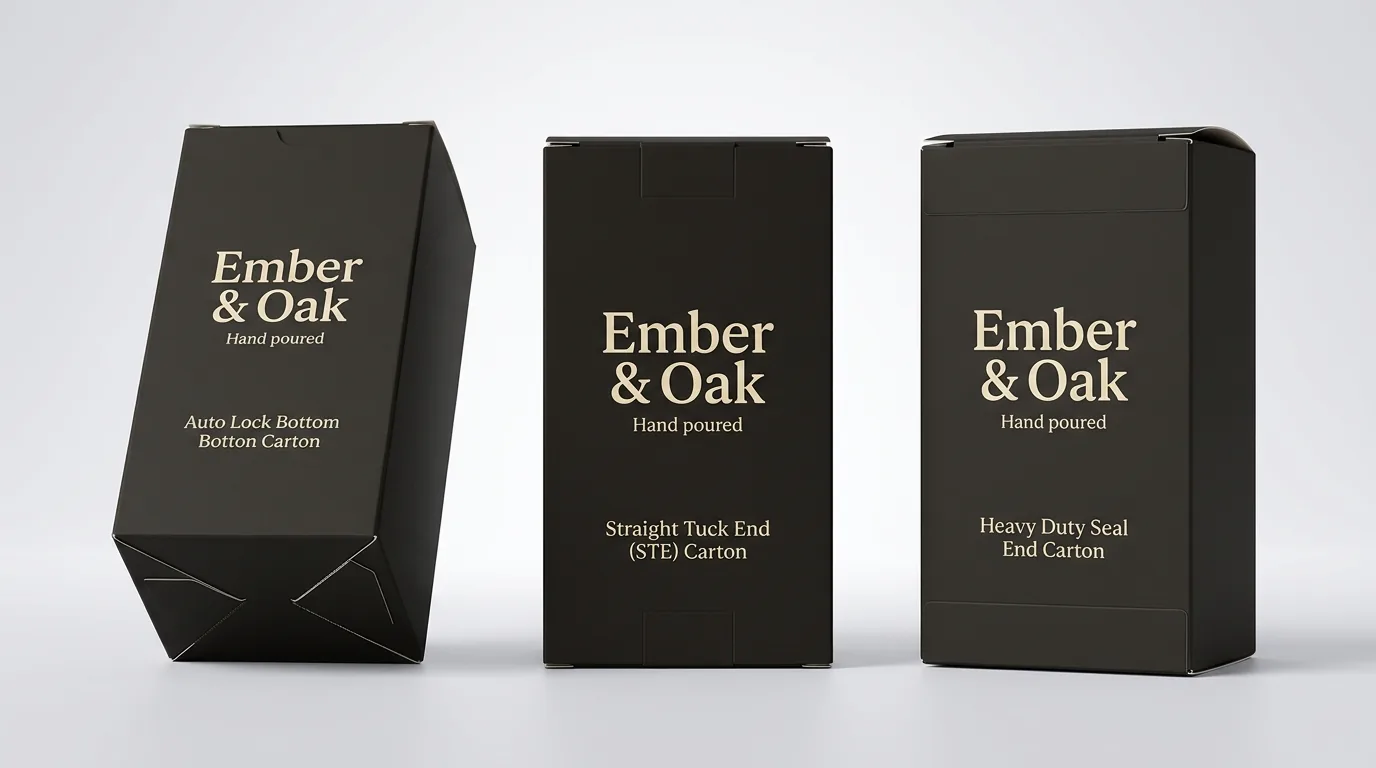
All three styles are one-piece folding cartons shipped flat with a glued vertical side seam, and all three give you a clean front display panel from top to bottom. What separates them is how the bottom supports weight and how your team seals the carton during fulfillment. A straight tuck end carton (ECMA A2020) closes both top and bottom with a single friction or slit-lock tuck flap folded in by hand, ideal for serums, soaps, and lightweight cosmetics. An auto lock bottom carton (ECMA A6020, also called a crash-lock bottom) pre-glues four diagonal-creased bottom panels during converting so the base snaps into an interlocked floor the instant a packer squeezes the corners, while keeping a reclosable tuck top. A seal end carton glues four overlapping flaps shut at both the top and bottom after filling, often adding a perforated tear strip for dry pantry foods. Compare all three below.
How do auto lock bottom, straight tuck end, and seal end boxes compare?
When choosing between these three core folding carton styles, look at four practical benchmarks: how much your product weighs, whether you pack cartons by hand or on an automated glue line, whether the customer recloses the top after opening, and how the front panel looks on the shelf. Compare the specifications side by side before ordering printed auto lock bottom cartons, custom straight tuck end boxes, or custom seal end boxes.
| Feature | Auto lock bottom (Crash lock / ECMA A6020) | Straight tuck end (STE / ECMA A2020) | Seal end carton (Full overlap or economy glue end) |
|---|---|---|---|
| Bottom closure mechanism | Four bottom flaps pre-glued along diagonal creases; snaps flat automatically when opened | Two side dust flaps plus a full bottom panel with a friction or slit-lock tuck flap | Two dust flaps and two major end flaps glued shut with hot-melt or cold adhesive after loading |
| Top closure mechanism | Reclosable tuck flap with two side dust flaps | Reclosable tuck flap hinging on the same panel as the bottom closure | Four overlapping flaps glued shut; opened with a pull tab or zipper tear strip |
| Safe weight & container support | High: interlocked four-layer base supports heavy glass jars, bottles, and ceramic mugs | Light to medium: best for tubes, dropper bottles, soap bars, and small jars | High: permanently bonded top and bottom ends resist shifting and sifting |
| Hand-packing speed | Fastest by hand (about 2–3 seconds to pop open the base and load) | Moderate by hand (fold two bottom dust flaps, tuck bottom, load, fold top, tuck top) | Slow by hand (requires glue applicator); built for automated cartoning lines |
| Front display panel | Clean folded top and bottom front edges | Clean folded top and bottom front edges | Clean folded top and bottom front edges |
| Minimum order at CubitPack | 1,000 boxes | 1,000 boxes | 1,000 boxes |
Why does an auto lock bottom hold heavy jars better than a tuck bottom?
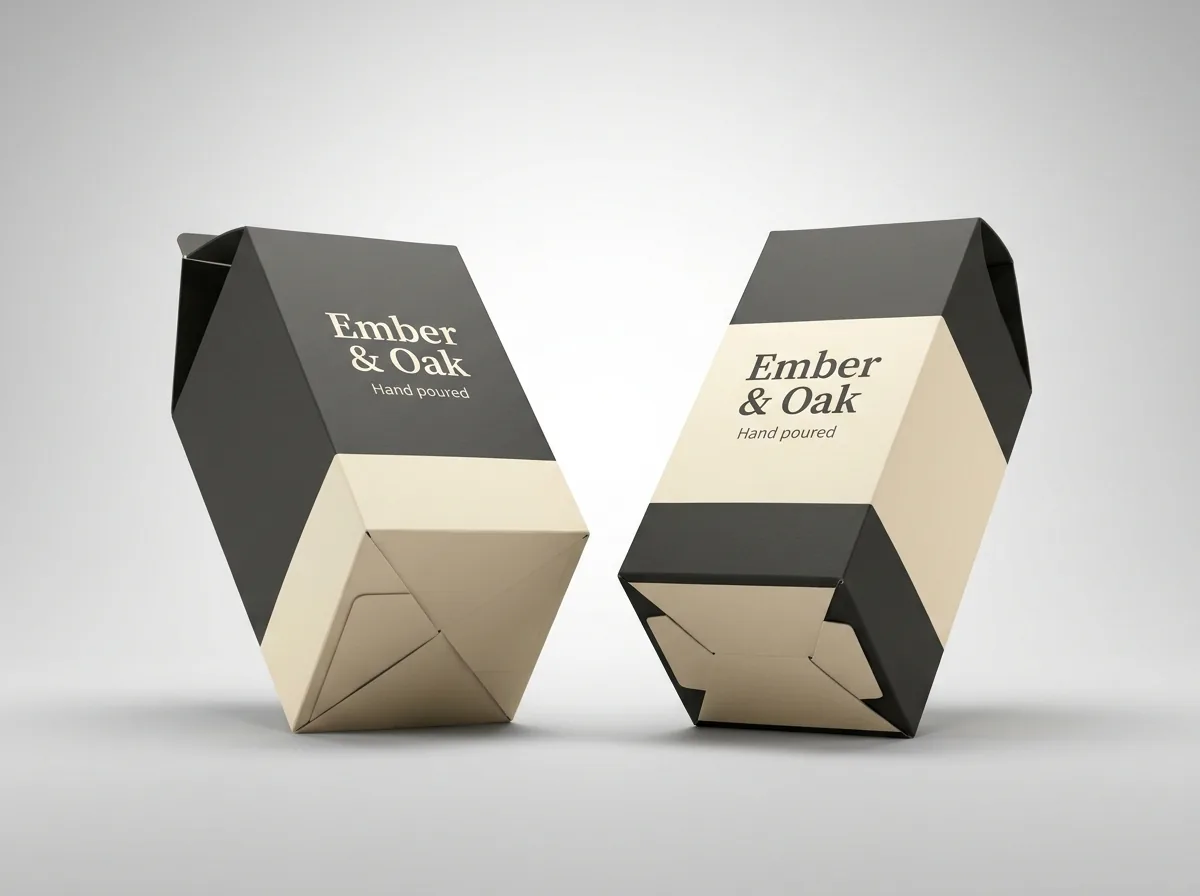
When a shopper lifts a 12-ounce glass candle tumbler, a jar of raw honey, or a ceramic coffee mug off a retail shelf, all of the container weight presses downward on the center of the carton floor. On a straight or reverse tuck end box, the bottom is a single panel held shut by friction along one edge; a concentrated glass base can flex that panel downward and pop the bottom tuck flap open in the shopper's hand. On an auto lock bottom carton, two opposite major bottom panels hook together across the center of the floor while two diagonal-creased side flaps are glued directly to them. The heavier the jar presses down on the interior floor, the tighter the overlapping center tongue locks against the glued diagonal wings.
- Straight tuck end sweet spot: Lightweight cosmetics, serums, lip balms, bar soaps, tea sachets, and blister packs.
- Auto lock bottom sweet spot: Glass candle jars, hot sauce and olive oil bottles, honey jars, vitamin bottles, coffee bags, and stoneware mugs.
- Extra heavy glass (750 ml spirits or multi-jar sets): Combine an auto lock bottom with E-flute corrugated board or a folded bottom pad.
How much faster is an auto lock bottom at a hand-packing table?
Across a production run of 1,000 to 10,000 units packed by hand, the labor savings of a pre-glued crash-lock bottom often outweigh its slightly larger flat blank area. To assemble a straight tuck end carton by hand, a packer must squeeze the flat tube open, fold in the two bottom dust flaps, crease and insert the bottom tuck flap (and engage slit locks if present), flip the carton upright, insert the product, fold the two top dust flaps, and close the top tuck. That takes roughly eight to twelve seconds per unit. With an auto lock bottom carton, the packer simply squeezes the two opposite vertical edges of the flattened carton; the pre-glued bottom snaps flat automatically in under two seconds, ready for the product to drop straight in.
- Auto lock bottom setup: 1 squeeze pops the base flat; only the top tuck closure is folded by hand after loading.
- 1-2-3 snap lock bottom comparison: Unlike an unglued 1-2-3 bottom that requires folding four separate bottom flaps by hand, an auto lock bottom is pre-glued on the folder-gluer machine.
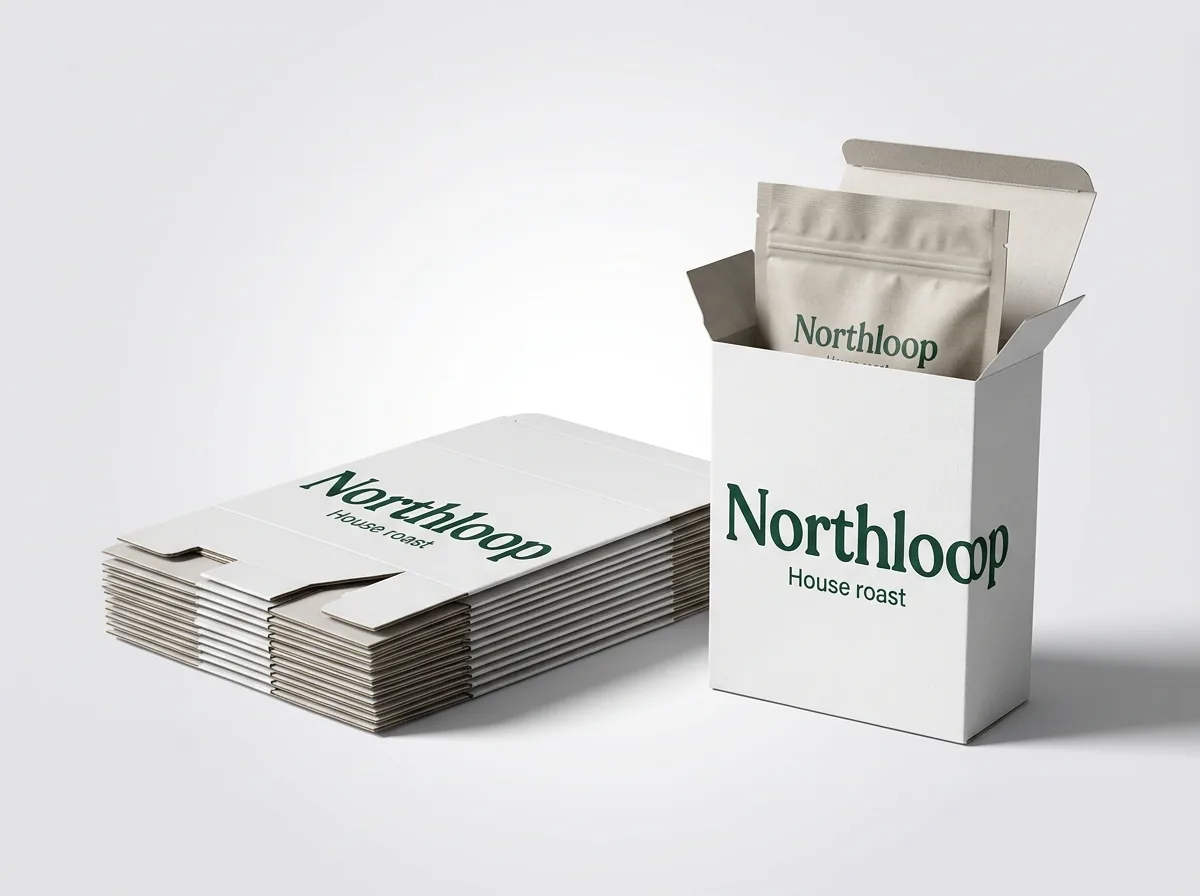
- Seal end line packing: Best when your co-packer runs horizontal or vertical cartoning equipment with hot-melt glue nozzles.
Know your size? Compare pricing across up to 3 quantities.
Request a Quote →When should you choose a seal end box instead of an auto lock bottom?
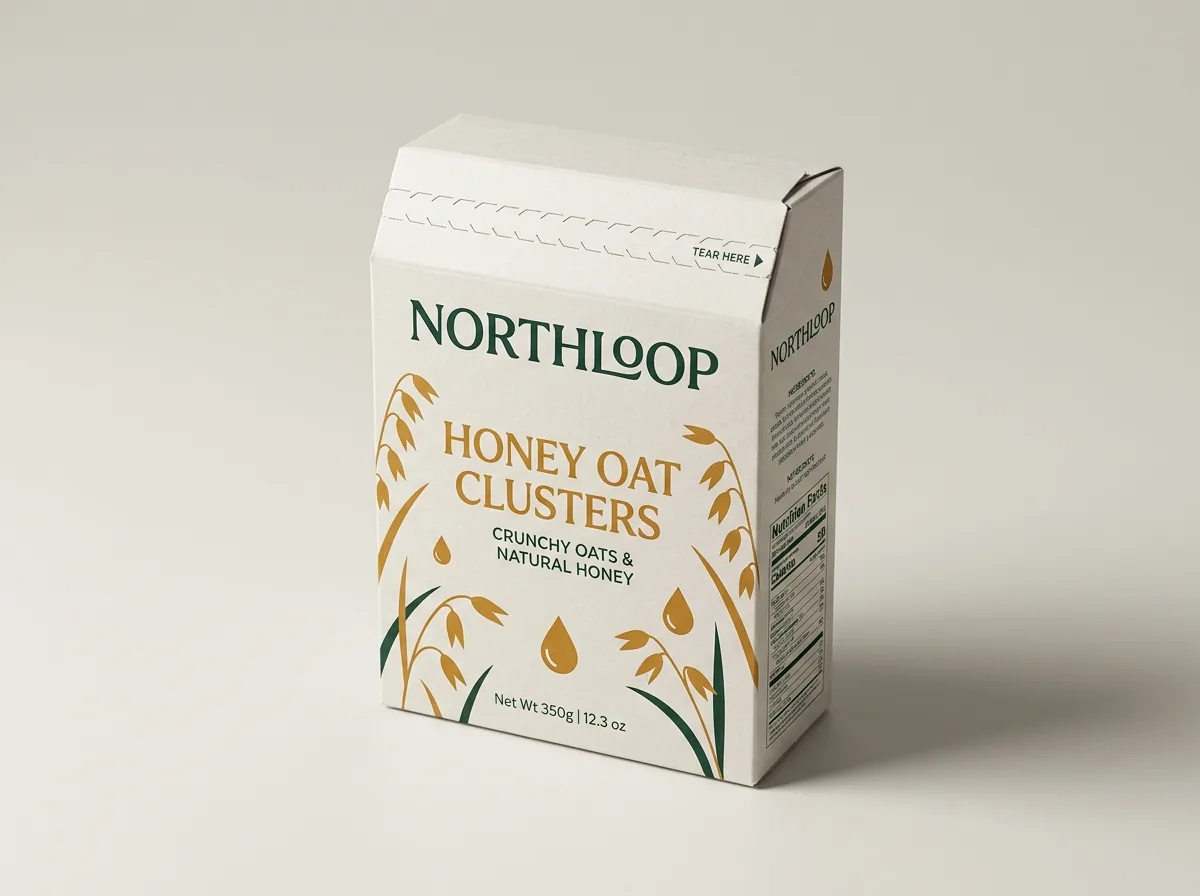
Both auto lock bottom and seal end cartons handle substantial weight, but they serve different product formats and tamper-evidence needs. Because an auto lock bottom uses a dry mechanical interlock at the base and a reclosable tuck flap at the top, small loose items or bags of fine powder could sift through the corner gaps, and a shopper in a grocery aisle can lift the top tuck open without breaking a seal. A seal end carton bonds all four flaps at both ends with adhesive after filling, creating a sifting-resistant, tamper-evident enclosure ideal for custom cereal boxes, custom snack boxes, granola, cookies, and frozen foods. Adding a perforated zipper tear strip across the top panel lets the customer open the glued top cleanly at home.
- Pick auto lock bottom when: Customers inspect the jar or bottle in store, reuse the carton to store the item, or your team packs by hand without glue equipment.
- Pick seal end when: You pack dry food pouches, snacks, or pantry cartons that require tamper-evident glued ends and a tear-strip opening.
Do windows, inserts, and finishes work the same way across all three styles?
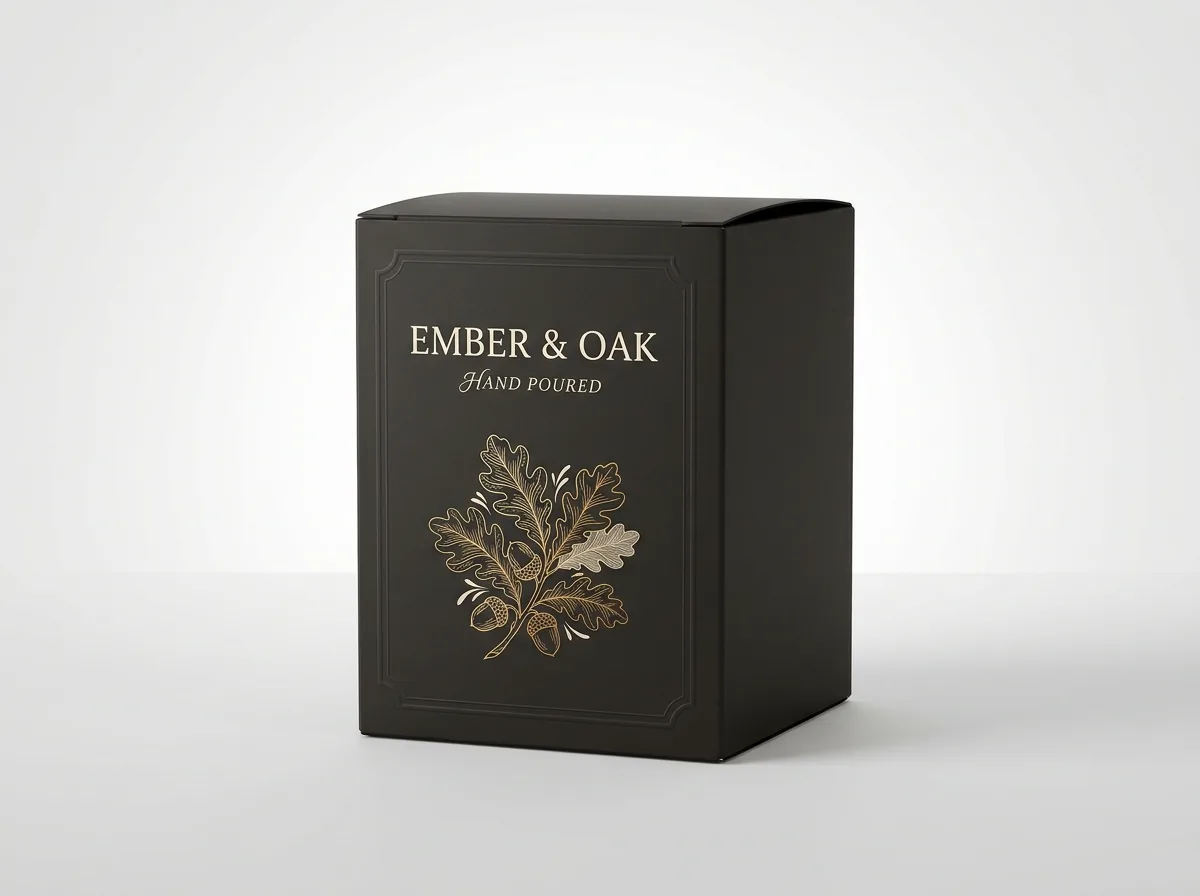
From the front of the retail shelf, all three styles present a clean, edge-to-edge front panel with no raw cut flap edges interrupting your headline or artwork. You can add a die-cut front window with clear film (or an open cutout so shoppers can smell a candle or touch a ceramic mug glaze) to any of the three styles. Similarly, foil stamping, embossing, debossing, spot UV, and matte, gloss, or soft-touch lamination apply identically across the exterior panels. The one prepress difference is on the bottom of the carton: while a straight tuck end or seal end box has a flat bottom panel that can carry a UPC barcode, an auto lock bottom has diagonal seams and an interlocking center tongue across the base, so the barcode belongs on the back or side wall.
How do I test or order auto lock bottom boxes from CubitPack?
Every custom folding carton style at CubitPack starts at 1,000 boxes with a 10–14 business day standard turnaround (4–5 business days rush), free design help, no die or plate charges, and free shipping to all 50 US states. If you are comparing a straight tuck end carton against an auto lock bottom carton for the same jar or bottle, tell your account manager in the quote notes and we will quote both options side by side in 5-7 minutes. Before production starts, you receive a custom structural dieline and a 3D digital mockup at no cost, and you can order a physical prototype or printed sample (priced per product and credited to your order) to test the bottom lock with your product in hand.
What are the most common mistakes when choosing a folding carton bottom style?
Avoid these five structural mismatches when selecting your carton base
- Packing heavy glass candle jars or honey jars in a plain tuck bottom carton without testing whether the bottom flap bows open when lifted.
- Ordering glue-end (seal end) cartons for a hand-packing team that does not have a hot-melt glue applicator or tape sealer.
- Confusing a 1-2-3 snap lock bottom with a pre-glued auto lock bottom. Always specify auto lock (crash lock) if you want the base pre-glued so it pops open automatically.
- Placing a retail barcode across the bottom seams of an auto lock bottom carton instead of on a flat side or back wall.
- Assuming straight tuck end and auto lock bottom boxes cannot match on a shelf. Both styles share the exact same clean front panel and top tuck closure.
Get an auto lock bottom dieline at your size
A simplified drawing for planning your design. Your free production dieline comes with your proof, made for your exact size and board.
Packaging for this
Ready to order auto lock bottom boxes? Compare up to 3 quantities with a free 3D mockup.
Request a Quote →Questions about auto lock bottom boxes
What is the main difference between an auto lock bottom box and a straight tuck end box?
A straight tuck end box closes both the top and bottom with a single tuck flap folded in by hand, suited for light to medium items. An auto lock bottom box has four pre-glued bottom panels that snap flat automatically when squeezed open, giving a much stronger base for heavy jars and faster hand packing.
When is a product heavy enough to need an auto lock bottom?
Whenever your product is a glass candle jar, honey jar, hot sauce bottle, ceramic mug, or multi-item pack whose weight could push a friction bottom tuck flap open when a customer picks the box up off a shelf, an auto lock bottom is the safer choice.
What is the difference between an auto lock bottom box and a seal end box?
An auto lock bottom box arrives with its bottom pre-glued so it pops open without machinery, and its top closes with a reclosable tuck flap. A seal end box arrives as an open-ended tube whose top and bottom flaps are glued shut after filling, typically for tamper-evident dry foods.
Do auto lock bottom boxes and straight tuck end boxes look the same from the front?
Yes. When standing closed on a retail shelf, both styles feature a clean, uninterrupted front display panel with folded top and bottom edges and a top tuck closure that folds toward the back.
What is the minimum order for custom auto lock bottom boxes?
1,000 boxes for custom auto lock bottom boxes, straight tuck end boxes, and seal end boxes at CubitPack. You can also split an order across 2 or 3+ artwork designs or scents in the quote form.
Can I get a quote comparing auto lock bottom and straight tuck end boxes?
Yes. Enter your inside dimensions and quantities in the quote form and mention in the notes that you would like pricing for both auto lock bottom and straight tuck end styles. Your account manager will send a written comparison in 5-7 minutes.
Still have a question? Ask a packaging specialist.
Request a Quote →Request your auto lock bottom boxes quote
Tell us your size and quantities, and one dedicated account manager prepares pricing for each tier.
- Free design & AI-to-print studio + 3D mockup
- No die or plate charges · 4–5 day rush available
- Free shipping to all 50 states
- 10% off your first order
We compared ECMA A6020 (auto lock bottom), ECMA A2020 (straight tuck end), and seal end folding carton specifications, bottom load mechanics, and hand-packing workflows against European Carton Makers Association standards and Paperboard Packaging Council guidelines. A packaging specialist verified every detail. Spot something wrong? Tell us and we fix it.
Sources
What changed
- October 24, 2026: First published comparing auto lock bottom, straight tuck end, and seal end folding cartons.
More guides
New packaging guides by email
Sizes, materials and design tips. Unsubscribe anytime.