
How do I measure my product for an auto lock bottom box?
Short answer: Measure your jar, bottle, or mug at its widest and tallest points using calipers. Add 1/16 to 1/8 inch of horizontal clearance to Length and Width, and add 1/8 to 3/16 inch of vertical clearance to Height so the four overlapping bottom flaps and top dust flaps sit flat inside custom auto lock bottom boxes.
On this page
- Which dimension is length, width, and height on an auto lock bottom box
- What are typical inside sizes for candle jars, bottles, coffee bags, and mugs
- Why do auto lock bottom boxes need extra vertical height clearance
- How do neck inserts, base pads, and front windows affect your measurements
- How do inside dimensions relate to outside and flat-folded carton sizes
- How do I verify my auto lock bottom box size before production
- Common mistakes
- FAQs
Request a custom quoteFree dieline & 3D mockup
Every auto lock bottom carton (standardized as ECMA A6020) is engineered and quoted using inside dimensions written in strict order: Length by Width by Height (L × W × H) in inches. Looking down at the open top of the standing carton with the main front display panel facing you, Length is the left-to-right width of the front wall, Width is the front-to-back depth of the side wall, and Height is the vertical distance between the bottom score crease and the top score crease. Because an auto lock bottom folds four pre-glued bottom panels over each other across the base floor and folds two dust flaps under the top tuck closure, the interior floor sits slightly higher than the outer bottom score line. Adding 1/8 to 3/16 inch of vertical height allowance prevents the top tuck lid from doming upward over a rigid glass candle jar or bottle cap. Send your measurements and we verify the dieline before payment.
Which dimension is length, width, and height on an auto lock bottom box?
In folding carton converting, the sequence of Length, Width, and Height determines which bottom panels carry the major crash-lock tongue and which top wall carries the main tuck closure hinge. Stand your candle jar, sauce bottle, coffee bag, or ceramic mug upright in the exact position it will face shoppers on a retail shelf. Length is the horizontal distance from left to right across the front panel. Width is the horizontal depth from the front panel to the back panel along the side wall. Height is the vertical span from the base of the product to the top of its lid, cork, or pump. On printed auto lock bottom cartons, the two major interlocking bottom panels attach to the Length walls, while the two diagonal-creased glue flaps attach to the Width walls.
- Length (L): Left-to-right horizontal measurement across the main front display face.
- Width (W): Front-to-back horizontal depth along the left and right side walls.
- Height (H): Bottom-to-top vertical height between the bottom crease and top tuck crease.
- Standard notation: Always write inside dimensions as L × W × H in inches (for example, 3.5 × 3.5 × 4.25 in).
What are typical inside sizes for candle jars, bottles, coffee bags, and mugs?
While every CubitPack order is cut to your exact custom dimensions with no die or plate charges, heavy retail containers cluster around proven inside footprints. Use the reference chart below to benchmark your container before measuring with a digital caliper. Always measure across the widest bulge of a tapered jar, the wooden lid overhang on a candle tumbler, or the spout of a sauce bottle. You can browse product-specific examples on our custom candle jar boxes, custom coffee boxes, custom honey boxes, and custom mug boxes pages.
| Retail product | Container dimensions (in) | Recommended inside box size L × W × H (in) |
|---|---|---|
| 5 oz glass hot sauce woozy bottle | 1.70 dia × 6.70 tall | 1.875 × 1.875 × 6.875 |
| 120 count glass vitamin or supplement jar | 2.50 dia × 4.50 tall | 2.625 × 2.625 × 4.6875 |
| 12 oz hexagonal or round glass honey jar | 2.85 dia × 4.10 tall | 3.00 × 3.00 × 4.25 |
| 9 oz straight-sided amber candle tumbler | 3.125 dia × 3.50 tall | 3.25 × 3.25 × 3.6875 |
| 11 oz ceramic coffee mug (with handle) | 4.50 wide × 3.25 dia × 3.80 tall | 4.75 × 3.50 × 4.00 |
| 12 oz gusseted whole-bean coffee bag | 4.10 × 2.85 × 7.25 filled | 4.25 × 3.00 × 7.50 |
| 14 oz 3-wick glass candle jar with lid | 4.00 dia × 4.00 tall | 4.25 × 4.25 × 4.25 |
| 750 ml craft spirits glass bottle | 3.25 dia × 11.75 tall | 3.50 × 3.50 × 12.00 |
Why do auto lock bottom boxes need extra vertical height clearance?
The number-one sizing mistake on an auto lock bottom carton happens along the vertical Height axis. On a standard tuck-end carton, the bottom closes with a single paperboard panel folded over two thin side dust flaps. On an auto lock bottom carton, four bottom flaps fold inward and overlap across the center of the base: two diagonal-creased side flaps folded double upon themselves, plus the two major bottom panels that hook together at the center tongue. In heavy paperboard or E-flute corrugated board, that four-layer interlocking floor stands 1/16 to 1/8 inch thick inside the bottom of the carton. When you also fold the two top dust flaps down under the top tuck closure, zero-clearance height measurements force the top lid to bow upward.
- Paperboard auto lock bottom (jars, vitamins, sauces): Add 1/16 to 1/8 in to Length and Width, and add 1/8 to 3/16 in to Height.
- Corrugated auto lock bottom (heavy candles, mugs, 750 ml spirits): Add 1/8 in to Length and Width, and add 3/16 to 1/4 in to Height to clear the fluted bottom lock stack.
- Flexible bags inside a carton (coffee, granola, cake mix): Add 1/8 in across all three axes so the filled pouch settles without bowing the front wall.
Know your size? Compare pricing across up to 3 quantities.
Request a Quote →How do neck inserts, base pads, and front windows affect your measurements?
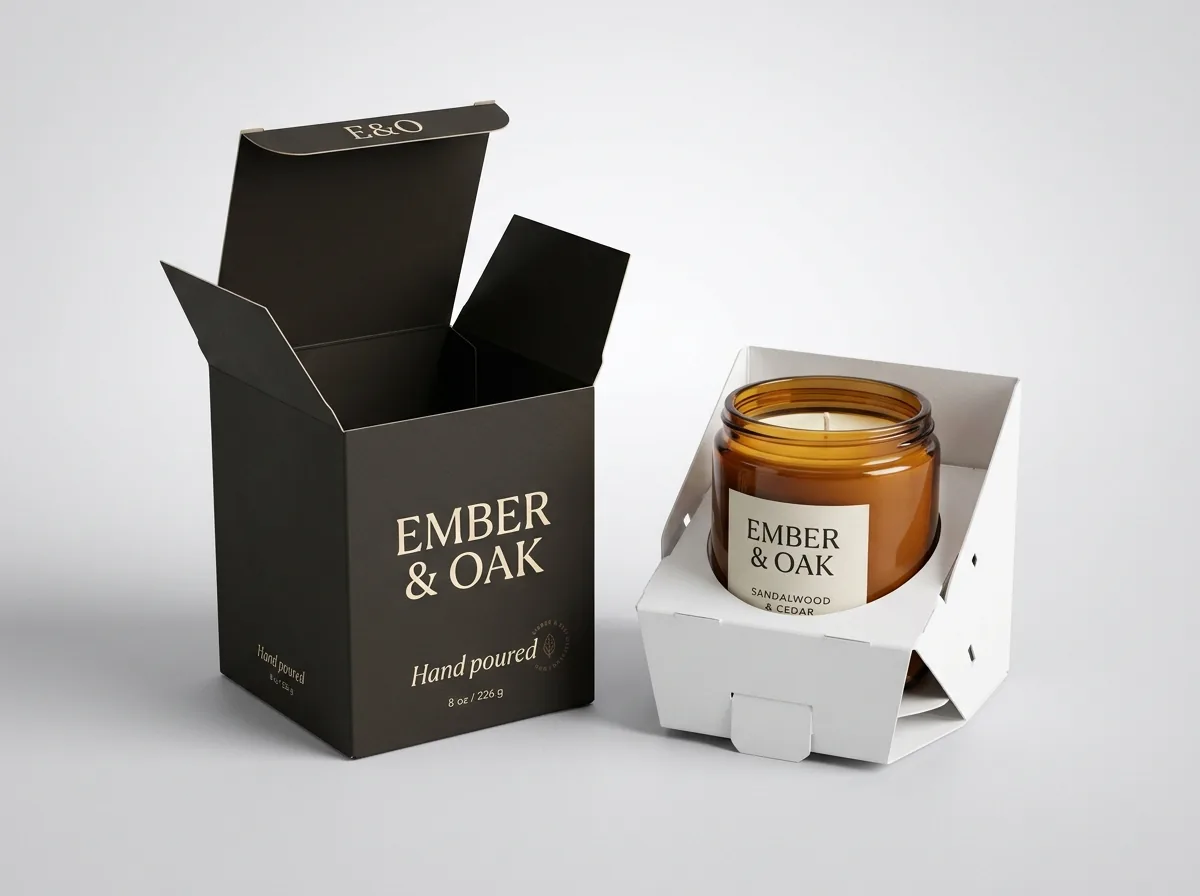
Heavy glass containers often pair an auto lock bottom carton with an internal paperboard or corrugated insert to stop the jar or bottle from shifting during transport. A flat corrugated bottom pad dropped onto the floor of the carton distributes concentrated glass weight evenly across the interlocking bottom tongue and adds 1/16 to 1/8 inch to the required inside Height. A folded perimeter wall insert or bottle-neck yoke surrounds the container on all four sides, increasing the required inside Length and Width by 1/4 to 1/2 inch depending on the fold style. If you add a die-cut front window like on our custom window boxes, keep the window opening at least 3/8 inch clear of the bottom crease so the crash-lock fold stays rigid.
- Bottom layer pad: Add 1/16 in (paperboard pad) or 1/8 in (E-flute corrugated pad) to the inside Height.
- Full-perimeter card or corrugated cradle: Add 3/8 to 1/2 in to Length and Width so the folded insert walls slide cleanly inside the carton.
- Top neck-lock collar (for sauce and spirits bottles): Keeps the narrow bottle neck centered under the top tuck without widening the base footprint.
How do inside dimensions relate to outside and flat-folded carton sizes?
Always enter inside dimensions (L × W × H) in the quote form, because inside space governs whether your jar, mug, or insert slides into the carton. If you are also ordering outer master shipping cartons or retail display trays, keep in mind that paperboard or corrugated wall thickness adds roughly 1/16 to 3/16 inch to the outside Length and Width and up to 1/4 inch to the outside Height. In addition, because auto lock bottom cartons arrive folded flat with the side seam and bottom flaps pre-glued, the flat bundle width equals Length plus Width (L + W). Knowing that flat footprint helps your warehouse plan shelf storage before packing.
- Inside size (L × W × H): The usable interior space above the locked bottom flaps and below the top dust flaps.
- Outside size: Used to calculate how many packed unit cartons fit into a master case or on a retail shelf.
- Collapsed flat width: Equals L + W when the pre-glued tube lies flat in its shipping bundle.
How do I verify my auto lock bottom box size before production?
At CubitPack, every quote for 1,000 or more auto lock bottom boxes includes a free custom structural dieline and a 3D digital mockup before you make payment. You can use the interactive dieline tool on the style page to preview panel proportions at your exact Length, Width, and Height, and our structural specialists verify your jar or bottle clearance before press. If you want to test hand-packing speed and bottom lock strength with your real glass jar or ceramic mug, you can order a physical prototype or a printed sample (priced per product and credited to your order), or start with our $50 sample kit (credited to your first order).
What are the most common mistakes when measuring for an auto lock bottom box?
Check your measurements against these five common errors before approving your dieline
- Forgetting height clearance for the four-layer crash-lock bottom. Always add 1/8 to 3/16 inch to Height so the top tuck flap closes flat.
- Measuring the glass body of a candle jar and ignoring an overhanging wooden or metal lid. Always measure across the widest diameter of the lid and jar.
- Forgetting the handle projection on a ceramic mug. Add the handle width to the Length axis so the mug fits without bowing the side wall.
- Measuring a flattened sample box from edge to edge. Flat folded cartons equal L + W plus board-thickness crease offsets.
- Skipping a bottom pad or insert on heavy narrow-base bottles. A small base diameter concentrating weight on the center tongue benefits from a flat bottom pad.
Get an auto lock bottom dieline at your size
A simplified drawing for planning your design. Your free production dieline comes with your proof, made for your exact size and board.
Packaging for this
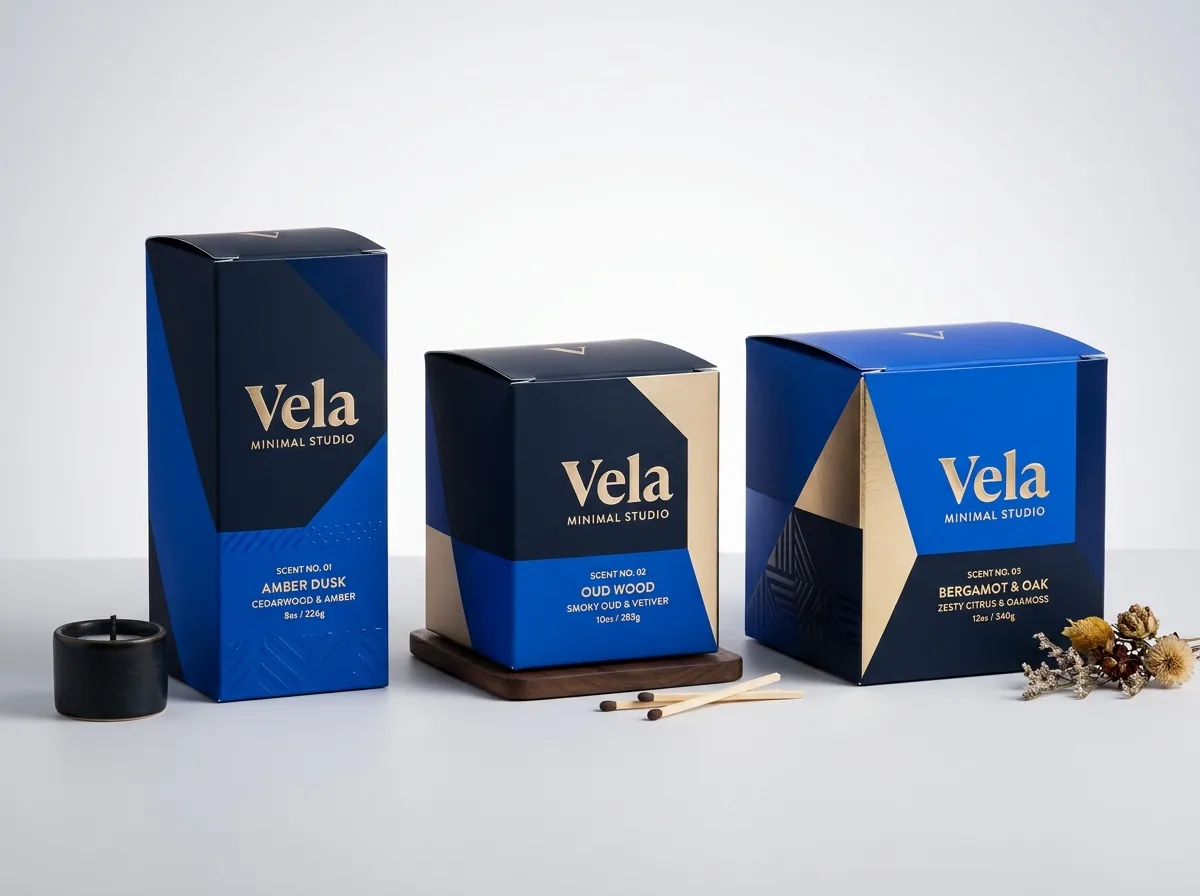

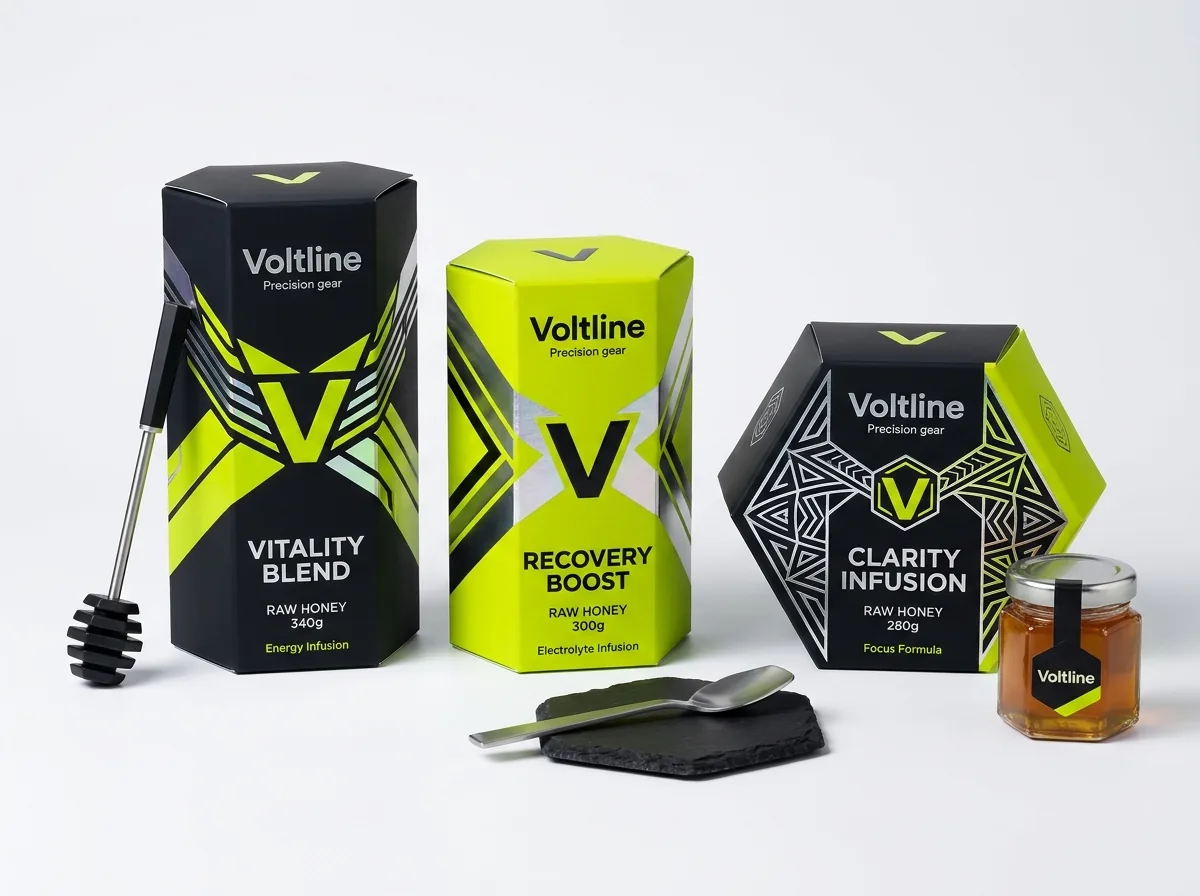
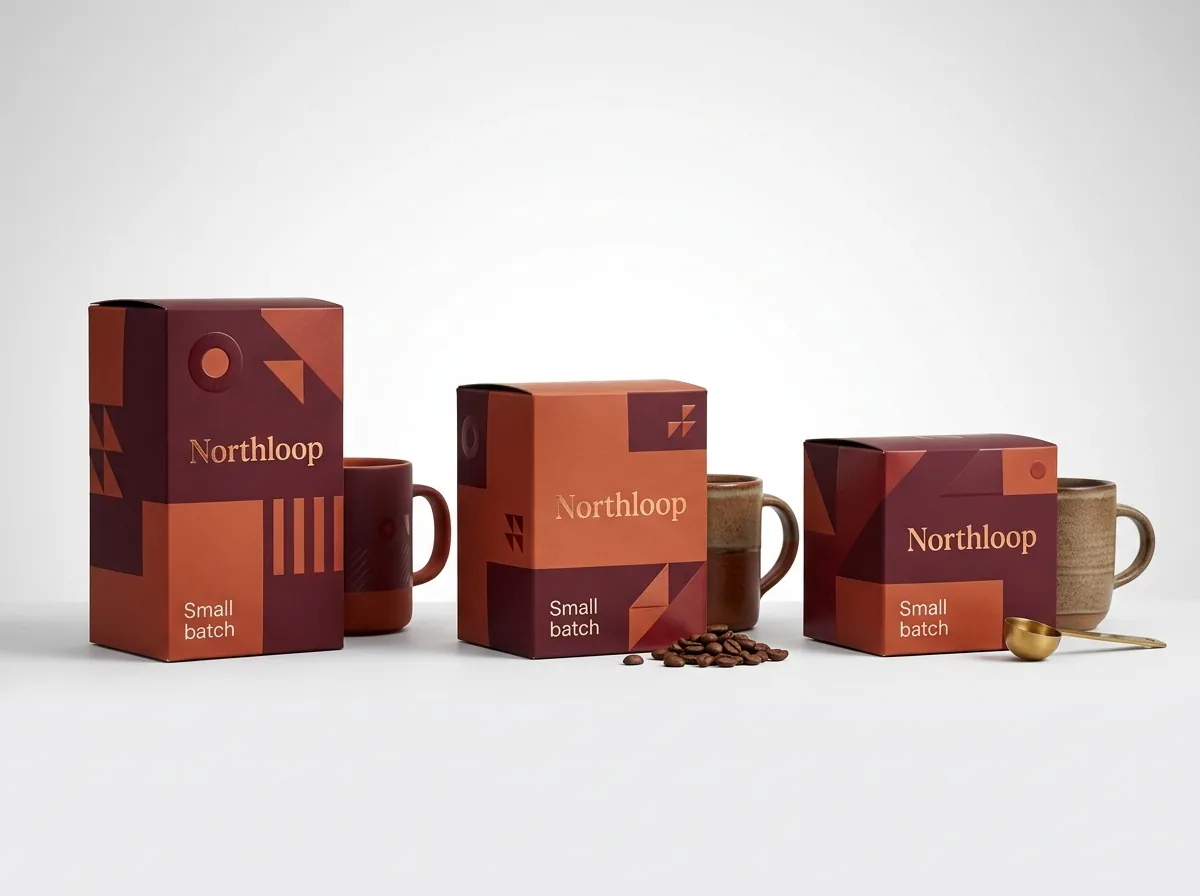

Ready to order auto lock bottom boxes? Compare up to 3 quantities with a free 3D mockup.
Request a Quote →Questions about auto lock bottom boxes
In what order do I write auto lock bottom box dimensions?
Always write dimensions as Length × Width × Height (L × W × H) in inches. Facing the front of the upright carton, Length is the left-to-right width of the front panel, Width is the front-to-back depth of the side panel, and Height is the vertical distance from the locked bottom to the top fold.
How much clearance should I add for a glass candle jar or bottle?
Add 1/16 to 1/8 inch to Length and Width so the jar slides in smoothly without catching on the walls, and add 1/8 to 3/16 inch to Height to account for the thickness of the four overlapping bottom lock panels and the two top dust flaps.
Are auto lock bottom boxes quoted by inside or outside dimensions?
Auto lock bottom boxes are always quoted and manufactured using inside dimensions (L × W × H). Because the four interlocking bottom panels stack inside the base floor, quoting by inside dimensions ensures your jar, bottle, or mug fits without pushing the top lid open.
How do I measure a mug with a handle for an auto lock bottom box?
Measure the full width from the outer edge of the cup to the outer tip of the handle and add 1/8 inch for Length, measure the cup diameter plus 1/8 inch for Width, and measure the mug height plus 3/16 inch for Height. A die-cut card slot can also lock the handle in place.
Can I order multiple box sizes in one production run?
Yes. Custom auto lock bottom boxes start at 1,000 units, and you can select 2 designs or 3+ designs in Step 2 of the quote form and list each size in the notes. Your dedicated account manager will quote all sizes together with free dielines and 3D mockups.
When should I add a corrugated insert inside an auto lock bottom box?
Add a folded card or corrugated insert when shipping fragile glass jars through e-commerce, when a bottle has a narrow neck that could tip inside a wider box, or when you want a bottom pad to spread heavy weight evenly across the crash-lock base.
Still have a question? Ask a packaging specialist.
Request a Quote →Request your auto lock bottom boxes quote
Tell us your size and quantities, and one dedicated account manager prepares pricing for each tier.
- Free design & AI-to-print studio + 3D mockup
- No die or plate charges · 4–5 day rush available
- Free shipping to all 50 states
- 10% off your first order
We verified the ECMA A6020 Length × Width × Height interior dimension convention, four-panel bottom lock stack tolerances, and glass container clearance rules against European Carton Makers Association standards and Paperboard Packaging Council guidelines. A packaging specialist checked every measurement rule. Spot something wrong? Tell us and we fix it.
Sources
What changed
- October 24, 2026: First published with ECMA A6020 inside dimension rules, jar and mug size chart, and crash-lock height clearance guidelines.
More guides
New packaging guides by email
Sizes, materials and design tips. Unsubscribe anytime.