
How do I measure my product and choose paperboard for a reverse tuck end box?
Short answer: To size a reverse tuck end (RTE) box, measure your product's width (Length, L), depth (Width, W), and height (H), then add +1/16 inch for playing card decks, +1/8 inch for medicine blisters and tubes, or +0.25 inch for a card insert. Use 16–18 pt board under 6 oz and 20–24 pt up to 12 oz.
On this page
- What is the 3-step formula for measuring usable inside L × W × H on a reverse tuck end box
- How much clearance do blister strips, playing cards, tubes, and card inserts require
- Should I choose 16 pt, 18 pt, 20 pt, or 24 pt paperboard for my reverse tuck end box
- What are standard reverse tuck end box sizes across retail and healthcare
- How do I verify my reverse tuck end box size before full production
- Common mistakes
- FAQs
Request a custom quoteFree dieline & 3D mockup
When ordering custom reverse tuck end boxes (ECMA A20.20.03.01), always specify Inside Dimensions in the sequence Length (L) × Width (W) × Height (H). Length (L) runs left-to-right across the front display face, Width (W) runs front-to-back along the side panels where the dust flaps hinge, and Height (H) runs top-to-bottom between the opening score lines. Because the top tuck flap slides inside the front wall while the bottom tuck flap slides inside the back wall, both flaps occupy roughly 0.016 to 0.024 inches of inside depth (W). Adding +1/16 inch (1.5 mm) of clearance on playing card decks, +1/8 inch (3.0 mm) on blister packs, tubes, and tea sachets, or +0.25 inch (6.0 mm) around a paperboard cradle prevents the tuck flaps from catching on your product. Match 16–18 pt SBS or kraft board to light items up to 6 oz, and 20–24 pt board with ankle slit locks up to 12 oz.
What is the 3-step formula for measuring usable inside L × W × H on a reverse tuck end box?
Whether you are ordering custom reverse tuck end boxes for over-the-counter medicines, playing card decks, herbal tea sachets, or USB chargers, folding carton manufacturers always specify dimensions from the inside score lines of the erected tube. Because the top closure hinges on the back wall (tucking inside the front wall) and the bottom closure hinges on the front wall (tucking inside the back wall), you must account for the paperboard caliper of both tuck flaps inside the box depth (W)
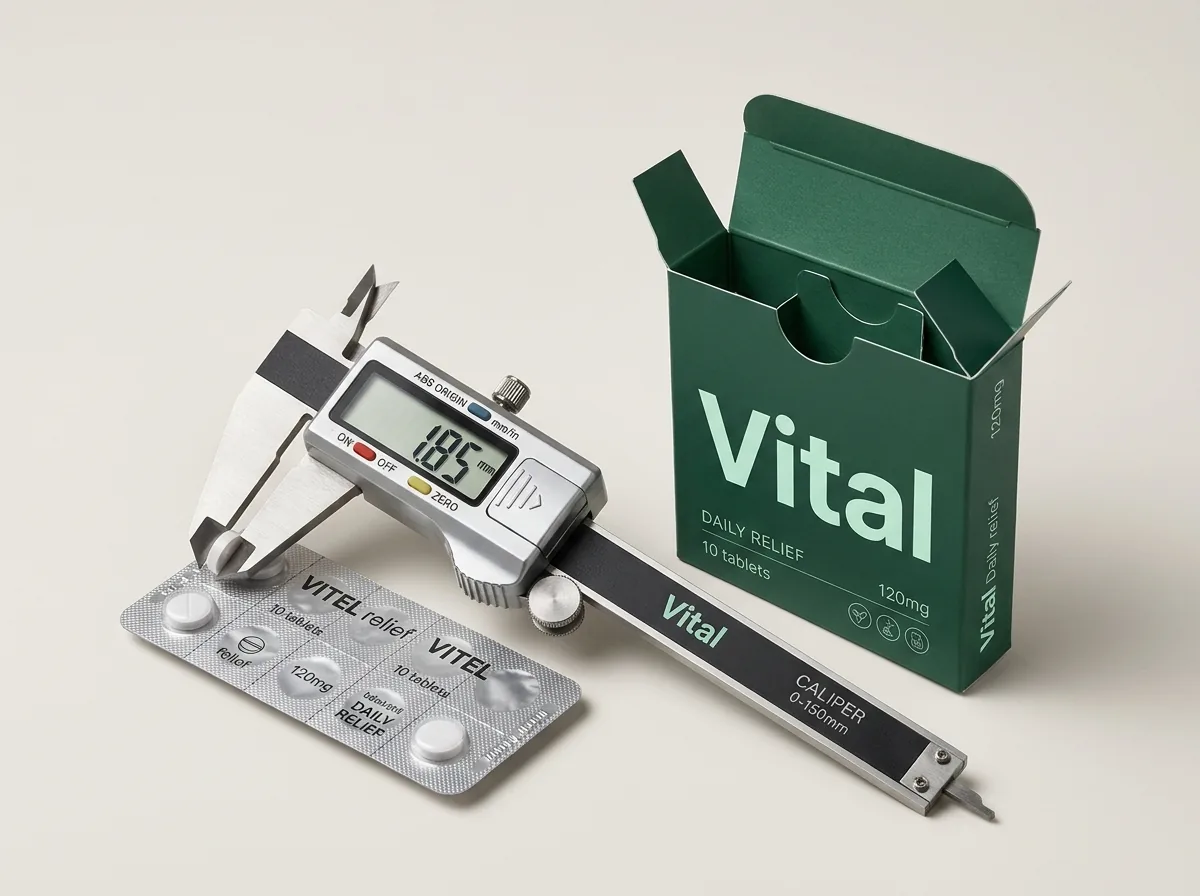
- Step 1: Measure your item at its widest, deepest, and tallest points using digital calipers. On a flexible cosmetic squeeze tube, measure across the widest flat heat-sealed top crimp rather than the round cap; on an OTC medicine carton, stack the foil blister strips and folded paper patient leaflet together before measuring.
- Step 2: Assign Inside Length (L), Inside Width (W), and Inside Height (H). Length (L) is the horizontal width of your front display face; Width (W) is the front-to-back side depth; Height (H) is the vertical distance between the top and bottom opening creases.
- Step 3: Add structural clearance to L, W, and H based on product rigidity. Add +1/32 to +1/16 in (0.8–1.5 mm) for a 54-card poker deck that needs a snug slide fit; add +1/8 in (3.0 mm) to L, W, and H for blister packs, dropper bottles, pens, and phone cases so the opposite tuck flaps slide past the item without snagging; and add +0.25 to +0.50 in (6–13 mm) when adding a scored paperboard cradle.
How much clearance do blister strips, playing cards, tubes, and card inserts require?
Different products interact differently with the top and bottom tuck flaps of an RTE carton. When a worker or an automatic cartoner pushes the top tuck flap down behind the front wall, a tight zero-clearance box will catch the top edge of the product and crease the flap. Use this engineering clearance table when filling out Step 1 of our quote form
| Product format | Inside L & W clearance | Inside Height (H) clearance | Recommended closure & insert setup |
|---|---|---|---|
| Playing card deck (54–56 cards) | +1/32 to +1/16 in (0.8–1.5 mm) | +1/16 in (1.5 mm) above deck | Friction tuck top + thumb cutout + ankle-lock base |
| OTC medicine blister + leaflet | +1/8 in (3.0 mm) + leaflet thickness | +1/8 in (3.0 mm) for smooth machine tuck | Ankle slit locks on bottom + tamper-evident seal label |
| Cosmetic squeeze tube (15–100 ml) | +1/16 in over crimp width (L) · +1/8 in over cap (W) | +1/8 in (3.0 mm) above crimp edge | Ankle slit locks on bottom + friction tuck top |
| Glass dropper bottle (10–50 ml) with insert | +0.25 to +0.375 in (6–9.5 mm) for card cradle | +0.25 in (6.0 mm) for neck collar | 20 pt board + scored card cradle + ankle slit locks |
| Tea sachets (15–25 wrapped bags) | +1/8 to +3/16 in (3.0–4.5 mm) | +3/16 in (4.5 mm) for pouch loft | 18–20 pt board + optional perforated dispenser door |
Should I choose 16 pt, 18 pt, 20 pt, or 24 pt paperboard for my reverse tuck end box?
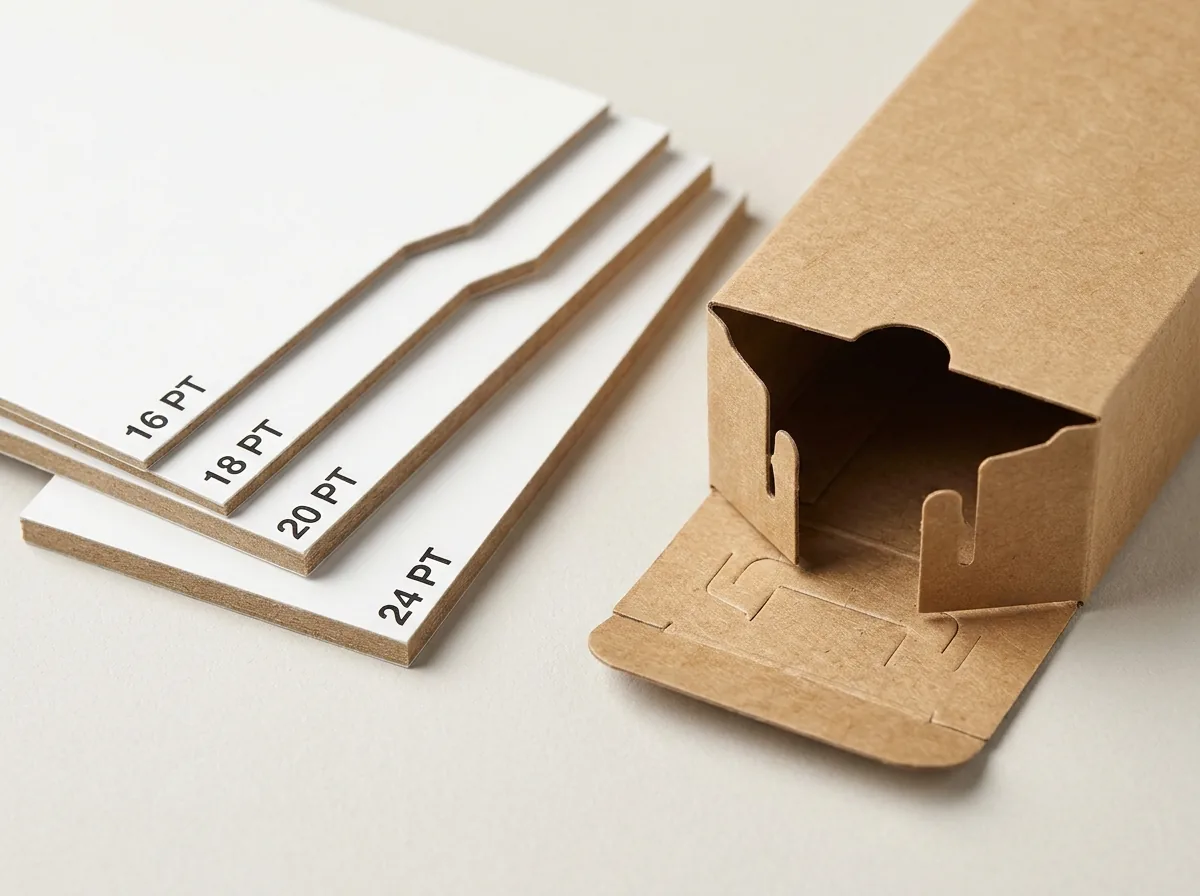
Folding carton board thickness (caliper) is measured in points, where 1 pt equals 0.001 inches (0.0254 mm). Because a reverse tuck end box relies on its bottom tuck flap and two side dust flaps to support the product when lifted off a retail shelf, matching board caliper and grain direction to product weight prevents bowed walls and popped bases. In addition to caliper, always make sure the paperboard grain runs horizontally around the carton (perpendicular to the vertical fold scores) so the front and back panels resist bowing when stacked in master shipping cases or displayed on pharmacy and boutique shelves
| Board caliper | Metric & GSM equivalent | Safe product weight | Ideal RTE applications | Base lock recommendation |
|---|---|---|---|---|
| 16 pt SBS / Kraft | 0.40 mm · ~300 gsm | Up to 3 oz (85 g) | 54-card poker decks, lip balms, single blister strips, eye drops | Friction tuck or ankle slit lock |
| 18 pt SBS / Kraft | 0.45 mm · ~350 gsm | 3 oz to 6 oz (85–170 g) | Standard OTC medicine boxes, 20-count tea boxes, cosmetic tubes, pens | Ankle slit locks on bottom flap |
| 20 pt SBS / Kraft | 0.50 mm · ~375–400 gsm | 6 oz to 9 oz (170–255 g) | USB-C wall chargers, phone cases, 30 ml serum bottles, tarot decks | Ankle slit locks + optional card insert |
| 24 pt SBS / Kraft | 0.60 mm · ~450 gsm | 9 oz to 12 oz (255–340 g) | Windowed wooden toy boxes, multi-item electronics kits, 50 ml bottles | Deep dust flaps + ankle slit locks |
Know your size? Compare pricing across up to 3 quantities.
Request a Quote →What are standard reverse tuck end box sizes across retail and healthcare?
Because every CubitPack order includes free custom die-making with zero die or plate charges, you never have to settle for a loose stock carton that lets your blister pack, bottle, or deck of cards rattle around in transit. Every reverse tuck end box we produce is die-cut to your exact Inside Length × Width × Height down to a 1/32-inch (0.8 mm) tolerance. Use these eight proven industry sizes from our custom medicine boxes, custom playing card boxes, custom tea bag boxes, and custom electronics boxes catalogs as a starting benchmark
| Product category | Inside L × W × H (inches) | Inside L × W × H (mm) | Typical board & features |
|---|---|---|---|
| Standard poker playing card deck (54 cards) | 2.56 × 0.71 × 3.56 in | 65 × 18 × 90 mm | 16–18 pt SBS · Thumb notch · Gloss or soft-touch |
| Tarot / affirmation card deck (78 cards) | 2.85 × 1.25 × 4.85 in | 72 × 32 × 123 mm | 18–20 pt SBS · Gold foil · Bottom slit locks |
| OTC tablet blister box (24–36 tablets) | 4.00 × 1.25 × 2.75 in | 102 × 32 × 70 mm | 18 pt SBS · Horizontal orientation · Drug Facts back |
| 30 ml dropper or nasal spray bottle | 1.50 × 1.50 × 4.25 in | 38 × 38 × 108 mm | 18–20 pt SBS/Kraft · Ankle slit-lock bottom |
| Herbal tea bag box (20 wrapped sachets) | 3.125 × 2.75 × 5.25 in | 79 × 70 × 133 mm | 18–20 pt SBS/Kraft · Re-closable top tuck lid |
| USB-C GaN fast charger & cable box | 3.00 × 1.50 × 4.50 in | 76 × 38 × 114 mm | 20 pt SBS · Scored card divider + bottom slit locks |
| Executive rollerball or fountain pen box | 1.25 × 0.875 × 6.00 in | 32 × 22 × 152 mm | 18–20 pt SBS · Internal card pen loop cradle |
| Smartphone protective case carton | 3.50 × 0.75 × 6.75 in | 89 × 19 × 171 mm | 20 pt SBS · Front PET window + bottom slit locks |
How do I verify my reverse tuck end box size before full production?
Once you have calculated your target Inside Length × Width × Height, review our companion guides on reverse tuck end vs straight tuck end and seal end boxes and reverse tuck end box dieline, nesting, and slit locks explained. When you order printed reverse tuck end cartons from CubitPack starting at 1,000 units, our structural specialists double-check your inside dimensions against your exact product format, paperboard caliper, and cartoning method. Whether you are packing blister cards on an automatic horizontal cartoner or hand-loading cosmetic tubes, tea sachets, or playing card decks at a fulfillment table, verifying both the interior score-to-score dimensions and the outer master case pack dimensions prevents costly rework. Follow this 4-step verification checklist before approving your production run
- Step 1: Enter your target Inside L × W × H, quantity (from 1,000 boxes), and paperboard stock (white SBS card, natural brown kraft, corrugated, or recycled board) in our quote form to get a written price in 5-7 minutes.
- Step 2: Share your exact product weight and components (such as whether an OTC medicine box includes a folded patient leaflet or a serum bottle requires a scored paperboard cradle) so our team can dial in your tuck flap and dust flap clearances.
- Step 3: Specify ankle slit locks (cherry locks) on the bottom tuck flap for any product over 3 ounces, and choose a smooth friction tuck (plus an optional half-moon thumb notch) on the top lid so customers can open and re-close the carton cleanly.
- Step 4: Review your free 2D vector dieline proof and interactive 3D mockup before payment to confirm panel proportions, grain direction, and flap artwork orientation, or order a physical sample to test your product fit in hand.
What are the most common sizing and board mistakes on reverse tuck end boxes?
Avoid these five dimensional errors before approving your reverse tuck end carton dieline
- Measuring the round cap of a squeeze tube instead of the wider flat top crimp seal, resulting in a box that is 0.25 inches too narrow across Length (L).
- Zero-clearance sizing on blister packs or bottles where the product diameter equals Inside Width (W), causing the top and bottom tuck flaps to snag on the item during closing.
- Forgetting to include the thickness of a folded multi-page pharmaceutical leaflet (+0.06 to +0.125 in) alongside the tablet blister strips inside a medicine box.
- Swapping Length (L) and Height (H) when ordering a landscape-oriented OTC medicine carton, which moves the tuck opening from the top panel to the narrow side end.
- Picking 16 pt paperboard without bottom slit locks for a 10 oz glass bottle or heavy toy that requires 20–24 pt board with ankle slit locks or an auto lock bottom.
Get a reverse tuck end dieline at your size
A simplified drawing for planning your design. Your free production dieline comes with your proof, made for your exact size and board.
Packaging for this
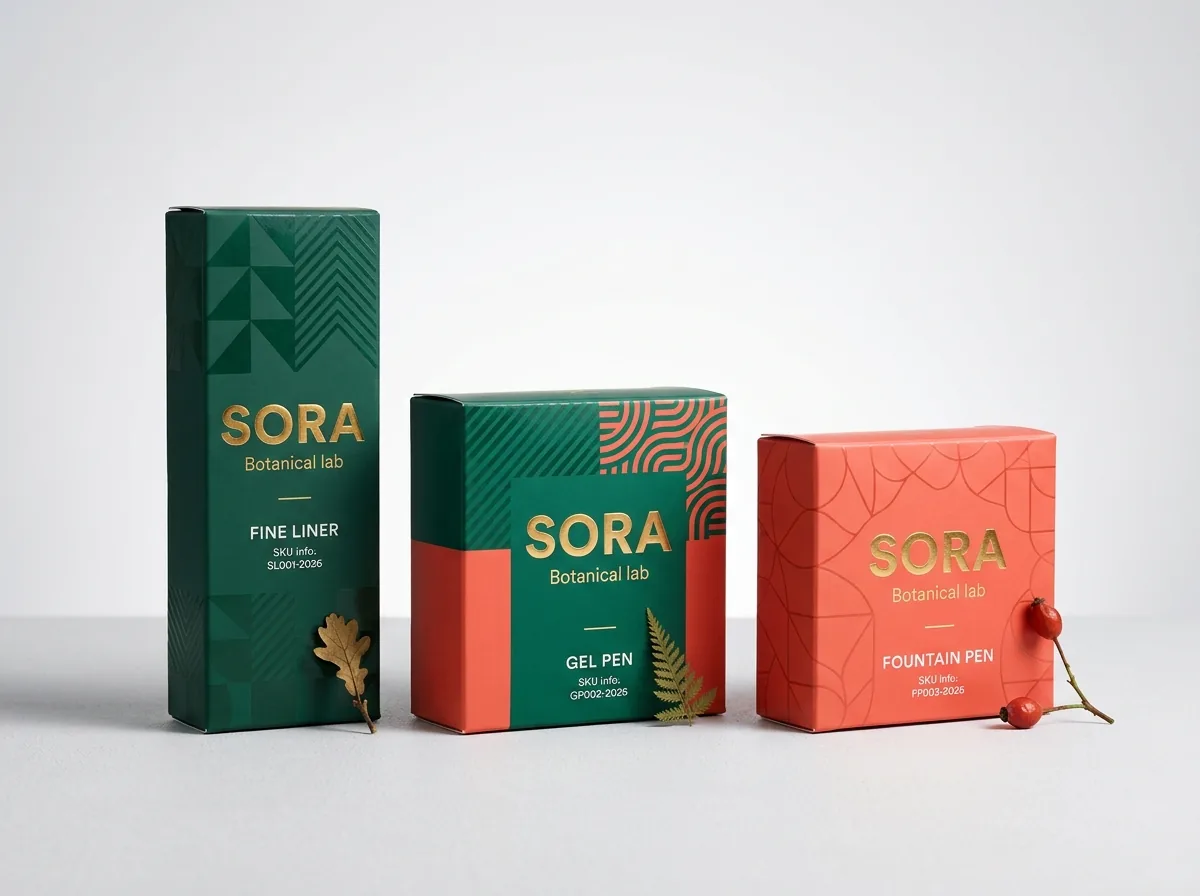
Ready to order reverse tuck end boxes? Compare up to 3 quantities with a free 3D mockup.
Request a Quote →Questions about reverse tuck end boxes
Are reverse tuck end box dimensions measured on the inside or the outside?
Reverse tuck end boxes are always specified by Inside Dimensions (Length × Width × Height) measured from crease to crease inside the folded carton. That ensures your blister pack, card deck, bottle, or insert slides in smoothly regardless of whether you choose 16 pt or 24 pt paperboard.
Which dimension is Length (L) vs Width (W) on a reverse tuck end box?
Length (L) is the horizontal width across the main front display panel (where the top and bottom closures hinge on the front/back walls). Width (W) is the front-to-back depth along the narrower side panels (where the dust flaps hinge). Height (H) is the vertical distance from the bottom fold to the top fold.
How much clearance should I add for a 54-card playing card deck?
For a standard 54-card poker deck (cards measuring 2.50 × 3.50 inches by ~0.65 inches thick), add +1/16 inch (1.5 mm) to Length, Width, and Height for a typical inside carton size of 2.56 × 0.71 × 3.56 inches.
What is the maximum weight a reverse tuck end box can hold?
With 20 pt to 24 pt paperboard and ankle slit locks on the bottom tuck flap, a reverse tuck end box safely holds up to 12 ounces (340 g). For heavier glass jars or items over 12–16 ounces, we recommend upgrading to a custom auto lock bottom box.
Can I order multiple sizes or SKUs in a single 1,000-box order?
Yes. Select the number of designs in Step 2 of our quote form and list each size or flavor SKU in the notes. Your packaging specialist will quote your multi-SKU run together in 5-7 minutes.
Still have a question? Ask a packaging specialist.
Request a Quote →Request your reverse tuck end boxes quote
Tell us your size and quantities, and one dedicated account manager prepares pricing for each tier.
- Free design & AI-to-print studio + 3D mockup
- No die or plate charges · 4–5 day rush available
- Free shipping to all 50 states
- 10% off your first order
We verified ECMA A20.20.03.01 inside dimension conventions, tuck flap caliper deductions, blister and playing card clearances, and 16–24 pt paperboard payload ratings against European Carton Makers Association (ECMA), Paperboard Packaging Council (PPC), and TAPPI standards. A packaging specialist checked every formula and table row. Spot something wrong? Tell us and we fix it.
Sources
What changed
- October 25, 2026: First published with 3-step RTE inside dimension formula, blister/card/tube clearance table, 16–24 pt caliper chart, and 8-industry size reference.
More guides
New packaging guides by email
Sizes, materials and design tips. Unsubscribe anytime.