
What size puzzle box do I need for 100, 500 and 1,000 piece puzzles?
Short answer: Size your box around the bagged pile of loose die-cut pieces and the folded reference poster, not the finished flat puzzle. A 1,000-piece puzzle fits an 8.0 × 8.0 × 2.5 in compact square or an 11.5 × 8.5 × 2.25 in wide box when ordering custom puzzle boxes.
On this page
- How do I measure bagged puzzle pieces and reference posters for a box
- What are the standard puzzle box dimensions by piece count
- Should I choose an 8 × 8 inch compact cube or an 11.5 × 8.5 inch wide puzzle box
- How do I size boxes for wooden whimsy puzzles, floor puzzles and mini favors
- How do telescope lid depth and bookshelf spine width affect puzzle box sizing
- Common mistakes
- FAQs
Request a custom quoteFree dieline & 3D mockup
A jigsaw puzzle's box dimensions come from the three-dimensional loft of its loose die-cut pieces inside their bag plus any folded reference poster, rather than the flat assembled dimensions of the puzzle. Because ribbon-cut and random-cut pieces interlock at angles inside a polybag or cotton pouch, they occupy roughly 2.2 to 2.6 times their solid board volume. For standard 1.8 to 2.0 mm blueboard, a 100 to 150 piece mini puzzle fits a 4.0 × 3.0 × 1.5 inch tuck carton, a 500-piece puzzle fits an 8.0 × 8.0 × 2.0 inch square or 10.0 × 8.0 × 2.25 inch bookshelf box, and a 1,000-piece puzzle fits an 8.0 × 8.0 × 2.5 inch compact cube or an 11.5 × 8.5 × 2.25 inch classic tabletop box. Every CubitPack order is cut to your exact inside length × width × height in inches with zero die or plate charges and free 50-state shipping.
How do I measure bagged puzzle pieces and reference posters for a box?
First-time puzzle publishers often look at their finished flat dieline, such as 27 × 20 inches for a 1,000-piece jigsaw puzzle, and guess the box dimensions without testing a physical bag of cut pieces. When a die press punches a 27 × 20 inch sheet of 2.0 mm puzzle blueboard into 1,000 interlocking tabs and blanks, those loose pieces tumble inside their bag and trap air pockets between them. A flat sheet that occupies just 42 cubic inches on press expands into a loose bagged mound of 115 to 145 cubic inches once packaged. To find your exact inside dimensions before requesting a quote for printed jigsaw puzzle boxes, place one complete set of die-cut pieces inside the exact resealable polybag, paper envelope or drawstring cotton bag you plan to ship. Shake the bag gently on a flat table so the pieces settle into an even rectangle, lay your folded reference poster and artist biography card on top, and measure length, width and height with a ruler. Add 0.25 inch of breathing room to the length, width and height so the telescoping rigid lid glides all the way down to the base without catching on a corner of the bag.
- Bag the real cut pieces: use the exact chipboard or wood thickness (1.8 mm, 2.0 mm or 5.0 mm) and bag style.
- Measure the settled mound: shape the bagged pieces to match your target footprint and measure the peak height.
- Include the folded poster: a 4-panel or 6-panel reference poster adds 0.125 to 0.25 inch of height on top of the bag.
- Add 0.25 inch clearance: keeps two-piece telescoping lids from riding high or trapping air during assembly.
- Quote inside L × W × H: always give the interior base tray dimensions in inches.
What are the standard puzzle box dimensions by piece count?
While CubitPack builds every folding carton (from 1,000 units), E-flute box (from 250 units) and two-piece rigid box (from 50 units) to your custom dimensions, retail bookstores, museum shops and adult puzzle collectors recognize six proven footprints. Use the benchmark chart below to compare piece counts, finished puzzle dimensions and inside box sizes. When reviewing the chart, note how 500-piece and 1,000-piece adult puzzles each offer two distinct footprints: a modern compact square or bookshelf box that saves parcel shipping volume and requires an enclosed reference poster, or a traditional wide rectangular lid that displays a larger cover image on its own.
| Puzzle format & piece count | Typical inside box size (L × W × H) | Best box style |
|---|---|---|
| 100–150 pc pocket / mini puzzle (finished 6 × 4 in) | 4.0 × 3.0 × 1.5 in | Straight tuck end or mini drawer |
| 150–250 pc laser-cut 5 mm wooden whimsy puzzle | 6.5 × 6.5 × 2.0 in | Two-piece rigid or magnetic book box |
| 300–500 pc compact square jigsaw (finished 20 × 16 in) | 8.0 × 8.0 × 2.0 in | Two-piece telescoping rigid box |
| 500 pc bookshelf or classic jigsaw (finished 20 × 16 in) | 10.0 × 8.0 × 2.25 in | Magnetic book box or two-piece rigid |
| 1,000 pc modern compact cube (finished 27 × 20 in + poster) | 8.0 × 8.0 × 2.5 in | Two-piece telescoping rigid box |
| 1,000 pc classic wide tabletop (finished 27 × 20 in) | 11.5 × 8.5 × 2.25 in | Two-piece telescoping rigid box |
| 2,000 pc collector jigsaw (finished 39 × 27 in) | 12.0 × 10.0 × 3.0 in | Heavy-duty two-piece rigid box |
| 36–60 pc jumbo toddler floor puzzle (finished 36 × 24 in) | 12.0 × 9.0 × 3.0 in | E-flute briefcase handle box |
Should I choose an 8 × 8 inch compact cube or an 11.5 × 8.5 inch wide puzzle box?
For decades, mass-market 1,000-piece puzzles came in wide 12 × 10 × 2.5 inch or 11.5 × 8.5 × 2.25 inch boxes that were nearly half empty inside. Wide lids give shoppers a big billboard on big-box toy aisles and give puzzlers a large cover image to prop on the table without needing a separate paper insert. However, oversized boxes take up more warehouse pallet space, push direct-to-consumer e-commerce orders into higher dimensional-weight shipping tiers, and overhang standard 9-inch living room bookshelves. Today, many artist-led DTC puzzle brands and boutique gift lines use an 8.0 × 8.0 × 2.5 inch compact square custom two-piece box or a 10.0 × 8.0 × 2.25 inch vertical bookshelf box. An 8 × 8 × 2.5 inch box holds 160 cubic inches, which comfortably fits a 1,000-piece bag of 2.0 mm blueboard pieces with zero wasted air. Because the 8 × 8 inch cover shrinks the reference illustration, always pair a compact cube with a folded 10 × 14 inch or 12 × 16 inch matte reference poster inside the box.
Know your size? Compare pricing across up to 3 quantities.
Request a Quote →How do I size boxes for wooden whimsy puzzles, floor puzzles and mini favors?
Specialty puzzle formats have very different piece thicknesses from standard 1.9 mm cardboard jigsaws, so their box volumes scale differently even at low piece counts. Laser-cut wooden puzzles made from 4 mm or 5 mm birch or basswood plywood have thick, non-compressible pieces and intricate figure-shaped whimsy silhouettes. A 200-piece wooden puzzle packed inside a burlap or cotton drawstring pouch needs a 6.5 × 6.5 × 2.0 inch or 7.5 × 7.5 × 2.25 inch rigid box or custom drawer box, often with a wooden box-top stand slotted inside. At the other end of the spectrum, toddler jumbo floor puzzles only have 36 to 60 pieces, but each piece measures 4 to 6 inches across and is laminated onto thick 2.5 mm chipboard (gray board). Those large tiles cannot bend around tight corners, so they require a roomy 12.0 × 9.0 × 3.0 inch E-flute custom briefcase box with a top carry handle. For 100 to 150 piece pocket puzzles sold at museum checkout counters or given as party favors, a 4.0 × 3.0 × 1.5 inch folding carton or 3.0 × 5.5 inch round paperboard tube fits easily into a jacket pocket or gift bag.
How do telescope lid depth and bookshelf spine width affect puzzle box sizing?
When sizing a two-piece rigid puzzle box, the height dimension applies to both the base tray and the outer telescoping lid. A full-telescope lid slides all the way down to the bottom edge of the base tray, minus a 0.125 inch thumb notch or reveal at the bottom so players can grip the base. Full-telescope lids double the vertical wall stiffness and keep enough friction on the sides that the lid stays shut when a customer stores the box vertically on a bookshelf. If you design a vertical bookshelf puzzle series using custom book style boxes or two-piece rigid boxes, keep the spine thickness (the box height) between 2.0 and 2.5 inches. A spine narrower than 1.75 inches tips over easily when propped upright on a dining table during puzzle assembly, while a spine wider than 2.75 inches looks bulky next to art books. Keep the exact same outer height and width across every volume in your collection so the spine badges align in a straight horizontal row on the shelf.
- Full-telescope lid depth: make the lid wall 0.125 inch shorter than the base wall for easy finger grip.
- Tabletop standing base: a 2.0 to 2.5 inch lid depth allows the box cover to stand upright on its bottom edge without tipping.
- Series uniformity: lock one footprint (such as 10 × 8 × 2.25 in) across both 500-piece and 1,000-piece titles so collectors can stack them together.
- Master case fit: two 8 × 8 × 2.5 in boxes sit side by side inside a compact 16.5 × 8.5 in shipping carton.
What are the most common puzzle box sizing mistakes?
Almost every puzzle sizing issue happens when a publisher sizes the box from the flat artwork sheet instead of the bagged pieces. Check these five mistakes before approving your dieline
- Calculating box volume from the flat sheet thickness (1.9 mm) without multiplying by 2.3x to 2.5x for the air trapped between loose bagged pieces.
- Switching to a compact 8 × 8 inch square box for a 1,000-piece puzzle without adding a folded reference poster inside for detailed viewing.
- Making the folded reference poster the exact same size as the inside box footprint so its corners get crushed when dropped into the tray.
- Ordering a lid depth under 1.5 inches on a large tabletop puzzle box, causing the lid to tip backward when propped up on the table.
- Changing box length and width between different titles in the same series, which prevents retailers and collectors from stacking them neatly.
Find your size
Suggested inside size: 4.0 × 3.0 × 1.5 in
A starting point. Your account manager confirms the size with you before the proof.
Quote this size →Packaging for this
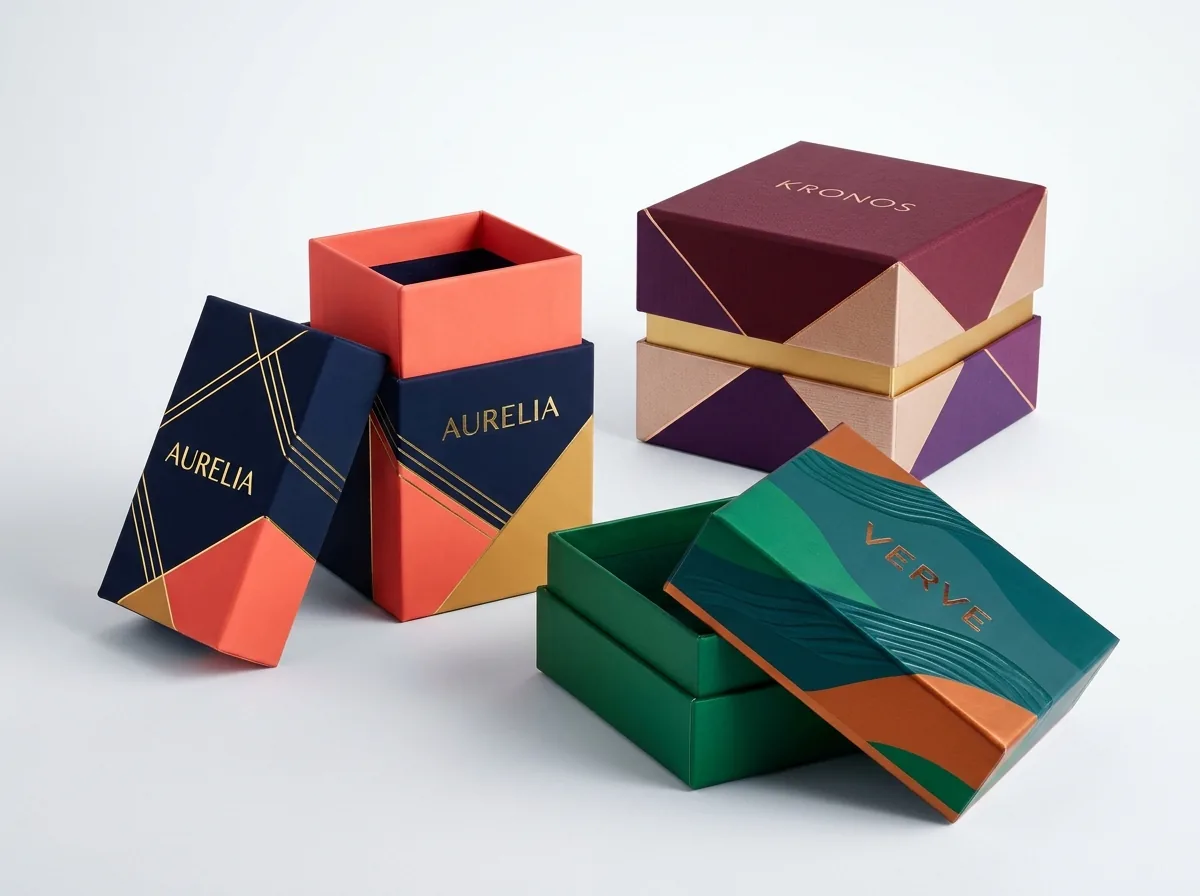
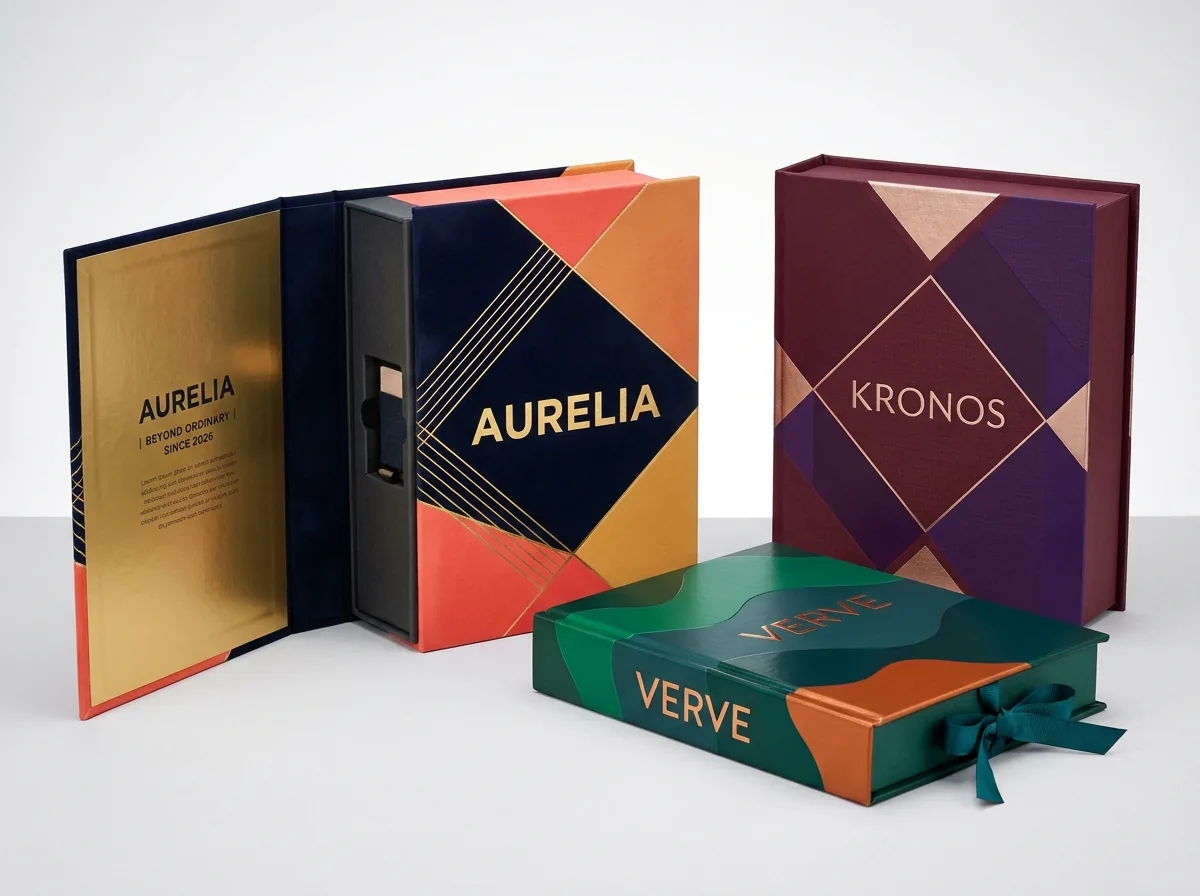
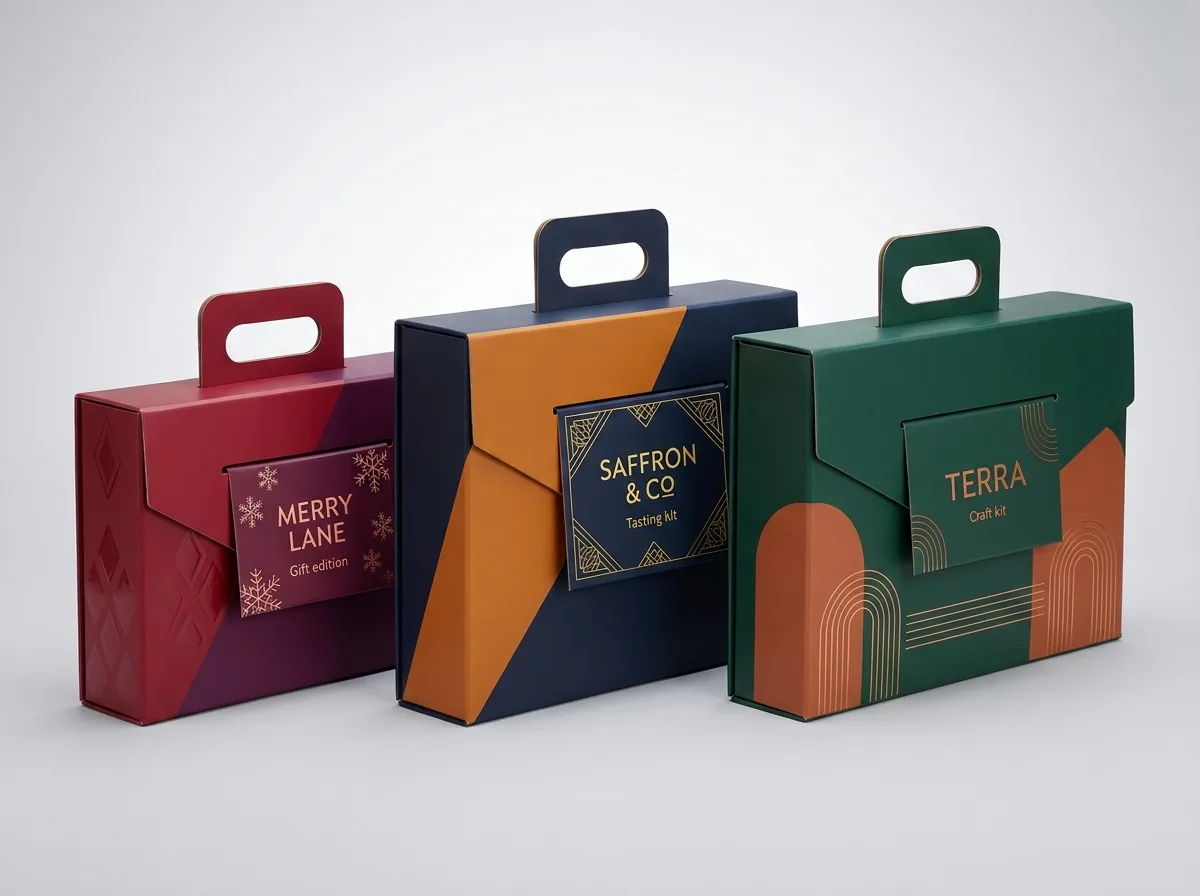
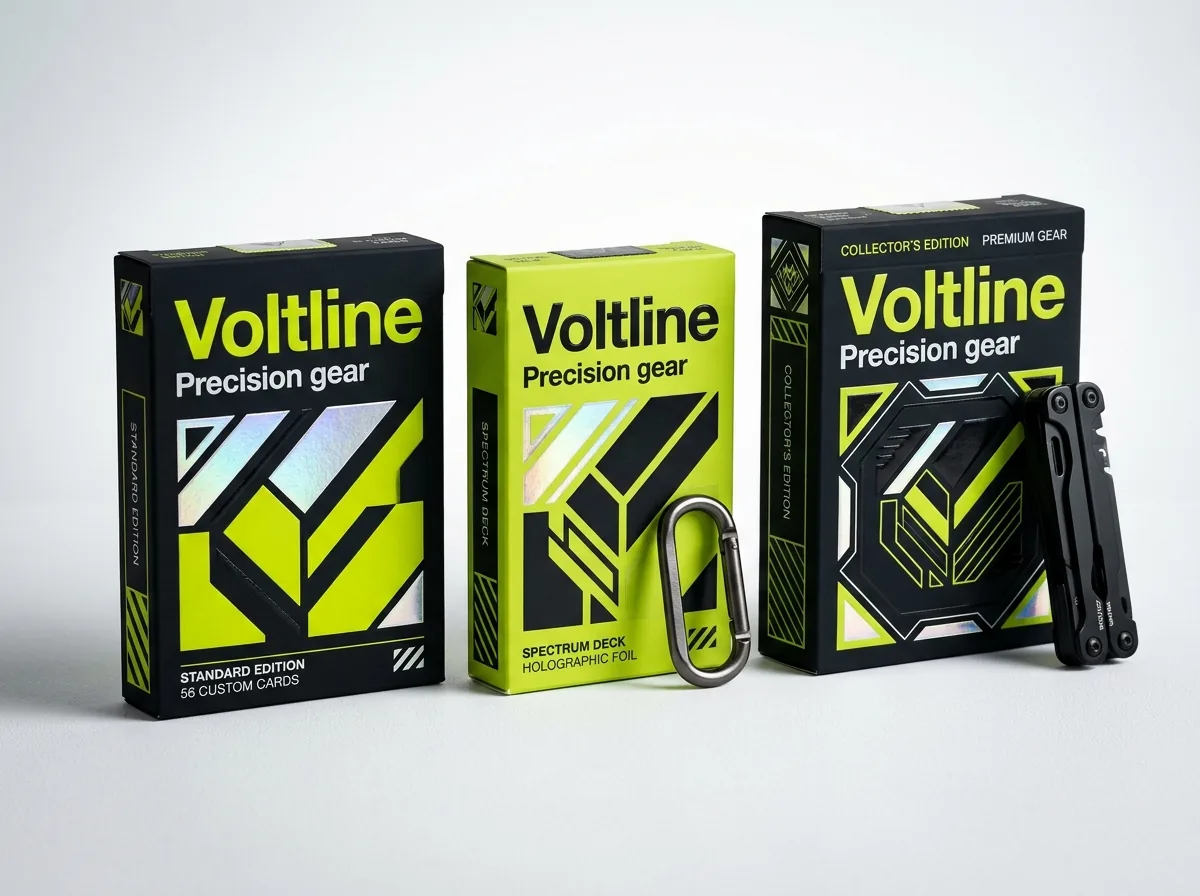
Ready to order puzzle boxes? Compare up to 3 quantities with a free 3D mockup.
Request a Quote →Questions about puzzle boxes
What is the most popular box size for a 1,000-piece jigsaw puzzle?
The two most popular inside sizes for a 1,000-piece puzzle (finished at 27 × 20 inches) are an 8.0 × 8.0 × 2.5 inch compact square rigid box paired with a folded reference poster, and an 11.5 × 8.5 × 2.25 inch classic wide tabletop rigid box.
Can a 500-piece and a 1,000-piece puzzle share the exact same box size?
Yes. Many puzzle brands use a single 8.0 × 8.0 × 2.5 inch or 10.0 × 8.0 × 2.25 inch box across both 500-piece and 1,000-piece titles. Sharing one dieline lets you combine multiple titles in a larger run and keeps retail shelves uniform.
How much clearance should I leave between the bagged pieces and the lid?
Leave about 0.25 inch of vertical headroom above the settled piece bag and folded poster. That keeps the two-piece telescoping lid sitting flush against the bottom of the base tray instead of floating upward on a cushion of trapped air.
Are custom puzzle box dimensions quoted as inside or outside measurements?
Inside measurements. Always give your length × width × height as the interior space of the base tray. On wrapped rigid puzzle boxes, the outside footprint will be about 0.15 to 0.20 inch larger due to the 1.5 to 2.0 mm chipboard (gray board) walls.
What size reference poster should go inside an 8 × 8 inch puzzle box?
A 14 × 10 inch or 15 × 11 inch poster folded in quarters (down to 7.0 × 5.0 inches or 7.5 × 5.5 inches) drops flat into an 8 × 8 inch base tray without touching the side walls, while opening large enough for two people to share.
Can I test my bagged puzzle pieces in a sample box before printing?
Yes. Every order includes a free custom vector dieline, digital proof and 3D mockup before payment. You can also order our $50 sample kit or a custom-sized prototype (credited toward your production order) to test your piece bag fit.
Still have a question? Ask a packaging specialist.
Request a Quote →Request your puzzle boxes quote
Tell us your size and quantities, and one dedicated account manager prepares pricing for each tier.
- Free design & AI-to-print studio + 3D mockup
- No die or plate charges · 4–5 day rush available
- Free shipping to all 50 states
- 10% off your first order
The inside dimensions in this guide are calculated from standard 1.8 to 2.0 mm puzzle blueboard and 5 mm wooden puzzle piece loft ratios, plus clearance for folded reference posters. A CubitPack packaging specialist verified every row. Spot something wrong? Tell us and we will fix it.
Sources
What changed
- October 22, 2026: First published.
- October 22, 2026: Updated specifications, terminology, and verified source links.
More guides
New packaging guides by email
Sizes, materials and design tips. Unsubscribe anytime.