
What size baby food spout pouch fits 3.5 oz, 4 oz and toddler purees?
Short answer: A 3.35 × 5.25 × 1.5 inch stand-up spout pouch fits 3.5 oz (99 g / 100 mL) of Stage 1 starter puree, while a 3.75 × 5.75 × 1.75 inch pouch fits the US grocery benchmark 4.0 oz (113 g / 120 mL) Stage 2 or Stage 3 blend when ordering custom baby food spout pouches.
On this page
- What are the standard custom baby food spout pouch dimensions from 2.5 oz to 16 oz
- How do you measure width, film body height, bottom gusset and capped height
- How do puree specific gravity and retort or HPP processing change pouch sizing
- What spout diameter, canoe base and vented wheel cap sizes fit infant pouches
- How do you size 4-pack, 6-pack and 12-count retail boxes for baby food pouches
- Common mistakes
- FAQs
Request a custom quoteFree dieline & 3D mockup
Unlike dry snack bags that vary widely in width and height, infant and toddler squeeze pouches are tightly standardized across US supermarket baby aisles and co-packer spout-rail filling machines. Over 80% of single-serve retail baby pouches fall into two footprints: 3.35 × 5.25 × 1.5 inches for 3.5 oz (99 g) Stage 1 fruit or vegetable purees, and 3.75 × 5.75 × 1.75 inches for 4.0 oz (113 g) Stage 2 and Stage 3 meals. Larger 5.0 to 6.0 oz (142 to 170 g) toddler oat and yogurt smoothies step up to a 4.0 × 6.25 × 2.0 inch pouch, while 12 to 16 oz family applesauce and yogurt refills use a 5.5 × 8.5 × 2.75 inch pouch. Always specify outer flat film Width × Body Height (below the top shoulder seam, excluding the 1.1 to 1.4 inch spout neck and vented wheel cap) × full Bottom Gusset depth, and leave 8% to 12% unfilled headspace for cold HPP, 190°F hot-fill or 250°F steam retort expansion.
What are the standard custom baby food spout pouch dimensions from 2.5 oz to 16 oz?
CubitPack builds custom baby food spout pouches to your exact outer Width × Film Body Height × Bottom Gusset in inches or millimeters with zero die or plate charges. Because contract packagers feed empty pouches along stainless-steel spout rails into rotary or inline fillers, matching standard US grocery stage footprints ensures smooth rail handling, consistent retail shelf posture and predictable gram fill weights. Use the size chart below to match your feeding stage, net weight declaration (in ounces and grams) and fluid capacity (in milliliters) to proven outer film dimensions.
| Feeding stage & format | Outer size (W × Body H × G) | Target net weight & fluid volume |
|---|---|---|
| Allergen introducer / probiotic mini | 3.15 × 4.75 × 1.5 in (80 × 120 × 38 mm) | 2.5 oz (70 g) / 75 mL peanut, egg or sesame puree |
| Stage 1 starter puree (4+ mos) | 3.35 × 5.25 × 1.5 in (85 × 133 × 38 mm) | 3.5 oz (99 g) / 100 mL single-fruit or single-veggie puree |
| Stage 2 & 3 grocery blend (6+ mos) | 3.75 × 5.75 × 1.75 in (95 × 146 × 44 mm) | 4.0 oz (113 g) / 120 mL fruit, veggie, oat, yogurt or meat blend |
| Stage 4 toddler smoothie (12+ mos) | 4.0 × 6.25 × 2.0 in (102 × 159 × 50 mm) | 5.0 to 6.0 oz (142 - 170 g) / 150 - 180 mL oat smoothie or applesauce |
| Family & daycare multi-serve refill | 5.5 × 8.5 × 2.75 in (140 × 216 × 70 mm) | 12 to 16 oz (340 - 454 g) / 350 - 475 mL applesauce or yogurt refill |
How do you measure width, film body height, bottom gusset and capped height?
The single most expensive sizing error on printed infant puree squeeze pouches is measuring total height from the bottom fold to the top of the plastic wheel cap. Flexible packaging plants always engineer pouch dielines by film body height, which is the vertical distance from the bottom edge of the laminate to the top horizontal shoulder seam where the spout exits the bag. An infant 8.6 mm spout neck and oversized vented wheel cap protrude roughly 1.1 to 1.4 inches (28 to 35 mm) above that top film shoulder. If you accidentally include the 1.25 inch cap inside a 5.75 inch height specification, your actual film body drops to 4.5 inches and loses more than 20% of its liquid capacity. You only use the overall capped height (roughly 7.0 inches on a 4.0 oz pouch) when sizing your outer corrugated shipper, 4-pack folding carton or 12-count grocery shelf tray.
- Outer Width (W): Measured flat from left edge to right edge. Subtract 0.50 in total (0.25 in per side heat seal) to find usable internal width.
- Film Body Height (H): Measured from bottom fold to top film shoulder seam, excluding the spout and cap. Subtract 0.375 in at the top for the canoe spout weld.
- Bottom Gusset (G): Full open depth of the W-fold base (a 1.75 in bottom gusset folds up 0.875 in when flat).
- Capped Standing Height: Film body height plus 1.1 to 1.4 in for the exposed spout throat and vented safety cap.
How do puree specific gravity and retort or HPP processing change pouch sizing?
US baby food brands declare net contents on the front panel by weight (Net Wt 3.5 oz (99 g) or 4.0 oz (113 g)), whereas pouch geometry holds fluid volume in milliliters (100 mL or 120 mL). Because fruit, vegetable, grain and meat purees are denser than water (typically 1.04 to 1.12 g/mL depending on soluble solids and fiber), 100 mL of sweet potato, lentil and oat puree weighs 106 to 112 grams, while 100 mL of light pear puree weighs roughly 103 to 105 grams. Your sterilization process also dictates how much empty headspace must stay above the liquid line inside custom spout pouches. Cold-pressed High Pressure Processing (HPP at 87,000 psi) compresses the pouch externally in a cold water vessel, so HPP fillers leave minimal air headspace (5% to 8%) to prevent top-shoulder creasing. Hot-fill pasteurization (185°F to 195°F) requires 8% to 10% headspace for thermal liquid expansion. Low-acid steam retort pouches cooked at 240°F to 250°F inside a pressurized autoclave require 10% to 12% headspace plus wide 6 mm to 8 mm side seals so internal vapor pressure never balloons or ruptures the seams.
Know your size? Compare pricing across up to 3 quantities.
Request a Quote →What spout diameter, canoe base and vented wheel cap sizes fit infant pouches?
While adult custom drink spout pouches and custom sauce spout pouches often use 10 mm to 16 mm spouts with compact twist caps, infant and toddler pouches rely on child-specific hardware. The industry-standard baby food fitment is a top-center polyethylene (for HPP/hot-fill) or polypropylene (for 250°F retort) spout with an 8.6 mm smooth inner bore and a boat-shaped canoe weld flange. That 8.6 mm bore is wide enough for thick Stage 3 oatmeal, chia seed and chicken purees to squeeze out smoothly without clogging, yet narrow enough to prevent a sudden gush and sized to accept standard twist-on infant feeding spoons. The spout pairs with an oversized 31 mm to 35 mm vented wheel cap featuring internal airflow channels and a ratcheting tamper-evident breakaway ring that clicks on first opening, combined with smooth 8 mm to 10 mm rounded corner cuts on all four pouch edges.
- 8.6 mm top-center spout bore: standard infant and toddler throat diameter that fits clip-on feeding spoons.
- 31 mm to 35 mm vented wheel cap: oversized outer diameter with internal airflow slots and tamper-evident breakaway ring.
- Canoe heat-weld flange: occupies the top 0.375 inches of center film shoulder between front and back walls.
- 8 mm to 10 mm rounded corner radii: die-cut on all four corners so stiff laminate edges never scratch small hands.
How do you size 4-pack, 6-pack and 12-count retail boxes for baby food pouches?
Most retail baby brands sell individual pouches out of a perforated 12-count shelf-ready display tray in grocery stores and sell 4-pack, 6-pack or 12-pack variety cartons in club stores and DTC subscriptions. When a 4.0 oz (3.75 × 5.75 × 1.75 in) pouch is filled and capped, its lower belly expands to roughly 1.60 to 1.65 inches thick while its total capped height reaches 7.0 inches. To size a matching custom food box or custom counter display box, multiply the filled bottom thickness by the number of pouches in a row, add 0.125 inches of loading clearance, set carton width to pouch width plus 0.125 inches, and set carton height to the full capped height (film body + 1.25 inch cap) plus 0.125 inches. We engineer both your flexible spout pouches and your paperboard multipack cartons on coordinated dielines so your stage colors match across shelf trays and club packs.
- 4-pack retail folding carton (for 4.0 oz pouches): 3.875 × 6.5 × 7.125 in (4 pouches standing front-to-back).
- 6-pack variety carton (for 4.0 oz pouches): 7.75 × 5.0 × 7.125 in (2 rows of 3 pouches).
- 12-count grocery shelf-ready display caddy (for 4.0 oz pouches): 4.0 × 10.5 × 7.125 in single-row or 7.875 × 9.75 × 7.125 in double-row perforated tray.
What are the most common baby food spout pouch sizing mistakes?
Most infant pouch sizing errors happen when brands confuse film body height with overall capped height or overlook thermal headspace. Avoid these five mistakes
- Including the 1.25 inch vented wheel cap inside your film body height spec, which shrinks the liquid pouch cavity by 20% and causes 4 oz fills to overflow.
- Ordering one pouch dimension without checking puree specific gravity, since 113 g of light fruit puree occupies more milliliters than 113 g of dense sweet potato and oat blend.
- Forgetting to leave 10% to 12% headspace on low-acid steam retort pouches, causing side seals to balloon or rupture inside a 250°F autoclave.
- Specifying sharp 90-degree corners instead of smooth 8 mm to 10 mm rounded corner cuts required for infant and toddler handling.
- Sizing your 4-pack carton or 12-count grocery tray to the flat film height (5.75 in) instead of the full capped height (7.0 in), preventing the top box flaps from closing.
Packaging for this
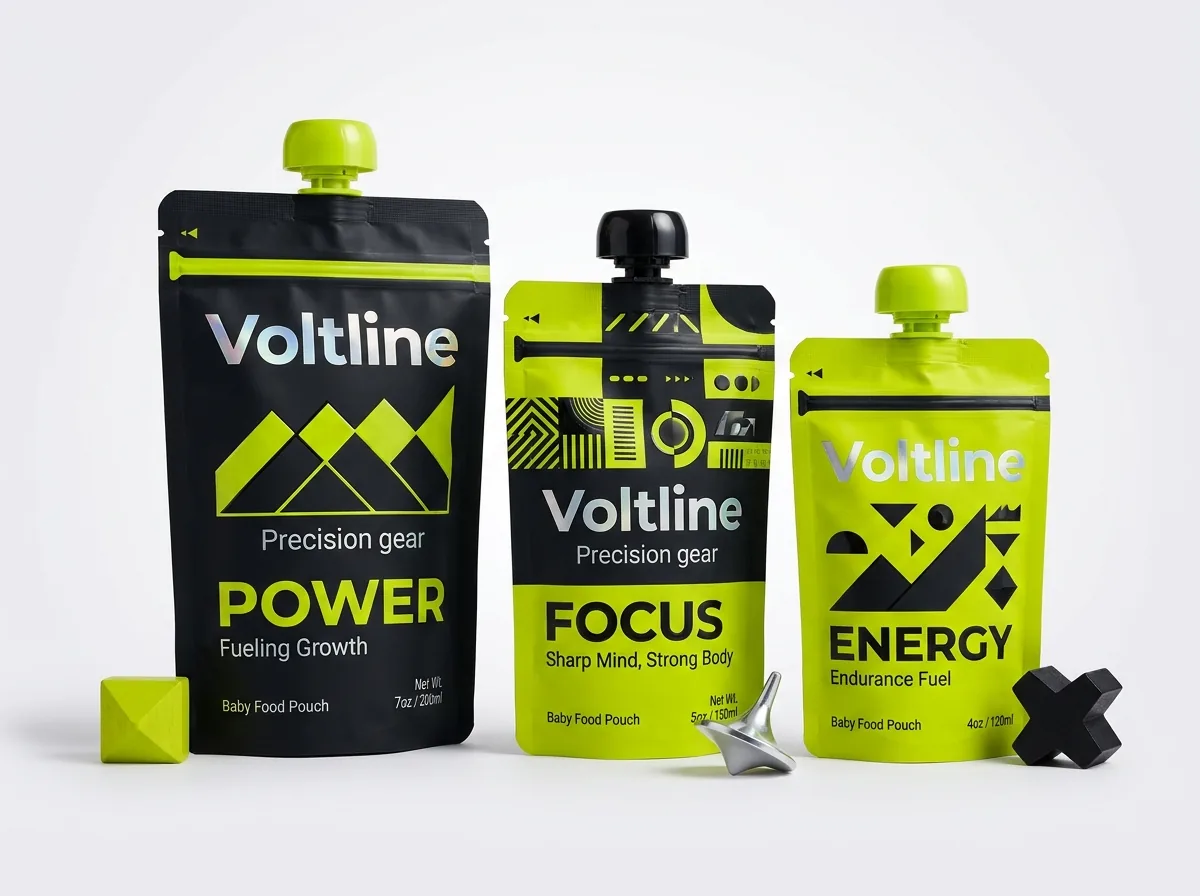
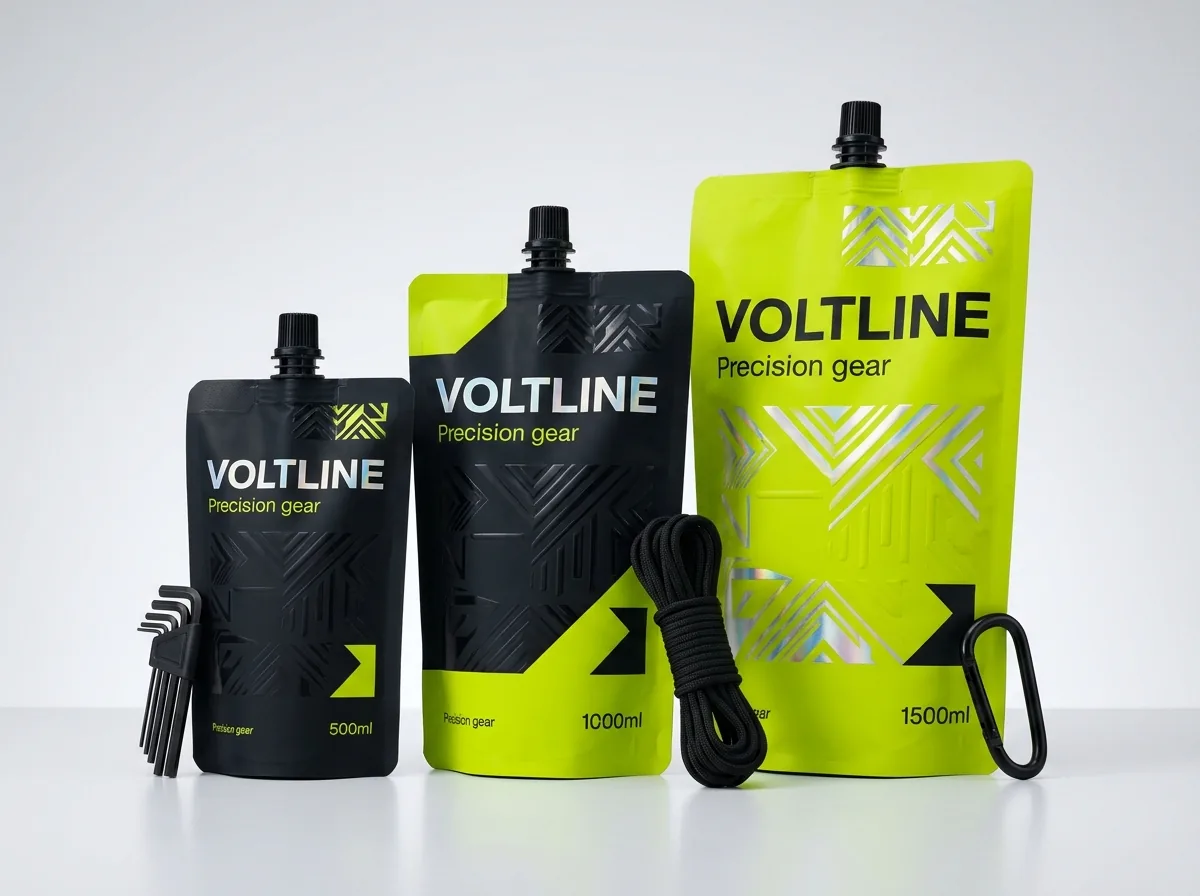
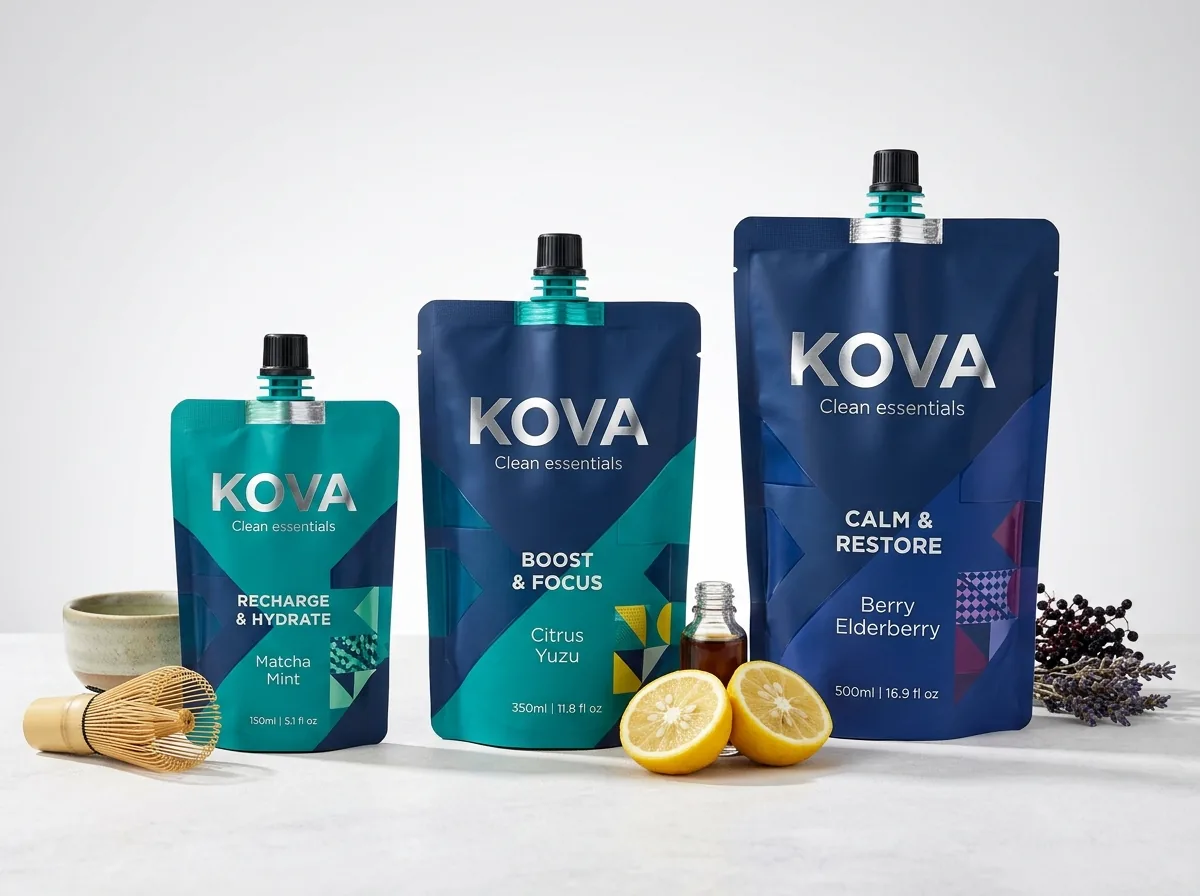
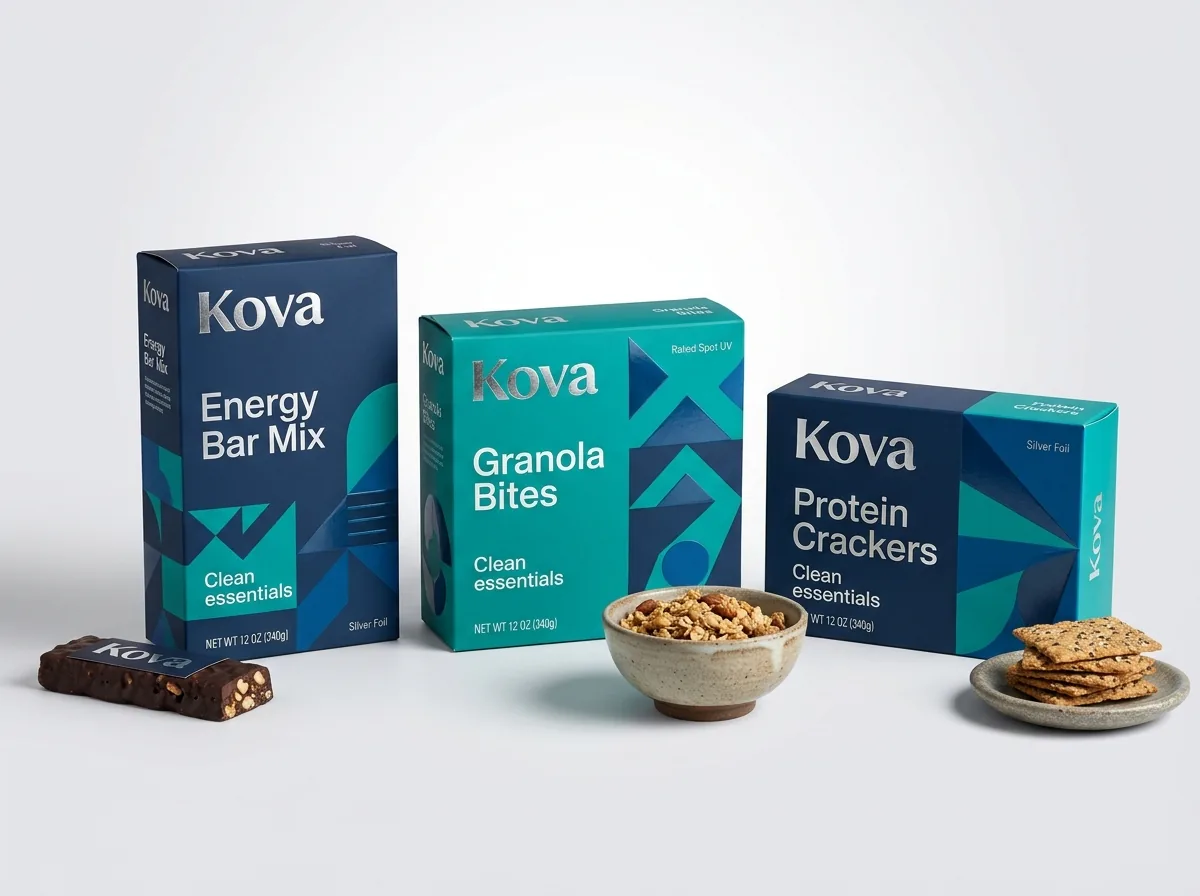
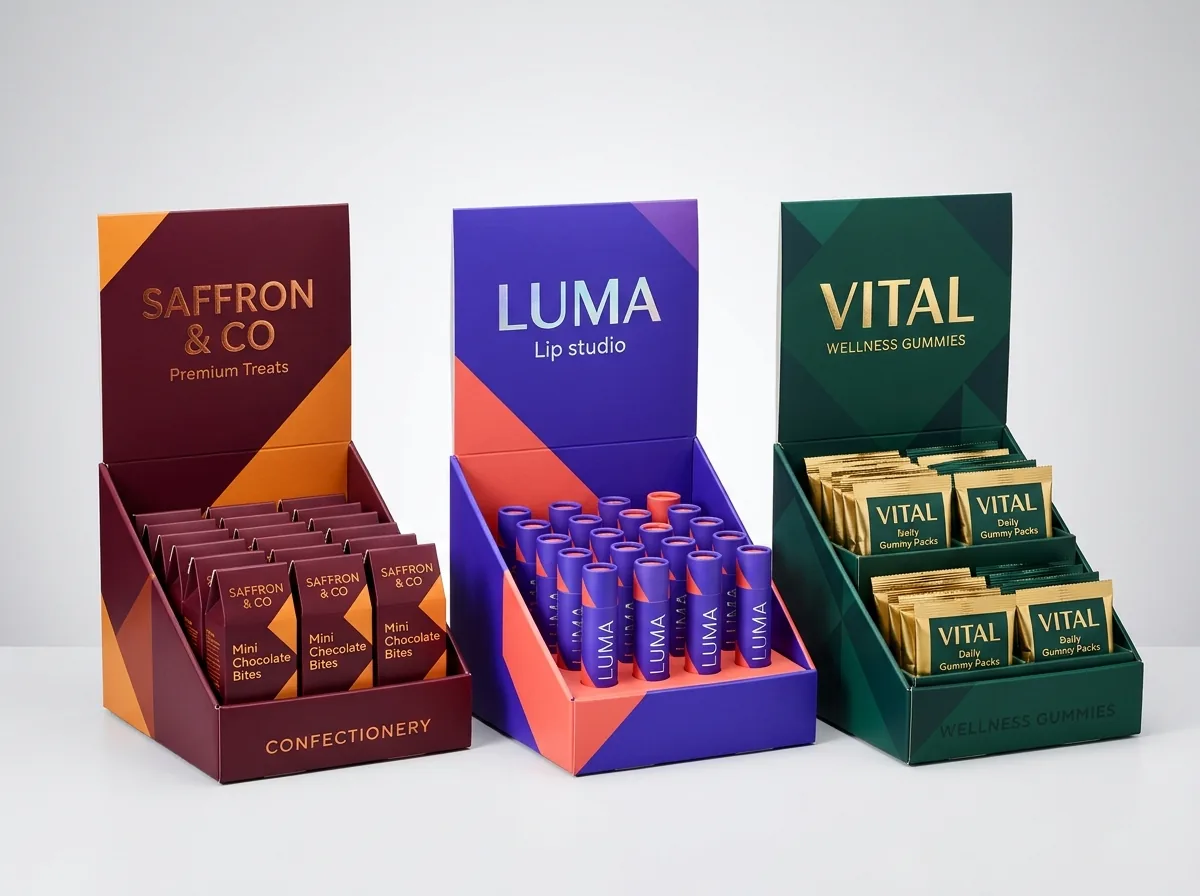
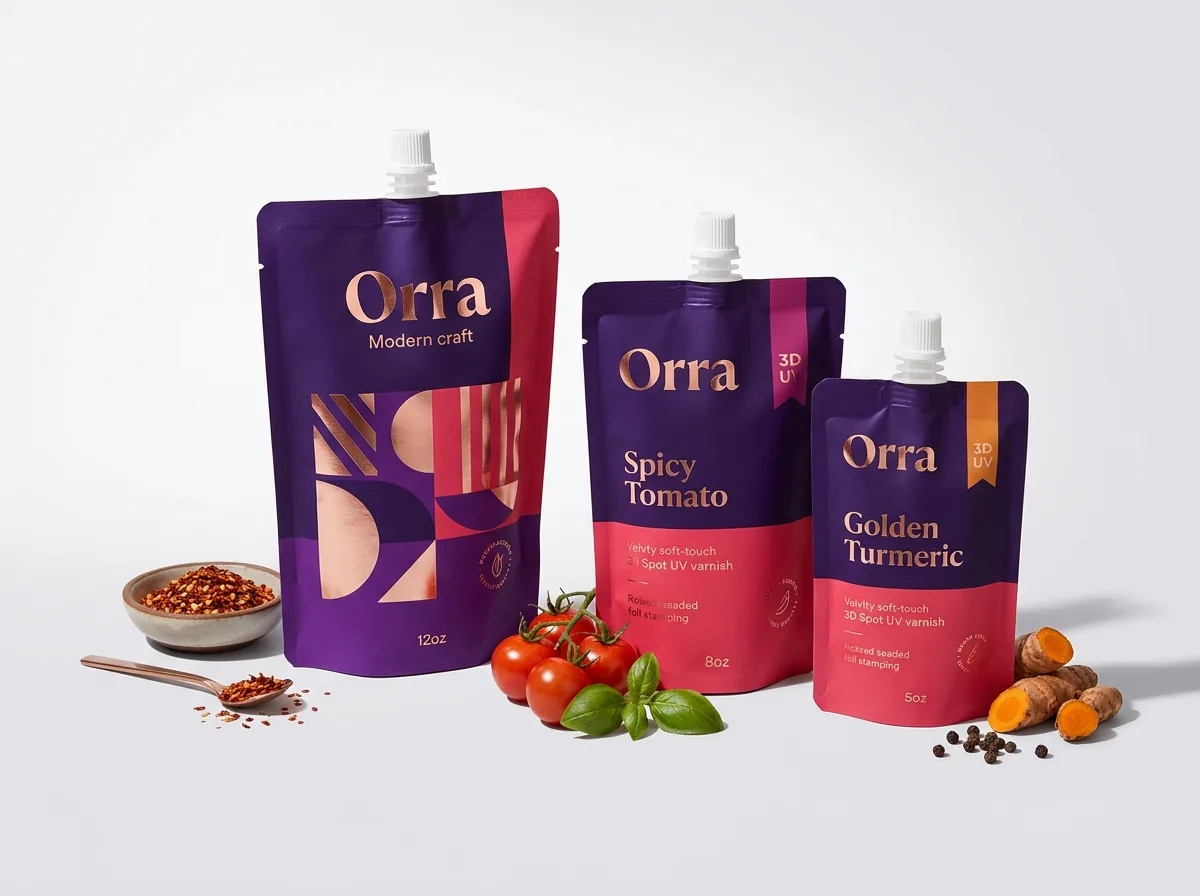
Ready to order baby food spout pouches? Compare up to 3 quantities with a free 3D mockup.
Request a Quote →Questions about baby food spout pouches
What are the exact dimensions of a standard 4 oz (113 g) baby food pouch?
A standard 4.0 oz (113 g / 120 mL) US grocery baby food spout pouch measures 3.75 inches wide × 5.75 inches film body height × 1.75 inches bottom gusset (95 × 146 × 44 mm), with a total standing height around 7.0 inches including the vented wheel cap.
What is the difference between a 3.5 oz and a 4 oz baby food pouch?
A 3.5 oz (99 g / 100 mL) pouch is slightly narrower and shorter (typically 3.35 × 5.25 × 1.5 inches), making it popular for Stage 1 single-ingredient starter purees for 4+ month infants. A 4.0 oz (113 g / 120 mL) pouch at 3.75 × 5.75 × 1.75 inches is the standard Stage 2 and Stage 3 meal size for 6+ month babies.
Why is spout pouch height measured without the spout and cap?
Flexible film printing and pouch converting machines cut and seal the flat laminate web before inserting the plastic spout fitment. Specifying film body height separately from the 1.1 to 1.4 inch cap ensures your printed artwork and liquid cavity match the converter's tooling.
Can I combine multiple puree flavors in one order if they share the same 4 oz pouch size?
Yes. When all your Stage 2 and Stage 3 flavors share the exact same 3.75 × 5.75 × 1.75 inch dimensions, barrier structure and 8.6 mm spout fitment, select 2 designs or 3+ designs in Step 2 of the quote form to combine your print run.
Do I pay extra die charges for rounded corners or custom pouch dimensions?
No. CubitPack never charges die or plate fees. Smooth rounded toddler-safe corners and custom width, height and bottom gusset dimensions are included with your order, along with a free digital proof and 3D mockup before payment.
How can I test my puree fill volume and co-packer spout rail fit before printing?
Order our $50 sample kit (credited toward your production order) or request unprinted sizing pouches in 3.5 oz and 4.0 oz footprints to run live fill, cap torque and retort or HPP trials on your co-packer's line.
Still have a question? Ask a packaging specialist.
Request a Quote →Request your baby food spout pouches quote
Tell us your size and quantities, and one dedicated account manager prepares pricing for each tier.
- Free design & AI-to-print studio + 3D mockup
- No die or plate charges · 4–5 day rush available
- Free shipping to all 50 states
- 10% off your first order
The pouch dimensions and capacity benchmarks in this guide are calculated from US grocery infant puree net weights (70 g to 454 g), puree specific gravities (1.04 to 1.12 g/mL), 0.375 inch canoe spout weld clearances and retort/HPP headspace rules, verified by a CubitPack packaging specialist. Spot something off? Tell us and we will fix it.
Sources
What changed
- October 22, 2026: First published.
- October 22, 2026: Updated specifications, terminology, and verified source links.
More guides
New packaging guides by email
Sizes, materials and design tips. Unsubscribe anytime.