
Sauce spout pouches vs glass jars and squeeze bottles: which should food brands choose?
Short answer: Choose custom sauce spout pouches when you want up to 99% product evacuation on thick aioli or BBQ glaze, shatterproof parcel shipping without bubble wrap, and 85% lighter empty packaging weight. Keep glass jars or rigid bottles only when traditional table aesthetics outweigh shipping cost.
On this page
- How do spout pouches, glass jars, squeeze bottles and number-ten cans compare
- Why do flexible spout pouches evacuate up to 99% of thick aioli, tahini and BBQ sauce
- How much freight weight and breakage do sauce spout pouches save in e-commerce shipping
- Why are commercial kitchens switching from number-ten cans and jugs to 64 oz spout pouches
- When should you still use glass jars or pair jars with refill spout pouches
- Common mistakes
- FAQs
Request a custom quoteFree dieline & 3D mockup
For decades, specialty condiment makers had only two primary container options: heavy glass mason jars and woozy bottles that shatter in e-commerce parcels and trap 10% to 15% of thick sauce in the bottom corners, or rigid plastic squeeze bottles that suck air back in after every squeeze and oxidize fresh herbs. Stand-up sauce spout pouches solve both problems at once. Because the multi-layer barrier film collapses inward as the condiment is dispensed, home cooks and restaurant line chefs can roll or press the pouch flat to squeeze out nearly 99% of viscous garlic aioli, tahini, chimichurri or smokehouse BBQ glaze without scraping with a knife. At the same time, empty pouches ship flat to your co-packer on a fraction of the pallets required for empty glass, survive parcel drops without foam dunnage, and wipe clean after kitchen drips.
How do spout pouches, glass jars, squeeze bottles and number-ten cans compare?
Switching a sauce SKU from rigid glass or rigid HDPE plastic into a flexible stand-up spout pouch changes every stage of your supply chain: inbound warehouse storage of empty containers, co-packing line speed, consumer dispensing ergonomics and outbound UPS or USPS parcel weight. When you order custom printed condiment spout pouches from CubitPack, your artwork is printed across 100% of the front, back and bottom gusset panels with no secondary paper label required. Review the side-by-side comparison table below to see where flexible spout pouches outperform glass jars, rigid squeeze bottles and foodservice number-ten metal cans.
| Comparison metric | Custom sauce spout pouch | Glass jar or woozy bottle | Rigid plastic squeeze bottle | Foodservice number-ten can / jug |
|---|---|---|---|---|
| Product evacuation rate | Up to 98–99% squeezed flat | 82–88% (stuck in shoulders/base) | 85–90% (clings to rigid walls) | 85–92% (requires spatula scraping) |
| Empty container weight (16 oz) | ~0.4 to 0.6 oz flexible film | ~7 to 10 oz heavy molded glass | ~1.2 to 1.8 oz blown plastic | ~8 to 14 oz steel or rigid HDPE |
| E-commerce drop survival | Shatterproof; mails in compact boxes | High breakage; needs thick dividers | Caps can pop off under compression | Dents on seams; heavy parcel surcharges |
| Air suck-back & oxidation | Collapses as squeezed; minimal air | Wide mouth exposes sauce to air | Springs back, pulling oxygen inside | Open lid oxidizes quickly in walk-in |
| Exterior branding & oil drips | 360° laminated film wipes clean | Paper wrap labels stain from oil | Small label panel; flexes and peels | Industrial paper wrap; tears when wet |
| Inbound pallet storage | ~25,000+ flat pouches per pallet | ~1,500–2,500 empty jars per pallet | ~2,000–3,500 empty bottles per pallet | High empty-air warehouse footprint |
Why do flexible spout pouches evacuate up to 99% of thick aioli, tahini and BBQ sauce?
Anyone who has tried to get the last three tablespoons of roasted garlic aioli, sesame tahini, chipotle mayo or thick molasses BBQ glaze out of a glass jar or rigid squeeze bottle knows the frustration of pounding the inverted bottle against a plate. Rigid walls cannot flex inward, so viscous emulsions cling to the vertical sides and hide under the curved neck shoulder. In a flexible stand-up spout pouch, the front and back barrier panels press directly together under thumb pressure. As you squeeze condiments out through a top-center flip cap or a 16 mm wide-bore spout, the pouch walls collapse inward rather than sucking outside room air back into the container. That collapsible action delivers two major culinary advantages: customers actually enjoy 98% to 99% of the sauce they paid for, and oxygen-sensitive ingredients like fresh basil pesto, cilantro chimichurri and avocado oil stay bright green longer in the refrigerator.
- Zero knife scraping: home cooks press from the bottom gusset upward like a pastry piping bag.
- Minimal oxygen suck-back: collapsing film walls limit headspace air compared with springy rigid squeeze bottles.
- One-handed plating control: pairing an 8 oz or 12 oz pouch with a flip-top drizzle nozzle lets cooks zigzag sauce cleanly.
- Wipe-clean exterior: reverse-printed or laminated pouch film never absorbs kitchen oil drips.
How much freight weight and breakage do sauce spout pouches save in e-commerce shipping?
Direct-to-consumer (DTC) condiment brands quickly discover that shipping glass jars through parcel carriers is an expensive battle against weight and gravity. Three 16 oz glass jars of pasta or BBQ sauce add nearly 1.5 to 2 pounds of dead glass weight before you even add a double-wall corrugated box, bubble sleeves and partition dividers. Three 16 oz stand-up spout pouches weigh less than 2 ounces of packaging material combined and absorb parcel drops by flexing slightly inside the carton. Because spout pouches do not shatter on sorting conveyors, you can ship 3-pack hot sauce or marinade flights inside slim custom mailer boxes or retail custom sauce boxes without bulky foam dunnage. Inbound logistics improve just as dramatically: a single pallet of flat unfilled spout pouches holds as many units as a full truckload of empty glass jars.
Know your size? Compare pricing across up to 3 quantities.
Request a Quote →Why are commercial kitchens switching from number-ten cans and jugs to 64 oz spout pouches?
In restaurant back-of-house prep lines and ghost kitchens, traditional number-ten steel cans (roughly 96 to 108 fl oz) and 1-gallon rigid plastic jugs create three daily headaches: sharp metal lids that require mechanical can openers, open containers that take up entire shelves in crowded walk-in coolers, and crushed cans or bulky jugs that fill dumpster bins after service. A 64 fl oz (half-gallon) or 128 fl oz (one-gallon) foodservice spout pouch fitted with a 45-degree corner spout and a reinforced two-finger carry handle solves all three. Line cooks twist off the tamper-evident screw cap to refill table squeeze bottles or condiment pumps in seconds, re-cap the pouch hygienically between shifts, and roll the empty bag into a tiny strip for disposal. Because the flexible bag flattens as prep staff pour from it, partially used pouches can lie flat or stand upright in cold-station reach-in drawers without spilling. Many culinary brands sell 64 oz custom refill spout pouches alongside their 8 oz and 12 oz retail bottles so loyal customers and restaurants can top up existing squeeze bottles with 80% less packaging waste.
When should you still use glass jars or pair jars with refill spout pouches?
Glass jars still shine in two specific scenarios: ultra-chunky spoonable condiments (such as whole-clove garlic pickles, coarse chili crisp with large peanuts, or rustic fruit preserves that cooks scoop with a wide spoon) and traditional gift baskets where a heavy glass vessel is part of the table presentation. If you pack spoonable condiments in glass, explore our oil- and moisture-resistant custom sauce labels and custom jar labels. Even if your flagship retail SKU sits in glass or a table bottle, launching a companion spout pouch for e-commerce 3-packs, travel sizes or 32 oz to 64 oz refills lets you capture online buyers without glass shipping surcharges. At CubitPack, food-contact inner liners for acidic vinegar, chili oils and hot-fill pasteurization are available on request. Minimums depend on the product; we confirm yours with your quote, with free design help, a 3D mockup and free 50-state shipping in 10 to 14 business days.
- Use spout pouches for e-commerce tasting flights, squeeze condiments, simmer sauces and foodservice refills.
- Keep wide-mouth jars for spoon-only condiments with whole nuts or large vegetable chunks.
- Compare up to three quantity tiers in Step 1 of the quote form with zero die or plate charges.
What mistakes do brands make when switching from jars to sauce spout pouches?
Avoid these five transition mistakes when moving a condiment line from glass or rigid bottles into flexible pouches
- Copying the exact net weight from a glass jar onto a pouch without checking specific gravity, which can leave dense BBQ pouches looking slack.
- Ordering a narrow 8.6 mm spout for a rustic marinade with crushed red pepper seeds that previously poured from a wide-mouth mason jar.
- Applying un-laminated paper stickers onto flexible sauce pouches instead of printing directly on the laminated barrier film.
- Using cold-fill pouch laminates for a pasta or BBQ sauce that is hot-filled at 190°F on the co-packing line.
- Forgetting to update e-commerce shipping box dimensions after switching from bulky glass jars to slim, shatterproof spout pouches.
Packaging for this
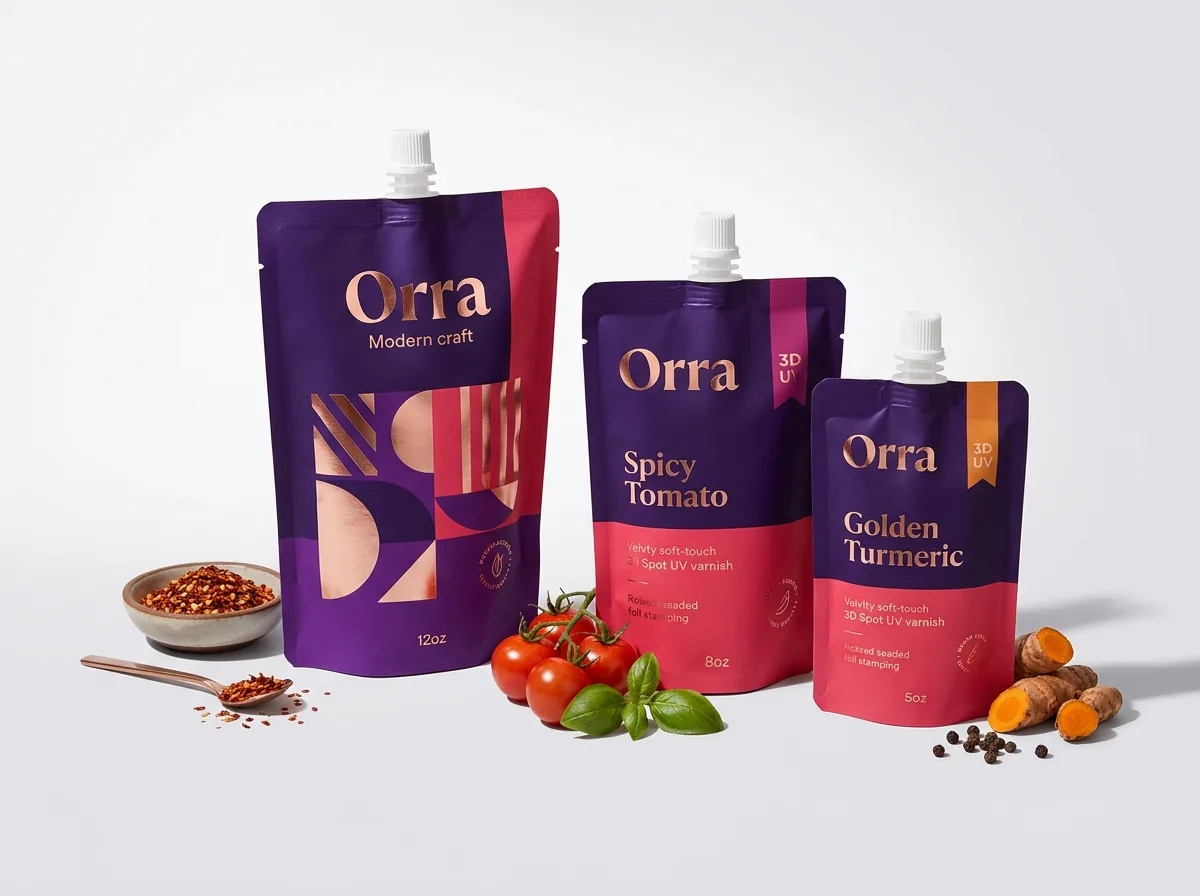
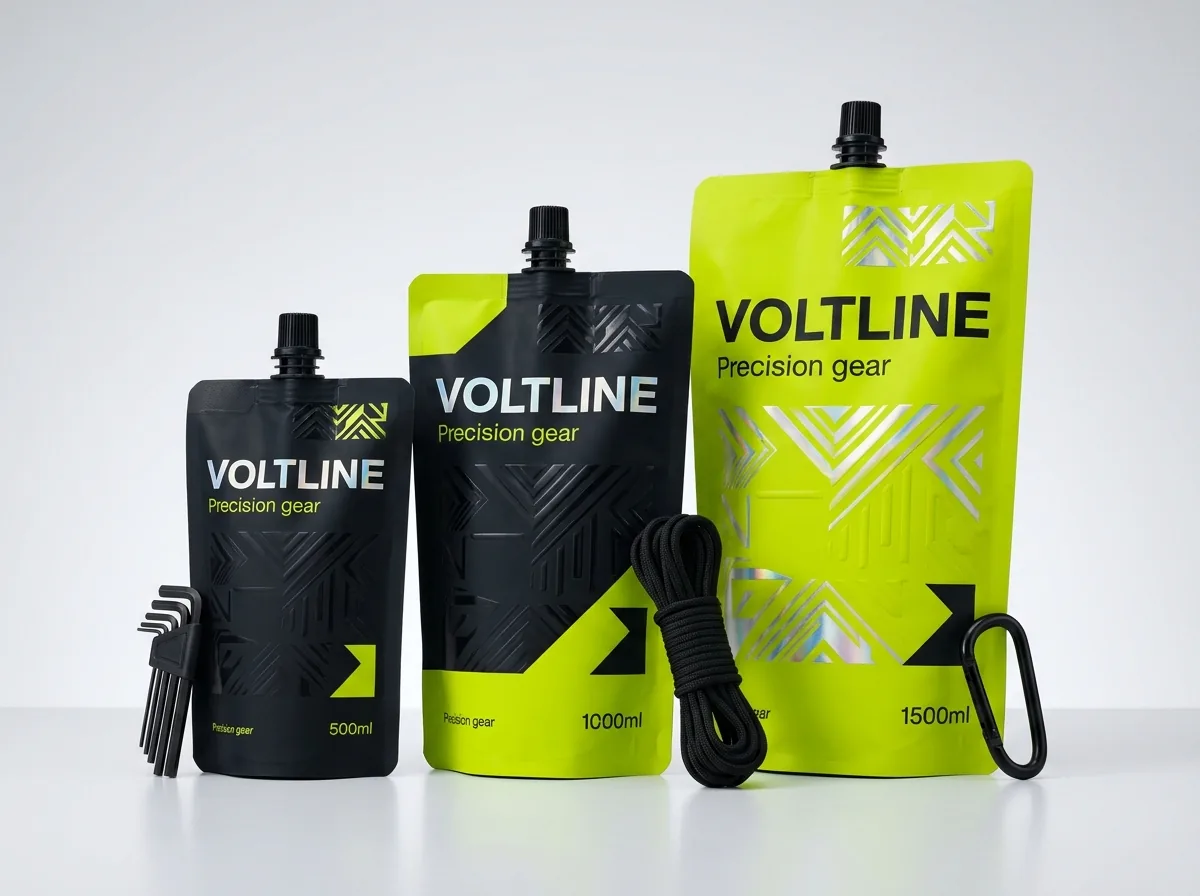
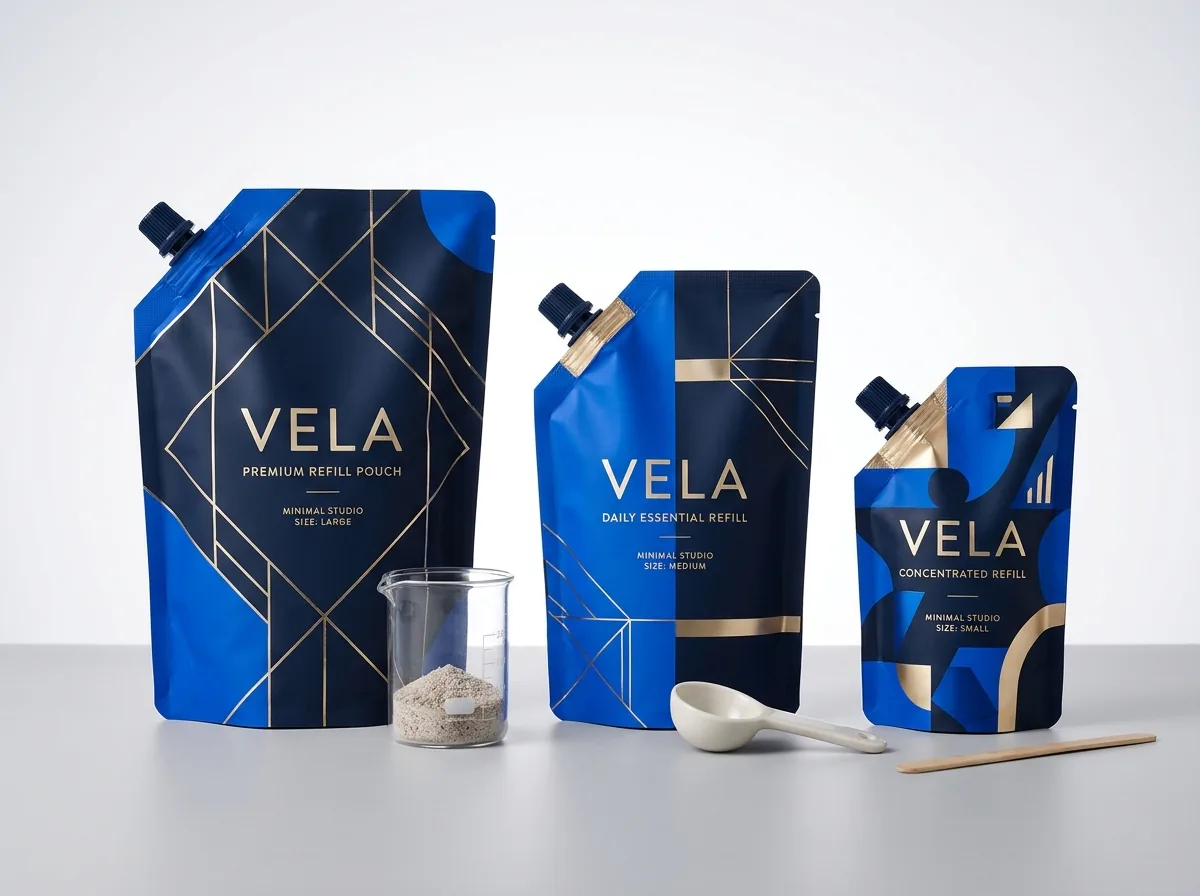
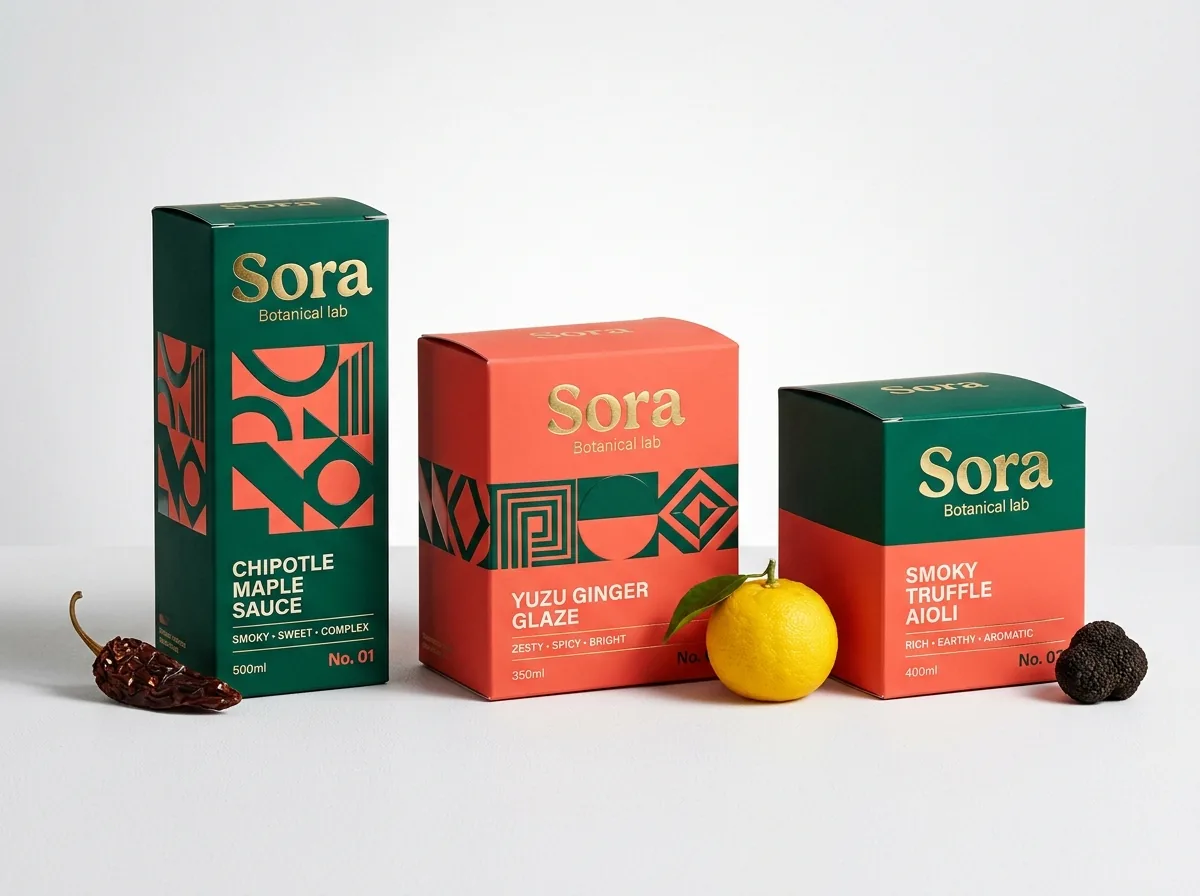
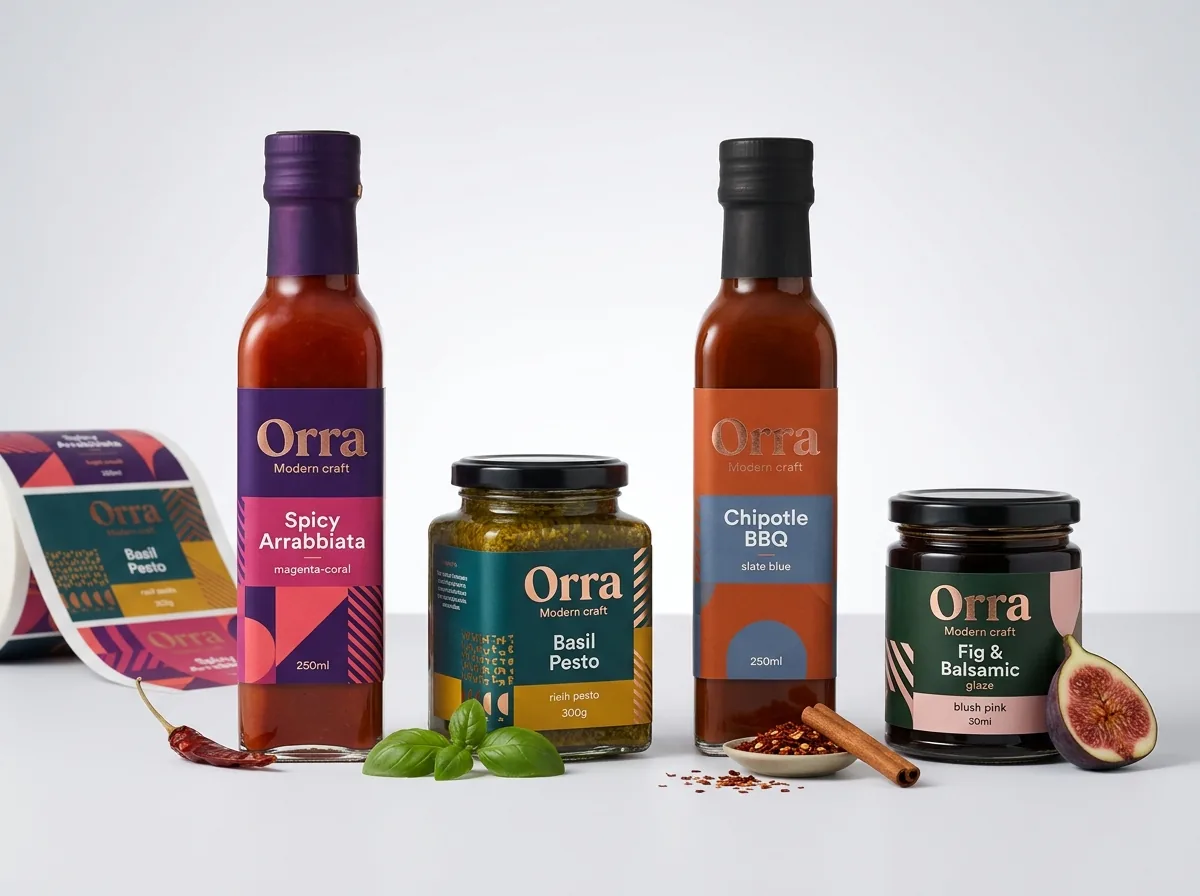

Ready to order sauce spout pouches? Compare up to 3 quantities with a free 3D mockup.
Request a Quote →Questions about sauce spout pouches
Do custom sauce spout pouches keep condiments as fresh as glass jars?
Yes, when engineered with the right multi-layer oxygen and light barrier film (such as aluminum foil or high-barrier metallized and clear laminates) and food-safe inner sealant liners on request. In fact, after opening, collapsible pouches trap less headspace oxygen than wide-mouth jars.
Can sauce spout pouches survive UPS, FedEx and USPS parcel drops without bubble wrap?
Unlike glass jars that crack on sharp corner impacts, flexible stand-up pouches absorb drop shock by flexing slightly. When packed snugly inside a fitted corrugated mailer box or 3-pack tasting carton, they ship safely without heavy bubble wrap or foam dividers.
How much sauce is wasted in a glass jar compared with a flexible spout pouch?
Viscous condiments like garlic aioli, mayo, tahini and thick BBQ sauce typically leave 10% to 15% of the product clinging to the inside shoulders and corners of a glass jar or rigid bottle. A flexible spout pouch squeezes flat to evacuate up to 98% to 99%.
Will oil or vinegar drips stain a custom printed sauce spout pouch?
No. Unlike paper jar labels that wick cooking oil and turn translucent around the rim, custom spout pouches trap the ink behind a protective outer film or matte/gloss lamination so chefs and home cooks can wipe the bag clean with a damp cloth.
Can restaurants use 64 oz sauce spout pouches to refill tabletop squeeze bottles?
Yes. A 64 fl oz (half-gallon) pouch fitted with a 16 mm to 22 mm 45-degree corner spout and a die-cut carry handle lets back-of-house staff pour directly into narrow tabletop squeeze bottles without funnels or messy ladles, then re-cap the bag for walk-in storage.
How do I test whether my sauce pours cleanly from a spout pouch before switching from jars?
Tell us your condiment texture and largest spice particle size when requesting a quote. You can order our $50 sample kit to inspect pouch films and spout bores in person, or order a custom sample run to test-fill your recipe.
Still have a question? Ask a packaging specialist.
Request a Quote →Request your sauce spout pouches quote
Tell us your size and quantities, and one dedicated account manager prepares pricing for each tier.
- Free design & AI-to-print studio + 3D mockup
- No die or plate charges · 4–5 day rush available
- Free shipping to all 50 states
- 10% off your first order
The container comparisons, product evacuation benchmarks (up to 99% in flexible pouches vs 82–90% in rigid containers) and inbound pallet ratios in this guide come from flexible packaging industry benchmarks and ISTA parcel transit principles. A CubitPack packaging specialist verified every section. Spot an error? Let us know and we will fix it.
Sources
What changed
- October 22, 2026: First published.
- October 22, 2026: Updated specifications, terminology, and verified source links.
More guides
New packaging guides by email
Sizes, materials and design tips. Unsubscribe anytime.