
What size drink spout pouch do I need for 3.4 oz, 8 oz, 12 oz and 32 oz beverages?
Short answer: An 8 fl oz juice pouch typically measures 4.25 × 6.75 × 2.25 inches, a 12 fl oz cocktail or smoothie pouch measures 4.75 × 7.75 × 2.5 inches, a 3.4 fl oz energy shot measures 3.25 × 5.25 × 1.5 inches, and a 32 fl oz mixer measures 6.5 × 10.5 × 3.5 inches when ordering custom drink spout pouches.
On this page
- How do I read Width, Height and Bottom Gusset on a drink spout pouch
- What are the standard drink spout pouch dimensions from 2 oz to 64 oz
- How much headspace do freeze-at-home cocktail and slush pouches need
- How do I size 3.4 oz energy shots vs 32 oz and 64 oz party pouches
- How does my co-packer's filling method affect pouch dimensions
- Common mistakes
- FAQs
Request a custom quoteFree dieline & 3D mockup
Liquid spout pouch dimensions are always specified as flat outer Width × Height × Bottom Gusset in inches, measured across the flexible pouch body without counting the rigid plastic spout neck protruding above the top edge. Because water-based beverages are incompressible and heavy - one US fluid ounce equals 29.57 milliliters and weighs roughly 1.04 ounces - the bottom gusset and side seals must leave enough internal volume for both the liquid fill and an upper unfilled headspace buffer. Standard chilled juices, cold-brew concentrates and sports drinks need 8% to 10% headspace below the heat-welded canoe fitment so liquid never splashes the sealing jaws. Freeze-at-home margaritas, wine slushies and fruit purees need 12% to 15% headspace so ice expansion never splits a side seam. Every CubitPack order is cut to your exact dimensions with no die or plate charges and includes a free 3D mockup before payment.
How do I read Width, Height and Bottom Gusset on a drink spout pouch?
When co-packers and flexible packaging engineers size a stand-up liquid pouch, every measurement refers to the flat outer film footprint before filling, written in the sequence Width × Height × Bottom Gusset (W × H × G). Width is the horizontal distance from the outer left edge of the vertical side seal to the outer right edge. Height is the vertical distance from the bottom fold crease up to the top film edge, excluding the threaded plastic spout neck and screw cap that rise another 1.0 to 1.375 inches above the bag. Bottom Gusset is the total full depth of the W-folded base panel when opened flat. Usable liquid volume inside the pouch is always smaller than those outer numbers suggest. Liquid-tight side seals are wider than dry snack seals - typically 0.25 to 0.375 inches (6 mm to 10 mm) on each side - to survive squeeze pressure and drop impact. At the top of the pouch, the heat-welded plastic canoe flange occupies the center or upper corner seam, requiring a 0.625 to 0.875 inch headspace clearance zone. When you request a quote for printed beverage spout pouches, sharing your target fluid ounces alongside your filling temperature lets our prepress team size the exact film dimensions and send a 3D mockup before payment.
- Outer Width (W): full horizontal width from left edge to right edge, including 6 mm to 10 mm liquid side seals.
- Body Height (H): vertical film height from bottom fold to top seal edge, not counting the protruding spout cap.
- Bottom Gusset (G): total expanded depth of the folded bottom base panel when opened out flat.
- Total Standing Height: once filled, the bottom gusset rounds out and reduces body height by about 0.5 to 1.0 inch, while the cap adds 1.125 inches on top.
What are the standard drink spout pouch dimensions from 2 oz to 64 oz?
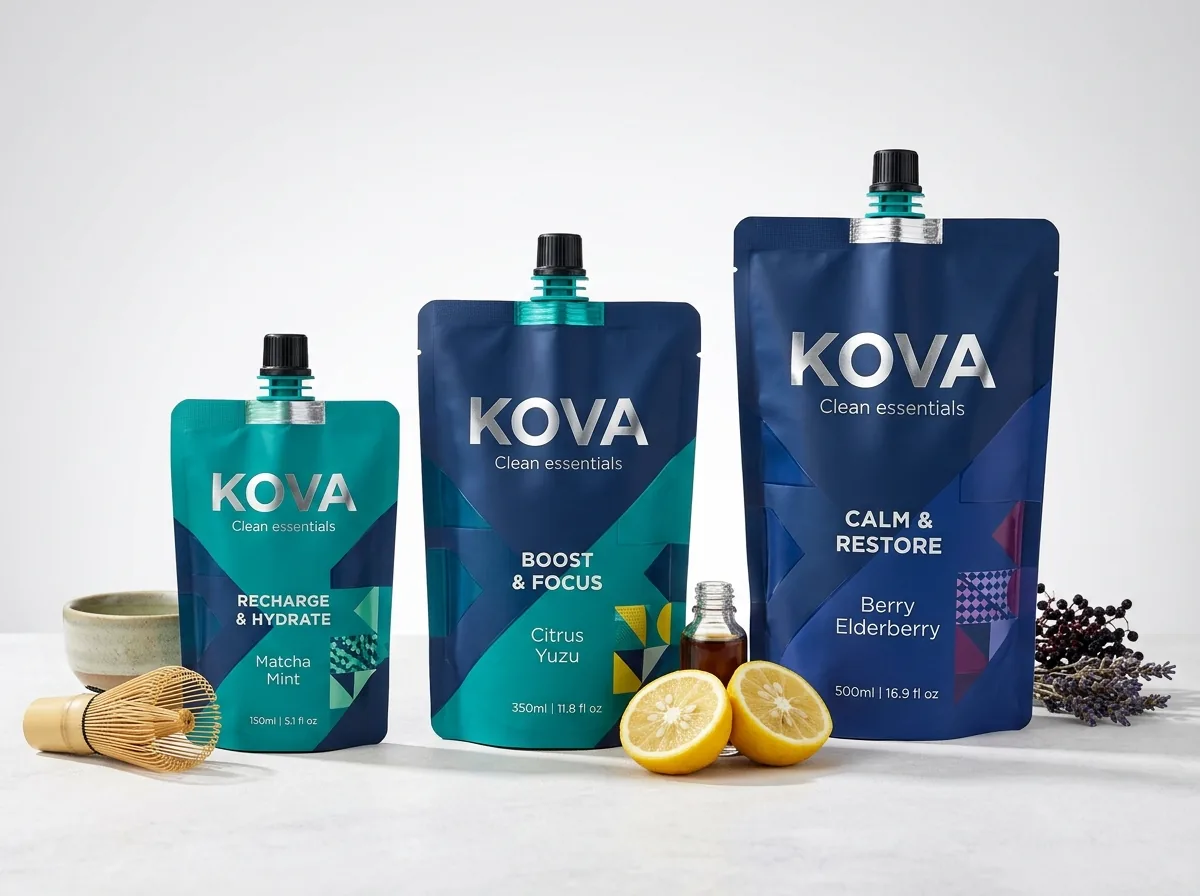
Although CubitPack manufactures every beverage pouch to your exact inch or millimeter dieline with zero die or plate charges, seven proven footprints cover almost every North American beverage tier - from 2 oz marathon energy gel shots up to 64 oz half-gallon party pitchers. The reference chart below pairs each fluid volume (in both US fluid ounces and milliliters) with its standard outer Width × Height × Bottom Gusset dimensions. Notice how the aspect ratio shifts as volume climbs. Small 2 oz to 3.4 oz wellness shots use a narrow 3.25 inch width so a runner or traveler can squeeze the entire pouch in one hand. Mid-size 8 oz to 16 oz juices, smoothies and ready-to-drink cocktails widen to 4.25 through 5.25 inches with a 2.25 to 2.75 inch bottom K-seal gusset so the filled bag stands upright on refrigerator shelves without tipping. Multi-serve 32 oz and 64 oz pouches widen the base gusset to 3.5 and 4.25 inches to support two to four pounds of liquid weight.
| Beverage volume | Outer pouch size (W × H × G) | Recommended spout & drink type |
|---|---|---|
| 2 - 3.4 fl oz (60 - 100 ml) | 3.25 × 5.25 × 1.5 in | Center 8.6 mm spout · Energy gel or immunity shot |
| 5 - 6 fl oz (150 - 180 ml) | 4 × 6.25 × 2 in | Center 8.6 mm spout · Kids juice or fruit puree |
| 8 fl oz / 1 cup (240 ml) | 4.25 × 6.75 × 2.25 in | Center 10 - 13 mm spout · Smoothie or iced coffee |
| 10 - 12 fl oz (300 - 355 ml) | 4.75 × 7.75 × 2.5 in | Center 13 - 16 mm spout · RTD cocktail or freezer slush |
| 16 fl oz / 1 pint (473 ml) | 5.25 × 8.75 × 2.75 in | Center or corner 13 mm spout · Hydration or double shake |
| 32 fl oz / 1 qt (946 ml) | 6.5 × 10.5 × 3.5 in | Corner 16 mm spout · Cold-brew concentrate or mixer |
| 64 fl oz / ½ gal (1.89 L) | 8.5 × 12.5 × 4.25 in | Corner 16 mm spout + handle · Party margarita pitcher |
How much headspace do freeze-at-home cocktail and slush pouches need?
One of the fastest-growing uses for custom drink spout pouches is freeze-at-home adult cocktails - margaritas, frosé, daiquiris, limoncellos and bourbon slushies - alongside kids freezer pops and smoothie packs. Unlike a chilled juice that stays liquid from the co-packer all the way to the customer's glass, a freezer pouch undergoes phase expansion when water turns to ice crystals at 32°F (0°C) and below. Pure water expands by roughly 9% in volume when frozen solid, while high-brix fruit purees and 5% to 15% ABV wine or spirit cocktails expand into a semi-solid slush matrix that still increases total volume by 8% to 11%. If you fill a 12 fl oz cocktail into a pouch sized with zero spare room, freezing forces the expanding slush upward into the rigid canoe spout weld and outward against the side seals, causing Delamination or pinholes when the customer squeezes the frozen bag. For any freeze-at-home beverage, size the pouch height or gusset 0.375 to 0.5 inches larger so a 10 oz or 12 oz liquid fill leaves 12% to 15% unfilled headspace at the top.
Know your size? Compare pricing across up to 3 quantities.
Request a Quote →How do I size 3.4 oz energy shots vs 32 oz and 64 oz party pouches?
Single-serve endurance gels and multi-serve beverage pitchers sit at opposite ends of the spout pouch spectrum, and each requires specific structural adjustments beyond simple scaling. On a 2 oz (60 ml) or 3.4 oz (100 ml) wellness shot or marathon gel pouch, the plastic spout fitment accounts for nearly one-third of the top width. If the pouch body is narrower than 3.0 inches, the heat-sealing jaws barely have room on either side of the canoe flange to form a flat top corner. Keeping small shot pouches at 3.25 to 3.5 inches wide gives the top weld ample seal margin while still fitting comfortably in a running belt or carry-on quart bag. At the 32 oz (946 ml) and 64 oz (1.89 L) pitcher scale, hydrostatic liquid pressure becomes the primary engineering factor. Sixty-four fluid ounces of cold-brew concentrate or sour mix weighs over four pounds. To keep a half-gallon pouch from bowing outward like a pillow or tipping over on a bar counter, pair an 8.5 × 12.5 inch face with a deep 4.25 inch K-seal bottom gusset, place the pouring spout at a 45-degree angle on the upper corner, and punch a reinforced die-cut two-finger handle into the opposite upper seal header. Many brands ship these heavy pouches inside custom corrugated boxes or display them in custom counter display boxes.
How does my co-packer's filling method affect pouch dimensions?
Before locking in your final width and height, ask your beverage co-packer whether their line fills through the spout throat or fills through an open top web. In fill-through-spout production - the standard for most dedicated liquid spout-pouch machines - CubitPack delivers the pouches completely sealed on all sides with the plastic spout already thermally welded into the top or corner seam, and the screw caps packed loose in a separate poly-lined carton. The filling machine slides the neck of each spout along metal carrier rails, injects the exact fluid ounces through the spout throat, flushes the headspace with nitrogen if needed, and torques the tamper-evident cap onto the threads. If your co-packer instead fills pouches through an unsealed top edge on a standard horizontal form-fill-seal or rotary pouch machine (common when using a corner spout), the pouch needs an extra 1.0 to 1.25 inches of unprinted film height along the top open lip so the grippers and post-fill heat-sealing bar can close the bag cleanly above the liquid line without touching product splash.
- Fill-through-spout lines: pouch arrives pre-sealed with welded spout; verify spout flange rail slot width (typically 8.6 mm to 16 mm neck) with your co-packer.
- Open-top fill lines: corner spout is pre-welded, but top horizontal edge ships open; add 1.0 inch of top seal allowance.
- Hot-fill pasteurization (up to 185°F / 85°C): cooling liquid contracts slightly after capping, so test filled panel profile as the pouch cools to room temperature.
- Retort or HPP processing: high-pressure processing (HPP) requires all-plastic non-foil barrier films that flex under water pressure without crinkling.
What are the most common drink spout pouch sizing mistakes?
Almost every beverage pouch sizing issue traces back to confusing total capped height with film body height or forgetting freezer expansion. Watch out for these five mistakes
- Including the 1.25 inch plastic spout and screw cap inside the film height measurement, which shrinks usable liquid capacity by 2 to 3 fluid ounces.
- Sizing a 12 oz frozen margarita or slush pouch with zero freezer headspace, causing expanding ice crystals to pop the side seals.
- Making a 2 oz or 3.4 oz energy shot pouch narrower than 3.0 inches, leaving too little room beside the canoe spout flange for a leak-proof top weld.
- Forgetting that the expanding bottom gusset pulls the front and back panels inward when filled, shortening standing body height by roughly 0.75 inches.
- Ordering a 64 oz half-gallon beverage pouch with a narrow bottom gusset and no carry handle, which makes a 4 lb bag unstable on fridge shelves.
Packaging for this
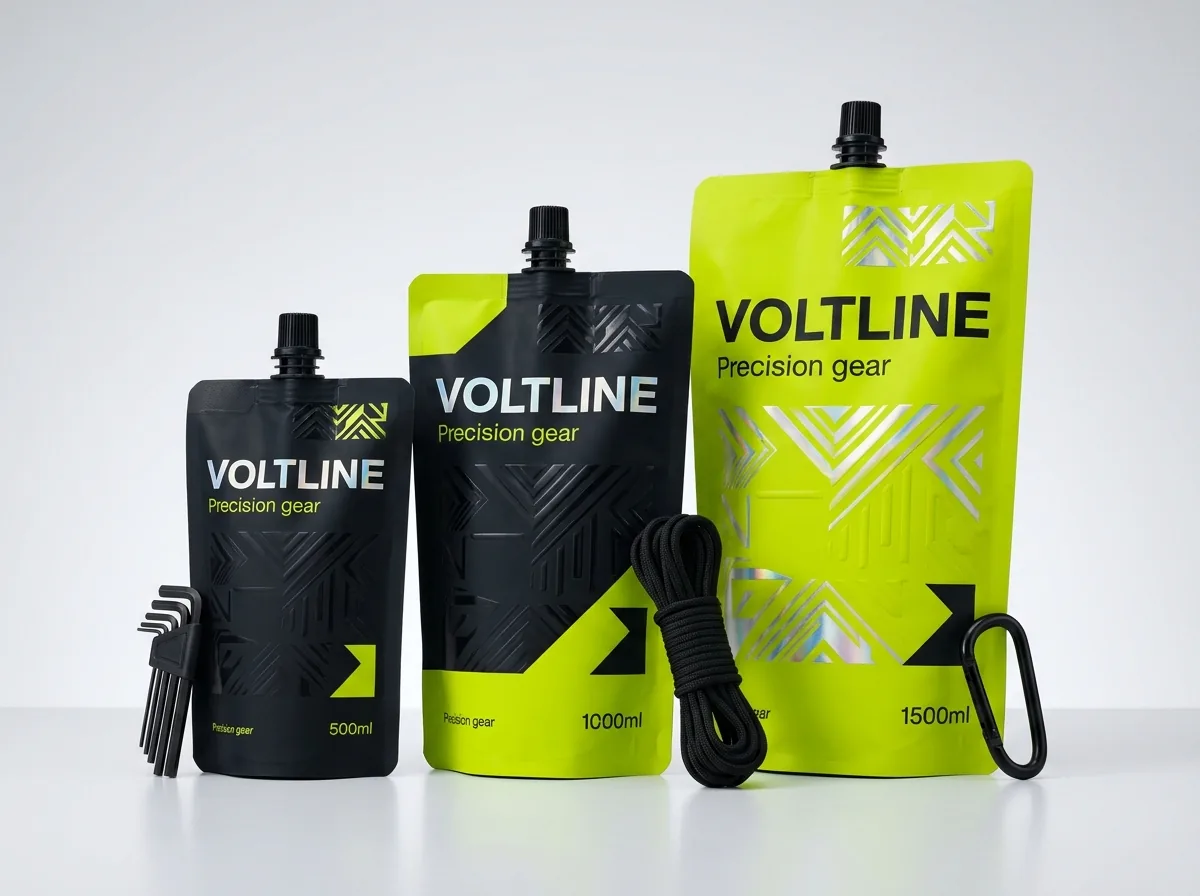
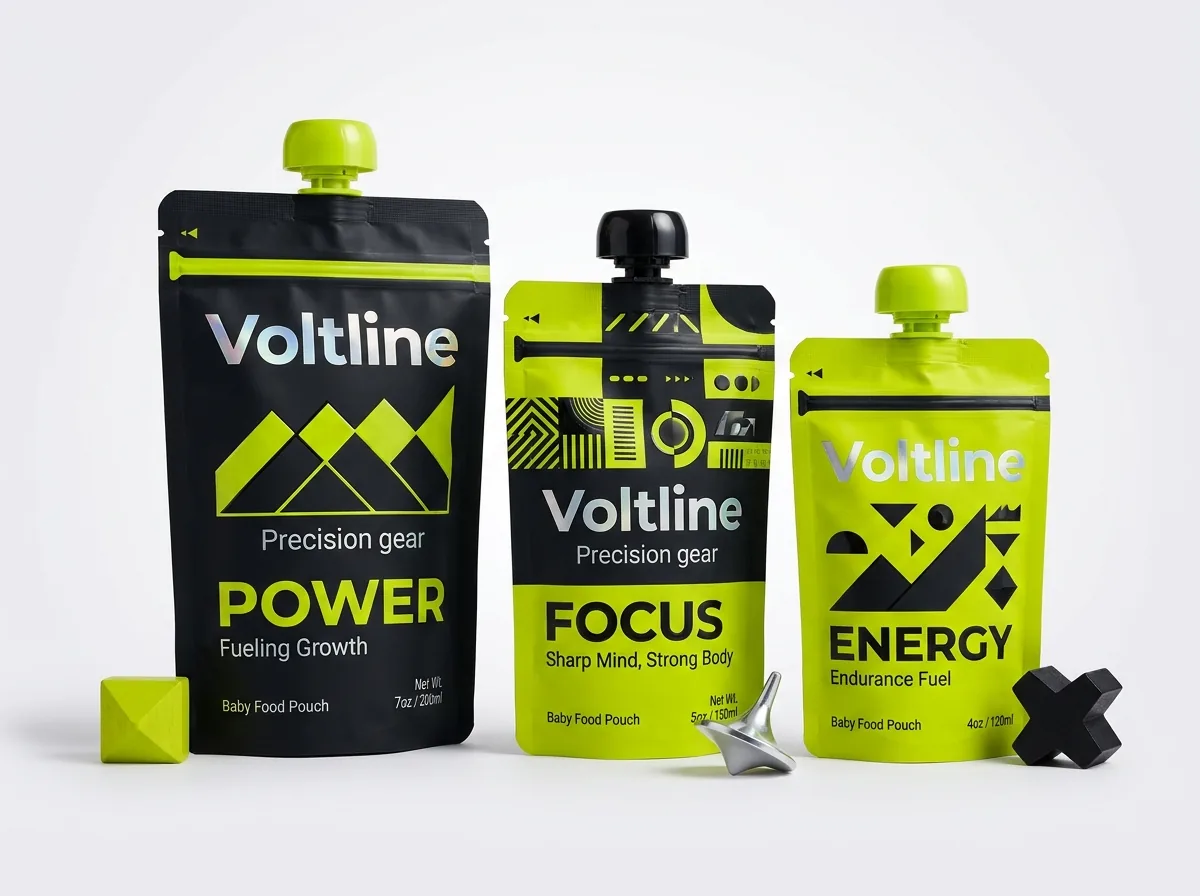
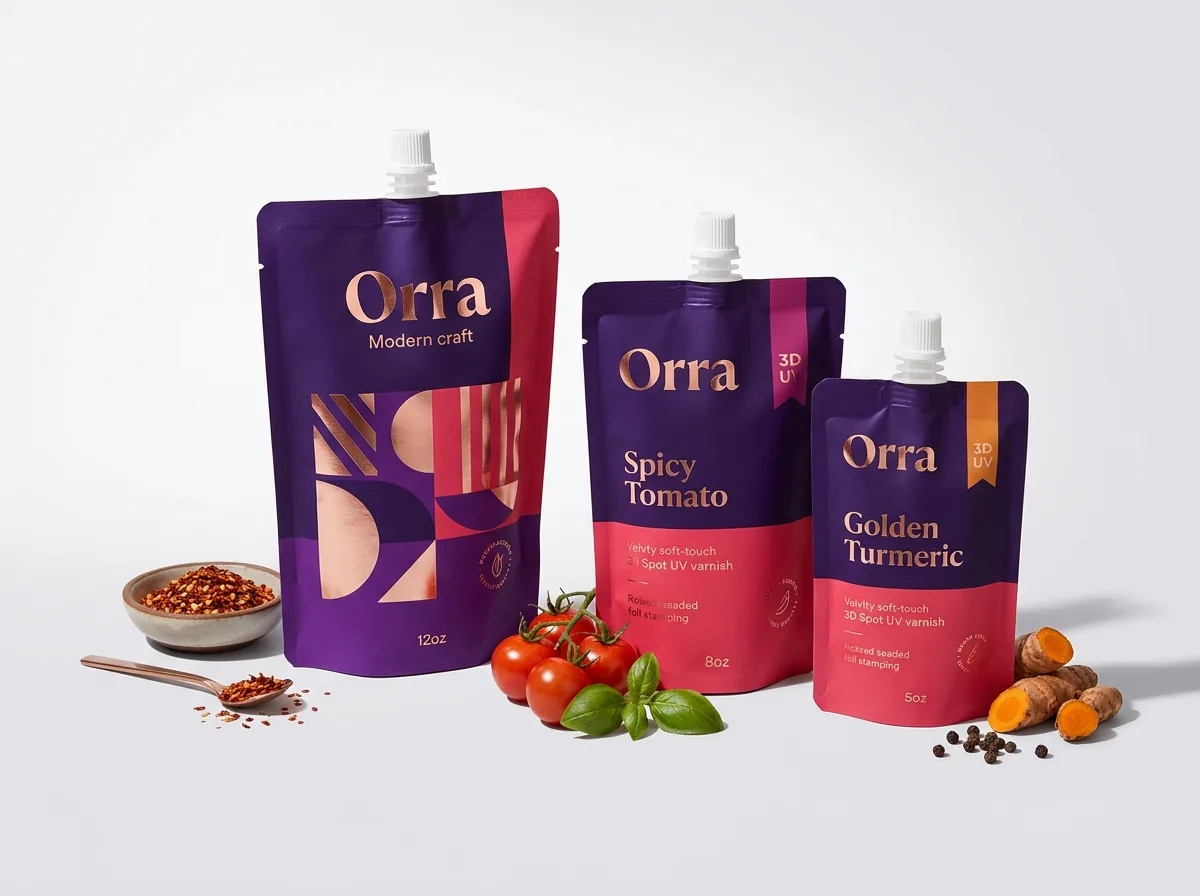
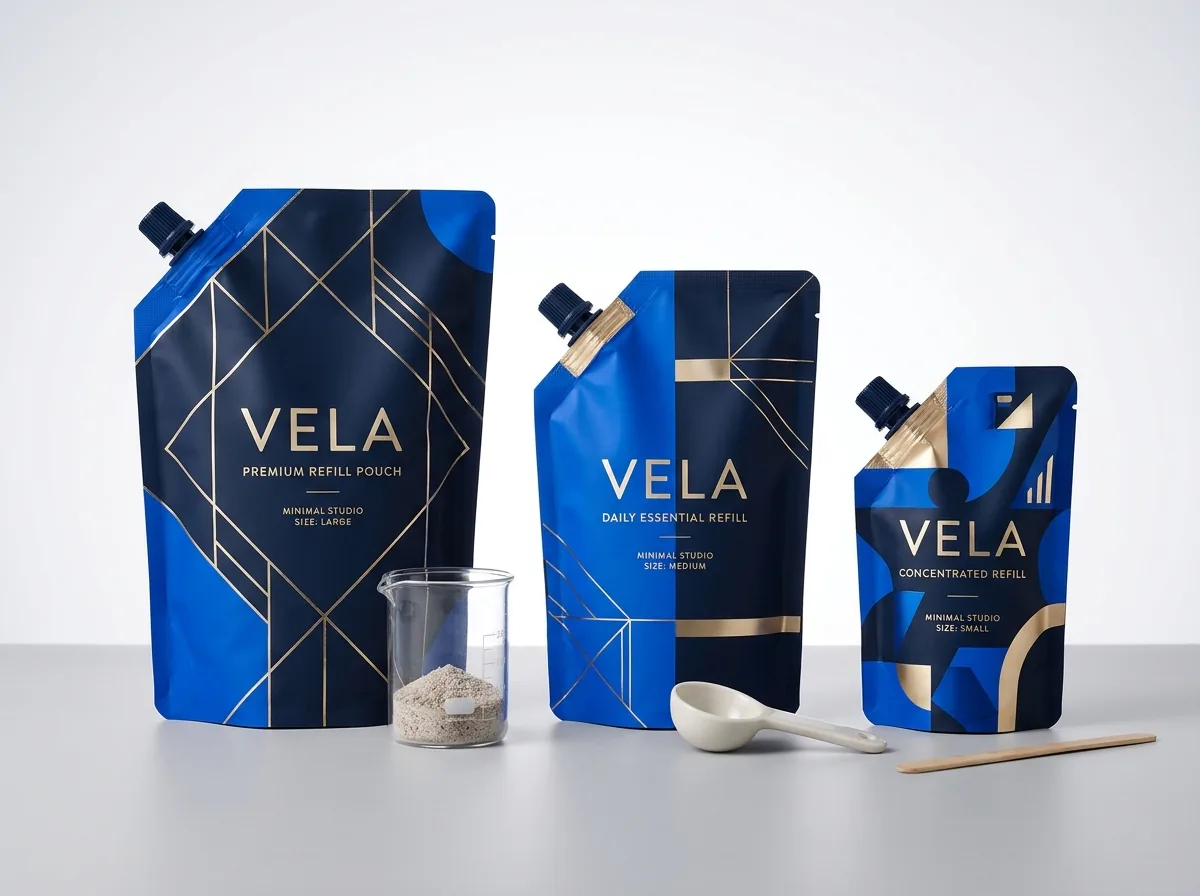
Ready to order drink spout pouches? Compare up to 3 quantities with a free 3D mockup.
Request a Quote →Questions about drink spout pouches
Is the plastic spout height included in the pouch Height dimension?
No. Pouch dimensions (Width × Height × Bottom Gusset) always measure the flexible film body from the bottom fold to the top seal edge. A standard center spout and tamper-evident screw cap add about 1.0 to 1.375 inches above the top film edge.
Can I use the same pouch size for 10 oz and 12 oz drinks?
Yes. A 4.75 × 7.75 × 2.5 inch stand-up spout pouch works cleanly for both 10 fl oz (300 ml) and 12 fl oz (355 ml) beverages. Using a 10 oz fill inside a 12 oz footprint is especially popular for freeze-at-home cocktails that need extra expansion headspace.
How wide are the side heat seals on a liquid drink spout pouch?
Liquid spout pouches use wider side seals than dry food bags - typically 0.25 to 0.375 inches (6 mm to 10 mm) along the left and right edges - to withstand internal fluid pressure, squeezing and shipping drops without leaking.
Do custom drink spout pouch sizes or contour shapes cost extra die fees?
No. CubitPack never charges die or plate fees. Whether you choose a standard rectangular 8 oz or 12 oz stand-up pouch or a custom hourglass contour shape with rounded safety corners, we prepare the dieline and 3D mockup for free.
What size label fits on a stock drink spout pouch if I test small batches first?
On an 8 oz (4.25 × 6.75 in) or 12 oz (4.75 × 7.75 in) spout pouch, a 3 × 3.5 inch or 3.25 × 4 inch waterproof rectangle label fits on the upper flat panel above the lower gusset curve. Custom printing eliminates hand-labeling completely.
How can I test my drink volume inside a pouch before approving production?
Request our $50 sample kit (credited toward your order) or a custom prototype sized to your dimensions, pour in your exact milliliter or fluid ounce target with a funnel, and check the standing profile, squeeze feel and freezer expansion firsthand.
Still have a question? Ask a packaging specialist.
Request a Quote →Request your drink spout pouches quote
Tell us your size and quantities, and one dedicated account manager prepares pricing for each tier.
- Free design & AI-to-print studio + 3D mockup
- No die or plate charges · 4–5 day rush available
- Free shipping to all 50 states
- 10% off your first order
The fluid capacity dimensions in this guide are calculated from standard liquid volume conversions (1 US fl oz = 29.57 ml) with 8% chilled and 14% freezer expansion headspace allowances. A CubitPack packaging specialist verified every size row. Spot something off? Tell us and we will fix it.
Sources
What changed
- October 22, 2026: First published.
- October 22, 2026: Updated specifications, terminology, and verified source links.
More guides
New packaging guides by email
Sizes, materials and design tips. Unsubscribe anytime.