
Center spout vs corner spout drink pouches: which fits your beverage?
Short answer: Choose a top-center spout for 2 oz to 12 oz single-serve beverages that customers sip directly from the bag, such as energy gels, kids juices, smoothies and frozen cocktails. Choose a 45-degree angled corner spout for 16 oz to 64 oz multi-serve custom drink spout pouches meant for pouring into glasses.
On this page
- How do top-center spouts and 45-degree corner spouts compare side by side
- When is a top-center spout the right choice for a beverage
- When should I switch to a 45-degree corner spout for drinks
- How do I choose between 8.6 mm, 10 mm, 13 mm and 16 mm spout diameters
- Which cap styles and filling setups work with center and corner spouts
- Common mistakes
- FAQs
Request a custom quoteFree dieline & 3D mockup
The choice between a top-center spout and a 45-degree corner spout comes down to how your customer consumes the liquid and how heavy the filled pouch is in one hand. A top-center spout sits vertically in the middle of the top horizontal seal, creating a symmetrical, bottle-like mouthpiece that feels natural when sipping a 3.4 oz wellness shot, an 8 oz cold-pressed smoothie or a 12 oz frozen margarita straight from the pouch. However, if you try to pour a heavy 32 oz or 64 oz center-spout bag into a glass, the upper left and right film shoulders trap liquid and cause the stream to glug. Welding the spout at a 45-degree angle across one upper corner turns that corner into a natural pitcher lip, allowing smooth, drip-free pouring while leaving the opposite upper seal free for a two-finger carry handle.
How do top-center spouts and 45-degree corner spouts compare side by side?
Both center and corner fitments use a rigid high-density polyethylene (HDPE) or polypropylene (PP) spout with a canoe-shaped base flange that heat-welds between the inner sealant layers of the pouch. The difference lies in where that canoe flange sits along the perimeter and how air enters the bag while liquid leaves. When you tilt a center-spout pouch to pour into a cup, liquid rushes toward the middle while the two flat top corners fold inward, trapping pockets of drink unless you squeeze the bag empty. On a 45-degree corner-spout pouch, tilting the bag places the spout at the lowest point of the pour arc while air vents cleanly above the stream, giving bartenders and home baristas a steady, splash-free pour. When ordering custom printed beverage spout pouches, you can specify either orientation along with your required inner throat diameter.
| Feature | Top-center spout pouch | 45-degree corner spout pouch |
|---|---|---|
| Ideal fluid volume | 2 fl oz to 12 fl oz (up to 16 oz) | 16 fl oz to 64 fl oz (half gallon) |
| Primary consumption | Sipping or squeezing straight into the mouth | Controlled pouring into glasses, shakers or over ice |
| Typical throat bore | 8.6 mm, 10 mm, 13 mm or 16 mm | 10 mm, 13 mm, 16 mm or 22 mm |
| Residual liquid holdback | Slight holdback in top shoulders if poured without squeezing | Empties nearly 100% by gravity along the angled corner |
| Carry handle pairing | Side seal grip or no handle needed | Pairs with a reinforced die-cut handle on the opposite top corner |
| Co-packer filling | Filled directly through the spout on inline or rotary rails | Filled through the spout or through an open top web before sealing |
When is a top-center spout the right choice for a beverage?
If your customer twists off the cap and drinks straight from the pouch without reaching for a glass, choose a top-center spout every time. Center placement balances the weight of the filled bottom gusset directly underneath the mouthpiece, so the bag does not twist in the drinker's hand when they tip it up. It also keeps the left and right side seals symmetrical, which lets you die-cut an hourglass waist or rounded ergonomically contoured edges for runners, cyclists and children. From a production standpoint, top-center spouts are the fastest format to run on automated fill-through-spout machinery. Because the spout neck projects straight up at a 90-degree angle to the top seal, dozens of empty pouches can slide single-file down straight stainless-steel feed rails into a rotary filler and capper at high speed without needing angled grippers.
- 2 oz to 3.4 oz endurance gels and immunity shots: compact one-hand squeeze with an 8.6 mm center spout.
- 6 oz to 8 oz kids juices and fruit smoothies: pairs with choke-safe slotted caps and rounded safety corners.
- 10 oz to 12 oz freeze-at-home RTD cocktails: centered 13 mm to 16 mm wide spout lets drinkers squeeze frozen slush straight up.
- 12 oz to 16 oz electrolyte hydration packs: fits upright in car cup holders, bike cages and stadium pockets.
When should I switch to a 45-degree corner spout for drinks?
Once a beverage pouch reaches 16 fl oz (473 ml), 32 fl oz (946 ml) or 64 fl oz (1.89 L), customers rarely drink from the nozzle directly. Instead, they keep the pouch in the refrigerator or bar well and pour servings over ice - think cold-brew coffee concentrates, margarita and Bloody Mary mixers, sangria, bulk kombucha and café chai syrups. At these weights, a 45-degree corner spout outperforms a center spout in both ergonomics and evacuation. Welding the spout across the upper right or left corner leaves 75% of the top horizontal seal uninterrupted. That flat upper span gives our design team room to punch a reinforced two-finger oval carry handle into the heavy upper heat-seal band. When a bartender or customer lifts the pouch by the top handle and tips it forward, the 45-degree corner nozzle points straight into the glass with zero wrist strain and no trapped liquid in the upper shoulder.
Know your size? Compare pricing across up to 3 quantities.
Request a Quote →How do I choose between 8.6 mm, 10 mm, 13 mm and 16 mm spout diameters?
Regardless of whether you place the spout in the center or on the corner, you must match the inner throat diameter (bore) of the plastic fitment to the viscosity and particulate size of your drink. Ordering a spout that is too narrow forces customers to squeeze hard or clogs on fruit pulp and ice crystals; ordering a spout that is too wide on a thin liquid can cause an unexpected rush when sipping. Standard 8.6 mm and 9.6 mm spouts are the workhorses for thin, low-viscosity liquids such as apple juice, electrolyte water, cold-brew tea and liquid energy shots. Stepping up to a 10 mm or 13 mm bore gives a smoother flow for viscous protein shakes, nectars and syrups. For freeze-at-home slush cocktails, chia seed drinks and thick fruit smoothies, specify a 13 mm to 16 mm wide-bore spout so partially frozen slush squeezes through effortlessly. If you also pack thicker condiments or purees, compare our custom sauce spout pouches and custom baby food spout pouches.
Which cap styles and filling setups work with center and corner spouts?
Every drink spout fitment pairs with a threaded or snap-on closure engineered for your market channel. Standard beverages use a ribbed screw cap with a perforated tamper-evident breakaway ring at the base; the first time a customer twists the cap counterclockwise, the small plastic bridges snap and drop the ring onto the spout shoulder, proving the pouch has never been opened. Children's juice and smoothie pouches typically use a taller, wide-winged slotted safety cap designed with airflow vents. Before placing your pouch order, confirm two details with your co-packer: how the pouches feed into the filler and whether caps should arrive pre-threaded or loose in a separate box. Most automated center-spout fillers require spouts welded into the pouch with caps supplied unthreaded in bulk bags so the machine can fill through the open neck and torque the cap inline. Hand-filled or open-top corner-spout runs often prefer caps pre-screwed onto the spouts during production so workers only have to heat-seal the top lip after filling.
- Tamper-evident screw cap: breakaway drop ring locks onto the spout collar and clicks open on first twist.
- Choke-safe winged cap: oversized outer diameter with internal breathing slots for children's drinks.
- Flip-top sports cap: hinged drinking nozzle for endurance cycling and running hydration packs.
- Loose vs pre-capped delivery: specify whether your filler caps inline after spout-filling or fills through an open top seam.
What are the most common mistakes when choosing a drink pouch spout?
Picking the wrong spout position or bore size can slow down co-packing or frustrate customers on the first pour. Avoid these five mistakes
- Putting a top-center spout on a heavy 32 oz or 64 oz mixer pouch, which causes the bag to glug and trap liquid in the top corners when pouring.
- Using a narrow 8.6 mm spout on a freeze-at-home margarita or thick smoothie, forcing drinkers to wait for the slush to melt before it fits through the neck.
- Placing a 45-degree corner spout on a small 4 oz or 6 oz single-serve pouch, where the angled cut eats into the small printable front face.
- Forgetting to tell us whether your co-packer needs screw caps shipped loose in a separate carton for inline spout filling or pre-threaded onto the spouts.
- Placing critical text or logos within 0.625 inches of a corner or center spout seam, where the canoe weld ribs press into the film.
Packaging for this
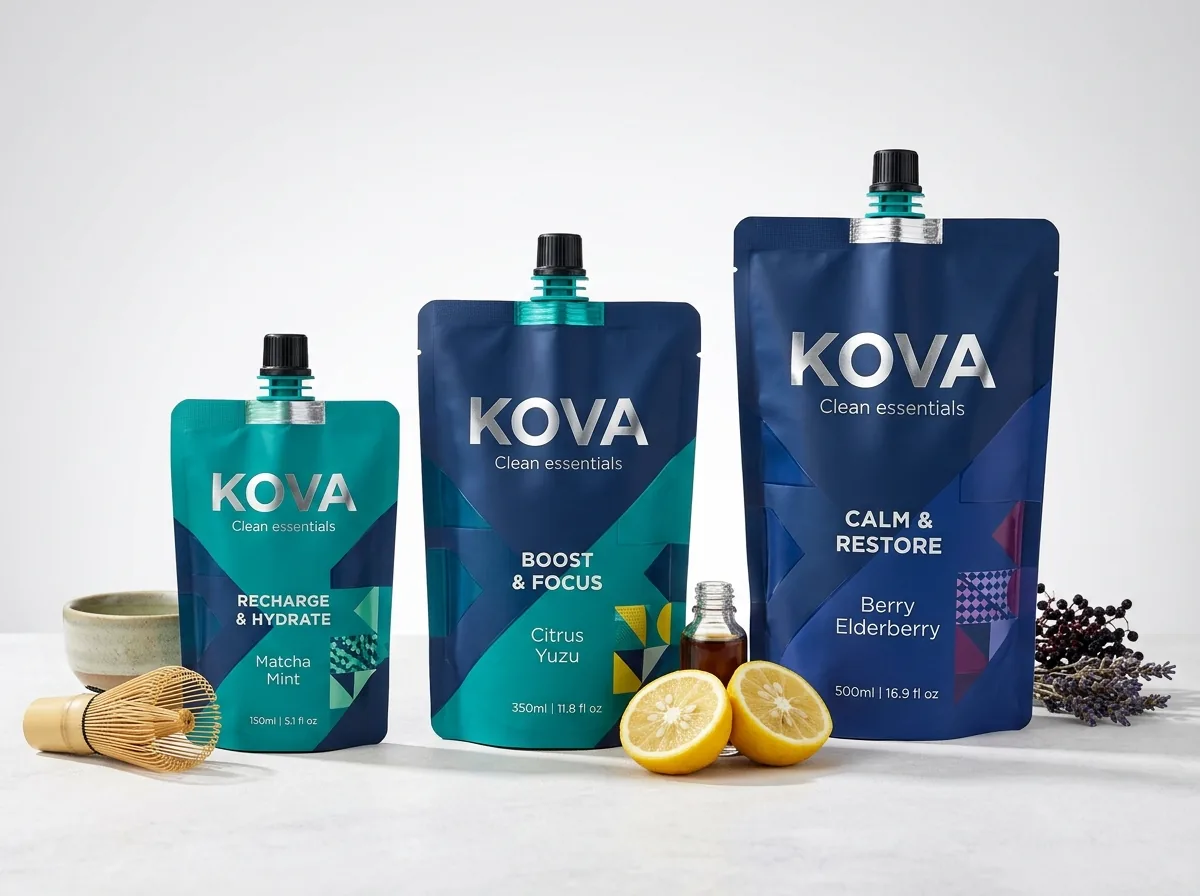
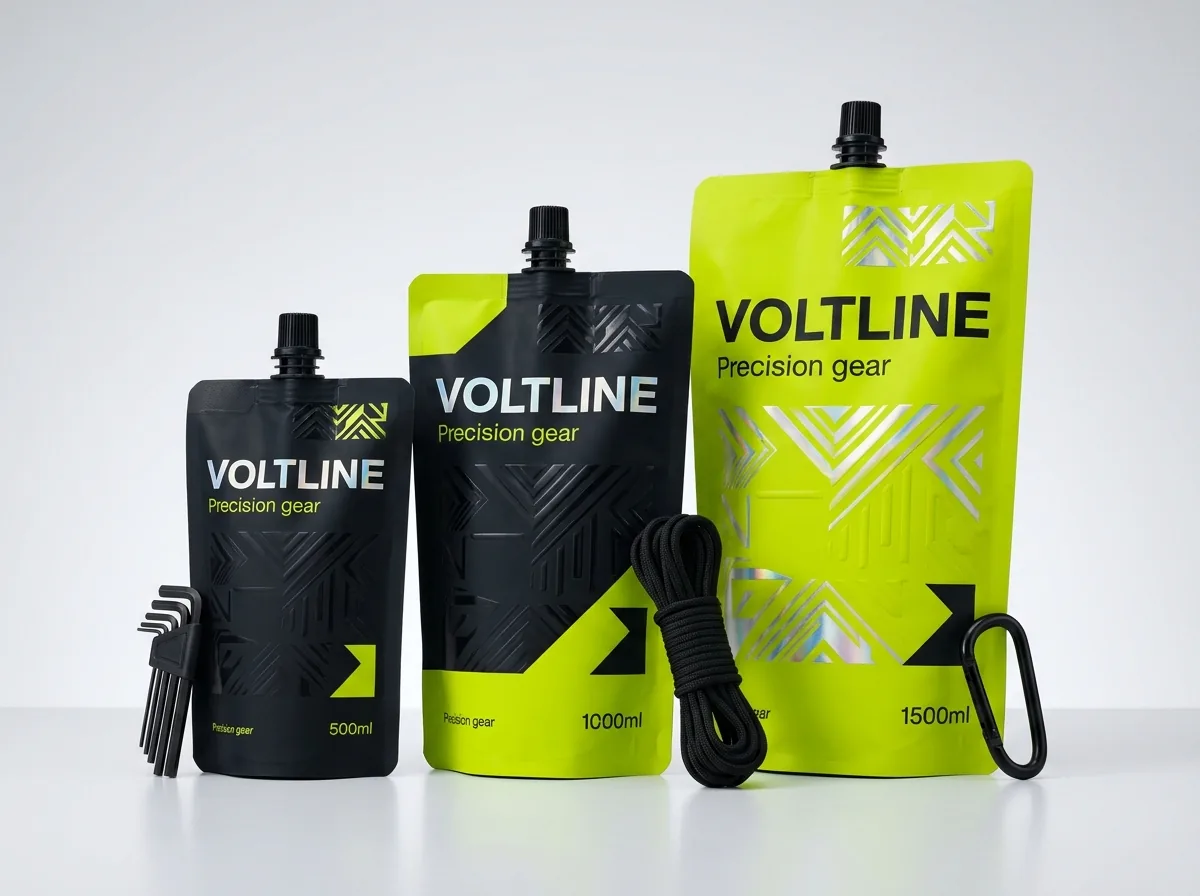
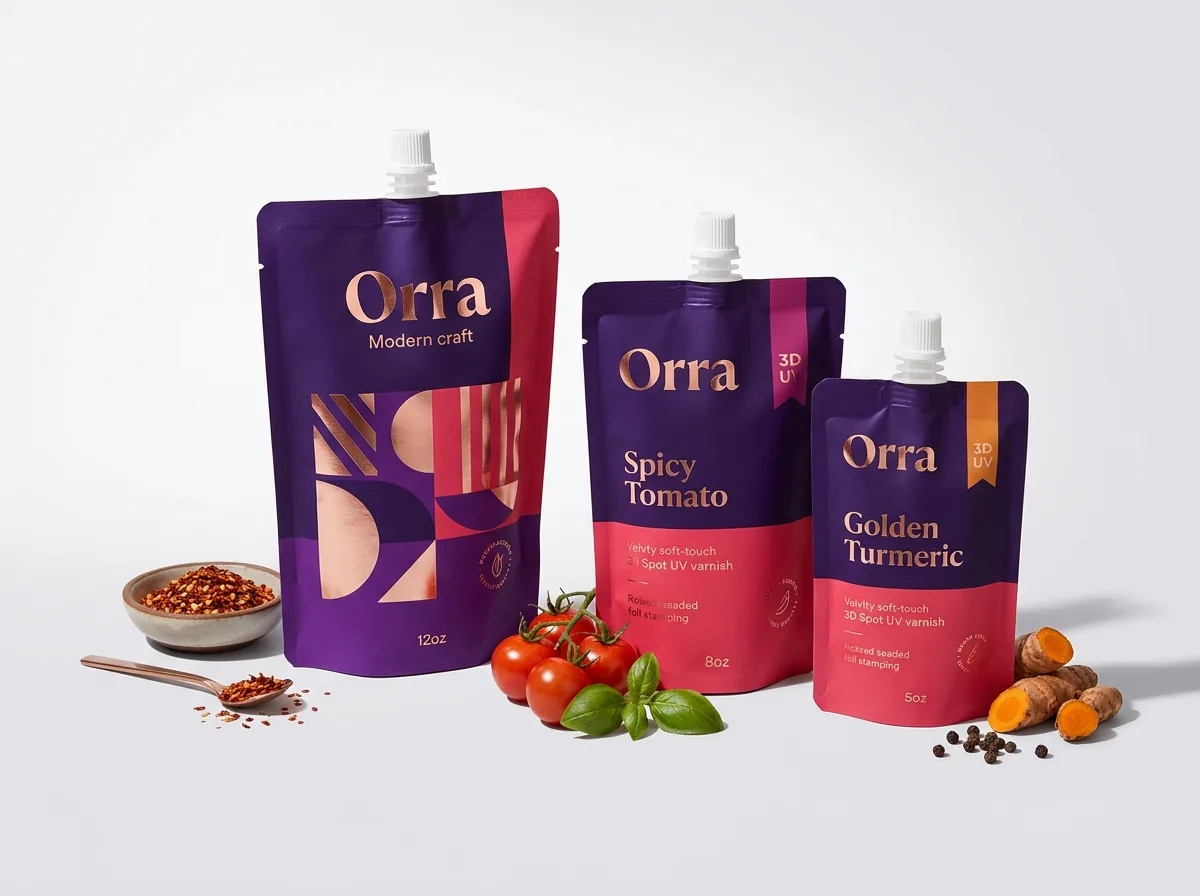
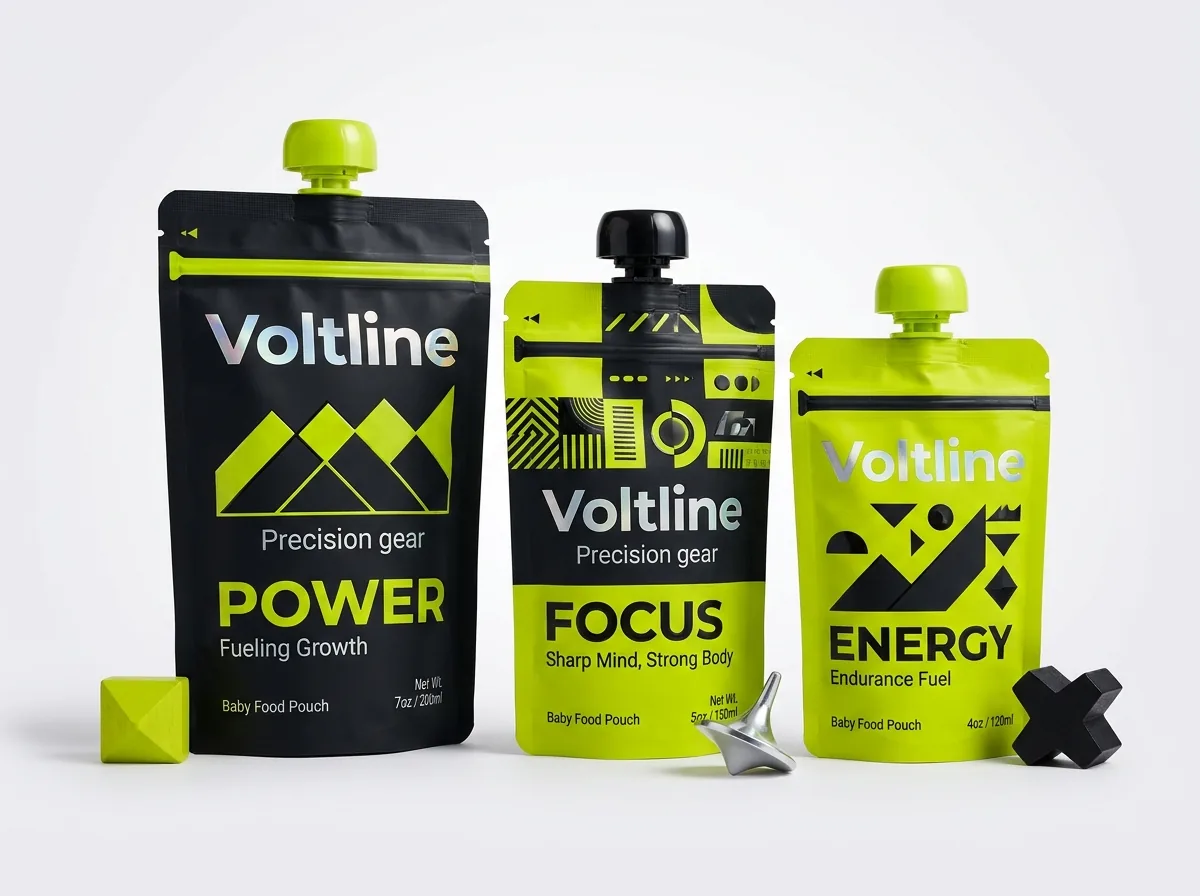
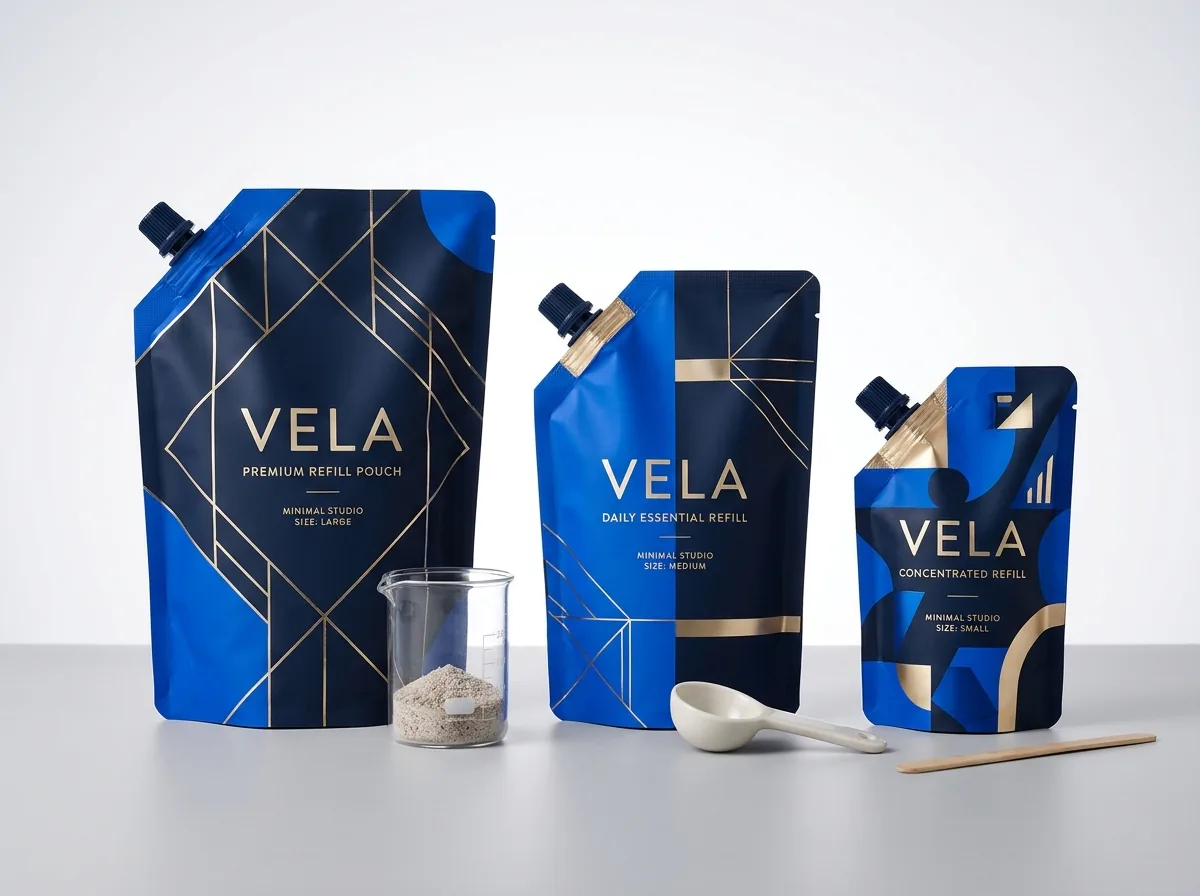
Ready to order drink spout pouches? Compare up to 3 quantities with a free 3D mockup.
Request a Quote →Questions about drink spout pouches
Does a 45-degree corner spout cost more than a top-center spout?
Corner spout welding involves an angled corner trim and diagonal heat-seal head, which can slightly affect unit cost compared with a straight top-center weld depending on run size. Enter your volume in the quote form to compare exact pricing.
Can a 16 oz drink pouch use either a center spout or a corner spout?
Yes, 16 fl oz (1 pint) is the crossover size. If customers sip the 16 oz drink directly - like an iced protein coffee or sports drink - use a top-center spout. If they pour it into glasses as a cocktail mixer, choose a 45-degree corner spout.
How do I know if my co-packer can run corner-spout pouches?
Ask your co-packer whether their filler loads pouches by the spout neck on straight rails (which usually favors top-center spouts or dual-rail corner spouts) or grips the pouch sides and fills through an open top web before heat sealing.
Can we match the plastic screw cap color to our beverage brand colors?
Standard stock cap colors such as white, black, green, red, yellow and blue are available at standard minimums, and custom Pantone-matched plastic caps can be produced at higher volume tiers.
Are both center and corner spouts leak-proof for e-commerce shipping?
Yes. Both styles use a canoe-shaped base flange that is thermally fused into the inner polyethylene sealant layer of the pouch, paired with a threaded screw cap and tamper-evident breakaway ring that stays sealed during parcel transit.
Can I add a die-cut carry handle to a corner-spout beverage pouch?
Yes. On 32 oz and 64 oz corner-spout pouches, we reinforce the upper horizontal seal area opposite the spout and die-cut a smooth two-finger oval handle so customers can carry and pour heavy multi-serve drinks comfortably.
Still have a question? Ask a packaging specialist.
Request a Quote →Request your drink spout pouches quote
Tell us your size and quantities, and one dedicated account manager prepares pricing for each tier.
- Free design & AI-to-print studio + 3D mockup
- No die or plate charges · 4–5 day rush available
- Free shipping to all 50 states
- 10% off your first order
This comparison draws on standard flexible liquid fitment engineering (8.6 mm to 16 mm throat diameters, canoe flange heat welding and fill-through-spout vs open-top co-packing workflows). A CubitPack packaging specialist reviewed every table row. Spot an error? Let us know and we will fix it.
Sources
What changed
- October 22, 2026: First published.
- October 22, 2026: Updated specifications, terminology, and verified source links.
More guides
New packaging guides by email
Sizes, materials and design tips. Unsubscribe anytime.