
Flat-bottom vs stand-up vs side-gusset coffee bags: which should you choose?
Short answer: Choose stand-up pouches for the widest front billboard and lowest unit cost on 8 oz to 16 oz retail roasts, choose flat-bottom box pouches for a five-panel brick silhouette with a front pocket zipper, and choose side-gusset bags for traditional 12 oz bricks or 5 lb wholesale custom coffee bags.
On this page
- How do stand-up, flat-bottom and side-gusset coffee bags compare side by side
- When is a stand-up coffee pouch (doypack) the smartest choice
- Why do third-wave roasters love flat-bottom box coffee bags
- When does a side-gusset quad-seal bag beat stand-up and flat-bottom pouches
- How do zipper types and applied roast labels affect your choice
- Common mistakes
- FAQs
Request a custom quoteFree dieline & 3D mockup
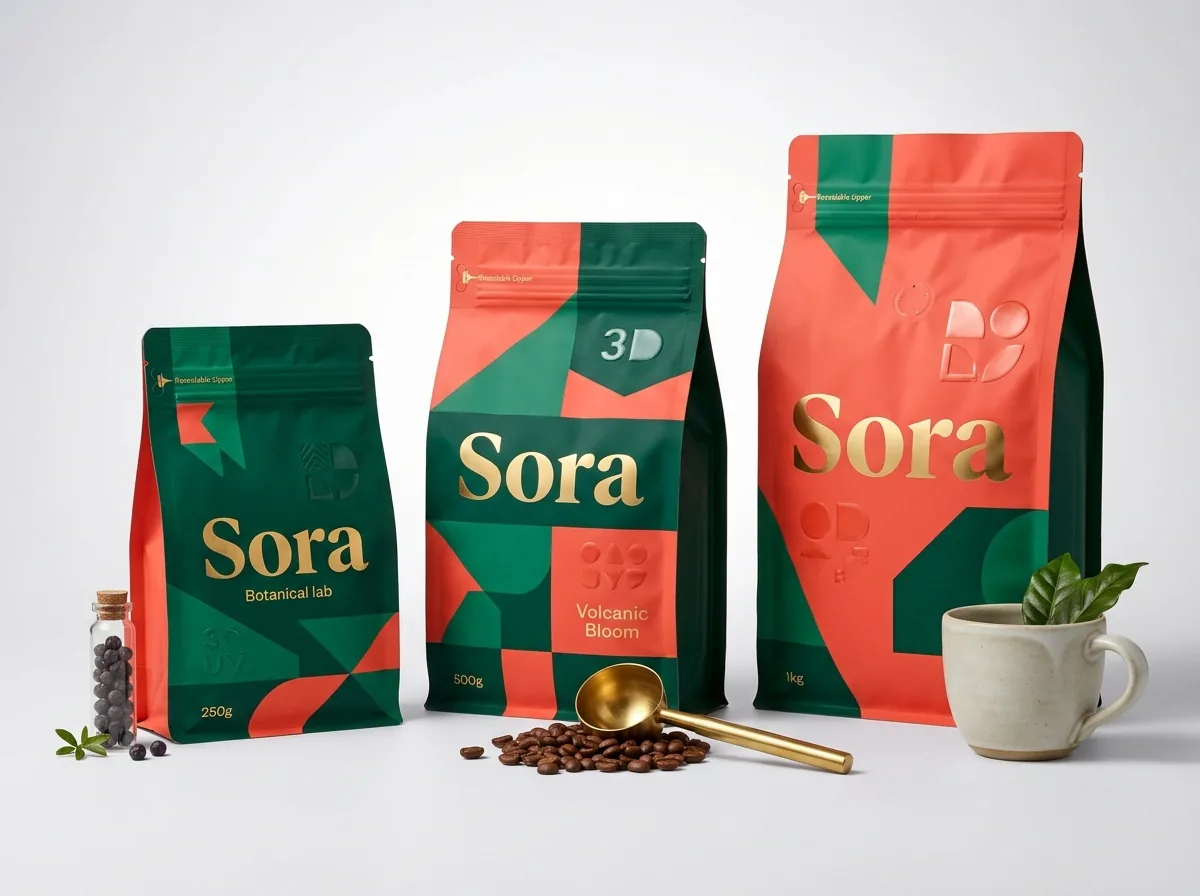
The three core coffee bag structures solve different shelf display and roastery packing problems. Stand-up pouches (doypacks) use an oval bottom gusset that pops open when filled, giving you a wide front face, a built-in top press-to-close zipper and the most economical unit cost for 4 oz to 2 lb retail bags. Flat-bottom pouches (also called box-bottom or eight-side-seal bags) combine a truly flat rectangular base with four vertical corner seals, creating five distinct printable panels that stand upright like a rigid folding carton and pair with a front pull-tab pocket zipper. Side-gusset (quad-seal) bags fold inward along the left and right edges to form a compact brick footprint that stacks efficiently in master cartons and scales up cleanly to 5 lb cafe hopper bags. All three styles support one-way degassing valves, custom finishes and high-barrier food-safe laminates on request.
How do stand-up, flat-bottom and side-gusset coffee bags compare side by side?
When roasters compare pouch formats, the decision usually comes down to four variables: how the bag sits on a retail shelf, how many printable panels your designer gets, how the bag recloses after opening, and how fast your team can fill and heat-seal it on roast day. Use the comparison matrix below to see how each structure behaves across 2 oz fractional packs, 12 oz retail bags and 5 lb wholesale cafe orders. Notice how the zipper position changes between styles. On a standard stand-up pouch, the press-to-close zipper sits across the top mouth of the bag. On a flat-bottom box pouch, you can mount a pocket pull-tab zipper on the upper front face so the entire top opening stays unobstructed over your filling spout. When you order custom printed coffee pouches, our prepress team sends a free structural dieline and 3D mockup for whichever format you select.
| Feature | Stand-up pouch (doypack) | Flat-bottom box pouch | Side-gusset quad-seal bag |
|---|---|---|---|
| Base & shelf posture | Oval folded bottom gusset; tapers toward top | Flat rectangular base; stands square like a box | Flat or folded brick base once filled with beans |
| Printable panels | Front, back and bottom gusset (3 zones) | Front, back, two flat sides and base (5 panels) | Front, back and two pleated side gussets (4 panels) |
| Typical reclosure | Top press-to-close zipper + tear notches | Front pocket pull-tab zipper or top zipper | Tin-tie metal tab, peel tape or fold-down clip |
| Filling mouth clearance | Beans pass through the open top zipper track | Wide-open top mouth (with front pocket zipper) | Full rectangular top opening for fast scooping |
| Best roast capacities | 4 oz, 8 oz, 10-12 oz, 1 lb and 2 lb | 8 oz, 10-12 oz, 1 lb and 2 lb specialty retail | 12 oz, 1 lb and 5 lb wholesale cafe bulk |
| Relative unit cost | Most economical per bag | Higher forming complexity and film usage | Economical, especially at 1 lb and 5 lb sizes |
When is a stand-up coffee pouch (doypack) the smartest choice?
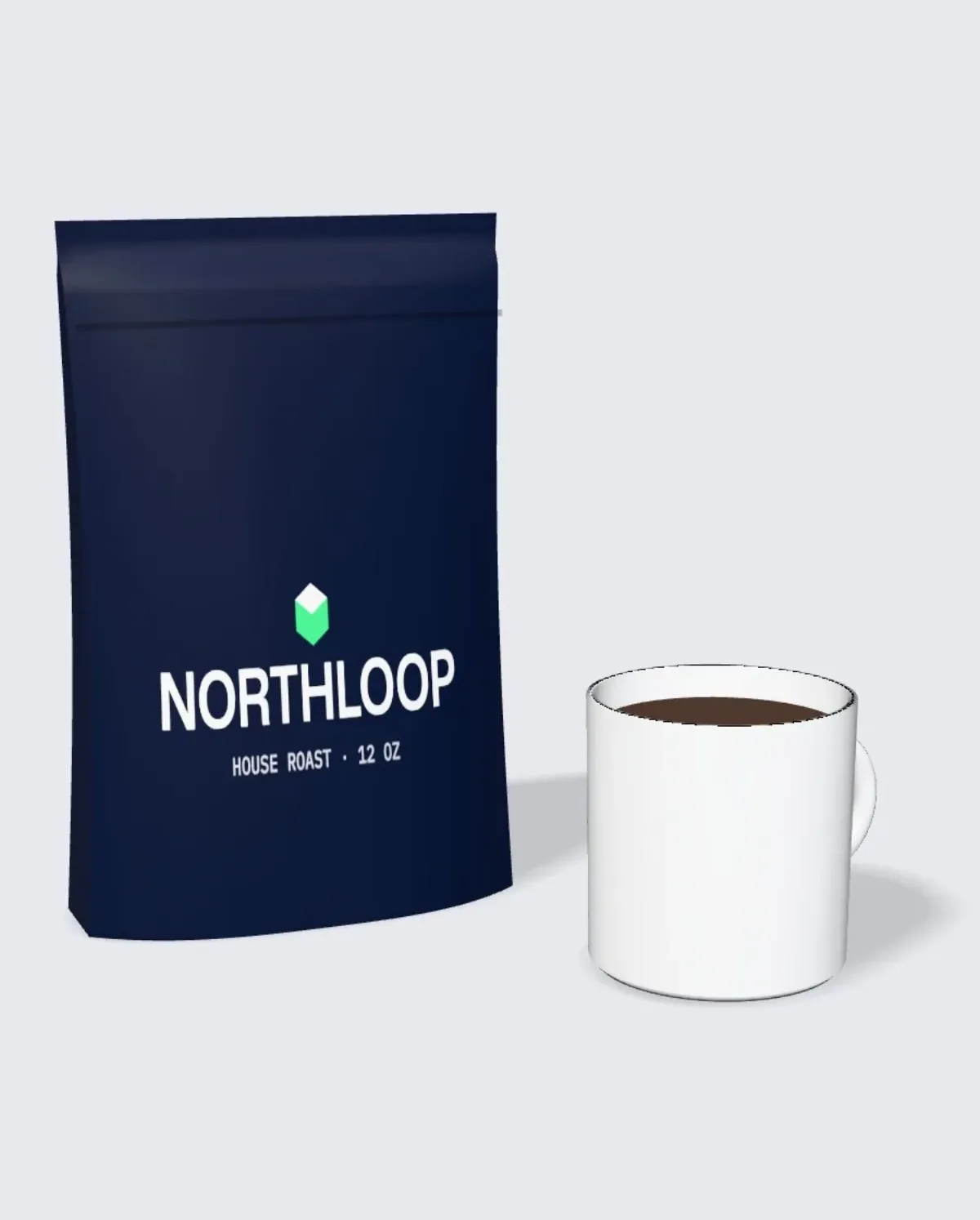
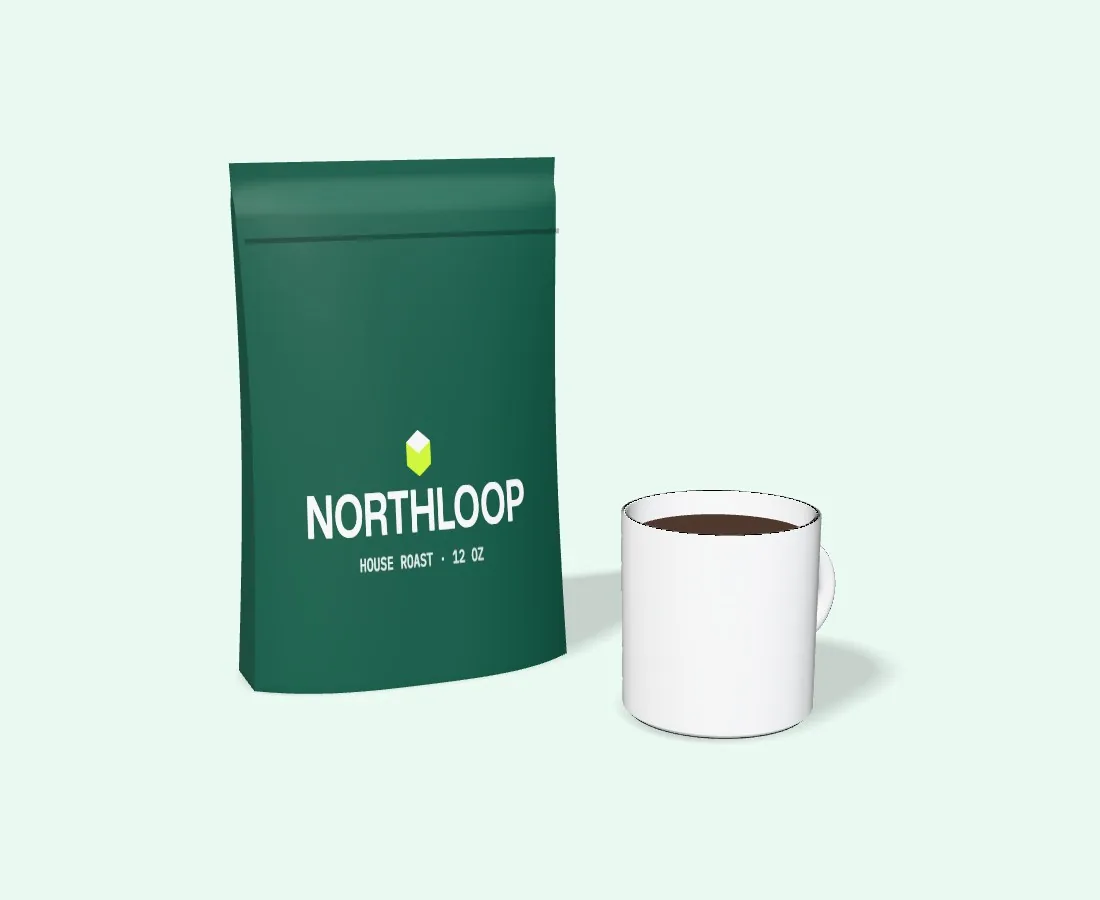
The stand-up pouch is the workhorse of retail coffee packaging across grocery stores, farmers markets and direct-to-consumer webshops. Because the bag is formed from two main face webs and a W-folded bottom gusset, it creates a broad front panel (typically 6 inches wide on a 12 oz bag) that acts like a billboard on crowded shelves. Even from six feet away, shoppers can read your roastery logo, origin country and tasting notes without picking up the bag. Stand-up pouches also arrive completely flat in shipping cartons and pop open as soon as beans hit the bottom gusset. They include a top press-to-close zipper and laser-scored tear notches as standard features, so customers never have to roll down the top or fuss with metal clips to keep their whole beans fresh. If you also pack loose-leaf teas, cacao nibs or granola alongside your coffee line, using matching custom stand up pouches and custom tea pouches keeps your shelf presentation cohesive.
Why do third-wave roasters love flat-bottom box coffee bags?
Walk into almost any specialty third-wave coffee bar and you will spot flat-bottom box pouches lined up like miniature hardcover books. Unlike a traditional stand-up pouch whose side seams taper to a flat top edge, a flat-bottom bag is sealed along all eight edges: four around the rectangular floor and four along the vertical corners. That geometry gives the bag a true flat footprint so it stands rock-solid on narrow cafe ledges even when only two ounces of beans remain inside. Designers love flat-bottom pouches because the two flat side gussets act like spine panels on a book. You can print farm altitude, processing method, roast curves and pour-over brew ratios on the left and right sides while keeping the front panel minimalist and uncluttered. Even better, flat-bottom bags accept a front pocket pull-tab zipper: the customer pulls a perforated tab across the upper front face to open and reseal the bag, while your roastery staff fill the bag through a completely wide-open top mouth with no zipper track in the way.
Know your size? Compare pricing across up to 3 quantities.
Request a Quote →When does a side-gusset quad-seal bag beat stand-up and flat-bottom pouches?
Side-gusset bags are the classic brick-shaped coffee packages with expandable pleats tucked into the left and right sides and a center back fin seal or four corner quad seals. While they do not use a wide bottom D-gusset, the weight of whole beans pushes the bottom folds out into a compact rectangular brick that takes up very little horizontal width on a shelf or inside a shipping carton. That space efficiency makes side-gusset bags the undisputed standard for 5 lb (2.27 kg) wholesale cafe bags and restaurant accounts. Four 5 lb side-gusset bags nest neatly into a master corrugated case with minimal wasted air space, reducing outbound freight costs per pound of roasted coffee shipped. Many traditional roasters also prefer 12 oz and 16 oz side-gusset bags paired with a factory-applied metal tin-tie tab or peel-and-reseal tape so customers can roll the top down tightly as the bean level drops, squeezing out excess headspace air after every pot. Upgrading from a center-fin-seal side-gusset bag to a four-corner quad-seal construction also gives you an uninterrupted back panel and stiffer vertical edges that prevent taller 16 oz and 5 lb bags from bowing outward in the middle.
How do zipper types and applied roast labels affect your choice?
Before locking in your bag style, consider how you handle multiple single-origin SKUs and how your packing crew fills bags. If you roast 15 rotating micro-lots a year, printing one master neutral pouch and applying custom coffee bag labels or custom roll labels for each lot is a proven way to keep inventory lean. Stand-up pouches and flat-bottom box pouches both offer a wide, flat front zone for 3 × 4 inch labels, whereas traditional center-seam side-gusset bags have a vertical back fin seal that forces back labels to sit off-center unless you upgrade to a quad-seal side-gusset construction. For reclosure, match the mechanism to your customer's habit. Retail grocery shoppers strongly prefer an integrated press-to-close or pocket zipper that snaps shut with one finger. Wholesale baristas dumping an entire 5 lb bag straight into an espresso grinder hopper care more about a wide top opening and a reliable one-way degassing valve than a zipper.
- Top press-to-close zipper: best for 8 oz to 2 lb stand-up pouches; simple tear-and-zip action for everyday kitchen use.
- Front pocket pull-tab zipper: best for flat-bottom box pouches; keeps the top mouth wide open and unobstructed during filling.
- Tin-tie or peel tape: classic roll-down reclosure for 12 oz and 1 lb side-gusset brick bags.
- Heat-seal only (no zipper): most economical choice for single-pot 2 oz sample packets and 5 lb wholesale cafe hopper bags.
What mistakes do roasters make when choosing a coffee bag style?
Picking the wrong pouch geometry can slow down roast-day packing or make labels wrinkle on curved folds. Watch out for these five missteps
- Ordering a traditional center-back-seal bag when you plan to apply wide back nutrition or brew labels that would cross the raised center fin seam.
- Putting fine origin text across the vertical side-gusset crease of a side-gusset bag where the inward fold hides the lettering.
- Choosing a flat-bottom pouch with a front pocket zipper and placing your main logo right over the perforated pull-tab zipper track.
- Using a tall, narrow side-gusset bag for 4 oz or 8 oz fills where there is not enough bean weight to hold the base flat on a retail shelf.
- Forgetting to check whether your tabletop band sealer can handle the thicker four-layer gusset transition zones on heavy quad-seal bags.
Packaging for this
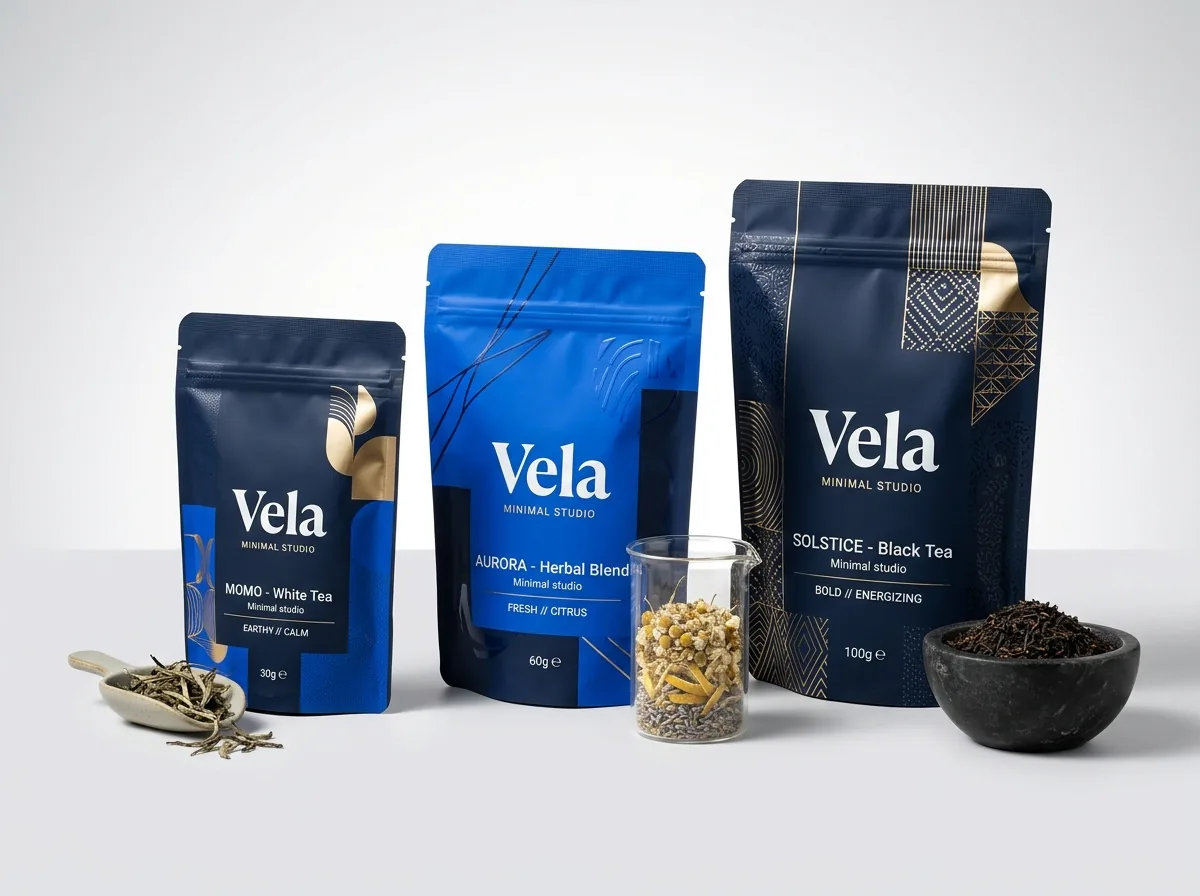
Ready to order coffee bags? Compare up to 3 quantities with a free 3D mockup.
Request a Quote →Questions about coffee bags
Do all three coffee bag styles support a one-way degassing valve?
Yes. Stand-up pouches, flat-bottom box pouches and side-gusset bags can all be fitted with an internal one-way degassing valve during pouch converting. The valve is heat-welded into the upper headspace zone so carbon dioxide escapes without letting oxygen enter.
Which coffee bag style stands up most reliably when half empty?
A flat-bottom box pouch stands the most reliably from full to nearly empty because its rectangular floor and four vertical corner seals form a self-supporting box structure. Stand-up doypacks also stand well on their oval bottom gusset.
Why do flat-bottom coffee bags use a front pocket zipper instead of a top zipper?
Because a flat-bottom bag has tucked side gussets on the left and right, running a standard zipper all the way across the top would pinch the side gussets shut. A front pocket zipper attaches only to the front panel, leaving the top mouth wide open for filling.
Which coffee bag format is best if I apply front and back stickers by hand?
Stand-up pouches and flat-bottom box pouches are easiest to label by hand because both have smooth, uninterrupted front and back faces with no center fin seam. Flat-bottom bags also give you straight vertical edges that act as a visual alignment guide.
Can I pack a stand-up or side-gusset coffee bag inside a folding carton?
Yes. Many specialty roasters seal whole beans inside a high-barrier valved pouch and slip that pouch inside a printed auto-lock-bottom folding carton. A 12 oz side-gusset or stand-up pouch slides cleanly into a rectangular coffee box.
Can I test stand-up and flat-bottom pouches before choosing one for my brand?
Yes. You can order our $50 sample kit (credited toward your first order) to compare pouch styles, barrier films and finishes in person, and our team builds a free 3D mockup of your artwork on your chosen bag style before payment.
Still have a question? Ask a packaging specialist.
Request a Quote →Request your coffee bags quote
Tell us your size and quantities, and one dedicated account manager prepares pricing for each tier.
- Free design & AI-to-print studio + 3D mockup
- No die or plate charges · 4–5 day rush available
- Free shipping to all 50 states
- 10% off your first order
This comparison draws on flexible packaging converting standards for doypack bottom gussets, eight-side-seal box pouches and quad-seal side-gusset bags, verified by a CubitPack packaging specialist. Spot an error? Tell us and we will fix it.
Sources
What changed
- October 22, 2026: First published.
- October 22, 2026: Updated specifications, terminology, and verified source links.
More guides
New packaging guides by email
Sizes, materials and design tips. Unsubscribe anytime.