
Roll labels vs sheet labels: which should you choose?
Short answer: Choose roll labels when you label dozens or hundreds of jars, bottles, cans or pouches in a row, or when you use a tabletop dispenser or labeling machine. Choose sticker sheets for smaller batches, flat storage, or packing multiple labels into a kit. Both start at 500 labels.
On this page
- How do roll labels, sticker sheets and die-cut stickers compare
- When are custom roll labels the better choice
- When do sticker sheets or die-cut stickers make more sense
- What is roll unwind direction and core size
- Do roll labels and sheet labels cost the same
- How should I store and handle roll labels and sticker sheets
- Common mistakes
- FAQs
Request a custom quoteFree dieline & 3D mockup
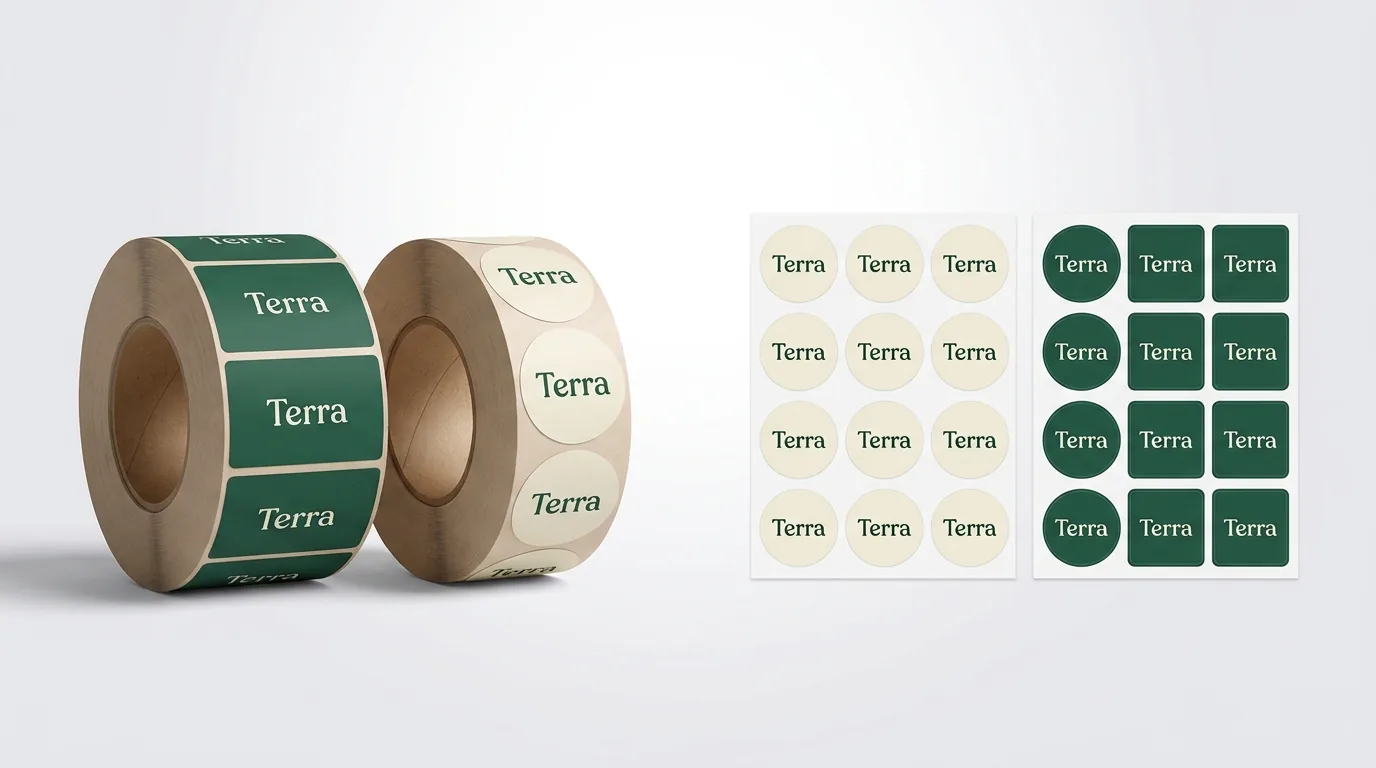
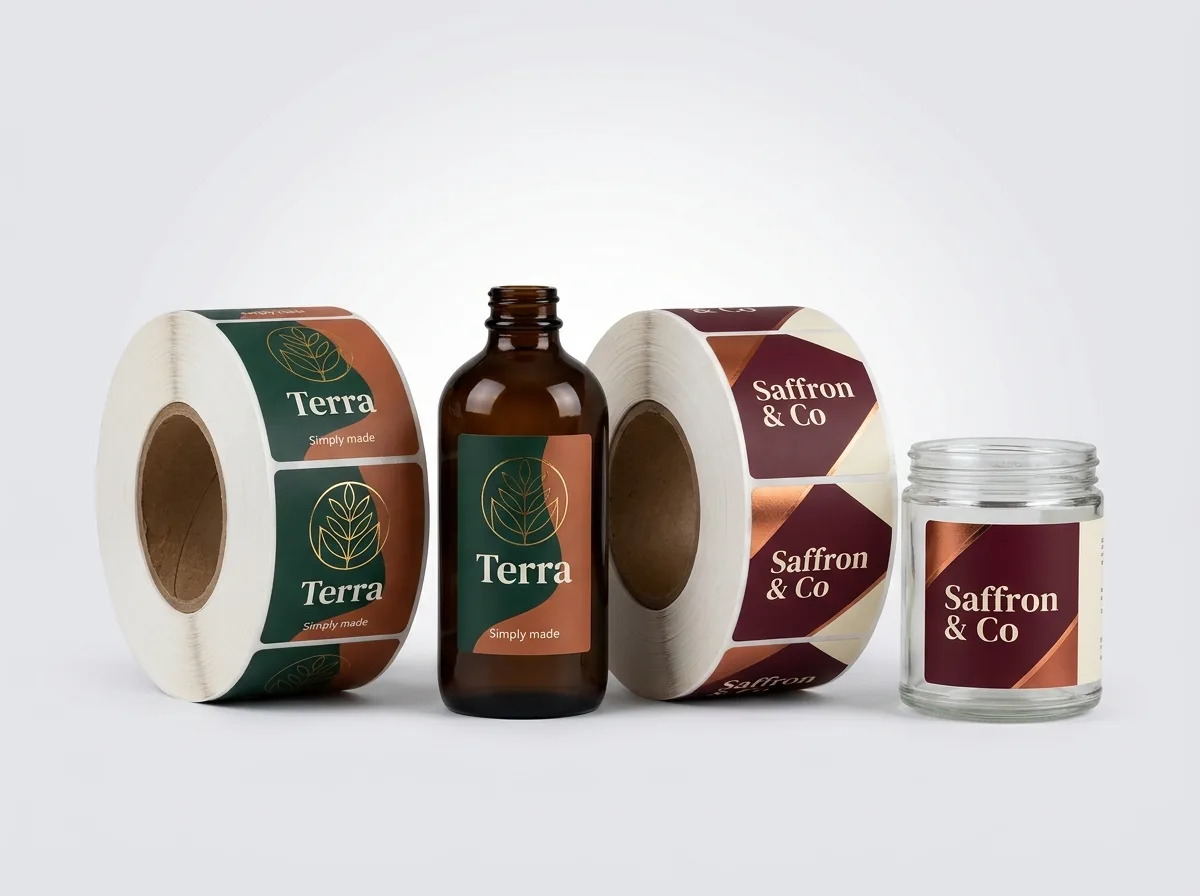
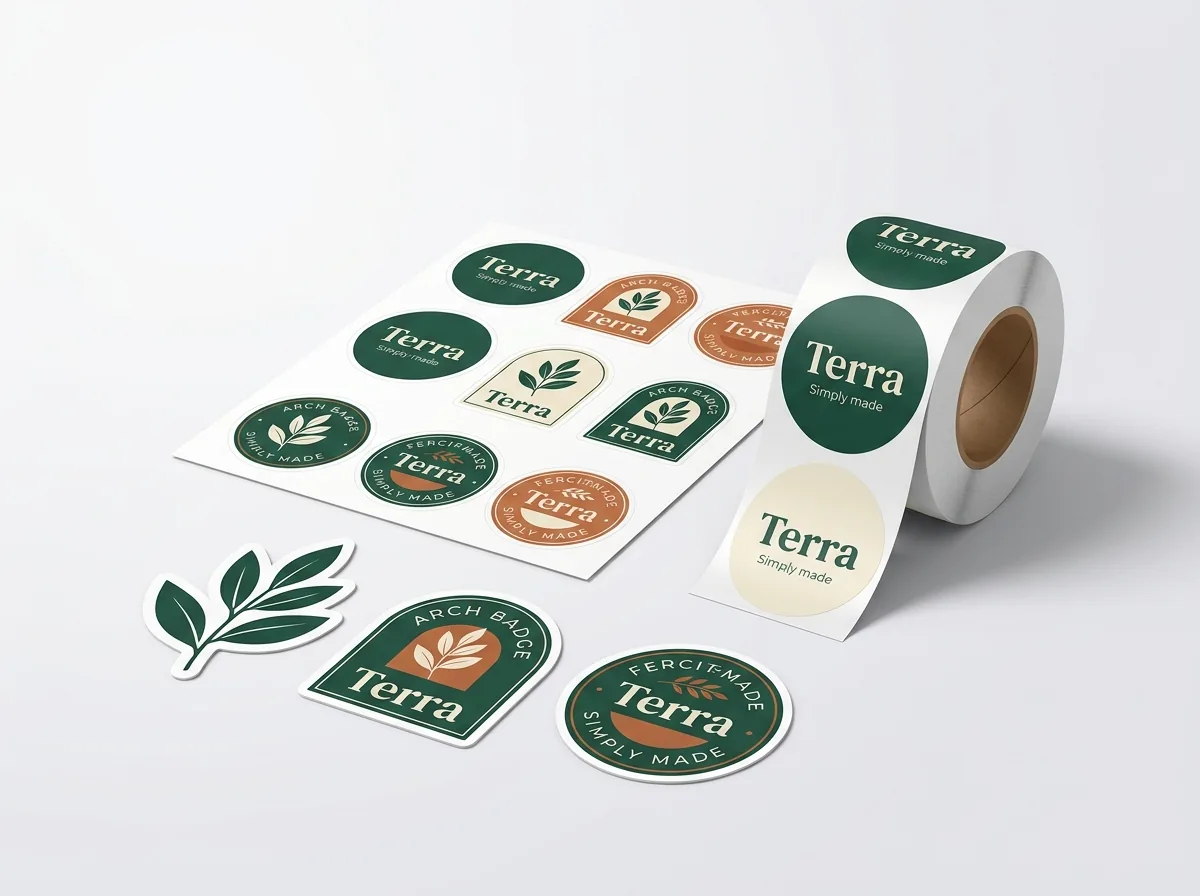
The difference between roll labels and sheet labels is how your labels are arranged on the backing liner and how fast your team can peel them at the packing table. Roll labels are wound single-file around a cardboard core: pulling the backing liner over a sharp edge pops the leading edge of each label up so you can grab and stick it in one motion, by hand or with a dispenser. Sticker sheets arrange multiple kiss-cut labels flat on a single page, making them easy to stack in a tray, slip into product boxes, or use when you only label a handful of orders at a time. At CubitPack, both formats are printed with the same CMYK or guaranteed Pantone inks, cut to any shape with no die fees, and start at 500 custom labels in 10–14 business days.
How do roll labels, sticker sheets and die-cut stickers compare?
When you order custom printed labels, the printed face stock, adhesive and finish look identical once applied to your jar, bottle or box. What changes is how the labels arrive in your workspace and how your team handles them during fulfillment. Use the comparison table below to match the format to your batch size, equipment and storage setup. Think of the three formats in terms of how many containers you touch in one sitting. Roll labels are built for assembly-line rhythm where you repeat the same peel-and-stick motion dozens or hundreds of times. Sticker sheets are built for desk convenience where you grab a flat page from a tray, peel a few seals, and slide the sheet back into a folder. Die-cut singles are individual pieces cut right through the backing paper so you can hand them out or drop one inside each customer package.
| Feature | Roll labels | Sticker sheets | Die-cut singles |
|---|---|---|---|
| How they arrive | Single-file on a cardboard core | Several kiss-cut labels per flat page | Cut one by one through the liner |
| Hand peeling speed | Fastest (liner bends back to pop edge) | Moderate (peel from flat sheet) | Slowest (split or peel edge) |
| Dispenser & machine fit | Fits manual & automatic applicators | Hand application only | Hand out or pack by hand |
| Best batch size | 50 to 10,000+ units at a time | 5 to 100 units at a time | 1 per customer order |
| Storage on packing table | Dispenser rack, bin or pegboard | Flat folder, binder or shelf tray | Stack or small bin |
| Best use cases | Jars, bottles, cans, coffee bags | Tissue seals, multi-label kits, samples | Freebie stickers, promo inserts |
When are custom roll labels the better choice?
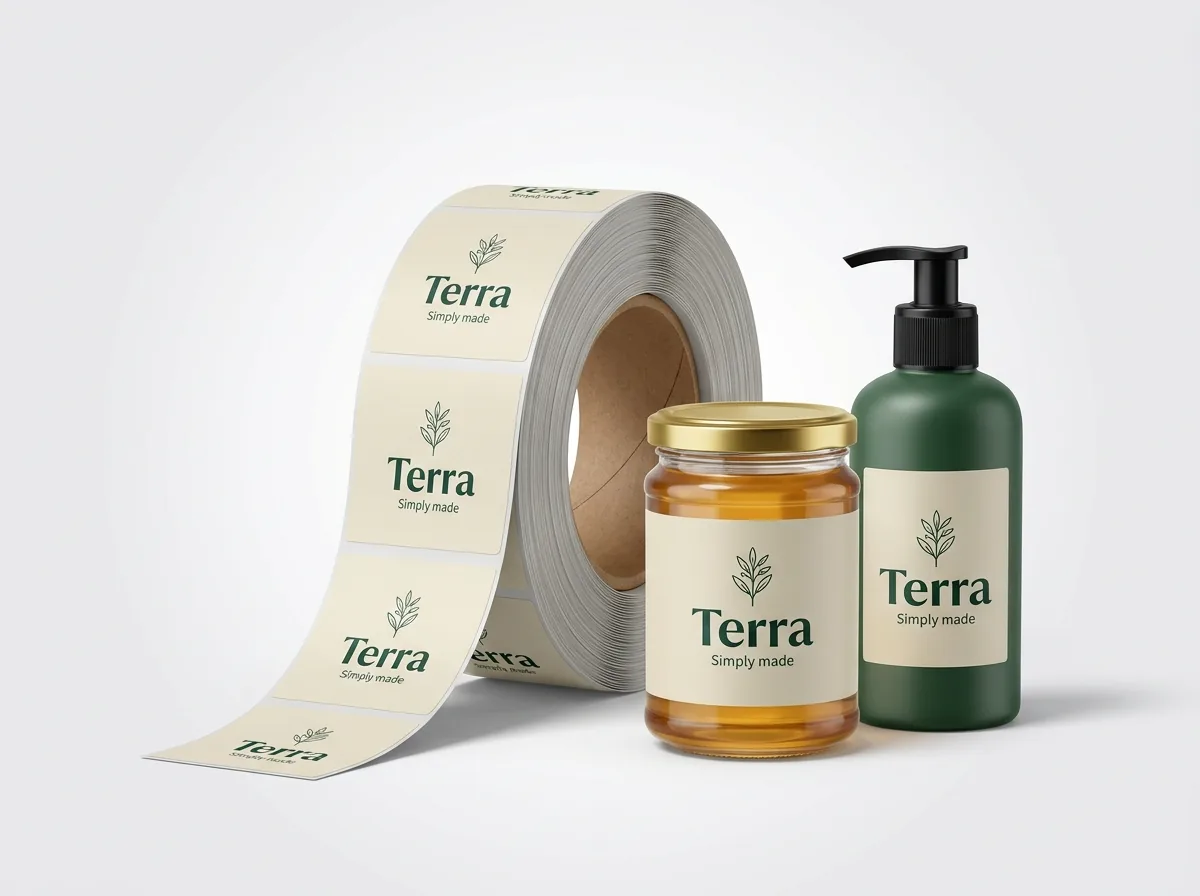
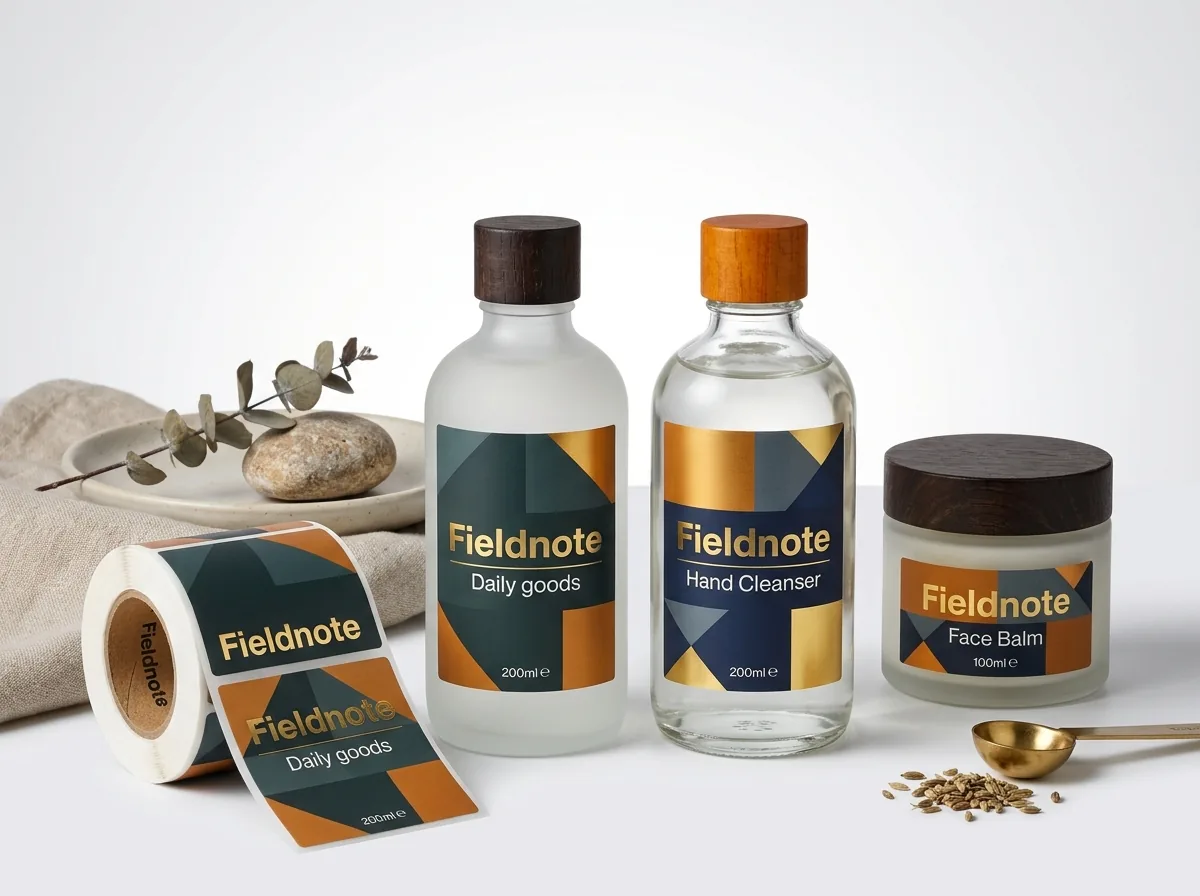
If you sit down to label 100 honey jars, 250 skincare bottles or 500 coffee bags in one session, custom roll labels save hours of finger fatigue. Because the waste matrix around the labels is already stripped away at the press, bending the liner ribbon over your finger or through a simple tabletop dispenser lifts the edge of the next label automatically. Rolls are also required if you use a semi-automatic bottle roller or an inline conveyor applicator, or if you plan to hand off your packaging to a co-packer or fulfillment warehouse as your brand grows.
- You label more than 50 jars, bottles or pouches in a single production run.
- You use a manual tabletop label dispenser or a motorized bottle applicator.
- Your co-packer or fulfillment center requires labels wound on rolls.
- You want one continuous strip with the waste matrix already removed so peeling is effortless.
When do sticker sheets or die-cut stickers make more sense?
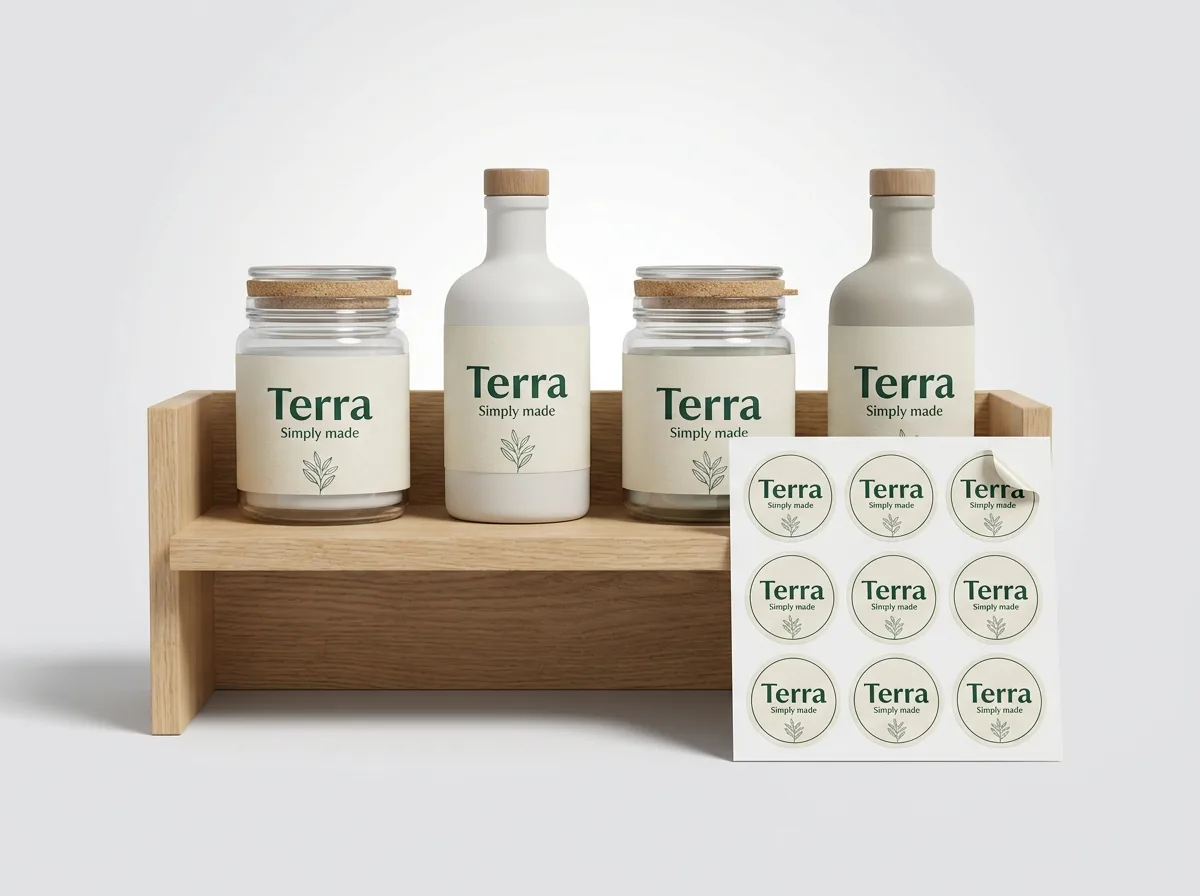
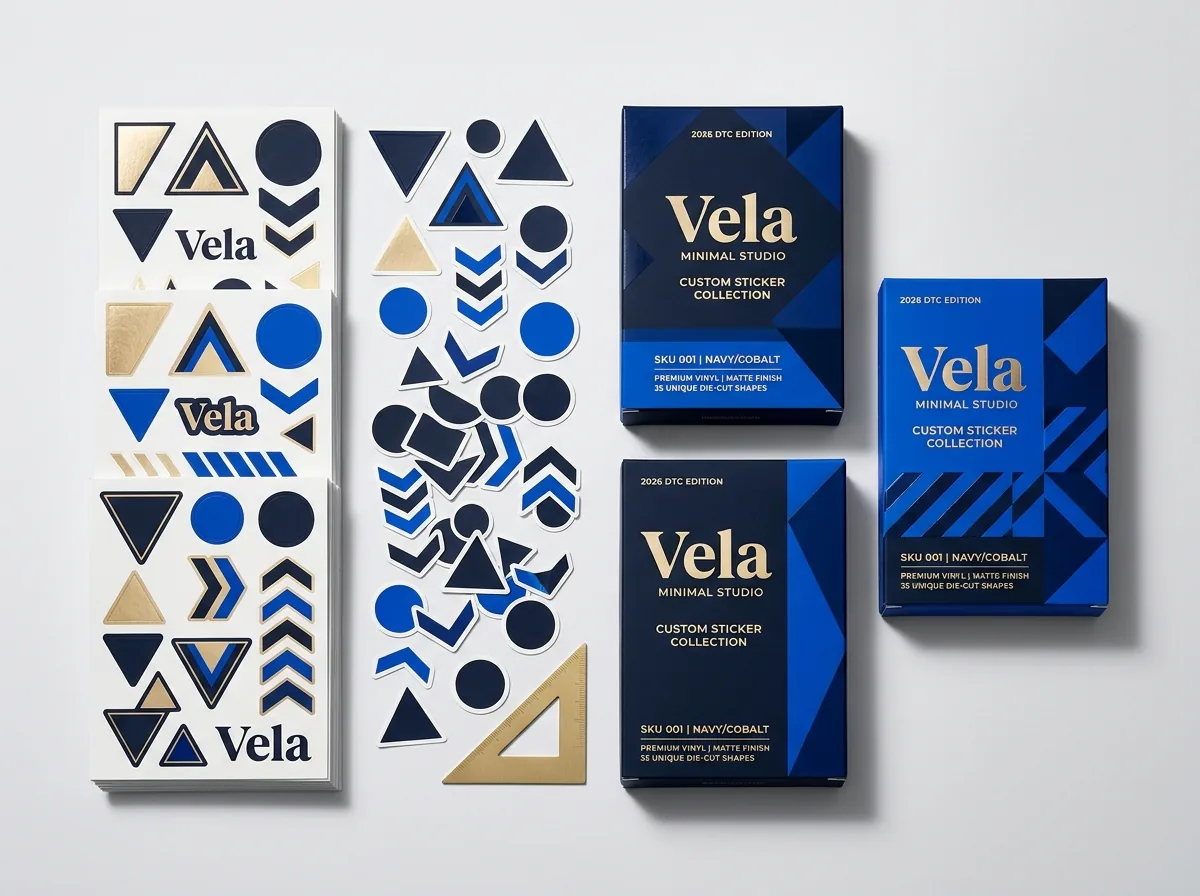
Flat custom sticker sheets shine when you pack orders one by one at a shipping desk or when the sheet itself goes inside your product box. For example, many e-commerce brands keep a flat tray of 1.5 inch circle seals next to their tissue paper so packers can peel one sticker per mailer box without mounting a roll dispenser. Sheets are also ideal when you sell a kit that includes several small labels for the customer to apply at home, such as spice jar organizer sets or planner stickers. If you want a logo sticker to drop inside orders as a free gift, choose custom die-cut stickers, where each sticker is cut all the way through the backing liner as a standalone piece. Sheets are also helpful when you have multiple label designs or flavors that your team picks from on demand. Instead of threading and unthreading five different rolls on a dispenser for small daily orders, a packer can flip through five labeled folders in a desktop file rack, pull out the right sheet, and peel the exact flavor or scent seal needed for that shipment.
- Packing-table tissue and box seals where you apply one sticker per outgoing shipment.
- Multi-flavor or multi-SKU stations where flat folders take up less desk space than multiple dispensers.
- Customer-facing kits where a sheet of multiple labels is packed flat inside your product box.
- Individual freebie or promotional logo stickers (choose die-cut singles cut through the liner).
Know your size? Compare pricing across up to 3 quantities.
Request a Quote →What is roll unwind direction and core size?
When labels are wound onto a roll, unwind direction describes which edge of the label feeds off the roll first (top edge first, bottom edge first, right edge first, or left edge first) and whether the printed side faces outward or inward. If you peel labels by hand or use a basic tabletop dispenser, unwind direction rarely matters because you turn the label in your hand before sticking it down. If you use a mechanical bottle or jar applicator, unwind direction and cardboard core diameter are critical: choosing the wrong direction will apply your label sideways or upside down on every bottle. Tell your account manager your machine model or preferred feed direction in the quote notes so we wind your rolls to match. In the packaging industry, unwind directions are numbered 1 through 8 on a standard chart. Positions 1 through 4 have the printed labels facing outward on the outside of the roll (which almost all tabletop dispensers and bottle rollers use), while positions 5 through 8 wind the labels facing inward toward the core. Within positions 1 to 4, position 1 feeds the top edge of the artwork first, position 2 feeds the bottom edge first, position 3 feeds the right edge first, and position 4 feeds the left edge first.
Do roll labels and sheet labels cost the same?
Both formats start at the same 500-label minimum at CubitPack, and neither format has die or plate charges. At 500 to 1,000 labels, sheet labels and roll labels are very close in price because setup and material area drive most of the cost. As your order climbs to 2,500, 5,000 or 10,000 labels, roll printing becomes more economical per label and saves significant labor time during application. You can enter up to three quantities in the quote form to compare price breaks across your run. When weighing total cost, remember to count the minutes your team spends peeling and sticking. Cutting two seconds off each label across a 2,000-unit production run saves more than an hour of hands-on packing time, which is why most food, beverage, candle and cosmetic brands switch from flat sheets to rolls as soon as their batches pass a few hundred units.
How should I store and handle roll labels and sticker sheets?
Pressure-sensitive label adhesives stay tacky and flat longest when stored indoors at normal room temperature away from direct sunlight, space heaters and damp concrete floors. Keep unused rolls inside their protective plastic wrap until packing day so dust does not collect along the exposed tacky edges of the roll, and store sticker sheets flat inside their box or a folder so the paper liner does not curl. Before sticking either format onto jars, bottles or pouches, wipe away any filling spills, oil residue or condensation on the container wall. Pressing a label onto a clean, dry room-temperature container gives the adhesive full surface contact right away, even if the bottle goes into a refrigerator or ice bucket later.
- Keep rolls and sheets sealed in their box at room temperature until you are ready to label.
- Stack sticker sheets flat rather than standing them on edge so the backing paper stays crisp.
- Apply labels to clean, dry containers at room temperature before chilling or refrigerating.
What are the most common mistakes when choosing rolls vs sheets?
Picking the wrong format usually slows down packing day rather than hurting how the label looks. Avoid these five pitfalls
- Ordering flat sheets for a 1,000-jar production day. Peeling 1,000 labels from flat pages by fingernail takes far longer than pulling from a roll.
- Ordering roll labels for a labeling machine without checking the required core diameter and unwind direction first.
- Ordering roll labels when you actually wanted individual handouts to drop into customer boxes (choose die-cut stickers for handouts).
- Forgetting to leave at least ⅛ inch between complex custom shapes on a sheet or roll so the waste matrix strips cleanly.
- Storing label rolls or sheets in a damp garage or next to a heater instead of flat at room temperature.
Find your label size
Suggested label size: 9⅛ × 2¾ in (width × height)
A typical starting point. Your account manager confirms the size on the proof.
Quote this size →Packaging for this
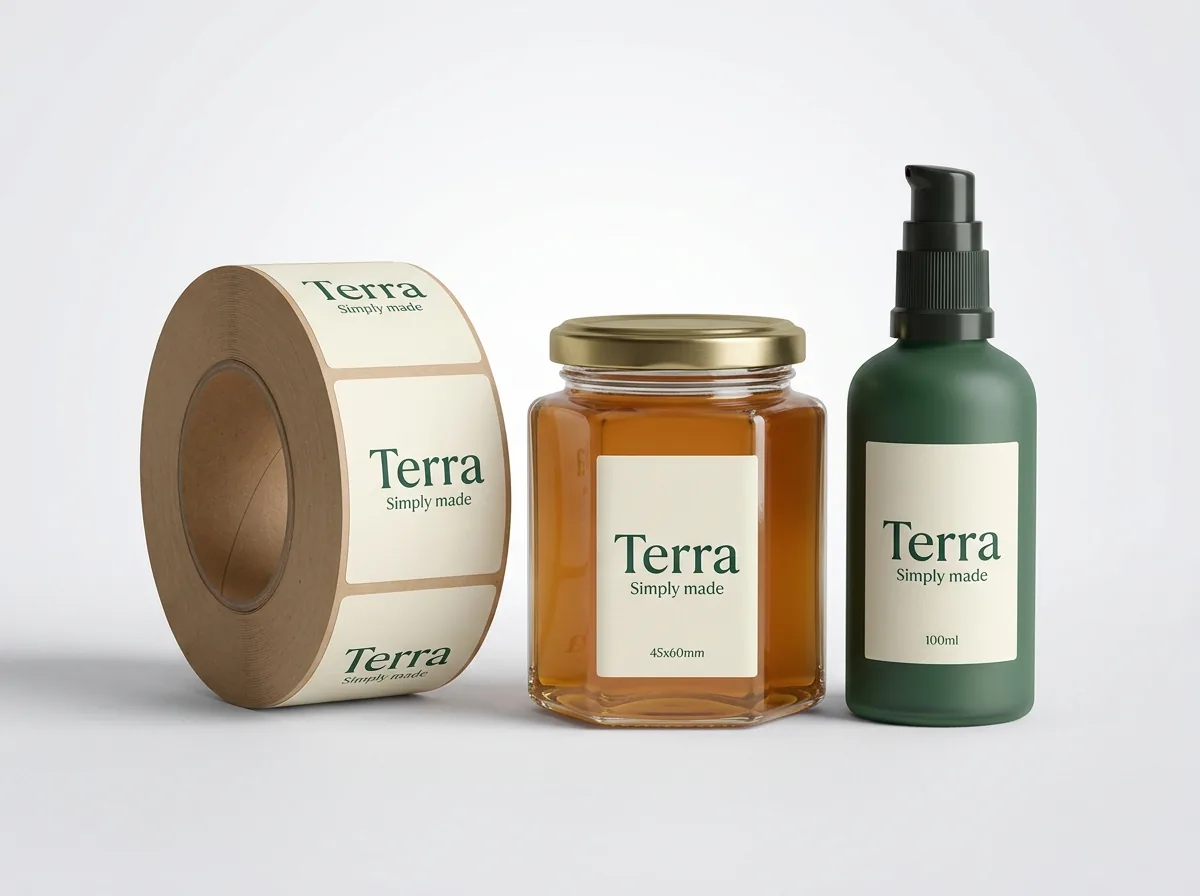
Ready to order labels? Compare up to 3 quantities with a free 3D mockup.
Request a Quote →Questions about labels
Can I peel roll labels by hand without a machine?
Yes. Most small brands peel roll labels by hand. Because the background waste matrix is already removed around each label, simply bending the backing paper sharply over your finger pops the leading edge of the label up so you can grab it immediately.
What is the difference between kiss-cut sheets and die-cut stickers?
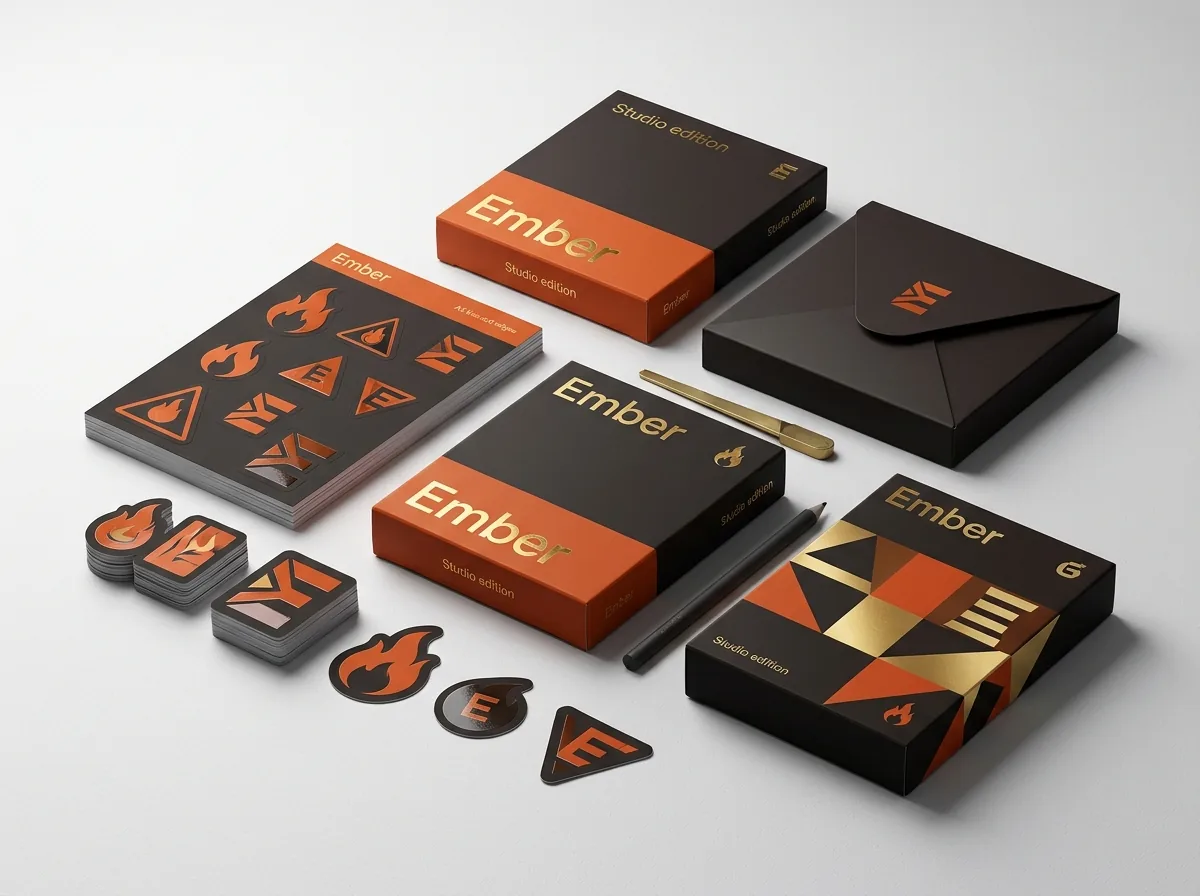
On a kiss-cut sticker sheet, the blade cuts through the printed label and adhesive layer but leaves the flat backing sheet intact, holding multiple labels on one page. On die-cut stickers, the blade cuts all the way through the backing liner to make single pieces.
Are clear and foil labels available on both rolls and sheets?
Yes. Both custom clear labels and custom foil labels, along with matte, gloss, foil stamping and spot UV finishes, can be supplied on rolls or flat sheets depending on how you prefer to apply them.
How many labels fit on a single sticker sheet?
The count per sheet depends on your label's width and height plus the small gap needed between labels for clean cutting. For example, a standard sheet holds twelve 2 inch circles or six 3 × 4 inch rectangles. We lay out the sheet for you on the proof.
What if I do not know my machine's unwind direction yet?
If you are applying labels by hand, any unwind direction works. If you are buying or using a labeling machine, send us the machine model or a quick photo of how the roll mounts, and your account manager will confirm the unwind direction before production.
Can I split one order between rolls and sheets?
Yes. If you want roll labels for your main production jars and flat sticker sheets of lid seals for your shipping table, note both in the quote form and we will quote the combined run in 5-7 minutes.
Still have a question? Ask a packaging specialist.
Request a Quote →Request your labels quote
Tell us your size and quantities, and one dedicated account manager prepares pricing for each tier.
- Free design & AI-to-print studio + 3D mockup
- No die or plate charges · 4–5 day rush available
- Free shipping to all 50 states
- 10% off your first order
This comparison draws on CubitPack's decided label formats, finishes and minimums alongside standard roll applicator unwind conventions. Checked by a packaging specialist. Spot something wrong? Tell us and we will fix it.
Sources
What changed
- October 22, 2026: First published.
- October 22, 2026: Updated specifications, terminology, and verified source links.
More guides
New packaging guides by email
Sizes, materials and design tips. Unsubscribe anytime.