
Die-cut vs kiss-cut stickers: which format should you choose?
Short answer: Once peeled and applied, die-cut and kiss-cut stickers look identical. The difference is the backing liner: die-cut stickers are cut all the way through the liner to match your shape, while kiss-cut stickers leave a wider backing border or sheet for faster peeling. Order both on our custom stickers page.
On this page
- How do die-cut singles, kiss-cut singles, sheets and rolls compare
- When are through-cut die-cut stickers the better choice
- When should I choose kiss-cut stickers instead of die-cut
- Kiss-cut sheets vs kiss-cut rolls: how do I pick the backing format
- Do die-cut and kiss-cut stickers look any different once applied
- Common mistakes
- FAQs
Request a custom quoteFree dieline & 3D mockup
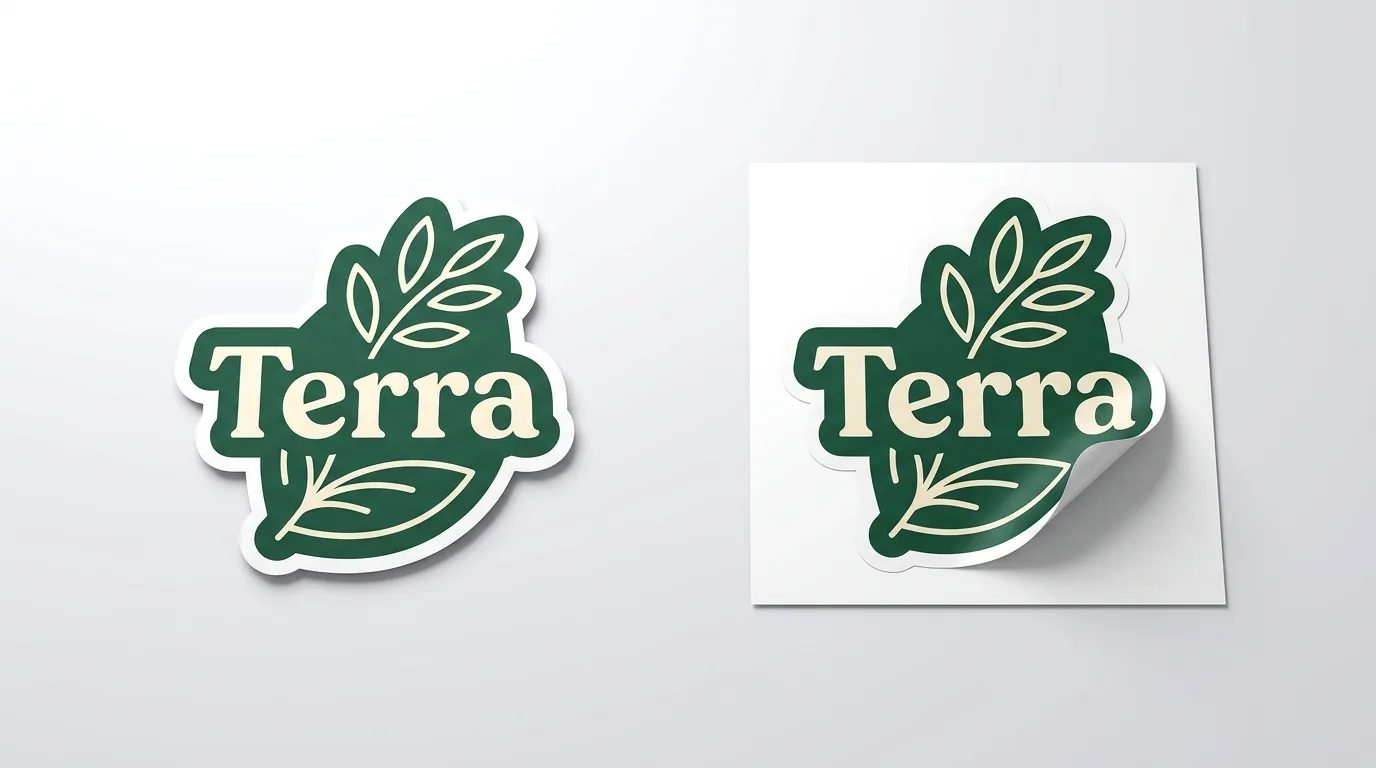
The choice between die-cut and kiss-cut stickers comes down to how the sticker looks before it is peeled and how quickly you need to peel it. On a die-cut sticker, the blade cuts completely through both the printed face layer and the paper backing liner right along your custom outline, so the unpeeled sticker in your customer's hand has the exact silhouette of your logo or mascot. On a kiss-cut sticker, the blade cuts only through the top adhesive sticker layer and stops at the backing paper, leaving an extra square border, a multi-sticker flat sheet, or a continuous roll liner around your shape. Choose die-cut singles when Presentation in the hand matters most, such as trade show bowls, retail checkout displays and order freebies. Choose kiss-cut singles, sheets or rolls when your artwork has delicate points, when you want to print on the extra backing border, or when your crew peels hundreds of stickers an hour.
How do die-cut singles, kiss-cut singles, sheets and rolls compare?
Because kiss-cutting simply means cutting the sticker face without cutting through the liner beneath it, kiss-cut stickers can be delivered in three ways: as individual square-backed singles, as multi-design flat sticker sheets, or wound onto continuous rolls. Use the comparison table below to match the cut style to your packing workflow and marketing goal. Whether you pick through-cut die-cut singles or any of the kiss-cut formats, CubitPack prints your custom brand stickers from 500 pieces with zero die or plate charges and free shipping to all 50 states. Understanding how the liner behaves during transit, storage and hand peeling makes it easy to pick the right cut style for every campaign.
| Feature | Die-cut singles | Kiss-cut singles & sheets |
|---|---|---|
| How the blade cuts | Cuts through both sticker face and backing liner | Cuts through sticker face only; backing stays intact |
| Appearance before peeling | Exact silhouette of your logo or illustration | Sticker sits inside a wider square or multi-up card liner |
| Appearance after peeling | Exact custom contour shape | Exact same custom contour shape |
| Peeling speed by hand | Moderate; you flex the edge to separate the liner | Fast; bend the wider backing corner and the sticker pops up |
| Protection for thin points | Exposed edges can ding if tossed loose in bins | Surrounding liner shields delicate tips and script tails |
| Extra liner printing | Back of liner only | Front border around the sticker can carry URLs or social handles |
| Best use cases | Order freebies, event handouts, retail merch counter bowls | Intricate logos, collector sheets, high-speed packing tables |
When are through-cut die-cut stickers the better choice?
If your sticker is a gift or a piece of merchandise that a customer holds before deciding where to stick it, pick a through-cut die-cut single. Because the backing paper is trimmed flush with your offset border, the sticker immediately reads as a custom-shaped object rather than a label on a square card. That visual punch is why streetwear brands, coffee roasters, breweries and software companies use custom die-cut stickers in trade show fishbowls and atop folded tissue in e-commerce orders. To make sure your die-cut singles survive shipping bins and backpack pockets without dog-eared corners, design the outer cut path with smooth, rounded curves rather than needle-sharp spikes. A clean ⅛ inch white or colored border around your illustration ties separate graphic elements together into one sturdy shape. When customers pick up a thick, smoothly contoured die-cut sticker from a retail counter, the flush edge gives it the feel of a collectible badge rather than an office supply label. If you plan to distribute thousands of singles at a festival, conference or pop-up market, stacking 3 × 3 in or 2 × 4 in decals in neat bundles of 50, 100 or 250 pieces makes booth restocking effortless while keeping the 0.125 in border edges crisp.
When should I choose kiss-cut stickers instead of die-cut?
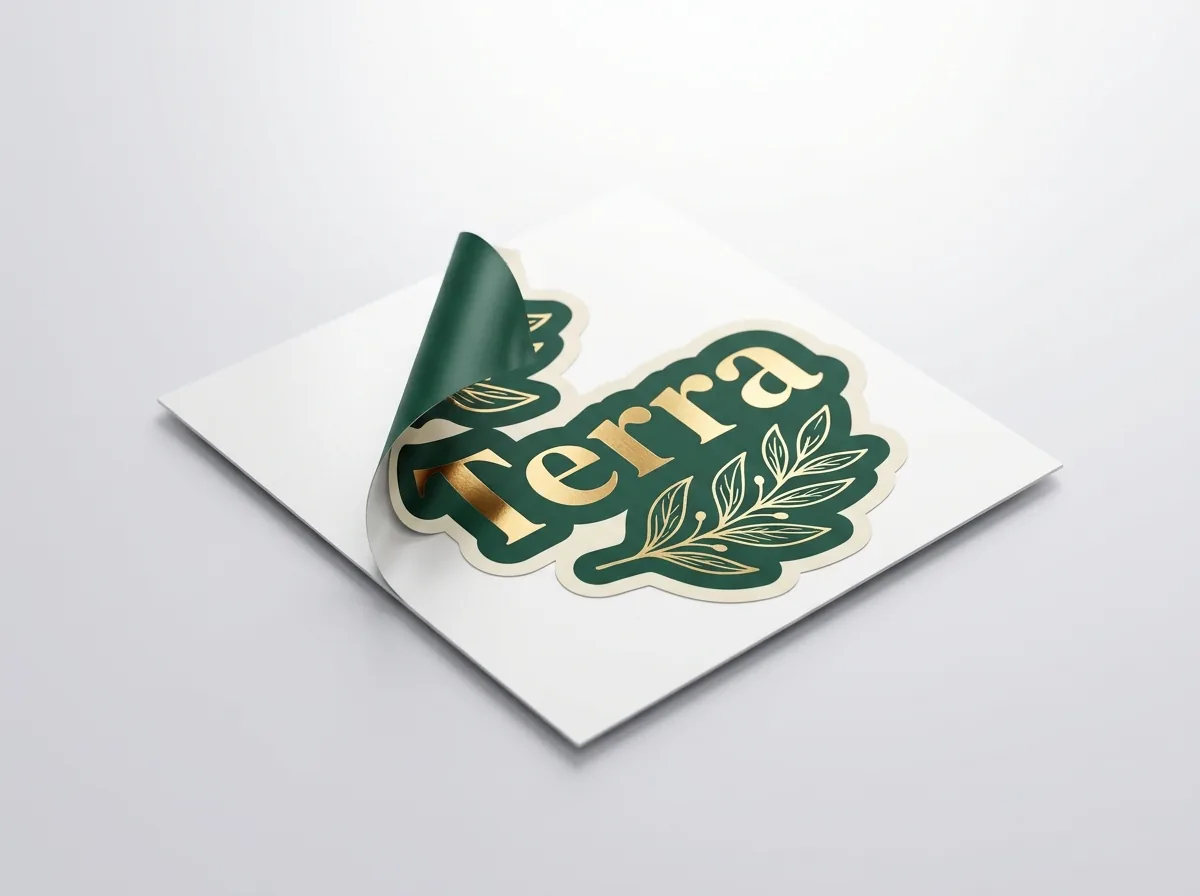
Kiss-cut stickers solve three practical problems that through-cut singles cannot. First, they peel twice as fast: because the backing paper extends past the cut line, you simply bend the backing sheet away from the sticker and the edge lifts right up without picking at the vinyl with a fingernail. Second, that extra backing margin acts like a bumper guard around delicate script lettering, thin antennae or star points while the stickers are stacked in boxes. Third, the surrounding flat border (the matrix) stays with the sticker until your customer peels it, giving you free real estate to print your website URL, Instagram handle, QR code or a coupon code right below the sticker without cluttering the actual decal artwork that goes on their laptop.
- Intricate contours: protects thin serif tails, botanical stems and narrow points from bending before use.
- Faster hand peeling: bending the outer liner pops the sticker edge up immediately without fingernail picking.
- Printed border message: put your @handle, reorder link or care note on the peel-away matrix border.
- Multi-design collector sheets: combine 4 to 10 individual kiss-cut stickers onto one postcard-sized sheet.
Know your size? Compare pricing across up to 3 quantities.
Request a Quote →Kiss-cut sheets vs kiss-cut rolls: how do I pick the backing format?
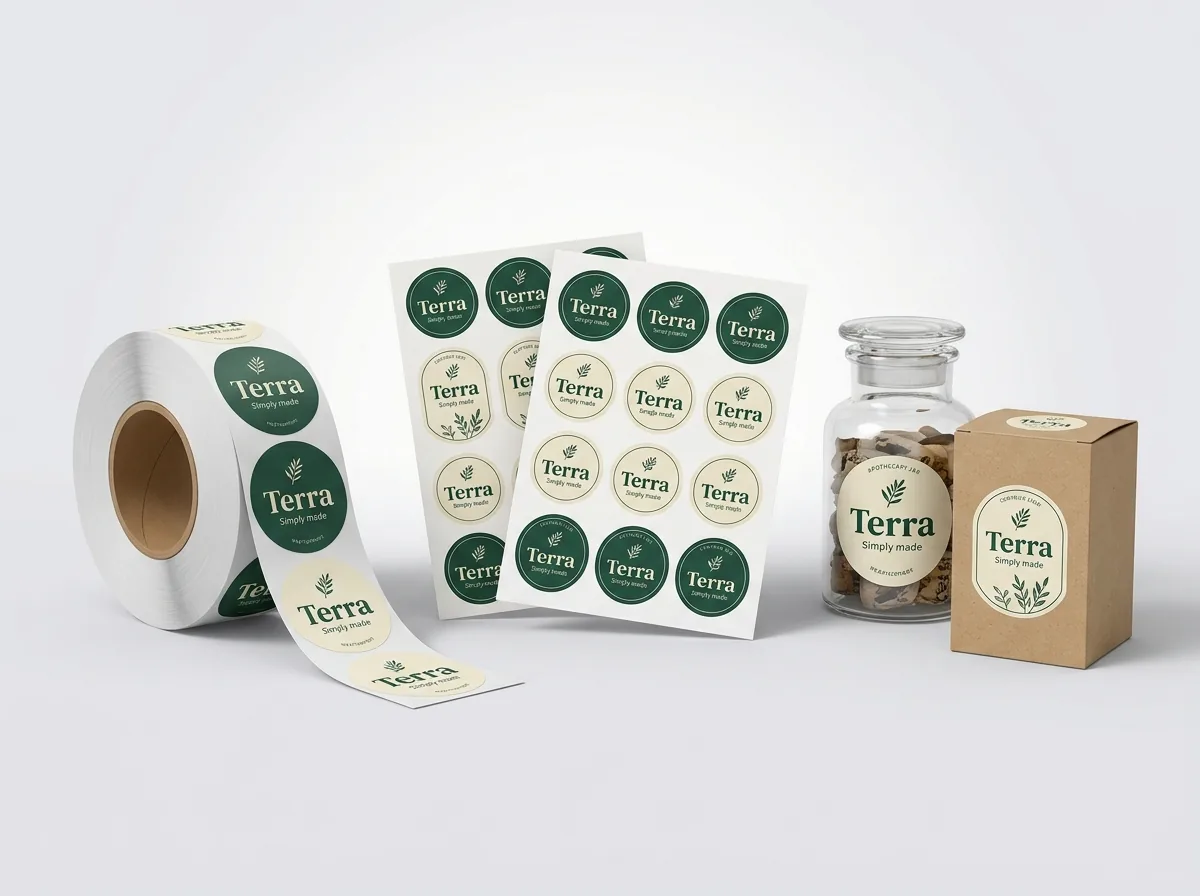
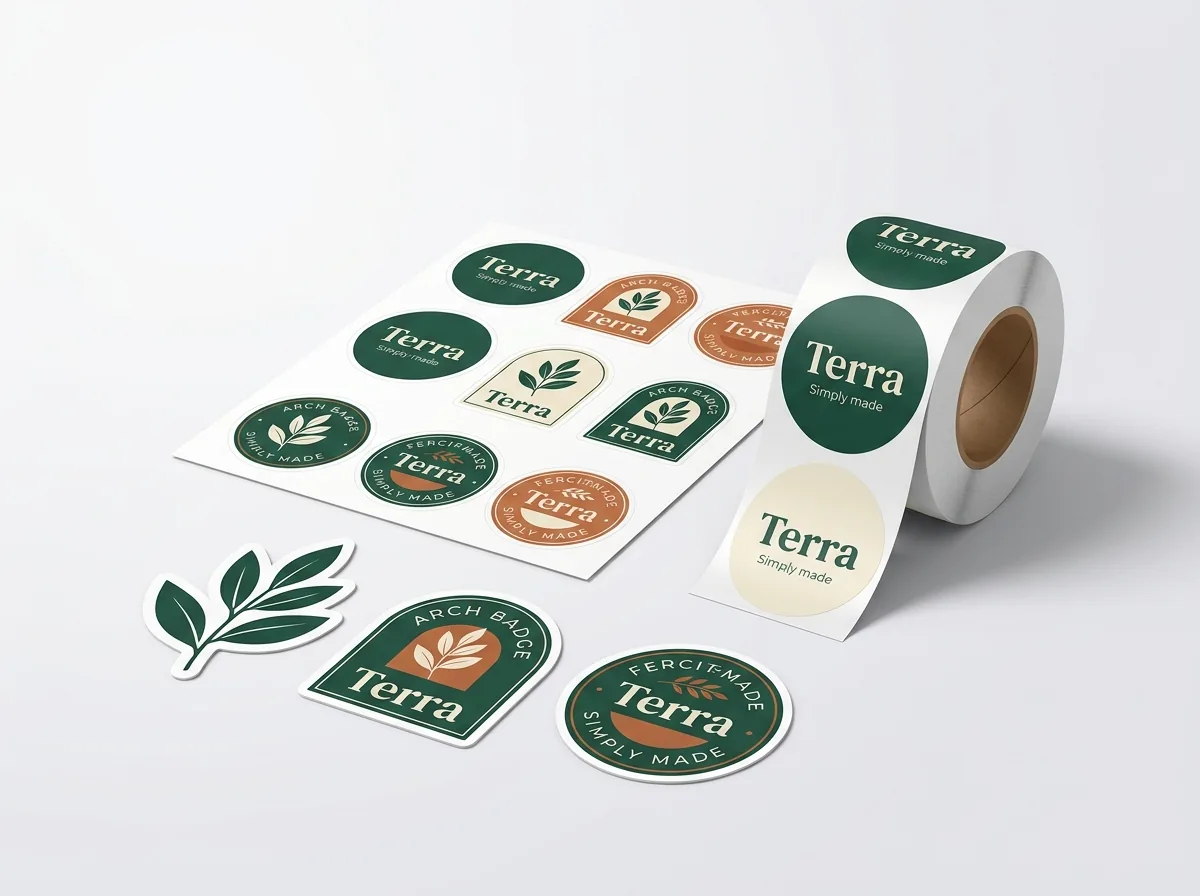
Both custom sticker sheets and custom roll labels use the exact same kiss-cut technique where the blade stops at the liner, so your choice depends on whether the stickers go to customers or stay at your packing bench. Pick flat kiss-cut sheets when you want to slip an entire multi-sticker collection into a subscription box, sell a themed sticker pack in your online store, or hand out a flat postcard sheet at events. Pick kiss-cut rolls when your own staff is peeling and sticking the same design hundreds of times a day onto tissue paper, coffee bags, bakery boxes or shipping mailers. Wound around a cardboard core, roll stickers feed smoothly through a manual tabletop dispenser or an automatic labeling machine, keeping your packing table clutter-free.
Do die-cut and kiss-cut stickers look any different once applied?
No. Once peeled off the backing paper and pressed onto a laptop, water bottle, glass jar or kraft box, a die-cut sticker and a kiss-cut sticker made from the same artwork file are 100% identical in shape, thickness, color and finish. Both can be cut to any custom contour, circle, square, rectangle or oval, and both can be printed on clear or metallic foil stock with matte, gloss, foil stamping or spot UV finishes. Because the applied result is identical, many brands order both formats from the same artwork file: a roll of kiss-cut stickers for the warehouse crew to seal outgoing boxes rapidly, and a batch of individual through-cut die-cut singles to drop inside the box as a customer freebie. When you submit your quote, you can request up to three quantity tiers so you see exactly how scaling from 500 to 1,000 or 2,500 pieces lowers your unit cost across either cut style. Before you pay for your order, our prepress team sends a digital proof and a 3D mockup that clearly distinguishes the kiss-cut blade line from the through-cut outer trim line. That way you can verify the exact border width, corner radius and backing margin on screen before the presses roll.
- Identical applied contour: once peeled from the liner, both formats leave the exact same custom shape on the surface.
- Same stocks and finishes: choose clear or foil stocks with matte, gloss, hot foil stamping or spot UV on either cut style.
- Dual-format workflows: use kiss-cut rolls at the packing bench and through-cut singles for customer handouts.
- Verified on proof: inspect both the kiss-cut path and the outer liner trim line on your free digital proof before paying.
What mistakes should I avoid when choosing between die-cut and kiss-cut?
Picking the wrong cut format can slow down your fulfillment line or leave delicate corners bent in the giveaway bowl. Avoid these five mistakes
- Ordering through-cut die-cut singles for high-speed warehouse box sealing, where picking at flush edges slows down packers.
- Using sharp needle points on a through-cut die-cut single instead of rounding the contour or protecting it on a kiss-cut liner.
- Assuming a kiss-cut sticker will keep its square backing border when applied, rather than peeling out along the inner contour.
- Leaving disconnected letters or floating dots in a kiss-cut design without realizing they will peel off as separate pieces.
- Crowding extra text onto the sticker face itself when it could sit cleanly on the peel-away border of a kiss-cut single or sheet.
Find your label size
Suggested label size: 9⅛ × 2¾ in (width × height)
A typical starting point. Your account manager confirms the size on the proof.
Quote this size →Packaging for this
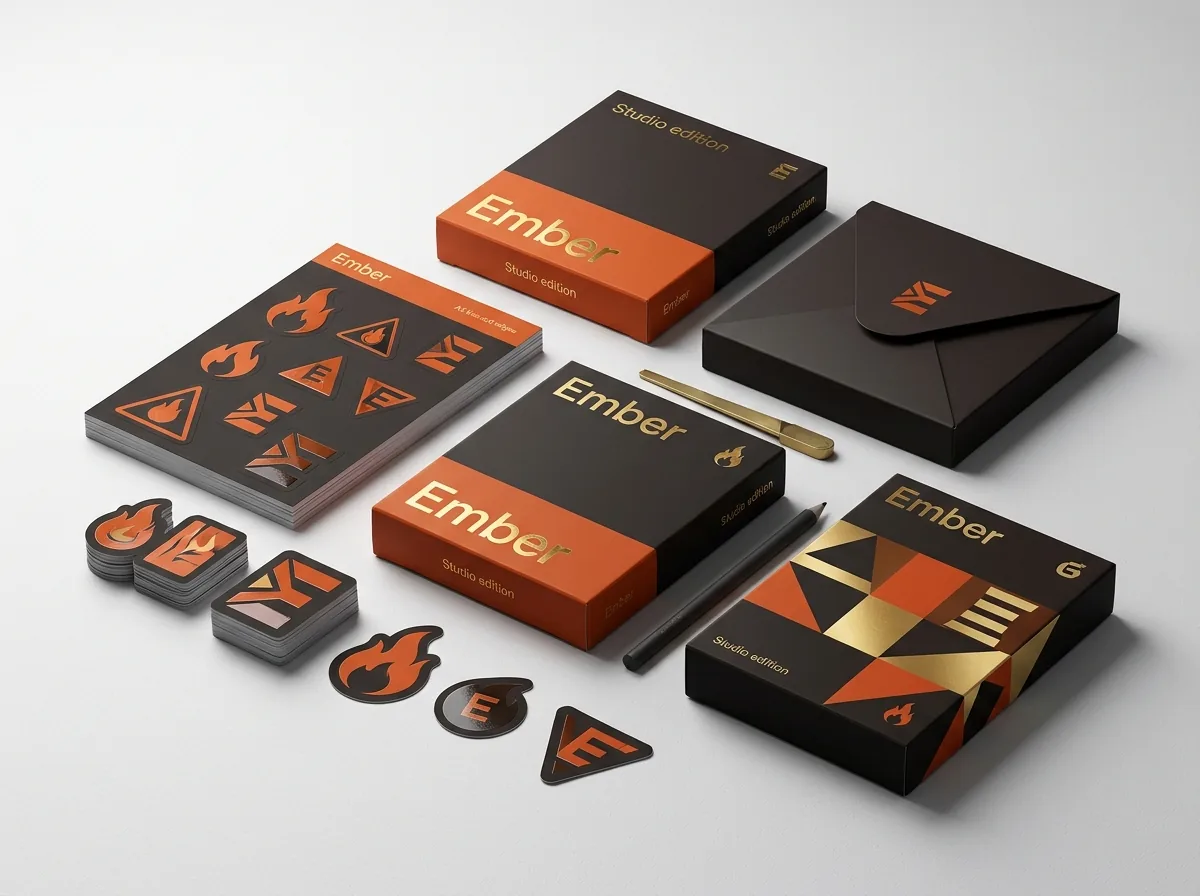
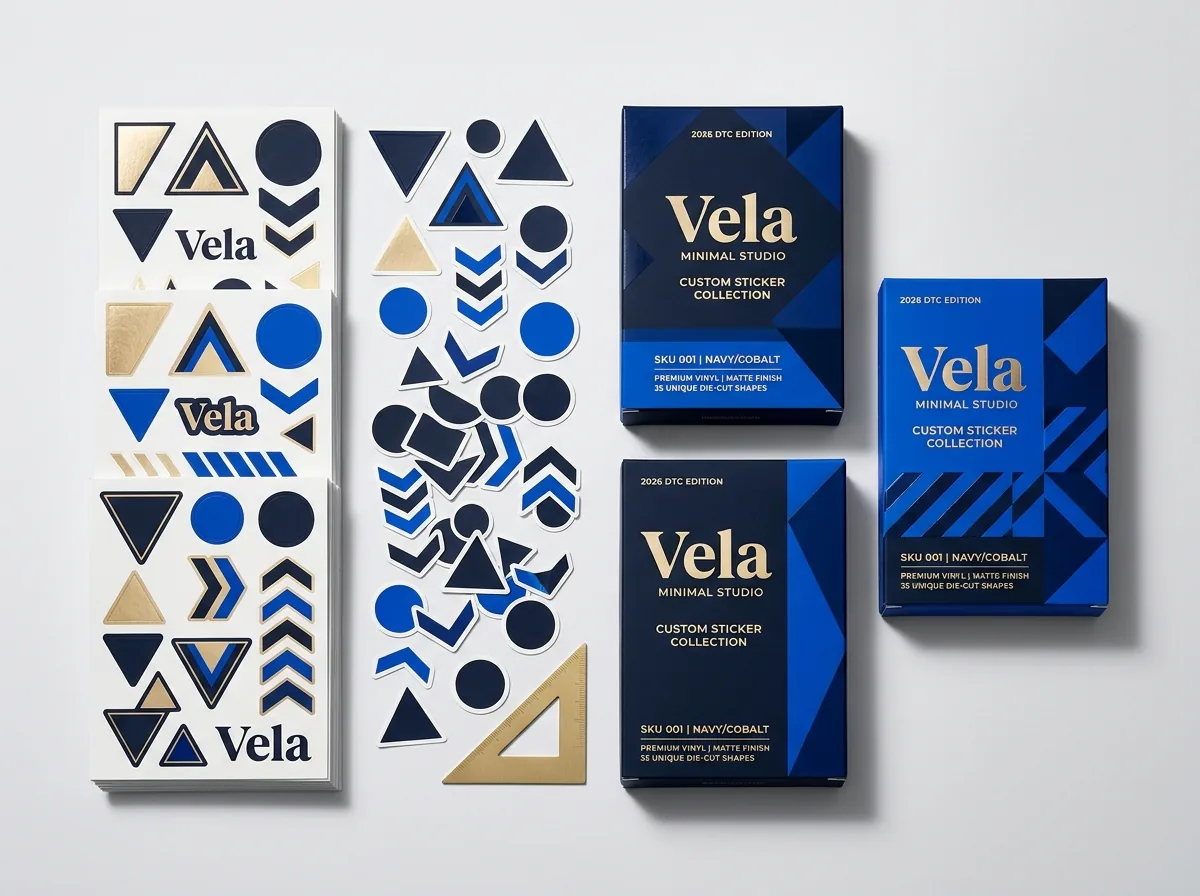
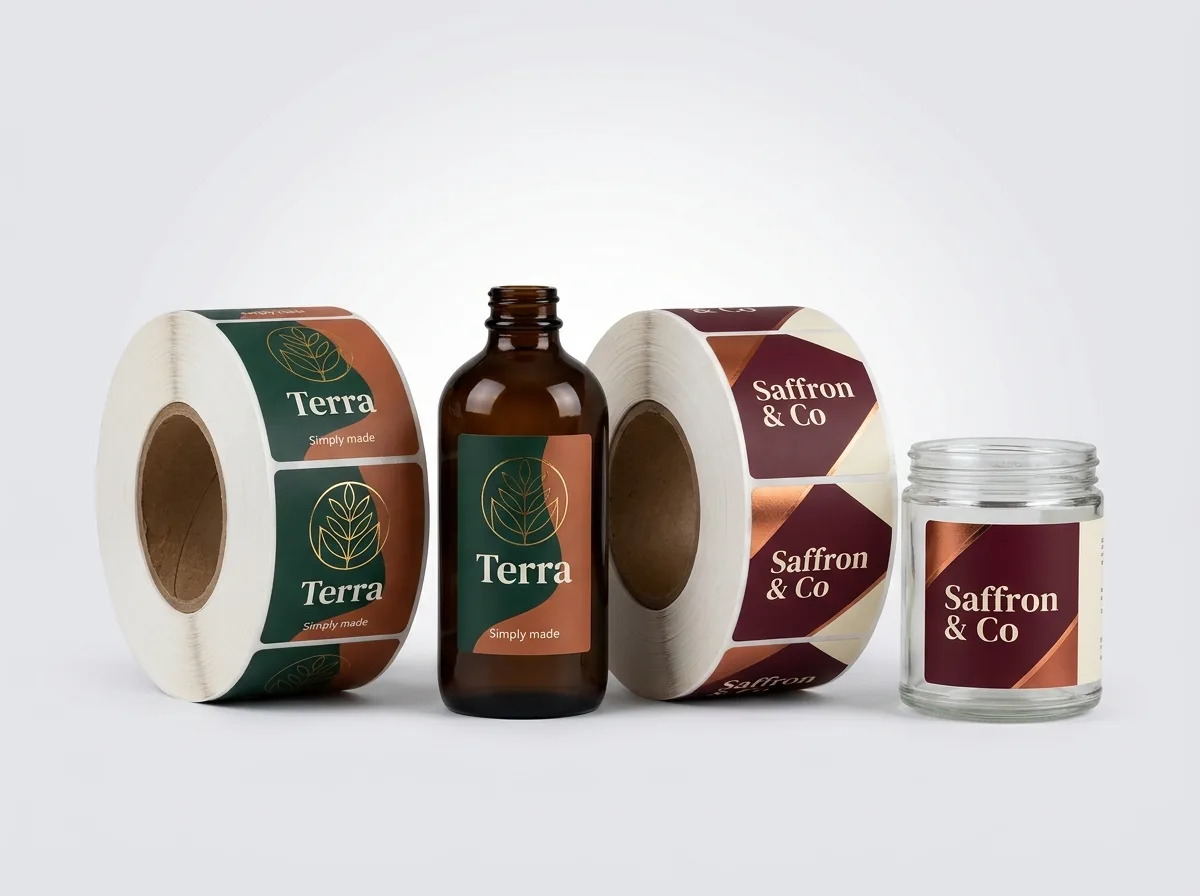
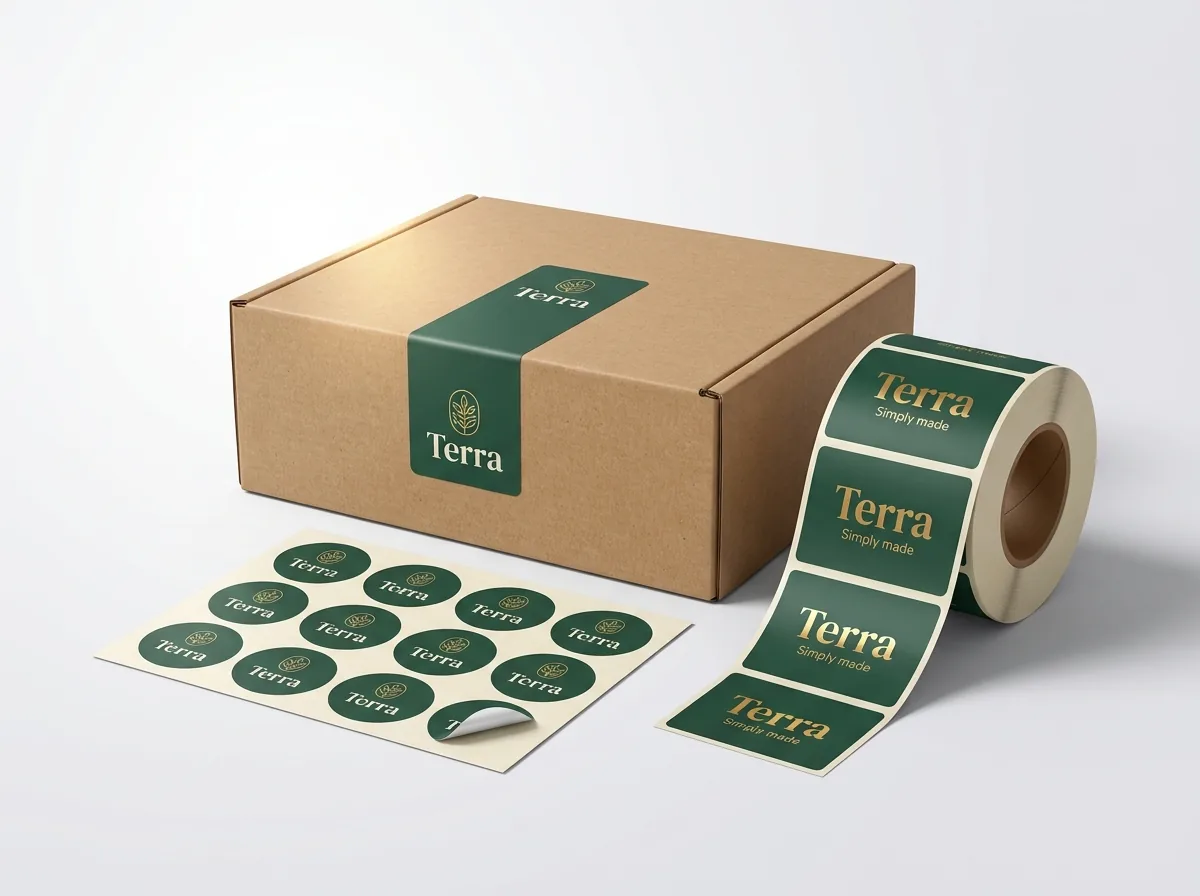
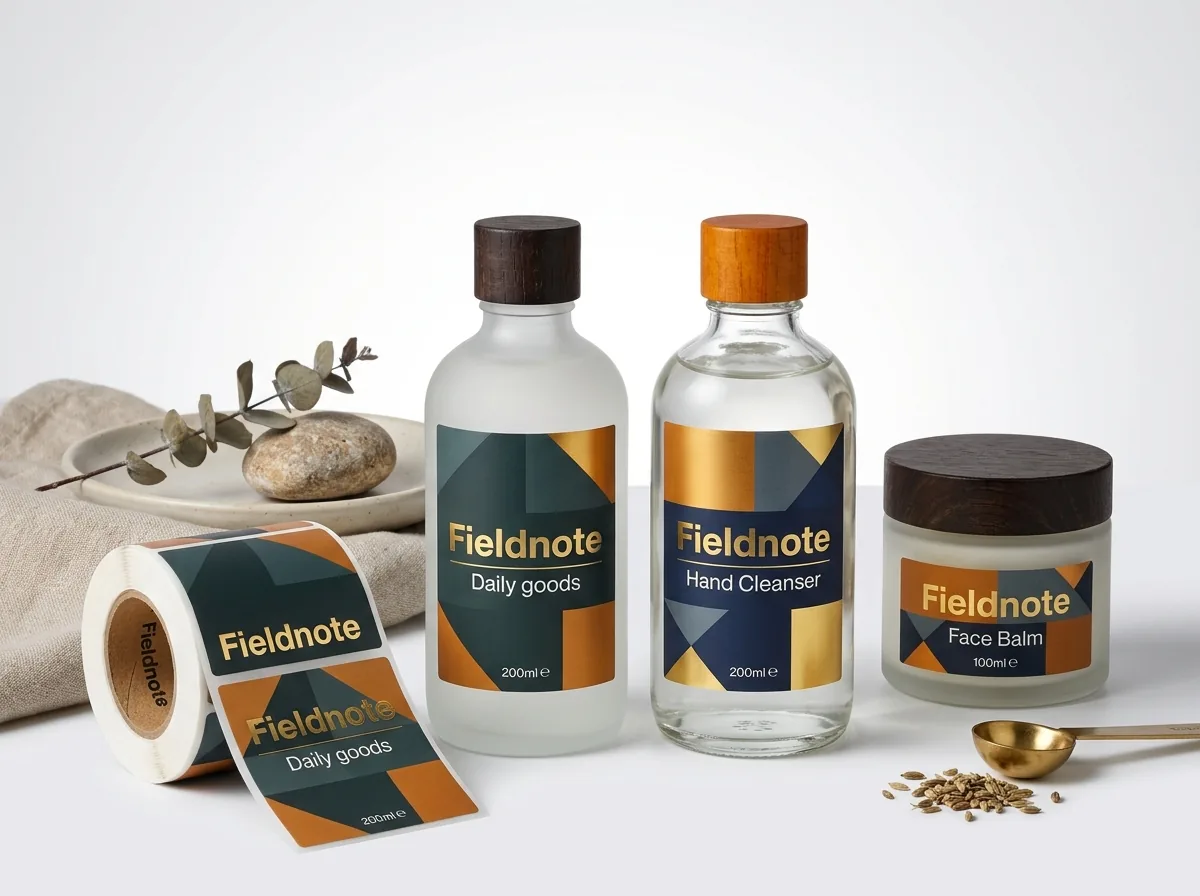
Ready to order stickers? Compare up to 3 quantities with a free 3D mockup.
Request a Quote →Questions about stickers
Which costs less: die-cut stickers or kiss-cut stickers?
For the same sticker dimensions, material and quantity, individual die-cut and kiss-cut stickers are very close in price, and neither has a die or plate fee at CubitPack. If you need thousands of stickers strictly for your own packing team to apply, kiss-cut roll stickers usually give the lowest cost per unit.
Can I get a custom contour shape on a kiss-cut sticker?
Yes. Kiss-cut does not mean the sticker has to be a square or circle. The inner kiss-cut blade follows the exact custom contour of your mascot, logo or lettering, while the outer backing paper stays a neat square, rectangle, flat sheet or roll.
Why is it called a kiss-cut sticker?
Printers call it a kiss cut because the steel die or laser is calibrated to lightly kiss through the top vinyl or paper face stock and adhesive layer without slicing through the silicone-coated backing liner underneath.
Can I print my social media handle or logo on the kiss-cut border?
Yes. Because the surrounding face stock stays attached to the backing sheet until the sticker is peeled, we can print your website, Instagram handle, QR code or a colorful frame on that outer border at no extra printing charge.
What is the minimum order for die-cut or kiss-cut stickers at CubitPack?
Both formats start at 500 pieces, with standard turnaround in 10-14 business days and rush production in 4-5 business days. You approve a free digital proof showing both the inner kiss-cut line and outer through-cut line before you pay.
How do I show both the kiss-cut line and through-cut line in my artwork file?
If you set up your own vector file, put the kiss-cut path and the outer sheet trim path on separate labeled layers. Or simply upload your artwork as-is and tell us what you want; our prepress designers draw both cut lines for free.
Still have a question? Ask a packaging specialist.
Request a Quote →Request your stickers quote
Tell us your size and quantities, and one dedicated account manager prepares pricing for each tier.
- Free design & AI-to-print studio + 3D mockup
- No die or plate charges · 4–5 day rush available
- Free shipping to all 50 states
- 10% off your first order
This comparison was written from standard converting definitions (through-cut vs liner-intact kiss-cut) and CubitPack's decided formats, minimums and turnaround times, reviewed by a packaging specialist. Spot something wrong? Tell us and we will fix it.
Sources
What changed
- October 22, 2026: First published.
- October 22, 2026: Updated specifications, terminology, and verified source links.
More guides
New packaging guides by email
Sizes, materials and design tips. Unsubscribe anytime.