
How do I measure and size custom die-cut stickers for laptops, bottles and boxes?
Short answer: Measure custom die-cut stickers by their outer rectangular bounding box (widest horizontal span × tallest vertical span in inches), including any ⅛ inch offset border. Pick a 3 × 3 inch footprint for laptops and water bottles, 2 × 4 inches for wide wordmarks, or 2 × 2 inches for small box inserts.
On this page
- How does outer bounding-box measurement work on an irregular contour
- What are the best die-cut sticker sizes by surface and aspect ratio
- How do I size wide horizontal wordmarks vs tall vertical characters
- How do I test fit a die-cut sticker on curved water bottles and inside mailer boxes
- Should my offset border width change on mini 1.5 inch vs large 4 inch stickers
- Common mistakes
- FAQs
Request a custom quoteFree dieline & 3D mockup
Because a custom die-cut sticker follows the irregular silhouette of a mascot, badge or script wordmark rather than a square or circle, it is always measured by its outer rectangular bounding box. Draw a straight horizontal line from the furthest left cut point to the furthest right cut point to find your width in inches, and draw a vertical line from the highest peak to the lowest bottom edge to find your height, making sure to include the ⅛ inch offset border on all sides. Entering the exact width and height rather than rounding a narrow design up to a square saves you money because CubitPack prices die-cut stickers by true square inches with zero die charges. For universal handouts on laptops, notebooks and 32 oz water bottles, a 3 inch longest side is the classic benchmark across the industry.
How does outer bounding-box measurement work on an irregular contour?
When you look at a die-cut sticker shaped like a coffee cup, a howling wolf or a hand-lettered slogan, there are no straight vertical or horizontal edges to put a ruler against. In commercial printing, every custom shape is measured by the smallest imaginary rectangle (called the bounding box) that completely encloses the finished cut path. Always measure all the way to the outer cut line, not just to the edge of the ink. If your illustration measures 2.75 × 2.75 inches and has a ⅛ inch (0.125 in) white offset border on the left, right, top and bottom, adding ⅛ inch on both sides brings your finished cut width and height to 3.0 × 3.0 inches. When you request a quote for custom contour die-cut stickers, entering the true width × height bounding box ensures our prepress team scales your digital proof and 3D mockup to the exact fraction of an inch.
- Find horizontal width (W): measure from the left-most point of the cut line to the right-most point.
- Find vertical height (H): measure from the highest top peak of the cut line to the lowest bottom point.
- Count the offset border: a ⅛ inch border on all sides adds ¼ inch (0.25 in) to both total width and total height.
- Keep aspect ratio locked: scale width and height proportionally so your illustration never distorts.
What are the best die-cut sticker sizes by surface and aspect ratio?
Two stickers with the same longest side can feel completely different in your hand if one is a round emblem and the other is a slender horizontal wordmark. Use the reference chart below to match your artwork's natural proportions (square, wide or tall) to the surface where customers will stick it. Notice how square-proportioned mascots and crests center around 3 × 3 inches, while wide script logos step out to 3.5 or 4 inches wide so the lettering stays tall enough to read across a coffee shop table. Because CubitPack never charges die fees, fractional sizes like 2.25 × 3.375 inches cost no extra setup.
| Bounding-box size (W × H) | Artwork proportion & shape | Best surfaces & applications |
|---|---|---|
| 1.5 × 1.5 in to 2 × 2 in | Compact badge, monogram or mini mascot | Phone cases, hard hats, earbud cases, small mailer box inserts |
| 2.5 × 2.5 in | Medium balanced contour or crest | Subscription box gifts, 16 oz tumblers, journal covers, retail hang tags |
| 3 × 3 in | Standard mascot, character head or emblem | 13 to 16 in laptop lids, 32 oz water bottles, trade show giveaway bowls |
| 3.5 × 1.5 in or 4 × 2 in | Wide horizontal wordmark or script logo | Bike frames, toolboxes, car windows, skateboard rails, laptop bottom corners |
| 2 × 3.5 in or 2.25 × 3.75 in | Tall vertical bottle, can or character silhouette | Insulated stainless steel tumblers, hydro flasks, vertical notebook spines |
| 3.5 × 3.5 in to 4 × 4 in | Oversized statement mascot or shield | Cooler lids, guitar and equipment cases, snowboard and skateboard decks |
How do I size wide horizontal wordmarks vs tall vertical characters?
The number-one sizing mistake on contour stickers happens when a brand orders a '3 inch sticker' for a wide horizontal wordmark whose width-to-height ratio is 3:1. If you set the longest side (width) to 3 inches, the height shrinks to just 1 inch tall, making the sticker look like a tiny strip next to a 3 × 3 inch mascot badge. Conversely, if you force the height to 3 inches, the width balloons to 9 inches wide. To make a wide horizontal wordmark feel visually balanced beside a 3 × 3 inch square sticker, aim for roughly the same total surface area (around 6 to 8 square inches). Stretching a horizontal wordmark to 3.75 × 1.75 inches or 4 × 2 inches gives the lettering strong visual presence on a laptop or toolbox while still costing less per piece than a full 3 × 3 inch square. For tall vertical characters or beverage bottle silhouettes, a 2 × 3.5 inch footprint aligns naturally with the vertical wall of a water bottle.
Know your size? Compare pricing across up to 3 quantities.
Request a Quote →How do I test fit a die-cut sticker on curved water bottles and inside mailer boxes?
Before approving your final dimensions, consider both the box the sticker ships inside and the curved surface the customer will stick it onto. If you drop a free die-cut sticker into custom mailer boxes or small custom product boxes, check the inside length and width of your smallest box. A 3.5 × 3.5 inch sticker dropped into a 3 × 3 × 5 inch cosmetic carton will get folded in half by packers, leaving a permanent crease across the vinyl. If your customers mostly stick decals onto 24 oz to 40 oz insulated water bottles, remember that a cylinder curves away from the viewer on the left and right sides. Keeping horizontal width at 3 inches or less ensures the entire logo can be read from the front without turning the bottle. For multi-sticker sets that ship flat in envelopes, compare individual singles against custom sticker sheets and general custom stickers.
- Paper silhouette test: print your artwork at 100% scale on copy paper, cut around the border with scissors, and hold it on a laptop and bottle.
- Check your smallest shipping box: keep insert stickers at least ¼ inch narrower than the inside width of your smallest carton.
- Curved tumbler rule: keep width under 3 inches on round bottles so the left and right tips do not wrap out of sight.
Should my offset border width change on mini 1.5 inch vs large 4 inch stickers?
While a ⅛ inch (0.125 in) offset border is the universal standard for 2.5 inch to 3.5 inch die-cut stickers, border thickness looks visually heavier on a tiny 1.5 inch badge and slightly thinner on a 4.5 inch decal. On a 1.5 × 1.5 inch mini sticker for a phone case or cosmetic compact, a ⅛ inch border takes up a sixth of the total width; stepping the visual border graphic down slightly while keeping ⅛ inch of bleed keeps the artwork front and center. On a 4 × 4 inch skateboard or cooler decal, a bold 0.15 inch to 0.18 inch offset border gives the silhouette a chunky, classic street-sticker frame and adds extra stiffness when peeling a large piece of vinyl off its backing liner. Regardless of which visual border width you prefer, our prepress team shows the exact outer cut line and border proportion on your free digital proof so you can adjust it before printing.
- 1.5 to 2 in mini stickers: keep the visible border slim so the central illustration stays as large as possible.
- 2.5 to 3.5 in standard handouts: a ⅛ inch (0.125 in) offset border gives the ideal balance of contrast and strength.
- 4 in and larger decals: a slightly wider 0.15 inch border prevents large contour tips from curling during peeling.
What are the most common die-cut sticker measurement mistakes?
Measuring an irregular contour takes ten seconds once you check the bounding box, but skipping that check leads to these five common mistakes
- Measuring only the printed illustration and forgetting to add ¼ inch total (⅛ inch per side) for the outer offset border.
- Entering 3 × 3 inches on the quote form for a 1.5 × 3.5 inch rectangular wordmark, which overestimates the square inches you pay for.
- Sizing a horizontal script logo by setting its longest side to 2 inches, resulting in lettering that is barely ½ inch tall.
- Ordering a 3.5 inch handout sticker to tuck inside a narrow 3 inch folding carton or jewelry pouch where it cannot lie flat.
- Measuring along a diagonal tilt instead of measuring straight horizontal width and straight vertical height.
Find your label size
Suggested label size: 9⅛ × 2¾ in (width × height)
A typical starting point. Your account manager confirms the size on the proof.
Quote this size →Packaging for this
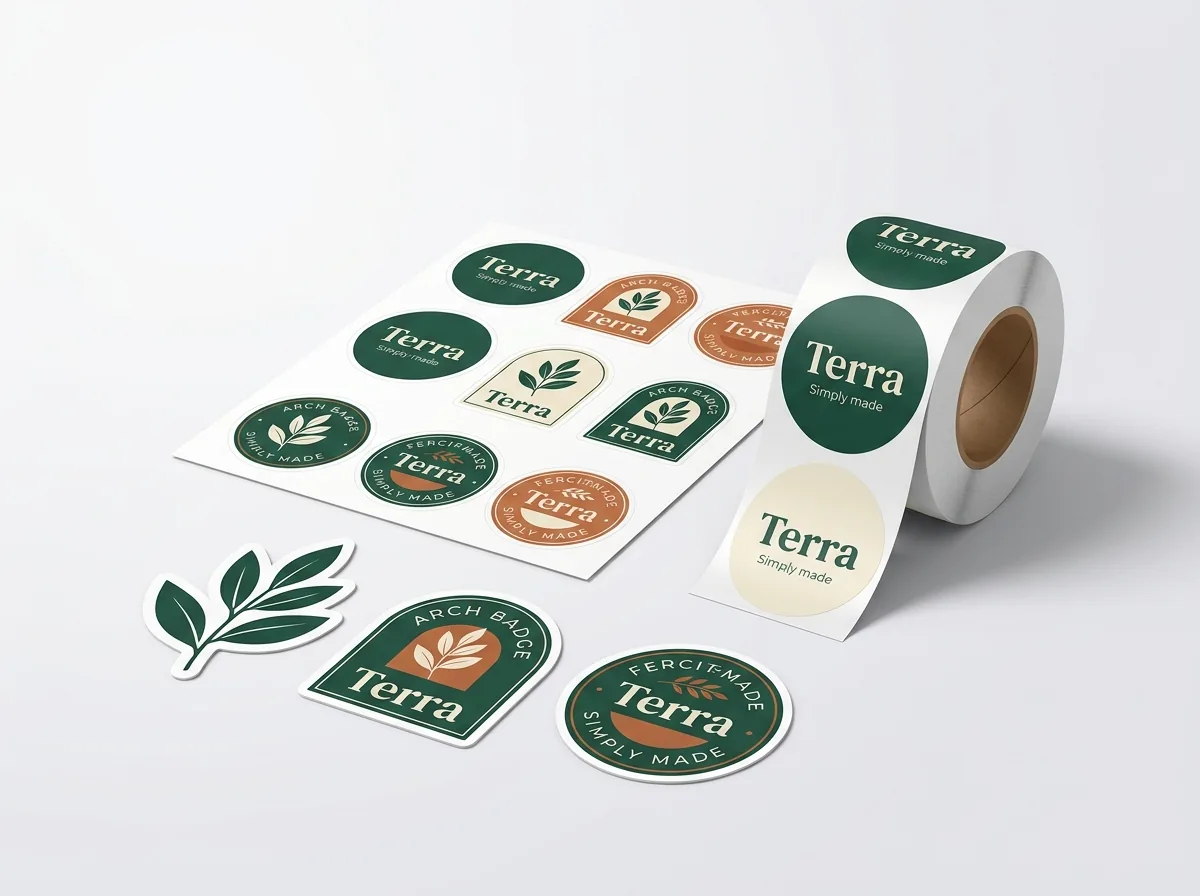
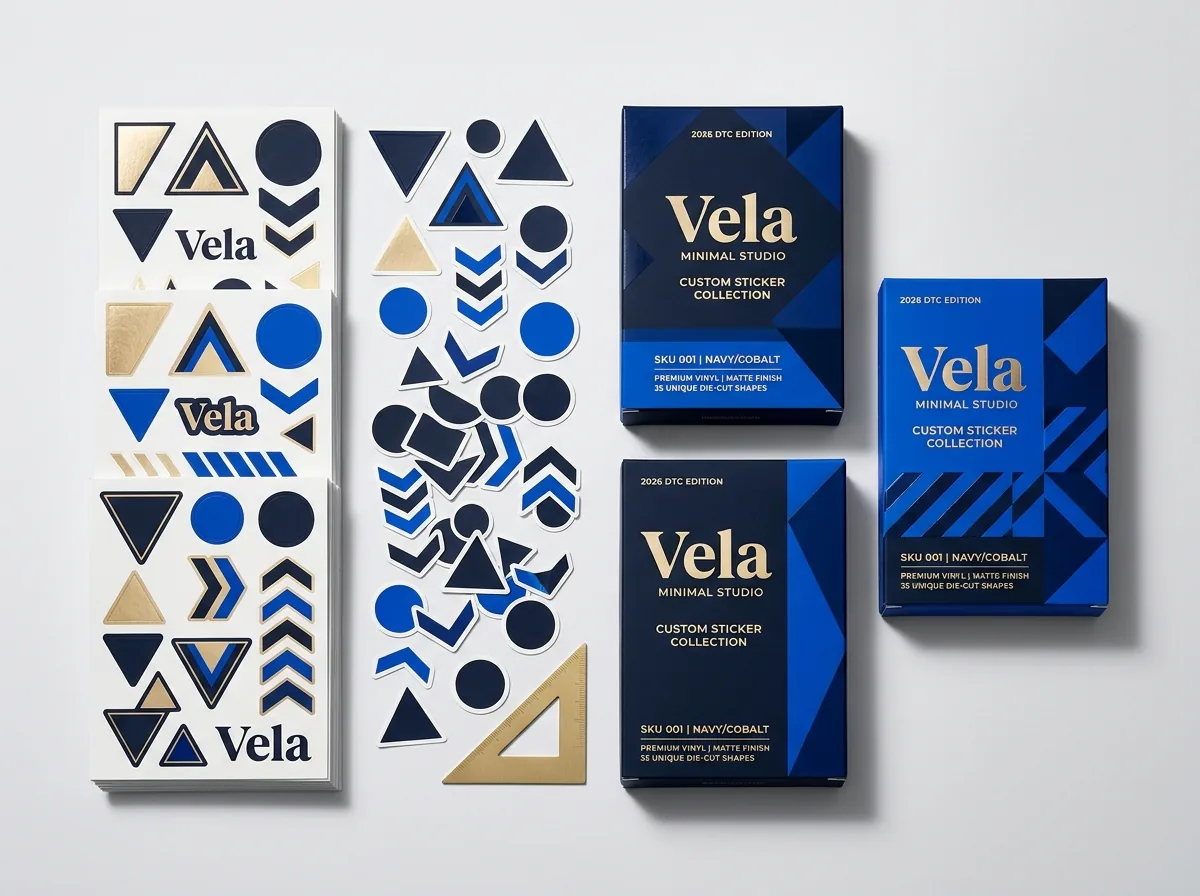
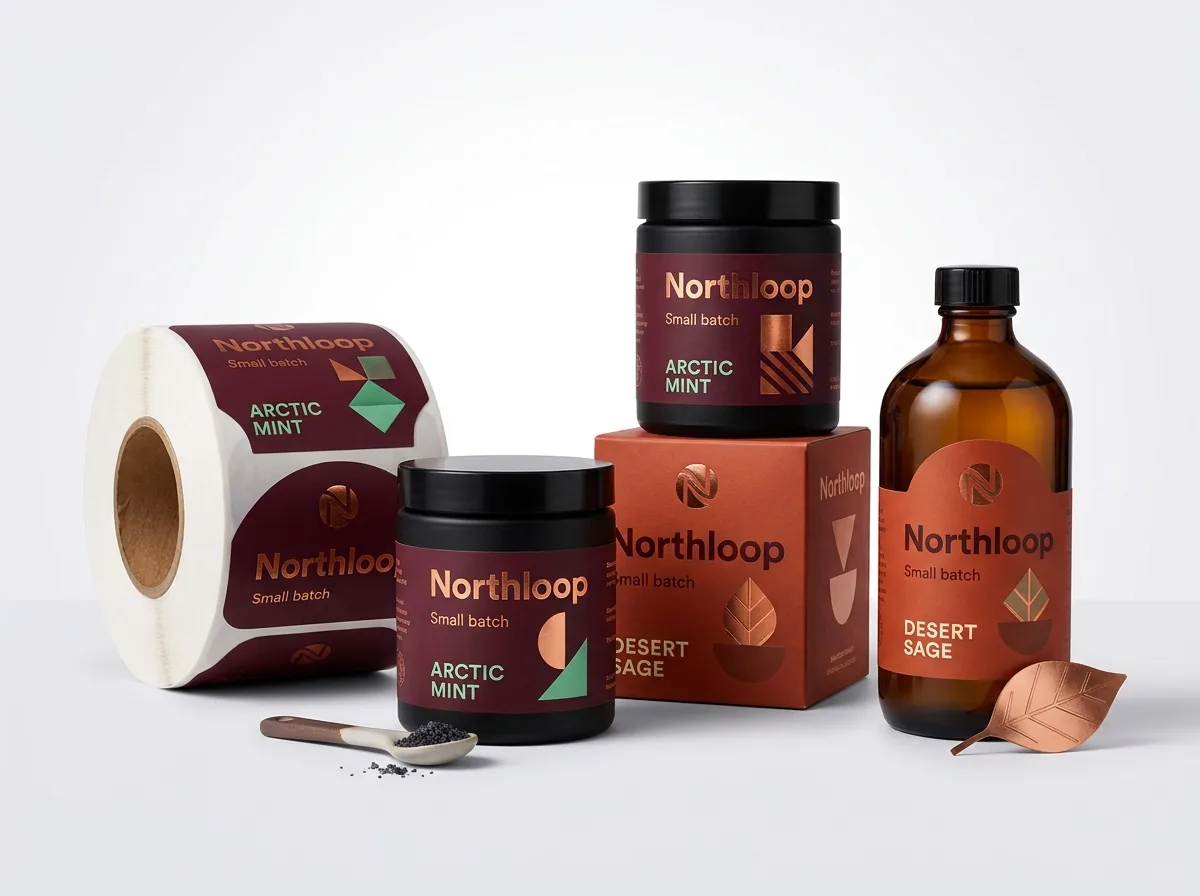
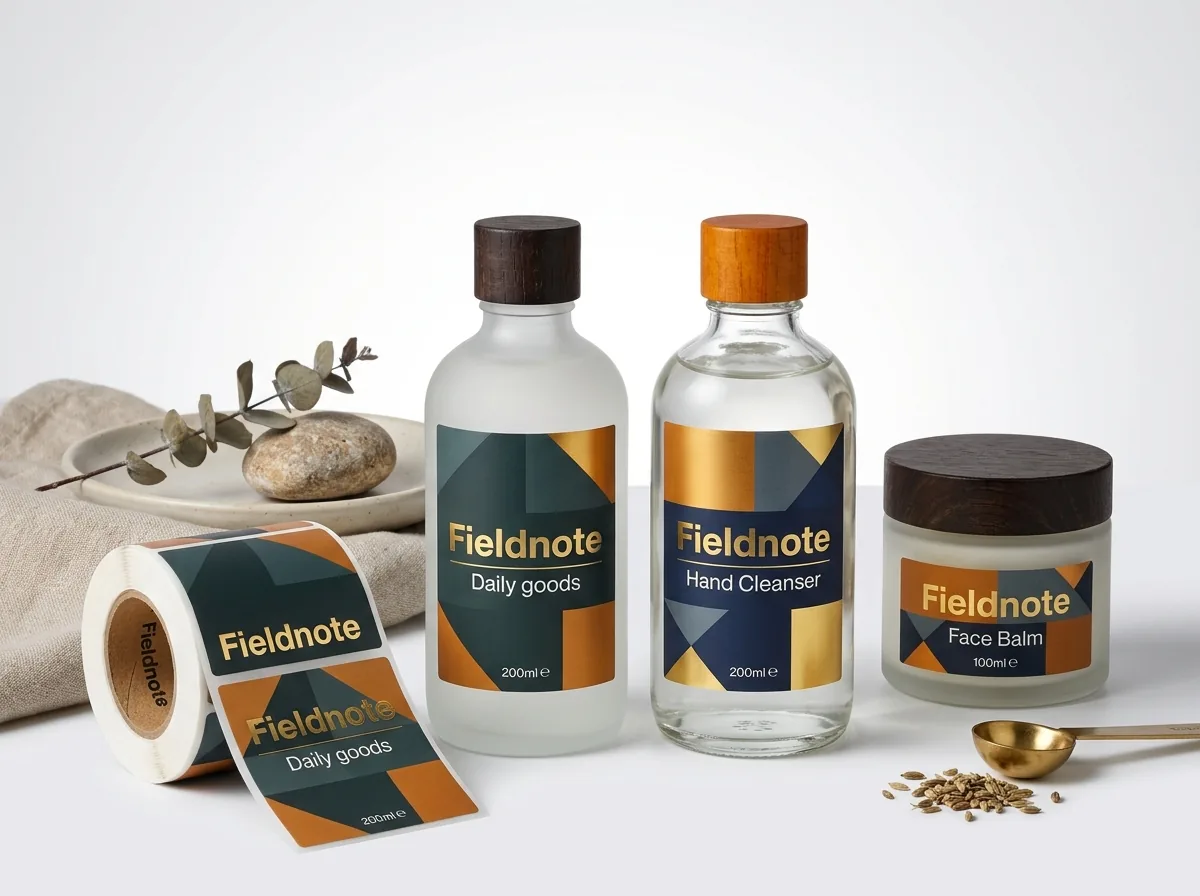
Ready to order die cut stickers? Compare up to 3 quantities with a free 3D mockup.
Request a Quote →Questions about die cut stickers
Does my ⅛ inch white border count toward the width and height of my die-cut sticker?
Yes. Width and height always measure the finished outer cut line of the sticker, which includes your ⅛ inch offset border on all sides. A 2.75 × 2.75 inch illustration with a ⅛ inch border around it finishes at 3.0 × 3.0 inches.
If I enter 3 × 3 inches in the quote form, will you stretch my rectangular logo into a square?
Never. We always lock your artwork's natural aspect ratio so it never stretches or squishes. If your logo is rectangular, enter its actual width and height (such as 3 × 1.75 inches) in Step 1 so your quote reflects the exact square inches used.
What is the best all-around size for laptop and water bottle die-cut stickers?
A 3 × 3 inch footprint (or 2.5 × 3.5 inches for tall/wide contours) is the industry favorite. It stands out clearly from across a room while leaving plenty of space on a laptop lid or 32 oz bottle for other decals.
Do fractional sizes like 2.375 × 3.125 inches cost extra?
No. Because CubitPack cuts every order to your exact vector path without physical steel rule dies, custom fractional dimensions cost the exact same as whole-inch sizes and carry zero die fees.
How do I know if small text inside my die-cut sticker will be readable at my chosen size?
Print your sticker at 100% scale on an office printer before ordering. As a rule of thumb, keep positive dark text at 5 pt or larger and light text knocked out of a dark background at 6 pt or larger.
Can I order the same mascot design in both a 2 inch mini size and a 3.5 inch large size?
Yes. Select 2 designs or 3+ designs in Step 2 of the quote form and note the two sizes you want. Many brands use the 2 inch version for box seals and the 3.5 inch version for retail merch and trade shows.
Still have a question? Ask a packaging specialist.
Request a Quote →Request your die cut stickers quote
Tell us your size and quantities, and one dedicated account manager prepares pricing for each tier.
- Free design & AI-to-print studio + 3D mockup
- No die or plate charges · 4–5 day rush available
- Free shipping to all 50 states
- 10% off your first order
The bounding-box measurement rules, square-inch area comparisons and surface fit benchmarks in this guide were compiled from standard promotional decal specs and verified by a CubitPack packaging specialist. Spot something wrong? Tell us and we will fix it.
Sources
What changed
- October 22, 2026: First published.
- October 22, 2026: Updated specifications, terminology, and verified source links.
More guides
New packaging guides by email
Sizes, materials and design tips. Unsubscribe anytime.