
Metallic foil label stock vs hot foil stamping: which should you choose?
Short answer: Choose metallic foil label stock when you want an all-over gold or silver sheen, metallic gradients or custom CMYK-tinted shades like rose gold and bronze. Choose hot foil stamping when you want mirror-bright gold or silver logos and borders contrasted against a deep matte or clear custom foil label.
On this page
- How do metallic foil base stock and hot foil stamping work on press
- How do foil stock and hot foil stamping compare side by side
- When should I choose printed metallic foil label stock
- When does hot foil stamping look sharper on bottles, candles and boxes
- How do multi-SKU orders and finishes affect your choice
- Common mistakes
- FAQs
Request a custom quoteFree dieline & 3D mockup
Although both methods produce genuine metallic reflection on the shelf, they build the label from opposite directions. Metallic foil stock starts with a full silver or gold metallic face material; we print opaque white ink beneath areas that need to look solid and print transparent CMYK inks directly over the bare metal to create custom shades like champagne, copper, rose gold or metallic emerald. Hot foil stamping starts with a non-metallic base material, such as a deep forest-green matte label or a transparent clear film, and uses heat and pressure to transfer mirror-bright metallic foil onto specific vector elements like your crest, border or brand name. At CubitPack, both options start at 500 labels in 10-14 business days (with 4-5 day rush available), include a free digital proof and 3D mockup, and never carry die or plate charges.
How do metallic foil base stock and hot foil stamping work on press?
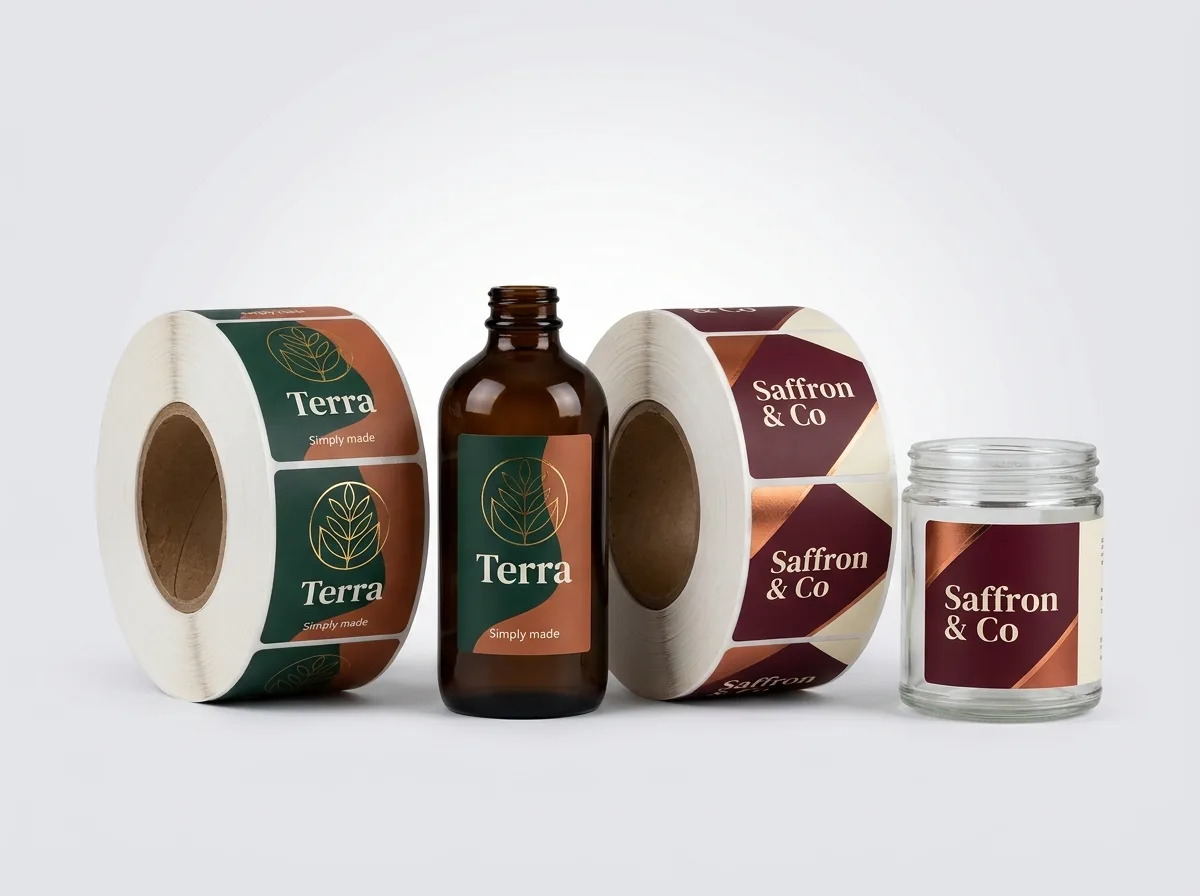
Understanding what happens on the printing press makes it much easier to pick the right spec for your artwork. With a metallic foil base stock, the entire web of label material entering the press is already mirror-bright silver or gold. First, the press lays down an opaque white ink underbase at 100% density wherever your design calls for non-metallic colors, white backgrounds or scannable UPC barcodes. Next, standard 4-color CMYK or Pantone PMS inks print over the top. Wherever the white underbase was left out, the transparent CMYK ink acts like a colored filter over the metal, turning silver foil into metallic blue, ruby, bronze or rose gold. With hot foil stamping, the label is printed first on a standard paper, white BOPP film or clear film stock, often sealed with a velvety matte lamination. Then a heated metal stamping die (typically running between 200°F and 275°F) presses a polyester carrier ribbon of metallic foil onto the exact vector shapes of your logo or border. When you order foil stamped labels from CubitPack, we include both prepress setups and any stamping dies at no extra fee, starting at 500 pieces.
- Metallic foil stock: starts 100% metallic; white ink plus CMYK masks out the non-metallic background areas.
- Hot foil stamping: starts with a matte, gloss or clear label; metallic foil is pressed onto select logos and borders.
- Custom metallic colors: foil stock lets you tint silver into unlimited metallic hues in a single CMYK pass.
- Surface contrast: hot stamping over matte lamination creates the highest contrast between flat dark ink and mirror metal.
How do foil stock and hot foil stamping compare side by side?
Use the comparison table below to match your artwork style, container type and SKU count to the right production method. Notice that neither option requires a die or plate charge at CubitPack. If you are unsure which way your file should run, upload your artwork with your quote request and ask your account manager to show how each option handles your background and text.
| Feature | Printed on metallic foil stock | Hot foil stamping on label stock |
|---|---|---|
| Base surface | All-over gold or silver metallic face material | Matte, gloss, kraft or clear label stock |
| Mirror brightness | High metallic sheen (softened slightly under varnish) | Maximum mirror-like specular reflection |
| Custom metallic tints | Unlimited (rose gold, bronze, teal, ruby via CMYK over silver) | Single foil ribbon shade per stamping pass |
| Background texture | Smooth printed ink over metal | Can pair with velvety matte, uncoated wine stock or clear film |
| Small reverse-out text | Controlled by high-resolution white + CMYK ink plates | Requires slightly bolder stroke weights so heat does not fill gaps |
| Clear window look | Not transparent (opaque metallic back) | Can stamp gold/silver directly onto clear transparent labels |
| Multi-SKU scent/flavor runs | Change metallic shapes and tints freely on every SKU | Best when all SKUs share the same stamped logo/border position |
| Die & plate charges | Free at CubitPack | Free at CubitPack |
When should I choose printed metallic foil label stock?
Printed metallic foil stock is the clear winner in three situations. First, choose it whenever more than 40% to 50% of your label surface is meant to look metallic, such as a solid 2 inch gold medallion seal, an all-silver industrial rating badge or a 3.5 × 4 inch metallic background wrap for a 12 oz craft beer can or pre-roll tube. Second, choose it when your brand palette relies on custom metallic shades like rose gold, warm antique bronze, champagne, metallic purple or emerald green, which are created effortlessly by printing transparent CMYK tints over silver foil. Third, printed foil stock is ideal when you have 5, 10 or 20 different product SKUs where the metallic graphics change shape on every single flavor or scent. Because the metallic effect is controlled by the ink knockout rather than a physical metal stamping die, each SKU in a 500-label, 1,000-label or 2,500-label run can feature a completely different metallic illustration on your custom roll labels without adding separate tooling steps.
Know your size? Compare pricing across up to 3 quantities.
Request a Quote →When does hot foil stamping look sharper on bottles, candles and boxes?
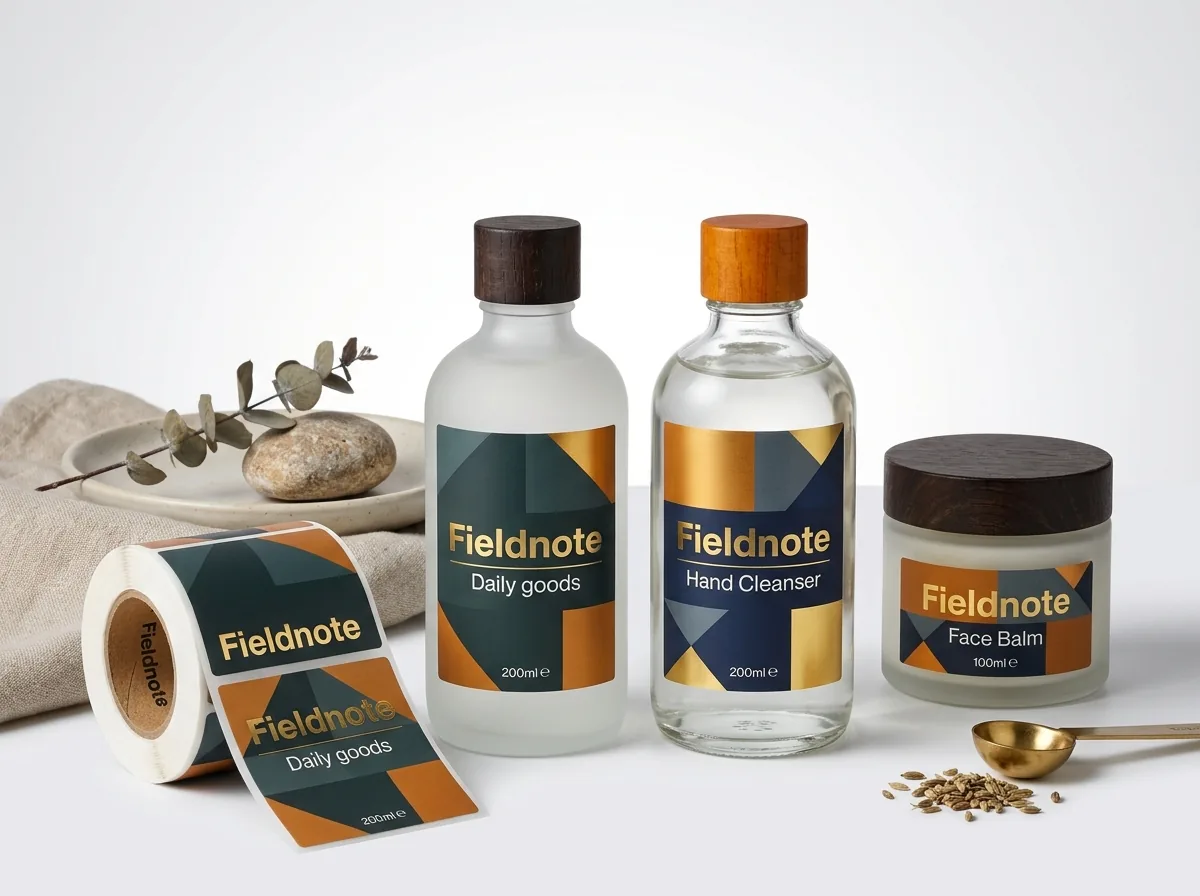
Hot foil stamping wins whenever your design depends on tactile contrast between a quiet, non-reflective background and a sharp flash of mirror-bright metal. Picture a 9 oz matte black or forest-green candle label where only the brand crest and a thin perimeter frame are stamped in gold foil: the matte background absorbs ambient glare while the stamped gold catches every spotlight. You also gets a subtle debossed edge where the heated die kisses the surface. Hot foil stamping is also the only way to combine metallic gold or silver with a transparent no-label background. By stamping metallic foil onto our custom clear labels, your gold monogram and product title appear to float directly on the glass of a perfume bottle, facial oil dropper or honey jar while the liquid inside remains completely visible.
How do multi-SKU orders and finishes affect your choice?
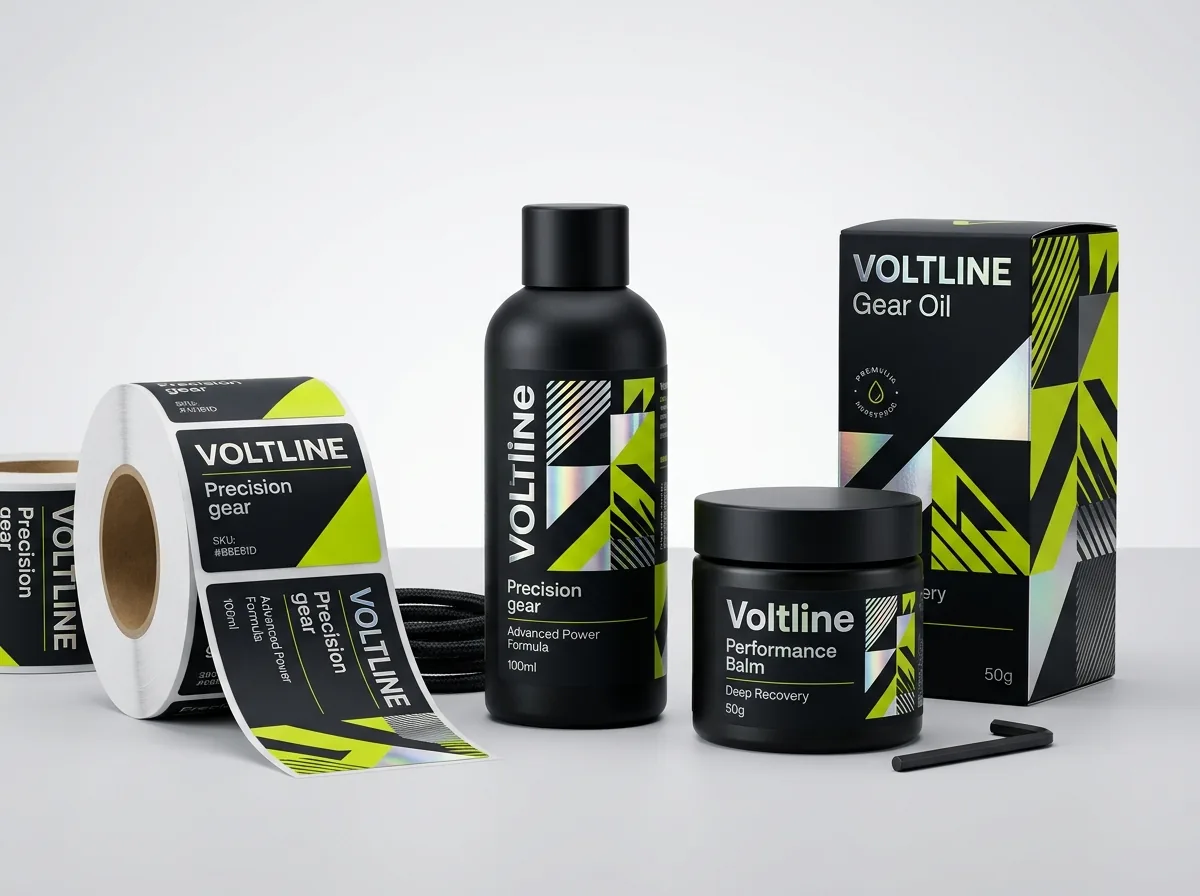
Many candle, cosmetic, coffee and supplement brands order 500 to 5,000 labels split across several scents, flavors or shades. If you choose hot foil stamping for a multi-SKU run, the smartest way to structure your artwork is to keep the stamped elements (such as your top brand logo and outer border) in the exact same position on every SKU, while swapping only the CMYK background color and scent title. That allows the entire run to share one stamping setup. If you want the metallic elements themselves to change on every SKU (for example, a metallic strawberry icon on one jar and a metallic vanilla orchid on the next, each in a different metallic tint), printing CMYK plus white ink over metallic silver foil stock keeps the setup simple. You can also explore our foil stamping finish and matte lamination pages to see how these finishes pair with custom boxes.
- Shared foil crest across scents: hot foil stamping over matte stock gives maximum shelf contrast.
- Changing metallic icons or colors per SKU: printed silver or gold foil stock handles variable metallic art easily.
- Transparent glass showcase: hot foil stamping on clear film gives a floating metallic look.
- Protective topcoat: add matte or gloss varnish so neither ink nor foil scuffs during transit.
What mistakes do brands make when choosing between foil stock and stamping?
Picking the wrong foil method can leave a dark background looking too shiny or make fine ingredient text hard to read. Avoid these five mistakes
- Ordering metallic foil stock when you wanted a transparent clear background; clear labels with metallic accents require hot foil stamping on clear film.
- Using hot foil stamping for 6-point ingredient paragraphs instead of printing crisp ink over a white underbase.
- Skipping the white ink underbase on metallic foil stock when you wanted solid pastel or cream brand colors.
- Putting a high-gloss laminate over a dark hot-stamped label when a matte background would make the gold foil pop twice as hard.
- Changing the position of the hot-stamped logo by 2 millimeters between five scent SKUs instead of locking it in one shared spot.
Find your label size
Suggested label size: 9⅛ × 2¾ in (width × height)
A typical starting point. Your account manager confirms the size on the proof.
Quote this size →Packaging for this
Ready to order foil labels? Compare up to 3 quantities with a free 3D mockup.
Request a Quote →Questions about foil labels
Which looks brighter: metallic foil label stock or hot foil stamping?
Hot foil stamping produces the brightest, most mirror-like specular reflection, especially when pressed over a non-glare matte label. Metallic foil base stock also delivers genuine metallic shine, and lets you tint the metal into custom colors.
Can I get gold or silver foil on a clear transparent label?
Yes. To put metallic gold or silver on a transparent label, we use hot foil stamping over clear film stock. That leaves the background completely see-through while your stamped logo shines like metal.
How do you print solid white or pastel colors on metallic foil label stock?
We print an opaque white ink underbase directly onto the silver or gold foil stock first, and then print your CMYK or Pantone colors on top of the white layer so the metallic sheen does not show through.
Does CubitPack charge extra for hot foil stamping dies?
No. We never charge cutting die or printing plate fees on any custom label order, whether you choose printed metallic foil stock or hot foil stamping.
Which foil method is better for fine lines and small serif text?
Printed metallic foil stock handles very fine reverse-out text and intricate halftones slightly better because the edge is defined by high-resolution ink plates rather than a heated metal stamping die.
Can I see how my artwork looks in foil before I pay for my order?
Yes. Every order includes free design help, a digital proof calling out the exact foil and white-underbase zones, and a 3D mockup before you pay. You can also order our $50 sample kit to feel our materials in person.
Still have a question? Ask a packaging specialist.
Request a Quote →Request your foil labels quote
Tell us your size and quantities, and one dedicated account manager prepares pricing for each tier.
- Free design & AI-to-print studio + 3D mockup
- No die or plate charges · 4–5 day rush available
- Free shipping to all 50 states
- 10% off your first order
This comparison of printed metallic foil stocks (with white ink underbases) versus hot foil stamping was compiled and verified by a CubitPack packaging specialist against our decided label capabilities in our published product specifications. Spot something wrong? Tell us and we will fix it.
Sources
What changed
- October 22, 2026: First published.
- October 22, 2026: Updated specifications, terminology, and verified source links.
More guides
New packaging guides by email
Sizes, materials and design tips. Unsubscribe anytime.