
Single wrap-around product labels vs front-and-back labels: which is better?
Short answer: Choose a single 360-degree wrap-around label for straight-walled round jars, dropper bottles and cans when you want one-pass peeling and maximum text space. Choose separate front and back custom product labels for stand-up pouches, flat-sided flasks, tapered jars or clear glass showcases.
On this page
- How do single wrap-around labels and front-and-back sets differ
- How do single wraps and front-and-back labels compare side by side
- When is a single 360-degree wrap-around label the smarter choice
- When should you use separate front and back product labels
- How should I order front-and-back sets on rolls or sticker sheets
- Common mistakes
- FAQs
Request a custom quoteFree dieline & 3D mockup
Every brand packaging a bottle, jar, can or pouch faces the same structural choice: print the front branding, ingredient list and barcode on one continuous 360-degree wrap-around strip, or split them across a front Principal Display Panel (PDP) label and a separate back information label. A single wrap-around label cuts hand-peeling and machine application steps in half because you only position one piece per container, and it gives you the entire cylinder circumference for nutrition panels, multilingual text and barcodes. Separate front and back labels are essential on flat-sided containers (like stand-up coffee pouches, rectangular liquor flasks and oval lotion bottles), gently tapered vessels where a long wrap would spiral upward, and clear glass jars where showing the food or serum along the sides helps sell the product. At CubitPack, both layouts start at 500 pieces with zero die fees.
How do single wrap-around labels and front-and-back sets differ?
A single wrap-around product label is one continuous rectangle whose horizontal width equals roughly the container's circumference minus a ¼ inch gap (W = 3.14 × diameter − 0.25 in). When unrolled flat, the center third holds your front brand artwork, the left third holds your product story or directions, and the right third holds your nutrition facts, ingredient list and 100% black UPC barcode. You peel one sticker and roll it around the cylinder in one smooth motion. A front-and-back set divides that single strip into two smaller printed product labels: a front badge (typically 30% to 35% of the circumference wide) and a back data label of similar or slightly narrower width. Between the two labels sit two open vertical windows of bare glass, plastic or pouch film.
- Single 360° wrap: 1 sticker per unit, maximum copy space, fastest 1-step rotary application on straight cylinders.
- Front-and-back pair: 2 stickers per unit, showcases product color on the sides, mandatory for flat bags and oval bottles.
- Front + bottom/lid pair: 1 front badge on the glass wall plus a 1.5 in or 2 in round sticker on the lid or base.
- Clear wrap compromise: a 360° wrap printed on transparent clear film gives 1-step application while keeping sides see-through.
How do single wraps and front-and-back labels compare side by side?
Use the decision table below to weigh container shape, hand vs machine application speed, text capacity and per-container cost before locking in your dieline. Notice how container geometry is always the first filter: straight round cylinders can use either layout, whereas non-cylindrical packages must use two panels. When you request a quote, you can also ask our prepress team to compare both layouts on a 3D mockup of your bottle or jar before you decide.
| Comparison factor | Single 360° wrap-around label | Separate front & back labels |
|---|---|---|
| Stickers applied per container | 1 label per unit | 2 labels per unit (front + back) |
| Hand-packing speed (per 500 units) | Fastest (single peel and roll) | Takes roughly 1.7× to 2× longer by hand |
| Alignment forgiveness by hand | Must start level or the far end spirals up/down | Shorter width is very easy to stick without skewing |
| Compatible container shapes | Straight-walled round cylinders only | Round, oval, square, tapered jars, flat flasks & pouches |
| Product visibility through glass | Covers ~95% of the cylinder wall (unless clear stock) | Leaves 35% to 40% of the glass wall open on the sides |
| Room for ingredients & barcodes | Maximum (side zones included at no extra piece count) | Moderate (must fit inside the back panel width) |
| Machine applicator setup | Standard single-web wrap station | Dual-head applicator or alternating front/back roll |
| Die & plate charges at CubitPack | Zero die or plate fees | Zero die or plate fees |
When is a single 360-degree wrap-around label the smarter choice?
A single wrap-around label is the standard choice across four major product categories: small 0.5 oz to 2 oz dropper and essential oil bottles, 4 oz to 8 oz spice and supplement jars, 12 oz to 16 oz aluminum beverage cans, and cylindrical lip balm or pre-roll tubes. On a 1 oz Boston round dropper bottle (1.25 in diameter), a front-only panel is barely 1.25 inches wide, leaving almost no room for mandatory INCI ingredients, directions, distributor address and a retail UPC barcode. Wrapping 3.75 inches all the way around the vial triples your usable layout area while keeping everything on one sticker. Single wraps also shine when you scale from 500 units to 2,500, 5,000 or 10,000 units on a tabletop or rotary labeling machine. Feeding a single web of custom roll labels onto spinning round containers is the fastest, lowest-maintenance automated labeling method in packaging, because the applicator never has to index a second label head or calculate 180-degree spacing between two separate panels.
Know your size? Compare pricing across up to 3 quantities.
Request a Quote →When should you use separate front and back product labels?
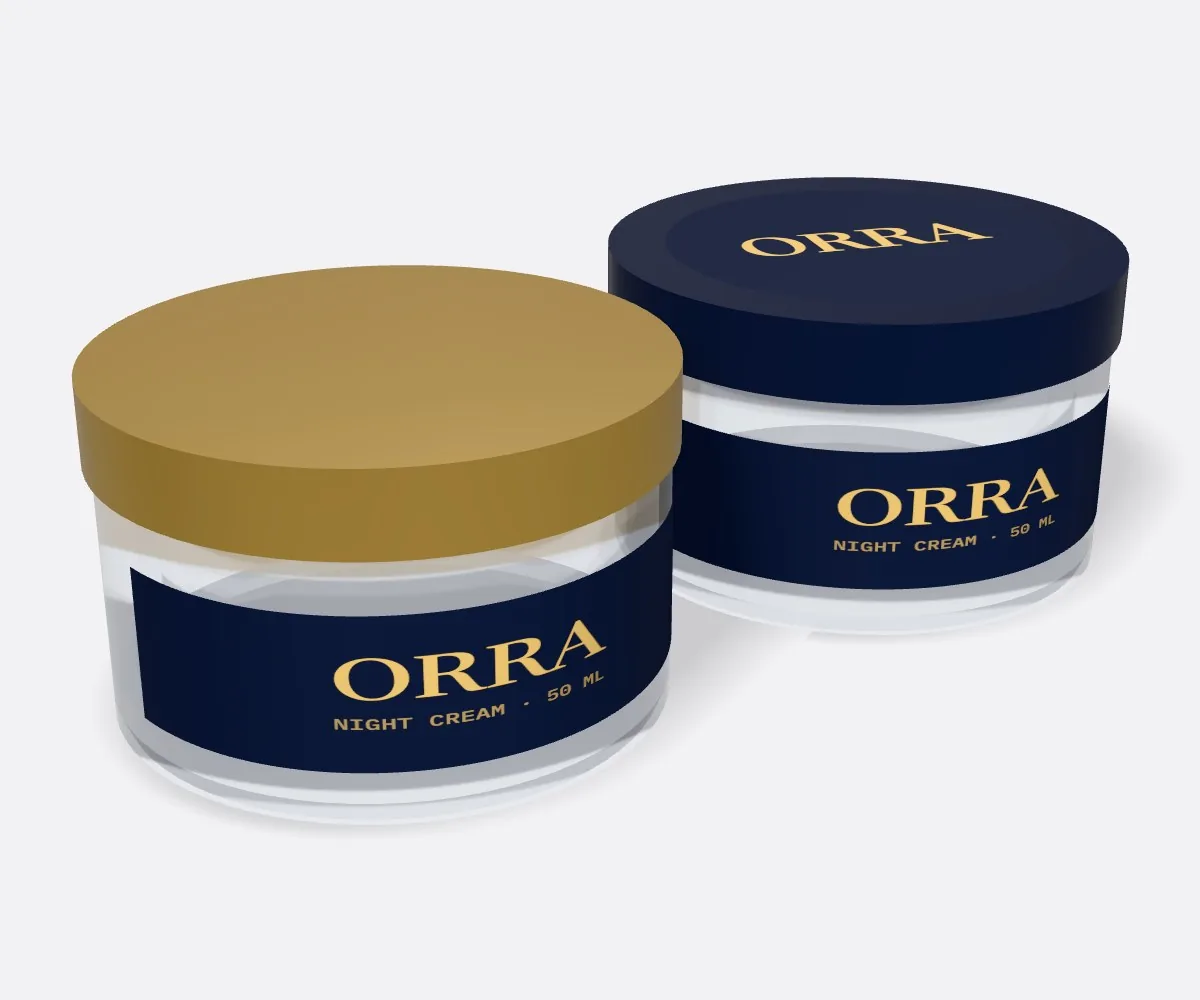
Separate front and back labels are required whenever your package is not a straight cylinder. Stand-up coffee pouches, gusseted snack bags, rectangular whiskey or olive oil bottles, oval shampoo bottles and four-sided French square jars cannot take a 360-degree wrap without crossing sharp corners or heat-sealed seams. On a 12 oz coffee bag, a 3 × 4 inch front brand label and a 3 × 4 inch back roast-note and barcode label sit cleanly on the flat faces without touching the side gussets. Even on round containers, many wine, spirit, candle and gourmet food brands choose front-and-back sets for visual restraint. On a 750 ml wine bottle or an 8 oz jar of golden honey, salsa or fruit preserves, leaving the left and right flanks bare lets light pass through the glass and liquid, giving a cleaner shelf presentation on our custom bottle labels and custom jar labels. Two shorter labels are also much easier to apply by hand without air bubbles on large-diameter jars.
How should I order front-and-back sets on rolls or sticker sheets?
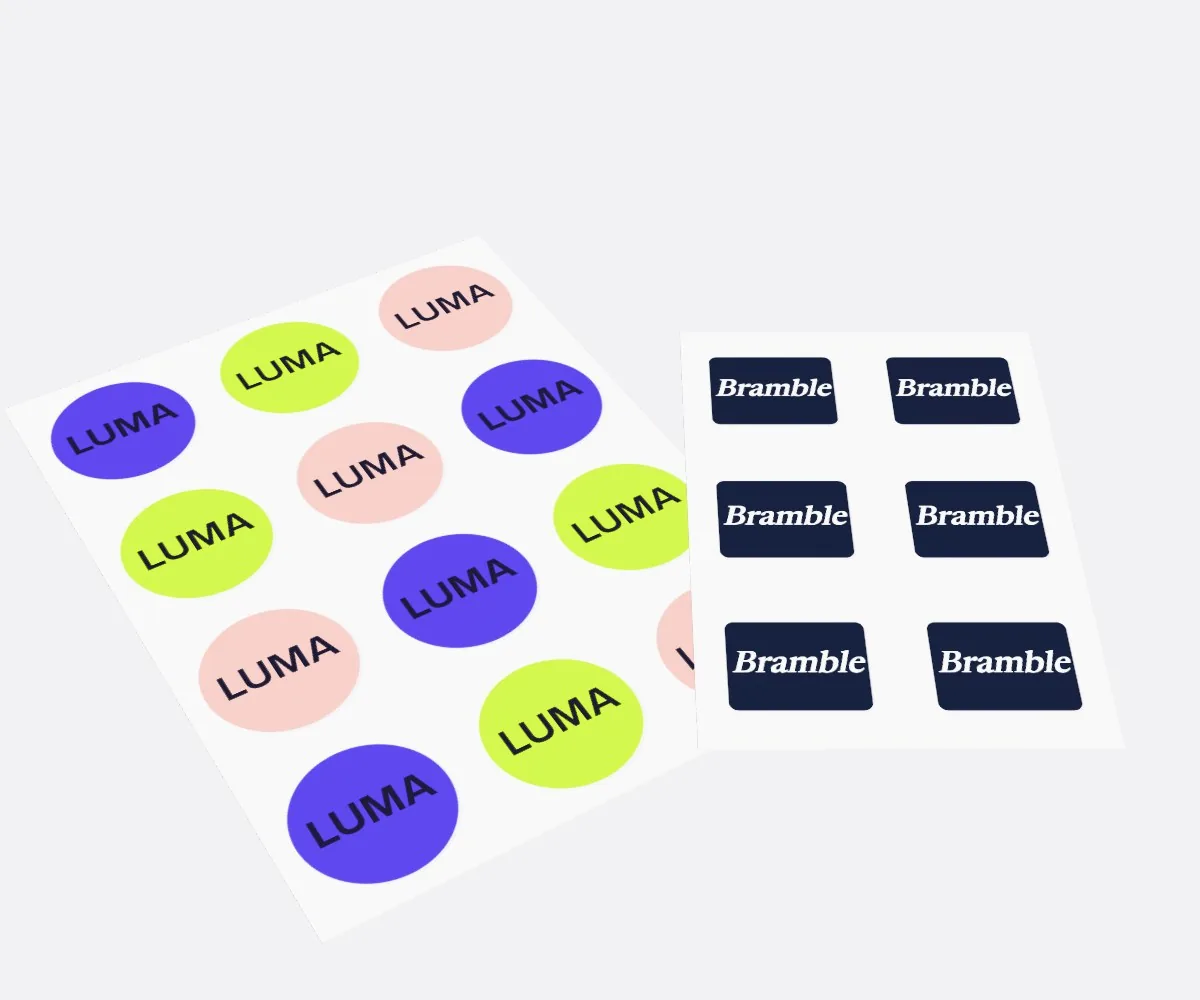
When you decide on separate front and back labels, you have three convenient ways to order them from CubitPack starting at 500 pieces. First, if you label by hand in small batches of 500 to 1,000 containers, we can print the front panel, back panel and even a round lid seal together on flat custom sticker sheets so a packer peels one complete container kit per card. Second, if you peel from rolls by hand or tabletop dispenser, you can order one roll of front labels and one roll of back labels. Remember that 500 containers require 500 front labels plus 500 back labels (1,000 total pieces). Third, if your co-packer uses a single-head wrap machine configured for two-panel placement, ask your account manager about winding front and back labels in an alternating A-B-A-B sequence on the same roll.
- Count total pieces needed: 500 containers × 2 panels = 1,000 total labels (or 500 front + 500 back).
- Keep heights identical: matching the vertical height (H) of both panels keeps your shelf line clean and simplifies roll setup.
- Use clear film to bridge both worlds: a single 360° wrap on custom clear labels gives one-piece speed with open glass sides.
- Request a 3-tier quote: compare 500, 1,000 and 2,500 units in the quote form to see where your per-container cost drops.
What mistakes do brands make when choosing between wrap and two-panel labels?
Picking the wrong configuration can double your hand-labeling labor or cause long labels to wrinkle on tapered walls. Avoid these five mistakes
- Ordering only 500 total labels for 500 bottles when using separate front and back designs (you need 500 fronts + 500 backs = 1,000 pieces).
- Trying to wrap a single long rectangular strip around a tapered candle vessel or bail-wire jar where the top diameter differs from the base.
- Wrapping a paper label across the sharp 90-degree corners of a square glass jar without accounting for corner radius lift.
- Making the front and back labels two different vertical heights when your co-packer's applicator expects matching panel heights.
- Paying for two separate labels on a small 1 oz round bottle when a single 3.75 × 1.75 inch wrap applies in half the time.
Find your label size
Suggested label size: 9⅛ × 2¾ in (width × height)
A typical starting point. Your account manager confirms the size on the proof.
Quote this size →Packaging for this
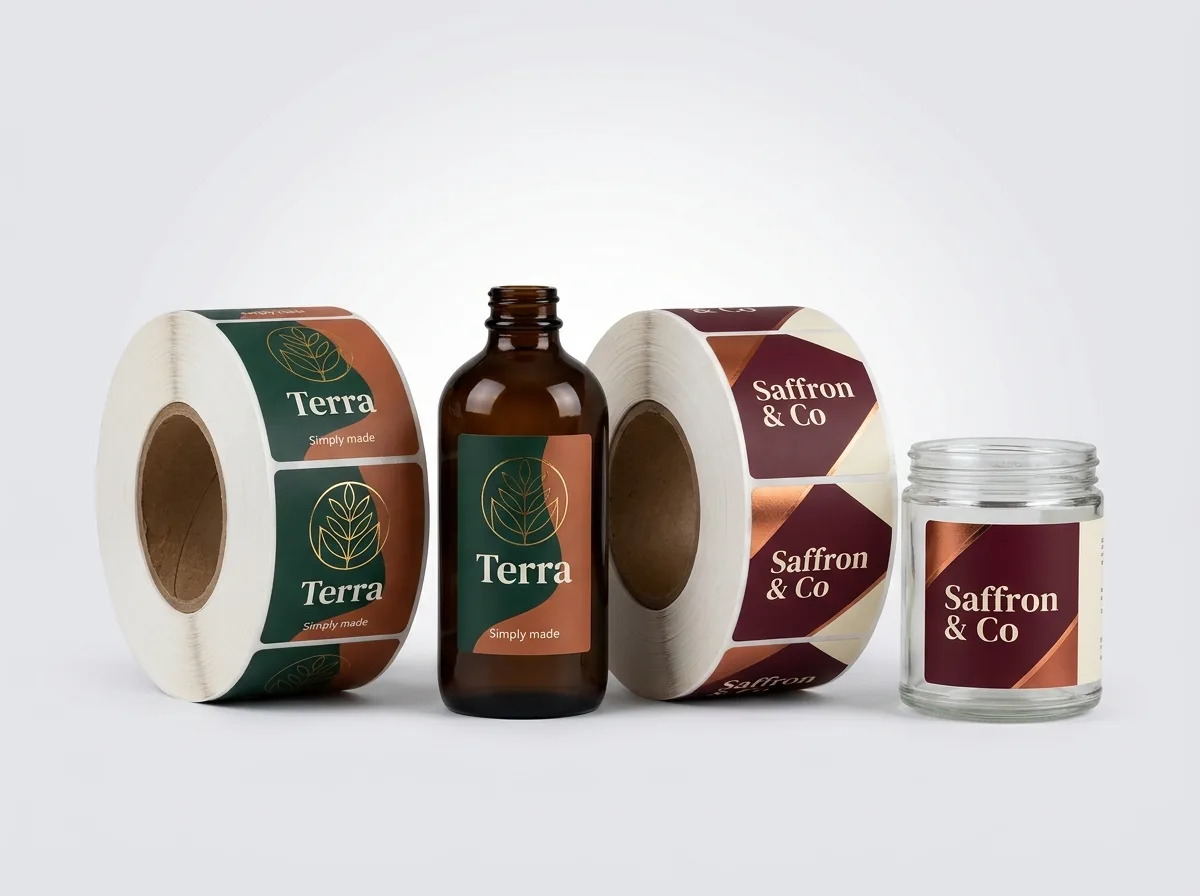
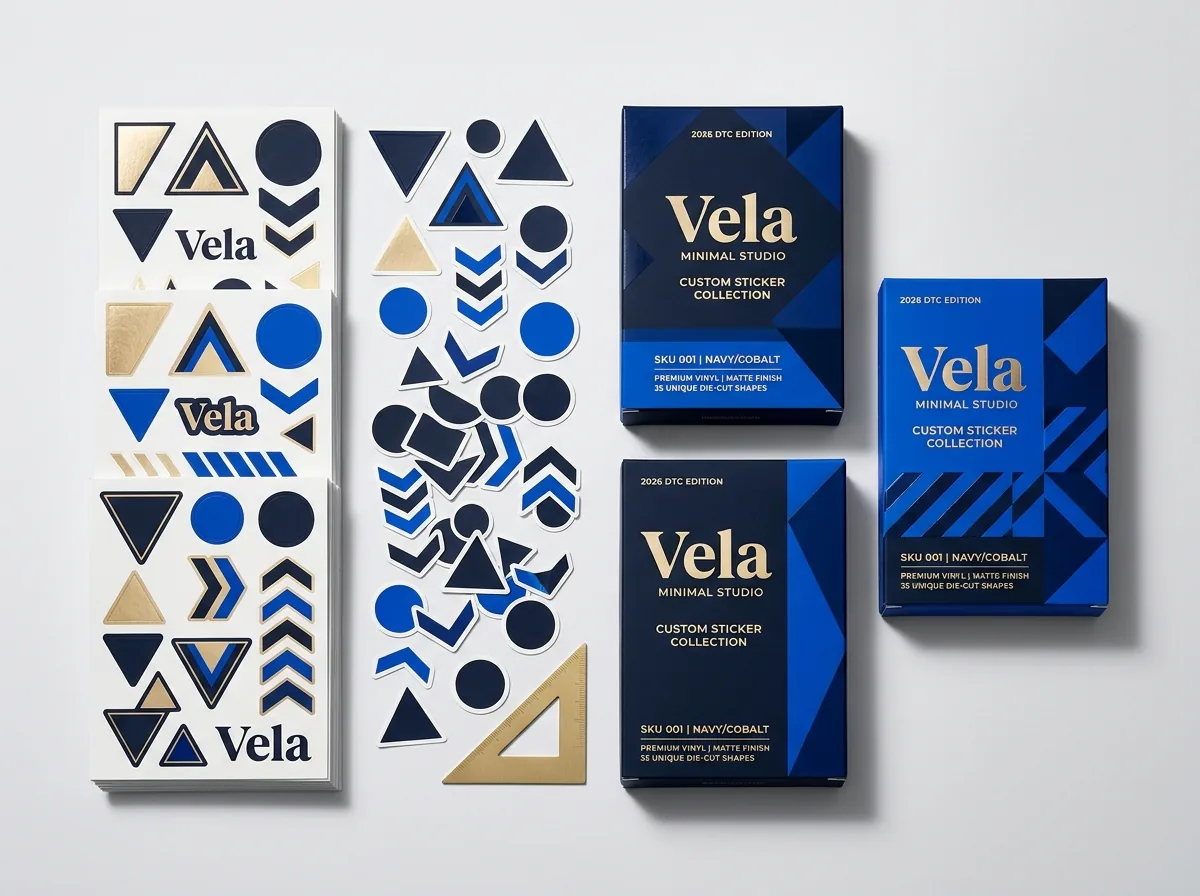
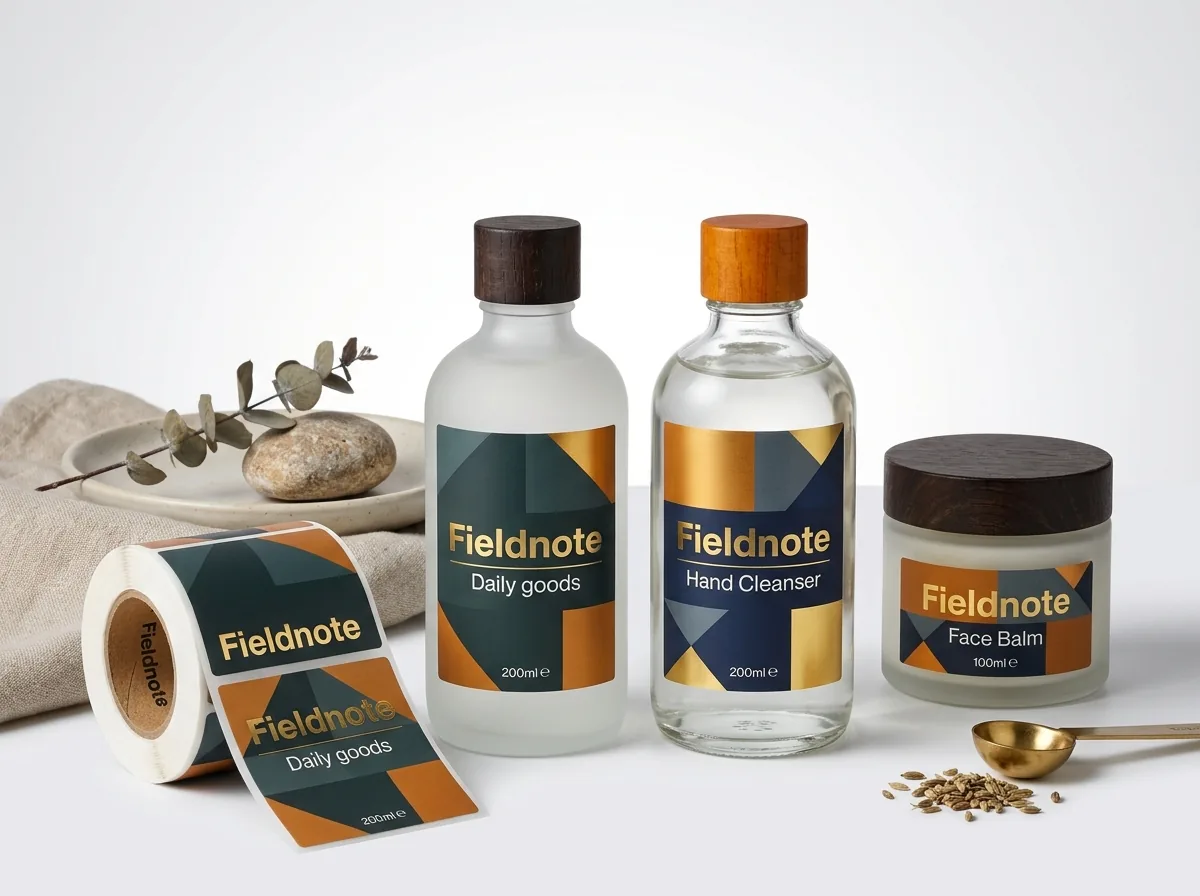
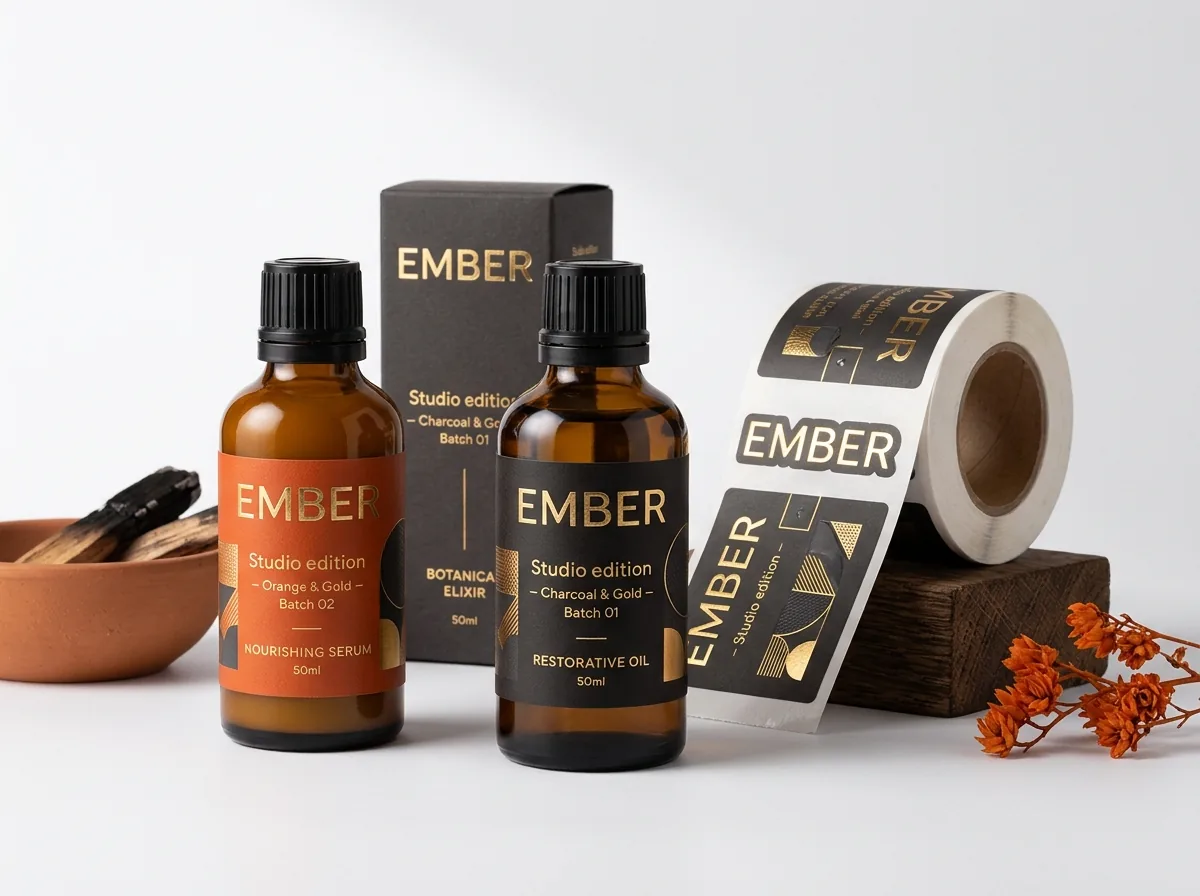
Ready to order product labels? Compare up to 3 quantities with a free 3D mockup.
Request a Quote →Questions about product labels
Is one wrap-around label cheaper than separate front and back labels?
Usually yes, both in label printing and in packing labor. One wrap-around label means you buy and apply 500 pieces for 500 bottles, whereas separate front and back labels require 1,000 pieces (500 fronts and 500 backs) and two peel-and-stick motions per bottle.
Can I use a single wrap-around label on a square or hexagon jar?
You can wrap a multi-sided jar if the corners are gently rounded and the walls are vertically straight, or you can size the strip to cover the front panel and two adjacent side panels (a 3-panel wrap). On sharp-cornered jars, separate front and back labels stay flatter.
How do I get the look of front-and-back labels with the speed of a single wrap?
Order a single 360-degree wrap printed on transparent clear label stock. Your front logo and back ingredient panel print over an opaque white ink underbase, while the spaces between them remain completely clear.
Can CubitPack print my front and back labels in the same 500+ order?
Yes. Select 2 designs in Step 2 of the quote form and enter your front and back dimensions and quantities in the notes. If both panels share the same size and material, they group together cleanly in one run.
What is an alternating front-and-back label roll?
An alternating roll winds one front label followed by one back label (A-B-A-B) along the same cardboard core so a labeling machine or packer peels front and back in order for each bottle.
How do I test whether a single wrap or front-and-back set looks better on my jar?
Cut both options out of plain copy paper at 100% scale and tape them onto two filled jars side by side. You will see right away which layout balances your artwork and container shape best, and our team also provides a free 3D mockup before payment.
Still have a question? Ask a packaging specialist.
Request a Quote →Request your product labels quote
Tell us your size and quantities, and one dedicated account manager prepares pricing for each tier.
- Free design & AI-to-print studio + 3D mockup
- No die or plate charges · 4–5 day rush available
- Free shipping to all 50 states
- 10% off your first order
This comparison of single 360-degree wrap-around product labels versus two-piece front-and-back sets was written and verified by a CubitPack packaging specialist against standard container geometry and fulfillment workflows. Spot something wrong? Tell us and we will fix it.
Sources
What changed
- October 22, 2026: First published.
- October 22, 2026: Updated specifications, terminology, and verified source links.
More guides
New packaging guides by email
Sizes, materials and design tips. Unsubscribe anytime.