
What size product label fits front and back retail containers?
Short answer: Measure the straight vertical wall of your container and subtract ¼ inch. For round bottles and jars, make a single full-wrap width equal to π (3.14) × diameter minus ¼ inch, or make separate front and back panels each 30% to 35% of the circumference when ordering custom product labels.
On this page
- How do I calculate full-wrap width vs separate front and back panel widths
- What are the standard product label sizes by container type
- How do I size product labels for dropper bottles, jars and beverage cans
- What size product label fits stand-up pouches, squeeze tubes and tins
- How do I standardize label sizes across a multi-SKU product line
- Common mistakes
- FAQs
Request a custom quoteFree dieline & 3D mockup
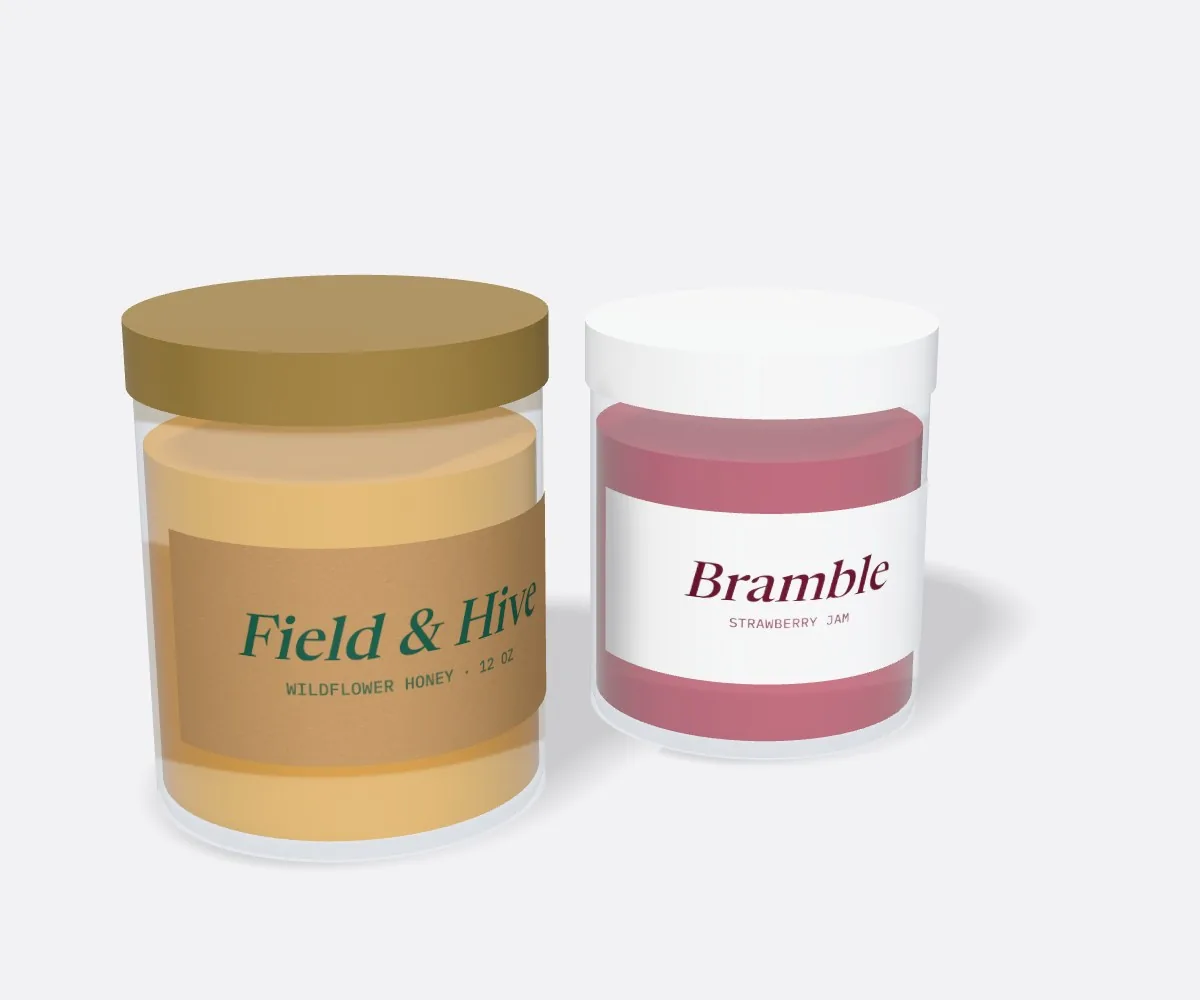
Finding the exact dimensions for a retail product label starts with dividing your container's printable area into its functional zones: the front Principal Display Panel (PDP) that faces the shopper, and the side or back information panel that holds ingredients, nutrition facts, directions and the UPC barcode. On a round jar, bottle or can, measure only the straight vertical wall between the neck curve and base heel, then subtract ¼ inch for vertical breathing room. Next, measure the container diameter and multiply by 3.14 (π) to get the circumference. If you want one 360-degree wrap that holds both front and back panels on a single sticker, subtract ¼ inch from the circumference. If you want separate front and back labels with glass showing on the sides, make each label about 32% of the circumference wide. At CubitPack, every dimension is cut to order from 500 pieces with no die fees.
How do I calculate full-wrap width vs separate front and back panel widths?
When shoppers look at a round bottle or jar on a store shelf, their eyes can only read about one-third of the cylinder's circumference without picking up the container and turning it. That optical limit is why retail packaging designers divide a round container's circumference (C = 3.14 × diameter) into three equal arcs: roughly 32% for the front Principal Display Panel (PDP), 32% for the back information panel, and the remaining 36% split between the left and right edges. Whether you combine those zones into a single 360-degree wrap or print them as two separate printed product labels, keeping your front brand lockup inside that center 32% arc guarantees your product name and net weight are readable in one glance.
- Straight vertical height (H): measure the flat vertical wall between shoulder and base curves, then subtract ¼ inch (0.25 in).
- Full 360° wrap width (W): multiply container diameter by 3.14 and subtract ¼ inch so the ends do not overlap.
- Front PDP width (W): multiply circumference by 0.32 so the entire front brand panel reads without distortion.
- Back information panel width (W): multiply circumference by 0.30 to 0.32 to leave clean glass windows on both sides.
- Flat pouch or carton panel: measure inside all heat seals, zippers or fold creases and subtract ½ inch (0.5 in).
What are the standard product label sizes by container type?
While CubitPack cuts every order to your exact width × height down to the sixteenth of an inch with zero die charges, most retail jars, dropper bottles, beverage cans, squeeze tubes and pouches use nine established footprints. Use the chart below to compare single-wrap dimensions against two-piece front-and-back dimensions. Remember that width (W) is always the horizontal measurement around or across the container, and height (H) is the vertical measurement from top to bottom.
| Retail container | Full-wrap size (W × H) | Front / back panel size (W × H) |
|---|---|---|
| 0.5 oz (15 ml) eye serum or lip tube | 1.5 × 2.5 in wrap | 0.875 × 1.5 in front only |
| 1 oz (30 ml) Boston round dropper bottle | 3.75 × 1.75 in wrap | 1.375 × 1.75 in front & back |
| 2 oz (60 ml) spray or lotion bottle | 4.5 × 2.25 in wrap | 1.625 × 2.25 in front & back |
| 4 oz jelly, spice or cosmetic cream jar | 6.25 × 1.75 in wrap | 2.25 × 1.75 in front + 2 in lid circle |
| 8 oz mason jar, honey jar or sauce bottle | 7.5 × 2.5 in wrap | 2.5 × 3 in front & 2.25 × 3 in back |
| 9 oz straight-sided glass candle tumbler | 8.5 × 2.75 in wrap | 2.75 × 3 in front + 2 in bottom warning |
| 12 oz sleek or standard aluminum beverage can | 8.125 × 3.75 in wrap | Full wrap standard for cans |
| 16 oz (1 pint) tall boy can or cold-brew bottle | 8.125 × 5 in wrap | 3 × 4.5 in front & back |
| 8 oz to 12 oz stand-up coffee or snack pouch | Not applicable (flat bag) | 3 × 4 in front & 3 × 4 in back |
How do I size product labels for dropper bottles, jars and beverage cans?
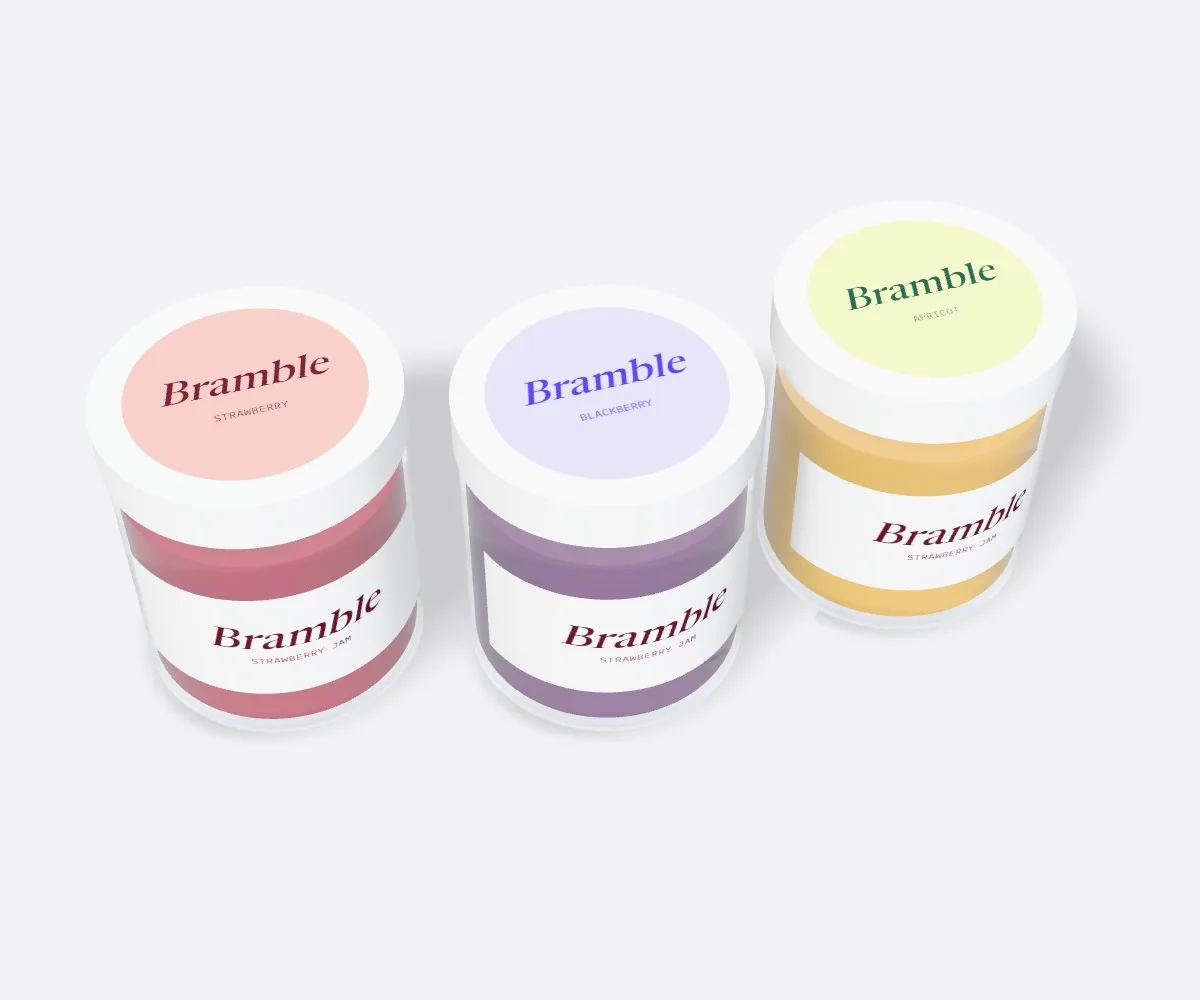
Small cylindrical containers like 1 oz (30 ml) serum droppers, essential oil vials and spice jars almost always use a single full-wrap rectangle (such as 3.75 × 1.75 inches) because you need every square inch of surface area to fit required ingredient lists, warnings, directions and a ladder-oriented barcode. Similarly, 12 oz and 16 oz aluminum craft soda, cold-brew coffee and functional beverage cans use an 8.125 inch wide wrap that stops below the tapered neck flange and above the bottom chime. On wider 8 oz to 16 oz glass jars for honey, pasta sauce, salsa or pickled goods, a full wrap works well when you want maximum space for recipes and nutrition facts, whereas a 2.5 × 3 inch front rectangle or oval paired with a 2 inch round lid seal lets shoppers inspect the food inside. Always measure the actual glass jar from your supplier before ordering, as two 8 oz jars from different glassmakers can vary by ¼ inch in diameter. Check our custom jar labels and custom bottle labels pages for vessel-specific templates.
Know your size? Compare pricing across up to 3 quantities.
Request a Quote →What size product label fits stand-up pouches, squeeze tubes and tins?
Stand-up pouches, gusseted coffee bags, plastic squeeze tubes and shallow metal tins have seams and curves that behave differently from rigid glass jars. On a flexible stand-up pouch, never measure the total outer width and height of the bag; measure the flat area inside the ⅜ inch left and right side heat seals, below the press-to-close zipper track, and above the curved bottom gusset fold. Filling a pouch with 12 oz of coffee or granola pulls the lower third of the bag into a rounded belly, so a 3 × 4 inch vertical rectangle centered on the upper-middle face stays much flatter than a tall 4 × 6 inch sheet. On plastic cosmetic squeeze tubes (for hand cream, cleanser or sunscreen), stop the label at least ⅜ inch below the top heat-crimped seal ridge and ¼ inch above the cap shoulder. On round metal salve tins, measure the flat inner recess of the lid inside the rolled metal rim and subtract ⅛ inch for your circle diameter, then place a matching round ingredient sticker on the bottom base.
How do I standardize label sizes across a multi-SKU product line?
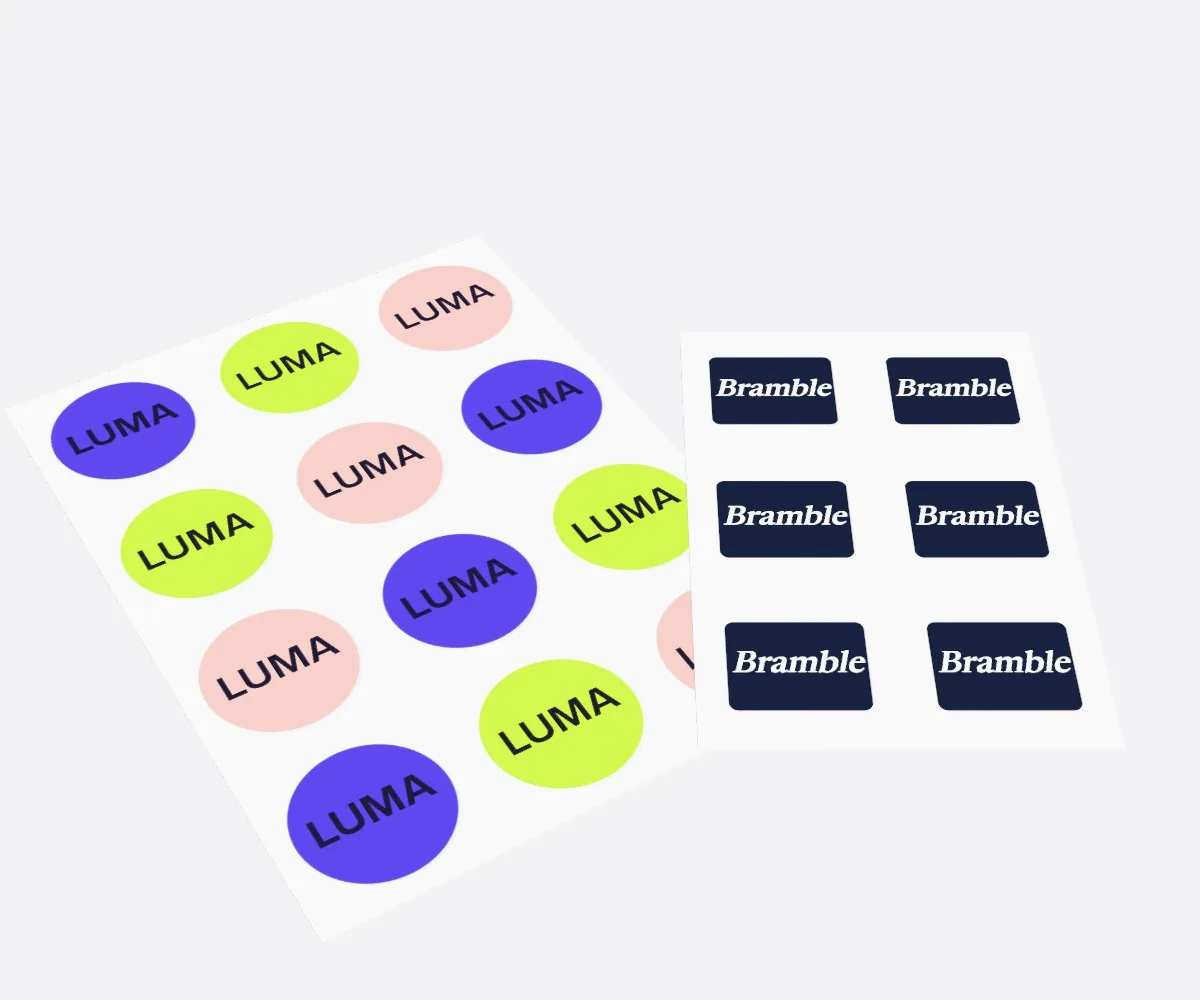
One of the biggest cost and fulfillment advantages of custom product labels is standardizing one or two label sizes across an entire catalog of flavors, scents or strengths. If you sell eight spice blends in 4 oz jars or six skincare serums in 1 oz bottles, keeping the exact same width, height and corner radius across every SKU lets you order all variants together in a single multi-design run starting at 500 labels. Standardizing dimensions also means your tabletop dispenser or automatic rotary labeling machine never needs guide-rail adjustments when switching from one flavor to the next on your custom roll labels. If you package food or skincare lines, you can also review specific sizing ideas on our custom food labels and custom cosmetic labels pages.
- Lock one master dieline: use the same width × height across every scent, flavor or shade in a container family.
- Match front and back heights: if you use separate front and back labels, make both the exact same height so they can alternate on one roll.
- Test one paper template: tape your master cutout onto your container and mark the front 32% PDP boundaries with a pencil.
- Compare three quantity tiers: enter 500, 1,000 and 2,500 in the quote form to see how grouping SKUs lowers unit cost.
What are the most common product label sizing mistakes?
Nearly every container fit problem comes from measuring over a structural seam, shoulder curve or gusset fold. Watch out for these five sizing mistakes
- Making the front brand lockup wider than 35% of a round bottle's circumference, which forces shoppers to rotate the bottle to read the product title.
- Measuring total jar or bottle height from rim to bottom instead of only the straight vertical cylinder wall between curves.
- Sizing a stand-up pouch label across the side heat seals or zipper track, where the raised plastic ridge creates air channels under the adhesive.
- Designing a 360-degree cylinder wrap to the exact circumference with zero gap, causing the ends to overlap when glass tolerances vary.
- Ordering slightly different heights for front and back bottle labels, which prevents a machine from feeding both from a single alternating roll.
Find your label size
Suggested label size: 9⅛ × 2¾ in (width × height)
A typical starting point. Your account manager confirms the size on the proof.
Quote this size →Packaging for this
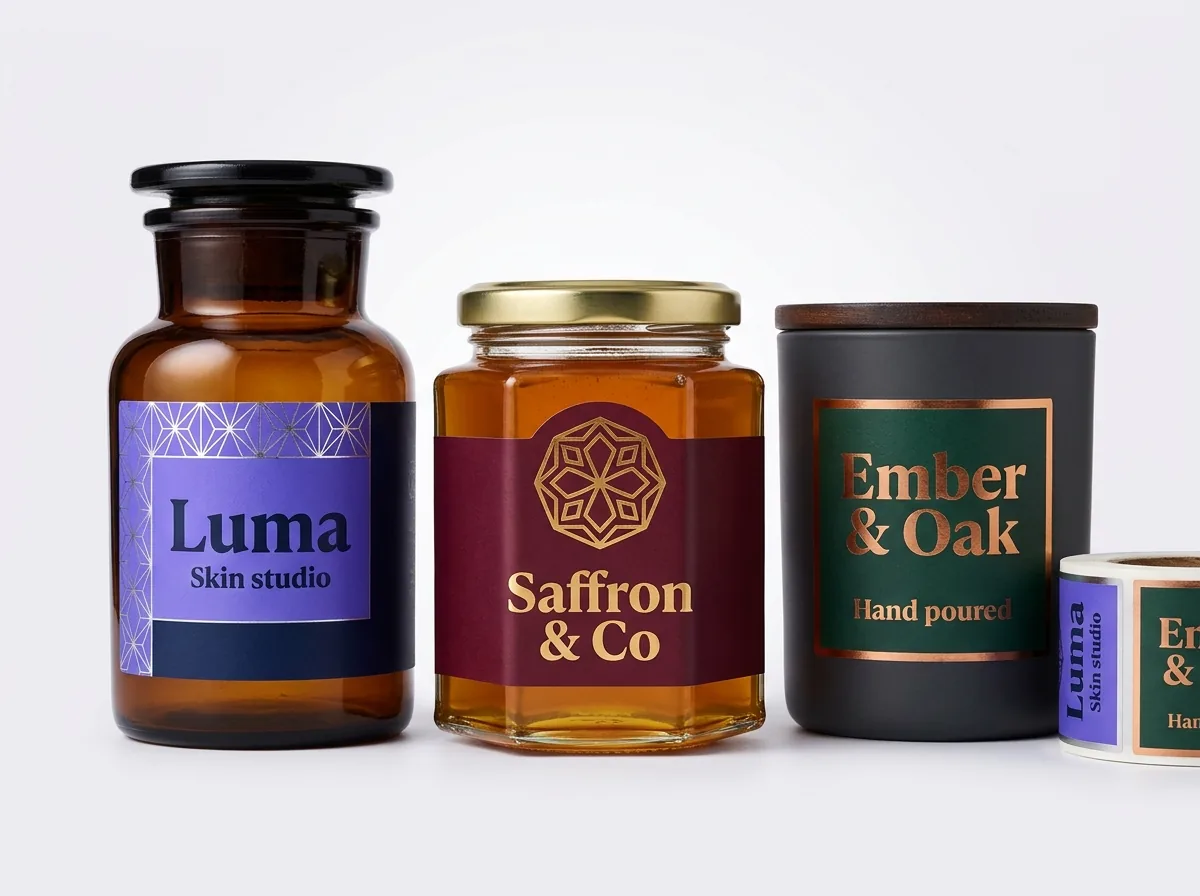
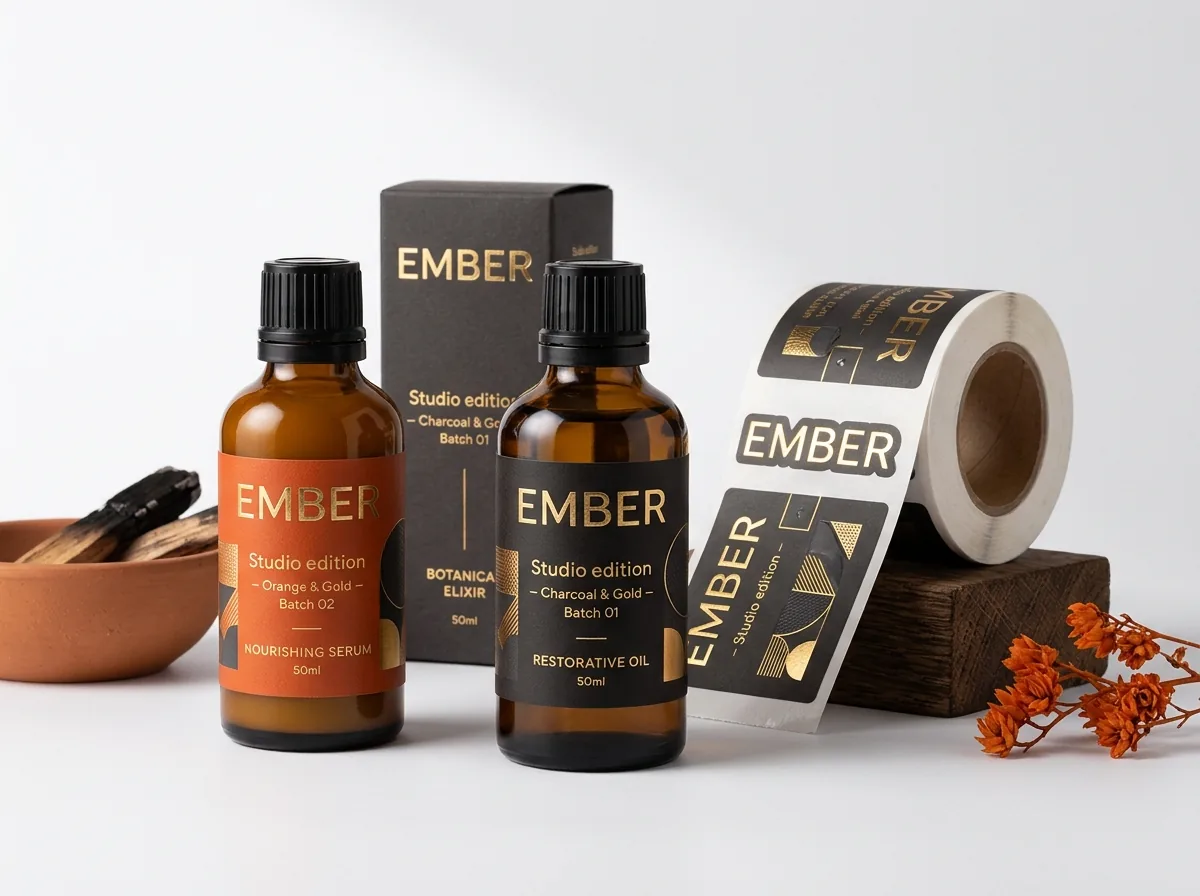
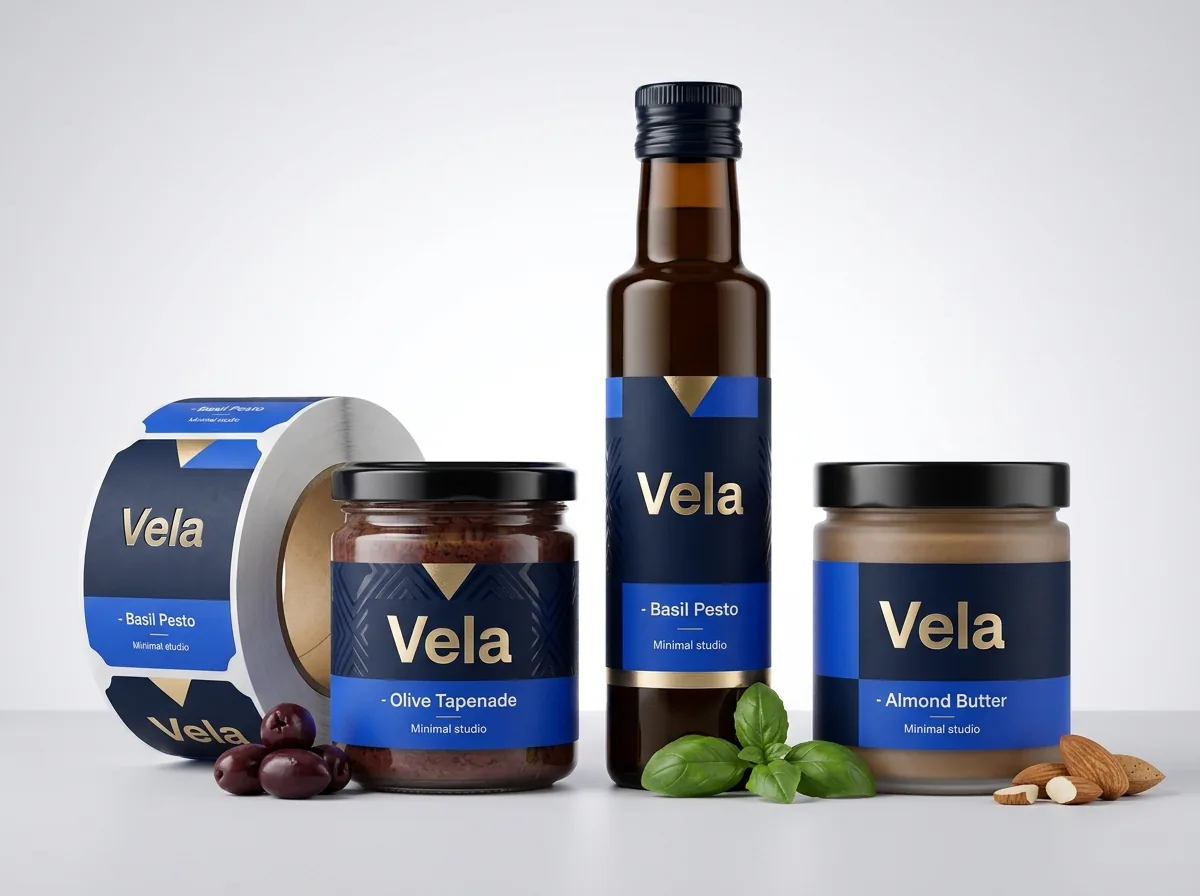
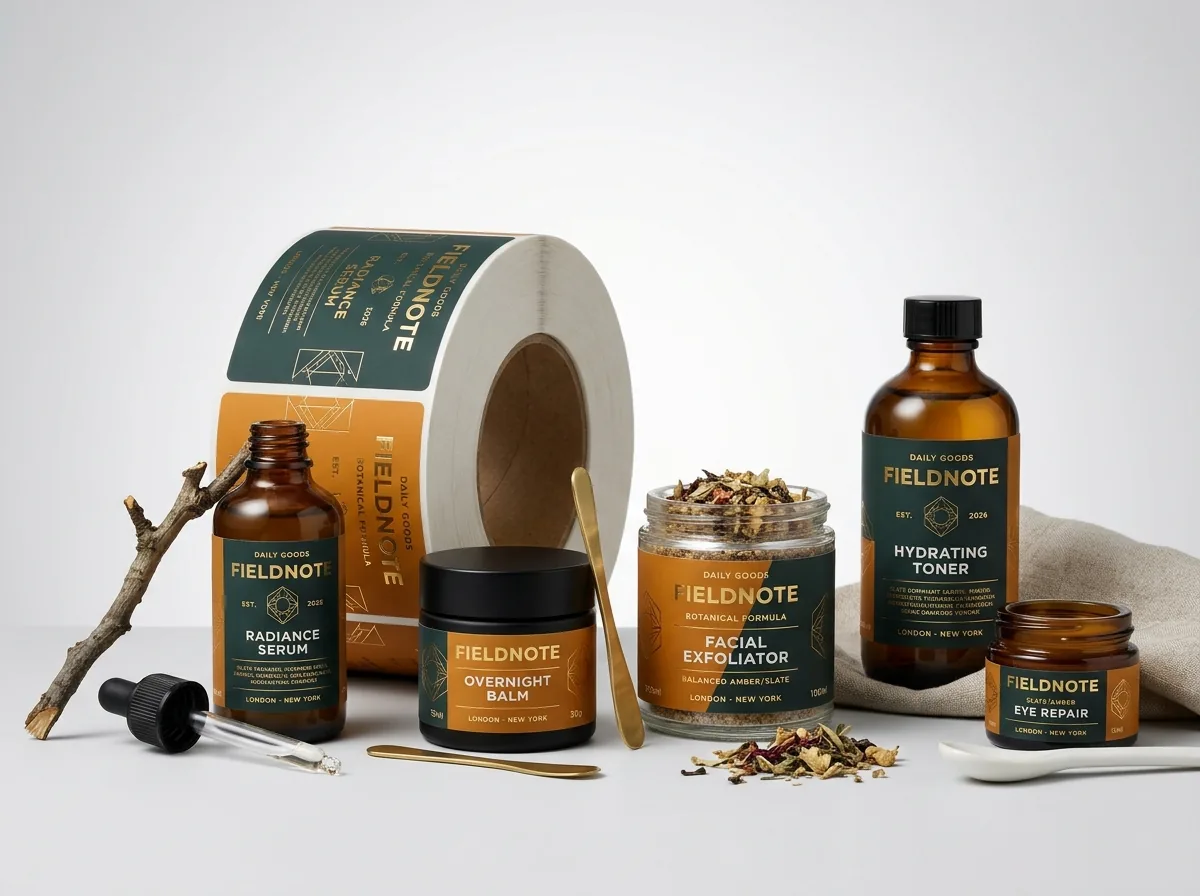
Ready to order product labels? Compare up to 3 quantities with a free 3D mockup.
Request a Quote →Questions about product labels
How wide should the front panel of a round bottle label be?
Keep the front Principal Display Panel (PDP) to about 30% to 35% of the bottle's total circumference. That ensures shoppers can read your logo, product name and net weight in a single glance without the edges curving out of sight.
Should my front and back bottle labels be the exact same size?
Making your front and back labels the exact same width and height (or at least the exact same vertical height) is the smartest setup. It lets us print both panels alternating on the same roll so hand packers or machines can apply front and back in sequence.
What size product label fits a standard 12 oz aluminum beverage can?
A standard 12 oz aluminum beverage can typically uses an 8.125 × 3.75 inch wrap-around label, which leaves a slight gap at the seam and stops cleanly between the top neck taper and bottom rim.
How much space should I leave around the edges of a stand-up pouch?
Measure the flat area inside the left and right heat-sealed seams, below the zipper track and above the bottom gusset crease, then subtract ½ inch from both width and height so the label sits completely flat.
Do non-standard fractional label dimensions cost extra?
No. CubitPack cuts every order to your exact width and height with no die or plate charges. Ordering a 2.125 × 3.625 inch label costs the exact same as a rounded 2 × 3.5 inch label.
Can I test my product label size on my container before paying?
Yes. Print or draw your planned width × height on plain paper, cut it out and tape it onto a filled container to check the fit. You also receive a free digital proof and 3D mockup before payment.
Still have a question? Ask a packaging specialist.
Request a Quote →Request your product labels quote
Tell us your size and quantities, and one dedicated account manager prepares pricing for each tier.
- Free design & AI-to-print studio + 3D mockup
- No die or plate charges · 4–5 day rush available
- Free shipping to all 50 states
- 10% off your first order
The cylinder circumference formulas, 32% Principal Display Panel arc calculations and container size rows in this guide were compiled and verified by a CubitPack packaging specialist. Spot something wrong? Tell us and we will fix it.
Sources
What changed
- October 22, 2026: First published.
- October 22, 2026: Updated specifications, terminology, and verified source links.
More guides
New packaging guides by email
Sizes, materials and design tips. Unsubscribe anytime.