
What size custom clear label do I need for glass jars and bottles?
Short answer: Measure the straight vertical wall of your jar or bottle and stop ¼ inch before any curve. For full-wrap custom clear labels, multiply diameter by 3.14 (π) and subtract at least ¼ inch so the transparent ends never overlap and leave a visible seam. Front-only panels use one-third of circumference.
On this page
- Why must full-wrap clear labels leave a ¼ inch gap instead of overlapping
- What are the most popular custom clear label sizes by container
- Should I use a full-wrap clear label or separate front and back panels
- What size clear wafer seal do I need to close retail boxes and jar lids
- How much space should I reserve for the white-backed barcode block on a clear label
- Common mistakes
- FAQs
Request a custom quoteFree dieline & 3D mockup
Sizing a custom clear label follows one critical rule that differs from opaque paper labels: you must never overlap the two ends of a full-wrap clear label. When a transparent film overlaps itself on the back of a glass jar or dropper bottle, the double layer of film and adhesive refracts light differently from the single layer, creating a milky vertical stripe right down the container. To avoid an overlap, measure your container's diameter, multiply by π (3.14) to find the circumference, and subtract a full ¼ inch (0.25 in) to ⅜ inch gap for your wrap width. For vertical height, measure only the straight flat portion of the cylinder wall between the top shoulder curve and the bottom base curve, and subtract ¼ inch. Every order of custom clear labels at CubitPack is cut to your exact width and height with zero die fees.
Why must full-wrap clear labels leave a ¼ inch gap instead of overlapping?
On an opaque white paper bottle label, some brands intentionally add ⅛ inch to the circumference so one end overlaps the other on the back of the bottle. Because white paper blocks light, the overlap seam is barely noticeable. On transparent custom clear labels, overlapping the ends has the opposite effect: stacking two layers of clear film and two layers of pressure-sensitive adhesive doubles the optical thickness along the overlap strip, trapping a tiny channel of air beside the step and creating a bright vertical line. To keep the no-label look clean all the way around a cylindrical jar, serum bottle or beverage bottle, calculate your full-wrap width as π (3.1416) × container diameter minus ¼ inch (0.25 in). That ¼ inch breathing gap absorbs normal glass manufacturing tolerances from batch to batch and ensures the two clear edges never touch or ride up on each other.
- Measure straight vertical height: place a flat ruler against the bottle side and measure only the dead-straight cylinder wall.
- Subtract ¼ inch from straight height: leaves ⅛ inch of glass clearance below the neck curve and above the base heel.
- Calculate non-overlapping wrap width: (3.14 × diameter) − 0.25 in gap.
- Specify 1/16 inch rounded corners: prevents sharp 90-degree clear film corners from lifting or catching air bubbles.
What are the most popular custom clear label sizes by container?
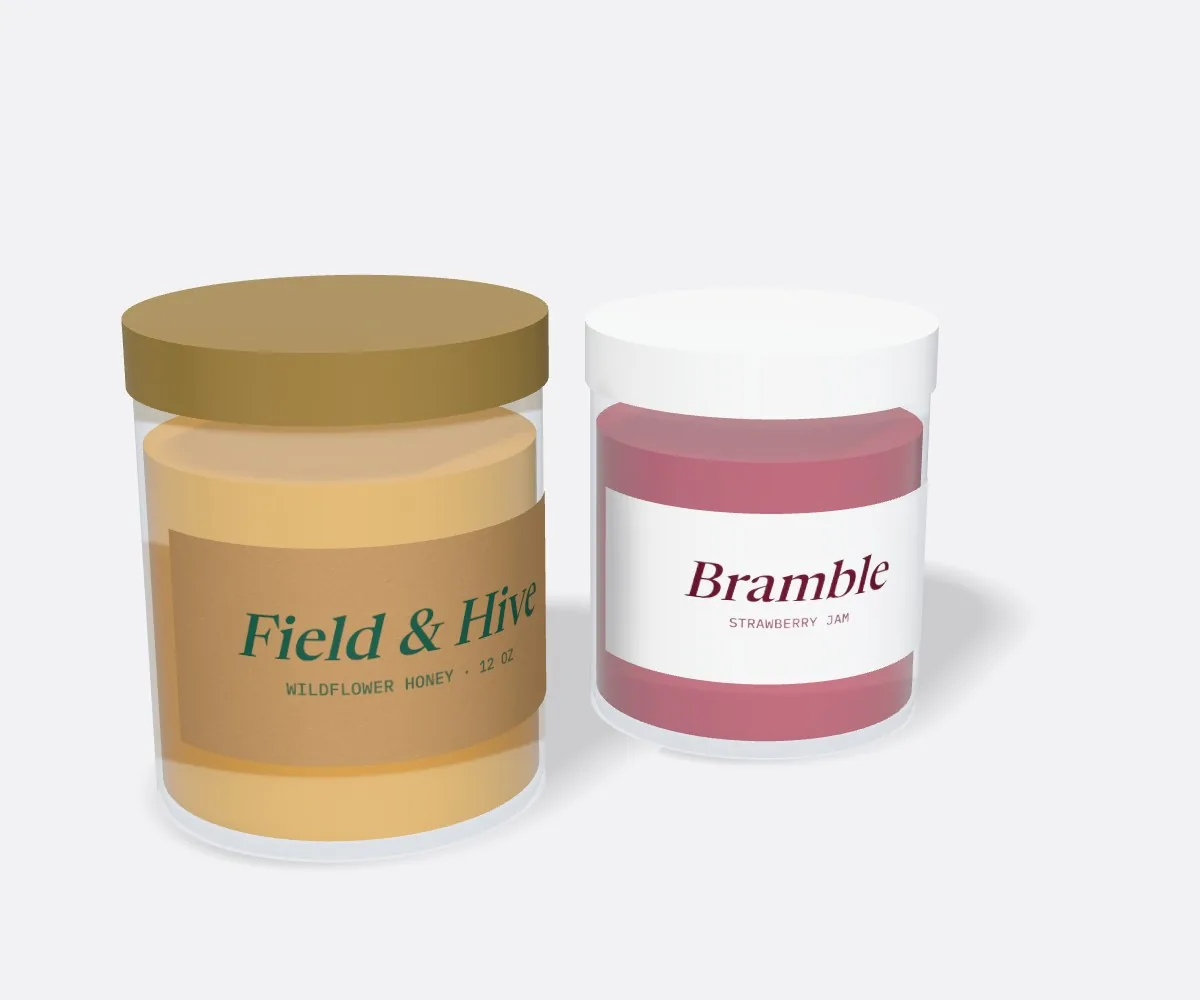
Use the size chart below to benchmark starting dimensions for glass dropper bottles, honey and jam jars, candle tumblers, beverage bottles and retail carton wafer seals. Every size at CubitPack is cut to order with no die charges, so you can adjust any width or height to the sixteenth of an inch to match your exact vessel. Notice how wide food jars and candle vessels often use a front-only clear panel (or a separate front and back pair) rather than a full wrap. Using a front-only panel cuts material square inches in half and leaves the sides of the glass completely bare so shoppers see the honey, jam, bath salts or candle wax from every angle.
| Container or application | Recommended clear label size (W × H) | Best layout & finish |
|---|---|---|
| Retail tuck-box wafer seals | 1 in, 1.25 in or 1.5 in circle | Clear circle on rolls (perforated or solid) |
| 0.5 oz (15 ml) & 1 oz (30 ml) dropper bottles | 1.5 × 3 in or 1.75 × 3.5 in | Full wrap with ¼ in gap; matte or gloss clear |
| 2 oz & 4 oz cosmetic pump or spray bottles | 2 × 3.5 in or 2.25 × 4.25 in | Full wrap with ¼ in gap; matte frosted clear |
| 8 oz honey, jam or gourmet sauce jar | 2.25 × 3 in (front) or 2 × 7.25 in (wrap) | Front oval/rectangle or wrap; gloss clear |
| 9 oz straight-sided glass candle tumbler | 2.75 × 2.75 in or 3 × 3 in | Front square or circle; matte or foil-stamped clear |
| 12 oz cold-pressed juice or kombucha bottle | 3 × 4 in (front & back) or 3 × 7.5 in (wrap) | Front/back pair or wrap; gloss clear + white ink |
| 750 ml spirit or wine bottle | 3.25 × 4.5 in (front) + 2.75 × 4 in (back) | Two-piece front and back; gloss clear + gold foil |
Should I use a full-wrap clear label or separate front and back panels?
When labeling clear glass bottles and jars, choosing between a single full-wrap label and a front-and-back two-piece setup depends on container diameter and how you apply your labels. On narrow cylinders under 2 inches in diameter (like 1 oz essential oil droppers, lip gloss vials and spice tubes), a single full-wrap clear label is much faster to apply and gives you room for tiny ingredient text and a barcode on the back half. On wider containers over 2.5 inches in diameter (like 8 oz honey jars, 12 oz juice bottles, spirit bottles and square apothecary jars), smoothing a 7.5-inch-long clear film wrap by hand without trapping a single air bubble takes practice. Splitting the layout into a 2.5 × 3 inch front brand label and a separate 2.5 × 3 inch back nutrition label makes bubble-free hand application effortless and saves film across the unprinted side walls. You can explore more container-specific dimensions on our custom jar labels and custom bottle labels pages.
Know your size? Compare pricing across up to 3 quantities.
Request a Quote →What size clear wafer seal do I need to close retail boxes and jar lids?
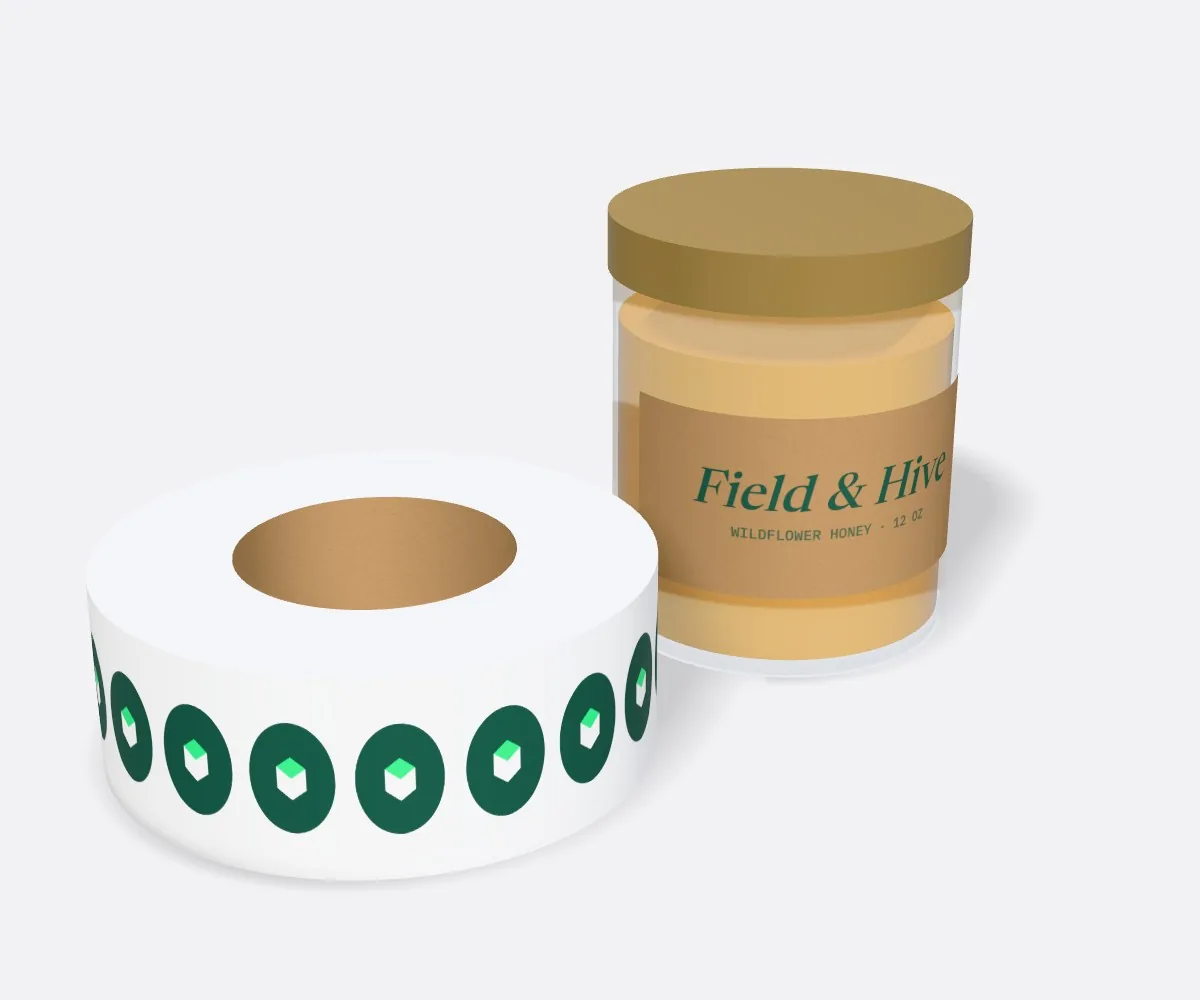
Transparent circle and rectangle seals (often called wafer seals or closure tabs) are the standard way to seal the top and bottom tuck flaps of custom cosmetic boxes, supplement cartons and retail folding boxes without covering up the printed box artwork underneath. A clear circle folded half on the top lid flap and half on the front panel keeps the carton closed on store shelves while letting the box color and typography show right through. For small lip balm, dropper and mascara cartons under 2 inches wide, use a 0.75 inch or 1 inch clear circle seal. For standard skincare, candle and food cartons measuring 2.5 to 5 inches wide, a 1.25 inch or 1.5 inch clear circle gives enough adhesive grip to hold heavy springy paperboard flaps shut. For jar lids and lollipop-style tamper strips, measure the flat inner lid ring and add a 0.75 × 2 inch side strip that bridges down over the jar neck.
- 0.75 in to 1 in clear circle: small cosmetic tuck boxes, lip balm cartons, envelope flaps and brochure mailers.
- 1.25 in to 1.5 in clear circle: standard retail folding cartons, bakery cake boxes and rigid gift box belly bands.
- 2 in clear circle: wide-mouth jar lids, candle dust covers and tissue paper closures.
- 0.75 × 2.5 in clear rectangle strip: tamper-evident neck bridges across jar caps and bottle closures.
How much space should I reserve for the white-backed barcode block on a clear label?
Even when the rest of your clear label uses an airy, open transparent background, retail UPC-A and EAN-13 barcodes cannot be printed as black bars over bare clear film. Checkout laser and camera scanners need a bright, opaque light-reflecting background behind the dark bars and quiet zones. When sizing your clear wrap or back panel, reserve a solid opaque white ink rectangle measuring at least 1.25 × 0.75 inches (or 1.5 × 1.0 inches for 100% nominal retail magnification) for the barcode block. Placing that white barcode block vertically along the back edge of a full wrap or at the bottom of a back label keeps the front panel 100% clean and see-through. For roll-fed dispenser sizing, see our custom roll labels page.
- 80% magnification barcode block: reserve at least 1.25 × 0.75 inches of solid opaque white ink on the back panel.
- 100% nominal barcode block: reserve 1.5 × 1.0 inches of solid opaque white ink including left and right quiet zones.
- Vertical ladder orientation: rotate the barcode 90 degrees on narrow 1 oz dropper bottles so the bars stay flat against the curve.
What are the most common clear label sizing mistakes?
Because clear film reveals every edge seam and trapped air pocket on glass, check these five sizing details before approving your proof
- Adding ⅛ inch of overlap to a full-wrap clear label instead of subtracting a ¼ inch gap, which leaves a visible double-thick vertical seam.
- Letting a clear label extend ⅛ inch onto the curved shoulder or bottom heel of a glass bottle, where stiff film forms air tunnels at the edge.
- Using sharp 90-degree square corners on a rectangular clear wrap instead of a 1/16 inch rounded corner radius.
- Placing a clear back label with dense text directly behind a clear front logo on a water-clear bottle so both sides show through at once.
- Forgetting to reserve a 1.25 × 0.75 inch opaque white ink block for the retail barcode on the back panel.
Find your label size
Suggested label size: 9⅛ × 2¾ in (width × height)
A typical starting point. Your account manager confirms the size on the proof.
Quote this size →Packaging for this
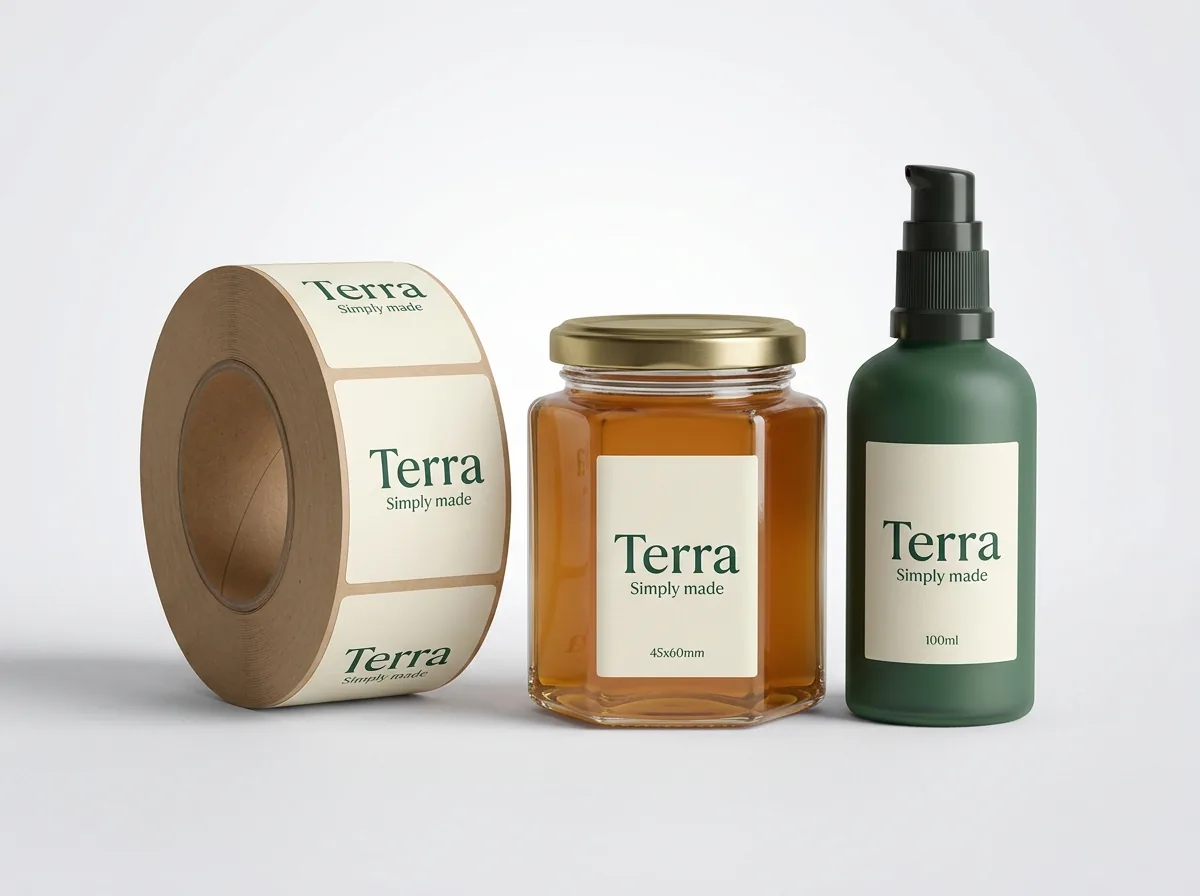
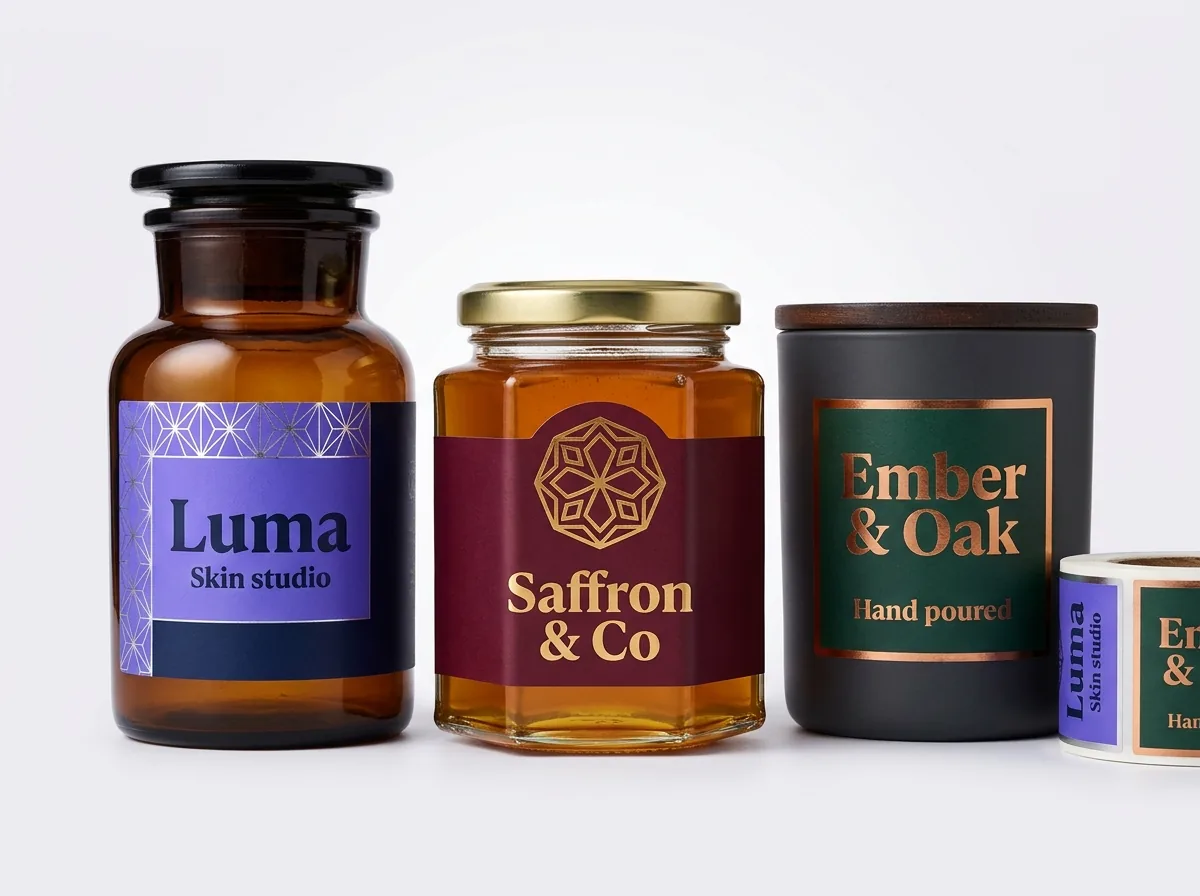
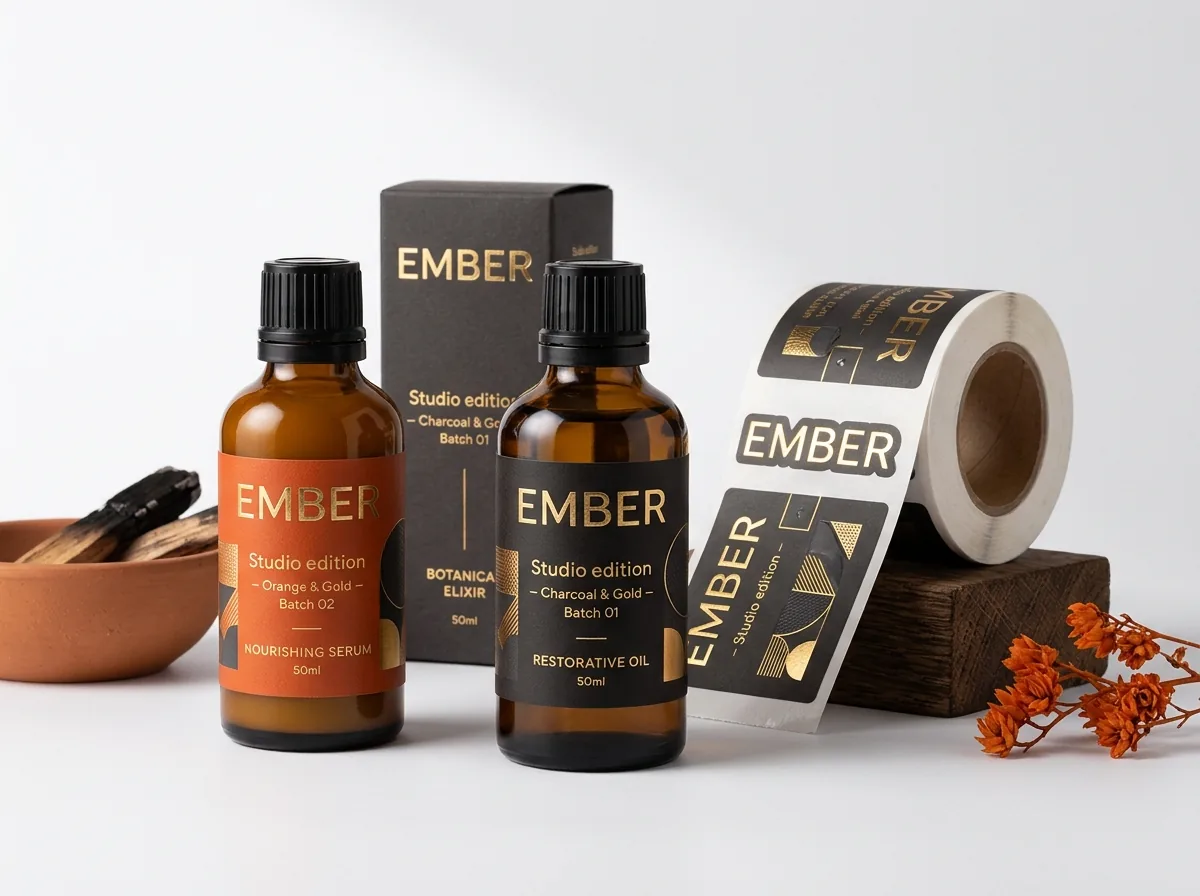
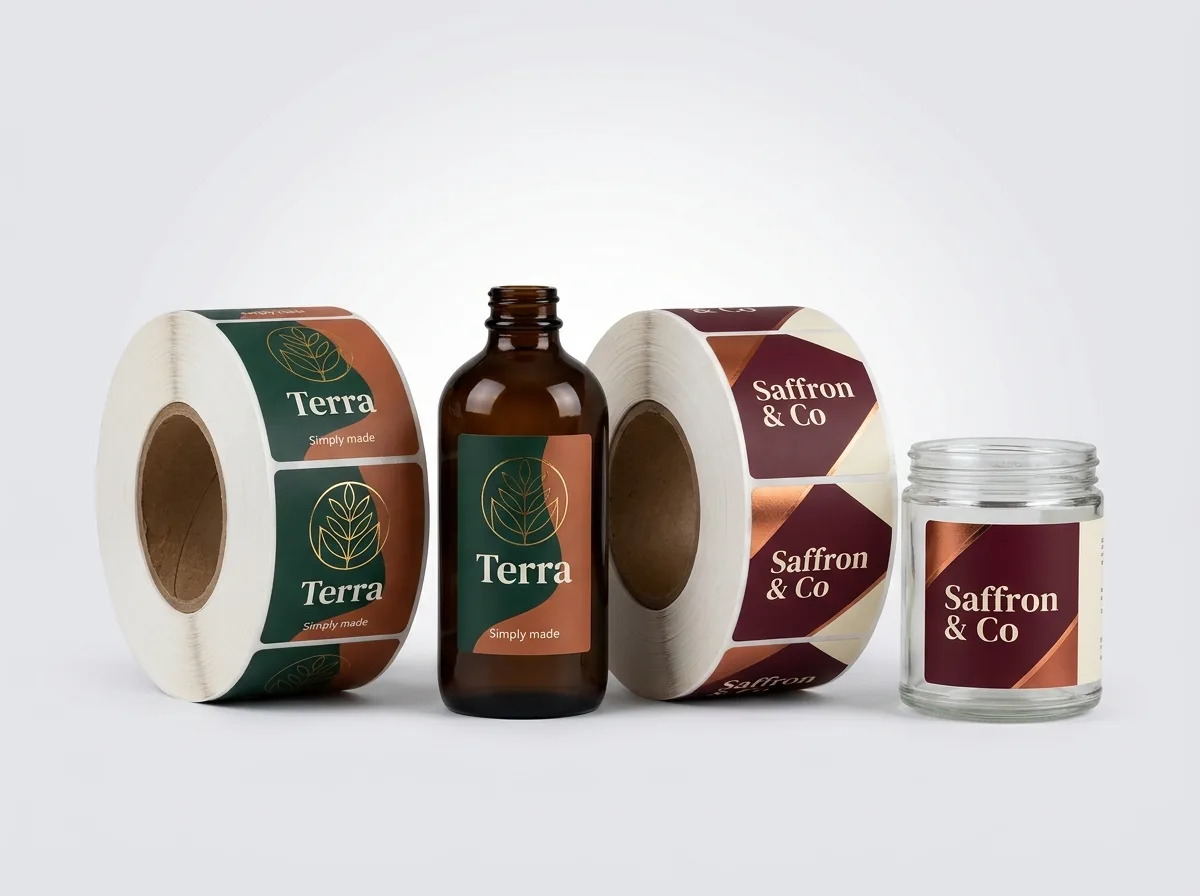
Ready to order clear labels? Compare up to 3 quantities with a free 3D mockup.
Request a Quote →Questions about clear labels
How much gap should I leave between the ends of a full-wrap clear bottle label?
Leave at least ¼ inch (0.25 in) to ⅜ inch between the two ends of a full-wrap clear label. Unlike paper labels, overlapping transparent film creates a noticeable vertical stripe twice as thick as the rest of the label.
What size clear label fits a standard 1 oz (30 ml) Boston round dropper bottle?
A standard 1 oz (30 ml) glass dropper bottle typically takes a 1.75 × 3.5 inch or 1.5 × 3.75 inch clear wrap label (where 1.75 in is vertical height on the straight wall and 3.5 in is horizontal wrap width).
Why should rectangular clear labels have rounded corners instead of sharp corners?
A sharp 90-degree corner on clear film is easier to catch with a finger or cloth, and once a clear corner lifts even slightly, air underneath makes the corner turn white. A 1/16 inch rounded radius stays down flat.
What size clear circle sticker is best for sealing retail folding cartons?
A 1 inch or 1.25 inch clear circle seal is standard for small cosmetic and supplement tuck boxes, while a 1.5 inch clear circle is ideal for medium retail cartons and gift boxes.
Can I test a clear label size on my jar before placing an order?
Yes. Cut a piece of plain paper or clear household tape to your planned width and height and press it onto the straight wall of your jar. We also provide a free digital proof and 3D mockup before payment.
Do custom clear label sizes or custom contour shapes cost extra?
No. CubitPack never charges die or plate fees. Any exact width × height rectangle, circle, oval or custom contour silhouette costs the same per square inch.
Still have a question? Ask a packaging specialist.
Request a Quote →Request your clear labels quote
Tell us your size and quantities, and one dedicated account manager prepares pricing for each tier.
- Free design & AI-to-print studio + 3D mockup
- No die or plate charges · 4–5 day rush available
- Free shipping to all 50 states
- 10% off your first order
The cylinder wrap formulas (π × diameter minus ¼ inch non-overlap gap) and container benchmarks in this guide were verified against standard glass dropper, jar and beverage bottle specs by a CubitPack packaging specialist. Spot something wrong? Tell us and we will fix it.
Sources
What changed
- October 22, 2026: First published.
- October 22, 2026: Updated specifications, terminology, and verified source links.
More guides
New packaging guides by email
Sizes, materials and design tips. Unsubscribe anytime.