
Machine-applied vs hand-applied custom roll labels: which setup fits your run?
Short answer: Choose hand-applied or manual bench-dispenser rolls for 500 to 2,500 pouches, boxes or jars where any Wind Out orientation works. Move to semi-automatic bottle rollers at 1,000 to 10,000 round containers, and inline rotary machines above 5,000 units, specifying exact core size and unwind on your custom roll labels.
On this page
- How do hand peeling, bench dispensers, bottle rollers and inline machines compare
- When are hand-peeled rolls and manual bench dispensers the smartest choice
- What roll specifications do semi-automatic bottle rollers and inline machines require
- How do clear stocks, foil finishes and custom contours behave on labeling machines
- Common mistakes
- FAQs
Request a custom quoteFree dieline & 3D mockup
Every custom roll label from CubitPack arrives kiss-cut in a single continuous lane with the surrounding waste matrix stripped away, so the same roll format supports both hand packing and automated machinery. The difference between a hand-applied roll and a machine-applied roll lies in four converting specifications: unwind direction (Positions 1–8), inside core diameter (1 inch vs 3 inch), maximum outer roll diameter (OD) and gap sensing along the release liner. When packers peel by hand or pull the liner through a manual tabletop separator bar, any Wind Out orientation works because the operator orients each piece by hand. Once you step into semi-automatic bottle rollers or motorized inline conveyors, locking in those four numbers on your free digital proof ensures every label releases cleanly across the peel plate without web breaks, missed sensor stops or crooked cylinder wraps.
How do hand peeling, bench dispensers, bottle rollers and inline machines compare?
Most growing brands pass through four stages of roll label application as batch sizes climb from 500 units to tens of thousands. Because flat sheets top out around 4 to 6 labels per minute and tire operators' fingers, switching to stripped rolls immediately doubles hand speed even without hardware. As soon as your monthly volume crosses 1,000 containers, the labor time saved on packing days outweighs the modest one-time cost of a bench dispenser or tabletop bottle roller. Adding a simple tabletop pull dispenser frees both hands so the packer holds the pouch or box while pulling the backing liner. For cylindrical containers like dropper vials, beverage bottles and candle jars, a tabletop cradle roller keeps the horizontal seam straight on every wrap, while high-speed inline rotary systems take over once you move into dedicated bottling lines or co-packers. Use the comparison table below to match your typical batch volume and container geometry to the right dispensing method and roll specification.
| Application method | Typical speed | Best run size & container | Required roll specifications |
|---|---|---|---|
| Direct hand peeling from roll | 8–12 labels/min | 500–1,500 lids, boxes, pouches or wide jars | Any Wind Out position (1–4); compact OD for easy holding |
| Manual tabletop pull dispenser | 15–25 labels/min | 1,000–3,000 flat pouches, mailer boxes and shipper seals | Wind Out Position 1 or 2; check frame max OD (typically 6–8 in) |
| Semi-automatic bottle roller | 20–35 bottles/min | 1,000–10,000 round bottles, jars, cans and dropper vials | 3 in core; Wind Out Position 3 or 4; ⅛ in gap |
| High-speed inline / rotary machine | 60–200+ units/min | 5,000+ beverage cans, supplements, sauces and cosmetics | 3 in core; exact max OD (8–12 in); optical or ultrasonic sensor gap |
When are hand-peeled rolls and manual bench dispensers the smartest choice?
If your team packs between 500 and 2,500 units per batch, or if you apply labels to flat and irregular surfaces like stand-up pouches, bakery boxes, tissue paper seals and jar lids, manual bench dispensing gives you the highest flexibility with zero machine setup time. A tabletop pull dispenser threads the siliconized release liner downward around a metal peel bar; when the operator tugs the waste liner forward, the stiff label projects straight out over the bar ready to press onto the package. Because a human hand transfers the label from the peel bar to the container, you do not have to worry about strict optical sensor gaps or whether the left or right edge exits first. Ordering Wind Out Position 1 (top edge leading) or Position 2 (bottom edge leading) keeps the print facing upright toward the packer. Many coffee roasters and food brands use bench dispensers for custom coffee bag labels across five or six roast varieties because swapping rolls between flavors takes less than ten seconds.
- Zero changeover downtime when switching between small batches of different flavors or scents.
- Works with any custom die-cut contour, circle, oval or rectangle without peel-plate snagging.
- Compact roll diameters fit comfortably on crowded fulfillment benches alongside scales and tape dispensers.
What roll specifications do semi-automatic bottle rollers and inline machines require?
The moment you label round cylinders in batches over 1,000 units, hand placement starts to show visual drift: wrap ends fail to meet level at the back seam, or trapped air pockets form creases on smooth glass. A semi-automatic bottle roller solves both problems by cradling the cylinder on two parallel rollers and pressing the leading edge of the label firmly against the wall as the bottle spins. Operators simply set a bottle in the cradle, tap a foot pedal or pull a handle, and lift a straight-labeled container out in two seconds. Unlike a human packer, a motorized roller or inline conveyor cannot rotate a label that was wound in the wrong direction. Before ordering machine-ready roll labels for custom bottle labels or custom jar labels, check your applicator manual for four numbers: inside core diameter (usually 3 inches), maximum outer roll diameter, unwind position (usually Position 3 or Position 4 for horizontal wraps) and minimum gap spacing along the liner (typically ⅛ inch). Also verify that the release liner width has a clean 1/16 inch margin outside each side of the die-cut label so the web tracks smoothly through your machine's tension guides without adhesive touching the rollers.
Know your size? Compare pricing across up to 3 quantities.
Request a Quote →How do clear stocks, foil finishes and custom contours behave on labeling machines?
Standard white paper, white film and metallic custom foil labels block light completely, so the standard optical gap sensor on an automatic applicator easily detects the difference between the opaque label and the translucent release liner in the ⅛ inch gap. However, when you run transparent custom clear labels on an automated line, a standard light-beam sensor may shine straight through both the clear label and the clear liner without seeing where the label ends. To run clear roll labels smoothly on a machine, either confirm that your applicator uses an ultrasonic (thickness) or capacitive gap sensor, or ask us to print a small black registration bar (eye-mark) on the back of the release liner between each label. Similarly, if you run rectangular or custom contour labels over a high-speed peel plate, adding a subtle 1/16 inch rounded corner radius and avoiding needle-sharp leading points prevents corners from catching or lifting at high dispensing speeds. When you split a production run across multiple flavors or scents that share the same label size, we wind each SKU onto its own dedicated roll so your operator or co-packer can swap varieties cleanly between batches.
- Opaque stocks (foil, paper, white film): work with all standard optical gap sensors using a ⅛ inch vertical gap.
- Clear stocks: check whether your machine uses an ultrasonic thickness sensor or needs a printed black eye-mark bar.
- Corner radius: a 1/16 inch radius on rectangular roll labels prevents 90-degree corners from dog-earing on peel plates.
- Leading-edge contour: keep the leading edge of custom shapes gently convex or straight so the peel plate pushes the label forward evenly.
What are the most common mistakes when moving from hand to machine labeling?
Upgrading from hand peeling to a tabletop roller or co-packer line is straightforward once your roll specs match the hardware. Avoid these five transition pitfalls
- Sending leftover hand-wound rolls to a co-packer without checking whether their inline applicator requires Position 3 or Position 4 unwind.
- Ordering clear roll labels for an optical-sensor machine without checking if an ultrasonic sensor or black eye-mark is needed.
- Designing sharp 90-degree corners or thin inward points on the leading edge that catch on the applicator's metal peel plate.
- Forgetting to specify maximum outer roll diameter (OD), resulting in large rolls that do not fit inside a tabletop roller housing.
- Applying full-wrap labels to tapered jars without measuring whether the top and bottom diameters differ.
Packaging for this
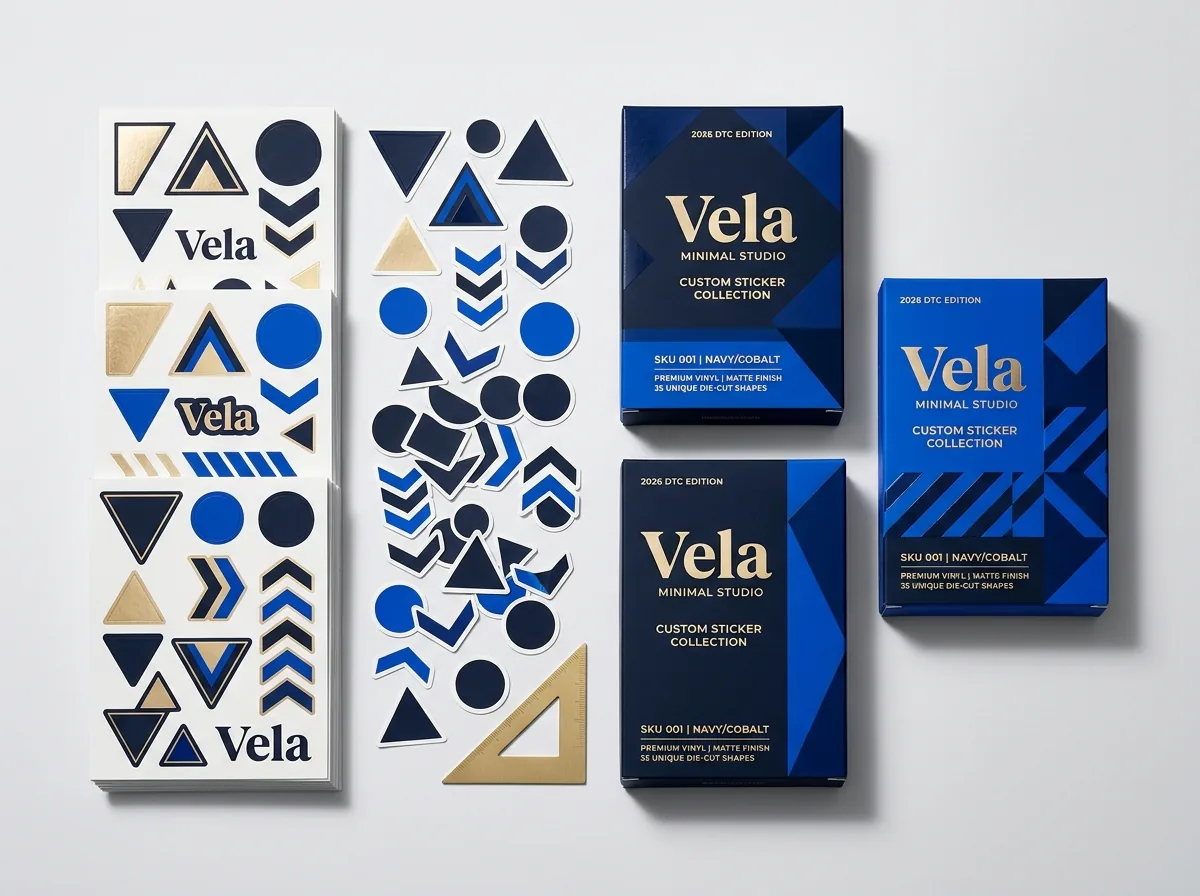
Ready to order roll labels? Compare up to 3 quantities with a free 3D mockup.
Request a Quote →Questions about roll labels
Do hand-applied roll labels cost the same as machine-applied roll labels?
Yes. At CubitPack, winding your custom roll labels to a specific unwind position (Positions 1–8) for a labeling machine does not add die or setup fees. Every order starts at 500 labels with free design help and free US shipping.
At what batch size does a semi-automatic bottle roller pay for itself?
Most beverage, skincare and food brands add a tabletop bottle roller once a batch reaches 1,000 to 1,500 cylindrical containers. It triples application speed from around 10 bottles per minute by hand to 25–35 bottles per minute and keeps every wrap level.
Can I peel machine-wound roll labels by hand if needed?
Yes. A roll wound to Position 3 or Position 4 on a 3 inch core for a bottle machine can still be peeled by hand or threaded through a manual tabletop pull dispenser for small rework batches or sample kits.
Why do roll labels dispense so much faster than flat sticker sheets?
On a custom roll label, the waste matrix around the cut line is stripped away at the plant and the labels sit in a single column on a siliconized liner. Bending the liner over a sharp peel bar pops the leading edge of the label up automatically, whereas flat sheets require picking corners by fingernail.
What if my co-packer sends me a spec sheet with core size, OD and unwind?
Upload or paste your co-packer's spec sheet into Step 2 or Step 3 of our quote form. Our prepress team will match their unwind position, core size and gap requirements and show them on your free digital proof before you pay.
How fast can you deliver machine-ready custom roll labels?
Standard production is 10-14 business days after digital proof approval and payment, and 4-5 business day rush production is available when you have a scheduled bottling or co-packing date.
Still have a question? Ask a packaging specialist.
Request a Quote →Request your roll labels quote
Tell us your size and quantities, and one dedicated account manager prepares pricing for each tier.
- Free design & AI-to-print studio + 3D mockup
- No die or plate charges · 4–5 day rush available
- Free shipping to all 50 states
- 10% off your first order
The dispensing throughput ranges and applicator specifications in this guide follow standard TLMI/FINAT pressure-sensitive roll converting guidelines and CubitPack's decided offers in our published product specifications. Checked by a packaging specialist. Spot something wrong? Tell us and we will fix it.
Sources
What changed
- October 22, 2026: First published.
- October 22, 2026: Updated specifications, terminology, and verified source links.
More guides
New packaging guides by email
Sizes, materials and design tips. Unsubscribe anytime.