
What unwind direction and core size do I need for roll labels?
Short answer: For hand peeling or manual tabletop dispensers, any Wind Out position (Positions 1–4) works. For semi-automatic bottle rollers and inline rotary machines, most cylindrical wraps use a 3 inch core with Wind Out Position 3 (right edge leading) or Position 4 (left edge leading) on custom roll labels.
On this page
Request a custom quoteFree dieline & 3D mockup
Ordering roll labels that feed straight onto your containers comes down to three hardware specifications: unwind direction (Positions 1 through 8), inside core diameter (commonly 3 inches or 1 inch) and maximum outer roll diameter (OD). Unwind direction tells the press whether the printed face stock sits on the outside of the roll (Wind Out, Positions 1–4) or the inside of the roll (Wind In, Positions 5–8), and which edge of your design crosses the peel plate first. When you wrap round bottles, jars or cans on a horizontal roller or rotary machine, Position 3 (right edge leading) or Position 4 (left edge leading) feeds the width around the spinning cylinder. When you apply labels to flat pouches, lids or cartons from an overhead tamper or bench dispenser, Position 1 (top edge leading) or Position 2 (bottom edge leading) is standard.
What do roll label unwind Positions 1 through 8 mean?
Every commercial label converter and applicator manufacturer uses the same eight-position unwind chart. To read the chart, hold the roll in front of you with the web feeding downward or forward toward your applicator's peel plate. Positions 1 through 4 are Wind Out, meaning the printed labels sit on the outside surface of the roll where you can see them before peeling. Positions 5 through 8 are Wind In, meaning the labels face inward toward the cardboard tube and only become visible as the web unrolls. Within each group of four, the number identifies which edge of your artwork exits the roll first as the liner advances. Choosing the right number ensures your text and barcode land right-side up on the container instead of upside down or sideways.
| Unwind position | Face stock side | Leading edge of artwork | Typical dispensing or machine setup |
|---|---|---|---|
| Position 1 | Wind Out (outside) | Top edge feeds off first | Flat-surface top tampers, overhead belt labelers and hand dispensers |
| Position 2 | Wind Out (outside) | Bottom edge feeds off first | Bottom-up pouch labelers, carton base labelers and manual pull bars |
| Position 3 | Wind Out (outside) | Right edge feeds off first | Standard semi-automatic bottle rollers and left-to-right inline wrap machines |
| Position 4 | Wind Out (outside) | Left edge feeds off first | Right-to-left inline wrap machines and reverse-rotation bottle rollers |
| Position 5 | Wind In (inside) | Top edge feeds off first | Inverted unwind spindles that thread the web under an internal idler roller |
| Position 6 | Wind In (inside) | Bottom edge feeds off first | Specialized under-conveyor tamp applicators with inside-wound web paths |
| Position 7 | Wind In (inside) | Right edge feeds off first | Inside-wound rotary cylinder labelers with internal tension dancers |
| Position 8 | Wind In (inside) | Left edge feeds off first | Inside-wound reverse-feed rotary cylinder labelers |
Which unwind direction do bottle rollers vs flat pouch applicators use?
The easiest way to pick between Positions 1–2 and Positions 3–4 is to look at how your container moves past the peel edge. On a semi-automatic bottle roller or inline wrap-around conveyor, a round glass jar, dropper bottle or beverage can rotates around its vertical axis while the label feeds horizontally across its wall. Because the side edge of the label must touch the cylinder first and pull the rest of the wrap around the curve, horizontal bottle machines almost always require Wind Out Position 3 (right edge leading) or Position 4 (left edge leading). By contrast, flat-surface applicators and manual tabletop pull dispensers feed the label vertically toward the operator or downward onto a flat pouch or box lid. For custom coffee bag labels or box closure seals, Position 1 (top edge leading) or Position 2 (bottom edge leading) presents the label upright as you pull it off the separator bar.
- Position 3 (right edge leading): most common setting for tabletop bottle rollers and left-to-right conveyor wrap lines.
- Position 4 (left edge leading): used when the bottle spins in the opposite direction or feeds right-to-left.
- Position 1 or 2 (top or bottom leading): preferred for flat pouches, jar lids, boxes and manual bench dispensers.
Should I choose a 1 inch or 3 inch core diameter, and what is max outer diameter?
Inside core diameter is the opening of the rigid cardboard tube at the center of the roll, and maximum outer roll diameter (OD) is the total width across the outside of a full roll of labels. Commercial semi-automatic bottle rollers, rotary inline machines and heavy-duty bench dispensers standardize on a 3 inch core diameter. A 3 inch core also keeps the innermost 100 labels on the roll much flatter than a tight 1 inch core, which prevents memory curl when labeling narrow 1 oz dropper vials or lip balm tubes. Always check your machine's maximum outer roll diameter before ordering large runs. While floor-standing inline machines easily hold 8 inch to 12 inch OD rolls so operators reload less often, compact tabletop rollers and desktop dispensers often sit close to the table frame and max out at a 5 inch to 8 inch outer diameter. If a roll is wound too wide for a compact frame, the bottom of the roll drags against the machine base and creates web tension spikes that skew labels on the bottle. Note both your core size and max OD in Step 2 of your printed roll labels quote so we split your quantity across the right number of rolls and wind each SKU onto its own clearly labeled tube.
Know your size? Compare pricing across up to 3 quantities.
Request a Quote →Why does swapping width and height rotate your artwork on the roll?
When you measure a container for custom bottle labels or custom jar labels, measure only the straight vertical wall between the top shoulder curve and the bottom base curve, then subtract ¼ inch so the label never bridges onto curved glass. For a full wrap around a cylinder, multiply the diameter by 3.1416 (π) and subtract ¼ inch (0.25 in) so the two meeting ends leave a clean seam gap without overlapping. When entering those two measurements into a roll quote, keep track of which dimension is the horizontal width and which is the vertical height of your artwork. Suppose your bottle wrap reads 2 inches tall by 4 inches wide around the cylinder. In Position 3 or Position 4, the 2 inch height sits across the width of the liner web while the 4 inch wrap length feeds along the running direction of the roll. If width and height are accidentally swapped without matching the unwind number, the press will wind the 4 inch dimension across the liner and your labels will feed sideways onto the bottle. Because every CubitPack order includes a free digital proof and 3D mockup before payment, our prepress specialists verify your artwork orientation against your chosen unwind number before plates or dies are set.
- Straight wall height: measure between neck and heel tapers and subtract ¼ inch total clearance.
- Full cylinder wrap width: (π × container diameter) minus ¼ inch seam gap.
- Sensor gap along the liner: standard ⅛ inch (0.125 in) spacing between labels for optical and ultrasonic gap sensors.
- Free digital proof check: our prepress team marks the unwind position and leading edge on your proof before payment.
What are the most common roll label unwind and core mistakes?
Specifying the wrong wind direction or core size can stall a bottling day before the first case is packed. Watch out for these five errors
- Ordering Position 1 (top edge leading) for a horizontal bottle roller that actually requires Position 3 (right edge leading) or Position 4 (left edge leading).
- Requesting a 1 inch core for a commercial labeling machine that has a fixed 3 inch mandrel spindle.
- Forgetting to check maximum outer roll diameter (OD), resulting in jumbo rolls that rub against the base plate of a compact tabletop applicator.
- Confusing Wind Out (labels on the outside of the roll, Positions 1–4) with Wind In (labels on the inside of the roll, Positions 5–8).
- Wrapping 100 percent of a glass jar's circumference with zero gap, which causes the ends to overlap when glass container diameters vary slightly.
Find your label size
Suggested label size: 9⅛ × 2¾ in (width × height)
A typical starting point. Your account manager confirms the size on the proof.
Quote this size →Packaging for this
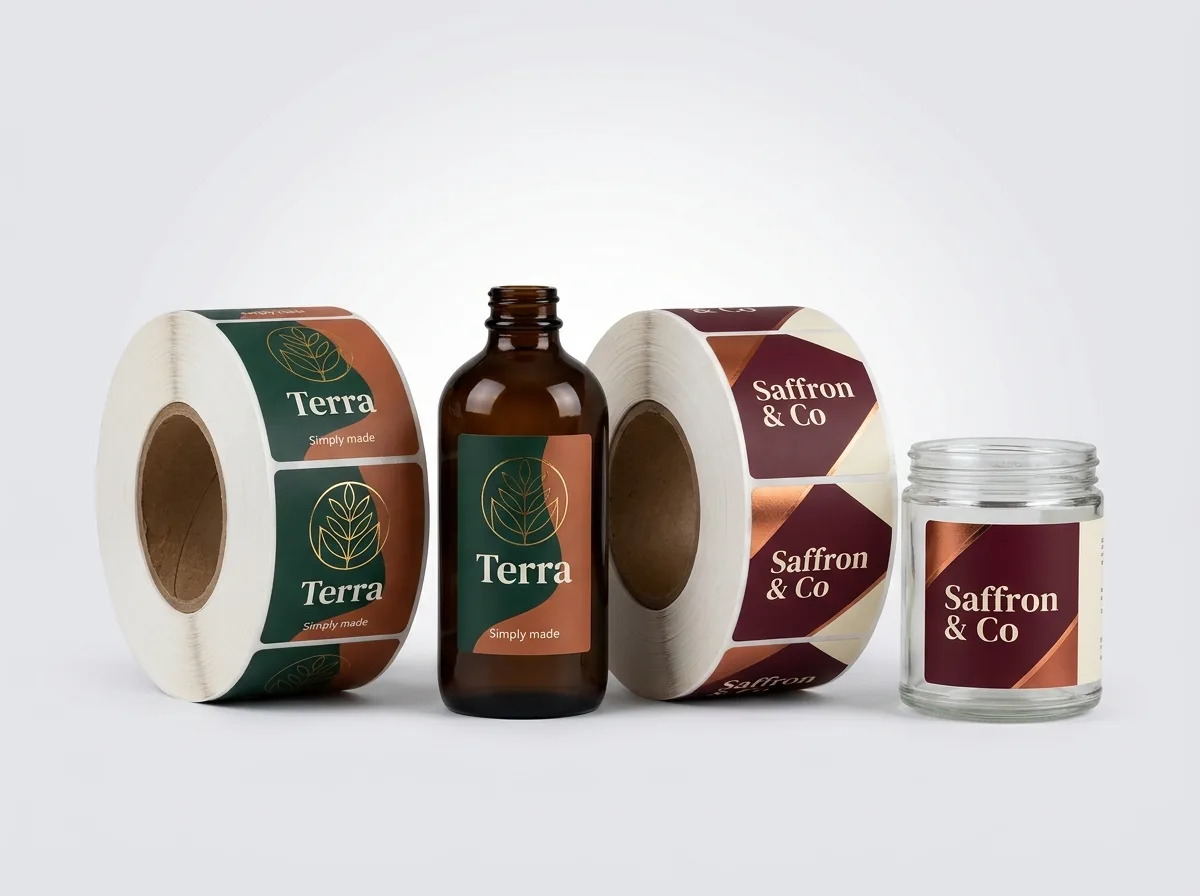


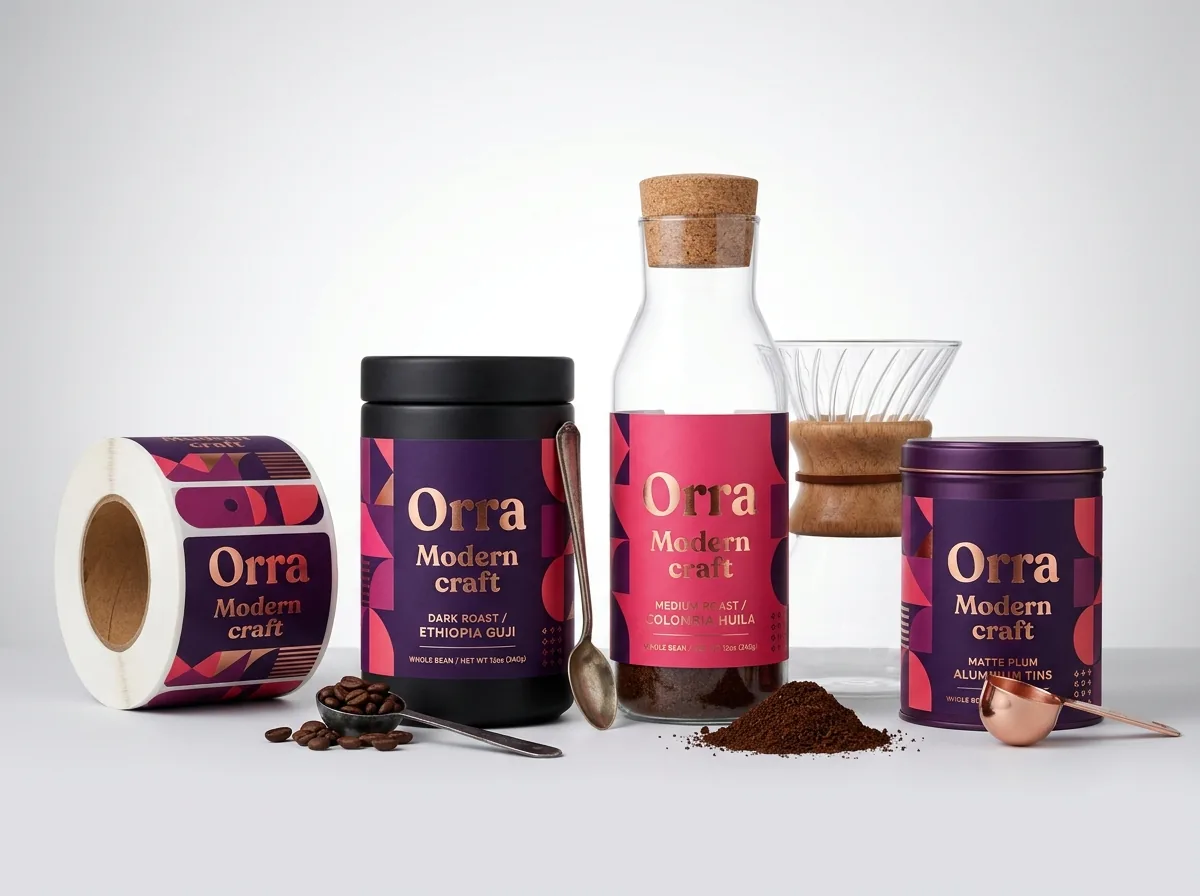
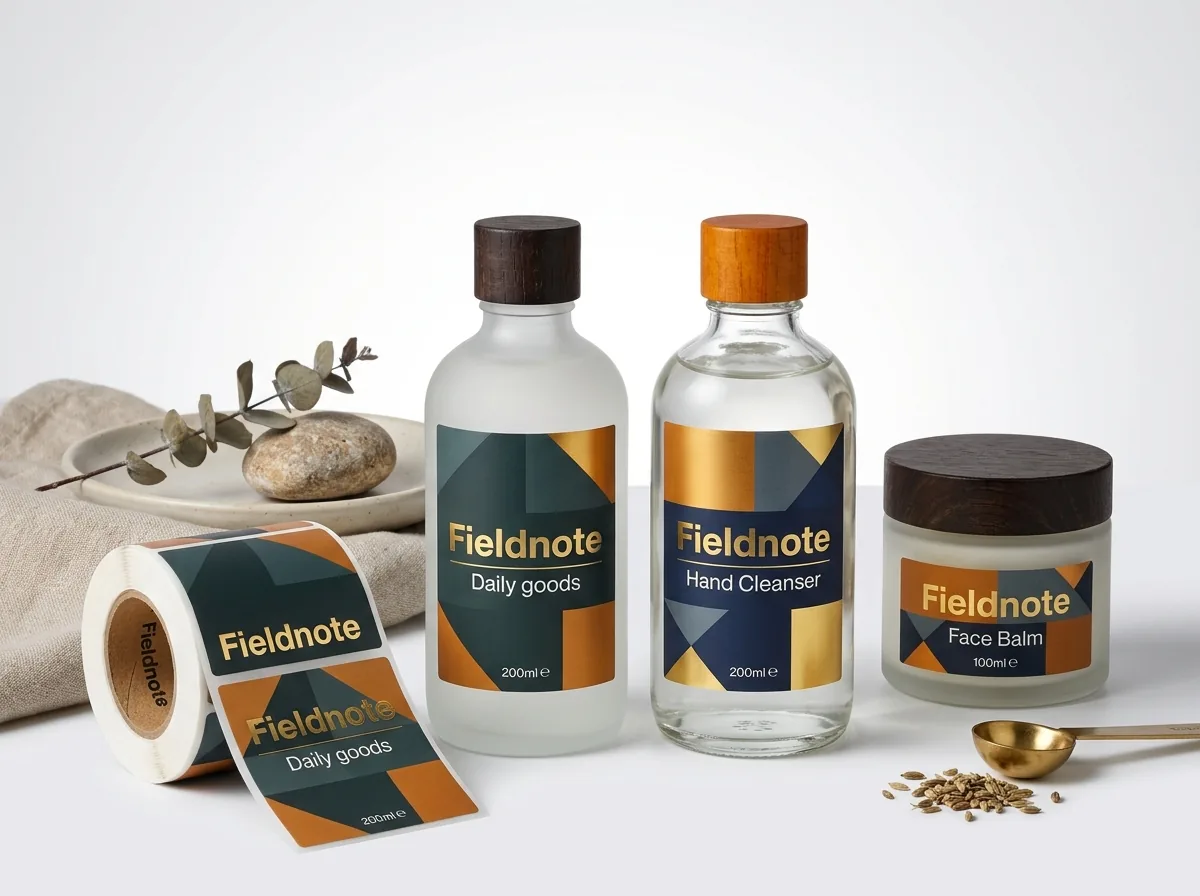
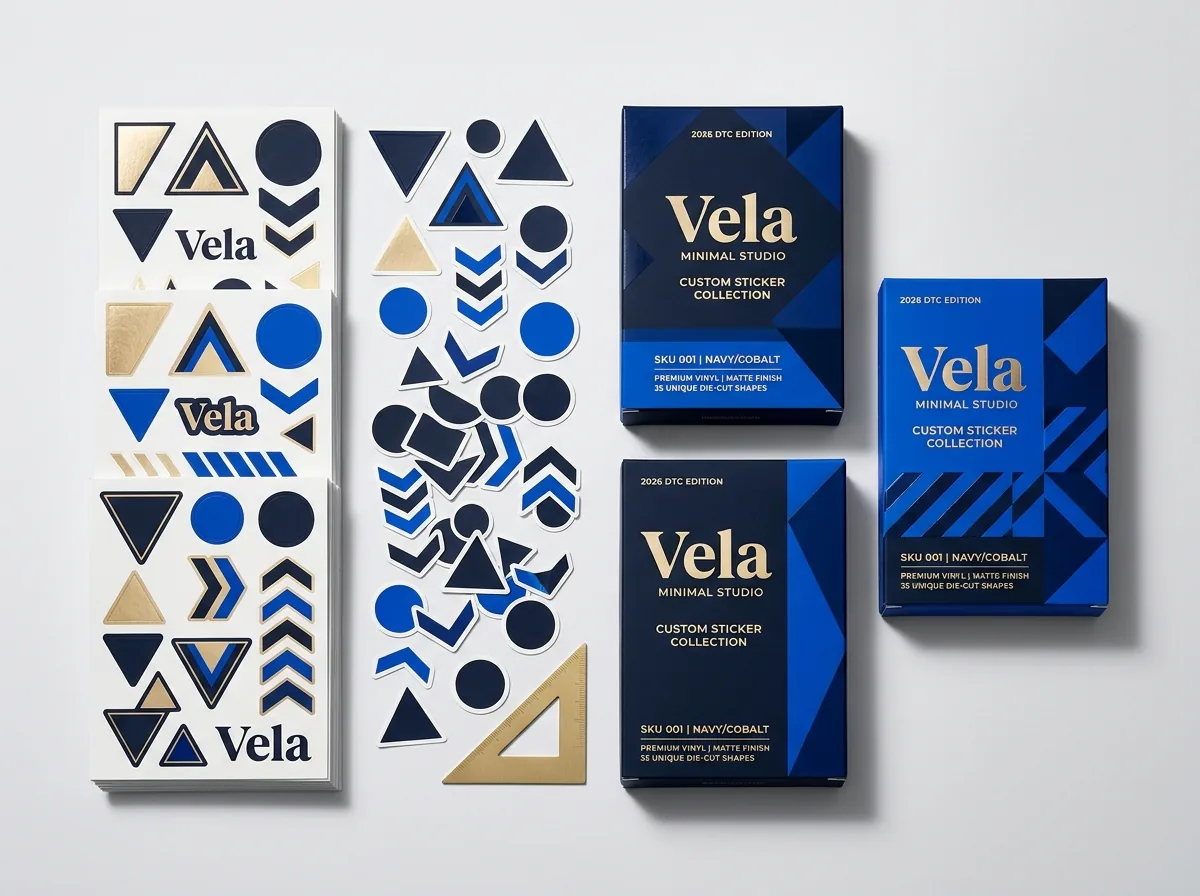
Ready to order roll labels? Compare up to 3 quantities with a free 3D mockup.
Request a Quote →Questions about roll labels
Which unwind direction is most common for semi-automatic bottle labelers?
Position 3 (Wind Out, right edge leading) and Position 4 (Wind Out, left edge leading) are used by the vast majority of tabletop and inline cylindrical bottle labelers. Check which way the bottle spins on your rollers and confirm with your machine manual.
Does unwind direction matter if I peel roll labels by hand?
No. When peeling by hand or pulling the liner through a manual bench separator bar, any Wind Out direction (Positions 1–4) works comfortably because you orient the label in your hand as you apply it.
Can I use a 3 inch core roll on a 1 inch dispenser spindle?
Yes, by sliding inexpensive plastic 3-inch-to-1-inch core reducer plugs into the ends of the cardboard tube. However, a 1 inch core cannot fit onto a 3 inch machine spindle without rewinding.
How much space is left between each label along the roll?
Standard spacing between labels along the running length of the liner is typically ⅛ inch (0.125 in), giving optical and ultrasonic gap sensors a clear window to stop each label at the peel plate.
Do you verify unwind direction on the digital proof before printing?
Yes. Every CubitPack order includes a free digital proof and 3D mockup before payment. When you note your unwind position and core size on the quote, our prepress team marks the leading edge on your proof.
What is the minimum order for custom roll labels with a specific unwind?
Our standard minimum is 500 labels, produced in 10-14 business days (with 4-5 business day rush available), with free design help, zero die fees and free shipping to all 50 US states.
Still have a question? Ask a packaging specialist.
Request a Quote →Request your roll labels quote
Tell us your size and quantities, and one dedicated account manager prepares pricing for each tier.
- Free design & AI-to-print studio + 3D mockup
- No die or plate charges · 4–5 day rush available
- Free shipping to all 50 states
- 10% off your first order
The unwind orientation chart (Positions 1–8) and cylinder wrap formulas (π × diameter minus 0.25 in seam gap) in this guide follow standard TLMI and FINAT roll converting conventions. A CubitPack packaging specialist checked every specification. Spot something wrong? Tell us and we will fix it.
Sources
What changed
- October 22, 2026: First published.
- October 22, 2026: Updated specifications, terminology, and verified source links.
More guides
New packaging guides by email
Sizes, materials and design tips. Unsubscribe anytime.