
Foil-lined vs kraft vs window tea pouches: which keeps loose leaf and matcha fresh?
Short answer: Choose 100% opaque foil or metallized pouches with zero windows for ceremonial matcha, green sencha and white teas that degrade under light, natural kraft pouches with an internal metallic liner for apothecary black and oolong teas, and lower-window pouches only for fast-turning herbal flower tisanes when ordering custom tea pouches.
On this page
- How do foil-lined, kraft-laminated and clear-window tea pouches compare
- Why does store light turn green tea and matcha powder brown inside clear bags
- Do natural kraft tea pouches keep tea as fresh as smooth printed film pouches
- When should I use a clear window on a custom tea pouch (and why skip valves)
- How do barrier tea pouches compare with metal tea tins for e-commerce shipping
- Common mistakes
- FAQs
Request a custom quoteFree dieline & 3D mockup
Dry tea leaves are hygroscopic sponges that absorb moisture and kitchen odors from surrounding air whenever relative humidity rises above 5%, while green tea chlorophyll and catechins break down rapidly under ultraviolet and fluorescent store lighting. Because of those two shelf-life threats, the barrier laminate you choose for your pouch directly controls how your tea tastes six months after packing. Full foil-lined or metallized PET multi-layer pouches block 100% of light and keep oxygen and water vapor transmission rates near zero, making them mandatory for ceremonial matcha, shaded gyokuro and delicate jasmine or bergamot scented teas. Natural brown or white kraft pouches bond a paper outer sheet to that same internal metallic barrier and food-contact inner sealant layer for an organic apothecary look without sacrificing freshness. Clear front windows should be reserved for caffeine-free herbal blossoms and fruit tisanes.
How do foil-lined, kraft-laminated and clear-window tea pouches compare?
A modern tea pouch is never a single layer of plastic or paper; it is a three-ply or four-ply laminate where each thin layer performs a specific job. The outer layer carries your reverse-printed CMYK and Pantone ink or natural kraft paper texture, the middle barrier layer (7-micron to 9-micron aluminum foil or metallized VMPET film) blocks oxygen, humidity and UV rays, and the inner 50-micron to 80-micron polyethylene sealant layer creates an odorless, airtight heat seal. Compare the four main barrier structures below when specifying custom loose leaf tea bags for your catalog. When planning your custom tea pouches specification, always measure the primary container or product with digital calipers across length, width, and height before locking the dieline. Adding the right internal clearance prevents scuffing during fulfillment while keeping outer shipping carton volume low.
| Pouch barrier structure | Light, moisture & aroma protection | Best tea & botanical match |
|---|---|---|
| Opaque foil-lined laminate | 100% UV blackout; lowest oxygen and moisture transmission (12-18 month shelf life) | Ceremonial & culinary matcha, gyokuro, sencha, white tea, Earl Gray |
| Metallized film (VMPET) laminate | 99% light block; high aroma and humidity barrier with flexible crease resistance | Assam, Ceylon, English Breakfast, chai blends, oolong, pyramid sachets |
| Kraft paper + internal barrier | 100% opaque paper exterior bonded to an internal metallized or foil liner | Organic apothecary herbs, wellness blends, single-estate black and pu-erh teas |
| Window pouch (demetallized zone) | High moisture seal, but clear window admits store light into the viewing area | Fast-turning chamomile flowers, hibiscus petals, rosebuds and fruit tisanes |
Why does store light turn green tea and matcha powder brown inside clear bags?
Unfermented green teas - especially shade-grown Japanese matcha, gyokuro and spring sencha - owe their vivid emerald color and sweet umami amino acids to high levels of intact chlorophyll and L-theanine. When wavelengths of visible and ultraviolet light between 300 and 500 nanometers pass through a clear glass jar or a transparent pouch window, photo-oxidation converts bright green chlorophyll into brownish-olive pheophytin and generates stale, hay-like off-flavors within weeks. For that reason, green tea and matcha should never be packed in a clear bag or a pouch with a front viewing window. Always pair an opaque outer film (finished in satin matte or velvety soft-touch) with a foil or metallized middle barrier core, and add a powder-resistant dual-track zipper from our custom zipper pouches lineup so fine 10-micron matcha dust never prevents the bag from sealing tightly. During pre-press review, our design team checks fold score allowances, glue flap widths, barcode contrast, and safe margins on every panel. Requesting a physical sample or reviewing the 3D proof ensures closures engage cleanly without bowing or cracking along the fold lines.
Do natural kraft tea pouches keep tea as fresh as smooth printed film pouches?
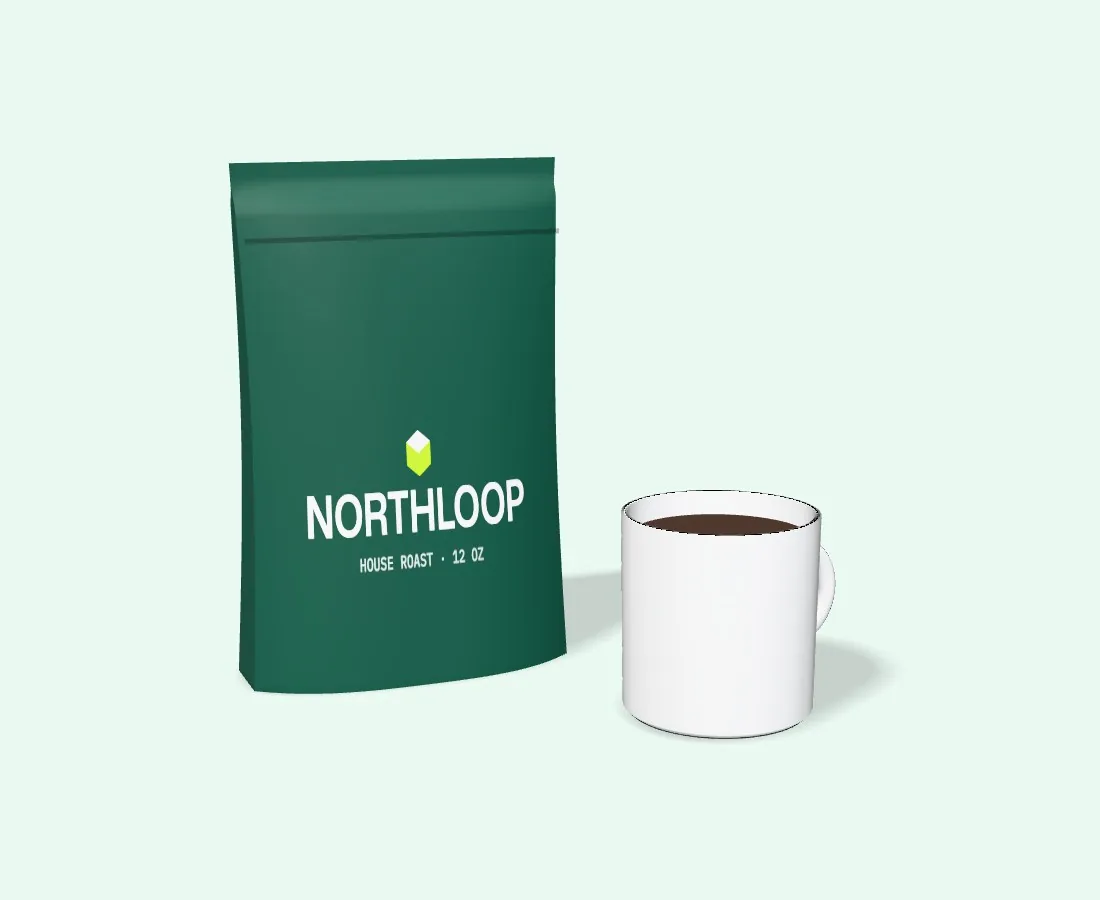
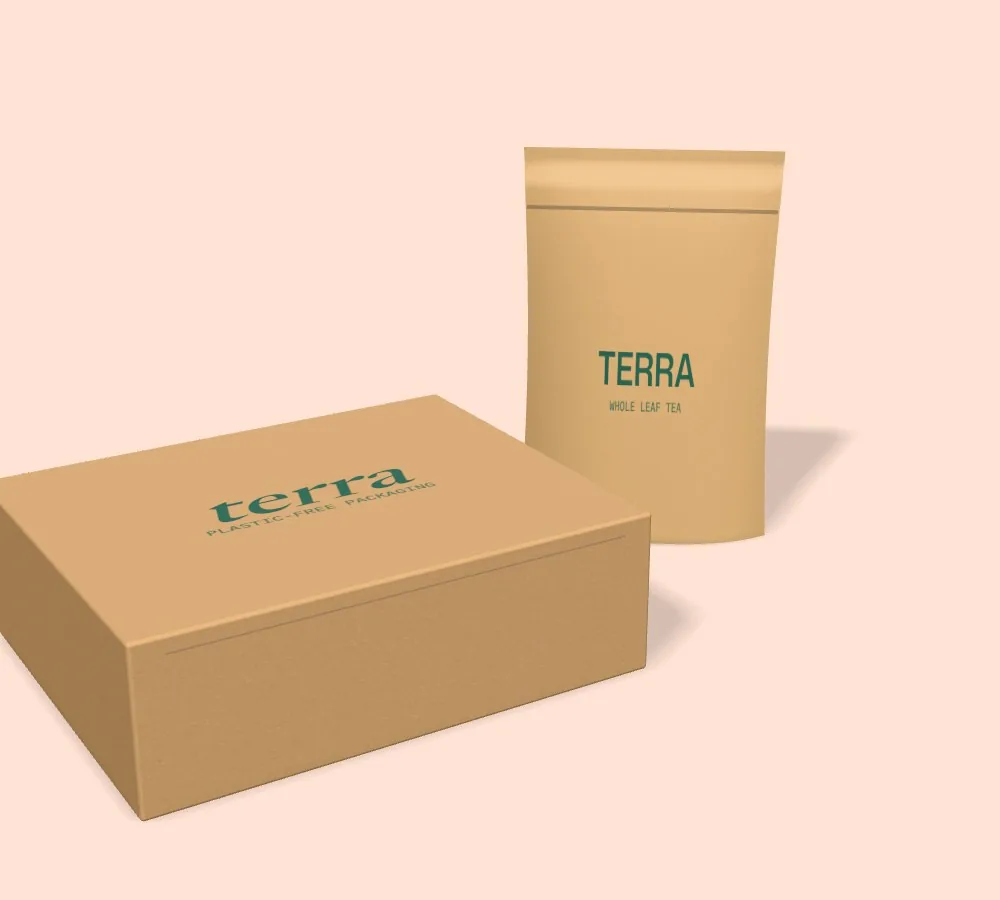
Many tea founders worry that choosing custom kraft stand up pouches means packing tea in a breathable brown paper lunch sack that lets moisture in and aroma out. In flexible converting, however, a kraft stand-up tea pouch is not unlined paper. The 50 gsm to 70 gsm natural brown or bleached white kraft paper is laminated directly over a middle metallized or aluminum barrier ply and an inner food-contact polyethylene heat-seal liner. That means a kraft-laminated tea pouch delivers the exact same airtight heat seal and moisture barrier as a smooth polymeric pouch while giving your brand a tactile, earthy paper surface on the shelf. The only trade-off with natural brown kraft is window and finish compatibility: kraft pouches look warmest with bold dark inks or opaque white ink underbases, whereas smooth white print films support full-bleed photographic gradients, soft-touch coatings and Spot UV highlights. Choosing the right board caliper or film thickness alongside a protective matte, gloss, or soft-touch finish keeps graphics crisp from the warehouse pallet to the customer doorstep. Every quote includes side-by-side quantity tiers so you can compare unit economics before production.
- Kraft + metallic barrier liner: combines earthy paper texture with an airtight, light-blocking inner core.
- White ink underbase on kraft: keeps pastel botanical illustrations crisp against brown paper fibers.
- Smooth matte or soft-touch film: resists kitchen counter splashes and supports edge-to-edge photography.
- Foil stamping on both: hot gold, copper or silver foil stamps cleanly onto both kraft paper and matte film.
Know your size? Compare pricing across up to 3 quantities.
Request a Quote →When should I use a clear window on a custom tea pouch (and why skip valves)?
While green, white and delicate oolong teas belong in 100% opaque pouches, caffeine-free herbal and fruit tisanes often sell twice as fast at farmers markets and gift shops when shoppers can see the whole dried flowers and fruit pieces inside. Golden Egyptian chamomile blossoms, crimson hibiscus petals, pink rosebuds, dried orange peel, cinnamon bark and blue butterfly pea flowers contain minimal chlorophyll and are far less sensitive to brief retail light exposure. If you choose custom stand up pouches with window for an herbal blend, keep the clear demetallized window small (about 1.5 to 2 inches tall) and position it in the lower third of the front panel so the rest of the pouch remains opaque. Above all, never add a one-way coffee degassing valve to any tea pouch. Freshly roasted coffee beans off-gas carbon dioxide for days, which is why custom coffee bags need valves; cured tea emits zero gas, and a valve only allows precious bergamot, peppermint, vanilla and jasmine aromatics to vent out into the room.
How do barrier tea pouches compare with metal tea tins for e-commerce shipping?
Historically, specialty tea houses sold loose leaf in rigid metal slip-cover tins. While metal tins block light well, they have two major drawbacks for modern e-commerce and wholesale distribution: empty tins take up whole pallet loads of warehouse space, and slip lids are not hermetic unless you still put a heat-sealed barrier bag inside the tin. By switching to heat-sealed multi-layer barrier pouches with press-to-close zippers, tea brands ship empty packaging flat in a tenth of the storage footprint, eliminate dented tin refunds in parcel mail, and give customers an airtight zipper closure that squeezes excess headspace air out after every pot. Food-contact inner barrier liners are available on request through certified partner facilities.
- Hermetic factory top seal: impulse heat seal above the tear notches locks in below-5% leaf moisture.
- Zero dent damage in mailers: flexible barrier pouches bounce back from parcel sorting impacts.
- Flat warehouse storage: 1,000 empty tea pouches store in a single shipping carton instead of a full pallet.
What are the most common tea pouch material and barrier mistakes?
Choosing a clear bag for light-sensitive green tea or copying a coffee bag spec with a valve can ruin an expensive harvest in weeks. Avoid these five mistakes
- Packing ceremonial matcha, sencha or white tea in a clear pouch or window bag where UV light turns green chlorophyll brown.
- Adding a one-way coffee degassing valve to a tea pouch, which lets volatile Earl Gray, chai and jasmine aroma oils escape.
- Using an unlined paper bag without an internal metallized or foil barrier ply, allowing humid air to push leaf moisture over 6%.
- Storing scented blends like peppermint or masala chai in low-barrier polyethylene bags where spice odors migrate into neighboring teas.
- Placing a clear window in the upper half of the front panel where it shows empty headspace instead of settled botanical petals.
Packaging for this
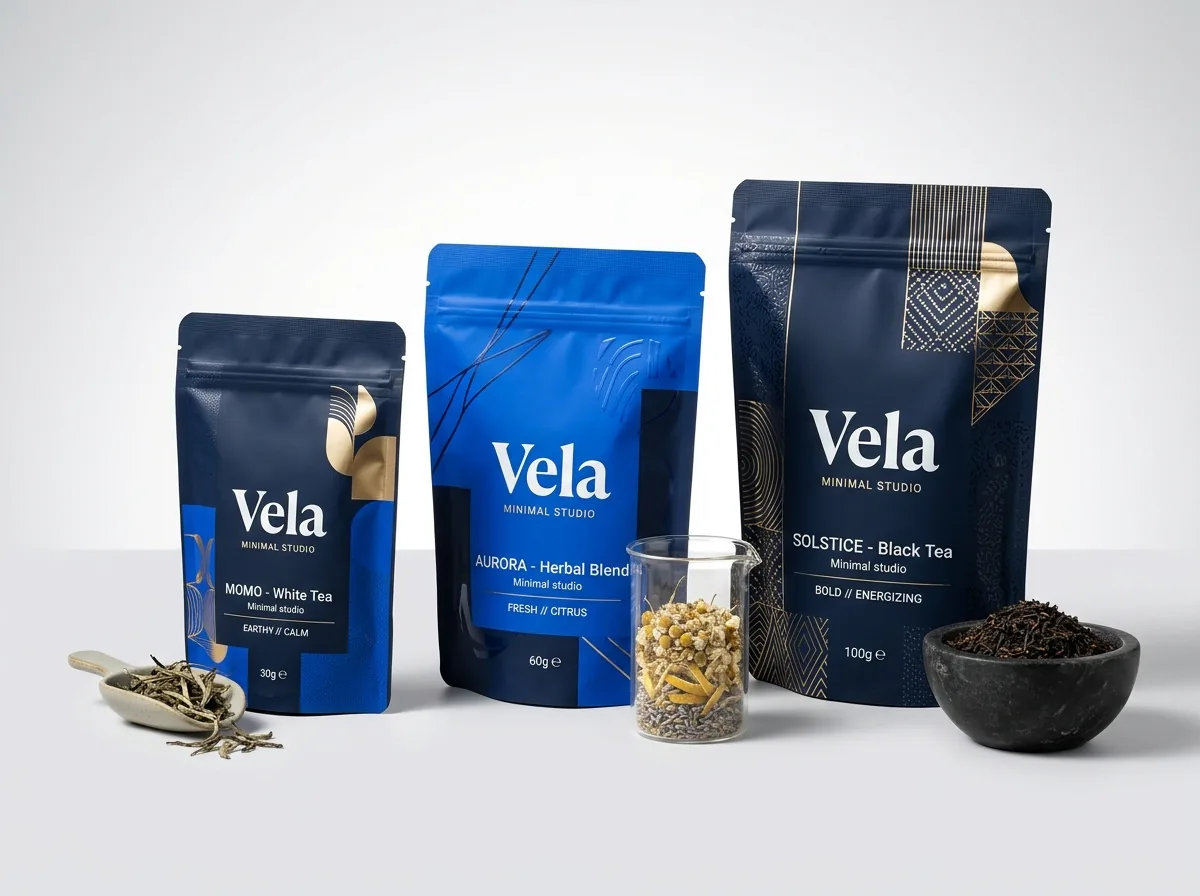
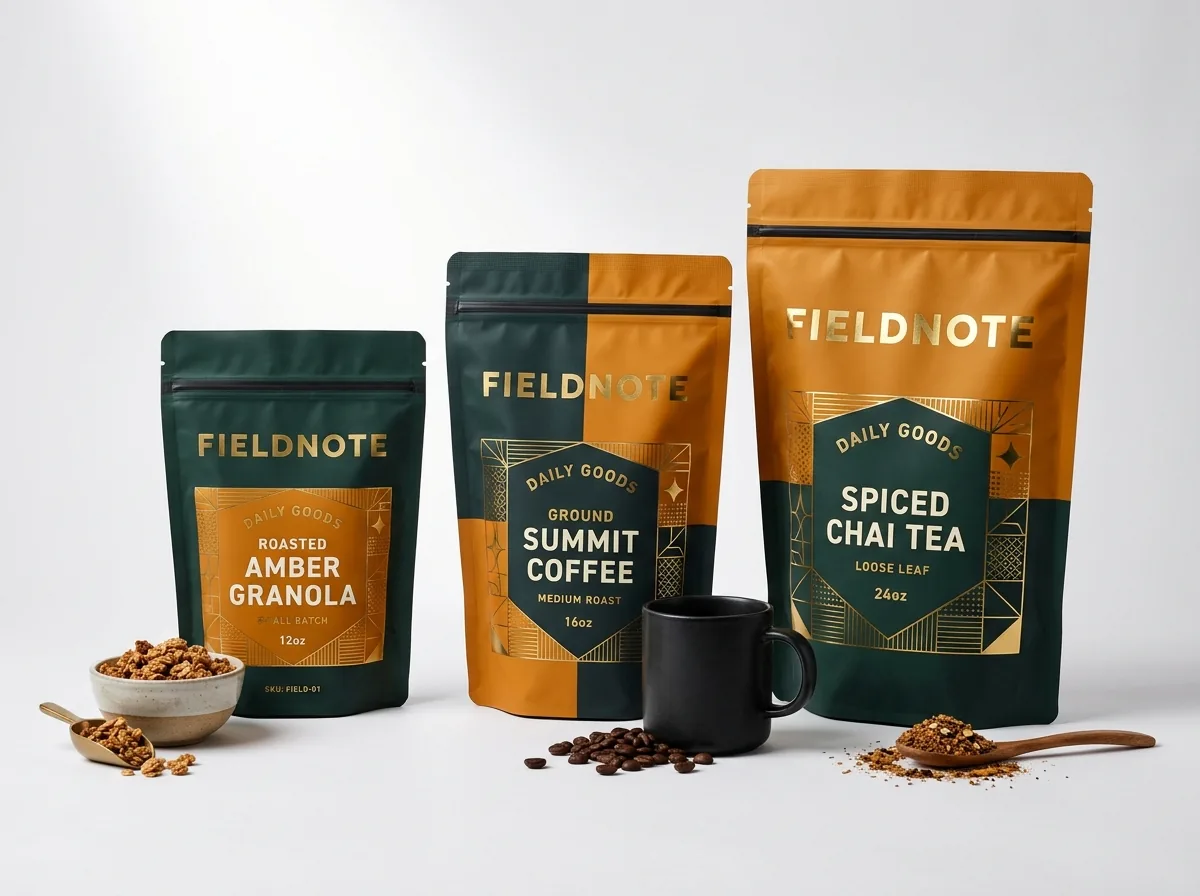
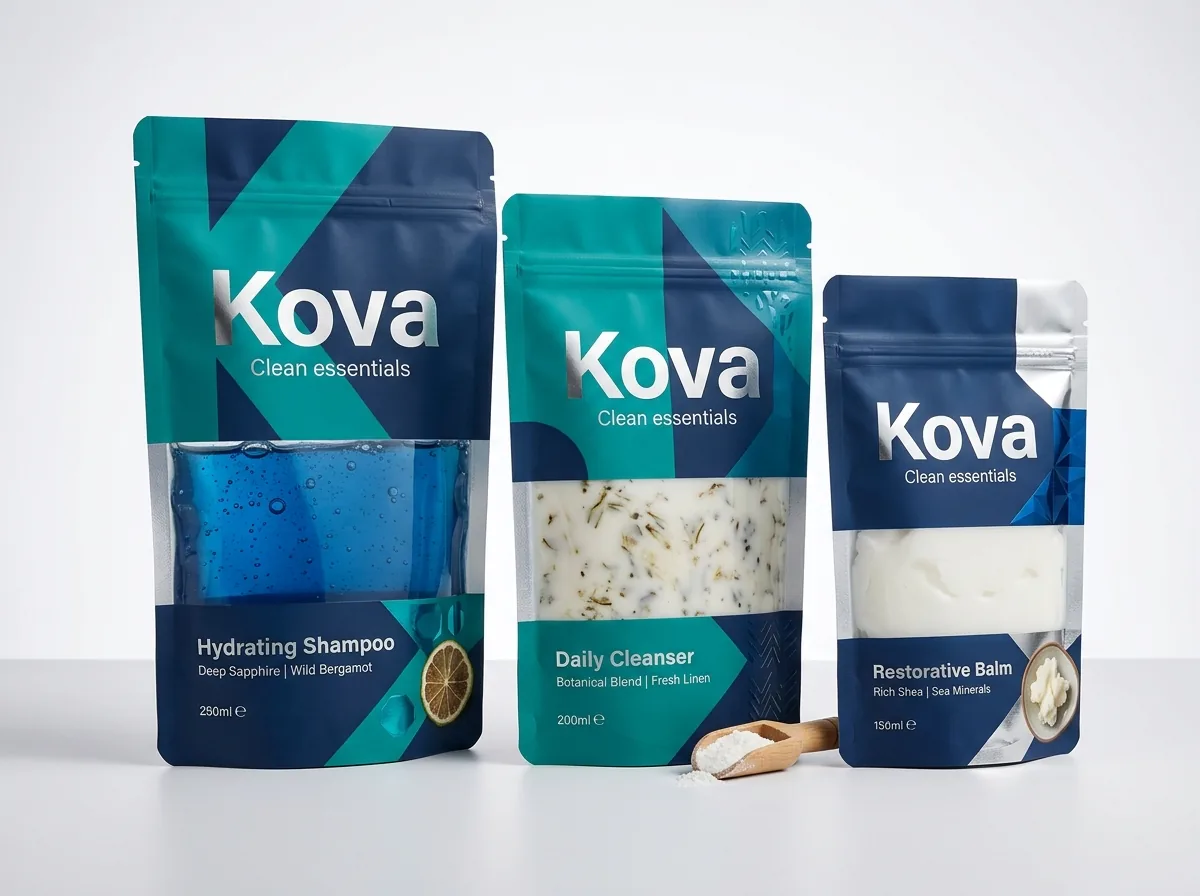
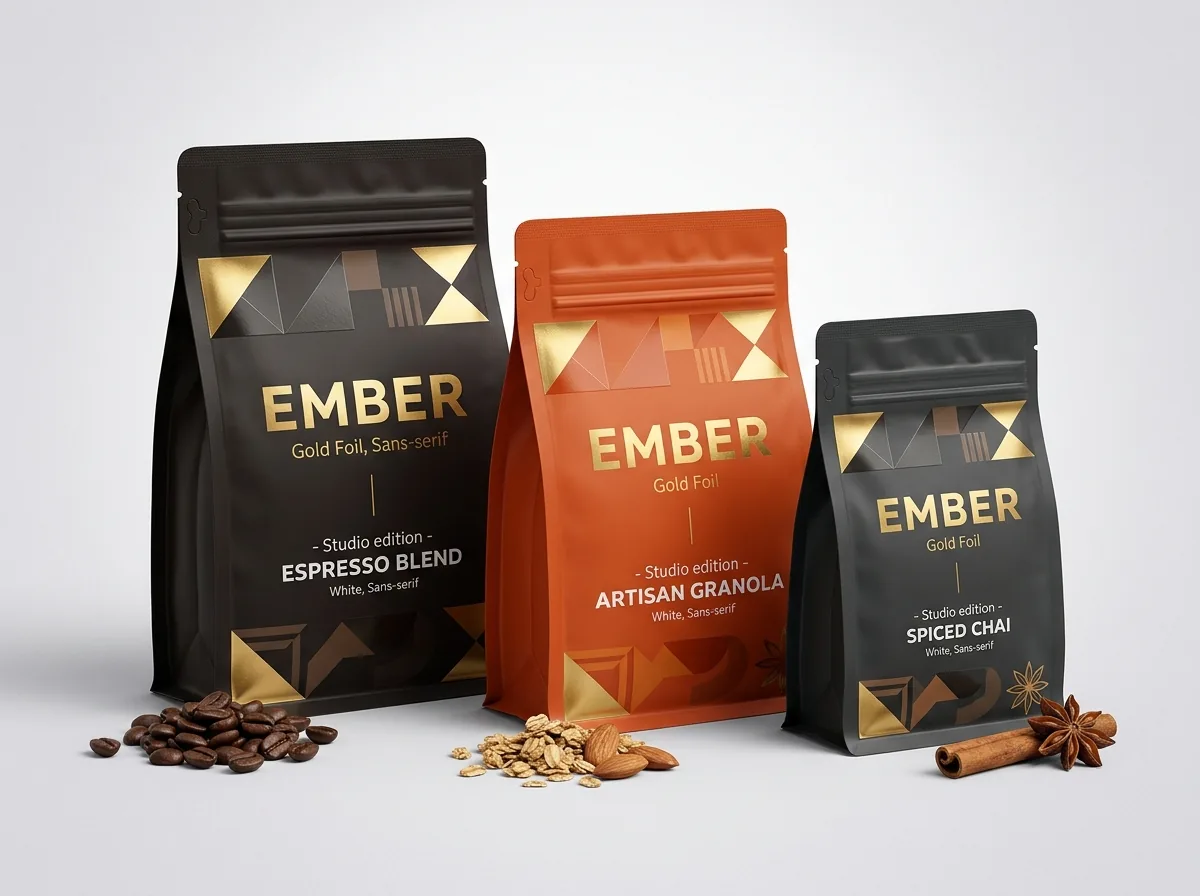
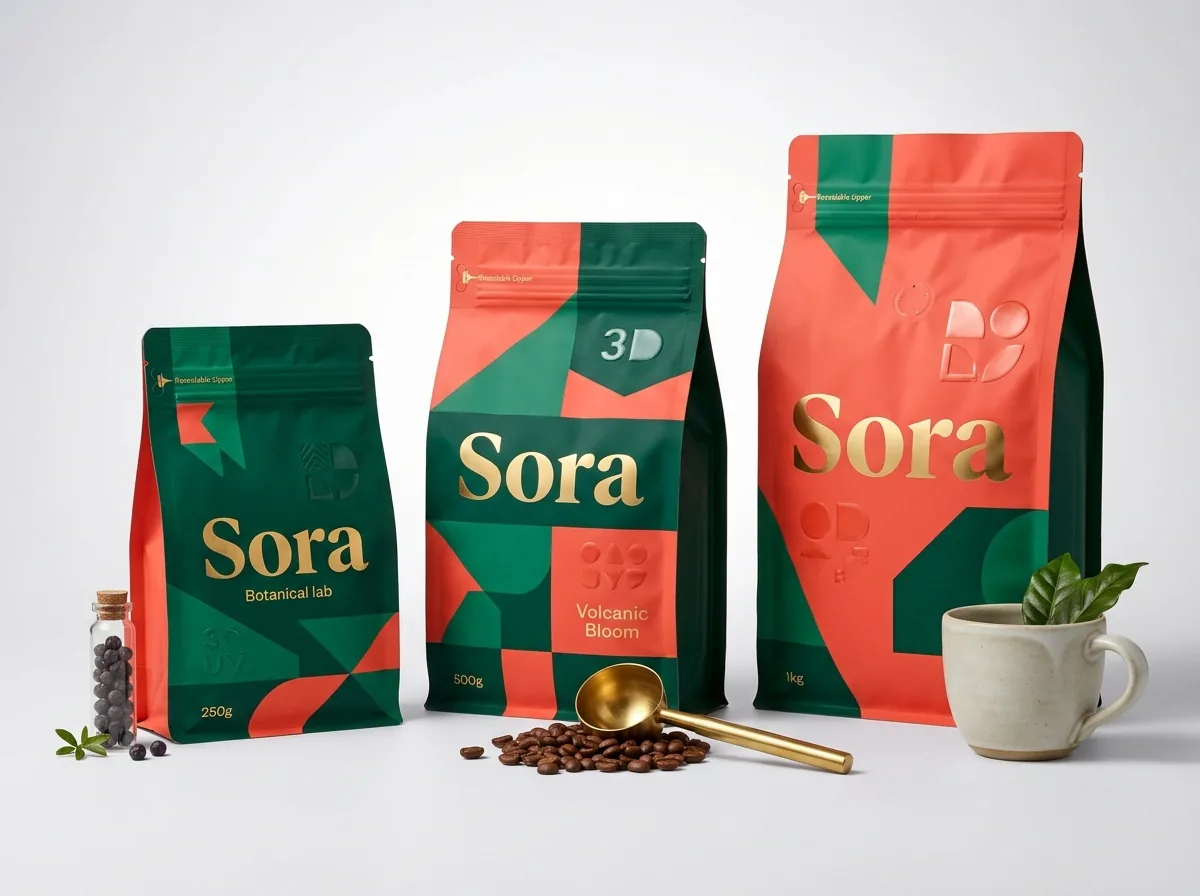
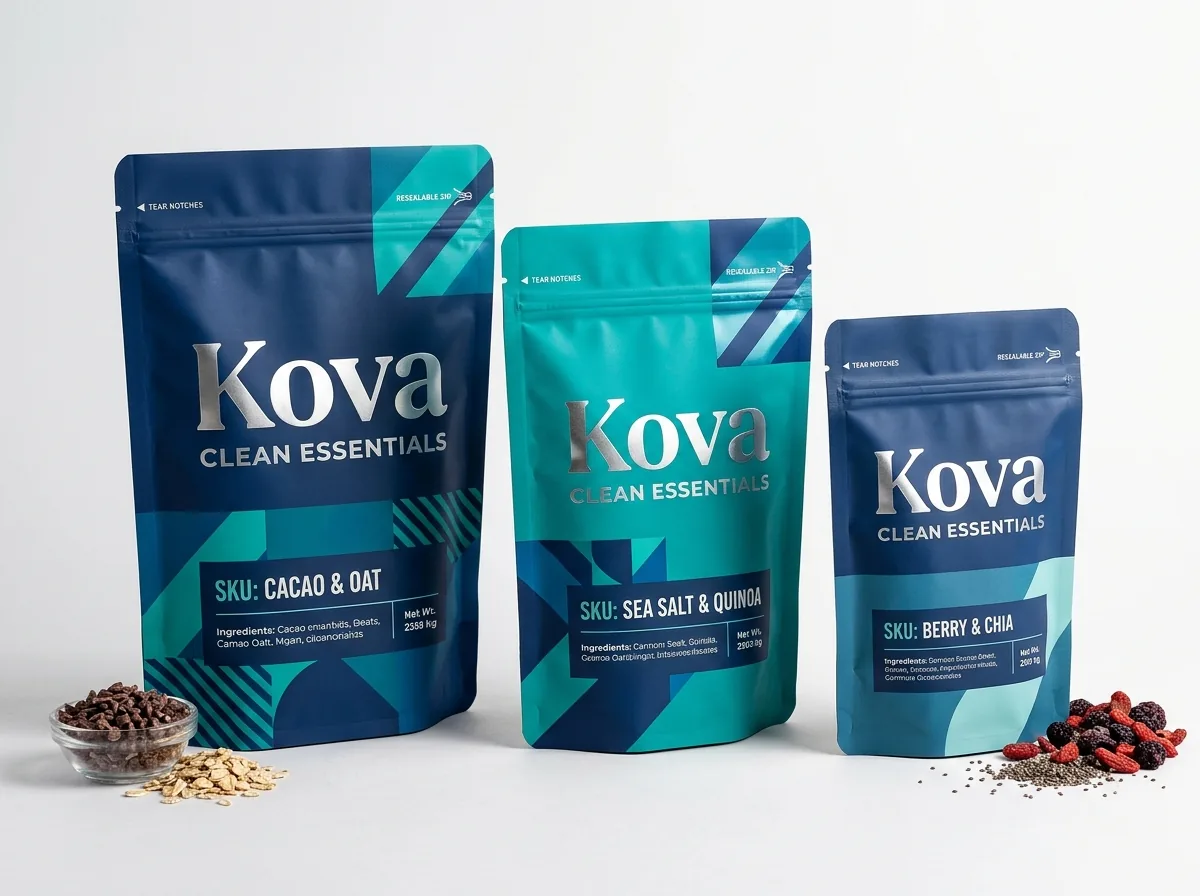
Ready to order tea pouches? Compare up to 3 quantities with a free 3D mockup.
Request a Quote →Questions about tea pouches
Why should tea pouches never have a one-way degassing valve?
Roasted coffee beans release carbon dioxide gas for days after roasting and need a one-way valve so the bag does not balloon. Cured tea leaves and dried herbs do not emit gas; putting a valve on a tea pouch simply lets bergamot, mint and floral essential oils escape.
Do natural kraft tea pouches have a foil or metallized liner inside?
Yes. Our kraft stand-up tea pouches laminate natural brown or white kraft paper on the outside to a high-barrier metallized or foil middle core and a heat-sealable inner food-contact film on request, giving you full aroma protection.
What is the best pouch material for ceremonial grade matcha powder?
Ceremonial matcha requires a 100% opaque aluminum-foil or high-barrier metallized laminate with zero clear windows to block UV photo-oxidation, paired with a powder-resistant dual-track zipper so fine 10-micron green tea dust does not clog the groove.
When is it okay to put a clear window on a custom tea pouch?
A small lower-panel window is great for caffeine-free herbal and fruit tisanes - such as whole chamomile flowers, hibiscus petals, rosebuds and berry pieces - where visual color sells the blend and there is no delicate green tea chlorophyll to oxidize.
Are your tea pouch inner liners safe for direct food contact?
Yes, food-contact inner polyethylene sealant layers and odor-free barrier laminates are available on request for direct loose-leaf tea, botanical herb and matcha contact through certified partner facilities. We share partner certificates on request.
Can I compare foil, matte film and kraft tea pouches in person before ordering?
Yes. Order our $50 sample kit (credited toward your first order) to inspect matte film, soft-touch, gloss and kraft barrier pouches side by side, and review a free 2D digital proof and 3D mockup before payment. Every order includes a free digital proof, 3D mockup, no die or plate charges, and free delivery to all 50 US states with a 5-7-minute quote response.
Still have a question? Ask a packaging specialist.
Request a Quote →Request your tea pouches quote
Tell us your size and quantities, and one dedicated account manager prepares pricing for each tier.
- Free design & AI-to-print studio + 3D mockup
- No die or plate charges · 4–5 day rush available
- Free shipping to all 50 states
- 10% off your first order
This material comparison draws on flexible converting standards for multi-layer foil, metallized PET and kraft laminates, plus tea preservation guidelines for leaf moisture (<5%) and chlorophyll UV protection, verified by a CubitPack packaging specialist. Spot an error? Tell us and we will fix it.
Sources
What changed
- October 22, 2026: First published.
- October 22, 2026: Updated specifications, terminology, and verified source links.
More guides
New packaging guides by email
Sizes, materials and design tips. Unsubscribe anytime.