
How do you choose barrier films and powder zippers for supplement pouches?
Short answer: Pair a multi-layer aluminum foil or metallized barrier laminate with a wide hook-to-hook powder-guard zipper and food-contact inner sealant liner when ordering custom supplement pouches for hygroscopic pre-workouts, greens, collagen or protein blends so moisture stays out and fine powder dust never clogs the closure.
On this page
- How do powder-resistant hook-to-hook zippers prevent track jamming
- Foil vs metallized film vs clear window: which barrier stops powder clumping
- Why does the inner heat-seal layer matter on dusty auger filling lines
- Where should the Supplement Facts panel, barcode and lot code sit on the dieline
- How do finishes and multi-flavor splits affect custom supplement pouch orders
- Common mistakes
- FAQs
Request a custom quoteFree dieline & 3D mockup
Two functional failures ruin dietary supplement pouches faster than anything else: moisture vapor creeping through thin film until pre-workout or greens powder hardens into a solid clump, and fine powder dust settling into a narrow zipper groove so the customer cannot reseal the bag after the first scoop. High-performance nutraceutical pouches solve both problems through a three-layer laminated film structure (an outer print layer, a middle aluminum foil or metallized barrier core, and a food-contact inner heat-seal layer on request) paired with a wide multi-track hook-to-hook powder zipper that presses shut cleanly right through dusty residue. Combined with proper back-panel dieline placement for your FDA Supplement Facts table above the bottom gusset fold and an unvarnished lot-code stamp zone, your pouches run cleanly on co-packer auger lines and stay sealed in humid kitchens and gym bags.
How do powder-resistant hook-to-hook zippers prevent track jamming?
A standard press-to-close zipper (the kind used on pretzel bags or sandwich bags) relies on a single microscopic male rib snapping into a tight female groove. When your contract manufacturer drops 300 grams of fine micronized creatine, greens powder or whey isolate through an auger tube, a cloud of airborne powder coats the inside of the pouch mouth. Even if the top heat seal closes cleanly, the moment your customer opens the bag and pulls out the first scoop, fine powder particles pack into that single narrow groove and prevent the zipper from clicking shut. A powder-guard (hook-to-hook) zipper replaces the single narrow rib with a wider band of interlocking micro-hooks on both sides of the track, similar in principle to plastic Velcro. When pressed together, the hooks push dusty particles aside into open channels between the rows and lock firmly without requiring exact thumb alignment. When ordering custom printed supplement pouches or custom zipper pouches for any powdered formula, specifying a powder-guard track eliminates the number-one source of customer packaging complaints.
- Standard press-to-close zipper: best for capsules, tablets, softgels, gummies and whole herbal teas.
- Powder-guard hook-to-hook zipper: built for whey, plant protein, collagen, greens, creatine and pre-workout powders.
- Child-resistant zipper: dual-action press-and-slide or pinch-and-pull track for high-potency gummies on request.
- No zipper (tear-notch only): used on 5 g to 30 g single-serve 3-side-seal electrolyte and sample sachets.
Foil vs metallized film vs clear window: which barrier stops powder clumping?
Dietary supplement ingredients vary wildly in how aggressively they pull moisture from room air (hygroscopicity). Ingredients like L-citrulline malate, glycerol powder, beet root extract, freeze-dried greens and live probiotic blends can absorb humidity through low-barrier plastics and turn into a rock-hard brick within weeks. To prevent clumping and vitamin oxidation, flexible pouches use multi-layer laminates rated by their Water Vapor Transmission Rate (WVTR) and Oxygen Transmission Rate (OTR). Use the table below to match the middle barrier layer and inner food-contact sealant film (available on request ) to your supplement's moisture sensitivity and target shelf life.
| Laminate structure | Moisture & UV protection | Best supplement applications |
|---|---|---|
| Aluminum foil barrier core | Highest protection against humidity, oxygen and UV light | Pre-workouts, citrulline, greens, probiotics and single-serve sachets |
| Metallized film (VMPET) core | High moisture and light barrier with flexible crease recovery | 1 lb and 2 lb whey protein, plant protein, collagen and BCAAs |
| Kraft paper + inner foil/metallized | Natural matte paper exterior backed by a sealed inner moisture barrier | Organic mushroom powders, herbal adaptogens and botanical capsules |
| High-barrier clear window film | Blocks moisture and oxygen while leaving a clear viewing zone | Pectin gummies, golden omega-3 softgels and daily pill packs |
Why does the inner heat-seal layer matter on dusty auger filling lines?
While shoppers only see the outer printed film and soft-touch finish, your contract manufacturer cares most about the innermost sealant layer that touches the supplement. During high-speed auger filling, a fine layer of static-charged protein or electrolyte dust inevitably clings to the top 0.5-inch heat-seal band above the tear notches. If the inner film requires an overly high sealing temperature or lacks hot-tack strength, that static dust prevents the front and back walls from fusing together, causing leakers in transit. Food-contact inner polyethylene (LLDPE) sealant layers engineered for dusty products melt and flow around microscopic powder specs to form a continuous hermetic weld. Pairing that inner sealant with 1.5 to 2 inches of unfilled headspace above the powder pile and a silica gel desiccant canister keeps both your co-packer's line and your customer's pantry trouble-free.
Know your size? Compare pricing across up to 3 quantities.
Request a Quote →Where should the Supplement Facts panel, barcode and lot code sit on the dieline?
Designing artwork for a flexible stand-up pouch is very different from laying out a flat wrap label for a rigid bottle. When a stand-up pouch is filled with powder or capsules, the folded bottom gusset pushes outward into an oval base, pulling the lower third of the front and back panels into a curve. If your designer places the bottom of the FDA Supplement Facts table or the UPC barcode too low on the back panel, the curved fold warps 6-point ingredient text and stops retail laser scanners from reading the barcode bars. Keep all required regulatory boxes, allergen warnings, structure/function disclaimers and barcodes inside the flat center zone of the back panel: at least 0.5 inches inside the left and right side heat seals, 0.5 inches below the zipper track, and at least 1.5 inches above the bottom edge. If you also pack sachets or bottles into outer custom supplement boxes or apply custom supplement labels, our prepress team checks every panel on a 3D mockup before you pay.
How do finishes and multi-flavor splits affect custom supplement pouch orders?
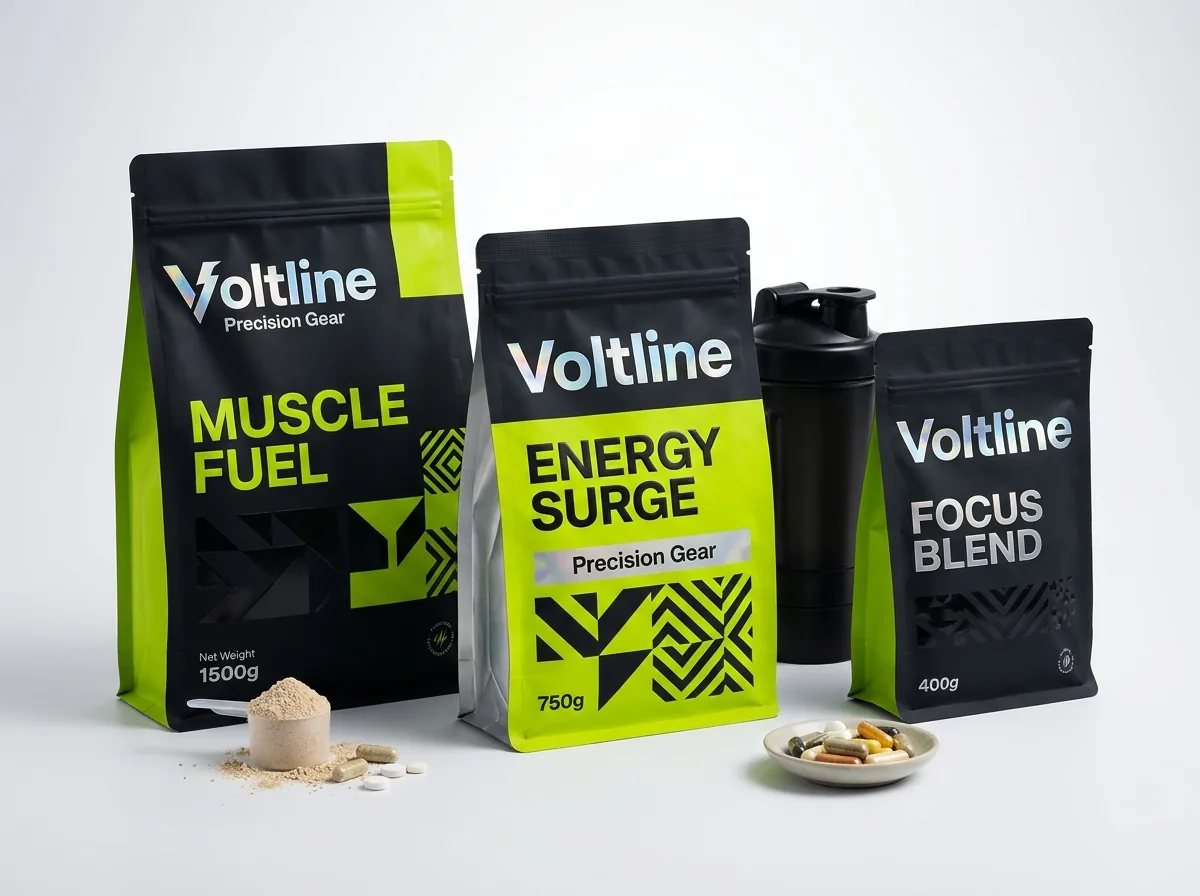
Exterior finishes do more than make a pouch look good in unboxing photos; they also protect the ink from scuffing when heavy 2 lb protein bags rub against each other in parcel transit. Soft-touch matte lamination gives a velvety, non-reflective surface that photographs without studio glare and keeps small Supplement Facts typography crisp under bright kitchen lights. Adding spot UV or metallic foil stamping on your brand crest or dosage callout creates contrast without sacrificing readability. To lower your unit cost across a full product line, standardize your outer dimensions across flavours. For example, if your Chocolate, Vanilla, Strawberry and Unflavored 2 lb protein powders all share the exact same 9.5 × 13.5 × 4.75 inch custom stand-up pouch structure, you can select 2 designs or 3+ designs in the quote form and split one production run across every flavor.
- Soft-touch lamination: velvety tactile feel with zero overhead glare on small regulatory text.
- Matte + Spot UV: satin background with glossy raised highlights on flavor icons and logos.
- Metallic underbase or foil stamping: highlights clinical seals, '30 Servings' badges and premium tiers.
- Unvarnished lot/expiry box: ensures co-packer inkjet or laser date codes bond permanently.
What are the most common barrier, zipper and dieline mistakes on supplement pouches?
Most packaging failures on powdered supplements trace back to a mismatched zipper or artwork placed over a seal zone. Check these five details before approving your proof
- Specifying a narrow single-track snack zipper on fine protein, collagen or greens powder, which jams with dust after the first scoop.
- Packing highly hygroscopic pre-workout or probiotic formulas in a low-barrier clear pouch without an aluminum or metallized moisture barrier.
- Placing the bottom of the Supplement Facts table or UPC barcode within 1.5 inches of the base edge, where the expanding gusset warps the print.
- Forgetting to leave a clean, high-contrast stamp box for the co-packer's lot number and expiration date coder.
- Placing text or logos across the top 0.375 inch heat-seal band or over the side laser-scored tear notches.
Packaging for this
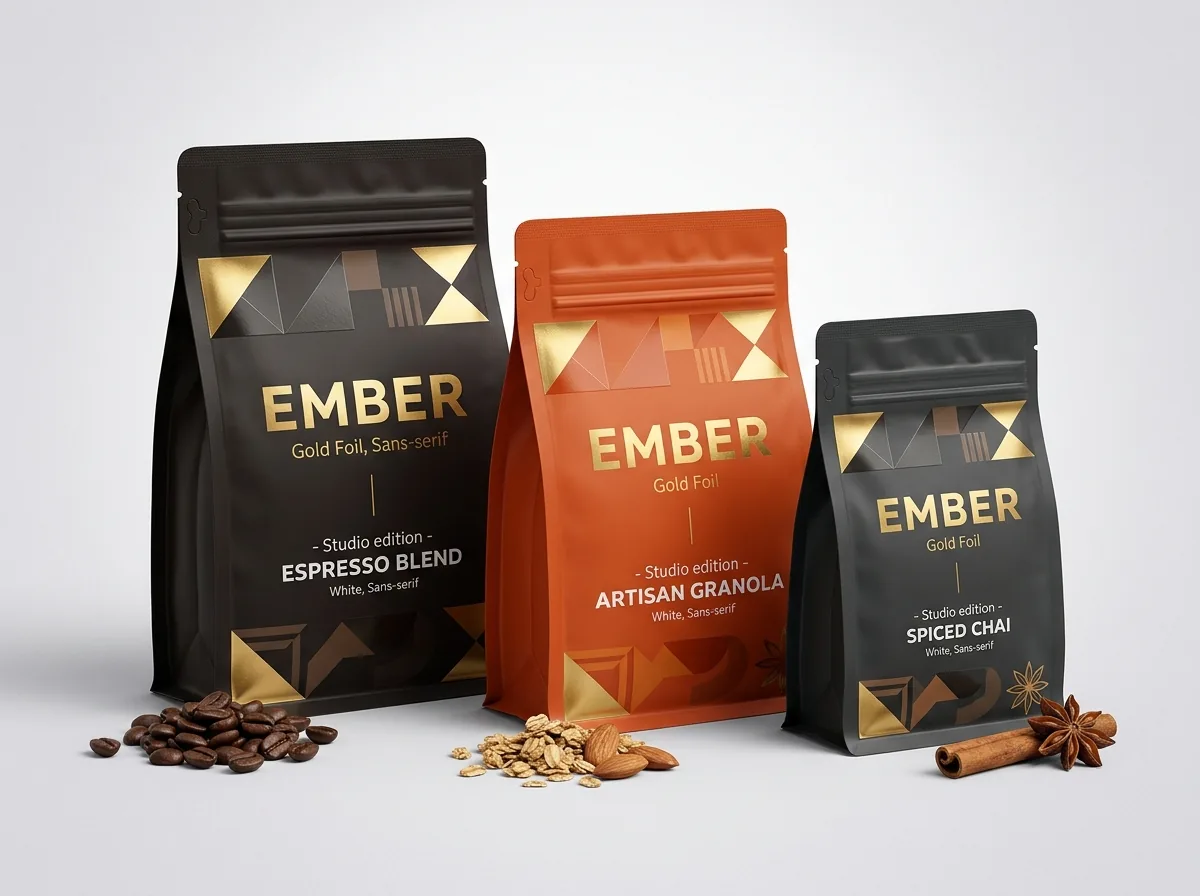
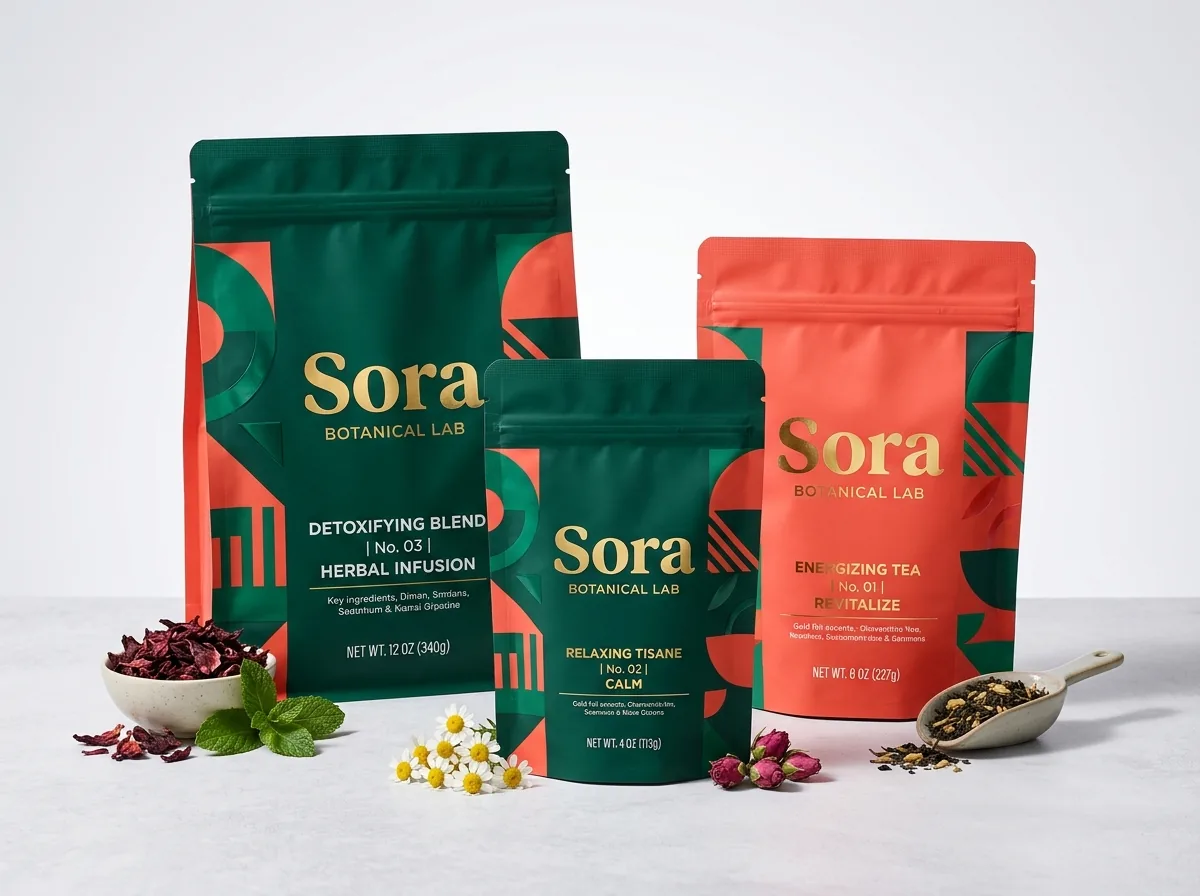
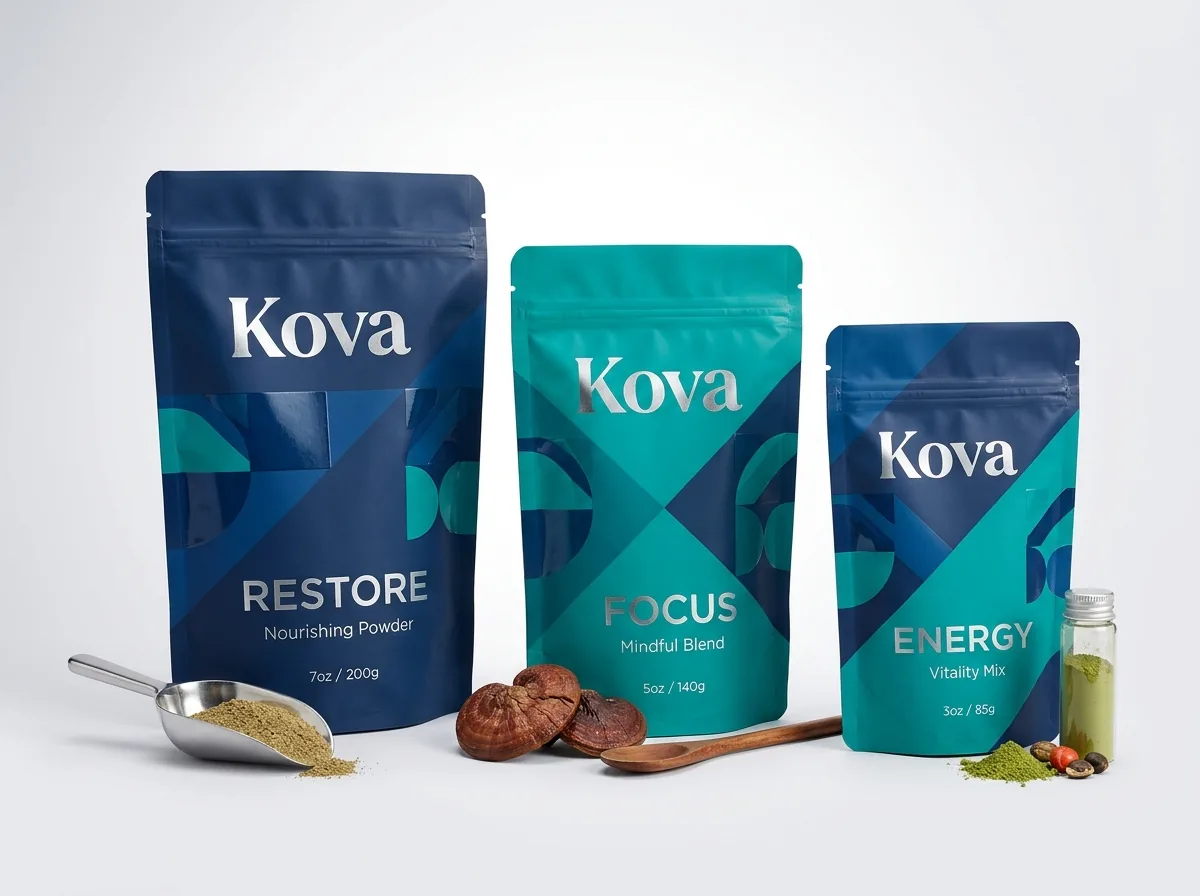
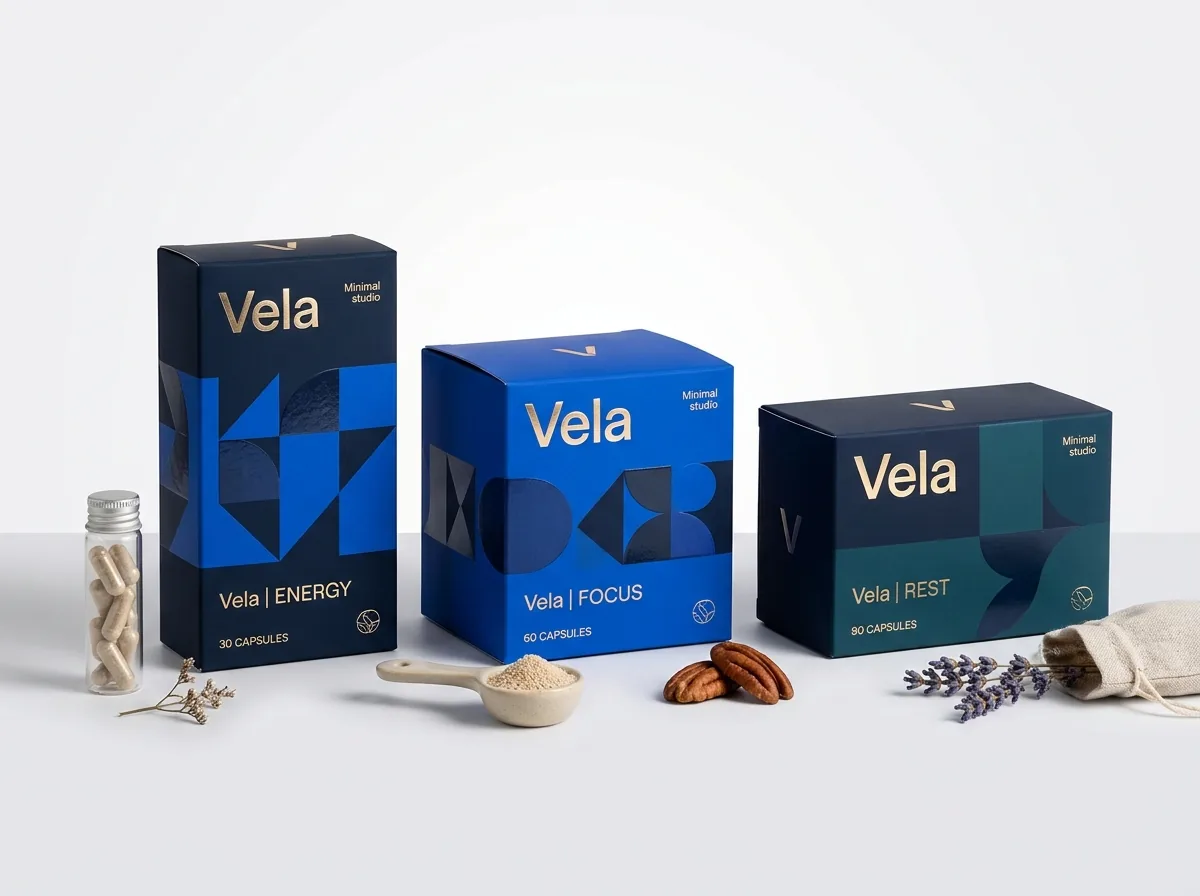
Ready to order supplement pouches? Compare up to 3 quantities with a free 3D mockup.
Request a Quote →Questions about supplement pouches
What is a powder-guard (hook-to-hook) zipper and when do I need one?
A powder-guard zipper uses wide rows of interlocking micro-hooks instead of a single narrow groove. You should use it on any powdered supplement (whey, plant protein, collagen, greens, creatine or electrolytes) that is scooped multiple times from the same pouch.
Do capsule and gummy refill pouches need a powder-guard zipper?
No. Whole capsules, tablets, softgels and pectin gummies do not create fine airborne dust, so a standard press-to-close zipper or a child-resistant zipper on request seals cleanly and keeps humidity out between openings.
Should I choose aluminum foil or metallized film for my supplement pouch?
Choose an aluminum foil core for highly moisture-sensitive powders like pre-workouts with citrulline, probiotics, greens and single-serve sachets. Choose metallized film (VMPET) for 1 lb and 2 lb protein or collagen bags that get handled and flexed daily.
Are food-contact inner barrier liners available for supplement pouches?
Yes. Food-contact inner heat-seal liners and low-migration inks are available on request for direct contact with dietary powders, capsules and gummies through certified partner facilities. Partner documentation is shared on request.
Will your prepress team check my Supplement Facts panel and barcode placement?
Yes. Every order includes a free custom dieline, prepress artwork review, digital proof and 3D mockup before payment. Our specialists verify that your Supplement Facts table, barcode and lot-code zone sit clear of all gusset folds and seals.
Can I order multiple supplement flavors at once to get a better unit price?
Yes. When your different flavors share the exact same pouch dimensions, style and barrier laminate, select 2 designs or 3+ designs in Step 2 of the quote form and list the quantity per flavor in the notes.
Still have a question? Ask a packaging specialist.
Request a Quote →Request your supplement pouches quote
Tell us your size and quantities, and one dedicated account manager prepares pricing for each tier.
- Free design & AI-to-print studio + 3D mockup
- No die or plate charges · 4–5 day rush available
- Free shipping to all 50 states
- 10% off your first order
This guide was compiled from FDA dietary supplement labeling guidance, USP moisture barrier standards, flexible film converter specs and CubitPack's decided service facts. A packaging specialist reviewed every section. Spot something wrong? Tell us and we will fix it.
Sources
What changed
- October 22, 2026: First published.
- October 22, 2026: Updated specifications, terminology, and verified source links.
More guides
New packaging guides by email
Sizes, materials and design tips. Unsubscribe anytime.