
Supplement pouches vs plastic tubs and glass jars: which should you choose?
Short answer: Choose custom supplement pouches when you want to cut empty warehouse storage by over 80%, eliminate wrap-label application, and lower parcel dimensional weight on 30-serving greens, 2 lb protein powders and monthly capsule refills; keep rigid plastic tubs for heavy gym-club stacks and amber glass jars for permanent starter vessels.
On this page
- How do supplement pouches, plastic tubs and glass jars compare side by side
- How much warehouse space and shipping weight do flexible pouches save
- Do flexible pouches protect hygroscopic powders as well as rigid tubs
- Why are DTC vitamin brands pairing glass jars with monthly refill pouches
- When should you still choose rigid tubs, glass jars or folding cartons
- Common mistakes
- FAQs
Request a custom quoteFree dieline & 3D mockup
Sports nutrition and wellness brands traditionally packed powders in blow-molded HDPE plastic tubs and capsules in heavy amber glass bottles, but both rigid formats ship mostly empty air to your co-packer and trigger higher dimensional weight charges on direct-to-consumer orders. Multi-layer flexible barrier pouches store flat on a single pallet before filling, weigh 70% to 90% less than rigid containers of the same capacity, and carry edge-to-edge CMYK and Pantone graphics across the front, back and bottom gusset without requiring a separate pressure-sensitive wrap label. Rigid plastic tubs still make sense when brick-and-mortar gym retailers demand tall cylindrical shelf stacks or when buyers store tubs on wet locker-room floors, while amber glass apothecary jars excel as permanent countertop starter vessels paired with monthly flexible stand-up refill pouches that mail flat to subscribers across all fifty states.
How do supplement pouches, plastic tubs and glass jars compare side by side?
When evaluating packaging for a new protein, greens or capsule line, looking only at the unit price of an empty container hides the true landed cost across your supply chain. A rigid 2 lb HDPE protein canister requires a separate injection-molded screw cap, an inner induction foil liner, a printed wrap-around label, pallet loads of inbound freight to your co-packer, and an oversized corrugated shipping box for every online order. By contrast, custom printed supplement pouches combine the container, moisture barrier, tamper-evident top seal, reclosable powder zipper and full-color label into one flat-shipping piece. Use the table below to compare flexible barrier pouches against rigid HDPE plastic tubs and amber glass supplement jars across the six operational metrics that matter to nutrition brands, fulfillment centers and contract manufacturers.
| Comparison factor | Custom supplement pouches | Rigid HDPE tubs & glass jars |
|---|---|---|
| Inbound freight & storage | Ships flat; 1 pallet of pouches equals ~15-20 pallets of empty tubs | Ships full of air; requires high-bay warehouse pallet space |
| DTC parcel shipping | Light and compressible; mails in compact mailers at lower weight tiers | Bulky cylinder or heavy glass; glass requires protective foam or pulp |
| Branding & labeling | Edge-to-edge print across front, back and bottom gusset; no label peeling | Limited to a narrow wrap-around label band that can wrinkle on curves |
| Moisture & UV barrier | Foil or metallized multi-layer film blocks UV light and humidity | HDPE and amber glass block light well; requires induction seal liner |
| Scooping & daily use | Flexible walls compress as powder empties so hands reach the bottom | Deep rigid walls coat knuckles in powder during the last 10 servings |
| Transit breakage risk | Puncture-resistant laminated film will not shatter or crack when dropped | Plastic lids can crack on impact; glass jars require drop-tested inserts |
How much warehouse space and shipping weight do flexible pouches save?
The biggest operational shock for emerging supplement brands is how much warehouse space empty rigid tubs consume at a contract manufacturer. Because blow-molded 1 lb and 2 lb protein jugs have straight vertical walls that cannot nest inside one another, a 53-foot trailer of empty plastic tubs is mostly empty air, and co-packers frequently charge monthly pallet storage fees before your production run even starts. Flat unfilled stand-up pouches stack densely inside compact master cartons, allowing your co-packer to store 15 to 20 times as many empty units on a single standard 48 × 40 inch pallet. The freight savings continue after filling when orders ship from your third-party logistics (3PL) warehouse to customers. An empty 2 lb HDPE tub with its wide screw lid weighs roughly 95 to 120 grams and requires a deep cubic shipping carton, whereas a 2 lb foil-lined stand-up pouch weighs around 22 to 28 grams and compresses smoothly inside a shallow mailer. On 30-serving greens powders (8 to 12 oz net weight) or 60-count capsule refills, switching from a rigid bottle or heavy amber glass jar to a flexible pouch frequently drops the packed parcel below key USPS Ground Advantage and UPS dimensional weight thresholds, saving substantial postage on every subscription renewal.
Do flexible pouches protect hygroscopic powders as well as rigid tubs?
Many formulators worry that a flexible bag will let humidity clump their pre-workout or probiotic blend faster than a rigid plastic jug. In practice, moisture protection depends on the Water Vapor Transmission Rate (WVTR) of the barrier layer and the integrity of the closure, not how stiff the wall feels in your hand. High-density polyethylene (HDPE) tubs actually have a measurable moisture transmission rate over long storage periods in humid climates, whereas a multi-layer laminate containing an aluminum foil or metallized film core in custom mylar bags and stand-up pouches creates a near-zero barrier against water vapor, oxygen and UV light. Before the customer opens the package, a continuous top heat seal above the laser-scored tear notches acts just like the induction foil seal on a plastic tub, guaranteeing tamper evidence and hermetic freshness during warehouse storage. Once torn open, pairing a wide hook-to-hook powder-resistant zipper with an internal silica gel desiccant packet keeps hygroscopic amino acids like L-citrulline, beet root powder and greens blends dry through all 30 daily scoops.
Know your size? Compare pricing across up to 3 quantities.
Request a Quote →Why are DTC vitamin brands pairing glass jars with monthly refill pouches?
Amber glass apothecary jars look clinical and weighty on a bathroom vanity, which is why longevity, prenatal and daily multivitamin brands love them for first-time customer acquisition. However, shipping a heavy glass jar wrapped in protective custom box inserts every single month eats into subscription margins, increases transit breakage claims, and clutters subscribers' recycling bins with twelve heavy glass bottles a year. The proven solution across modern subscription wellness is the hybrid starter-and-refill system: Month 1 ships a welcome kit inside a custom printed custom mailer box containing the permanent UV-blocking glass jar alongside the first 30-day pouch. From Month 2 onward, the subscriber receives a compact 5 × 8 × 3 inch stand-up refill pouch that mails flat in a lightweight mailer envelope or compact carton. Customers tear open the top laser-scored strip, pour the fresh capsules or gummies into their countertop jar, drop in the new silica gel desiccant packet, and flatten the empty pouch.
When should you still choose rigid tubs, glass jars or folding cartons?
Despite the freight and storage advantages of flexible pouches, certain sales channels and supplement formats still call for rigid packaging or a bag-in-box combination: First, mass-market gym chains and warehouse clubs often stack 5 lb protein containers three high without shelf dividers, where rigid canisters bear vertical stacking loads without slumping. Second, liquid herbal tinctures, oil-suspended droppers and effervescent tubes require glass or rigid plastic bottles paired with outer custom supplement boxes and custom supplement labels. Third, if you sell single-serve electrolyte or collagen stick packs, the inner package is a flexible 3-side-seal film sachet, while the outer retail package is a perforated folding carton that sits upright on grocery shelves, pharmacy endcaps and gym checkout counters.
- 1 lb and 2 lb DTC protein & collagen: wide-mouth stand-up or flat-bottom pouch wins on freight, storage and scooping.
- 30-serving greens & hydration blends: foil-lined stand-up pouch with powder-guard zipper and silica gel desiccant.
- Monthly capsule or gummy subscriptions: permanent amber glass starter jar paired with a monthly stand-up refill pouch.
- Single-serve sachets & liquid tinctures: flexible 3-side-seal sachets or glass dropper bottles packed inside custom folding cartons.
What mistakes do brands make when switching from tubs to supplement pouches?
Switching from a rigid plastic canister to a flexible stand-up pouch changes how your co-packer fills the product on the line and how customers scoop it at home. Watch out for these five pitfalls
- Ordering a tall, narrow pouch that mimics a cylinder tub instead of a wider, shorter pouch that lets hands scoop comfortably.
- Using a standard snack zipper on dusty protein or greens powders, which clogs on the first scoop and prevents resealing.
- Skipping the internal silica gel desiccant packet when moving hygroscopic pre-workout powders into a flexible bag.
- Forgetting to check whether your contract manufacturer has premade rotary pouch grippers or only runs rigid bottle lines.
- Placing critical Supplement Facts text across the bottom gusset crease where the pouch folds flat before filling.
Packaging for this
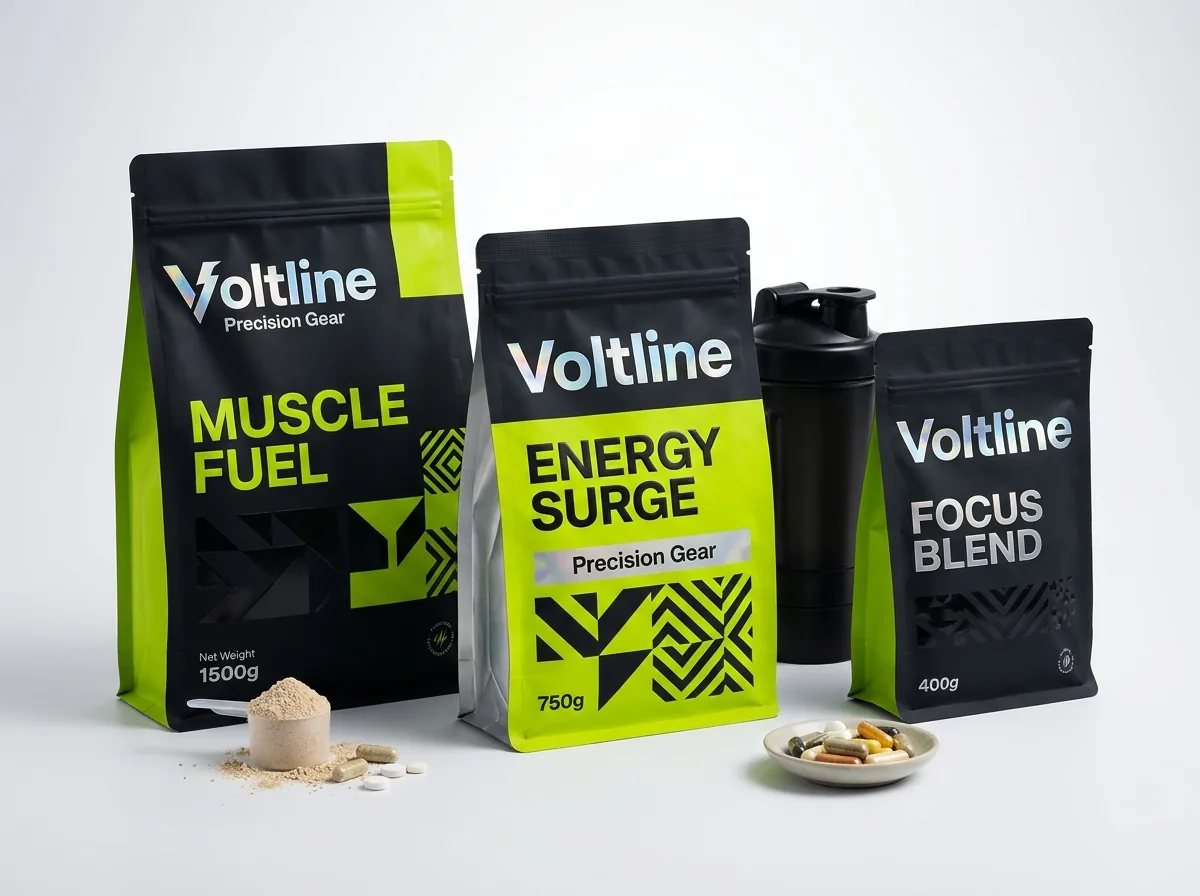
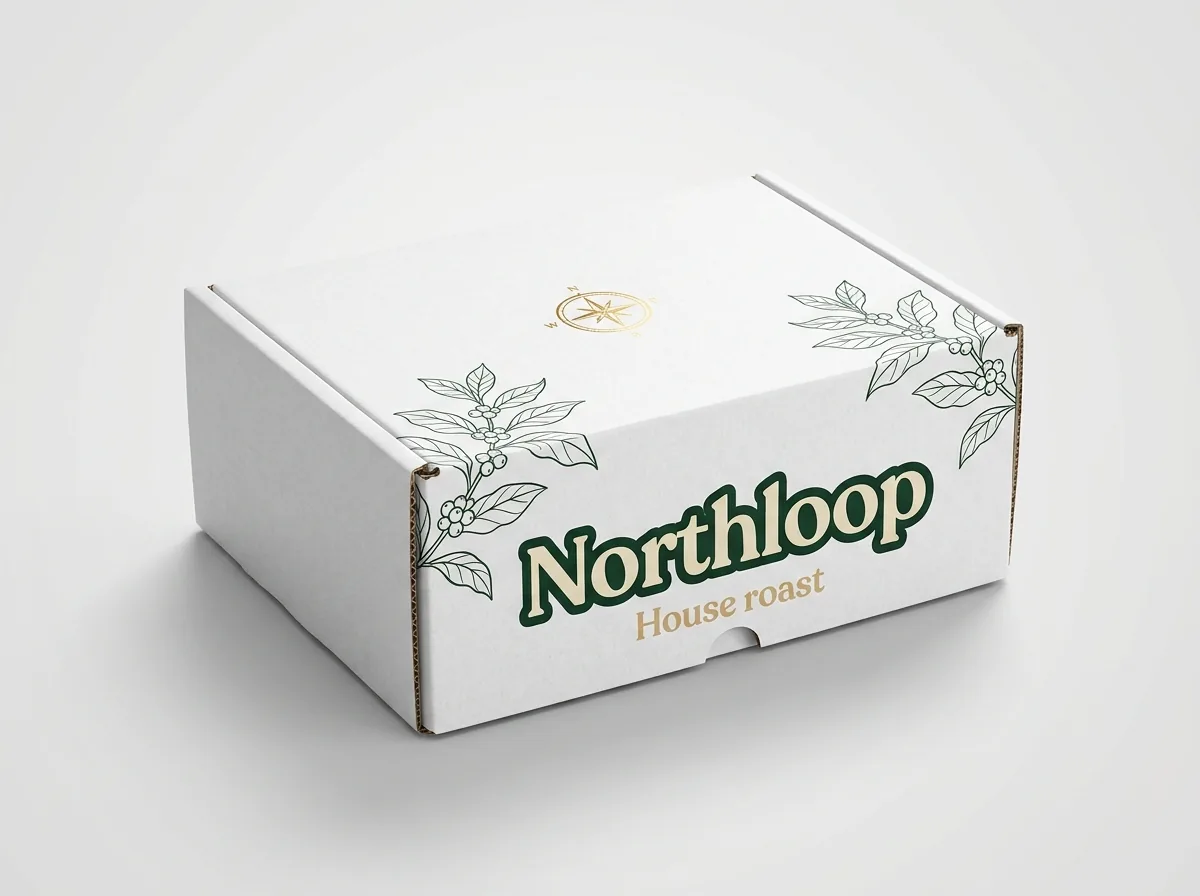
Ready to order supplement pouches? Compare up to 3 quantities with a free 3D mockup.
Request a Quote →Questions about supplement pouches
Are custom supplement pouches cheaper to ship than plastic protein tubs?
Yes. Empty pouches ship flat to your co-packer at roughly one-fifteenth the pallet volume of blow-molded HDPE tubs, and filled pouches weigh 70% to 80% less than rigid jugs, cutting both inbound freight and outbound DTC postage.
Do retail pharmacies and grocery stores accept supplements in stand-up pouches?
Yes. Stand-up bottom-gusset pouches and five-panel flat-bottom box pouches stand upright on standard retail gondolas without shelf trays, and optional top hang holes let smaller 30-serving or gummy pouches hang on checkout pegboards.
How do you make a supplement pouch tamper-evident like an induction-sealed tub?
Every custom supplement pouch is heat-sealed across the top band above the reclosable zipper after filling, with laser-scored tear notches on the left and right edges. Until the customer tears off that top strip, the pouch is completely sealed.
Can I print both my refill pouches and my starter kit mailer boxes with CubitPack?
Yes. CubitPack produces custom supplement pouches, folding cartons, rigid welcome boxes, foam inserts and jar labels under one roof with one dedicated account manager, guaranteeing that your Pantone brand colors match across every piece.
Will a flexible protein pouch tip over when it is nearly empty?
No, provided the bottom gusset is proportioned properly to the bag height. On a 2 lb protein pouch (9.5 × 13.5 × 4.75 inches), the 4.75-inch expanded oval base or flat box bottom keeps its footprint even with two scoops left.
What is the turnaround time for custom printed supplement pouches?
Standard production takes 10 to 14 business days after you approve your free digital proof and 3D mockup. Rush production in 4 to 5 business days is available on quote, and shipping to all 50 US states is always free.
Still have a question? Ask a packaging specialist.
Request a Quote →Request your supplement pouches quote
Tell us your size and quantities, and one dedicated account manager prepares pricing for each tier.
- Free design & AI-to-print studio + 3D mockup
- No die or plate charges · 4–5 day rush available
- Free shipping to all 50 states
- 10% off your first order
This comparison draws on flexible packaging freight and pallet benchmarks from Packaging Digest, USP moisture-barrier standards, and CubitPack's decided service facts. A packaging specialist verified every row. Spot an error? Let us know and we will fix it.
Sources
What changed
- October 22, 2026: First published.
- October 22, 2026: Updated specifications, terminology, and verified source links.
More guides
New packaging guides by email
Sizes, materials and design tips. Unsubscribe anytime.