
How do I design custom pet treat pouches for AAFCO panels and retail pegs?
Short answer: Keep your front brand logo 1.75 inches below the top edge to clear sombrero pegboard hooks, use bold color bands to separate proteins, and structure your back panel around the AAFCO Guaranteed Analysis table, Calorie Content (kcal/kg and kcal/treat) and feeding chart on custom pet treat pouches.
On this page
- How should I lay out the front Principal Display Panel (PDP) for pet-store pegboards
- What belongs in the AAFCO back-panel layout on a custom pet treat pouch
- Where should the UPC barcode and lot/expiration stamp box sit on a stand-up pet pouch
- How do matte, soft-touch and custom paw windows boost pet treat shelf appeal
- What affects custom pet treat pouch cost and how do I group protein SKUs
- Common mistakes
- FAQs
Request a custom quoteFree dieline & 3D mockup
Pet treat packaging has to pass two strict tests at the same time: a three-second visual scan on crowded pet-boutique pegboards and a detailed regulatory and nutritional check on the back panel. On the front Principal Display Panel (PDP), pet parents look immediately for the target species ('For Dogs' or 'For Cats'), the primary protein ('Single-Ingredient Freeze-Dried Beef Liver'), the functional benefit ('Hip & Joint' or '3-Calorie Training Bites'), and the net weight in ounces and grams. On the back information panel, US state feed control officials and retail buyers expect a properly formatted AAFCO-style Guaranteed Analysis table, an ingredient list in descending order by weight, a Calorie Content (ME) box showing both kilocalories per kilogram and kilocalories per treat, a daily feeding table by dog weight, and a scannable UPC barcode placed above the bottom gusset curve.
How should I lay out the front Principal Display Panel (PDP) for pet-store pegboards?
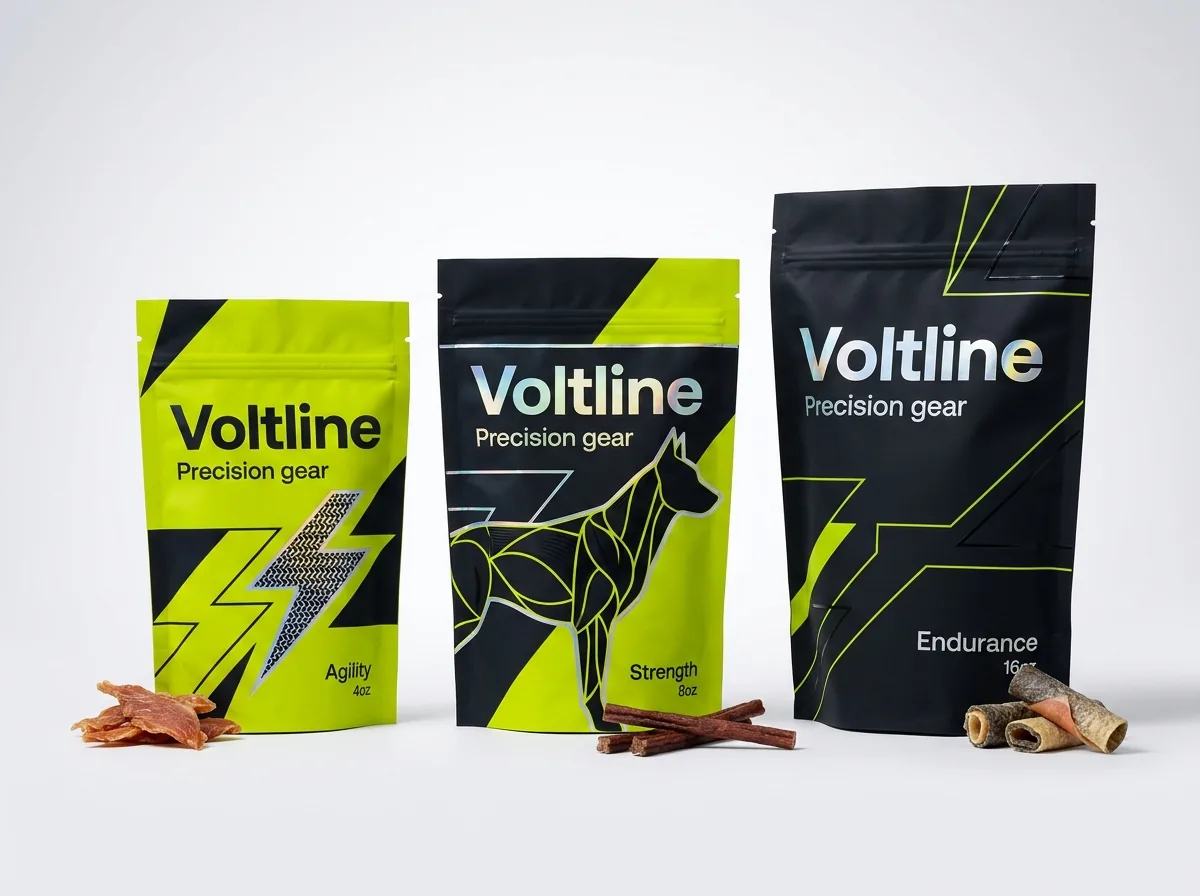
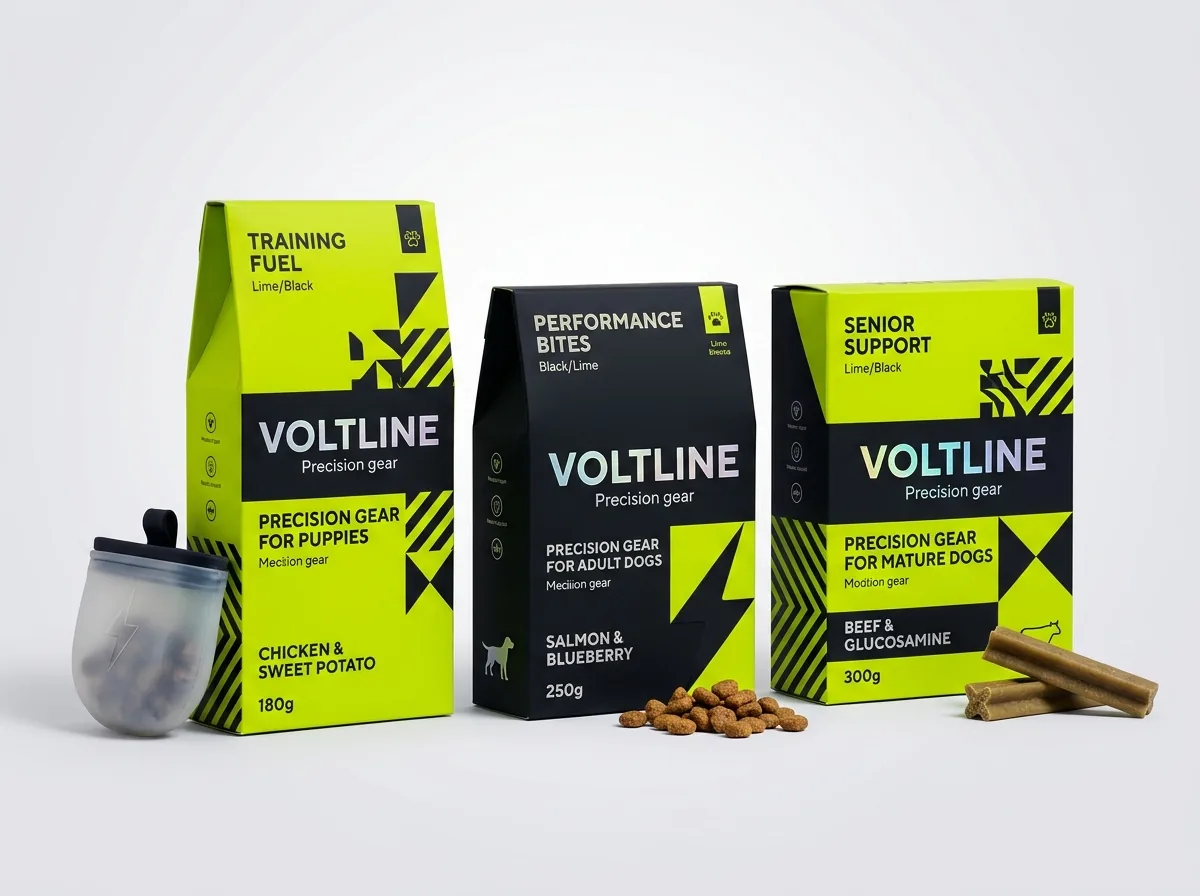
Independent pet boutiques, veterinary clinics, grooming salons and national pet chains merchandise 2 oz to 8 oz treat bags on wire pegboard hooks as often as on flat shelves. Punching a centered sombrero (euro) hang hole in the top heat-seal header lets your printed dog treat bags hang straight on double-prong metal peg hooks without tipping sideways when a shopper pulls the front bag. Because the top 1.5 to 1.75 inches of a hanging pouch is occupied by the impulse heat seal, sombrero hang slot, laser tear notches and press-to-close zipper ribs, always start your primary brand logo at least 1.75 inches below the top cut edge. Below the logo, organize the front belly into clear horizontal color-coded bands by protein: for example, deep burgundy for Grass-Fed Beef, ocean blue or teal for Wild Salmon, forest green for Pasture-Raised Duck, and warm gold for Peanut Butter & Banana. Clearly state the target animal ('Dog Treats' or 'Cat Treats') and net weight ('Net Wt 4 oz (113 g)') in the lower front safe zone.
- Top 0.0 to 1.65 in header zone: sombrero hang hole, laser tear notches and zipper track (keep free of logos).
- Upper billboard (1.75 to 4.0 in from top): brand logo, species callout ('For Dogs') and primary protein headline.
- Center belly zone: hero illustration, custom bone/paw viewing window, and 3 key benefit badges ('Single Ingredient · Grain-Free').
- Lower front zone (above gusset fold): net weight in both avoirdupois ounces and metric grams.
What belongs in the AAFCO back-panel layout on a custom pet treat pouch?
Unlike human food packages that use a vertical FDA Nutrition Facts box, US pet treats follow the Association of American Feed Control Officials (AAFCO) and FDA Center for Veterinary Medicine (CVM) model pet food regulations. Reserve the flat middle area of your back panel (between the zipper line and the lower gusset fold) for the five mandatory information blocks listed below.
| Back-panel block | Required information | Layout & placement tip |
|---|---|---|
| 1. Guaranteed Analysis | Crude Protein (min %), Crude Fat (min %), Crude Fiber (max %), Moisture (max %) | Set in a clean bordered table with high-contrast dark type on a light box |
| 2. Ingredient Statement | All ingredients listed in descending order of predominance by weight | Place directly below Guaranteed Analysis; use common AAFCO ingredient names |
| 3. Calorie Content (ME) | Metabolizable Energy in kcal/kg AND per familiar unit (e.g., kcal/treat) | Keep separate from Guaranteed Analysis; state 'Calculated' vs 'Fed' |
| 4. Feeding Guidelines | Daily treat count by pet weight (e.g., 5-15 lb, 16-30 lb, 31-60 lb, 60+ lb) | Include 'Intended for intermittent or supplemental feeding only' note |
| 5. Distributor & Barcode | 'Manufactured for / Distributed by' city, state & ZIP + UPC-A + lot box | Keep UPC barcode and lot stamp box at least 1.5 in above bottom edge |
Where should the UPC barcode and lot/expiration stamp box sit on a stand-up pet pouch?
When a stand-up pet pouch is filled with 8 ounces of dog biscuits or 4 ounces of freeze-dried liver, the oval bottom gusset pushes open and pulls the bottom 1.5 to 2.25 inches of the front and back walls inward at a steep curve. If your designer places the retail UPC-A barcode or the co-packer's expiration date box along the bottom margin, the barcode bars wrinkle over the K-seal corner weld and fail checkout scanning at Petco, PetSmart or independent pet shops. Always place your UPC barcode (100% black bars on an opaque white rectangle at least 1.25 × 0.85 inches) in the flat middle-right or lower-middle zone of the back panel, at least 1.5 inches above the bottom cut line. Next to the barcode or in the top back header, leave an unvarnished white or light-cream rectangle (1.5 × 0.6 inches) labeled 'Best By / Lot #' where your co-packer's thermal-transfer or inkjet printer stamps traceability codes on custom zipper pouches.
- UPC-A barcode height: place at least 1.5 inches above the bottom cut edge so the expanding gusset never curves the bars.
- High-contrast lot & expiration box: leave a 1.5 × 0.6 inch light rectangle for thermal-transfer or inkjet date coding.
Know your size? Compare pricing across up to 3 quantities.
Request a Quote →How do matte, soft-touch and custom paw windows boost pet treat shelf appeal?
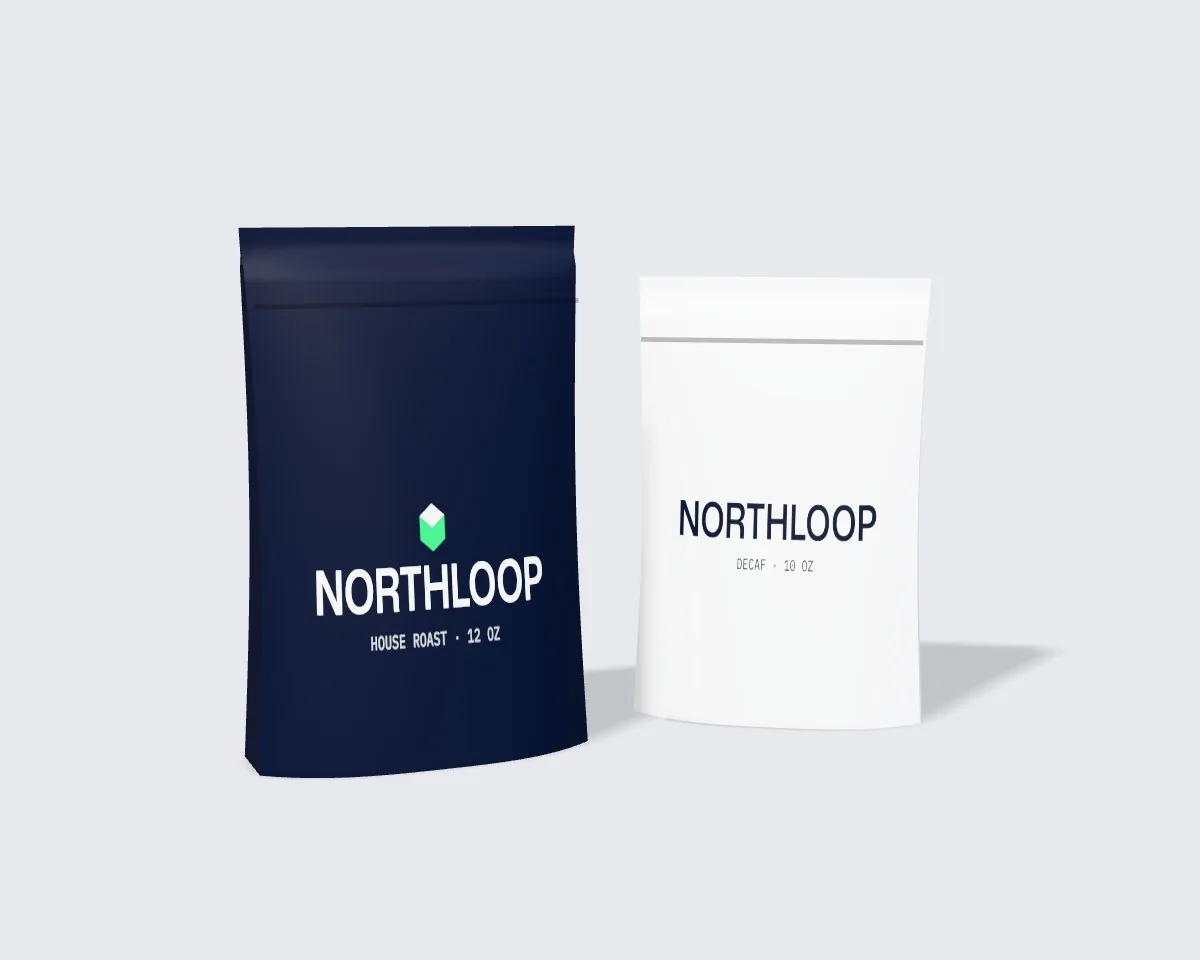
Pet specialty aisles are packed with glossy bags that reflect overhead fluorescent lights into a harsh glare. Switching your outer film finish to flat satin matte or velvety soft-touch lamination immediately makes breed photography, botanical illustrations and protein color bands look rich and glare-free from every angle. To add tactile contrast without extra tooling costs, highlight your brand crest or '100% Single Ingredient' seal with Spot UV gloss or metallic gold/copper foil stamping. On baked biscuit and sweet potato chew pouches that use a clear high-barrier film structure, we can also knock out the white ink layer in the shape of a dog bone, paw print, fish or heart so pet parents can see the actual treat texture inside custom stand up pouches with window.
What affects custom pet treat pouch cost and how do I group protein SKUs?
Four main variables determine the unit cost of custom printed pet treat pouches: outer bag dimensions (a 4 × 6 × 2 inch cat treat bag uses far less film than an 8.5 × 13 × 4.5 inch value biscuit bag), barrier film structure (aluminum foil for freeze-dried raw vs metallized or clear barrier), converting features (crumb-shedding zippers and sombrero hang holes), and total run quantity. Most pet treat brands launch with 3 to 6 recipes (such as Beef Liver, Wild Salmon, Cage-Free Chicken, Pasture Duck and Sweet Potato). By keeping every recipe on the exact same outer Width × Height × Bottom Gusset and barrier laminate, you can select 2 designs or 3+ designs in Step 2 of our quote form and combine your entire multi-protein order into one production run. For seasonal flavors or small vet-clinic batches, you can also apply custom roll labels onto master-printed pouches or ship multi-bag variety bundles in custom pet treat boxes and custom counter display boxes.
- Standardize one 5 × 8 × 3 in or 6 × 9 × 3.5 in dieline across all dog or cat proteins to combine volume.
- Enter up to 3 quantities in Step 1 of the quote form to compare unit price breaks side by side.
- Zero die or plate charges, free custom dieline and 3D mockup, 10% off your first order, and free US shipping.
What are the most common custom pet treat pouch design and labeling mistakes?
Most pet packaging delays happen when artwork crowds the top hang-hole header or omits required AAFCO back-panel blocks. Avoid these five mistakes
- Placing the brand logo within 1.25 inches of the top edge where the sombrero hang hole and pegboard hook cover the name.
- Writing a human-style FDA Nutrition Facts box instead of an AAFCO Guaranteed Analysis table with min/max percentages.
- Forgetting to list Calorie Content (ME) in both kcal/kg and kcal per treat alongside the 'intermittent or supplemental feeding' statement.
- Putting the UPC barcode in the bottom 1.25 inches of the back panel where the expanding bottom gusset warps the bars.
- Ordering a different pouch width for Beef, Salmon and Chicken recipes instead of sharing one master dieline to combine print runs.
Packaging for this
Ready to order pet treat pouches? Compare up to 3 quantities with a free 3D mockup.
Request a Quote →Questions about pet treat pouches
Can I combine multiple dog and cat treat flavors in one pouch print run?
Yes. As long as your Beef, Salmon, Duck and Chicken pouches share the exact same outer Width × Height × Bottom Gusset and barrier film, select 2 designs or 3+ designs in Step 2 of the quote form and list your quantity per protein.
Do pet treat pouches use an FDA Nutrition Facts panel or an AAFCO Guaranteed Analysis?
US pet treats use an AAFCO-style Guaranteed Analysis table listing minimum percentages of Crude Protein and Crude Fat and maximum percentages of Crude Fiber and Moisture, plus a separate Calorie Content (ME) statement in kcal/kg and kcal/treat.
Should I choose a round hang hole or a sombrero hang hole for pet stores?
Choose a centered sombrero (euro) hang hole for 3 oz to 10 oz dog treat and chew pouches so the bag hangs level on double-wire pet-store pegboard hooks. A 0.25 inch round hole suits lightweight 1 oz to 2 oz catnip packets.
Do you charge extra for custom dielines, sombrero holes or bone-shaped windows?
No. CubitPack never charges die or printing plate fees. Every order includes a free custom dieline, free artwork prepress check, digital proof and 3D mockup before payment.
Can you print an AI-generated dog or cat illustration on my pet treat pouches?
Yes. Select AI image in Step 2 of the quote form and upload your artwork. Our prepress team upscales the illustration to 300 DPI and sets your AAFCO Guaranteed Analysis table and barcode in crisp vector type at no cost.
How fast can I get custom printed pet treat pouches delivered?
Standard production takes 10 to 14 business days after you approve your free digital proof and 3D mockup, and rush production in 4 to 5 business days is quoted per order. Standard shipping to all 50 US states is free.
Still have a question? Ask a packaging specialist.
Request a Quote →Request your pet treat pouches quote
Tell us your size and quantities, and one dedicated account manager prepares pricing for each tier.
- Free design & AI-to-print studio + 3D mockup
- No die or plate charges · 4–5 day rush available
- Free shipping to all 50 states
- 10% off your first order
The dieline zones, hang-hole clearances and AAFCO back-panel layout guidelines in this article come from FDA CVM / AAFCO model pet food labeling rules, GS1 barcode standards and CubitPack prepress checklists, verified by a packaging specialist. Spot something off? Tell us and we will fix it.
Sources
What changed
- October 22, 2026: First published.
- October 22, 2026: Updated specifications, terminology, and verified source links.
More guides
New packaging guides by email
Sizes, materials and design tips. Unsubscribe anytime.