
What size custom smell-proof mylar bag do I need?
Short answer: Size custom smell-proof mylar bags by their flat outside Width × Height × Bottom Gusset in inches, subtracting ⅝ to ¾ inch from the width for heavy side heat welds and 1.5 to 1.75 inches from the height for the zipper and top heat-seal header. Leave 20% interior headspace so product dust never contaminates the seal.
On this page
- Why do smell-proof mylar bags need wider seal and header allowances
- What are the standard smell-proof mylar bag sizes from 1g to 1 lb
- Why does leaving 20% headspace stop odor leaks at the top seal
- How do single-track, dual-track and two-step zippers change bag height
- How can I bench-test my smell-proof bag size before ordering
- Common mistakes
- FAQs
Request a custom quoteFree dieline & 3D mockup
Odor-barrier mylar pouches require slightly larger outside dimensions than ordinary poly bags of the same weight because their perimeter heat welds and locking zipper headers are wider. Flexible pouches are always specified by outside Width × Height × Bottom Gusset in inches. To find your usable interior pocket, subtract 5/16 to ⅜ inch per side (⅝ to ¾ inch total width) for the vertical heat-seal seams, and subtract 1.5 to 1.75 inches from the top height for the impulse heat-seal strip, V-cut tear notches and press-to-close or two-step zipper track. Just as important, size your bag so the settled product fills no more than 75% to 80% of the cavity below the zipper; if spice powder, coffee oils or herbal trichomes sit right against the seal zone during filling, they contaminate the inner polyethylene layer and cause microscopic odor leaks.
Why do smell-proof mylar bags need wider seal and header allowances?
When you pack non-aromatic dry goods in a standard pouch, a narrow ¼ inch side weld is plenty. On custom printed smell-proof mylar bags, however, the pouch is engineered to trap volatile terpene, spice, roast and sulfur molecules under pressure changes during air and ground shipping. That requires wider, heavier perimeter heat welds (typically 5/16 to ⅜ inch per side) and a wider top header above the zipper track. Because flexible packaging is always measured from outer edge to outer edge, those wider welds reduce the usable interior width by ⅝ to ¾ inch compared to the flat outside width. At the top of the pouch, a standard press-to-close zipper plus tear notches and a ⅜ inch impulse heat-seal band consume 1.375 to 1.5 inches of vertical height. If your product uses a dual-track odor zipper or a two-step closure on custom child-resistant mylar bags, the deeper zipper profile consumes 1.5 to 1.75 inches of top height.
- Outside Width (W): outer left edge to outer right edge; subtract ⅝ to ¾ inch for the two heavy-duty vertical side welds.
- Outside Height (H): bottom fold to top open lip; subtract 1.5 to 1.75 inches for the top impulse seal band, tear notches and zipper track.
- Bottom Gusset (G): expanded depth of the W-fold at the base (0 in on flat 3-side-seal sachets; 1.5 in to 4 in on stand-up pouches).
- Gusset Height Pull: when a bottom gusset opens flat, it pulls the lower front and back walls inward by roughly 0.5 × Gusset depth.
- Clean Seal Buffer: keep the settled top of your product at least ½ to ¾ inch below the bottom of the zipper track.
What are the standard smell-proof mylar bag sizes from 1g to 1 lb?
The benchmark table below lists the six most common outside pouch footprints used across dried botanicals, culinary spices, specialty coffee roasts, scented bath soaks and high-odor pet treats. Because dried flower buds and leafy herbs have a much lower bulk density than ground curry powders or dense bath salts, the table shows capacity for both light botanicals (in grams) and medium-density pantry goods (in ounces). At CubitPack, every order is built to your exact Width × Height × Gusset in inches with no die or plate charges. Minimums depend on the product and are confirmed with your quote.
| Nominal size tier | Outside W × H × G (in) | Usable pocket W × H | Dried herb / botanical fill | Spice, coffee or treat fill |
|---|---|---|---|---|
| Single-serve flat sachet | 3 × 4.5 × 0 in | 2.3 × 2.9 in | 1 g – 2 g dried herbs | 0.5 oz – 1 oz spice rub, incense cones, wax melts |
| Eighth-ounce compact | 3.5 × 5 × 1.5 in | 2.8 × 2.9 in | 3.5 g (⅛ oz) whole flower | 1.5 oz – 2 oz loose tea, bath salts, liver treats |
| Quarter-ounce pouch | 4 × 6 × 2 in | 3.3 × 3.5 in | 7 g (¼ oz) dried herbs | 3 oz – 4 oz garlic rub, jerky bites, dog chews |
| Half-ounce / retail medium | 5 × 8 × 2.5 in | 4.25 × 5.2 in | 14 g (½ oz) botanicals | 6 oz – 8 oz ground coffee, curry powder, bath soak |
| One-ounce / pantry size | 6 × 9 × 3 in | 5.25 × 6.0 in | 28 g (1 oz) whole herbs | 10 oz – 12 oz whole-bean coffee, salmon pet treats |
| Bulk storage barrier bag | 8 × 11 × 4 in | 7.25 × 7.5 in | 85 g – 113 g (3–4 oz) herbs | 16 oz – 24 oz (1–1.5 lb) bulk spices, kibble, salts |
Why does leaving 20% headspace stop odor leaks at the top seal?
When brands complain that an odor-barrier pouch still smells on the outside, often the aroma is escaping through a contaminated top heat seal, not through the barrier wall. During high-speed hand or machine filling, fine spice dust, coffee chaff, bath powder or herbal resin particles float upward and settle on the inner polyethylene (LLDPE) seal strip above the zipper. If a bag is sized too tight for its fill weight, the product pile touches the underside of the zipper track. When the operator presses the top header flat between the jaws of an impulse sealer, trapped air puffs upward and blows dust right into the molten weld seam, creating microscopic pinholes that leak scent. Choosing a pouch height that leaves 20% to 25% empty headspace below the zipper lets the top header close flat without disturbing the product bed.
- 75%–80% maximum fill height: leaves a clean ½ to ¾ inch air buffer below the zipper track.
- Flat 3-side-seal thickness rule: if your item is thicker than ½ inch (such as chunky botanical buds or thick jerky slabs), add ½ inch to both Width and Height so the flat bag does not pull the top seal tight.
- Stand-up gusset stability: make sure the settled fill reaches at least 60% of the usable height so the expanded bottom gusset sits flat on retail shelves.
Know your size? Compare pricing across up to 3 quantities.
Request a Quote →How do single-track, dual-track and two-step zippers change bag height?
The closure hardware welded inside your top header directly changes how much usable vertical space remains inside the pouch. Standard custom zipper pouches use a single-track press-to-close flange that is roughly ⅜ inch tall, placing the bottom of the zipper 1.375 inches below the top lip. For extra odor containment between uses, many spice, pet treat and botanical brands upgrade to a wider dual-track press-to-close zipper or a two-step pinch-and-slide closure. Those heavier plastic profiles measure ½ to ⅝ inch tall and require slightly more clearance below the tear notches, pushing the bottom of the zipper track 1.5 to 1.75 inches below the top edge of the bag. Always add ¼ inch to your total bag height when switching from a standard zipper to a two-step closure.
How can I bench-test my smell-proof bag size before ordering?
Before locking your production dieline, test your exact fill weight inside a physical pouch to verify both the mouth opening width and the post-settle headspace. You can order our $50 sample kit to test stock barrier pouch sizes on your packing table, or order a paid custom printed sample of your exact dimensions, both credited toward your full order. When testing, pour your product through your actual filling funnel, zip the track shut, and run your impulse heat sealer across the top header above the tear notches. Squeeze the sealed pouch gently between your hands: the welds should hold firm with zero air hiss, and the settled product should sit at least ½ inch below the zipper flange.
- Check mouth clearance: verify that scoops, funnels or whole buds drop cleanly past the open zipper track.
- Check headspace: tap the filled pouch 10 times and confirm at least ½ inch of clear film between the product pile and the zipper.
- Check impulse seal: seal the top header above the tear notches and inspect for a continuous, wrinkle-free weld.
- Review free proofs: approve your free 2D dieline proof and 3D mockup before payment.
What are the most common smell-proof mylar bag sizing mistakes?
Avoiding these five dimension mistakes prevents contaminated top heat seals and cramped packing lines
- Using outside Width × Height numbers as interior capacity without subtracting ⅝ to ¾ inch of width for heavy side welds and 1.5 to 1.75 inches of height for the zipper header.
- Sizing a pouch with zero headspace below the zipper, which forces spice powder or herbal dust into the heat-seal zone and causes odor leaks.
- Ordering a narrow 3.5 inch wide bag for hand-scooped items when your packing scoop is 3.25 inches wide, slowing down pack-out.
- Forgetting to add ¼ to ⅜ inch of extra bag height when upgrading to a wider two-step closure or adding a retail pegboard hang hole.
- Packing bulky 3.5 g or 7 g whole botanicals into a zero-gusset flat pouch without stepping up the width by ½ inch to allow for center thickness.
Packaging for this
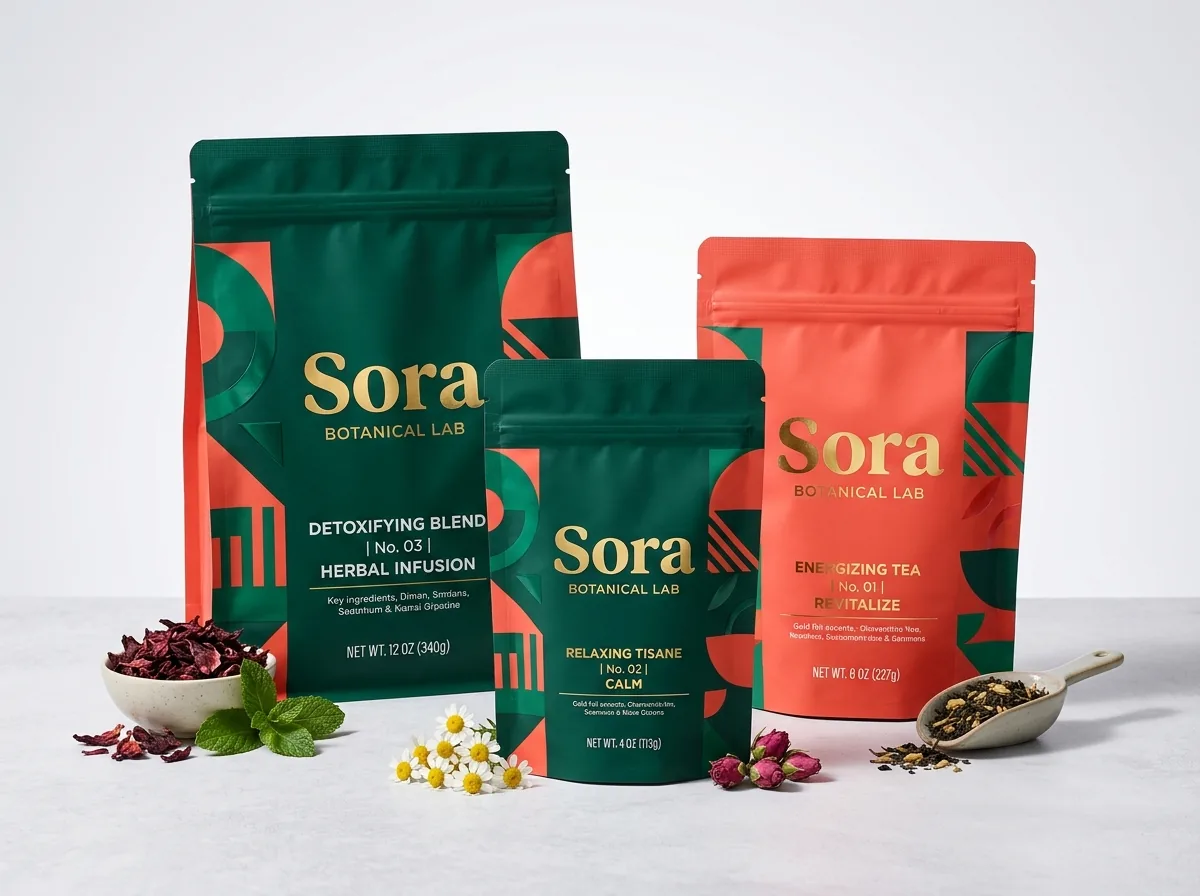

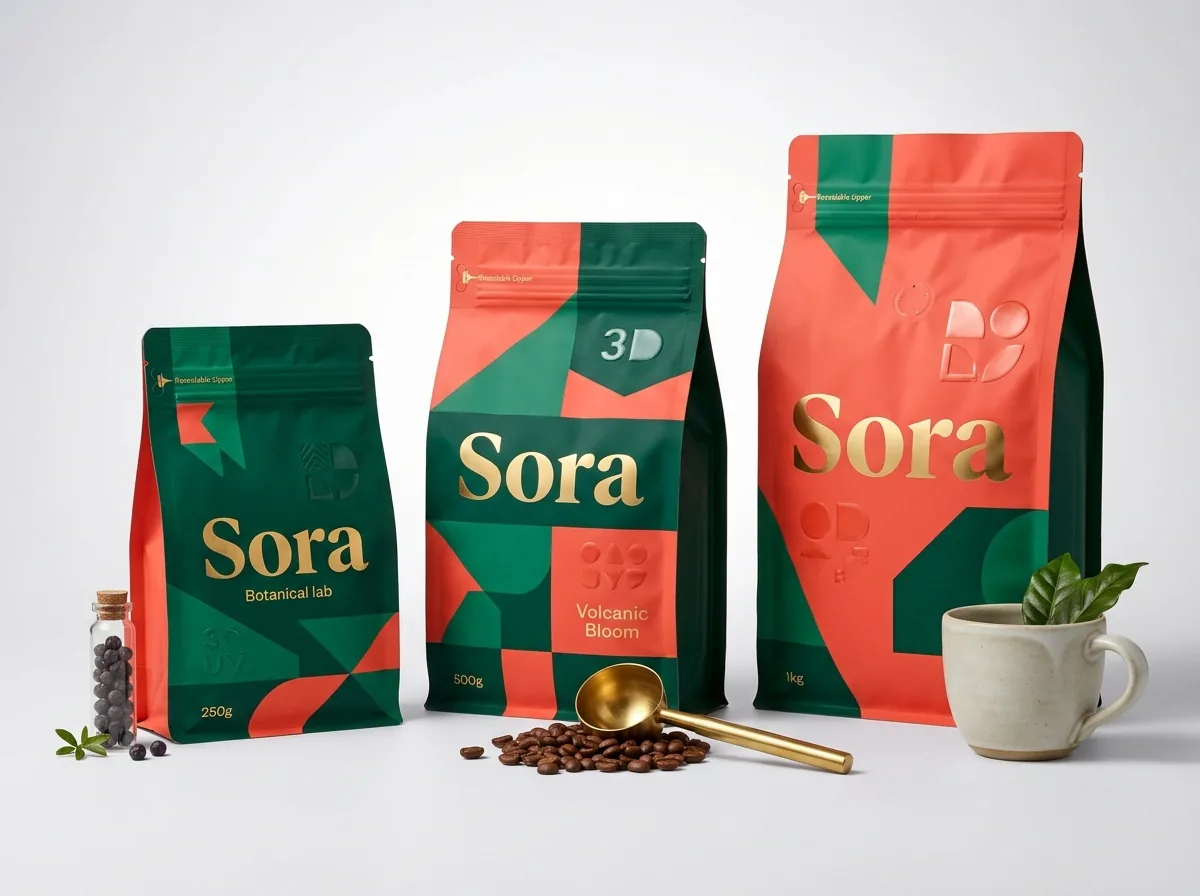
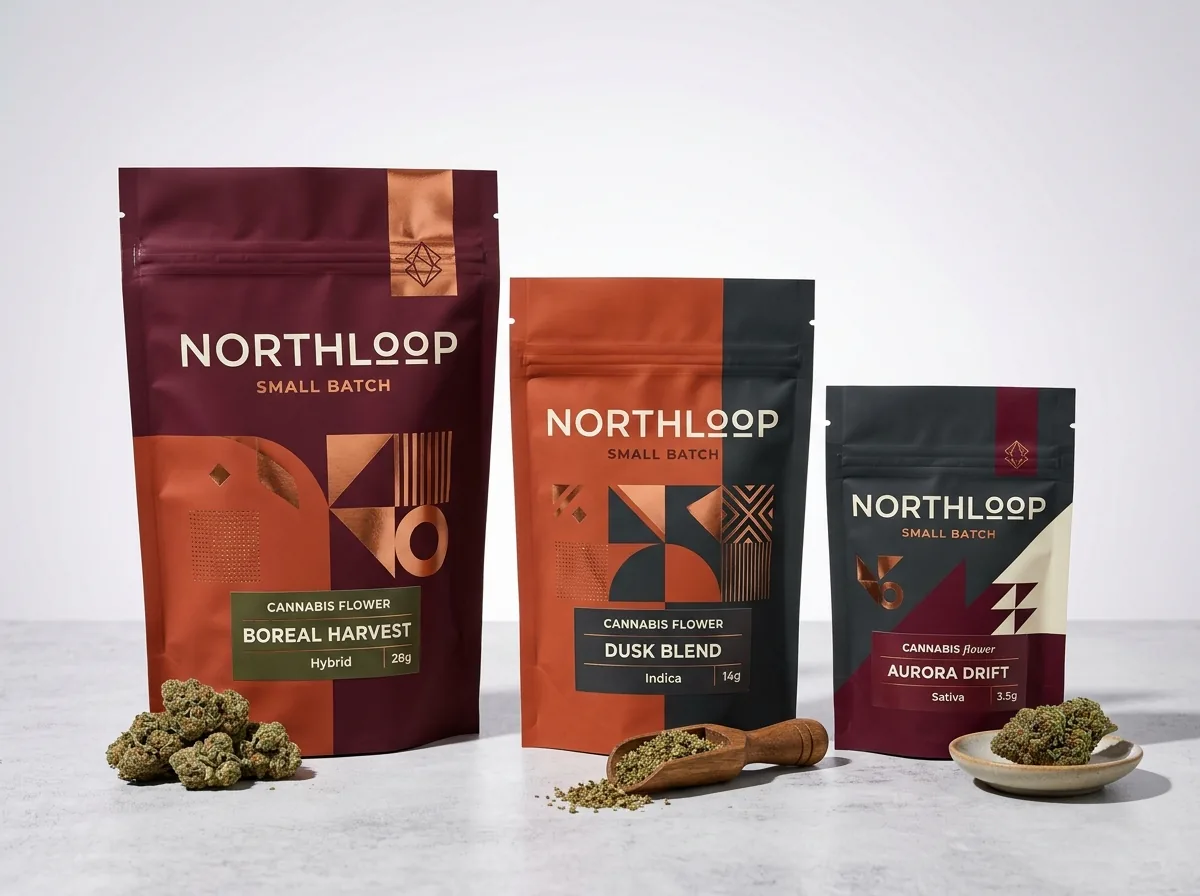
Ready to order smell proof mylar bags? Compare up to 3 quantities with a free 3D mockup.
Request a Quote →Questions about smell proof mylar bags
What size smell-proof mylar bag is standard for 3.5 grams (an eighth)?
The industry-standard outside size for 3.5 grams (⅛ oz) of dried botanicals or herbs is 3.5 × 5 × 1.5 inches for a stand-up bottom-gusset bag, or 3.5 × 5 inches for a flat 3-side-seal pouch, which leaves comfortable headspace below the zipper.
What size smell-proof bag fits 7 grams, 14 grams and 28 grams (1 oz)?
For dried herbs, 7 g (¼ oz) fits a 4 × 6 × 2 inch stand-up bag; 14 g (½ oz) fits a 5 × 8 × 2.5 inch stand-up bag; and 28 g (1 oz) fits a 6 × 9 × 3 inch stand-up pouch.
Are smell-proof mylar bags measured by outside or inside dimensions?
Like all flexible pouches, custom smell-proof mylar bags are measured by flat outside Width × Height × Bottom Gusset in inches. Usable interior width is about ⅝ to ¾ inch narrower, and usable fill height is 1.5 to 1.75 inches shorter.
How much space above the zipper is needed for an impulse heat seal?
Standard open-top odor-barrier pouches include ⅜ to ½ inch of unsealed header film above the V-cut tear notches and zipper track, giving your hand impulse or continuous band sealer plenty of room for a ¼ inch hermetic weld.
Can I order a custom smell-proof bag in non-standard dimensions?
Yes. CubitPack produces every order to your exact Width × Height × Gusset in inches with no die or plate charges. Minimums depend on the product and are confirmed on your quote.
How can I check if my product fits before printing a full run?
Every order includes a free 2D dieline proof and 3D mockup before payment. You can also order our $50 sample kit or a paid custom printed sample of your exact bag size, both credited toward your full production order.
Still have a question? Ask a packaging specialist.
Request a Quote →Request your smell proof mylar bags quote
Tell us your size and quantities, and one dedicated account manager prepares pricing for each tier.
- Free design & AI-to-print studio + 3D mockup
- No die or plate charges · 4–5 day rush available
- Free shipping to all 50 states
- 10% off your first order
The outside-to-inside seal deductions, zipper header allowances and gram/ounce capacity benchmarks in this guide follow standard flexible barrier pouch converting conventions. A CubitPack packaging specialist reviewed every size row. Spot something wrong? Tell us and we will fix it.
Sources
What changed
- October 22, 2026: First published.
- October 22, 2026: Updated specifications, terminology, and verified source links.
More guides
New packaging guides by email
Sizes, materials and design tips. Unsubscribe anytime.