
Aluminum foil vs metallized VMPET smell-proof mylar bags: which barrier core should you choose?
Short answer: Choose vacuum-metallized polyester (VMPET) for everyday custom smell-proof mylar bags holding roasted coffee, culinary spices, loose-leaf teas and jerky where flex resistance matters. Upgrade to a solid aluminum foil (AL) middle core for ultra-pungent botanicals, sulfur rubs, incense and fish-based pet treats.
On this page
- How do aluminum foil, metallized VMPET and clear EVOH odor-barrier pouches compare
- When does your product require a solid aluminum foil (AL) middle core
- Why is vacuum-metallized polyester (VMPET) the workhorse for everyday odor-barrier bags
- How do kraft smell-proof bags and clear EVOH window pouches lock in scent
- Why does the inner LLDPE heat-seal layer matter just as much as the metal core
- Common mistakes
- FAQs
Request a custom quoteFree dieline & 3D mockup
What people casually call a smell-proof mylar bag is actually a three-layer or four-layer laminated barrier web where the middle layer does the heavy work of trapping volatile organic molecules. Standard single-wall polyethylene bags have microscopic amorphous gaps between polymer chains that let low-molecular-weight terpenes, essential oils, sulfur compounds and roast gases diffuse straight into the room within hours. To stop aroma permeation, converters laminate an outer printable polyester layer (PET) and an inner heat-sealable linear low-density polyethylene liner (LLDPE) around a metallic or high-barrier middle core. That middle core comes in three main constructions: solid aluminum foil (AL) for near-zero gas transmission and dead-fold stiffness, vacuum-metallized polyester (VMPET) for resilient flex-crack resistance on everyday pouches, and transparent EVOH or oxide-coated barrier films when you need a clear viewing window.
How do aluminum foil, metallized VMPET and clear EVOH odor-barrier pouches compare?
Every odor-barrier pouch stack balances three physical properties: gas and aroma transmission rate, flex-crack endurance when the bag is squeezed or shipped, and whether shoppers need to see the product through a window. Solid aluminum foil uses a continuous rolled metal sheet laminated between plastic webs, whereas metallized VMPET deposits an ultra-thin atomic layer of aluminum vapor onto a stretched polyester film. Use the engineering comparison table below to match your product's scent volatility, shelf life and handling conditions to the right film stack when requesting a quote for odor-locking mylar pouches.
| Barrier property | Solid Aluminum Foil Core (PET / AL / LLDPE) | Metallized VMPET Core (PET / VMPET / LLDPE) | Clear High-Barrier Film (PET / EVOH or SiOx / LLDPE) |
|---|---|---|---|
| Middle barrier layer | Rolled solid aluminum foil sheet (typically 7 to 9 microns) | Polyester film vacuum-coated with aluminum vapor | Co-extruded EVOH polymer or clear oxide barrier coating |
| Odor & terpene retention | Maximum blockout for ultra-pungent volatiles and essential oils | High blockout for everyday spices, coffee, teas and snacks | Moderate-to-high blockout; holds mild-to-medium aromas |
| Light & UV protection | Opaque (blocks visible and UV shelf lighting) | Opaque (metallized) | Transparent (allows custom knockout product windows) |
| Flex-crack resistance | Stiffer hand feel; can crease if sharply folded repeatedly | Springy, resilient film that resists crinkling in pockets | Flexible polymer web that recovers from squeezing |
| Kraft paper compatibility | Laminates cleanly behind brown or white kraft paper | Standard inner liner for flexible kraft stand-up bags | Used behind registered die-cut kraft windows |
| Best product applications | Pungent botanicals, incense, garlic/asafoetida rubs, salmon treats | Roasted coffee beans, chai blends, beef jerky, bath salts | Spiced nuts, bath crystals, herbal teas needing a peek window |
When does your product require a solid aluminum foil (AL) middle core?
A solid aluminum foil core (often written as PET/AL/PE or Kraft/AL/LLDPE) places an unbroken sheet of rolled metal inside the pouch wall. Because volatile organic compounds and sulfur or terpene molecules cannot diffuse through solid crystalline metal, an aluminum-core pouch delivers the lowest oxygen transmission rate (OTR) and moisture vapor transmission rate (MVTR) available in flexible packaging. Choose a solid aluminum foil laminate whenever escaping scent could ruin your product's potency or taint neighboring boxes inside a parcel carrier truck. It is the gold standard for resinous dried botanicals, concentrated incense cones, heavily scented wax melts, asafoetida and roasted garlic spice blends, freeze-dried fish training treats, and long-term emergency or bulk storage bags.
- Ultra-volatile terpenes and essential oils: a foil core gives the strongest barrier against aroma loss.
- Light protection: an opaque foil core blocks the visible and UV light that can fade pigments.
- Crisp dead-fold hand feel: gives stand-up pouches a firm, structured shelf posture that feels substantial in a shopper's hand.
- Pairs with heavy LLDPE sealants: bonds with thick inner polyethylene layers so volatile oils cannot delaminate the inside weld.
Why is vacuum-metallized polyester (VMPET) the workhorse for everyday odor-barrier bags?
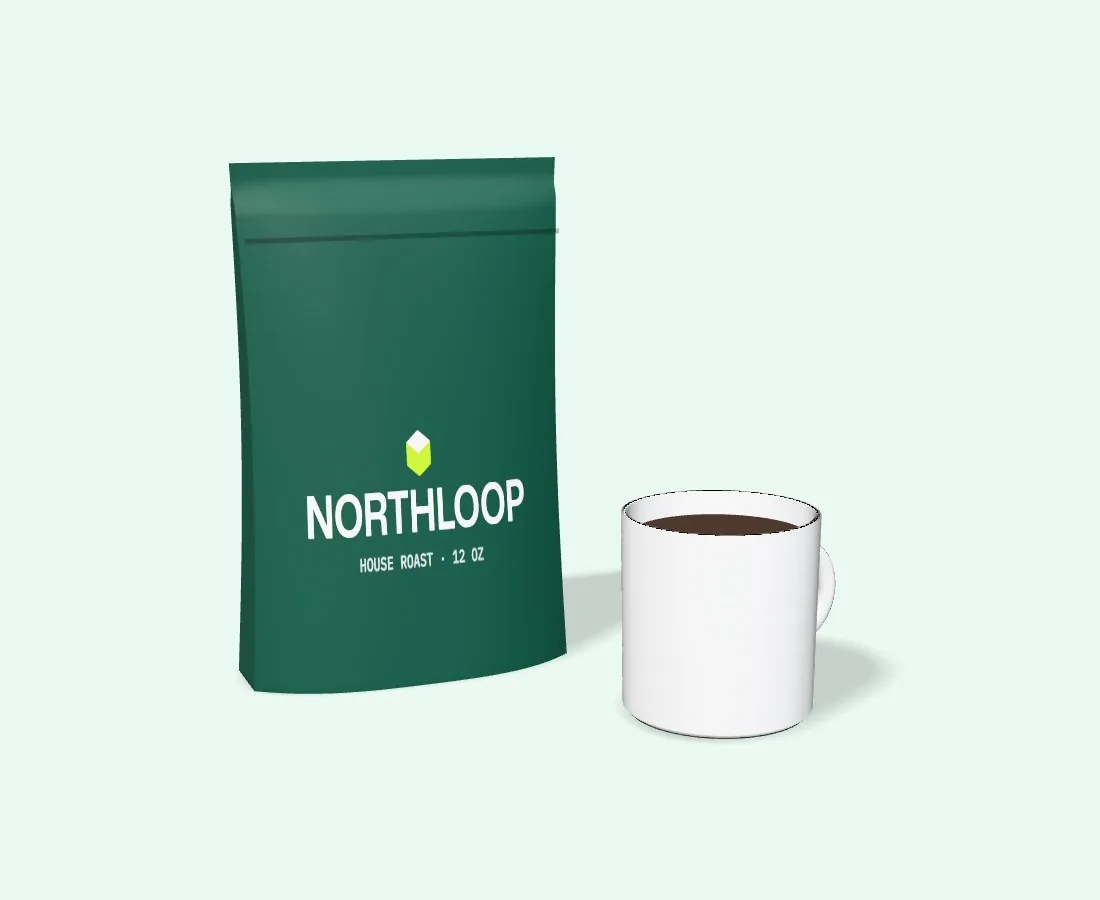
Vacuum-metallized polyester (VMPET) bonds a microscopic mirror coating of aluminum onto biaxially oriented polyester film. While its barrier rating is slightly below rolled solid foil, VMPET solves the one physical drawback of pure metal foil: flex cracking. When a shopper stuffs a flat 3.5-gram botanical sachet into a jeans pocket or repeatedly squeezes a dog-treat bag on a trail walk, solid foil can develop tiny crease lines, whereas VMPET springs right back smooth. For 80% of retail pantry and wellness applications, including custom coffee bags, gourmet jerky pouches, masala chai blends, protein powders, bath soaks and everyday custom mylar bags, a PET/VMPET/LLDPE structure traps aroma cleanly while keeping film cost and shipping weight down.
- Pocket & travel durability: resists permanent fold creases on flat 3-side-seal pockets and repeatedly opened zipper bags.
- Metallic graphic effects: knocking out areas of the white ink underbase lets the bright mirror VMPET layer shine through CMYK inks like foil stamping.
- Lower material cost: uses less raw aluminum than rolled foil while still blocking light, humidity and everyday food aromas.
- Ideal for high-speed filling: feeds smoothly through rotary and inline pouch-filling equipment without stiff board memory.
Know your size? Compare pricing across up to 3 quantities.
Request a Quote →How do kraft smell-proof bags and clear EVOH window pouches lock in scent?
Brands often ask whether a smell-proof pouch has to look shiny or metallic on the outside. It does not. On a kraft odor-barrier bag, we laminate natural brown or bleached white kraft paper to the outside of an inner VMPET or aluminum foil core and an LLDPE heat-seal liner. Shoppers touch warm, matte paper on the shelf while the hidden metal core traps aroma inside. What if you want shoppers to see the product inside the pouch? Because solid foil and VMPET are completely opaque, a windowed odor-barrier bag uses a transparent multi-layer film co-extruded with ethylene-vinyl alcohol (EVOH) or coated with clear aluminum/silicon oxide (AlOx/SiOx). By printing an opaque white underbase and brand colors everywhere except your window shape, you get a custom mylar bag with window that contains spice, tea, jerky or bath-salt aromas while showing the real product.
Why does the inner LLDPE heat-seal layer matter just as much as the metal core?
Even a 9-micron solid aluminum foil core will fail if the inner heat-seal layer is too thin or incompatible with your product's oils. The innermost ply is a heat-sealable polyethylene (LLDPE) film that melts when pressed between heated sealing jaws, fusing the left, right, bottom and top headers shut. Food-safe materials are available on request, made in a certified partner facility. When you request a quote from CubitPack, tell your account manager whether your product is dry, dusty, oily or alcohol-rich. For culinary spices, roasted coffee, teas, edibles and pet treats, we run your order in a certified partner facility with food-safe inner seal layers and share partner test certificates on request. Minimums depend on the product and are confirmed with your quote, with 10 to 14 business day turnaround and free 50-state shipping.
- Dry herbs & whole spices: standard LLDPE inner sealant gives clean, airtight impulse welds above the zipper.
- Fine powders & spice rubs: pair anti-static inner film with a powder-resistant zipper and 20% fill headspace.
- Oily jerky, salmon treats & essential-oil bath salts: specify a heavier gauge, grease-resistant inner sealant so oils cannot wick into the seam.
- Free 2D dieline & 3D mockup: review your exact barrier stack, window knockout and heat-seal margins before paying.
- $50 sample kit (material and finish swatches, sample boxes, labels and bags) or a paid printed sample, both credited to your order.
- Guaranteed Pantone match: if a Pantone color is clearly off, we reprint. Colors look different on foil, metallized and kraft, so check them on your proof.
What are the most common mistakes when choosing smell-proof barrier films?
Selecting the wrong middle barrier layer or inner sealant leads to aroma bleed-through or creased bags. Avoid these five material mistakes
- Ordering a single-wall poly bag without a foil, VMPET or EVOH barrier core for pungent herbs, spices or fish treats.
- Choosing a clear window laminate for ultra-light-sensitive botanicals that lose color and terpene potency under retail LEDs.
- Using a stiff aluminum-foil laminate on a small pocket sachet that customers fold in half repeatedly, where springy VMPET resists creasing better.
- Failing to mention high oil or essential-oil content on the quote, which requires a grease-resistant inner seal layer.
- Assuming kraft paper bags cannot be smell-proof, instead of specifying a kraft exterior laminated over an inner foil and LLDPE core.
Packaging for this
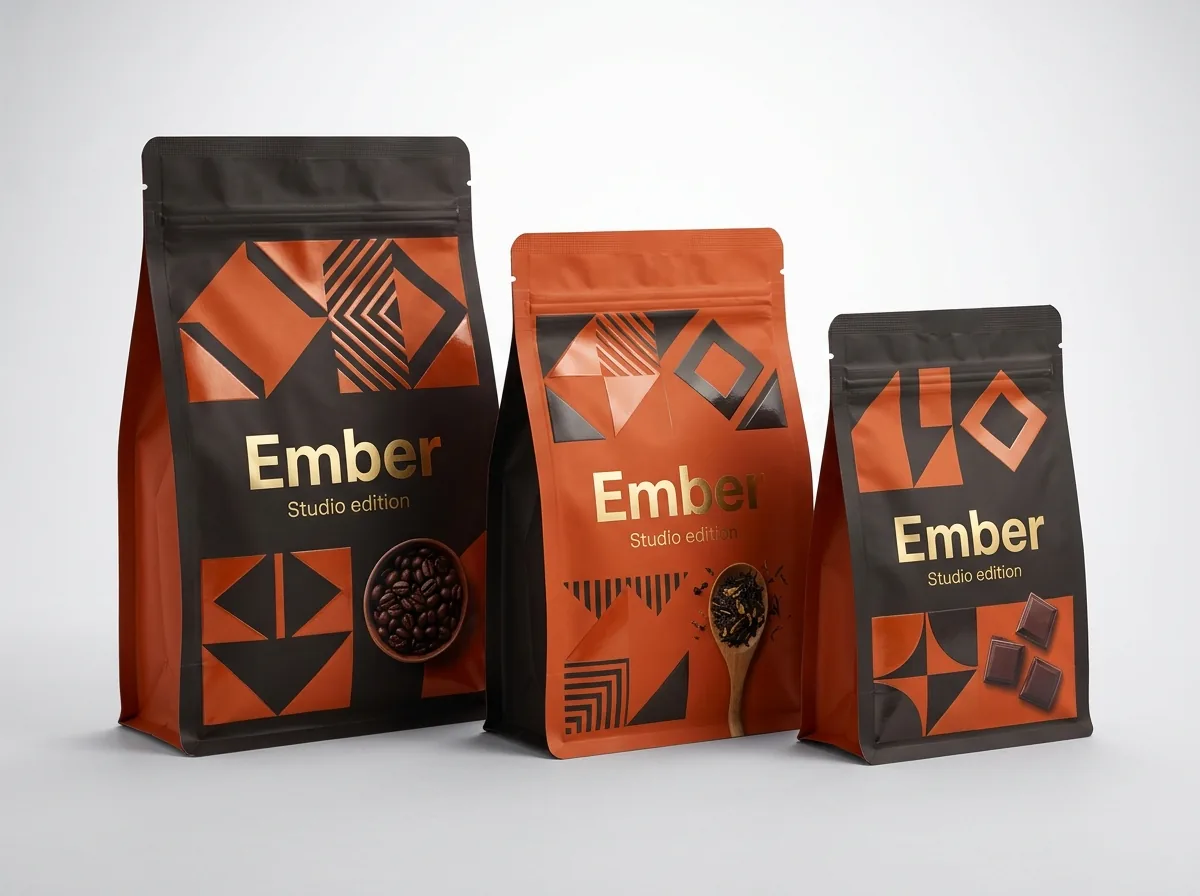
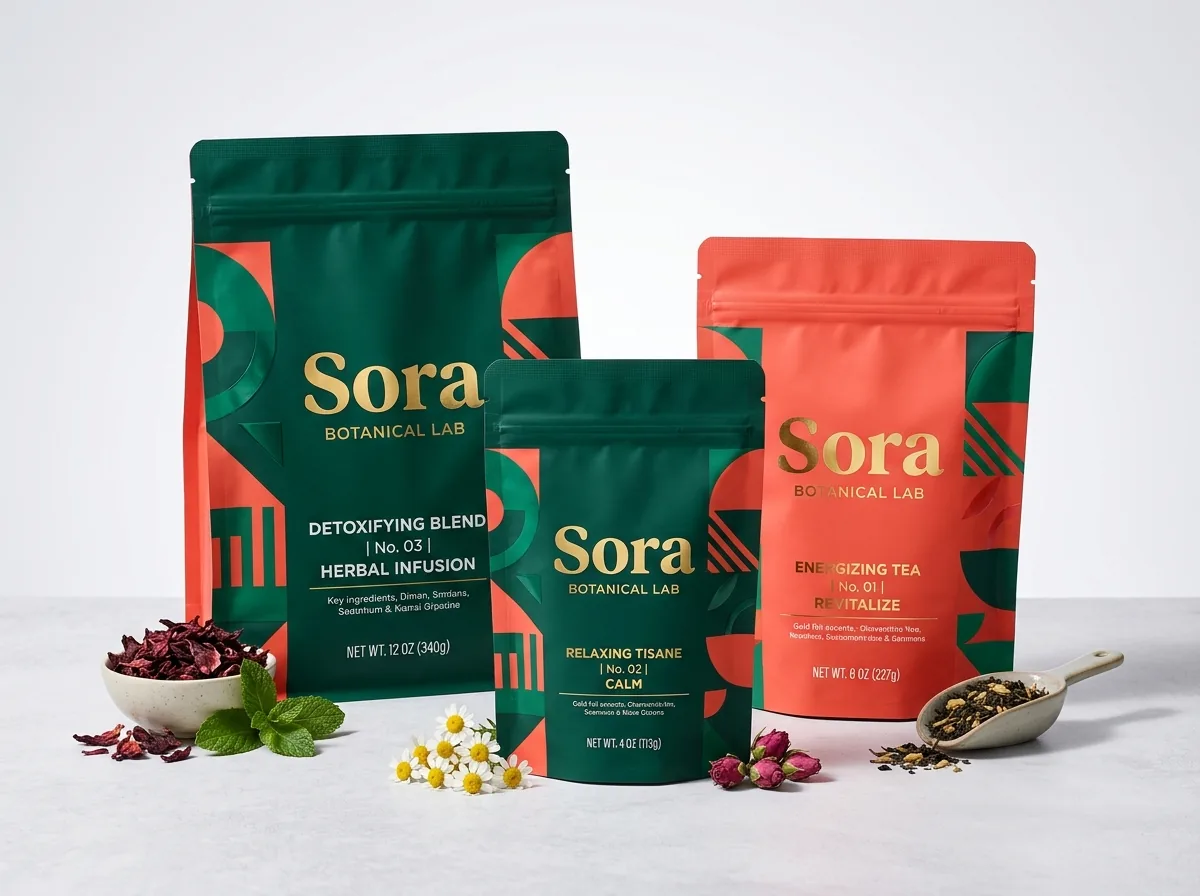
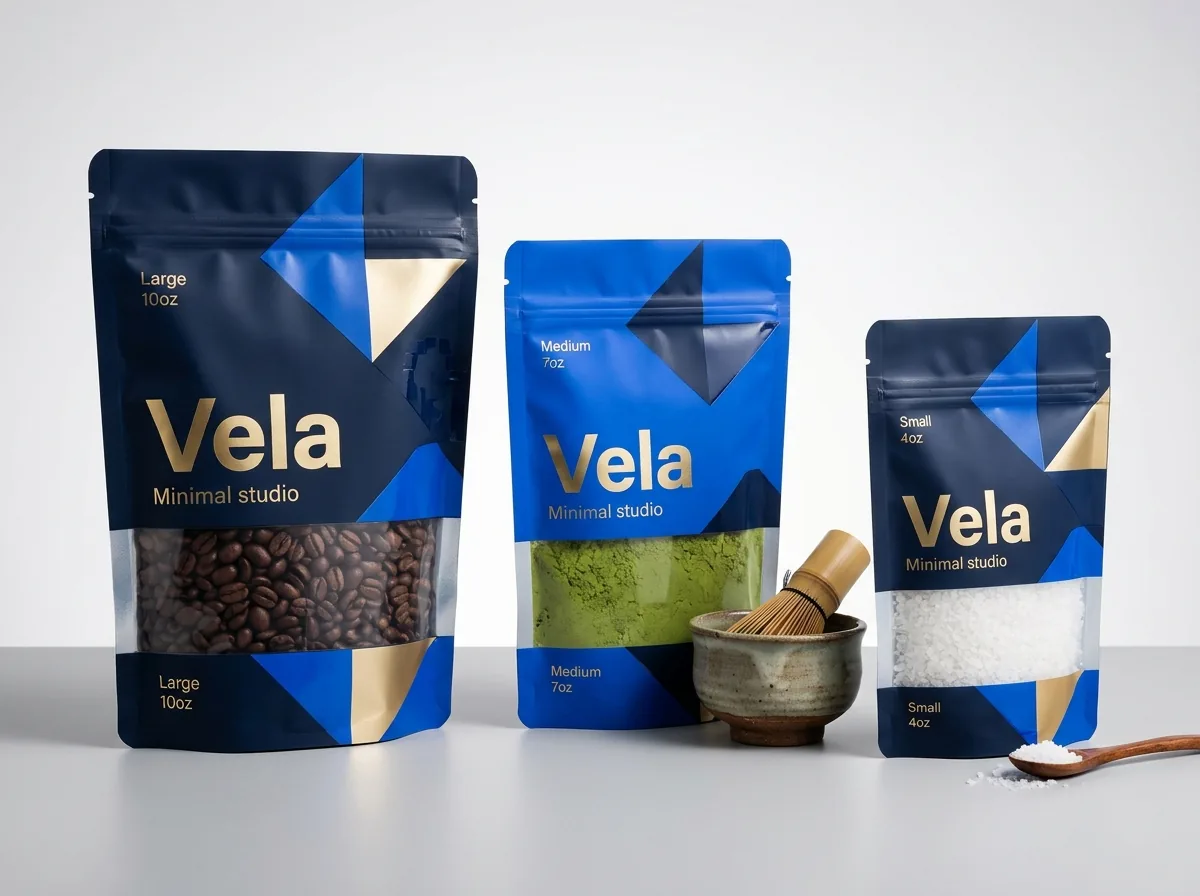
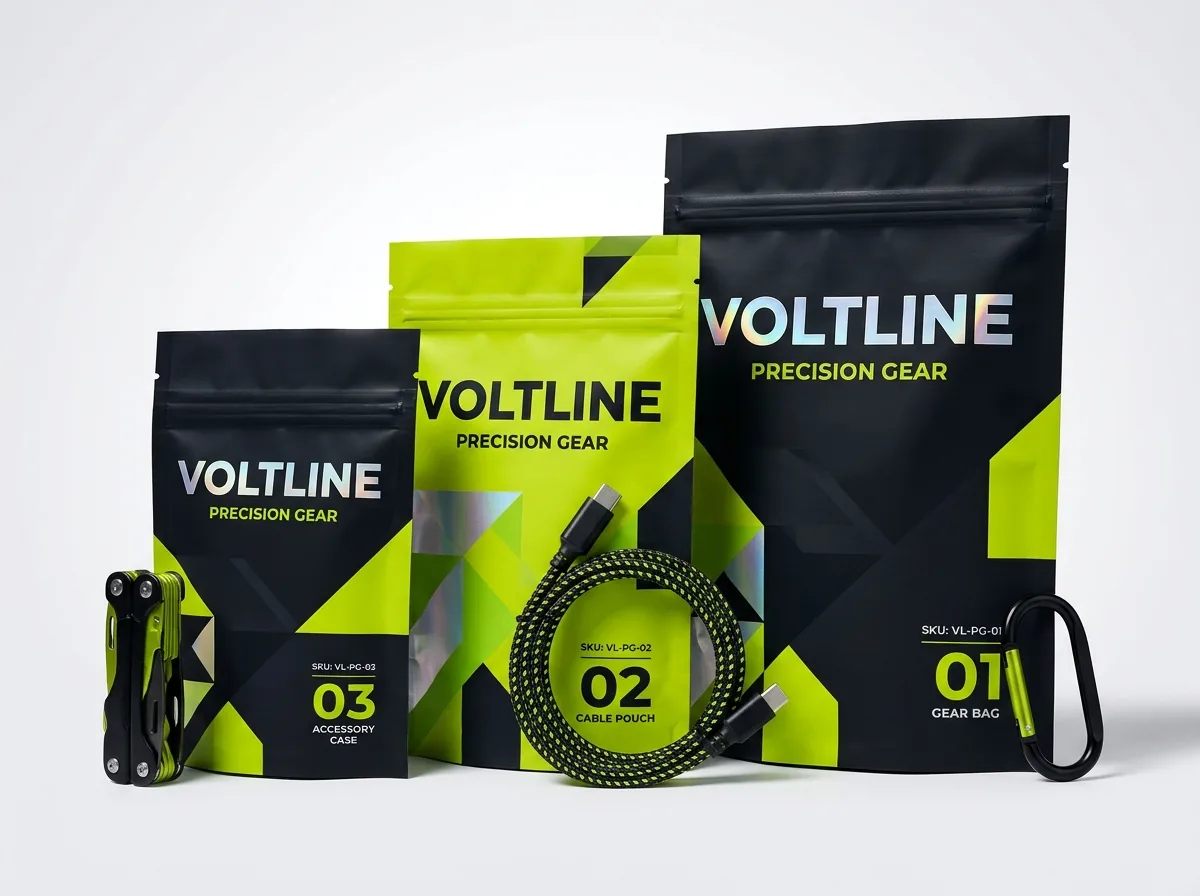
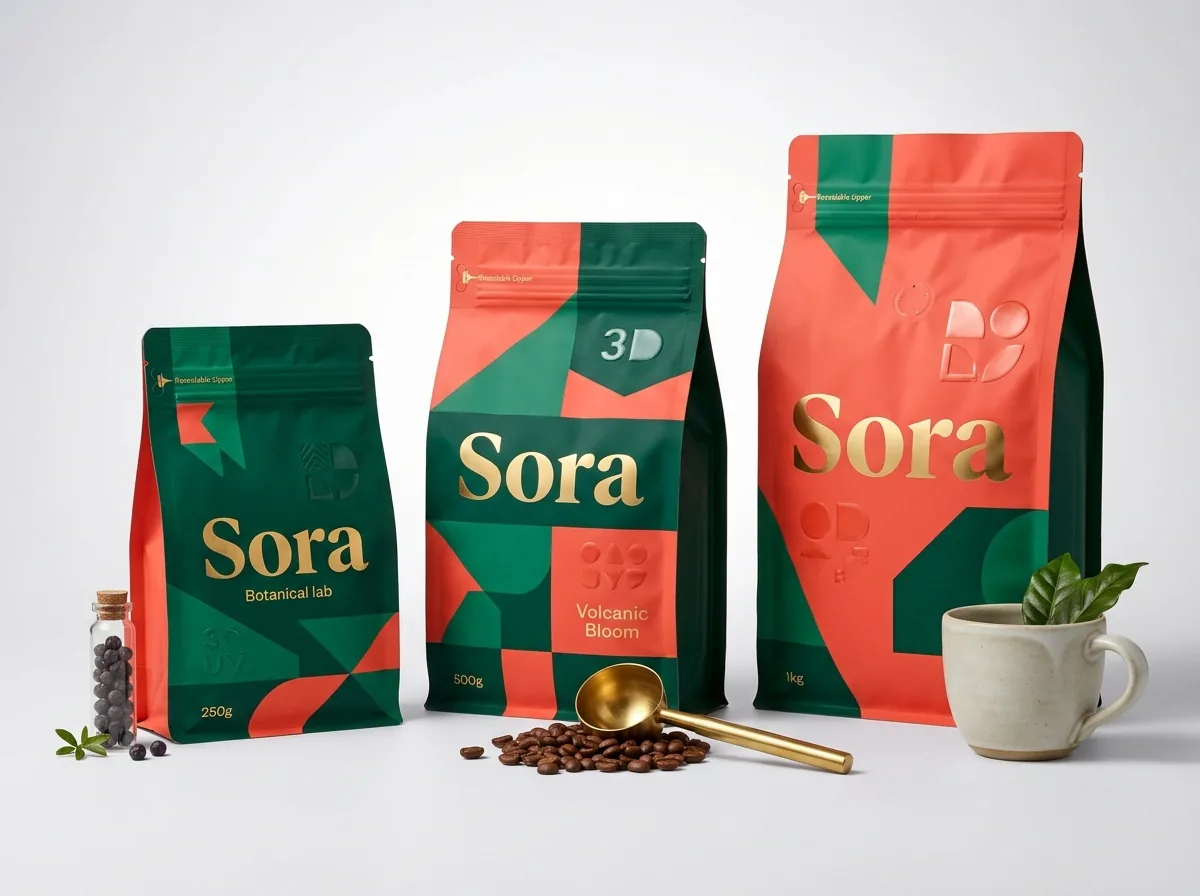
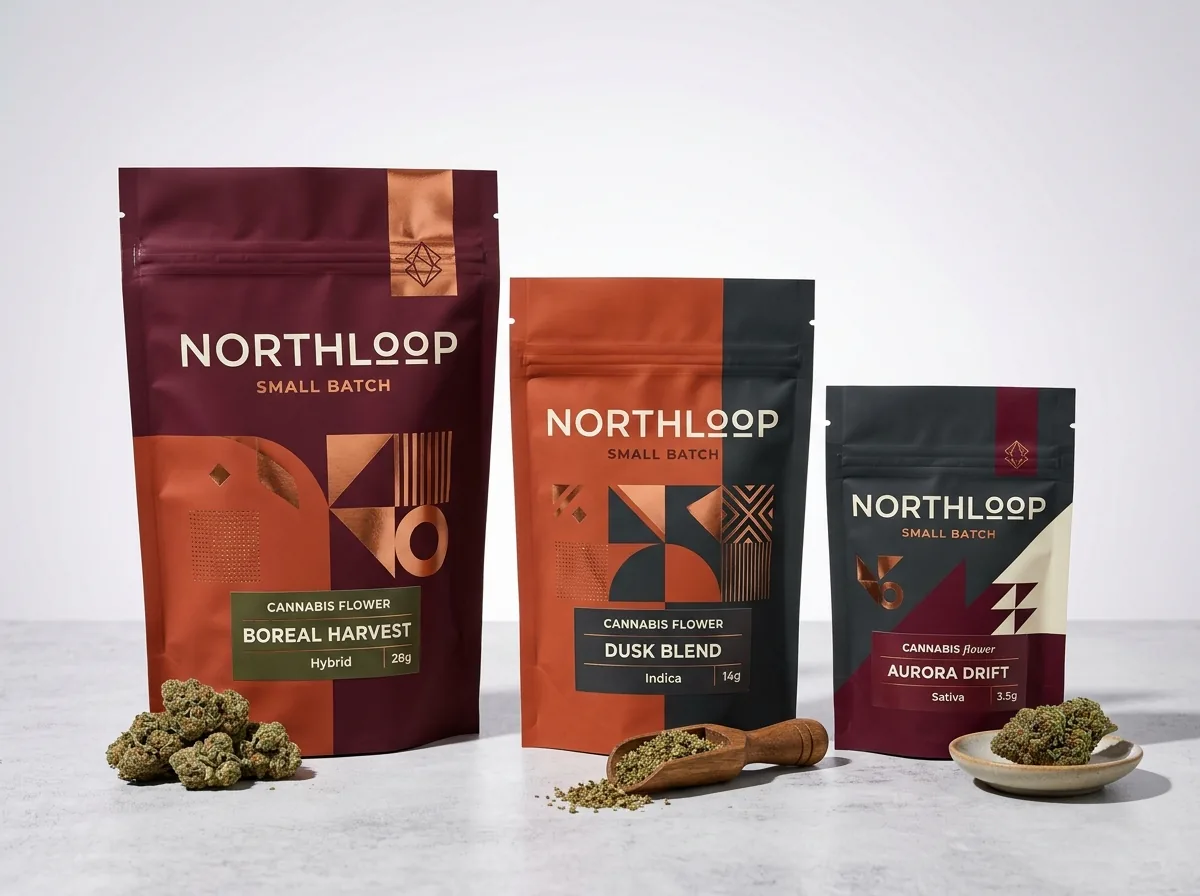
Ready to order smell proof mylar bags? Compare up to 3 quantities with a free 3D mockup.
Request a Quote →Questions about smell proof mylar bags
What is the difference between aluminum foil (AL) and VMPET in smell-proof bags?
Solid aluminum foil (AL) is a continuous rolled metal sheet laminated between plastic layers for maximum odor, oxygen and moisture blockout. Metallized polyester (VMPET) is a plastic film coated with aluminum vapor that blocks everyday aromas while staying more flexible and crease-resistant.
Why do regular plastic zip bags leak smell even when zipped shut?
Standard polyethylene zip bags are made from a single porous plastic layer. Small volatile aromatic molecules from spices, coffee, herbs or pet treats dissolve into the plastic and diffuse straight through the microscopic gaps in the bag wall within hours.
Can a kraft paper stand-up pouch be smell-proof?
A kraft pouch can have the same odor barrier inside: kraft paper outside, then a foil or metallized barrier layer and a heat-seal liner. It cuts odor transfer a lot, but no bag is 100% smell-proof, so heat-seal the top after filling.
Can I get a clear window on a smell-proof mylar bag?
Yes. Because metal foil and VMPET are opaque, windowed smell-proof pouches are built from transparent high-barrier EVOH or oxide-coated laminates. We print opaque white ink and colors everywhere except your clear window silhouette with zero die fees.
Are aluminum foil and VMPET smell-proof bags safe for food and spices?
Yes, food-safe materials are available on request. In both structures, your food, coffee, tea or pet treats only touch the inner food-contact polyethylene (LLDPE) seal layer, never the middle metal core. We share partner facility certificates on request.
How can I compare foil vs VMPET pouches in hand before ordering?
Every order includes a free 2D proof and 3D mockup before payment. To feel the stiffness and test aroma retention with your own product, order our $50 sample kit or a paid custom printed prototype, both credited toward your full order.
Still have a question? Ask a packaging specialist.
Request a Quote →Request your smell proof mylar bags quote
Tell us your size and quantities, and one dedicated account manager prepares pricing for each tier.
- Free design & AI-to-print studio + 3D mockup
- No die or plate charges · 4–5 day rush available
- Free shipping to all 50 states
- 10% off your first order
The multi-layer laminate comparisons (PET/AL/LLDPE, PET/VMPET/LLDPE and EVOH clear barrier webs) in this guide follow flexible packaging converting standards and ASTM barrier test principles. A CubitPack packaging specialist reviewed every table row. Spot something wrong? Tell us and we will fix it.
Sources
- ASTM oxygen, moisture and volatile organic aroma permeation testing principles across foil and metallized laminates
- Flexible Packaging Association multi-layer barrier pouch structures (PET/AL/LLDPE and PET/VMPET/LLDPE)
- Food-contact inner polyethylene (LLDPE) sealant layer guidance for culinary spices, coffee and pet treats
What changed
- October 22, 2026: First published.
- October 22, 2026: Updated specifications, terminology, and verified source links.
More guides
New packaging guides by email
Sizes, materials and design tips. Unsubscribe anytime.