
What size supplement pouch do I need for 30 servings, 1 lb and 2 lb powders?
Short answer: A 30-serving greens or pre-workout blend (8 to 12 oz) fits a 6 × 9 × 3.5 inch stand-up pouch, 1 lb of collagen fits 7.5 × 11 × 4 inches, and 2 lb of protein powder fits 9.5 × 13.5 × 4.75 inches when ordering custom supplement pouches.
On this page
- How do I read Width, Height and Bottom Gusset on a supplement pouch
- What are the standard supplement pouch sizes from 5 g sachets to 5 lb bags
- How does powder bulk density change pouch size for creatine, collagen and pea protein
- How much room should I add for a plastic scoop, desiccant and wide-mouth scooping
- How do I size single-serve sachets and monthly vitamin refill pouches
- Common mistakes
- FAQs
Request a custom quoteFree dieline & 3D mockup
Supplement pouch dimensions are always specified as outer Width × Height × Bottom Gusset in inches, and choosing the right footprint requires matching three variables: net powder weight, ingredient bulk density, and scoop plus headspace clearance. Fine crystalline powders like creatine monohydrate and electrolyte salts pack densely at 0.60 to 0.70 grams per cubic centimeter, whereas spray-dried whey isolate, hydrolyzed collagen peptides, and organic pea protein trap air between particles and measure 0.32 to 0.45 g/cm3. Consequently, 16 ounces (454 grams) of plant protein requires a taller, wider bag than 16 ounces of creatine. For US nutrition brands, 5 × 8 × 3 inches holds a 60-to-90-count capsule refill, 6 × 9 × 3.5 inches holds 30 servings of greens, 7.5 × 11 × 4 inches holds 1 lb of collagen, and 9.5 × 13.5 × 4.75 inches holds 2 lb of protein.
How do I read Width, Height and Bottom Gusset on a supplement pouch?
Flexible supplement bags are measured flat from outer edge to outer edge in inches before any powder or capsules go inside, written in the sequence Width × Height × Gusset (W × H × G). Width is the horizontal span across the front face from the left heat-seal edge to the right heat-seal edge. Height is the full vertical span from the bottom fold to the top lip above the zipper and tear notches. Gusset is the total expanded depth of the folded bottom panel (on a stand-up doypack or flat-bottom box pouch) when pushed open. Remember that usable interior volume is smaller than those flat outer measurements. Left and right side seals take up 0.25 to 0.375 inches per side, and the upper powder zipper track, laser tear notches and top heat-seal band occupy the top 1.5 to 2 inches of bag height. When you request a quote for printed supplement and protein pouches, sharing your target gram weight, bulk density and scoop size lets our design team verifyies that your co-packer's auger spout and heat-seal bars clear the mouth cleanly.
- Width (W): outer horizontal distance from left edge to right edge, including side seals.
- Height (H): total vertical height from base fold to top lip above the zipper.
- Gusset (G): full open depth of the folded bottom panel when the pouch stands.
- Usable fill zone: subtract 1.5 to 2 inches from total height for the zipper and top seal.
What are the standard supplement pouch sizes from 5 g sachets to 5 lb bags?
While CubitPack cuts every pouch to your exact custom dimensions with no die or plate charges, US sports nutrition and wellness co-packers group most runs around seven standard footprints. These sizes fit rotary premade pouch filling grippers, standard master shipping cartons and retail pharmacy shelves. The capacities in the table below assume medium-density dietary powders (around 0.45 g/cm3, typical of whey blend or collagen) along with a standard plastic scoop and a 2-gram silica gel desiccant packet. If your formula uses extra-fluffy pea, hemp or brown-rice protein, step up half an inch in height or width so the settled powder line stays safely below the zipper track during filling.
| Supplement format & weight | Outer size (W × H × G) | Typical nutrition application |
|---|---|---|
| 5 to 15 g powder (or 4-8 pills) | 3 × 4.5 in (flat, no gusset) | Single-serve hydration sachet or daily vitamin pack |
| 25 to 40 g powder (1 scoop) | 4 × 6 × 2 in | Single-serving whey or plant protein sample pouch |
| 60 to 120 capsules or 60 gummies | 5 × 8 × 3 in | Monthly subscription refill pouch for glass vitamin jars |
| 8 to 12 oz (240 to 340 g) powder | 6 × 9 × 3.5 in | 30-serving greens, pre-workout, electrolytes or BCAAs |
| 14 to 16 oz / 1 lb (454 g) powder | 7.5 × 11 × 4 in | 30-serving collagen peptides or meal-replacement shake |
| 32 oz / 2 lb (907 g) powder | 9.5 × 13.5 × 4.75 in | Standard 30-serving whey or plant protein stand-up bag |
| 5 lb (2.27 kg) powder | 11.5 × 16.5 × 5.5 in | Bulk gym protein or mass-gainer flat-bottom or gusset bag |
How does powder bulk density change pouch size for creatine, collagen and pea protein?
Two dietary supplements with the exact same 300-gram net weight can require completely different pouch sizes because of bulk density, measured in grams per cubic centimeter (g/cm3). Granular creatine monohydrate, magnesium citrate and electrolyte salt blends have high bulk densities between 0.60 and 0.75 g/cm3; 300 grams of micronized creatine easily fits inside a compact 5 × 8 × 3 inch stand-up pouch. At the middle of the spectrum sit agglomerated whey protein concentrate, whey isolate and bovine or marine collagen peptides at 0.40 to 0.50 g/cm3. At the fluffiest end sit organic greens powders, mushroom extracts and plant-based pea or pumpkin-seed proteins at 0.30 to 0.38 g/cm3. In addition, newly milled powder is aerated with air as it drops from an auger screw, expanding 15% to 20% higher at the moment of filling before vibrating down during shipping. Always size your pouch for the aerated fill level right off the auger, not the settled level two weeks later.
Know your size? Compare pricing across up to 3 quantities.
Request a Quote →How much room should I add for a plastic scoop, desiccant and wide-mouth scooping?
Nothing frustrates a supplement buyer faster than buying a 2 lb bag of protein powder whose opening is so narrow and tall that their wrist scrapes against powder-coated inner walls every morning. Unlike coffee or snacks that customers pour out of the bag, powdered supplements are scooped by hand 30 times over the life of the pouch. On 1 lb and 2 lb bags, we recommend a wider landscape-proportioned stand-up pouch or a five-panel custom flat-bottom pouch so a customer's hand and a long-handled 70 cc scoop fit through the zipper mouth without touching the sides. Remember to account for the physical volume of the scoop and desiccant when calculating headspace. A 70 cc protein scoop displaces the equivalent of two full servings of powder, and your co-packer's top heat-sealing jaws need 1.5 to 2 inches of clean, dust-free film between the top of the powder pile and the bottom of the powder-guard zipper.
How do I size single-serve sachets and monthly vitamin refill pouches?
Single-serve sample sachets and monthly capsule refill pouches are the two fastest-growing formats in direct-to-consumer nutrition. A single-serve hydration, pre-workout or greens packet (5 g to 15 g) typically uses a 3 × 4.5 inch flat custom flat pouch sealed on three sides with a laser-scored tear notch near the top corner. Because a single scoop of protein powder (30 g to 35 g) is much bulkier, protein sample packs step up to a 4 × 6 inch flat packet or a 4 × 6 × 2 inch mini stand-up pouch. You can pack 15 or 30 single-serve sachets upright inside custom tear-top custom supplement boxes or custom protein powder boxes for retail shelves. For monthly vitamin subscriptions, a 5 × 8 × 3 inch stand-up pouch comfortably holds 60 to 120 standard Size 00 capsules, softgels or pectin gummies along with a desiccant canister, while mailing flat in a padded envelope or shallow mailer box.
- Electrolyte or greens stick/sachet (5-15 g): 3 × 4.5 in flat 3-side-seal packet.
- Single-scoop protein sample (25-40 g): 4 × 6 in flat packet or 4 × 6 × 2 in mini stand-up pouch.
- 30-day capsule or gummy refill (60-90 ct): 5 × 8 × 3 in stand-up barrier pouch.
- Retail sachet caddy: pair 15 or 30 flat sachets with a custom printed counter display carton.
What are the most common supplement pouch sizing mistakes?
Almost every supplement pouch sizing error comes from ignoring aerated powder expansion on the filling line or forgetting the scoop. Avoid these five mistakes
- Sizing a pouch from settled powder in a measuring cup instead of aerated powder dropping from an auger filler, which overflows into the zipper.
- Using the same small pouch for dense creatine and fluffy pea protein without testing the plant protein's higher volume.
- Forgetting to leave 1.5 to 2 inches of headspace for a 30 cc or 70 cc plastic scoop and silica desiccant packet.
- Designing a tall, narrow 2 lb protein bag that forces customers to scrape their knuckles against dusty inner walls to reach the bottom.
- Placing the FDA Supplement Facts table or barcode in the bottom 1.5 inches of the back panel where the expanding gusset bends the film.
Packaging for this
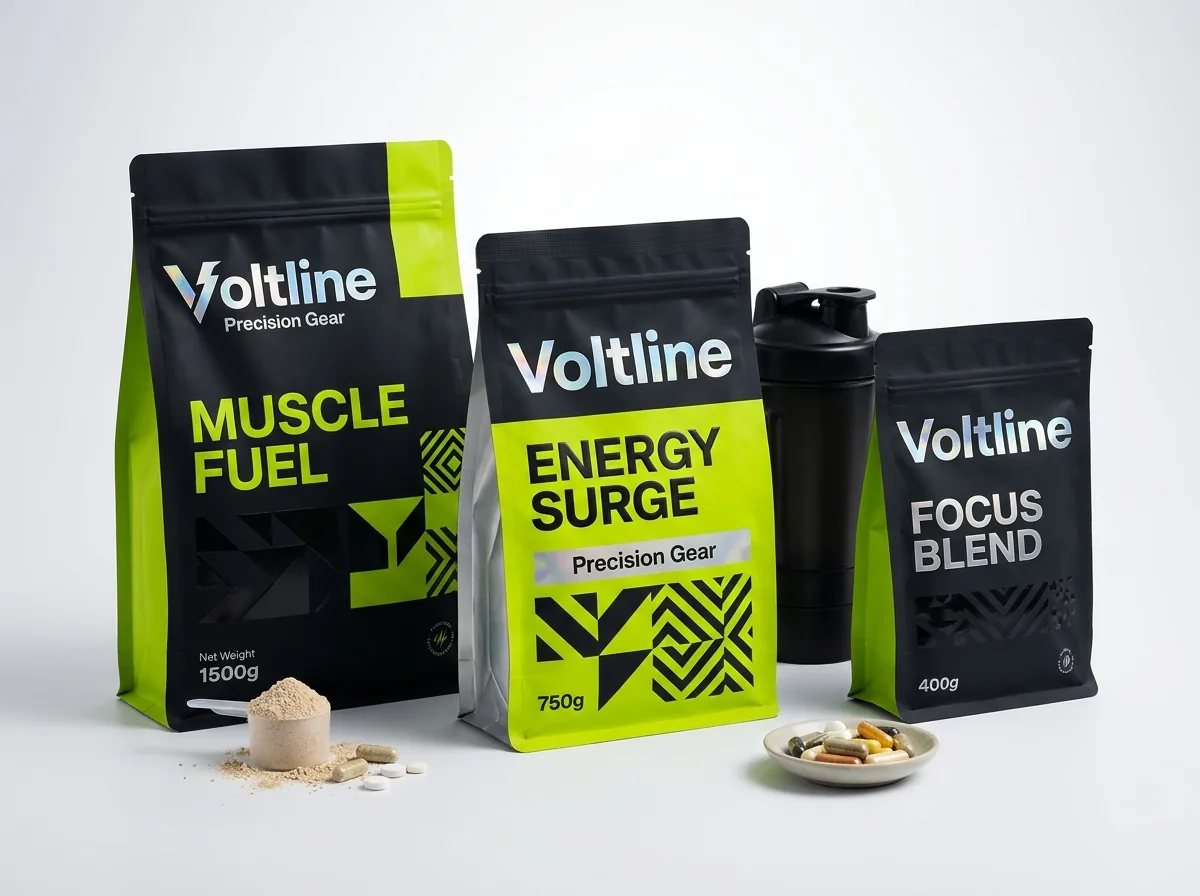
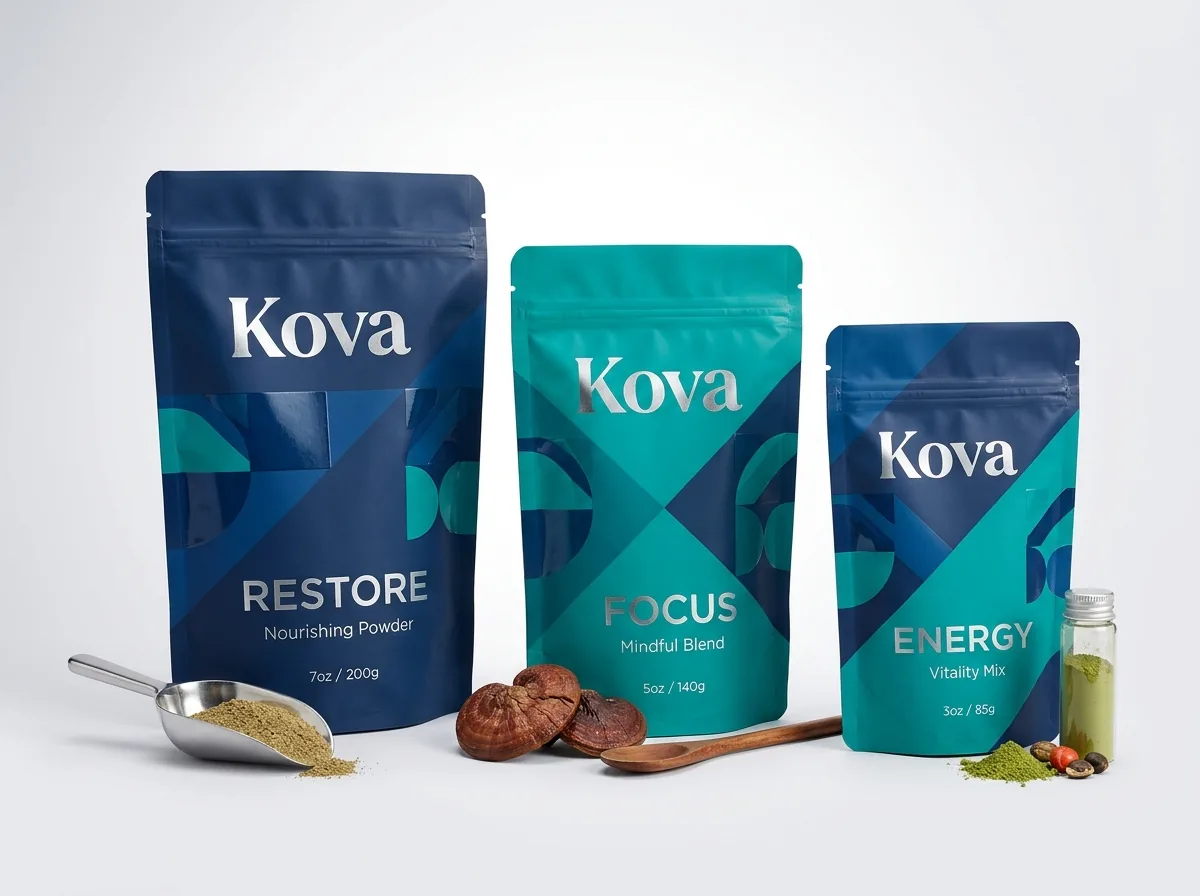
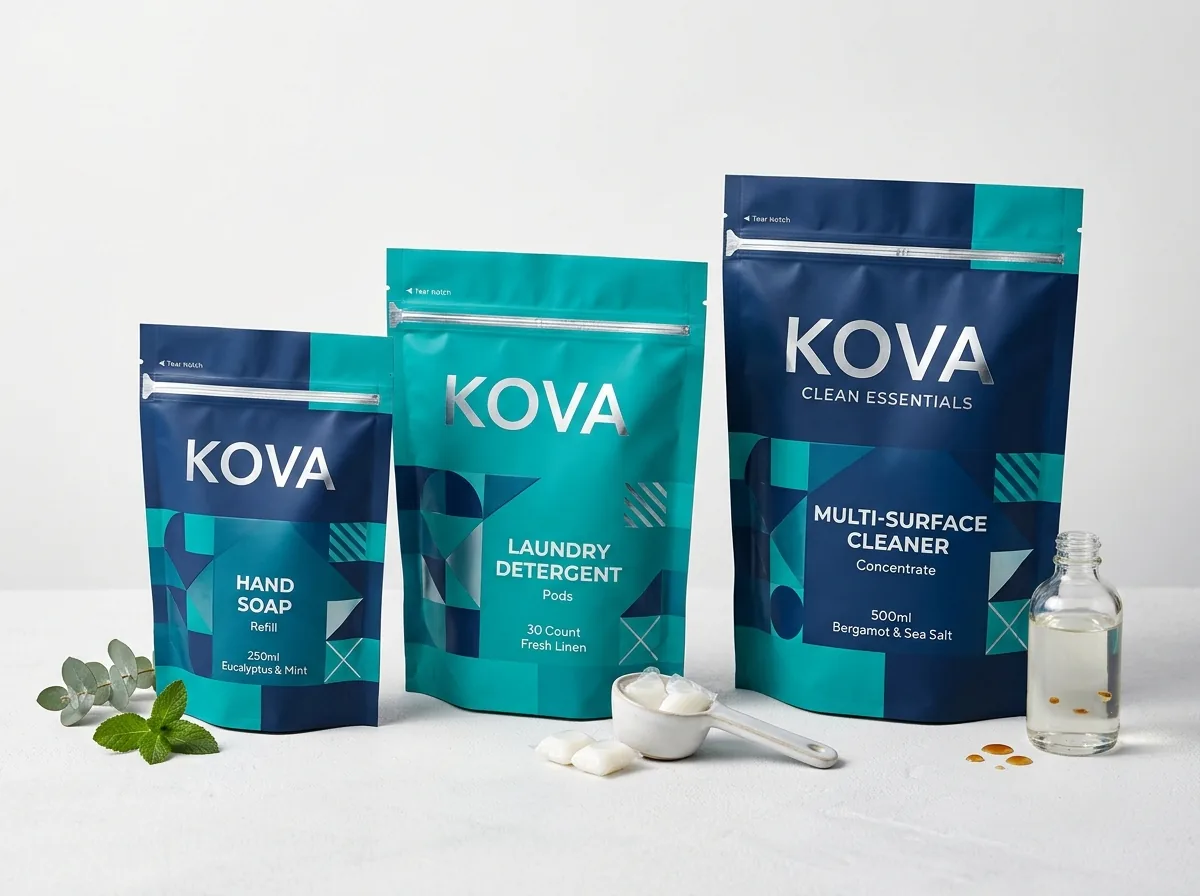
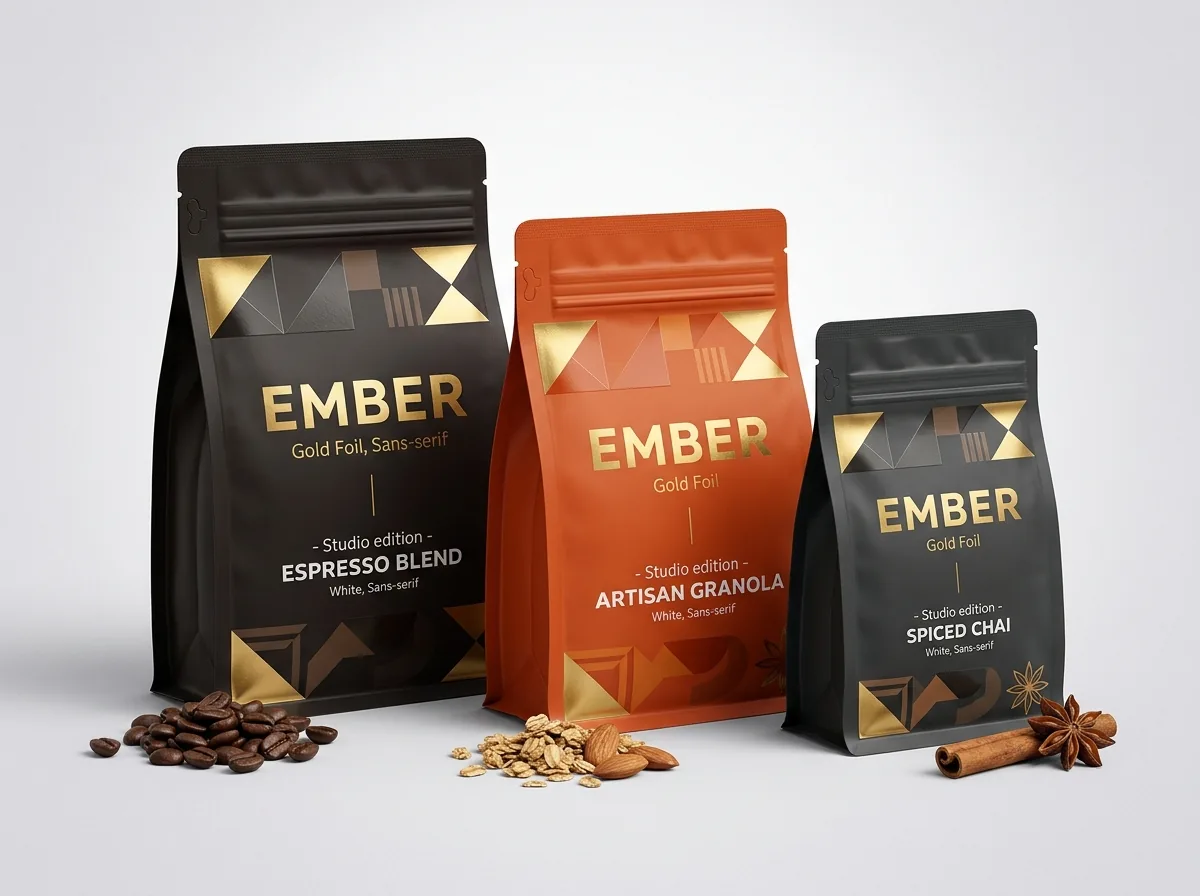
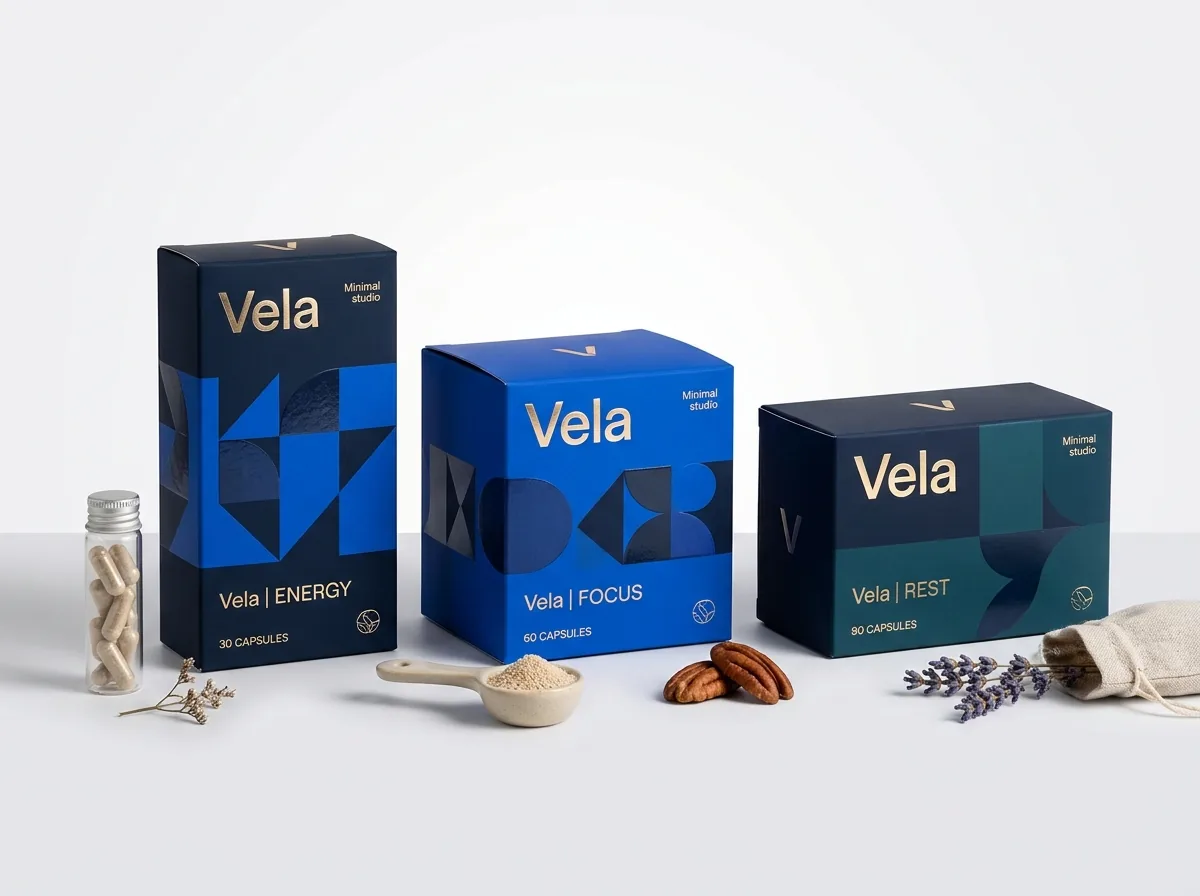
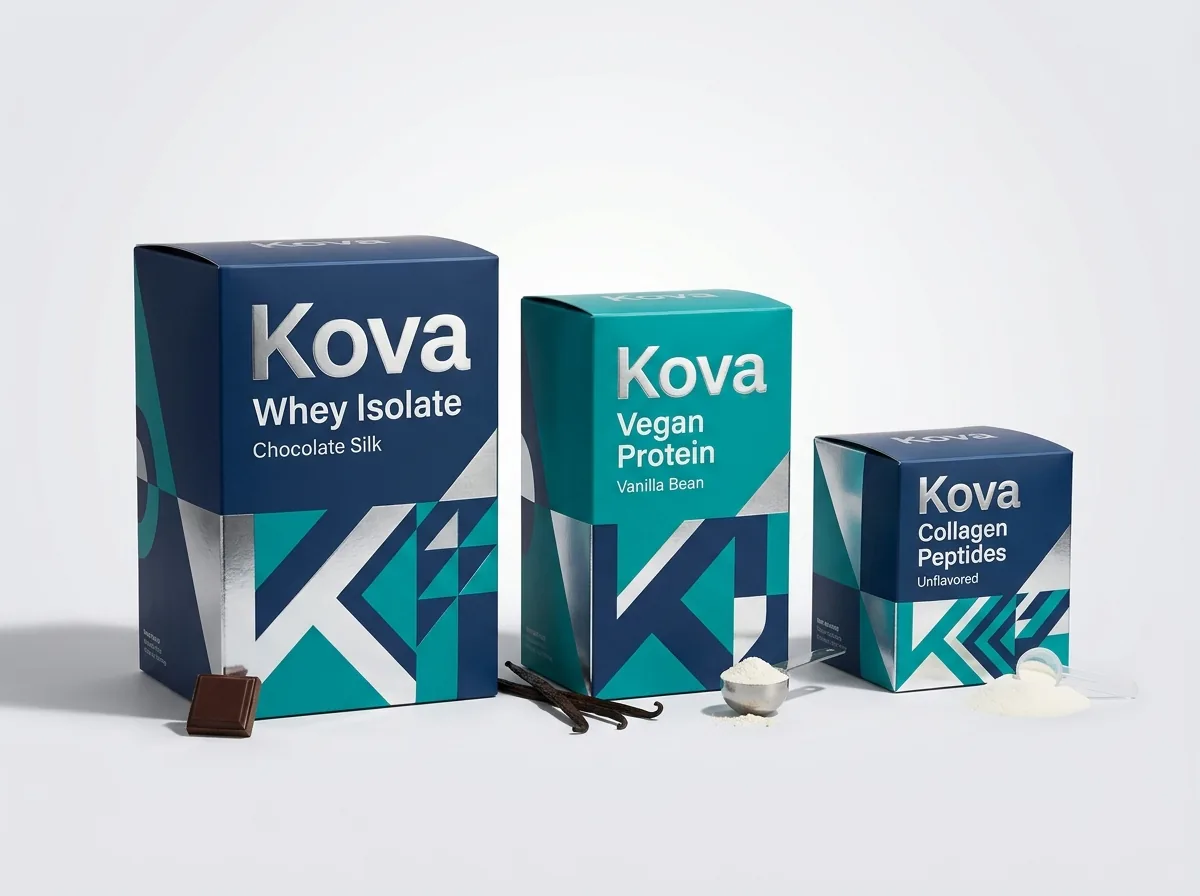
Ready to order supplement pouches? Compare up to 3 quantities with a free 3D mockup.
Request a Quote →Questions about supplement pouches
What size stand-up pouch do I need for 30 servings of greens or pre-workout powder?
Most 30-serving greens, pre-workout, amino acid and hydration formulas weigh between 8 oz and 12 oz (240 g to 340 g) and fit cleanly inside a 6 × 9 × 3.5 inch stand-up pouch, including a 15 cc to 30 cc plastic scoop and desiccant packet.
Can I use one pouch size for both whey protein and plant-based pea protein?
Yes, provided you size the pouch around the plant-based protein. Pea and brown-rice proteins are 20% to 25% less dense than whey isolate, so a 9.5 × 13.5 × 4.75 inch 2 lb pouch sized for pea protein will comfortably hold 2 lb of whey.
How much headspace do co-packers require above the powder level?
Most rotary premade pouch fillers and semi-automatic auger lines require 1.5 to 2 inches of unfilled headspace below the zipper track. That gap allows the top clamps to pull the pouch mouth flat for a dust-free heat seal.
What size label fits on a 6 × 9 inch or 7.5 × 11 inch supplement pouch?
On a 6 × 9 × 3.5 inch greens pouch, use a 3.5 × 4 inch front and back label. On a 7.5 × 11 × 4 inch 1 lb collagen pouch, a 4 × 5 inch label sits flat between the zipper track and bottom gusset crease.
Do I pay die or plate fees for a custom supplement pouch size?
No. CubitPack never charges die or plate fees. Whether you choose a standard 6 × 9 × 3.5 inch greens bag or a custom width matched to your co-packer's filling grippers, we provide a free custom dieline and 3D mockup before payment.
How can I test my powder and scoop inside a pouch before printing?
Order our $50 sample kit (credited toward your first order) or request an unprinted prototype cut to your planned width, height and gusset, then pour in your exact gram weight plus the scoop and desiccant on a scale.
Still have a question? Ask a packaging specialist.
Request a Quote →Request your supplement pouches quote
Tell us your size and quantities, and one dedicated account manager prepares pricing for each tier.
- Free design & AI-to-print studio + 3D mockup
- No die or plate charges · 4–5 day rush available
- Free shipping to all 50 states
- 10% off your first order
The size benchmarks in this guide are calculated from standard dietary supplement bulk densities (0.32 to 0.70 g/cm3), plastic scoop displacement and co-packer auger headspace requirements. A CubitPack packaging specialist reviewed every dimension. Spot something off? Tell us and we will fix it.
Sources
What changed
- October 22, 2026: First published.
- October 22, 2026: Updated specifications, terminology, and verified source links.
More guides
New packaging guides by email
Sizes, materials and design tips. Unsubscribe anytime.