
How do one-way degassing valves and barrier films work on coffee bags?
Short answer: A one-way degassing valve uses a flexible inner diaphragm that opens under slight pressure to vent carbon dioxide gas from freshly roasted beans while sealing shut against outside oxygen. Paired with multi-layer foil or metallized barrier films on custom coffee bags, it keeps whole beans fresh without ballooning the pouch.
On this page
- Why do freshly roasted beans need a one-way degassing valve
- How do foil, metallized and kraft barrier laminates compare
- Where should I place the degassing valve and heat seals on my artwork
- How do white ink, soft-touch and foil stamping work on coffee pouches
- What drives the unit cost of custom coffee bags
- Common mistakes
- FAQs
Request a custom quoteFree dieline & 3D mockup
Freshly roasted coffee faces two opposite packaging threats at the exact same time: trapped carbon dioxide pushing outward from inside the bean, and atmospheric oxygen trying to push inward from the room. During roasting, Maillard and pyrolysis reactions generate up to 10 liters of carbon dioxide per kilogram of coffee, which slowly diffuses out of whole beans over 7 to 14 days. If you heat-seal fresh beans in an airtight pouch with no valve, the bag inflates like a pillow and can burst its side seams; if you poke a raw pinhole in the bag, oxygen enters and stales the delicate aromatic oils within days. A one-way degassing valve solves both problems with an elastic membrane sealed over a sealant layer that lifts only when internal gas pressure exceeds outside air pressure, working alongside multi-layer barrier laminates to preserve roast flavor.
Why do freshly roasted beans need a one-way degassing valve?
Inside the roaster drum, green coffee beans reach internal temperatures above 400 degrees Fahrenheit, forming carbon dioxide gas trapped within the microscopic pores of the roasted seed. Roughly 35% to 40% of that gas escapes in the first 24 hours after cooling, and the remainder continues outgassing for one to two weeks. For a specialty roaster who bags and ships whole beans the same afternoon or the morning after roasting, that carbon dioxide needs a controlled escape path. A one-way degassing valve (typically a 20 mm to 22 mm plastic disk heat-welded to the inside of the pouch wall) contains a small rubber or silicone diaphragm seated against a thin layer of viscous sealant fluid and a micro-filter screen. When carbon dioxide pressure inside the sealed pouch rises just a few millibars above room pressure, the diaphragm flexes open and vents the gas through tiny pinholes pierced in the outer pouch film. As soon as the pressure equalizes, the diaphragm snaps flat against its seat so outside oxygen and moisture cannot travel back inside. The built-in mesh filter also blocks fine coffee chaff and espresso grounds from clogging the valve seat.
- Whole-bean coffee bagged within 72 hours of roasting: always include a one-way degassing valve.
- Freshly ground coffee bagged immediately after grinding: include a mesh-filtered one-way valve.
- Silo-degassed ground coffee or single-pot 2 oz fractional packs brewed within days: valve is optional.
- Squeeze aroma check: shoppers can gently press a valved pouch to smell the roast without opening the seal.
How do foil, metallized and kraft barrier laminates compare?
A flexible coffee bag is never a single sheet of plastic or paper; it is a three- or four-layer laminate where each thin layer performs one job. The outer layer (such as matte BOPP, PET or unbleached kraft paper) carries your printed ink and finish. The middle barrier layer blocks oxygen and water vapor. The inner food-contact sealant layer (typically linear low-density polyethylene, LLDPE) melts cleanly under your heat-sealing bar without imparting odor or taste to the beans. In packaging engineering, barrier performance is measured by Oxygen Transmission Rate (OTR) and Water Vapor Transmission Rate (WVTR), where lower numbers mean less air and humidity pass through the film over 24 hours. Use the table below to match your laminate structure to how long your custom printed coffee bags sit in distribution before brewing.
| Laminate structure | Oxygen & UV protection | Best coffee distribution channel | Visual & tactile look |
|---|---|---|---|
| Aluminum foil middle layer | Highest barrier; blocks virtually all oxygen and UV light | Grocery distribution, export shipping, 6-12 month shelf life | Crisp fold memory; opaque matte, gloss or soft-touch exterior |
| Metallized film (VMPET) | High oxygen and moisture barrier; blocks UV light | Specialty cafe retail, e-commerce subscriptions, 3-6 month turnover | Flexible, resilient against crinkling in parcel mailers |
| Natural kraft + inner barrier | High barrier when laminated over foil or metallized film | Artisan roasters wanting natural paper texture with full freshness | Earthy unbleached brown or white paper outer feel |
| Clear window + barrier web | Moderate barrier across the clear demetallized window zone | Fast-turning cafe counter blends sold within 2-6 weeks | Shows whole-bean size, chaff and roast degree directly |
Where should I place the degassing valve and heat seals on my artwork?
Even though the plastic body of a one-way valve is welded to the inside of the pouch, the heat-stamping ring leaves a subtle 0.85 inch circular impression and three to five tiny vent pinholes on the outside of the bag. If your designer places small origin text, a roast date box or a UPC barcode directly over that spot, the valve ring will distort the letters or prevent retail scanners from reading the barcode. On both stand-up pouches and flat-bottom box bags, the standard valve position is centered horizontally on either the front panel or the back panel, approximately 2.25 to 3 inches down from the top edge of the bag (sitting about 0.75 inches below the zipper track). Placing the valve in that upper headspace keeps it above the settled bean line and gives your logo a natural anchor point. Also keep essential typography at least 0.375 inches inside the left and right side heat seals and 1.5 inches below the top edge where your heat sealer jaws clamp shut.
Know your size? Compare pricing across up to 3 quantities.
Request a Quote →How do white ink, soft-touch and foil stamping work on coffee pouches?
Specialty coffee packaging relies heavily on tactile finishes and color coding so shoppers can tell an Ethiopian floral light roast apart from a Sumatran dark roast at a glance. On white or clear print films, CMYK process printing and Pantone spot inks reproduce bright berries, citrus yellows and pastels directly. On natural brown custom kraft stand up pouches or metallic films, transparent CMYK inks will look dark and muted unless we print a solid opaque white ink underbase beneath your colored artwork first. To add shelf contrast without extra labels, pair a dead-matte or velvety soft-touch lamination across the body of the bag with a spot UV gloss pattern or metallic foil stamping on your roastery crest. If you pack rotating micro-lots using one shared pouch design, ask us to leave a clean un-Varnished or matte-coated 3 × 4 inch rectangle on the front panel so your custom coffee bag labels bond permanently without lifting.
What drives the unit cost of custom coffee bags?
Because CubitPack never charges die or plate fees and includes free 50-state shipping on every order, your quote is driven purely by material area, pouch construction, functional hardware and total run quantity. A 5 lb bulk bag uses more than twice the square inches of barrier film as a 12 oz stand-up pouch, and an eight-side-seal flat-bottom box pouch with a front pocket zipper requires more converting steps than a three-web stand-up doypack. The biggest lever for lowering your cost per bag is combining your roast SKUs into a single shared pouch size and material run. When your house blend, decaf, espresso and single-origin bags all share the same 6 × 9 × 3.5 inch stand-up dieline and barrier stack, you can enter up to three total quantities in the quote form to see how quickly the unit price drops at higher tiers.
- Keep one master dimension across all 10 oz and 12 oz roasts to consolidate volume and maximize unit price breaks.
- Include a one-way degassing valve on whole-bean retail bags, and omit it on single-use 2 oz sample packets where not needed.
- Use a shared custom-printed pouch with a front 3 × 4 inch label frame for small 100-bag seasonal micro-lots and experimental roasts.
- Request three quantity tiers in Step 1 of the quote form to compare how setup spreads across larger production runs.
What are the most common coffee bag valve and prepress mistakes?
Most barrier and artwork issues are easy to prevent during prepress if you check valve coordinates and seal zones before approving your proof. Avoid these five mistakes
- Placing a UPC barcode or tiny origin text right over the 0.85 inch circular one-way valve weld zone.
- Mounting the degassing valve in the lower half of the pouch where fine ground coffee can press directly against the valve filter.
- Printing light pastel colors directly on natural brown kraft film without specifying an opaque white ink underbase.
- Running critical logo letters into the top 0.375 inch heat-seal band where the crimped sealer jaws distort the film.
- Setting heat-sealer jaws too hot on a kraft-laminated pouch, which scorches the outer paper before melting the inner sealant layer.
Packaging for this
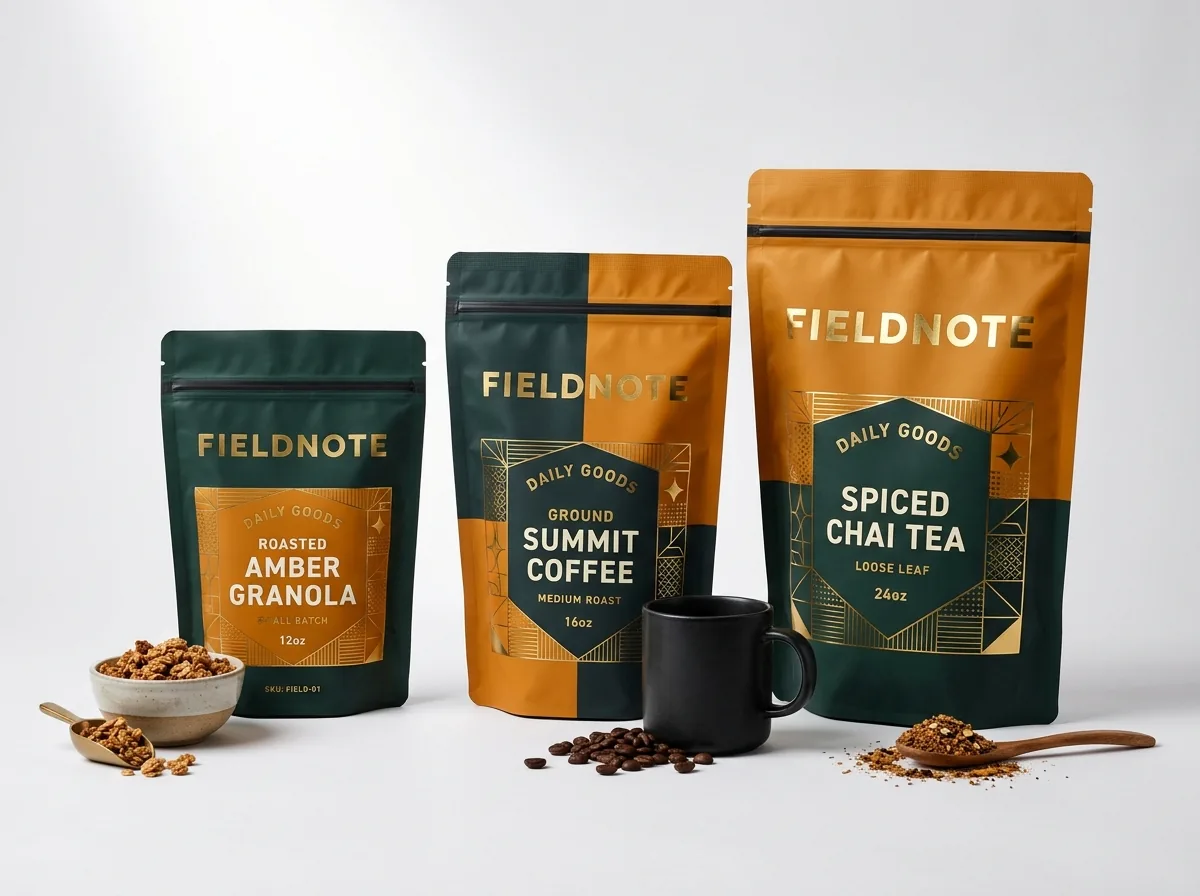
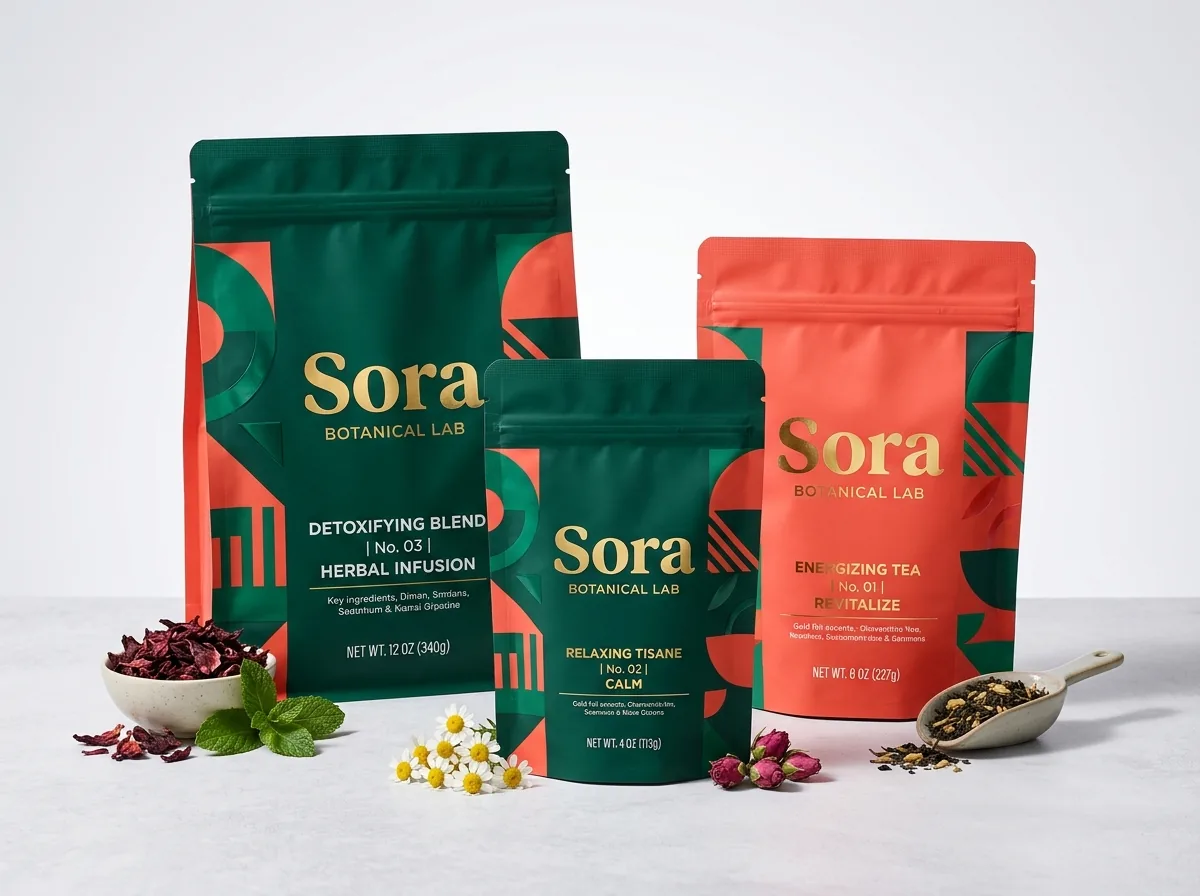
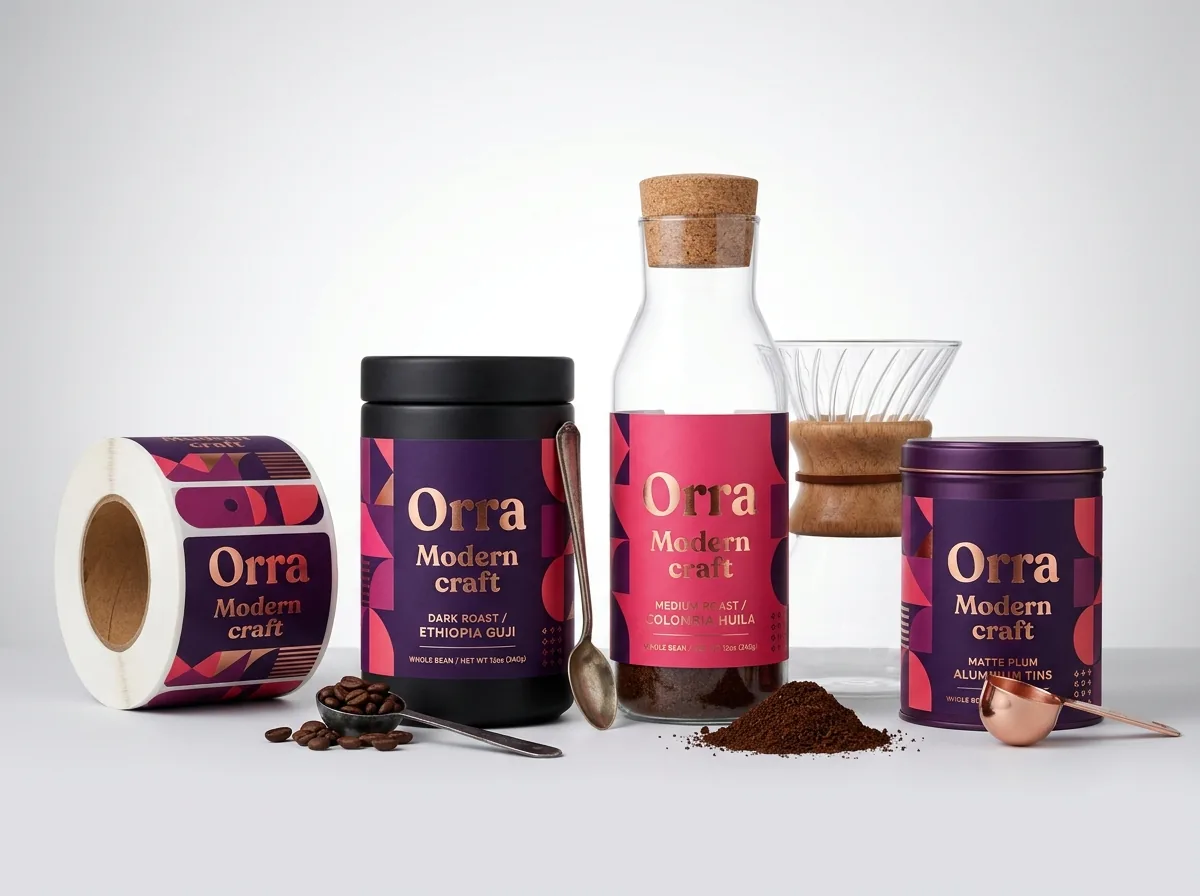
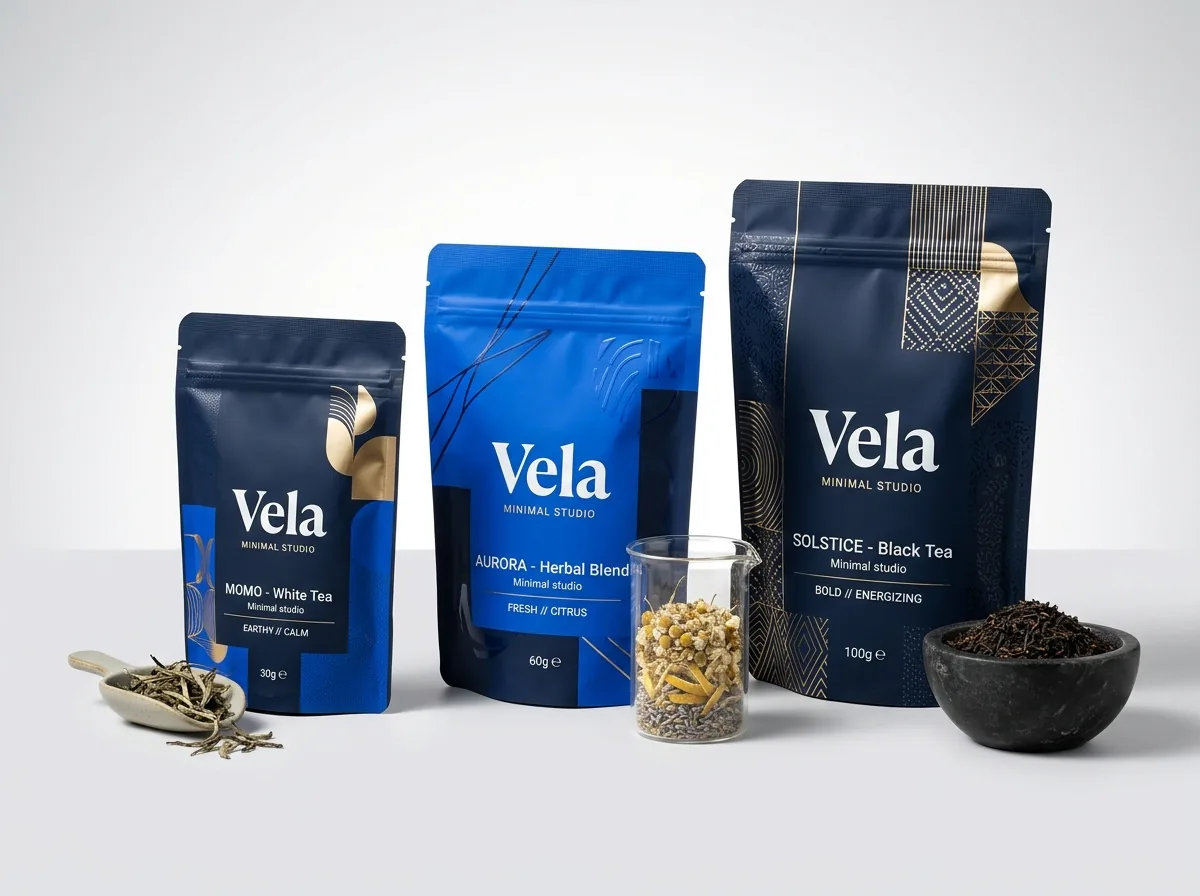
Ready to order coffee bags? Compare up to 3 quantities with a free 3D mockup.
Request a Quote →Questions about coffee bags
Does the one-way degassing valve go on the front or the back of the coffee bag?
You can place the one-way degassing valve centered on either the upper front panel or the upper back panel, about 2.25 to 3 inches below the top edge. Many roasters prefer the back panel so the front artwork stays completely uninterrupted.
Can customers smell the coffee through a one-way degassing valve?
Yes. When a shopper gently squeezes a sealed coffee bag, the slight increase in internal pressure flexes the one-way valve membrane open for a second, releasing a burst of roast aroma without letting outside room air back into the pouch.
Are your barrier films and inner liners safe for direct coffee contact?
Yes, food-contact inner sealant liners and barrier laminates are available on request for direct whole-bean and ground coffee contact through our certified partner facilities. We provide partner material documentation on request.
How long should I let roasted beans rest before heat-sealing a valved bag?
With a properly rated one-way degassing valve, most roasters bag whole-bean coffee as soon as it cools to room temperature (within 1 to 24 hours after roasting). For finely ground coffee, resting 12 to 24 hours before sealing prevents sudden pressure spikes.
Do I need a vector dieline before requesting a quote for custom coffee bags?
No. Tell us your target bag style and roast weight in the quote form, and our structural team will send a free custom dieline showing the exact bleed, cut lines, zipper track, tear notches and valve circle.
Can I send an AI-generated coffee bag illustration to print?
Yes. Upload your AI concept or artwork file in Step 2 of the quote form. Our designers clean up the file, set up CMYK or Pantone layers, clear the valve zone and show you a free 3D mockup before payment.
Still have a question? Ask a packaging specialist.
Request a Quote →Request your coffee bags quote
Tell us your size and quantities, and one dedicated account manager prepares pricing for each tier.
- Free design & AI-to-print studio + 3D mockup
- No die or plate charges · 4–5 day rush available
- Free shipping to all 50 states
- 10% off your first order
The degassing mechanics and laminate barrier comparisons in this guide are based on Specialty Coffee Association research on post-roast carbon dioxide emission and standard flexible packaging OTR/WVTR specifications, checked by a CubitPack packaging specialist. Spot an error? Tell us and we will fix it.
Sources
What changed
- October 22, 2026: First published.
- October 22, 2026: Updated specifications, terminology, and verified source links.
More guides
New packaging guides by email
Sizes, materials and design tips. Unsubscribe anytime.