
Seal end vs tuck end pill boxes: which closure should you choose?
Short answer: Choose a tuck-end carton when your pills sit inside an induction-sealed bottle or when customers open and reclose the box daily to reach blister cards. Choose a glued seal-end carton with a perforated tear strip when the custom pill boxes themselves act as the tamper-evident retail barrier on store shelves.
On this page
- How do seal end, tuck end, auto lock and dispenser pill boxes compare
- When is a reverse tuck or straight tuck end pill box the smarter pick
- When do blister packs require a glued seal end carton with a tear strip
- When should you step up to an auto lock bottom or sachet dispenser box
- How does your filling method affect which pill box style you order
- Common mistakes
- FAQs
Request a custom quoteFree dieline & 3D mockup
Picking between a seal-end and a tuck-end closure comes down to two questions: how your primary container is sealed inside, and how your customer interacts with the box at home. A reverse tuck end or straight tuck end box closes with fold-in flaps and friction slit locks, making it fast to pop open and hand-pack without glue equipment and easy for customers to reclose between doses. A seal-end box has overlapping top and bottom flaps that are glued shut on a cartoning line (or sealed with high-tack tape/adhesive) and opened by pulling a perforated zipper tear strip across the top or front panel. Once that tear strip is pulled, the box cannot be sealed back to its factory state, giving immediate visual tamper evidence for OTC blister cards. At CubitPack, all closure styles for printed pill boxes start at 1,000 units with zero die charges.
How do seal end, tuck end, auto lock and dispenser pill boxes compare?
Every pill carton ships flat to save warehouse space, with the long vertical side seam pre-glued so your packing crew or co-packer simply squeezes the edges to pop the carton into a rectangular tube. What differs is how the top and bottom ends close once the blister cards, bottles or sachet strips slide inside. Use the comparison table below to match your primary pill container, filling method and retail tamper-evidence requirement to the right structural style. If you pack multiple SKUs, you can use a reverse tuck carton for bottled capsules and a tear-strip seal-end carton for blister-packed tablets within the same brand family. Every style below runs on the same paperboard stocks and accepts matte, gloss or soft-touch lamination.
| Carton closure style | Best primary pill format | Tamper & weight behavior |
|---|---|---|
| Reverse tuck end (RTE) | HDPE pill bottles (60-120 cc) & 1-2 blister cards | Reclosable slit lock; pair with wafer stickers for tamper seal |
| Straight tuck end (STE) | Clinical capsules, beauty vitamins & giftable regimens | Clean unbroken front face; both flaps tuck toward the back |
| Seal end with tear strip | OTC tablet blister stacks (2-6 cards) & retail pharmacy packs | Glued ends + zipper perforation show permanent opening evidence |
| Auto lock bottom (crash lock) | Heavy amber glass pill jars (150-250 cc) & twin packs | Pre-glued bottom locks flat on erection; holds heavy glass |
| Lower-front dispenser box | 28-day and 30-day wound rolls of daily pill sachets | Top stays closed; perforated lower door feeds 1 pouch per day |
When is a reverse tuck or straight tuck end pill box the smarter pick?
If your capsules or tablets are already sealed inside an HDPE or PET bottle with a heat-induction foil liner and a shrink neck band, the bottle itself provides the primary tamper barrier. In that case, gluing the outer carton shut with a destructive tear strip is unnecessary and often frustrates customers who like to keep the carton on their nightstand to read the dosage schedule. A reverse tuck end box has the top flap hinging from the back panel and the bottom flap hinging from the front panel. Because those two flaps point in opposite directions on the flat dieline, adjacent cartons nest together tightly on the press sheet, reducing paperboard waste. A straight tuck end box hinges both flaps from the front panel so they tuck into the back wall, leaving zero raw cut board edge along the top front crease. Both styles include friction slit locks on the dust flaps so the lid snaps shut securely during shipping.
When do blister packs require a glued seal end carton with a tear strip?
Foil-backed blister cards hold each tablet in its own sealed plastic pocket, so the individual pills are protected from moisture, but an unsealed tuck carton allows anyone in a store aisle to slide a blister sheet out and back in without leaving a mark. For OTC pain relievers, allergy tablets, sleep aids and pharmacy-shelf supplements packed in blisters, retail buyers frequently specify a seal end box. On a seal-end pill carton, four flaps fold down at both ends and bond together with hot-melt glue, cold glue or double-sided high-tack tape strips. To make the box effortless for the customer to open at home without scissors, we die-cut a dual-line zipper perforation across the top lid or upper front panel with a small thumb notch at one edge. Pulling the tear strip pops the top hinge open cleanly while clearly showing that the package has been opened.
- Full overlap seal end: front and back main flaps overlap completely for maximum glue bond strength.
- Zipper tear strip: two parallel nick-and-cut perforation lines that pull away cleanly with one finger.
- Reclosable tuck tab after tear: the upper flap can include a secondary tongue that tucks back in after the strip is removed.
- Hand-pack option: ask for pre-applied peel-and-stick adhesive tape on the seal flaps if you do not run a hot-melt cartoner.
Know your size? Compare pricing across up to 3 quantities.
Request a Quote →When should you step up to an auto lock bottom or sachet dispenser box?
Standard tuck bottoms rely on friction slits to hold the base shut. That works well for lightweight foil blister cards and plastic 60-capsule bottles under 4 ounces, but a thick 150 cc or 250 cc amber glass bottle filled with 120 tablets can push a standard tuck base open when a shopper lifts the box off a shelf. An auto lock bottom box (also called a crash-lock bottom) solves this by pre-gluing the bottom flaps during production. When your packing team squeezes the flat carton open, the interlocking bottom base snaps flat in one second and supports heavy glass jars without tape. Meanwhile, if you sell 30-day personalized vitamin strips, a dispenser box combines a sturdy auto-lock or tuck base with a perforated pull-out window near the bottom of the front panel so customers can pull out one daily sachet packet each morning.
How does your filling method affect which pill box style you order?
Always match your closure style to how your team or contract packager loads the boxes. If you are hand-packing 1,000 to 5,000 units in-house, an auto-lock bottom paired with a top tuck flap (or a reverse tuck end box with clear custom seal stickers) cuts assembly time in half compared with folding and gluing four bottom flaps by hand. If your contract manufacturer runs a horizontal or vertical automatic cartoner, ask them for their machine spec sheet before approving your dieline. High-speed cartoners often prefer reverse tuck end cartons with specific slit-lock angles or hot-melt seal-end flaps with glue-free knockouts so the folding plows and glue nozzles run without jams. Share your co-packer's notes when ordering custom vitamin boxes or custom supplement boxes and our design team will match every flap angle for free. Beyond packing speed, think about how your customer stores the carton during a 30-day or 60-day course. When a bottle or blister pack is used every morning, a reclosable tuck flap with crisp slit locks or a reclosable tongue inside a tear-strip lid keeps the carton neat on a bathroom shelf so the dosage table and expiration date stay attached to the product for the entire month.
- In-house hand packing (1,000 to 5,000 boxes): pick reverse tuck end + wafer seals, or an auto-lock bottom with a tuck top.
- Semi-automatic tabletop loading: pick reverse tuck end with friction slit locks or peel-and-stick tape seal flaps.
- High-speed horizontal or vertical cartoner: pick reverse tuck end or hot-melt seal end with unvarnished glue flap knockouts.
- Daily countertop sachet dispensing: pick an auto-lock bottom dispenser box with a perforated lower-front pull window.
What are the most common mistakes when choosing a pill box closure?
Choosing the wrong flap style can slow down your packing table or let heavy glass bottles drop through the base. Avoid these five closure mistakes
- Ordering glue-only seal-end boxes for an in-house hand-packing team that has no hot-melt glue gun or tape fixture.
- Using a standard friction tuck bottom for heavy 200 cc amber glass pill bottles instead of a pre-glued auto-lock base.
- Laminating over the glue flaps on a seal-end carton. Hot-melt and water-based glues need raw unlaminated board to bond.
- Skipping a zipper tear strip on glued seal-end blister boxes, which forces customers to rip the top panel apart.
- Forgetting slit locks on reverse tuck flaps, which lets springy folded leaflets push the top lid open on the shelf.
Find your size
Suggested inside size: 2.5 × 0.75 × 3.75 in
A starting point. Your account manager confirms the size with you before the proof.
Quote this size →Packaging for this

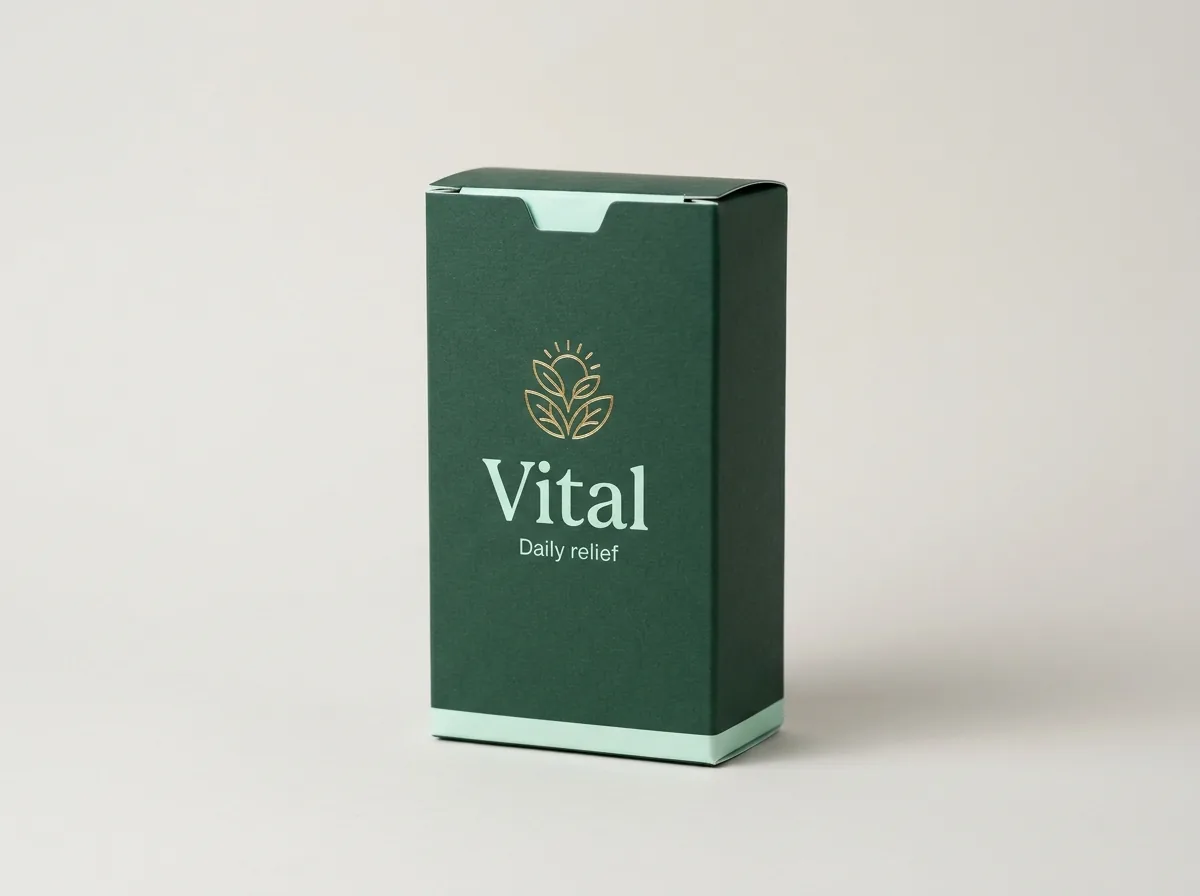

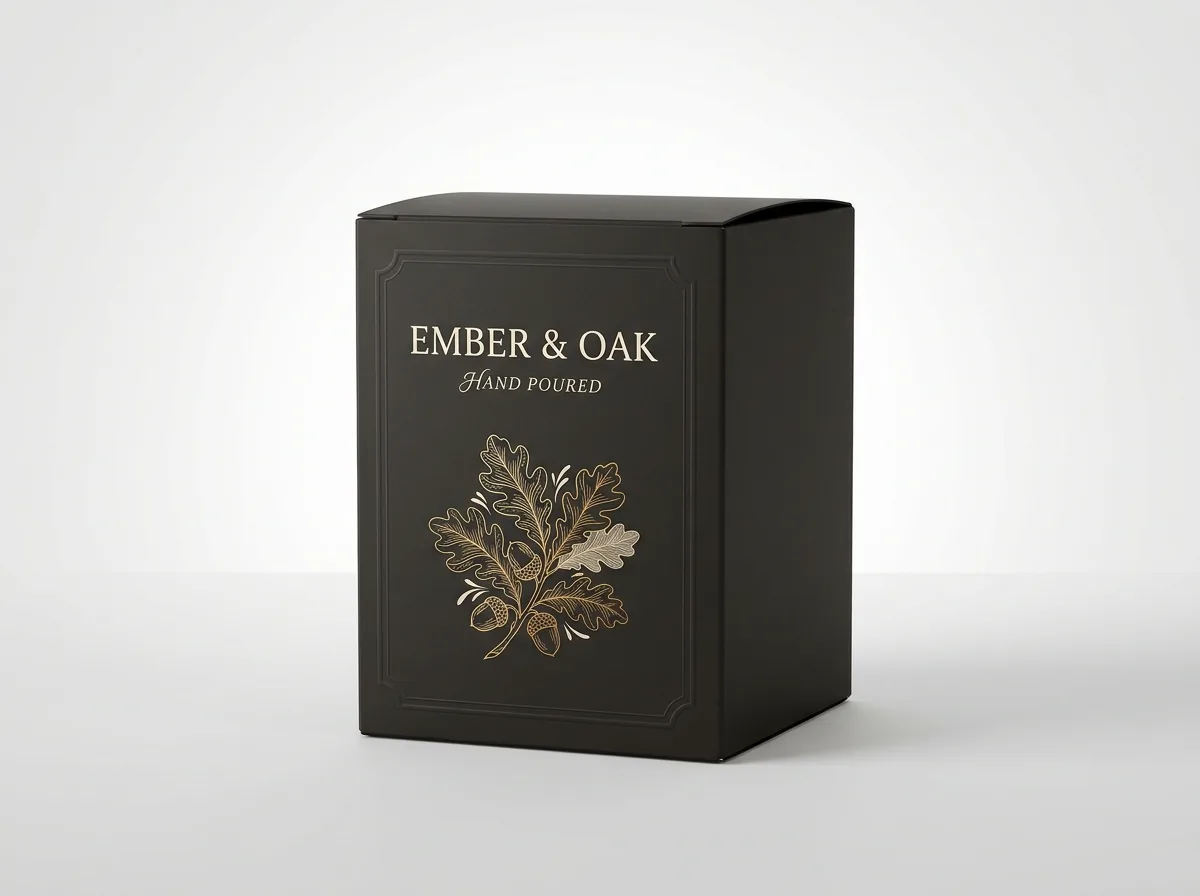
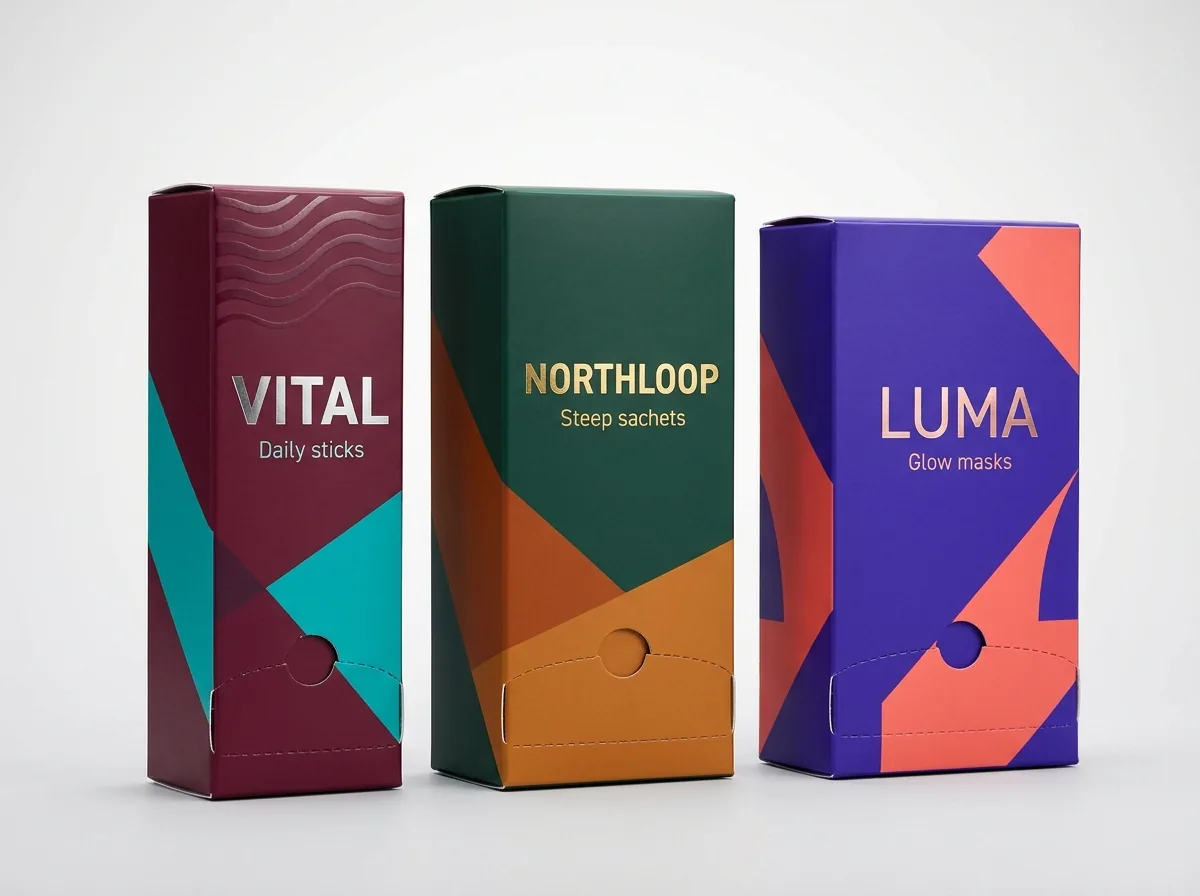
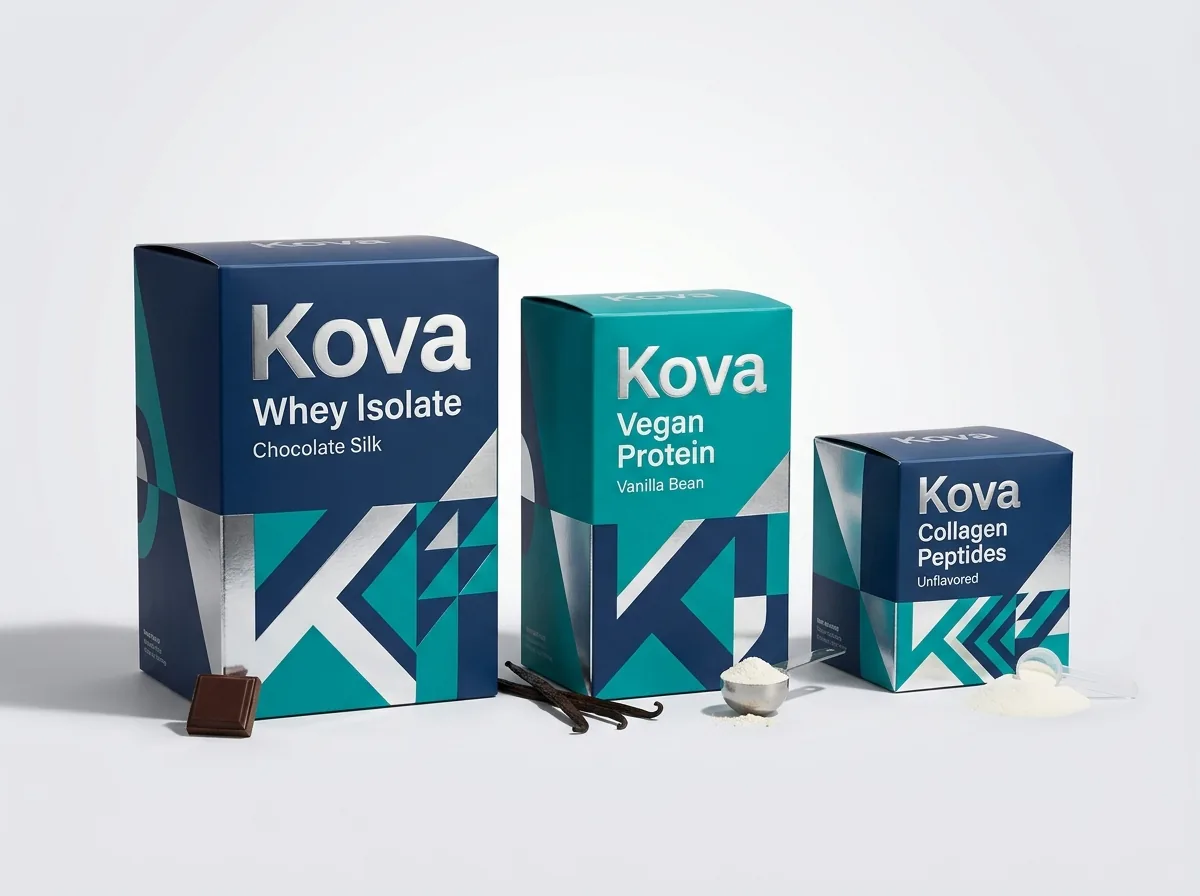
Ready to order pill boxes? Compare up to 3 quantities with a free 3D mockup.
Request a Quote →Questions about pill boxes
Can I get a tamper-evident pill box without using a gluing machine?
Yes. You can order a reverse tuck end or straight tuck end pill box and apply clear or printed tamper-evident security stickers across the top and bottom tuck seams, or ask for peel-and-stick adhesive tape strips on seal-end flaps.
Does a seal-end pill box with a tear strip cost extra for the die cut?
No. CubitPack never charges die or plate fees. Adding a zipper tear strip, a thumb notch or a lower sachet dispenser door to your custom pill box dieline is completely free.
Which closure is faster to assemble by hand: reverse tuck or auto-lock bottom?
An auto-lock bottom is fastest because the base is pre-glued during production and snaps flat automatically when you squeeze the carton open, leaving only the top tuck flap to close after loading the bottle.
Can a seal-end pill box still be reclosed after the tear strip is pulled?
Yes. We can design a reclosable tear-strip lid where pulling the perforated strip releases a tongue tab that tucks back into a slot on the inner frame, so the customer can close the box between doses.
Why do straight tuck end boxes look cleaner on the front panel than reverse tuck?
On a straight tuck end box, both the top lid and bottom flap hinge from the front panel and fold toward the back, so the front face has smooth folded score lines at both top and bottom with no raw board edge showing.
Can I compare pricing between reverse tuck and auto-lock bottom on one quote?
Yes. Tell your account manager which styles and quantities (from 1,000 boxes up) you want to compare, and we will return a side-by-side quote in 5-7 minutes along with free 3D mockups before you pay.
Still have a question? Ask a packaging specialist.
Request a Quote →Request your pill boxes quote
Tell us your size and quantities, and one dedicated account manager prepares pricing for each tier.
- Free design & AI-to-print studio + 3D mockup
- No die or plate charges · 4–5 day rush available
- Free shipping to all 50 states
- 10% off your first order
This comparison draws on standard folding carton structural styles (ECMA / TAPPI tuck, seal-end and crash-lock standards) and contract-packaging line requirements for blister cards and pill bottles. A CubitPack packaging specialist reviewed every section. Spot something off? Let us know and we will fix it.
Sources
What changed
- October 22, 2026: First published.
- October 22, 2026: Updated specifications, terminology, and verified source links.
More guides
New packaging guides by email
Sizes, materials and design tips. Unsubscribe anytime.