
Jar cartons vs sachet dispenser boxes for gummy supplements: which fits your line?
Short answer: Choose auto-lock bottom jar cartons for 60-count and 90-count home multivitamin bottles, and perforated gravity dispenser boxes for 15 to 30 flow-wrapped daily 2-gummy travel packs. Compare both formats on our custom gummy boxes page to match your filling line and shelf goals.
On this page
- How do jar cartons, sachet dispensers and PDQ trays compare
- When should you use an auto-lock bottom carton for gummy bottles
- Why are supplement brands switching to 2-gummy sachet dispenser boxes
- How do retail PDQ counter display boxes drive single-pouch trial sales
- Can you combine a starter jar carton with a monthly sachet or pouch refill box
- Common mistakes
- FAQs
Request a custom quoteFree dieline & 3D mockup
Choosing between a wide-mouth jar carton, a vertical sachet dispenser box and a retail PDQ counter tray depends on how your customers take their gummies and how your contract packager seals them. Standard 60-count and 90-count family supplements use a 250 cc to 400 cc PET or amber glass jar packed inside an auto-lock bottom folding carton, giving you four flat panels for Supplement Facts tables while keeping per-serving packaging cost low. By contrast, sleep, travel immunity, pre-workout and beauty-chew brands often seal 2 to 4 gummies in individual metallized barrier sachets and pack 30 packets inside a zip-perforated dispenser box so gummies never clump together in humid bathrooms or gym bags. CubitPack produces every gummy carton style starting at 1,000 units with free custom dielines, no die or plate charges and free 50-state shipping.
How do jar cartons, sachet dispensers and PDQ trays compare?
Unlike dry tablets, pectin and gelatin gummies are hydrocolloid gels containing 12% to 18% moisture, coated either in fine sugar crystals or carnauba wax oil. Once a consumer opens a 60-count jar in a humid bathroom or warm kitchen, ambient moisture can cause sugar-sanded gummies to sweat or oil-coated gummies to stick in a clump near the bottom of the bottle. That physical reality drives many brands to offer both a home jar and a single-serve sachet carton. The comparison table below breaks down the four primary outer box structures used for custom printed gummy boxes across container weight, shelf footprint, clump protection and co-packer speed.
| Carton structure | Primary gummy container | Best retail or DTC use case |
|---|---|---|
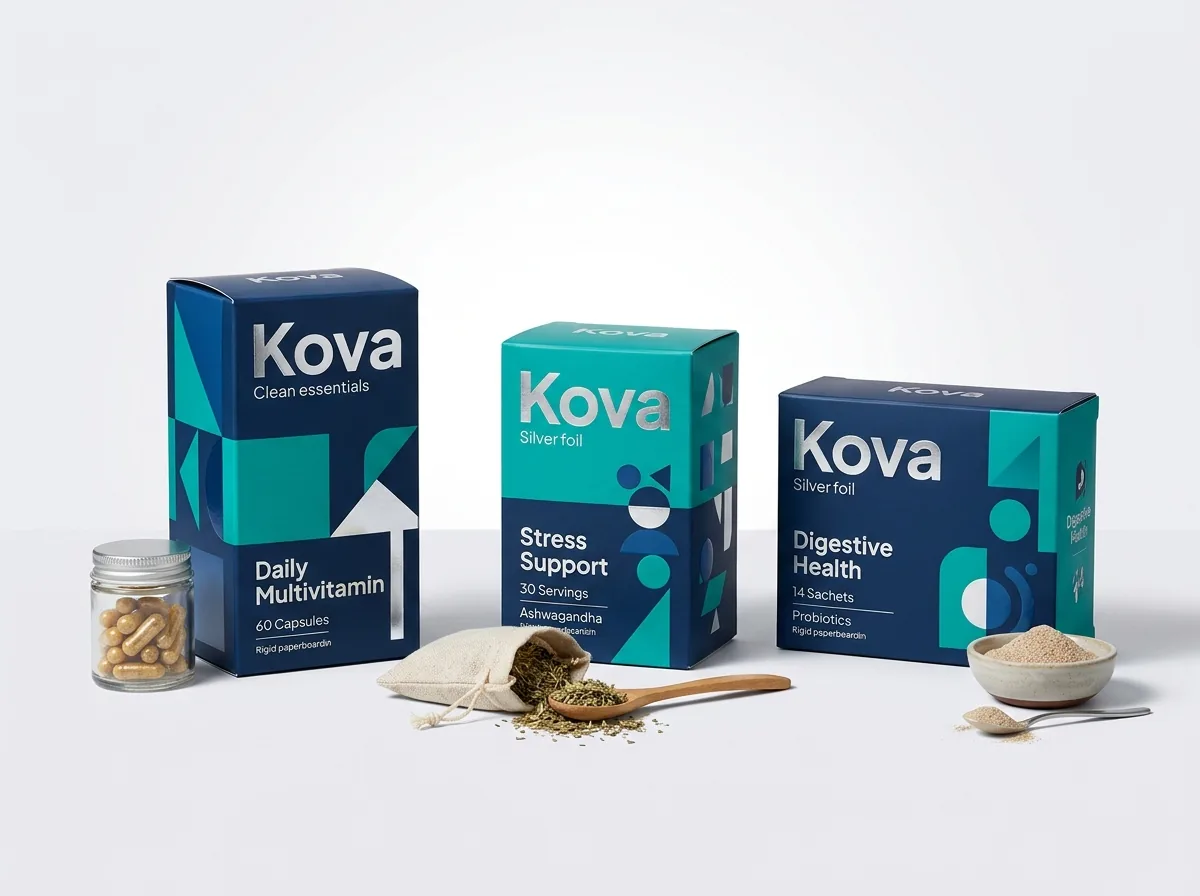
| Auto-lock bottom jar carton | 250 cc - 400 cc PET or glass jar (60-90 gummies) | Everyday home multivitamins & pharmacy shelves |
| Window jar carton | Clear PET jar showing fruit colors & shapes | Retail grocery & natural health aisles |
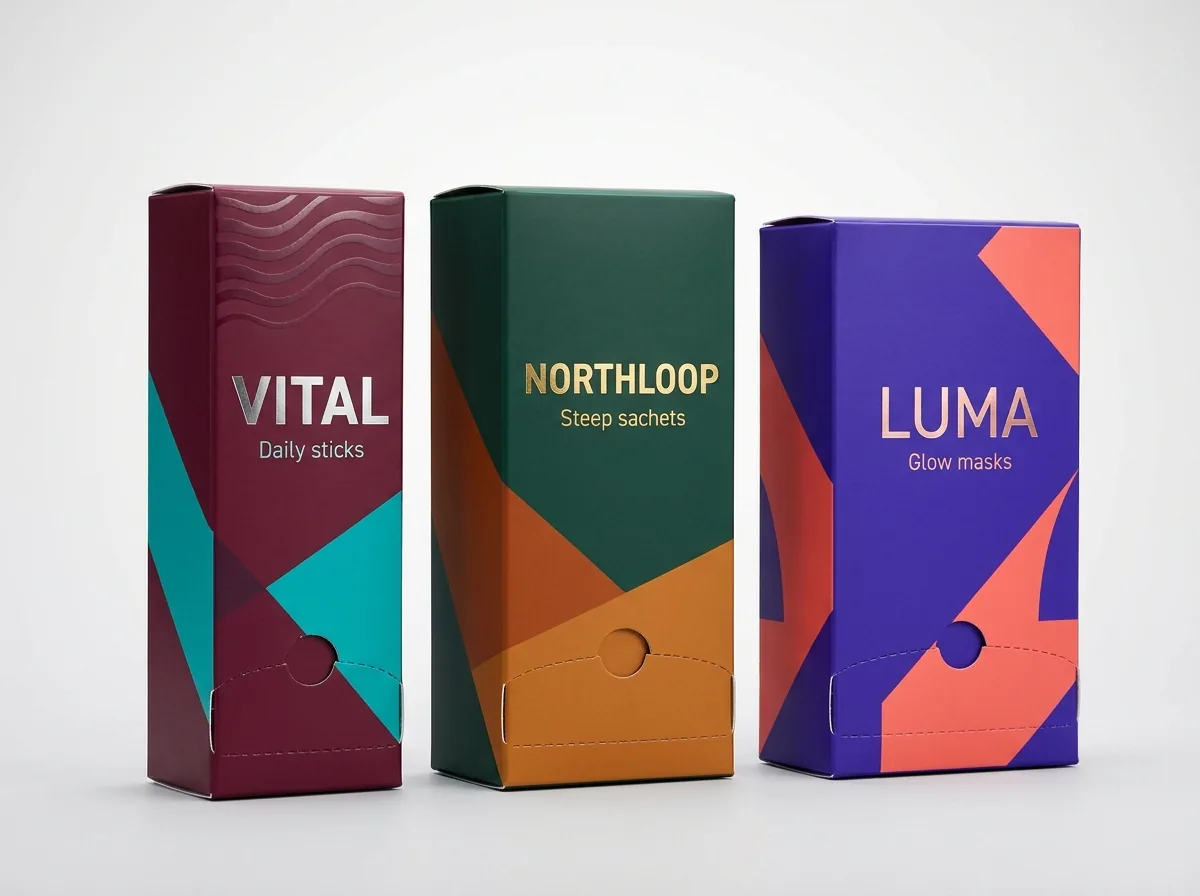
| Gravity sachet dispenser box | 15 - 30 flow-wrapped 2-to-4 gummy packets | Hygienic travel, gym bag & nightstand dosing |
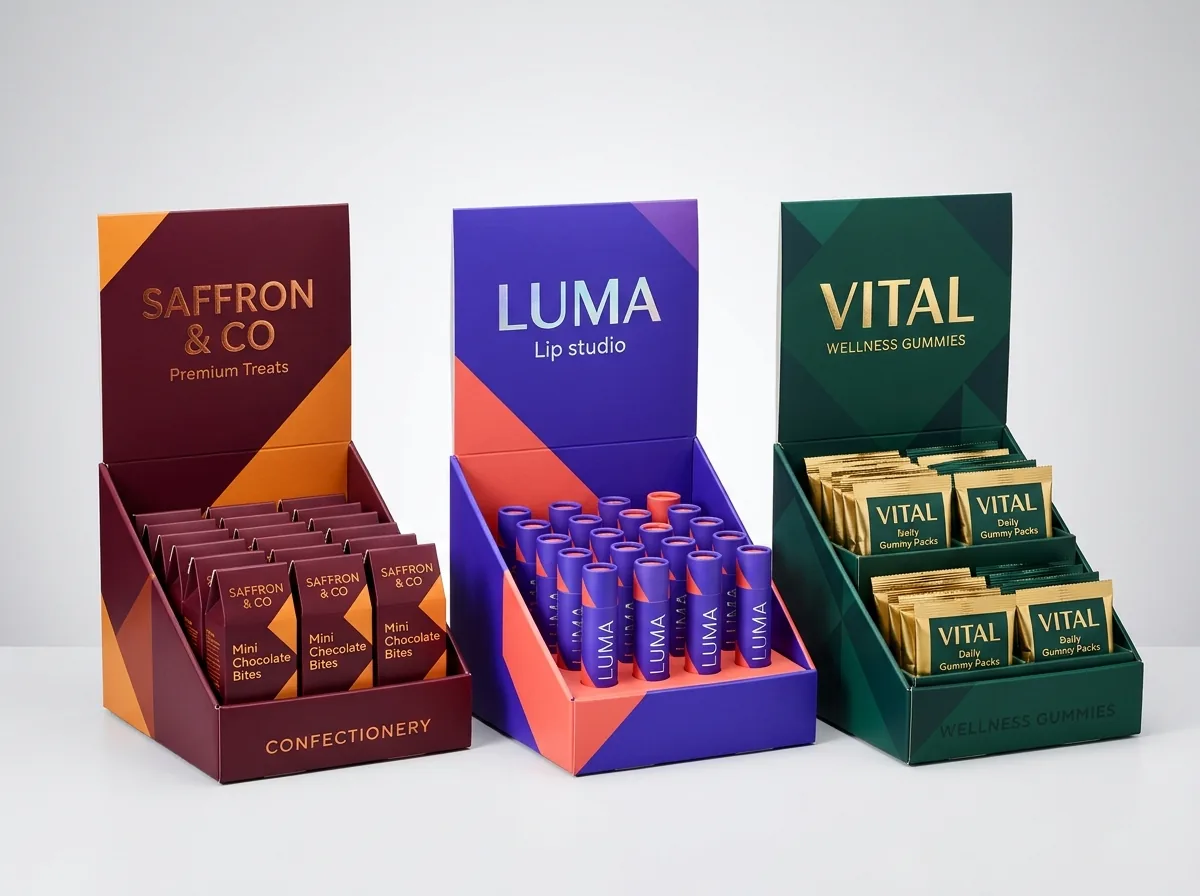
| PDQ counter display tray | 12 - 20 stand-up pouches or trial packs | Checkout registers, gyms & wellness clinics |
| Straight tuck end jar carton | 150 cc - 200 cc light PET bottle (30 gummies) | Kids' vitamins or 14-day starter bottles |
| Partitioned E-flute mailer | Three 300 cc flavor jars or jar + sachet refill | Direct-to-consumer bundles & subscriptions |
When should you use an auto-lock bottom carton for gummy bottles?
A 60-count bottle of 3.5-gram pectin gummies holds 210 grams (7.4 ounces) of product before you even weigh the thick-walled PET jar or amber glass packer bottle. Once capped and induction-sealed, a 60-count jar weighs 8.5 to 12 ounces, and a 90-count 400 cc jar can exceed 14 ounces. In a standard reverse tuck end or straight tuck end carton, only friction holds the bottom flap closed; when a shopper picks up the box by its sides, a heavy gummy bottle can push the bottom tuck flap open and drop onto the floor. Switching to a custom auto-lock bottom box solves both base strength and co-packer labor. We pre-glue the four overlapping bottom flaps on our folder-gluer so the carton ships flat but snaps into a locked base as soon as your fulfillment team squeezes the sides.
- Use auto-lock bottoms on any gummy jar 250 cc or larger (or any container weighing over 6 ounces).
- Add a die-cut front window if your clear PET jar has a gap between the front and back label panels.
- Include an extended top dust-flap neck collar if packing a narrower amber glass jar inside a wider square box.
- Straight tuck end works well for lightweight 150 cc or 200 cc PET bottles holding 30 small gummies.
Why are supplement brands switching to 2-gummy sachet dispenser boxes?
Single-serve metallized film sachets (holding two, three or four gummies per packet) have surged in popularity for melatonin sleep gummies, mushroom focus chews, tart cherry recovery gummies and kids' lunchbox vitamins. Because each serving remains hermetically heat-sealed in foil laminate until the moment it is eaten, the gummies never dry out, oxidize or fuse into a solid block during humid summer months. To organize 30 slippery foil packets in a medicine cabinet or on a kitchen counter, brands pack them upright inside custom dispenser boxes. A zipper-style perforation runs across the lower front panel and wraps 0.75 inch onto both side walls. When the customer pulls the tear strip, the lower front flap either detaches or folds forward into a shallow chute that feeds the next sachet down by gravity as each packet is pulled out, keeping all remaining servings stacked upright and dust-free.
Know your size? Compare pricing across up to 3 quantities.
Request a Quote →How do retail PDQ counter display boxes drive single-pouch trial sales?
When launching a new gummy flavor into independent pharmacies, chiropractic clinics, Pilates studios or natural food stores, asking shoppers to commit to a 30-day bottle right away can slow trial. Packing 6 to 10 gummies in a small stand-up pouch or pillow pack and displaying 12 to 20 pouches inside a custom counter display box puts an impulse trial unit right next to the point-of-sale terminal. A PDQ (Pretty Darn Quick) display carton acts as both the protective shipping outer and the shelf merchandiser. Your co-packer loads the pouches into the carton and closes the tuck lid for shipping; at the store, the cashier tears along the side perforations and folds the lid in half behind the tray to create a double-thick printed header billboard.
- Set the front tray lip height to 1.5 - 2.0 inches so the brand logo on the front pouch remains completely visible.
- Use E-flute corrugated board or heavy laminated white card so the tray walls do not bow when fully loaded.
- Add a front-to-back center divider wall if displaying two flavors (such as Berry Sleep and Citrus Energy) in one tray.
- Print a clear 3-step opening diagram on the back of the perforated lid so store staff fold the header cleanly.
Can you combine a starter jar carton with a monthly sachet or pouch refill box?
Many subscription gummy brands run a two-stage packaging model: the customer's first order arrives in a keepsake amber glass jar packed inside a soft-touch auto-lock carton, while month-two and month-three refills arrive as flexible barrier pouches or 30-count daily sachets inside a slim folding carton or custom mailer box. That approach cuts outbound parcel weight on recurring subscription shipments while keeping a heavy glass jar on the customer's bathroom counter. When you pair a refill pouch or sachet bundle with an outer folding carton, you also protect the flexible film from punctures in mail sorting hubs and give warehouse staff a flat, scannable barcode surface. Because CubitPack manufactures folding cartons, corrugated mailers, stand-up pouches and roll labels under one roof, our prepress team keeps your Pantone fruit colors, typography and lot-coding windows consistent across your retail jar box, sachet dispenser and monthly refill carton. You can start with 1,000 jar cartons for retail shelves and add 1,000 sachet dispenser cartons for travel packs using the exact same brand palette.
What are the most common mistakes when choosing a gummy box style?
Matching the wrong box structure to your gummy container leads to crushed bases, stuck sachets or messy retail displays. Avoid these five structural errors when specifying your dieline
- Using an unglued reverse tuck bottom carton for a heavy 300 cc or 400 cc gummy jar that pushes through the base flap as soon as a shopper lifts the box.
- Cutting the perforated opening on a sachet dispenser box too close to the bottom crease, allowing all 30 flow-wrapped gummy packets to slide out onto the counter at once.
- Designing a retail PDQ counter tray with a tall 3.5-inch front lip that hides the flavor badge, benefit callout and gummy count on the front stand-up pouch.
- Packing sticky oil-coated or sugar-sanded gummies directly into an unlined paperboard carton without a sealed inner barrier jar or metallized foil sachet.
- Ordering a thin-caliper single-wall folding carton for a heavy 3-jar variety bundle instead of an E-flute corrugated mailer with a die-cut partition insert.
Find your size
Suggested inside size: 2.5 × 2.5 × 4.5 in
A starting point. Your account manager confirms the size with you before the proof.
Quote this size →Packaging for this
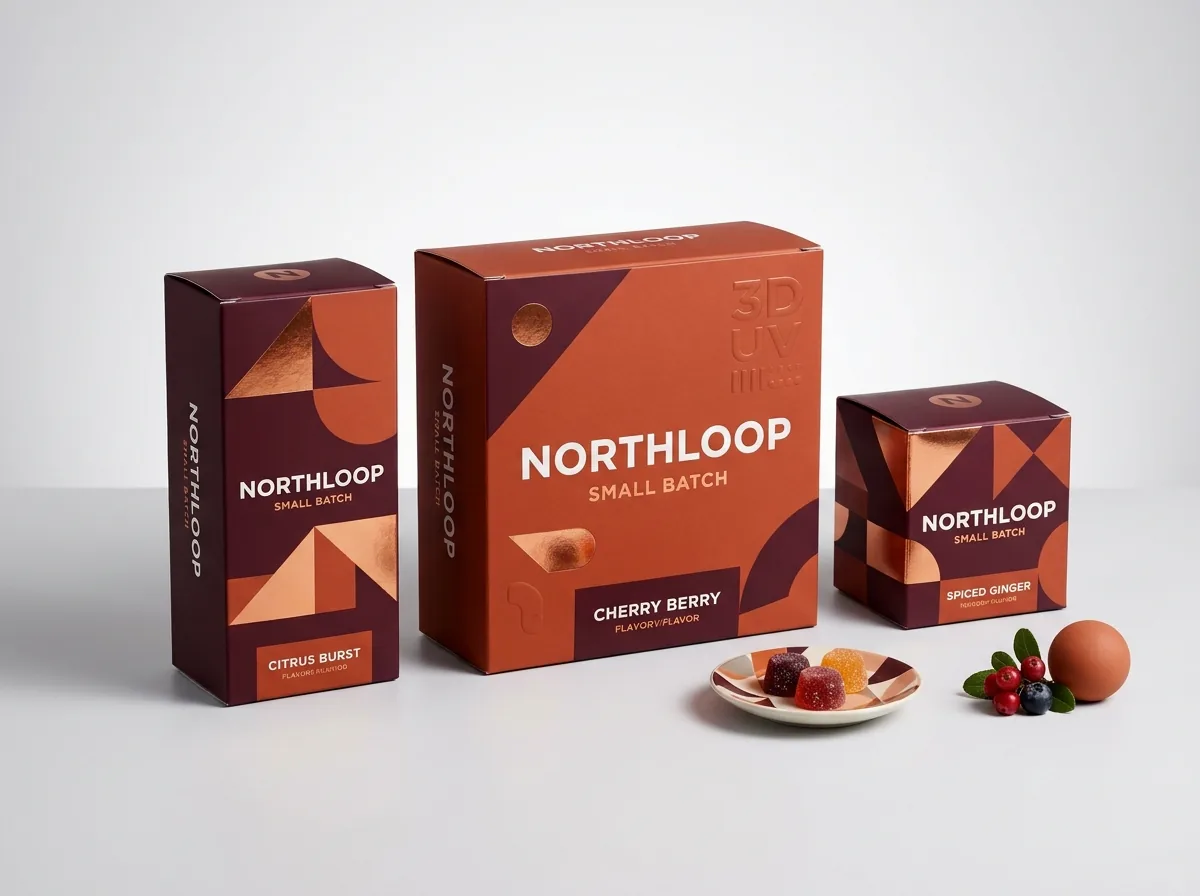
Ready to order gummy boxes? Compare up to 3 quantities with a free 3D mockup.
Request a Quote →Questions about gummy boxes
Can gummies be packed directly inside a paperboard box without a bottle or wrapper?
No. Dietary supplement gummies need a sealed moisture and oxygen barrier (either a PET/glass jar with an induction seal or a heat-sealed foil/film sachet) to stay soft, prevent microbial growth and meet cGMP tamper-evident rules. The paperboard carton is the secondary outer package.
How high should the bottom lip be on a perforated gummy sachet dispenser box?
Leave a 0.75 to 1.0 inch solid paperboard lip between the bottom crease of the carton and the lower edge of the perforated dispenser slot. That lip acts as a retaining dam so the bottom gummy packet stays cradled until pulled.
Do auto-lock bottom gummy cartons cost much more than reverse tuck end cartons?
Auto-lock bottom cartons use slightly more board on the bottom flaps and include a factory folder-gluer step, adding a small per-unit difference. Most gummy brands recover that cost immediately on the co-packer line because auto-lock bases pop open twice as fast as hand-tucked bottoms.
Should a gummy jar window be open die-cut or patched with clear film?
Because your gummies are already sealed inside a rigid PET or glass bottle, an open die-cut window (with no plastic film patch) works cleanly, costs nothing extra for window patching, and makes the paperboard carton easier for consumers to recycle.
Can I order both jar cartons and PDQ counter display boxes in the same run?
Yes. Each distinct box structure has its own custom dieline and starts at 1,000 units, with zero die or plate charges. We print both structures using the same Pantone ink specifications so your jar cartons and counter trays match.
How fast can you deliver custom gummy jar cartons or dispenser boxes?
Standard production takes 10-14 business days after you approve your 2D digital proof and 3D mockup and complete payment. Rush production in 4-5 business days is available, and shipping is free to all 50 US states.
Still have a question? Ask a packaging specialist.
Request a Quote →Request your gummy boxes quote
Tell us your size and quantities, and one dedicated account manager prepares pricing for each tier.
- Free design & AI-to-print studio + 3D mockup
- No die or plate charges · 4–5 day rush available
- Free shipping to all 50 states
- 10% off your first order
The structural comparisons between auto-lock jar cartons, perforated sachet dispensers and PDQ counter trays in this guide draw on ISTA shelf-load standards and US nutraceutical co-packing workflows. A CubitPack packaging specialist verified every detail. Spot an error? Tell us and we will fix it.
Sources
What changed
- October 22, 2026: First published.
- October 22, 2026: Updated specifications, terminology, and verified source links.
More guides
New packaging guides by email
Sizes, materials and design tips. Unsubscribe anytime.