
Seal-end vs tuck-end medicine boxes: which closure should you choose?
Short answer: Choose a tuck-end carton when your primary bottle or tube already carries a shrink band or foil membrane seal, or pair the tuck flap with clear wafer stickers. Choose a glued seal-end carton with a zipper tear strip when the outer box provides primary tamper evidence. Order custom medicine boxes in either style.
On this page
- How do tuck-end, wafer-sealed, auto-lock and seal-end medicine boxes compare
- When is a reverse or straight tuck-end carton the right choice for medicine
- How do glued seal-end medicine boxes with zipper tear strips work
- Why do 4 fl oz and 8 fl oz liquid syrup bottles need an auto-lock bottom
- Wafer seal stickers vs hot-melt glued flaps: which is better for 1,000 to 5,000 box runs
- Common mistakes
- FAQs
Request a custom quoteFree dieline & 3D mockup
Selecting the right closure for an over-the-counter (OTC) medicine carton depends on two things: where your tamper-evident barrier lives (on the inner bottle/tube or on the outer carton) and whether your contract packager closes cartons by hand or with hot-melt glue equipment. Under 21 CFR 211.132, retail OTC drug products require a tamper-evident feature that leaves visible proof if breached. If your syrup bottle has an induction-sealed foil liner and neck shrink band, or your ointment tube has a punctured metal nozzle membrane, a reclosable reverse or straight tuck end carton is fast to pack and lets patients store the tube between uses. When the outer carton itself serves as the tamper barrier (as with blister cards or medicated patches), choose either a hot-melt glued seal-end carton with a perforated zipper tear strip or a tuck-end carton closed with destructible wafer seal labels.
How do tuck-end, wafer-sealed, auto-lock and seal-end medicine boxes compare?
Medicine brands choose among four closure configurations depending on container weight, pharmacy tamper-evidence expectations and co-packer equipment. Review how each closure opens, recloses and runs on a filling line in the table below. When planning your run of custom printed medicine boxes, check with your contract manufacturer early: a glued seal-end carton requires a cartoner with hot-melt or cold-glue applicators, whereas reverse tuck end and auto-lock bottom cartons can be closed either by hand or on standard tuck-plow machines.
| Closure style | Tamper-evidence method | Reclosable after opening? | Typical OTC medicine format |
|---|---|---|---|
| Reverse / straight tuck end | Relies on inner bottle shrink band or tube foil seal | Yes (tuck flap re-closes cleanly) | Crimped ointment tubes, nasal sprays, eye drops |
| Tuck end + wafer seal stickers | Clear destructible or paper tamper labels over flaps | Yes (tuck tab still works after label is cut) | 1,000 - 10,000 unit OTC runs without glue machinery |
| Tuck end with spot-glued flap | Fiber-tear glue dots applied to the top and bottom tuck | Partial (leaves visible paper fiber tear) | Retail tablet blister packs and medicated gels |
| Seal end + zipper tear strip | Full overlapping glued flaps + perforated pull strip | Flip-top hood recloses lightly after tear strip opens | Pharmacy blister cartons, patches, single-dose packs |
| Auto-lock bottom + tuck top | Pre-glued crash-lock base; top uses wafer seal or inner band | Yes (top tuck flap recloses) | Heavy 4 fl oz and 8 fl oz oral syrups & suspensions |
When is a reverse or straight tuck-end carton the right choice for medicine?
For multi-dose remedies that patients keep in a bathroom medicine cabinet or travel bag for months (such as a 30 g hydrocortisone tube, a 15 ml sterile eye drop bottle or a 30 ml nasal spray), the outer carton often stays in use long after purchase because it carries the full 21 CFR 201.66 Drug Facts directions and dosing limits. If the box is torn apart on day one, the patient loses the warning panel. A custom reverse tuck end box or custom straight tuck end box lets the patient open the top flap, read the dosage instructions, use the tube or spray, and tuck the flap right back into the box. When the primary container inside already has a factory-sealed tamper indicator (such as a pierceable aluminum nozzle membrane on an ointment tube or a perforated PVC shrink band on a nasal spray neck), the carton simply needs a printed statement alerting the consumer to check that inner seal, or you can apply clear tamper-evident wafer stickers over the two tuck flaps.
- Reclosable storage: keeps the tube or dropper vial together with its Drug Facts panel and patient leaflet.
- No glue machinery needed: runs on standard mechanical tuck cartoners or hand-packing lines.
- Slit-lock security: friction notches on the side dust flaps hold the bottom and top tucks closed during shipping.
- Wafer-seal ready: works cleanly with clear perforated roll labels applied across the top and bottom seams.
How do glued seal-end medicine boxes with zipper tear strips work?
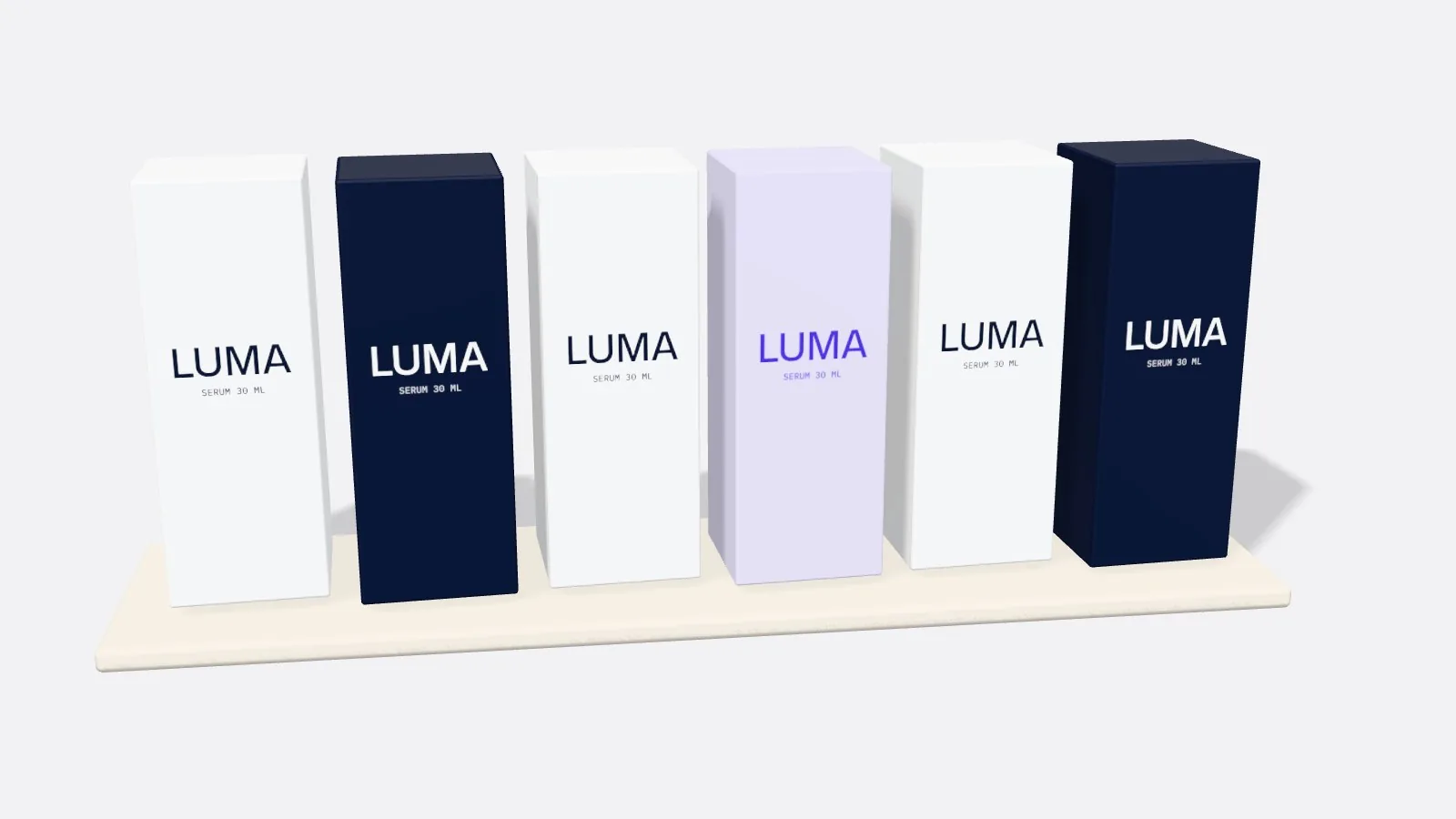
When you walk down a national pharmacy aisle, you will notice that many tablet blister cartons, medicated patch boxes and single-use vial packs have no tuck flaps at all. Instead, they use a custom seal end box where four full-width flaps at both ends are folded over each other and bonded with hot-melt adhesive on the packaging line. Because the glued flaps cannot be pried open without tearing the paperboard fibers, the carton itself acts as a one-piece tamper-evident vault. To make a glued seal-end carton easy for patients (including older adults or anyone with limited hand strength) to open without scissors, we die-cut a double-row parallel perforation called a zipper tear strip across the top front panel or along the top major flap. Pulling the notched starter tab unzips a 0.4 inch paperboard ribbon, releasing the upper hinged hood of the carton cleanly while leaving unmistakable visual proof that the package has been opened.
Know your size? Compare pricing across up to 3 quantities.
Request a Quote →Why do 4 fl oz and 8 fl oz liquid syrup bottles need an auto-lock bottom?
Liquid oral medicines (cough syrups, antacids, children's fever suspensions and digestive elixirs) are the heaviest items on the OTC shelf. A 4 fl oz (118 ml) or 8 fl oz (236 ml) bottle filled with dense sugar-based or glycerin-based syrup weighs 6 to 14 ounces, and twice as much when bottled in amber glass. If a shopper lifts a heavy syrup carton by its sides and the bottom closure is only a friction tuck flap, the bottle can push the bottom flap open and shatter on the pharmacy floor. For any liquid medicine bottle 4 fl oz or larger, pair a custom auto-lock bottom box at the base with either a wafer-sealed tuck top or a spot-glued top flap. Because our converting line pre-glues the four interlocking bottom flaps before shipping the flat cartons to your co-packer, the floor of the carton is permanently locked and ready to bear the full weight of a glass syrup bottle and its over-cap dosing cup.
- Under 2 fl oz (eye drops, nasal sprays, ointment tubes): reverse or straight tuck end with slit locks is sufficient.
- 2 fl oz to 4 fl oz PET bottles: straight tuck end with bottom slit lock or auto-lock bottom.
- 4 fl oz to 8 fl oz glass or heavy liquid bottles: always specify a pre-glued auto-lock bottom or full seal-end base.
- Top neck stabilization: combine an auto-lock base with extended top dust flaps die-cut to grip the bottle neck.
Wafer seal stickers vs hot-melt glued flaps: which is better for 1,000 to 5,000 box runs?
If you are producing an initial run of 1,000 to 5,000 medicine boxes at a contract packager or assembling outer kits in-house, setting up a hot-melt glue cartoner for a small batch can add significant co-packer changeover fees. In that range, ordering a straight or reverse tuck end carton and sealing both ends with clear perforated custom seal stickers (wafer seals) gives you retail tamper evidence without requiring hot-melt glue machinery. We supply matching roll-fed tamper-evident wafer seals alongside your folding cartons, engineered with a center micro-perforation or destructible acetate/vinyl stock that splits apart if anyone tries to peel or lift the tuck flap. Once your SKU scales past 10,000 to 25,000 units per batch on an automated horizontal or vertical cartoning line, switching the dieline to a glued seal-end carton with a perforated zipper tear strip eliminates the separate label application step altogether.
What are the most common medicine box closure mistakes?
Mismatched closures can fail pharmacy buyer reviews or cause co-packer adhesive issues. Check these five closure mistakes before ordering
- Ordering glued seal-end cartons without confirming that your contract packager has hot-melt or cold-glue cartoning equipment on the line.
- Applying flood UV varnish or soft-touch lamination over the glue flaps of a seal-end box, preventing hot-melt adhesive from bonding to the board fibers.
- Packing a heavy 4 fl oz or 8 fl oz amber glass syrup bottle in an unglued reverse tuck end box where the base can pop open when lifted.
- Using a glued seal-end carton with no perforated zipper tear strip, forcing patients to tear the top off raggedly and lose the dosing instructions.
- Forgetting to print the required tamper-evidence indicator statement on the carton telling shoppers which seal (flap, sticker or neckband) to inspect.
Find your size
Suggested inside size: 1.25 × 1.25 × 3.25 in
A starting point. Your account manager confirms the size with you before the proof.
Quote this size →Packaging for this
Ready to order medicine boxes? Compare up to 3 quantities with a free 3D mockup.
Request a Quote →Questions about medicine boxes
Do all over-the-counter medicine boxes have to be glued shut?
No. Under 21 CFR 211.132, an OTC drug product needs at least one visible tamper-evident barrier. If your inner bottle has a shrink neckband and foil induction seal, or your ointment tube has a sealed metal nozzle, the outer box can be a standard tuck-end carton.
Can a tuck-end medicine box be made tamper-evident without glue machinery?
Yes. The most popular method for 1,000 to 10,000 unit runs is applying clear perforated or destructible wafer seal stickers across both the top and bottom tuck flaps. Anyone opening the flap breaks the clear seal along the perforation.
How do you make sure hot-melt glue sticks to a laminated seal-end medicine box?
Our prepress team automatically masks (knocks out) lamination, aqueous coating and UV varnish on all side glue laps and overlapping seal-end flaps so the hot-melt adhesive penetrates directly into bare paperboard fibers for a fiber-tearing bond.
Does a zipper tear strip weaken the medicine box during shipping?
No, when the perforation cut-to-tie ratio is matched to your board caliper. We engineer the double-row zipper perforation so the box stays rigid under top-to-bottom case stacking, yet tears cleanly along the parallel tracks when the thumb tab is pulled.
Which closure is easiest for hand-packing a 1,000-unit launch of syrup bottles?
An auto-lock bottom carton with a top tuck flap sealed by a clear wafer sticker is the fastest setup for hand packing. The bottom locks automatically in one second, the bottle drops in from the top, and one wafer sticker seals the lid.
Can I get samples of both seal-end and tuck-end cartons before ordering?
Yes. Every order includes a free flat digital proof and 3D mockup before payment, and you can also order our $50 sample kit or a custom printed prototype cut to your container size (credited toward your production order).
Still have a question? Ask a packaging specialist.
Request a Quote →Request your medicine boxes quote
Tell us your size and quantities, and one dedicated account manager prepares pricing for each tier.
- Free design & AI-to-print studio + 3D mockup
- No die or plate charges · 4–5 day rush available
- Free shipping to all 50 states
- 10% off your first order
This closure comparison draws on 21 CFR 211.132 tamper-evident packaging categories, folding carton glue-lap mask rules, and load tests for liquid syrup and tube cartons. A CubitPack packaging specialist reviewed every section. Spot something wrong? Tell us and we will fix it.
Sources
What changed
- October 22, 2026: First published.
- October 22, 2026: Updated specifications, terminology, and verified source links.
More guides
New packaging guides by email
Sizes, materials and design tips. Unsubscribe anytime.