
How do I design custom protein powder boxes with macro badges, amino tables and tear slots?
Short answer: Put your protein gram badge, flavor name and packet count on the upper two-thirds of the front panel above any tear slot, place the Supplement Facts on the back and the amino acid table on the side, and leave an unlaminated lot window on the base. See examples on our custom protein powder boxes page.
On this page
- Where should macro badges, Supplement Facts and amino acid tables sit on the box
- How do I design artwork around gravity-feed tear slots and PDQ headers
- Which board stocks and finishes work best for whey, plant and collagen lines
- How can I color-code multiple protein flavors on one shared dieline
- What prepress details does my powder co-packer need on the bottom flap
- Common mistakes
- FAQs
Request a custom quoteFree dieline & 3D mockup
Sports nutrition shoppers read a protein box in a strict three-second hierarchy: first they check the protein grams per serving and protein source (such as 25g Grass-Fed Whey Isolate or 20g Organic Pea Protein) on the front face, second they check the flavor band and packet count, and third they turn the box to inspect the Supplement Facts or Nutrition Facts panel and the branched-chain amino acid (BCAA) breakdown. Designing an effective carton means organizing that dense nutritional data across four flat panels without colliding with structural features like a bottom gravity-feed tear strip or a fold-back counter display header. Pair a scuff-resistant matte or soft-touch lamination on the outside with high-gloss spot UV over your macro callout badges, and leave an unvarnished knockout rectangle on the bottom flap for co-packer lot and expiration date coding.
Where should macro badges, Supplement Facts and amino acid tables sit on the box?
One of the biggest advantages of packing single-serve sachets or a bulk foil refill pouch inside custom printed protein powder boxes is gaining four wide, flat paperboard panels instead of a curved plastic jug. Even on a compact 15-count sachet carton, you have more than 120 square inches of flat surface area to separate your front-of-pack shelf hook from your technical nutrition tables. Use the panel-by-panel layout guide below when setting up your artwork file or briefing our free design team. Notice how all critical brand and macro callouts stay on the upper two-thirds of the front face so tearing open a bottom gravity-feed dispenser slot never removes your product name or protein gram badge.
| Carton panel or zone | What to place here | Prepress & structural rule |
|---|---|---|
| Upper front panel (top 70%) | Brand logo, protein source, macro badge (e.g., 25g Protein · 0g Sugar) & flavor illustration | Keep core copy at least ½ in above any bottom dispenser tear perforation |
| Lower front panel (bottom 30%) | Perforated zip-strip dispenser tab ('Pull here to dispense') & packet count | Print clear directional arrows on the tear strip so users pull cleanly |
| Back panel | Full Supplement Facts or Nutrition Facts table, ingredient list & allergen bolding | Set table rules and 6 pt type in 100% black (K) or high-contrast dark ink |
| Right side panel | Typical Amino Acid Profile table (Leucine, Isoleucine, Valine / BCAAs) & testing seals | Center columns with at least ¼ in margin inside vertical fold score lines |
| Left side panel | 3-step Shaker / Blender / Oats mixing icons, liquid oz guide & side gauge slot | Add printed tick marks (15, 10, 5, Reorder!) beside a die-cut gauge window |
| Bottom auto-lock flap | UPC barcode, SKU code & unvarnished lot/expiry stamp knockout window | Keep barcode on flat white board and leave lot box free of lamination |
How do I design artwork around gravity-feed tear slots and PDQ headers?
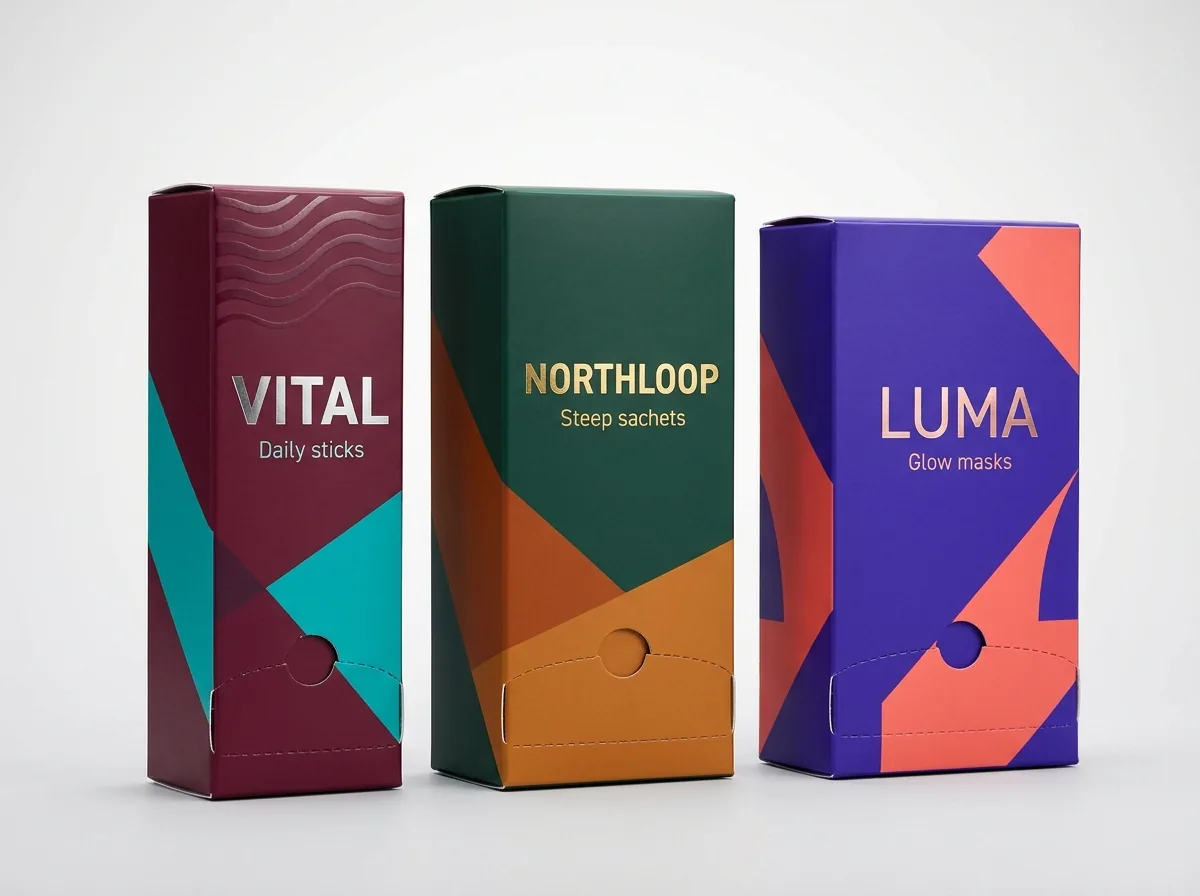
Perforated dispenser slots and tear-away counter display hoods are cut into the paperboard with a toothed zip-rule knife on the cutting die. If your graphic designer lays out the front panel without looking at the structural dieline layer, the perforation line will slice right through the middle of your protein gram callout or flavor illustration. When we send you your free custom vector dieline for a custom dispenser box or custom counter display box, the cut lines, fold scores and zip-rule perforation lines each sit on their own color-coded layer. Treat the removable tear strip as an interactive callout badge: color it in a contrasting accent shade, print 'PULL TO OPEN DISPENSER' right inside the strip, and print your brand tagline or a reorder QR code on the inner back wall or bottom lip that becomes visible once the strip is torn away.
- Keep logos, macro badges and net weight declarations at least ½ inch away from any perforation line.
- Extend background colors and flavor patterns continuously across the perforation so the box looks unified on the shelf.
- Color-contrast the pull tab so customers immediately see where to start tearing.
- On tear-top PDQ gym caddies, duplicate your logo and protein gram badge on the inside of the top lid that folds up into the header card.
Which board stocks and finishes work best for whey, plant and collagen lines?
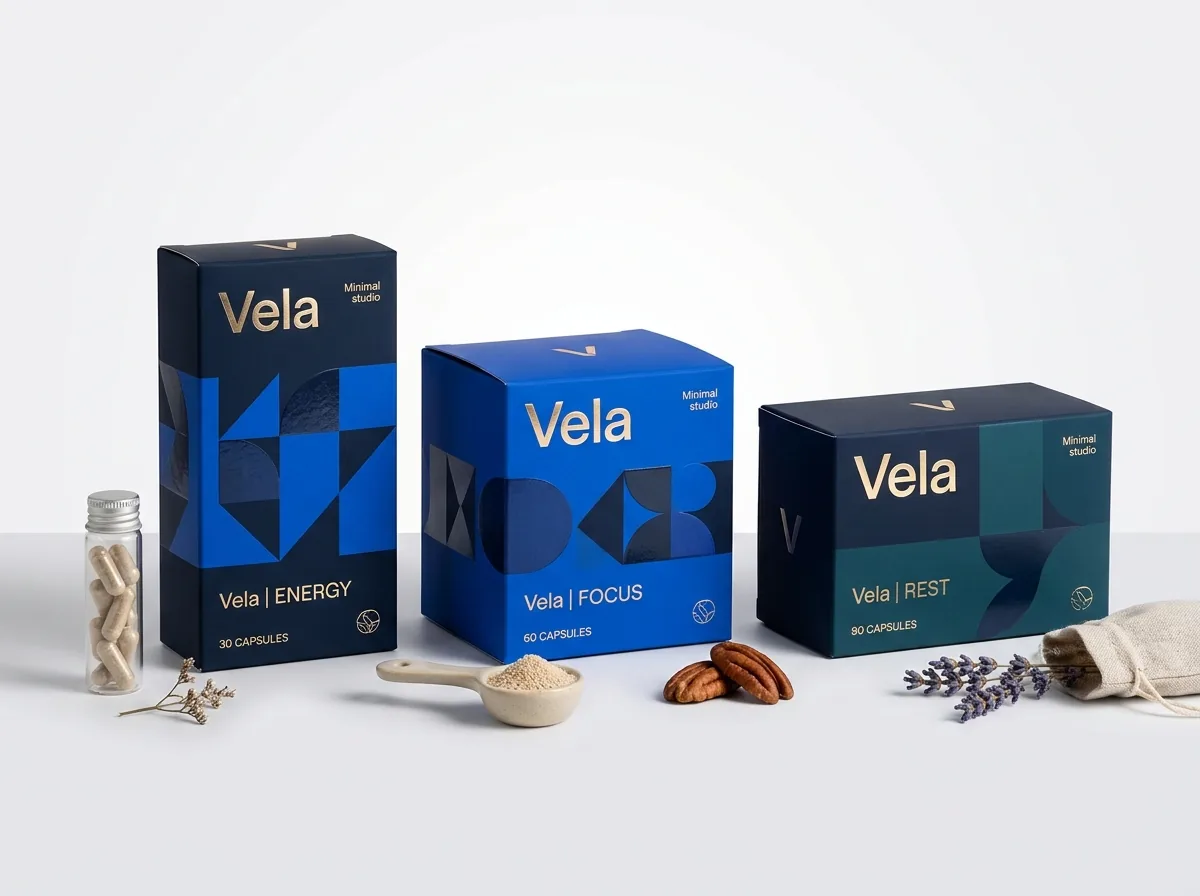
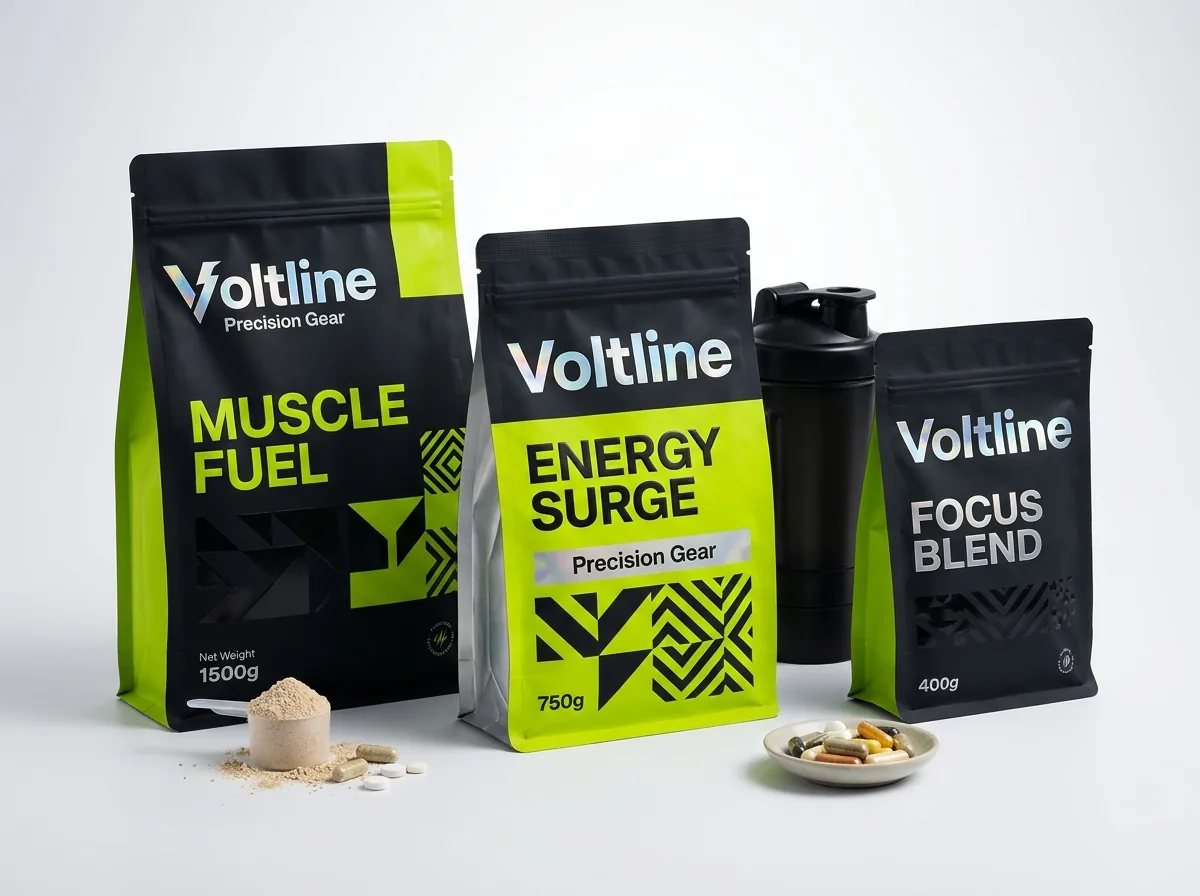
Different corners of the protein market have distinct visual languages. High-performance whey isolate and pre-workout recovery lines usually favor bleached white paperboard flooded with deep matte charcoal, cobalt or crimson ink, paired with matte lamination and high-gloss spot UV over the '25G PROTEIN' badge and shaker graphics so the numbers catch the store lights. Organic pea, sprouted brown rice, hemp and pumpkin seed protein brands frequently choose unbleached brown kraft board printed with opaque white ink and botanical Pantone greens to signal whole-food simplicity. Meanwhile, daily collagen peptide and prenatal protein stick-pack dispensers often pair pastel white card with velvety soft-touch lamination and warm champagne gold or rose gold foil stamping. Every finish above is available on CubitPack cartons, and our matte, gloss and soft-touch laminations also prevent stray powder dust from clinging to the outside of the box. Adding an exterior film lamination also reinforces the fold scores along a bottom gravity-feed dispenser slot so the front lip stays crisp through all thirty daily pulls.
- Matte lamination + Spot UV: athletic non-glare carton with high-gloss macro gram callout badges.
- Unbleached Kraft + White Ink: natural whole-food aesthetic for organic plant protein and greens blends.
- Soft-touch + Foil Stamping: velvety wellness finish for marine and bovine collagen stick-pack caddies.
- Gloss lamination: wipe-clean, high-impact color saturation for dessert-inspired whey flavors.
Know your size? Compare pricing across up to 3 quantities.
Request a Quote →How can I color-code multiple protein flavors on one shared dieline?
Most sports nutrition brands launch with at least three to five flavors: Dutch Chocolate, Vanilla Bean, Strawberry Milkshake, Salted Caramel and Cookies & Cream. If every flavor uses the exact same sachet count and box dimensions (for example, a 5.5 × 4.5 × 6.25 inch 15-count auto-lock dispenser), all five flavors share a single structural dieline. Design a master brand grid where the logo position, macro callout badge, amino acid table frame and bottom tear strip stay in the exact same spot, and swap only the flavor Pantone color band, flavor illustration and ingredient/Supplement Facts text. Because CubitPack guarantees Pantone color matching and never charges die or plate fees, your chocolate brown, vanilla cream and berry red bands will match your inner custom supplement pouches and tub labels across every reorder.
- Lock one structural dieline across all flavors so you can group multiple SKUs in one quote.
- Use a wrap-around Pantone color band on the top or lower third of the carton for instant flavor recognition.
- Place the flavor name on both the front panel and the top flap for pantry drawers and gym bins.
- Match carton Pantone codes to your inner foil sachets and custom supplement labels.
What prepress details does my powder co-packer need on the bottom flap?
Before sending your protein carton artwork to press, check two co-packer requirements: the barcode orientation and the lot/expiration coding window. Retail scanners read high-contrast bars best when the UPC barcode is printed in solid black ink on a white unvarnished box at least ¼ inch away from any bottom flap fold or glue seam. Next, ask your contract packager where their conveyor line inkjets, stamps or laser-codes the batch lot number and 'Best By' date. We leave a dedicated 1.5 × 0.75 inch knockout window on that flap completely free of ink, varnish and lamination so high-speed thermal inkjet coding dries on contact without smearing.
- Unvarnished lot/expiry knockout: 1.5 × 0.75 in bare paperboard rectangle on the bottom or side flap.
- High-contrast UPC barcode: 100% black bars on a white background box inside the flap safe zone.
- Allergen & facility statement: bold 'Contains: Milk, Soy' or 'Manufactured in a cGMP facility' right below the ingredient list.
What are the most common protein powder box artwork and design mistakes?
A great sports nutrition design has to survive both the perforation knife and the co-packer's coding line. Check these five mistakes before approving your digital proof
- Placing the protein gram badge or flavor title directly across the bottom gravity-feed tear perforation line.
- Setting 6 pt Supplement Facts or amino acid tables in four-color CMYK gray instead of crisp single-channel black ink.
- Laminating the entire bottom flap without leaving an unvarnished paperboard knockout window for lot and expiry inkjet coding.
- Forgetting to duplicate the brand logo and macro callout on the inner lid of a tear-away gym counter PDQ caddy.
- Using slightly different box dimensions for Chocolate and Vanilla instead of sharing one master carton dieline across all flavors.
Find your size
Suggested inside size: 4.5 × 2.5 × 5.5 in
A starting point. Your account manager confirms the size with you before the proof.
Quote this size →Packaging for this
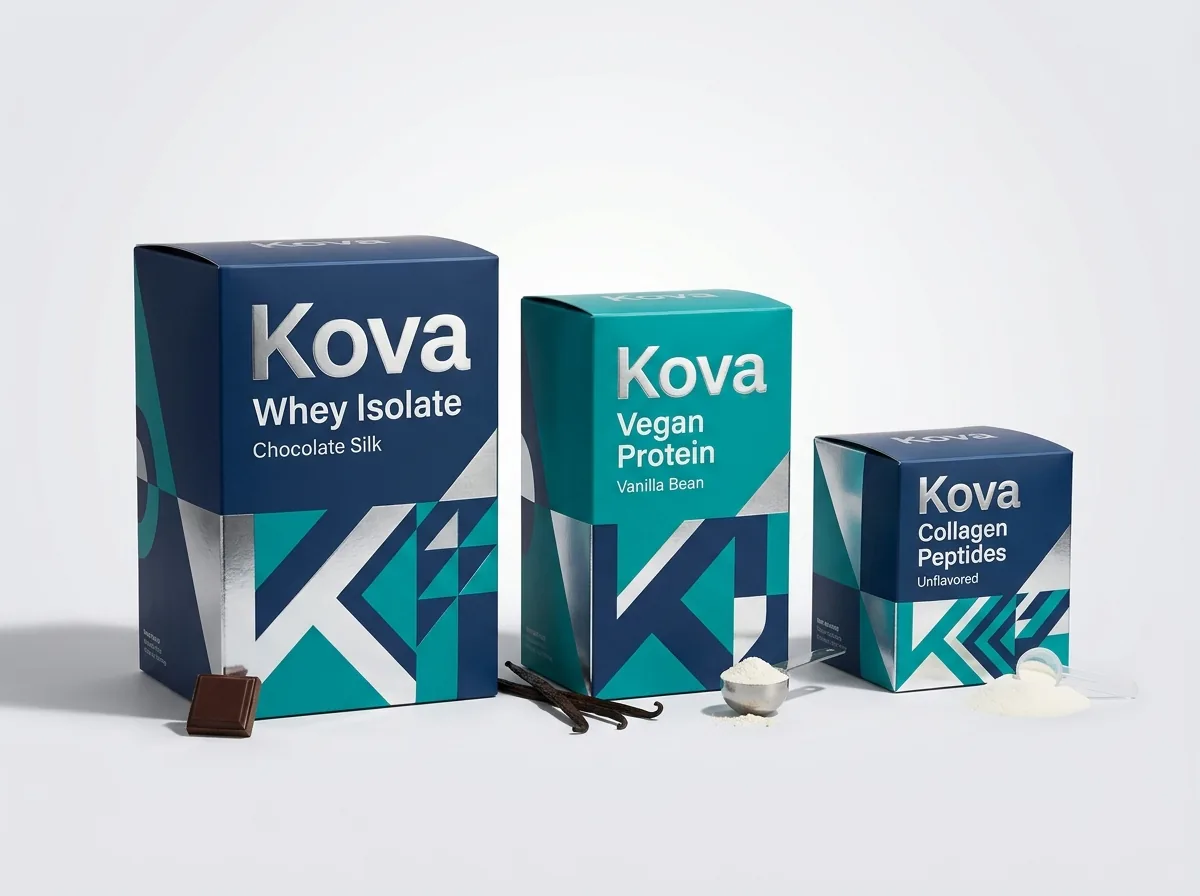
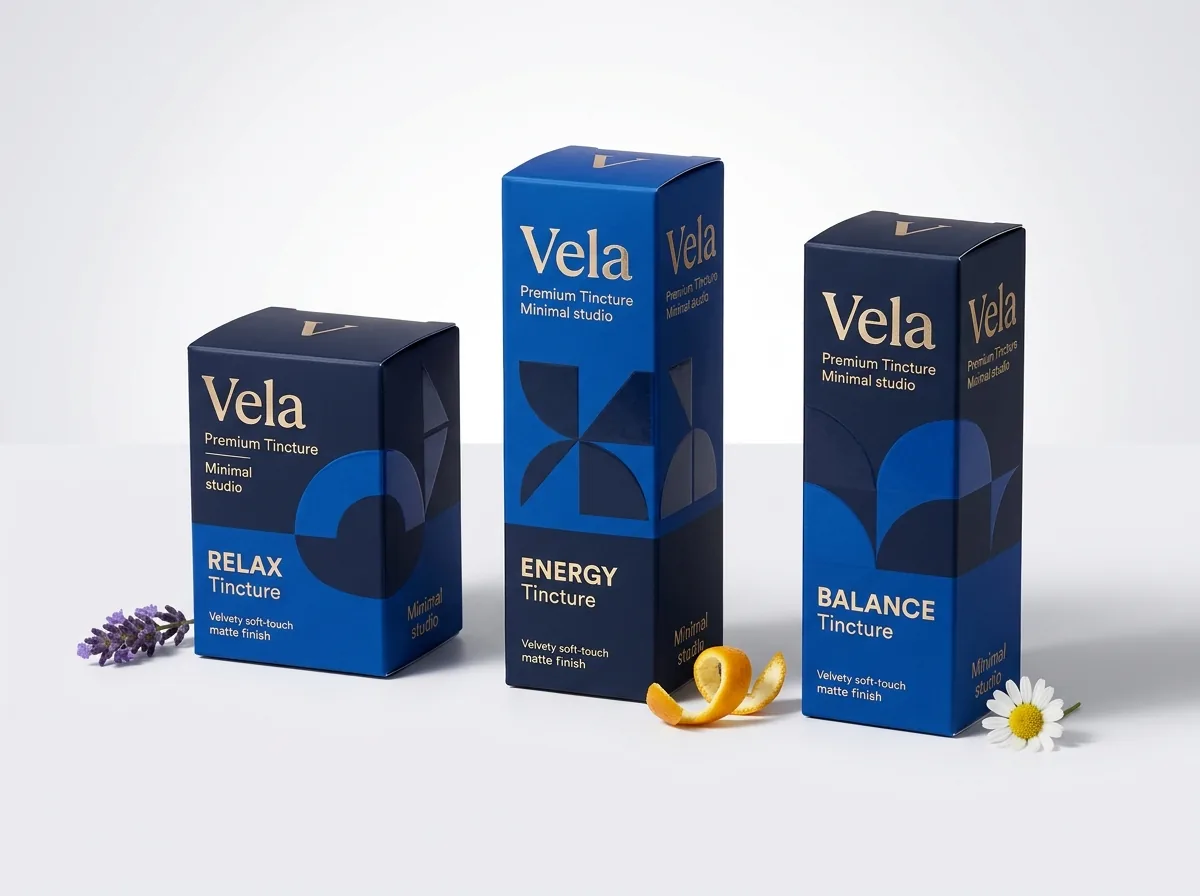
Ready to order protein powder boxes? Compare up to 3 quantities with a free 3D mockup.
Request a Quote →Questions about protein powder boxes
Should my protein box carry a Supplement Facts or a Nutrition Facts panel?
In the US, protein powders marketed as conventional foods or meal replacements typically carry a Nutrition Facts panel, while products marketed as dietary supplements carry a Supplement Facts panel under 21 CFR 101.36. Our prepress team checks that whichever table your regulatory advisor specifies fits cleanly within the back panel safe margins.
Can I print an amino acid profile table alongside the Supplement Facts panel?
Yes. Most whey, casein and plant protein brands place the mandatory Supplement Facts or Nutrition Facts table on the back panel and put the full 18-amino-acid or BCAA (Leucine, Isoleucine, Valine) breakdown table on the adjacent right side panel.
How do you guarantee my flavor Pantone colors match my inner sachets and tubs?
Share your Pantone (PMS) spot color codes when requesting your quote. CubitPack guarantees Pantone color matching on custom boxes: if a printed Pantone shade is clearly off from the approved specification, we reprint at no cost.
Can you print inside a protein dispenser box or shaker starter mailer?
Yes. Inside printing is available on both folding cartons and corrugated mailers. On PDQ counter caddies, inside printing turns the folded top lid into a full-color header billboard; on shaker starter kits, it lets you print smoothie recipes and mixing tips under the lid.
What if I need help laying out my macro badges and dispenser tear strip?
Every CubitPack order includes a free custom vector dieline and free design help. Send us your logo, nutrition copy and flavor palette, and our designers will position your macro callouts, amino table and tear perforation and send a free 2D proof and 3D mockup before payment.
Do you charge extra plates if I split my order across multiple protein flavors?
No. CubitPack never charges cutting die or printing plate fees, even when you run multiple flavor designs on the same carton size. Select 2 designs or 3+ designs in Step 2 of the quote form so your account manager can quote your flavor lineup together.
Still have a question? Ask a packaging specialist.
Request a Quote →Request your protein powder boxes quote
Tell us your size and quantities, and one dedicated account manager prepares pricing for each tier.
- Free design & AI-to-print studio + 3D mockup
- No die or plate charges · 4–5 day rush available
- Free shipping to all 50 states
- 10% off your first order
The artwork and structural guidelines in this post follow CubitPack's decided policies in our published product specifications, FDA dietary supplement and food labeling layout rules, and standard co-packer coding practices. A CubitPack packaging specialist verified every row. Spot something wrong? Tell us and we will fix it.
Sources
What changed
- October 22, 2026: First published.
- October 22, 2026: Updated specifications, terminology, and verified source links.
More guides
New packaging guides by email
Sizes, materials and design tips. Unsubscribe anytime.