
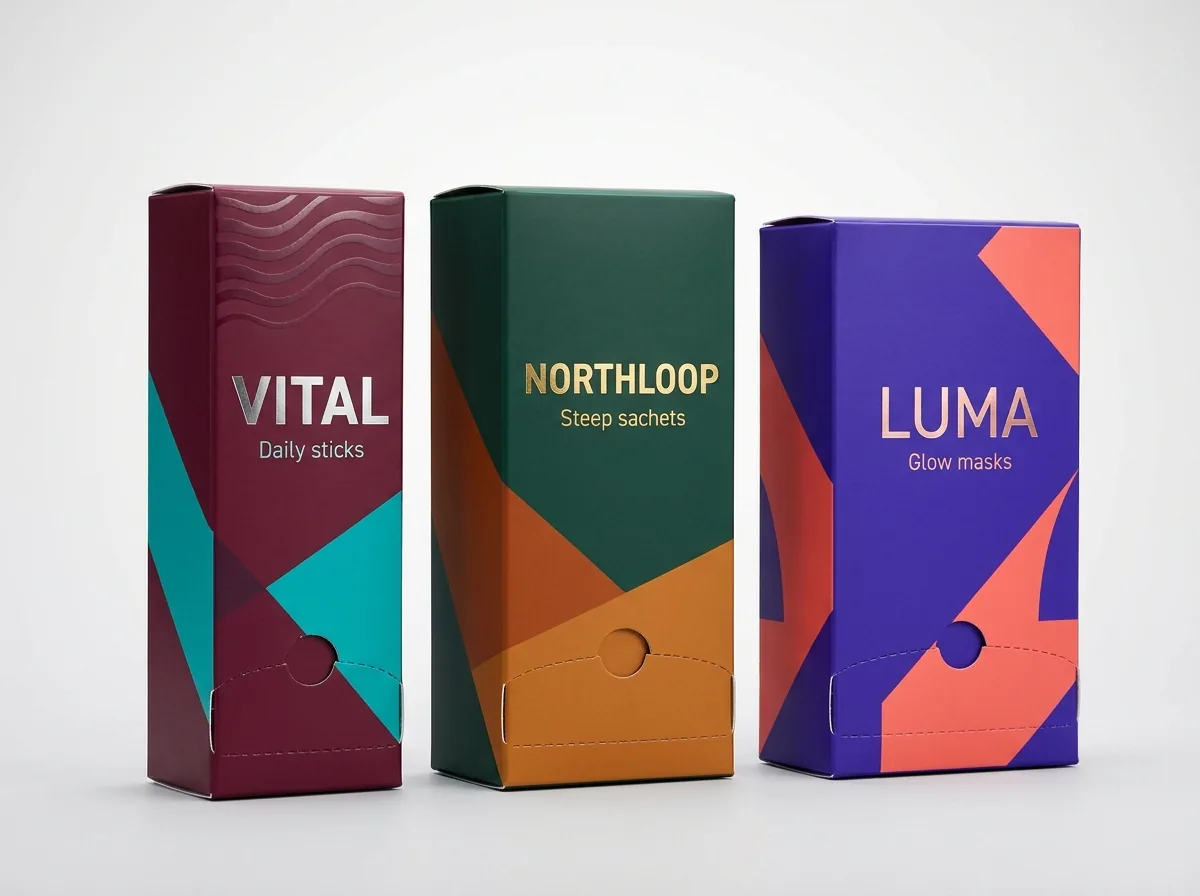
- Clean thumb-notched perforated tear-out slot converts a sealed shipping carton into a self-serve dispenser without knives.
- Optional internal 25–35 degree folded paperboard gravity ramp feeds tea bags, stick packs, pods, and sheet masks to the front.
- Narrow vertical tower footprint (3.5–6 in wide) saves shelf and breakroom counter space while shielding stock from dust.
- From 1,000 boxes in 10–14 business days (4–5 rush), with zero die or plate setup fees, free 3D proof, and free US shipping.
Custom Dispenser Boxes
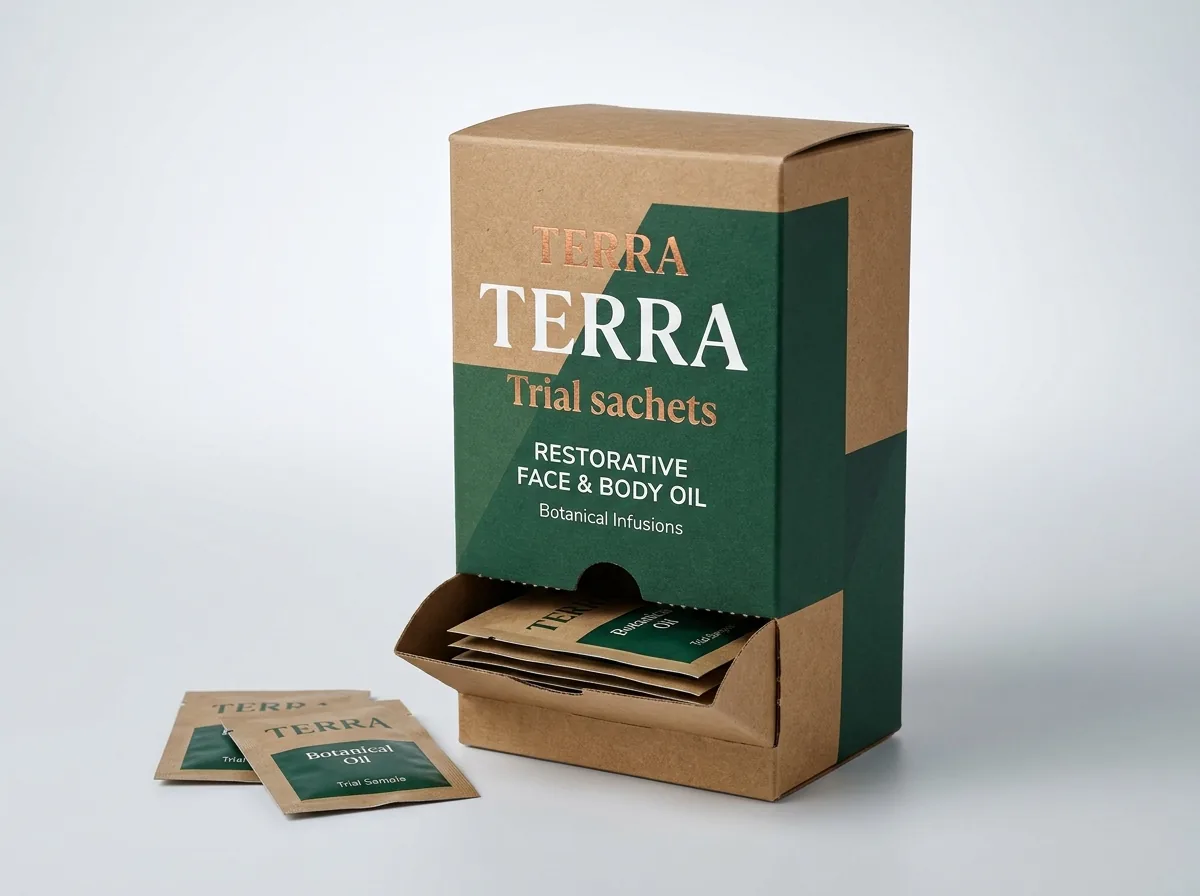
Custom dispenser boxes are upright paperboard folding cartons engineered with a precision cut-tie perforated tear-out opening on the lower front or top face so shoppers, guests, or staff pull out one sachet, pod, bar, or mask at a time. Optional internal 30-degree gravity ramps slide remaining units forward automatically while keeping 90% of the stack enclosed against dust, starting at 1,000 boxes.
What are custom dispenser boxes?
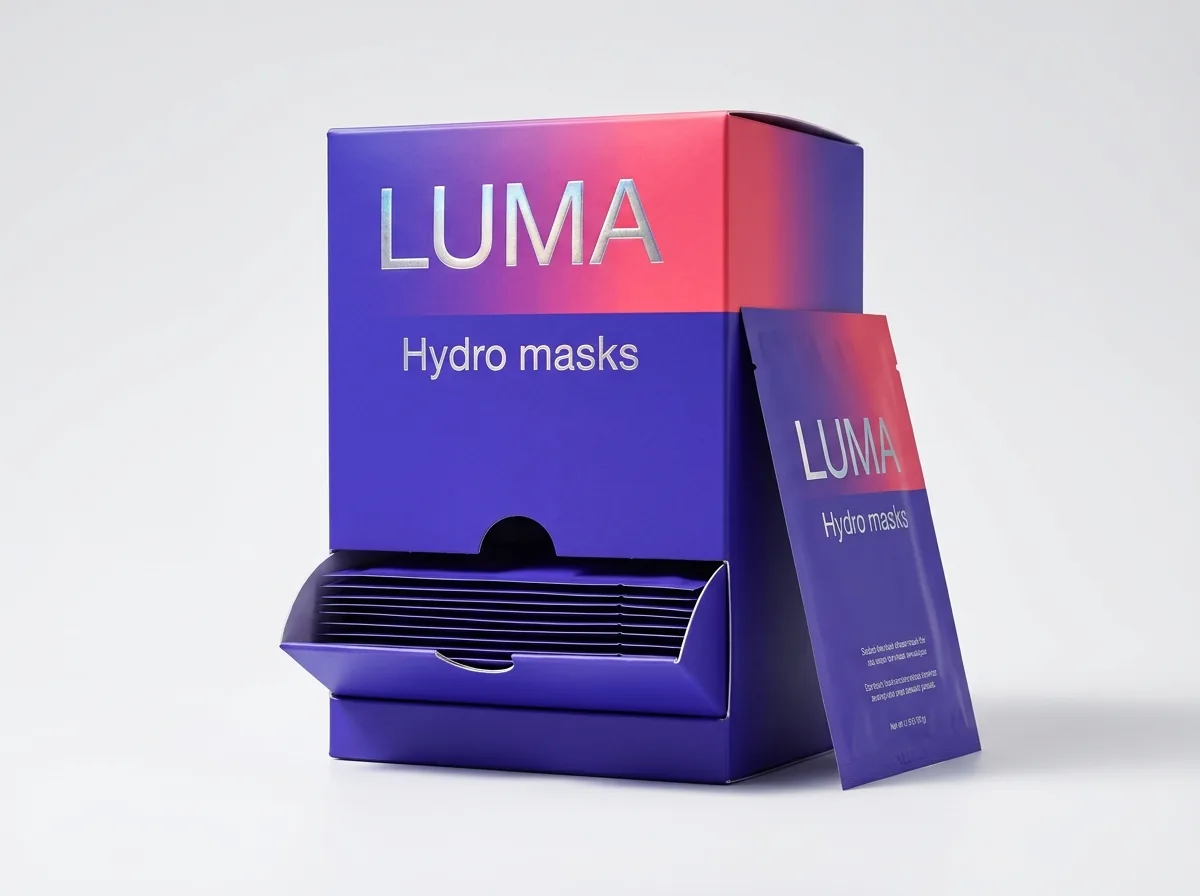
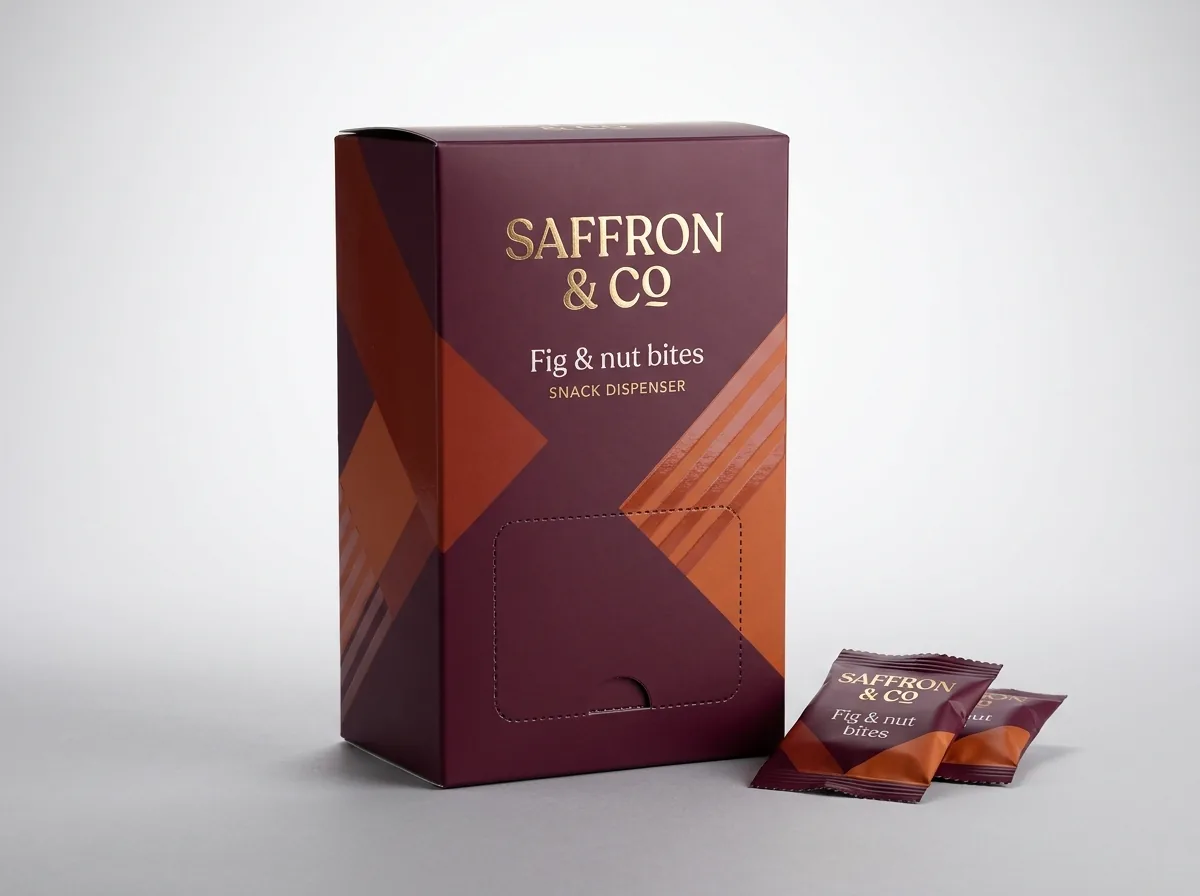
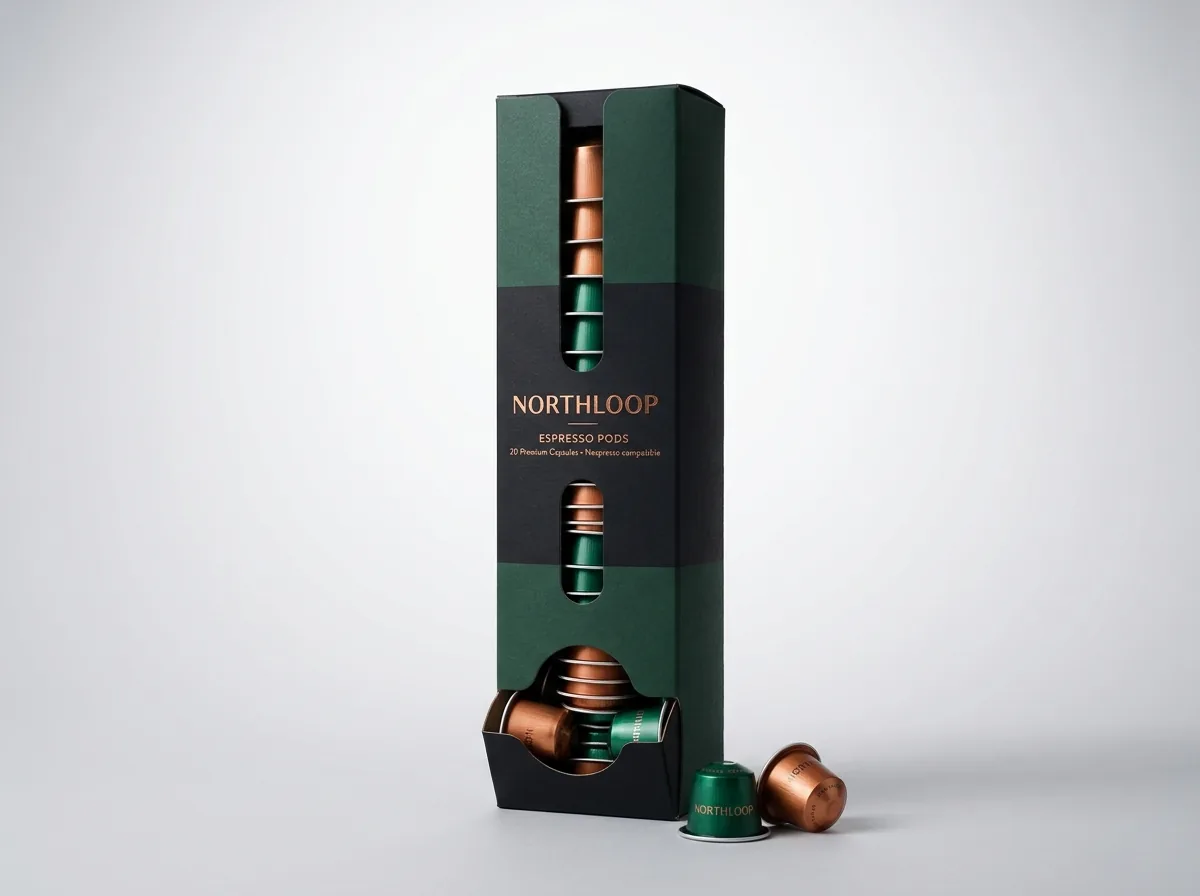
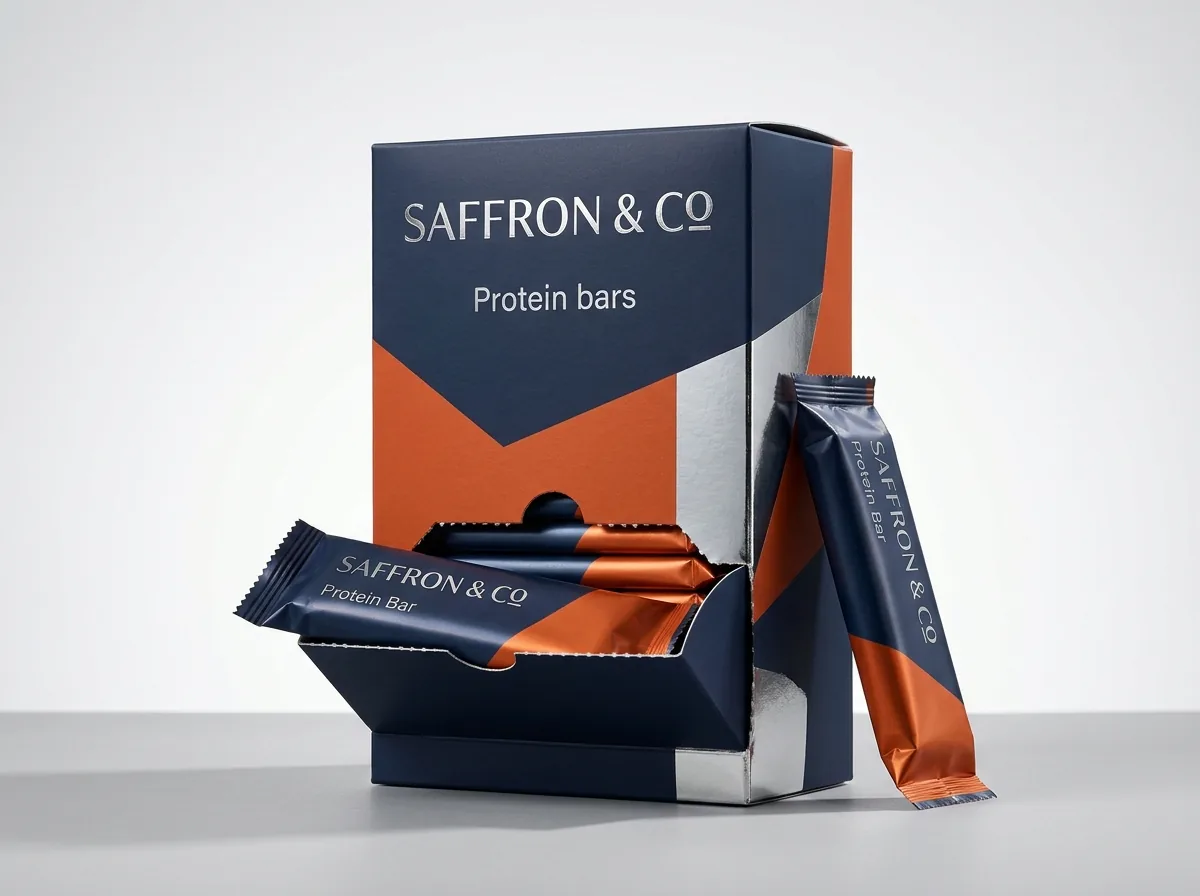
Custom dispenser boxes (built on ECMA Group A longitudinal glue-seam folding carton skeletons modified with auxiliary perforated extraction apertures) are enclosed multi-unit cartons that travel safely sealed through warehousing and parcel fulfillment, then zip open along a die-cut perforation at point of use to dispense one item at a time. Unlike wide open-top counter trays where every pouch sits exposed to air, dust, and handling, a vertical gravity-feed dispenser shields the entire reserve column inside four tall printed walls and presents only the next unit at a calibrated lower-front mouth. Adding a folded 30-degree paperboard ramp inside the floor eliminates flat-bottom dead zones so flat sachets, coffee capsules, protein bars, and sample packets glide forward smoothly until the final piece is taken. CubitPack custom-engineers perforated dispenser cartons and matching gravity ramps from 1,000 units with free US delivery.
How is a custom dispenser box built?
Die-cut from high-stiffness 18 pt to 24 pt SBS or natural kraft paperboard (with optional micro-flute board for heavier capsule towers), pairing a calibrated steel-rule tear perforation with an enclosed vertical chimney and optional sloped feed deck. Whether your team calls them gravity feed dispenser boxes, custom perforated dispenser cartons, cardboard sachet dispenser boxes, tear out bottom dispenser packaging, custom printed dispenser boxes, dispenser boxes with logo or printed dispenser boxes, every sheet is cut to your exact inside dimensions.
- 1Cut-tie perforated tear-out hatch
A lower-front or top extraction panel scored with precision 2:1 or 3:1 mm cut-to-tie rules and a semicircular thumb notch so users zip out a clean edge without ragged fiber tears. - 2Bottom stop sill or pull-out tray lip
A 0.75 to 1.0 inch retaining sill beneath the bottom slot (or a hinged fold-down catch tray wrapping 15 mm onto both side walls) that arrests the sliding stack so units never spill onto the counter. - 3Internal 30-degree gravity ramp
A folded paperboard wedge seated on the interior floor at a 25 to 35 degree incline so remaining tea bags, stick packs, sheet masks, or capsules glide forward after every pull. - 4Top loading closure (tuck or seal end)
Choose a friction or reverse tuck top when offices, cafes, or households refill the tower, or specify a tamper-evident glued seal-end top for retail grocery shelves. - 5Auto-lock or snap-lock bottom
A pre-glued crash-lock or interlocking 1-2-3 bottom floor that pops flat in seconds during packing and supports tall vertical stacks without bowing.
Dispenser box facts
- Closure
- Top tuck or tamper-evident seal end; auto-lock bottom; perforated tear-out dispensing slot
- Best for
- Tea bags, coffee pods, hydration sticks, candies, gummies, sheet masks, protein bars & samples
- Window
- Optional narrow vertical gauge slot on side or front wall to check remaining sachet count
- Inserts
- Optional 25–35 degree folded paperboard gravity ramp or dual-column center divider
- Minimum
- 1,000 boxes
- Turnaround
- 10–14 business days, rush 4–5
- Materials
- 18–24 pt white SBS card, natural brown kraft, recycled board (E-flute optional)
- Arrives
- Side-seam glued & folded flat in master cartons (with flat-scored ramp inserts)
- Size range
- 3.25 × 2.5 × 5.5 in pocket towers up to 8 × 6 × 14 in breakroom caddies
Dispenser boxes vs retail display boxes vs counter display boxes
| Dispenser | Display | Counter display | |
|---|---|---|---|
| How items dispense | One unit at a time through a calibrated bottom gravity slot or top tear hatch | Shoppers reach into a wide open-top tray after removing the transit hood | Shoppers lift units upward over a low 1.25–2.25 in checkout retaining lip |
| Dust & pantry hygiene | Enclosed tower keeps 90% of reserve sachets or pods covered until pulled | Open case top leaves all remaining rows exposed on the store shelf | Open front and top face designed for rapid high-turnover checkout sales |
| Internal feed mechanics | 25–35 degree folded paperboard gravity ramp slides the stack forward | Flat case floor or straight vertical lane partition walls | Die-cut round hole collars or 2-tier/3-tier stadium step risers |
| Shelf or counter footprint | Ultra-narrow vertical footprint (typically 3.5–6 in wide × 3–5 in deep) | Broad inline shelf tray (typically 8–16 in wide × 8–14 in deep) | Compact cash-wrap caddy (typically 4–10 in wide × 5–9 in deep) |
| Primary print billboard | Unbroken tall front tower face sits directly at eye level on shelves | Low front tray lip plus optional fold-up rear header panel | Standing 180-degree double-ply rear billboard header beside POS |
| Often used for | Tea sachets, coffee pods, stick packs, sheet masks, bars, sample packets | Full-size snack bags, multipack pouches, jarred goods, boxed retail items | Lip balms, pens, nail polish, pocket gummies, mini checkout confections |
Save this comparison
The styles on one sheet. Pin it, or share it with whoever packs your boxes.
Still deciding between styles?
Request a Quote →Is a custom dispenser box right for my product?
- You pack flat envelopes, foil sachets, stick packs, sheet masks, wrapped bars, or coffee capsules that stack cleanly in a vertical column
- You want one dual-purpose carton that ships sealed and tamper-tidy, then converts into a pantry, office, hotel, or shelf dispenser in two seconds
- Counter or shelf width is tight, so storing 15 to 30 servings vertically in a 4-inch-wide tower beats spreading them across a wide tray
- Hygiene matters in breakrooms, clinics, cafes, or bathrooms where keeping reserve packets enclosed away from dust and splashes adds trust
- You want a tall unbroken front billboard panel on grocery shelves without paying for an extra header card
- You want upright cylindrical lip balms, pens, or mini bottles browsable next to a cash register: counter display box
- You need a wide open-top shelf-ready tray for bulky snack bags or jarred foods: retail display box
- You want stores to hang multi-packs vertically on metal pegboard hooks: hang tab box
- You need permanent tamper-glued ends without a tear-out dispensing aperture: seal end box
- You are packing a single bottle or jar that opens and recloses from the top flap: straight tuck end box
What are custom dispenser boxes used for?
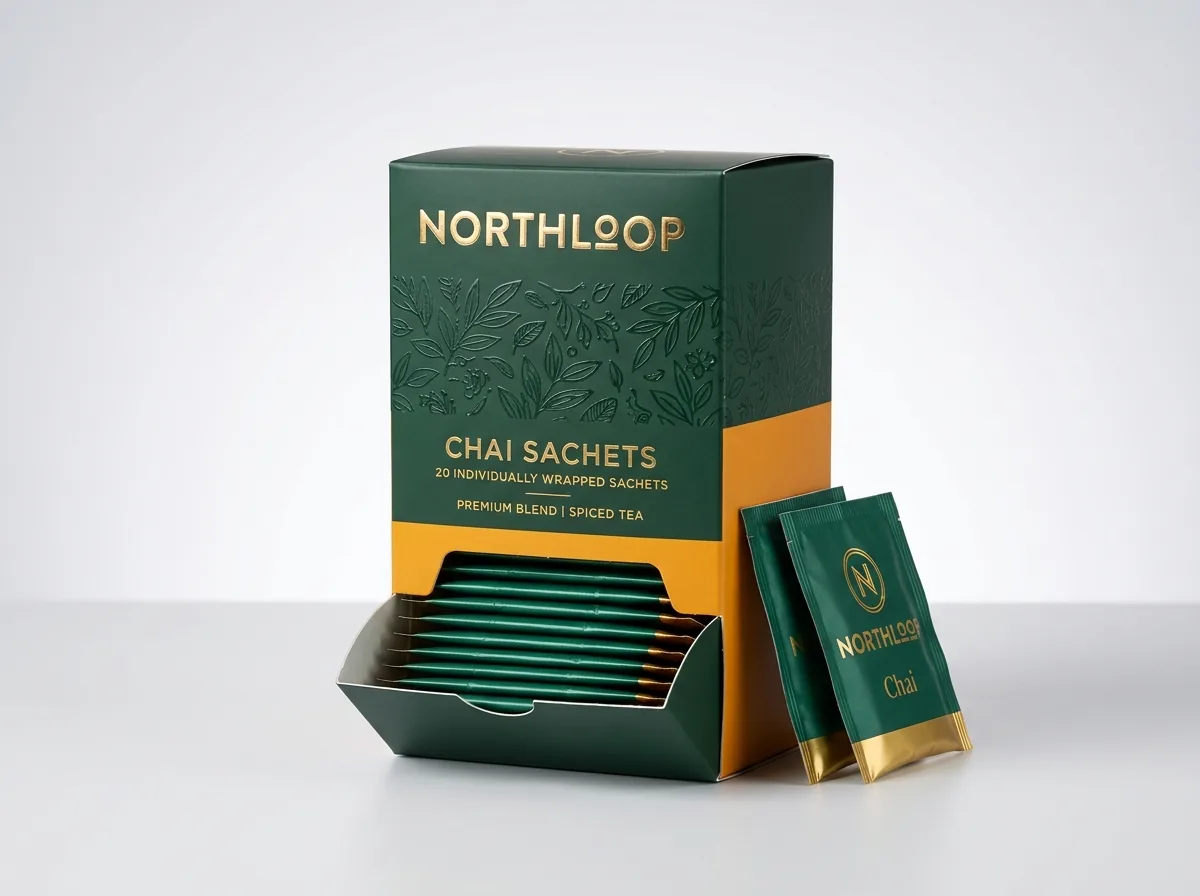
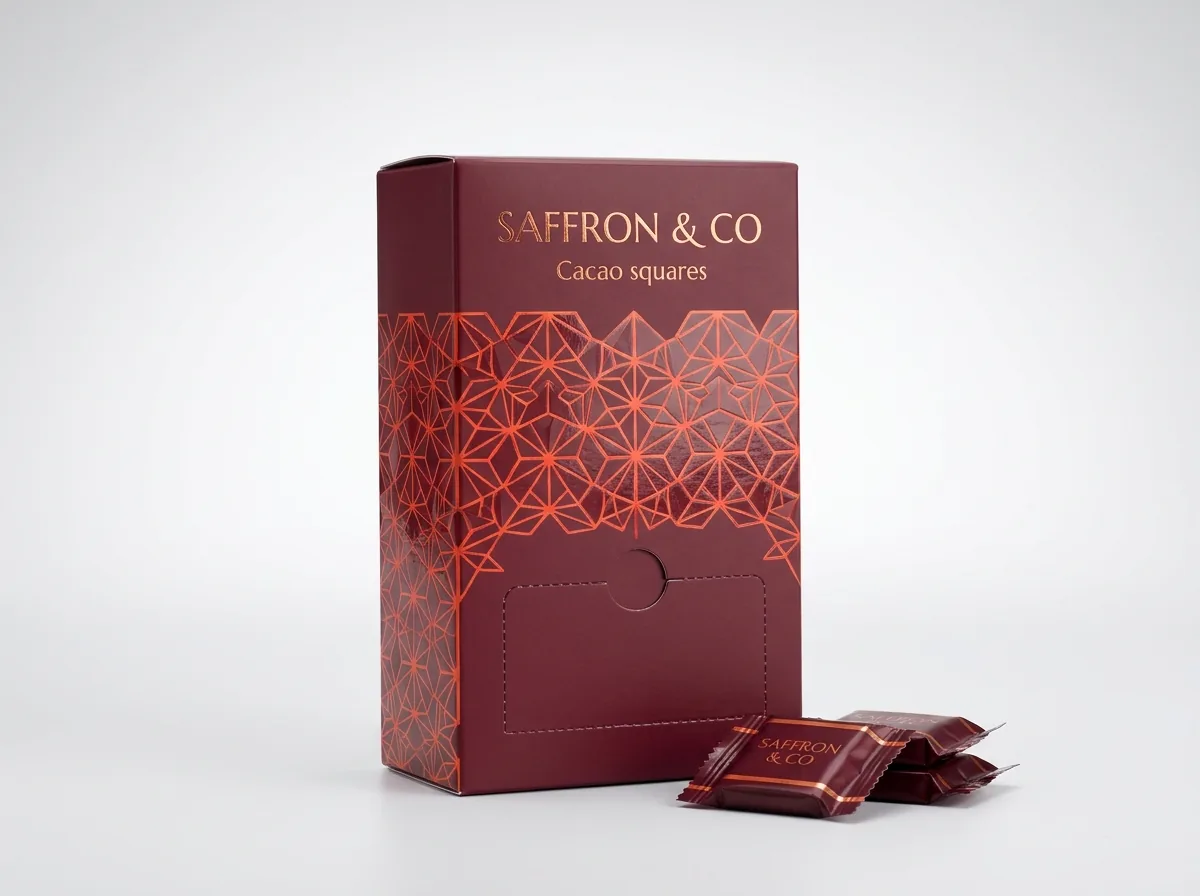
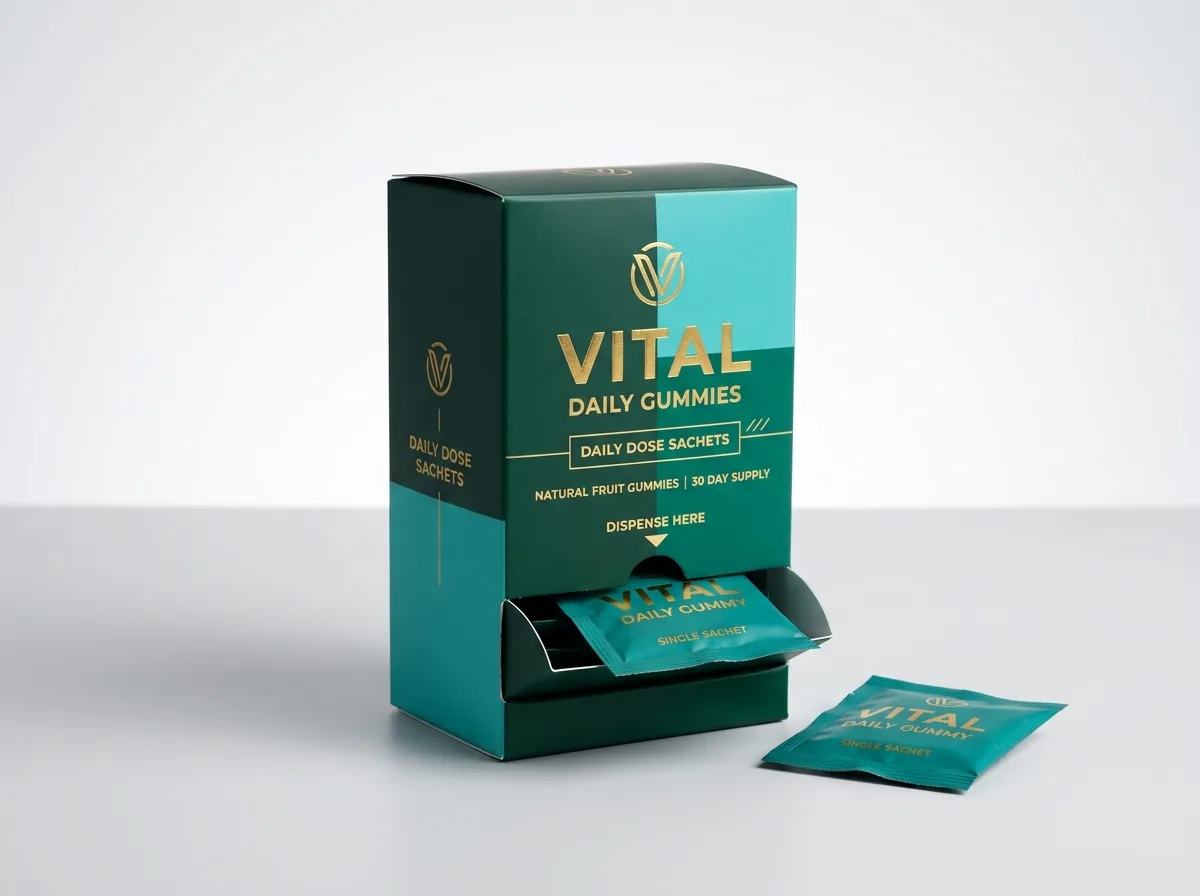
Wrapped tea envelopes, bite-size candies, daily gummy packs, single-use sheet masks, snack sticks, espresso capsules, protein bars, and trial sachets all feed cleanly from vertical dispenser cartons. Explore our product pages
Which paperboard stocks make perforated dispenser boxes tear cleanly?
Clean dispensing depends on board stiffness and low interior slide friction: 18 pt to 24 pt virgin paperboard zips crisply along cut-tie perforations without delamination while keeping tall vertical walls straight.
Which finishes elevate custom dispenser boxes on shelves and counters?
What structural add-ons customize a gravity-feed dispenser box?
Dispenser box specifications
| Spec | Options |
|---|---|
| Construction | ECMA Group A longitudinal seam carton (tuck or seal-end top, auto-lock or snap bottom) with die-cut perforated dispenser aperture |
| Board | Smooth white SBS paperboard, unbleached natural brown kraft, recycled card, or optional printed E-flute micro-corrugated |
| Board thickness | 18 pt, 20 pt, or 24 pt paperboard standard; 1.5 mm E-flute for heavy multi-bar or 40-pod caddies |
| Perforation rule | Calibrated 2:1 mm or 3:1 mm steel-rule cut-to-tie ratio with die-cut semicircular thumb starter notch |
| Internal feed | Optional 25–35 degree folded paperboard gravity ramp insert or dual-flavor vertical lane divider |
| Printing | Full-color CMYK + Pantone PMS outside; optional interior flood color inside the visible dispensing mouth |
| Lamination | Matte, gloss, or soft-touch exterior lamination (exterior-only so the interior slide ramp stays low-friction) |
| Finishes | Metallic foil stamping, raised Spot UV, embossing, debossing, and optional side stock-level gauge window |
| Minimum | From 1,000 dispenser boxes; delivered within ±5% of the ordered quantity |
| Proofs | Free 2D vector CAD dieline (including perforation & ramp geometry) and 3D digital proof before payment; $50 sample kit credited to first order |
| Turnaround | 10–14 business days standard; 4–5 business days rush turnaround available |
| How boxes ship | Pre-glued along the side seam and stacked flat with free shipping across all 50 US states |
Ready to quote dispenser boxes? Compare up to 3 quantities with a free 3D mockup.
Request a Quote →What goes on each panel of a custom dispenser box?
- 1Upper front tower wall
Primary brand wordmark, flavor or formula title, serving count, and metallic foil focal graphics safely above the tear line. - 2Perforated tear-out hatch
Clean dotted boundary graphic, 'Press & pull here' callout icon at the thumb notch, and zero critical legal copy (since this piece tears off). - 3Bottom retaining stop sill
Bold accent color strip or short tagline ('Take one daily') framing the open dispensing mouth throughout the life of the box. - 4Left & right side walls
Nutrition or ingredient panel on one side; vertical stock-level sight window or brewing/usage icons on the opposite side. - 5Top loading lid & back wall
Flavor color-coding on the top flap for pantry drawers, plus full brand story, refill guide, and UPC barcode on the back.
Dispenser box design ideas
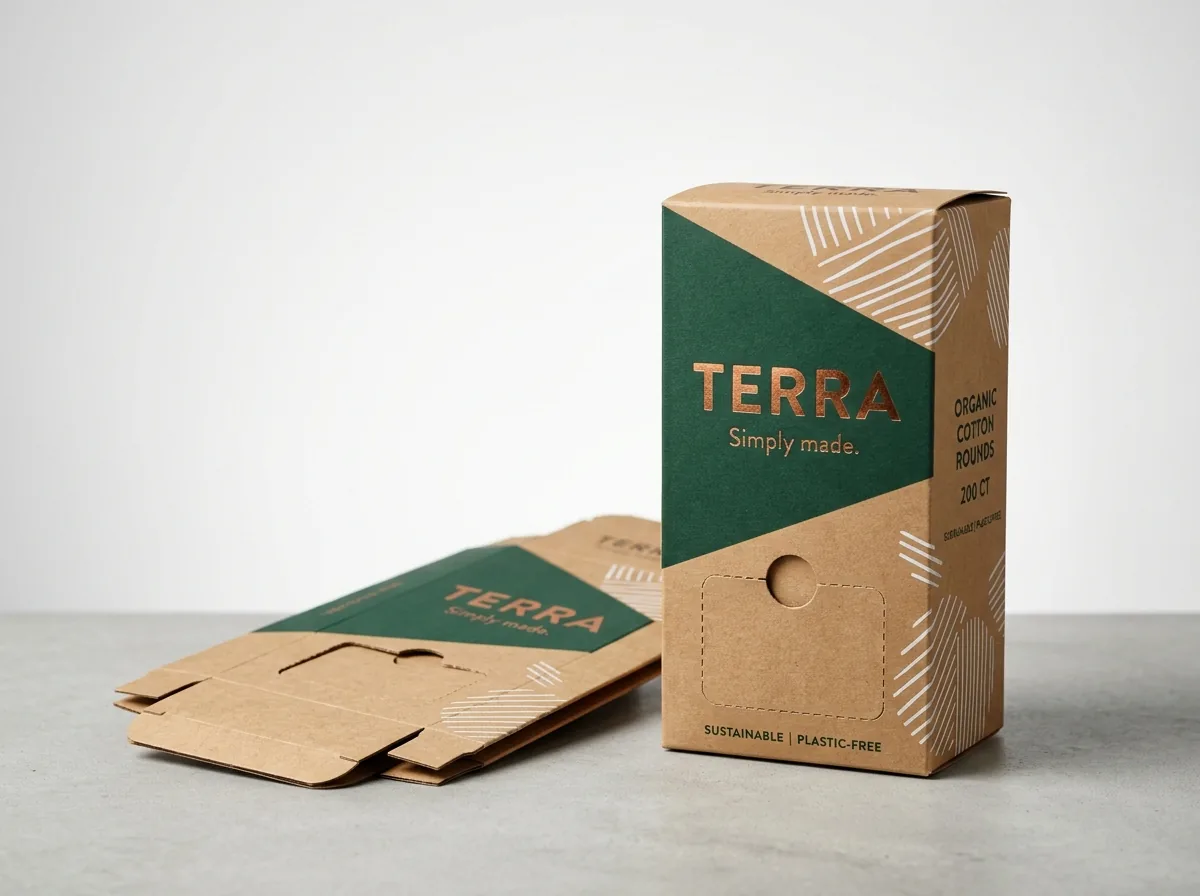
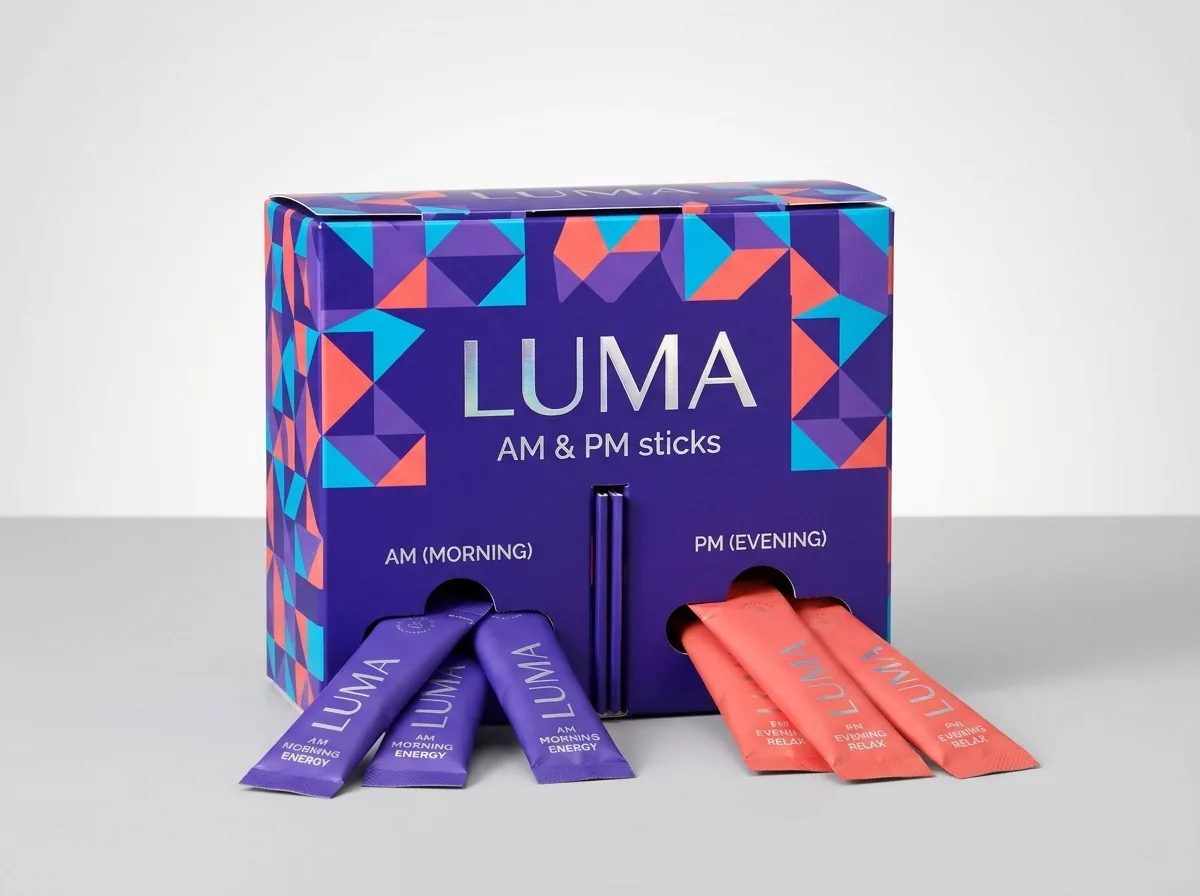
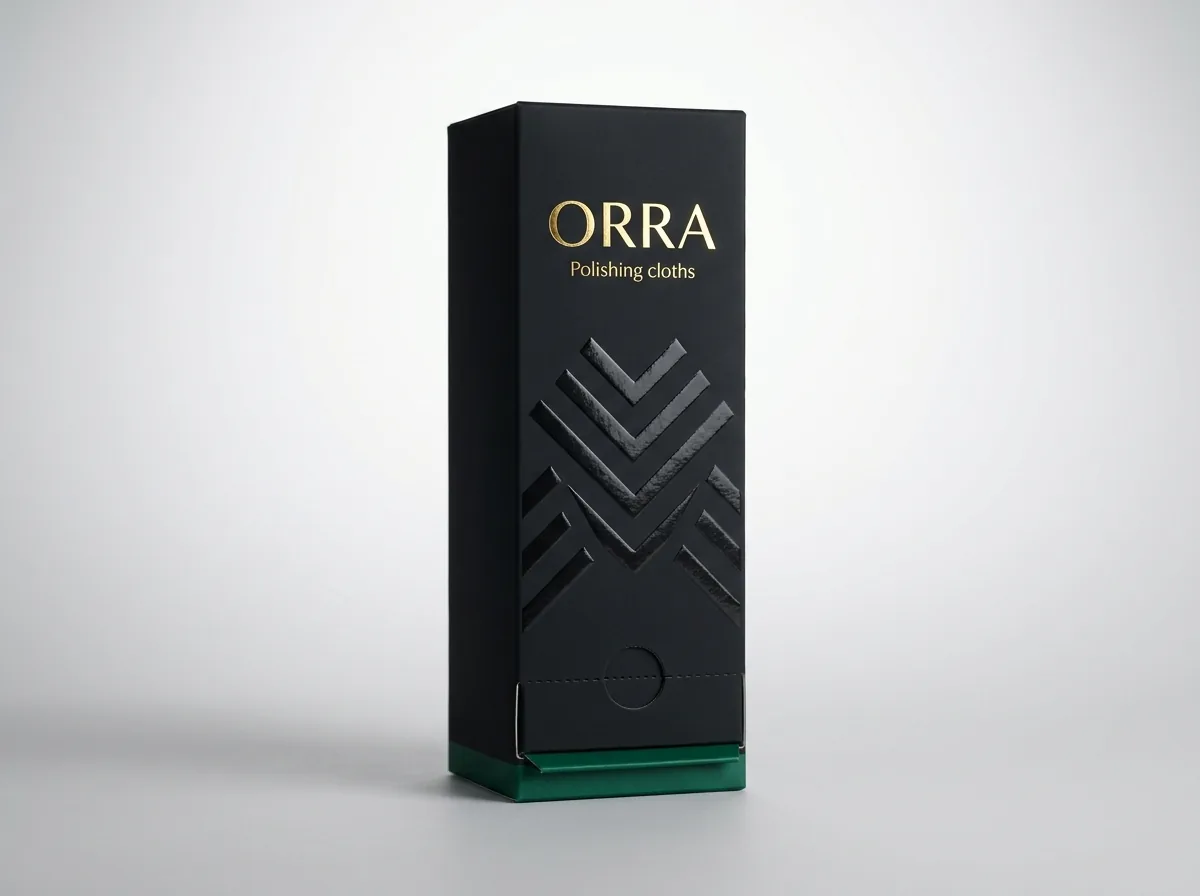
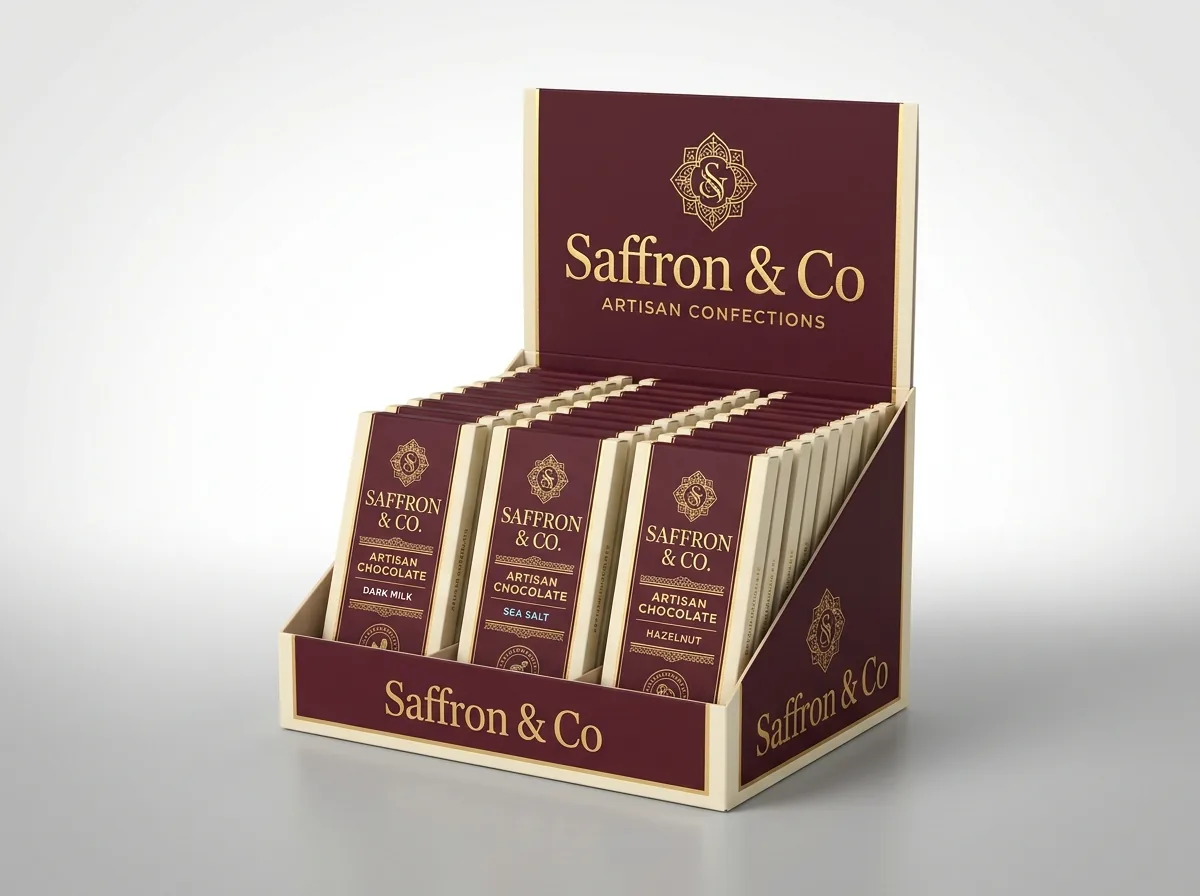
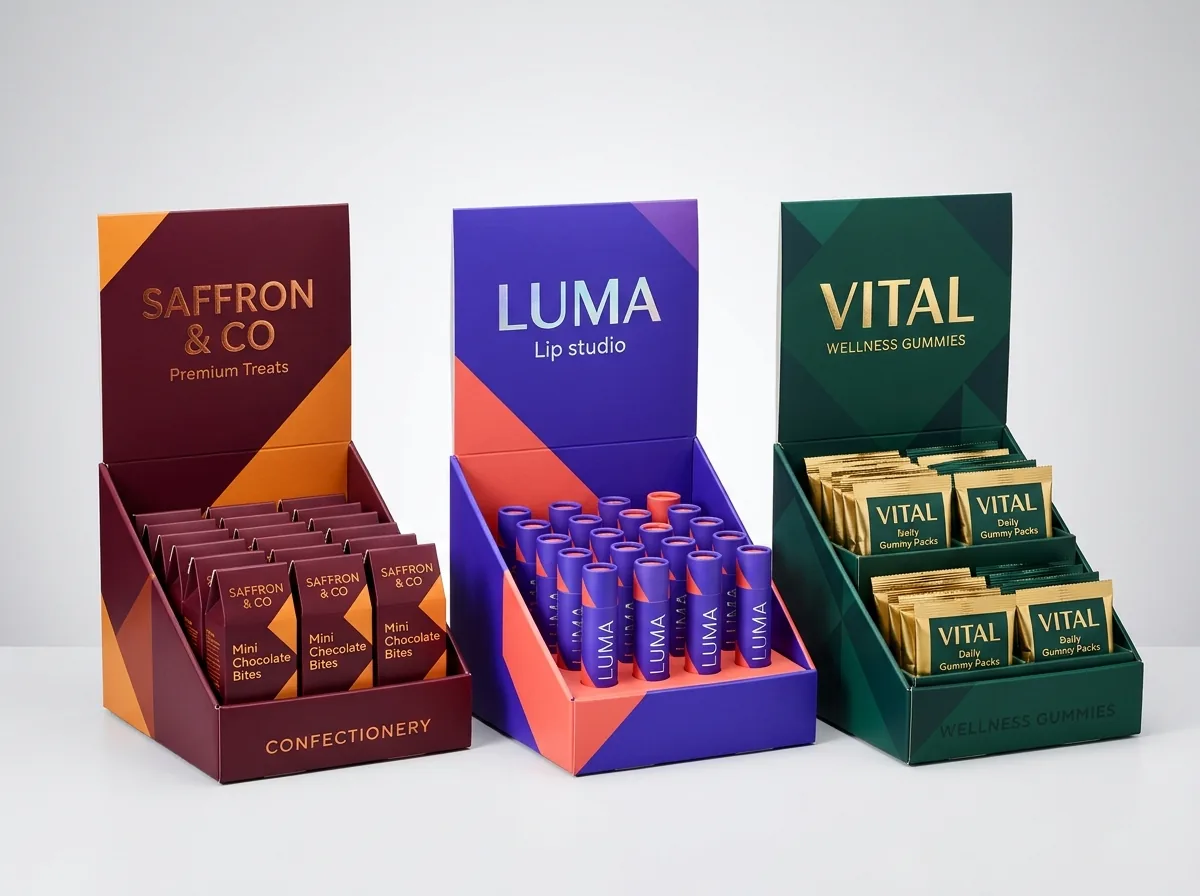
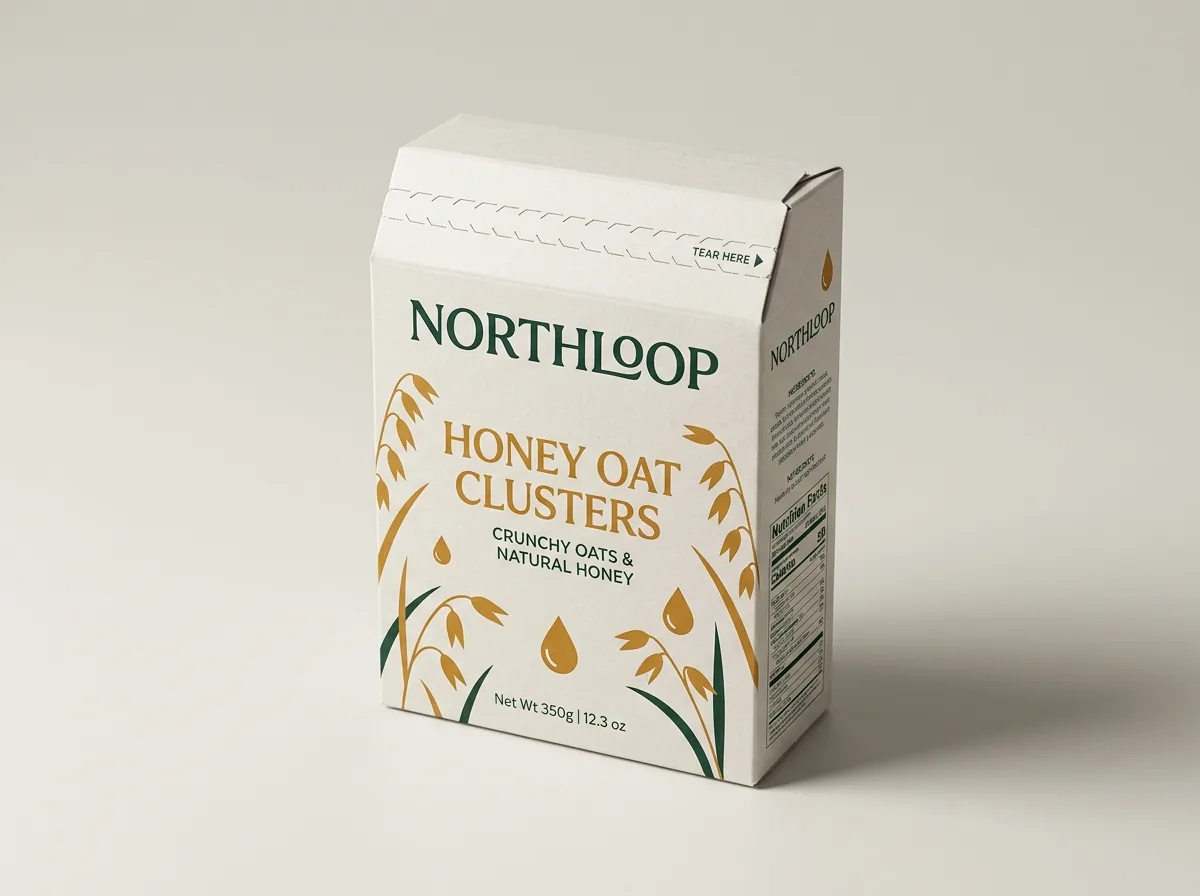
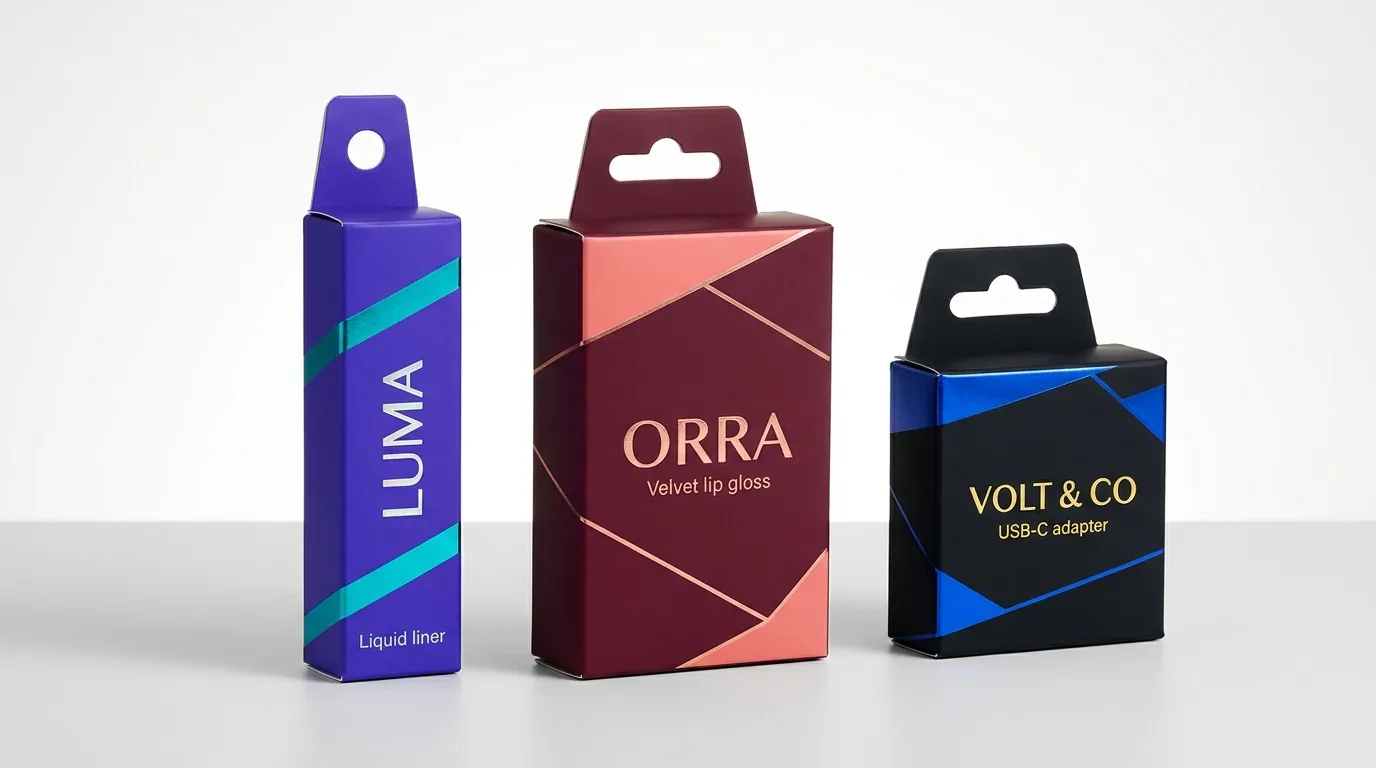
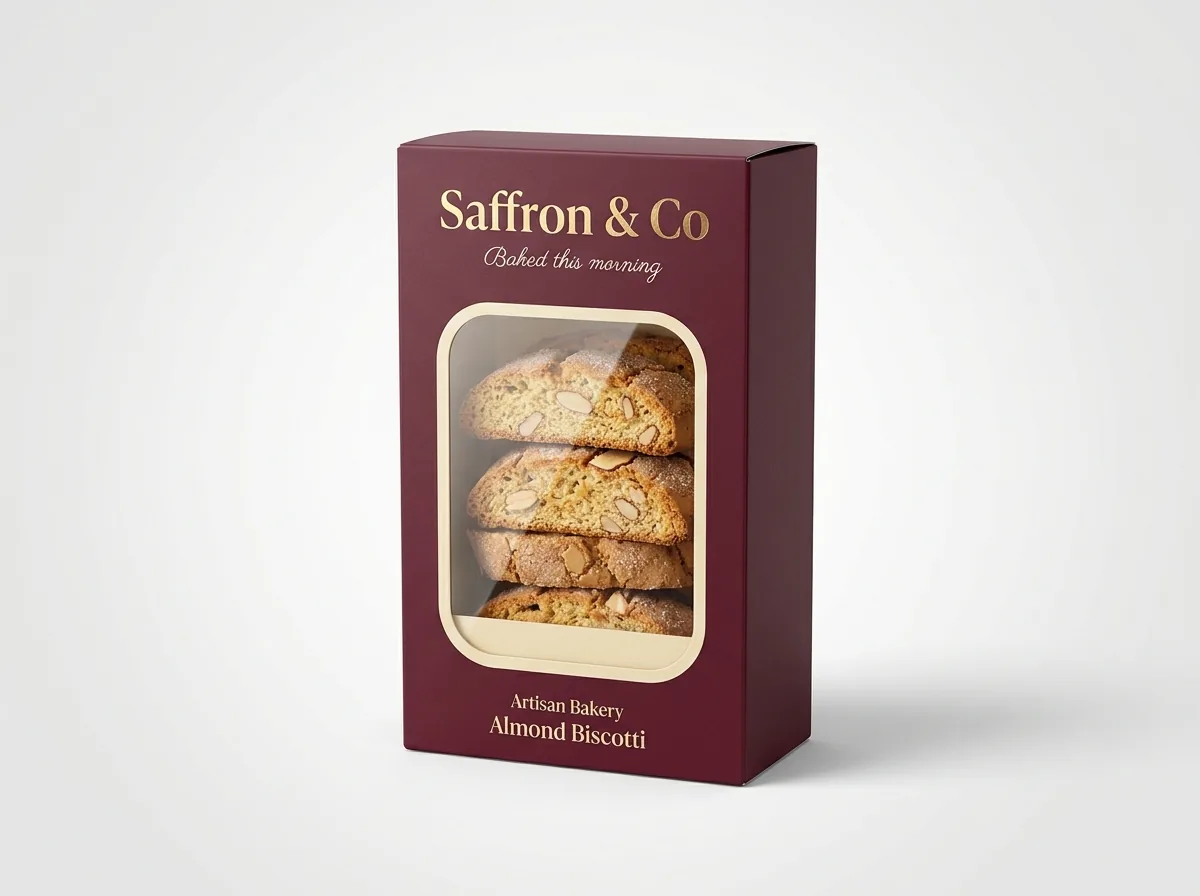
Example designs with made-up brands. Your box is made to your design.

What mistakes happen most often with custom dispenser boxes?
Prevent jammed stacks and ragged tear openings by avoiding these five common dispenser dieline errors. For buyers ordering branded dispenser boxes, wholesale dispenser boxes, bulk custom dispenser boxes, personalized dispenser boxes, custom size dispenser boxes, dispenser boxes with top loading closure or custom paperboard dispenser boxes, watch out for these common sizing and artwork mistakes
- Leaving the interior carton floor completely flat on a bottom-slot sachet box. Without a 25 to 35 degree internal gravity ramp, the final three or four packets sit flat below the opening where fingers have to dig them out.
- Cutting the bottom dispenser window taller than twice the thickness of a single bar or sachet. Excess aperture height lets the upper stack avalanche forward onto the counter after the first pull.
- Placing barcodes, nutrition facts, or brewing instructions onto the removable tear-out panel. Once zipped off and discarded, essential product details vanish.
- Laminating both sides of the paperboard or flood-varnishing the internal gravity ramp with tacky high-friction coating. Keep the interior ramp smooth and low-friction so foil and paper envelopes slide freely.
- Specifying weak micro-ties on heavy 24-bar cartons so the perforated front pops open prematurely inside parcel shipping cartons.
Chat with a designer now
Share your logo, a sketch or an AI image. We'll rebuild every element cleanly onto your box dieline and send a 3D mockup, free.
Made your design with AI?
Generated a concept in Google Gemini, ChatGPT, Claude or Midjourney? Send us your AI image: we rebuild every element onto your box dieline and show you a 3D mockup before you pay, free.Custom vs stock dispenser boxes: which is better?
| Stock (plain) boxes | Custom boxes from CubitPack | |
|---|---|---|
| Branding | Plain, or a label on the front | Your logo and colors, inside and out |
| Fit | Fixed sizes | Made to your exact size |
| Minimum | Any quantity | 1,000 boxes |
| Lead time | Ships right away | 10–14 business days, rush 4–5 |
| Design | None | Free design help, proof and 3D mockup |
Get custom dispenser boxes made to your exact size, with a free 3D mockup before you pay.
Request a Quote →Are dispenser boxes eco-friendly?
Kraft and recycled board
Choose kraft or recycled board for a lower-impact box.FSC paper available
FSC paper and ISO 9001 production are available on request.Food-safe on request
For food, we make it in a certified partner facility. Certificates and lab tests on request.How do I order custom dispenser boxes?
Tell us what you need
Size, quantities or AI conceptCompare volume pricing
Dedicated account managerApprove your proof
Digital proof + 3D mockupMade and shipped
Free to all 50 statesHow much do custom dispenser boxes cost?
The price depends on four things, and every custom quote is free.
Size
Bigger packaging uses more materialQuantity
The unit price drops as you order moreMaterial
The board, film or paper you chooseFinishes
Foil, windows and lamination add costYour first order is 10% off, and we beat written quotes from US competitors for the same specs.
10% off your first order.
Request a Quote →What do I need to send for a quote?
- The product and how many you need
- The inside size, or what goes in it
- A style, or ask us to suggest one
- Your logo or artwork (an AI image is fine)
- Pantone codes, if you have them
- Delivery ZIP code and the date you need it
Can I see a sample first?
Sample kit
Board and finish swatches, sample boxes, labels and bags. Credited to your first order.Digital proof + 3D mockup
See it before you payPrinted sample
Of your own designHow do the boxes ship?
- Free shipping to all 50 states
- Worldwide with DDP prices: duties and taxes included
- Blind and split shipping
- Damaged in transit? We reprint the damaged units free
Why brands choose CubitPack
Dedicated specialist
One account manager from quote to deliveryPantone guaranteed
Clearly off? We reprintReprint or refund
If we get it wrong, you chooseBBB accredited
A US business you can checkDispenser box questions
How does a gravity-feed dispenser box push the next sachet or pod forward?
Inside the base of the carton sits a folded 25 to 35 degree paperboard wedge ramp. Gravity presses the vertical stack gently downward along that angled slope toward the lower-front stop sill, so pulling out the bottom sachet automatically slides the next one forward into finger reach.
What is the ideal opening height for a bottom pull-out dispenser slot?
We engineer the vertical slot opening at roughly 1.3 to 1.6 times the thickness of one individual packet, pod, or bar, above a 0.75 to 1.0 inch retaining stop sill. That geometry gives fingers easy pinch room for one item while blocking the second item from sliding out simultaneously.
Can the perforated dispenser panel reclose after opening instead of tearing completely off?
Yes. Instead of a full 4-sided tear-away strip, we can cut perforations along the top and sides while scoring a clean horizontal fold crease along the bottom edge with two side friction ears, turning the opening into a hinged fold-down scoop tray that tucks back shut.
Should my dispenser box load from a tuck top or a glued seal-end top?
Choose a reverse or straight tuck top if customers, offices, or hotel staff refill the dispenser box with bulk refill bags, or if your team hand-packs small batches. Choose a glued seal-end plus auto-lock bottom when co-packing tamper-evident retail grocery cartons at higher speeds.
How do you stop film-laminated dispenser perforations from tearing crookedly?
BOPP matte or soft-touch film stretches if cut with wide gaps. When laminating a perforated dispenser carton, our die-makers calibrate tighter 2:1 mm steel-rule cut-to-tie blades aligned with the horizontal cross-grain and add a clean semicircular thumb notch so the film snaps crisply along the dotted path.
Can one custom dispenser box hold two flavors side by side?
Yes. Adding a full-height vertical center divider turns one wider carton into a dual-chamber tower with two separate bottom pull slots, a favorite setup for caffeinated versus decaf coffee pods, daytime versus nighttime teas, or assorted electrolyte sticks.
What board thickness works best for custom dispenser boxes?
Most 15-to-30 count tea sachet, candy, gummy, sheet mask, and stick-pack dispensers use 18 pt to 24 pt SBS or natural brown kraft paperboard for crisp graphics and rigid vertical corners. Heavy 24-count protein bars or tall 40-pod office caddies can step up to 1.5 mm E-flute corrugated.
What is the minimum order quantity and are there extra die charges for the ramp insert?
Custom dispenser boxes start at 1,000 units with zero steel-rule die or printing plate charges, including your custom thumb-notched perforation pattern and any matching internal gravity ramp or center divider. Every order includes a free vector CAD dieline and 3D proof before payment.
Can you add a small sight window so users see how many packets are left?
Yes. We frequently punch a narrow vertical gauge slot along the side wall or lower front corner (left open for wrapped foil sachets or patched with clear film) printed with tick marks so households and office managers spot low inventory at a glance.
How quickly do custom dispenser boxes ship across the United States?
Standard production runs 10–14 business days after 3D proof approval and payment, with 4–5 business day rush production available. All dispenser cartons ship pre-glued and folded flat with free delivery across all 50 US states, and our $50 sample kit credits in full toward your first order.
Still have a question? Ask a packaging specialist.
Request a Quote →Parts of a dispenser box
- Cut-tie perforation
- Alternating steel-rule knife cuts and tiny uncut fiber bridges (such as 2 mm cut, 1 mm tie) that hold shut in transit yet zip open cleanly
- Gravity-feed ramp
- Internal 25–35 degree folded paperboard slope at the base of the box that slides stacked items toward the front slot
- Thumb starter notch
- Small die-cut half-moon cut along the top edge of the tear panel so a fingertip can break the first tie without tools
- Retaining stop sill
- Permanent 0.75–1.0 in lower front wall strip below the aperture that catches sliding items so they do not spill out
- Fold-down catch tray
- Reclosable hinged dispenser mouth whose side gussets cradle loose pods or candies like a miniature scoop
- Level-gauge slot
- Narrow vertical die-cut peek aperture on the side panel showing how many sachets or capsules remain in the stack
Other box styles
Learn more about dispenser boxes
Get your dispenser boxes price
One dedicated account manager prepares pricing across up to 3 quantities.
- Free design & AI-to-print studio + 3D mockup
- No die or plate charges · 4–5 day rush available
- Free shipping to all 50 states
- 10% off your first order
- Reprint or refund if we get it wrong
Longitudinal glue-seam dispenser carton geometry, steel-rule cut-to-tie perforation ratios, laminated film tear behavior, bottom stop-sill clearance, and 25–35 degree internal gravity-ramp angles were verified against ECMA Folding Carton Design Codes, Paperboard Packaging Council (PPC) structural guidelines, and TAPPI paperboard stiffness and slide-friction standards. A packaging specialist checked all options against CubitPack's 1,000-box folding carton minimum and US turnaround specifications. Spot something wrong? Tell us and we fix it. Tell us if something looks wrong.
Sources
- Tuck-end, seal-end, and auto-lock bottom carton skeletons modified with front/side perforated tear-out hatches and thumb starter notches.
- 2:1 and 3:1 mm steel-rule cut-tie perforation ratios, 18–24 pt caliper stiffness, and 25–35 degree internal paperboard gravity ramps.
- Cross-grain horizontal tear alignment and low-friction uncoated interior surfaces for smooth sachet and capsule feeding.
What changed
- November 6, 2026: Built full 38-block custom dispenser boxes style page with unfolded gravity-feed carton + 30-degree ramp CAD dieline, 8 product applications, 15 studio WebP images, and 3 companion guides.