
Should you choose a bottom gravity dispenser, a top pop-open carton, or an open counter tray?
Short answer: Choose a bottom gravity-feed dispenser tower for flat stackable tea bags, sticks, masks, pods, and bars when narrow shelf width, FIFO rotation, and dust protection matter. Choose a horizontal top pop-open carton for tumbled candies or drawers, and an open counter display tray for multi-SKU checkout impulse picks.
On this page
- How do bottom gravity towers, top tear-hatch cartons, and open counter trays compare
- When should your dispenser box use a tuck top versus a glued seal-end top
- Which dispensing format wins across tea, coffee pods, snacks, gummies, and skincare
- How do you finalize your dispenser structure before ordering 1,000 units
- Common mistakes
- FAQs
Request a custom quoteFree dieline & 3D mockup
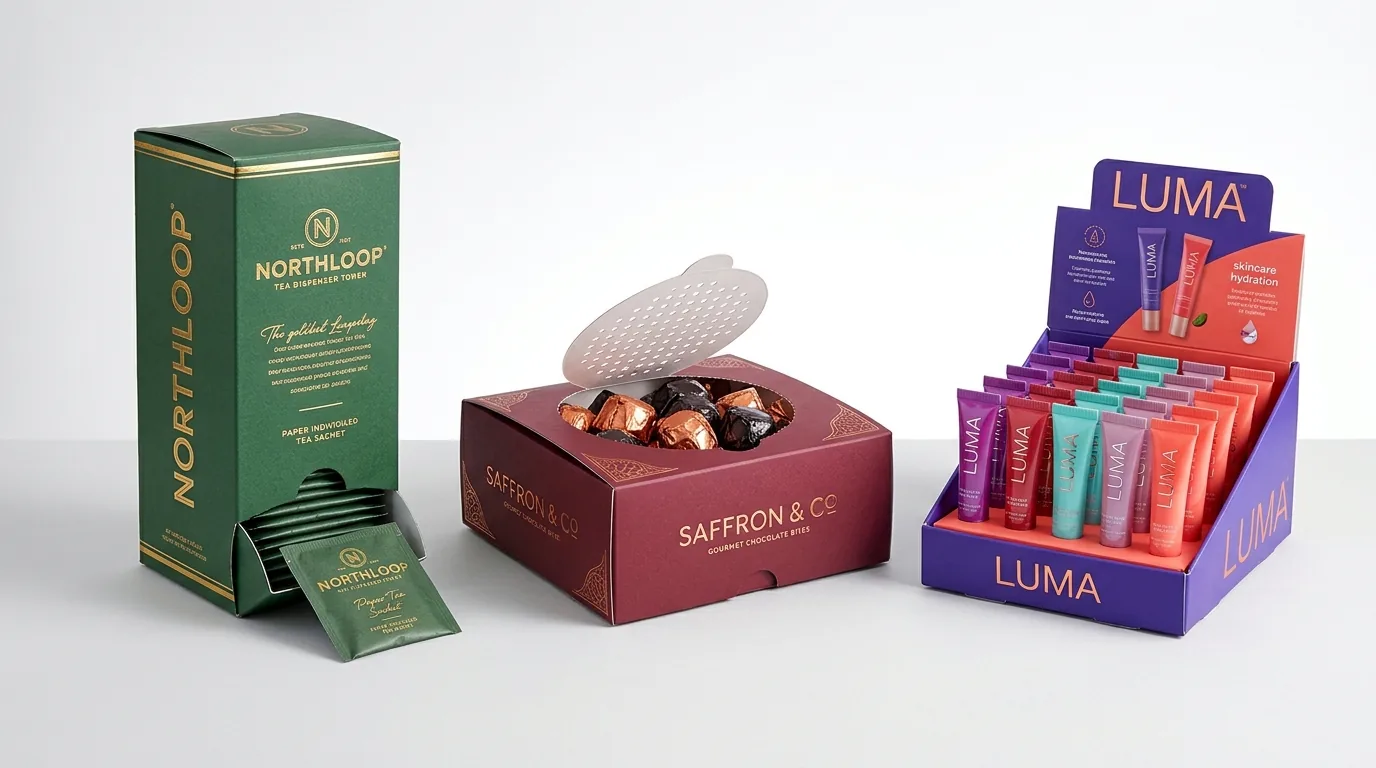
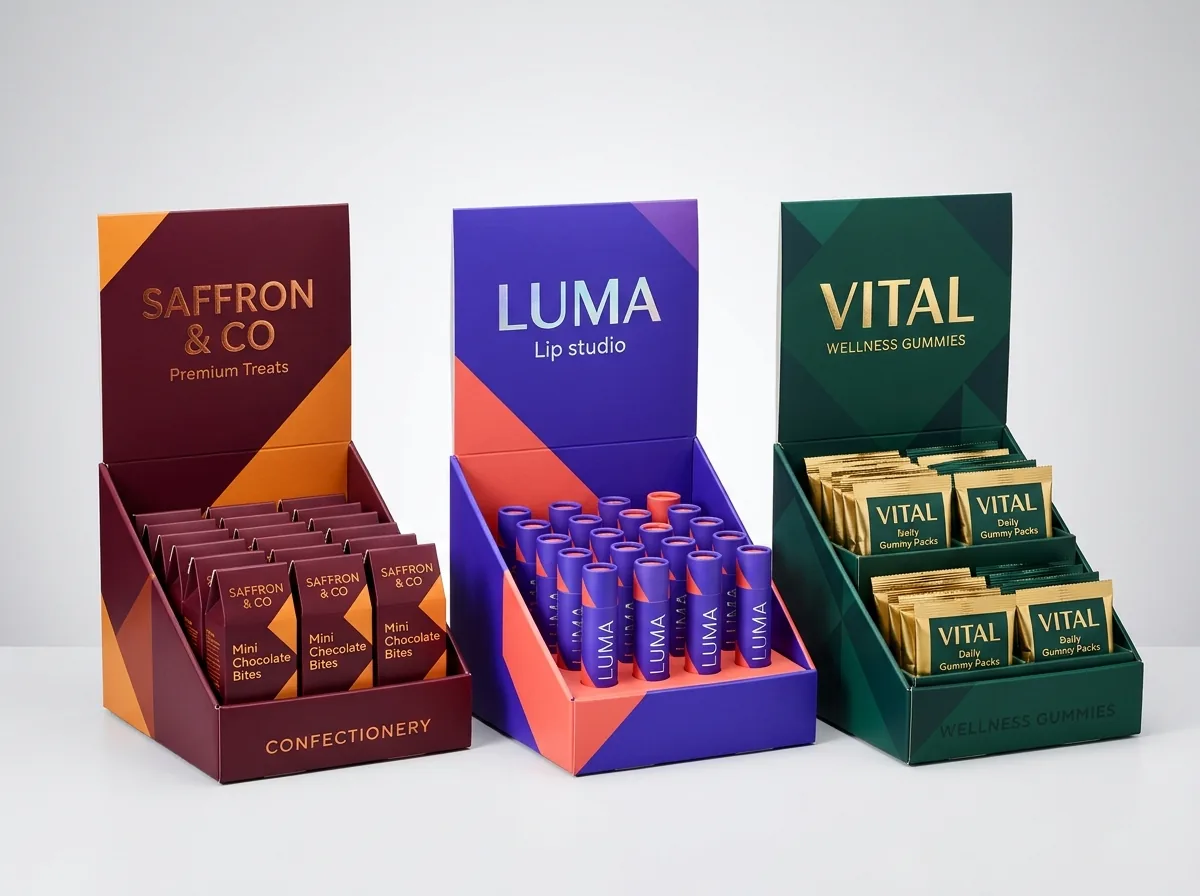
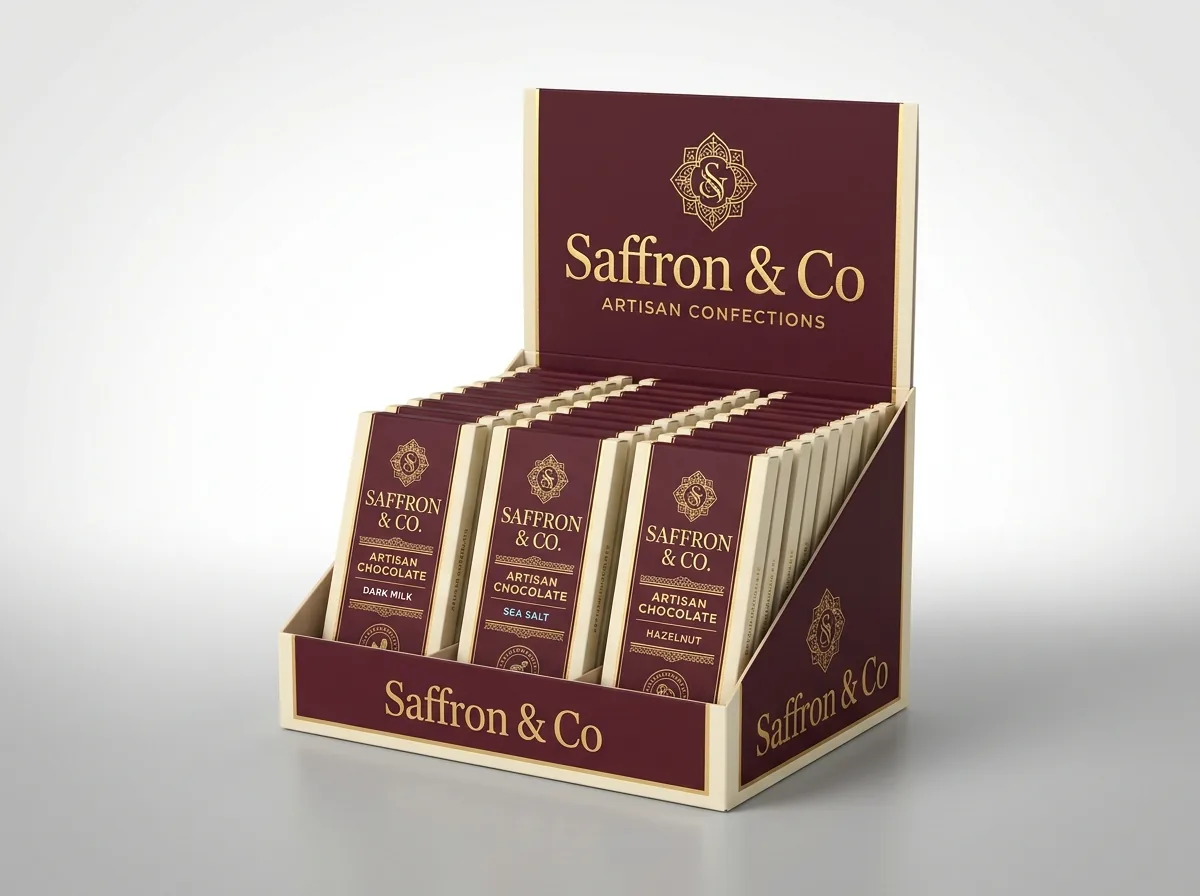
Brands ordering custom dispenser boxes actually choose between three distinct self-serve folding carton architectures, each engineered around a specific retail or household placement zone and daily hand motion. An upright bottom-slot gravity tower holds twenty to thirty servings inside a tiny 4-inch-wide footprint, shields reserve stock behind four clean printed walls, and rotates the oldest units out first whenever offices, cafes, or households top up from above. A horizontal top pop-open tear hatch skips the internal ramp insert altogether so fingers reach straight down from above inside shallow kitchen drawers or hotel amenity trays. Meanwhile, an open-top counter display box trades dust coverage for multi-facing impulse visibility right beside retail cash registers. CubitPack engineers all three structures from 1,000 units with zero die or plate setup charges, free 3D proofs, and free shipping across all 50 US states.
How do bottom gravity towers, top tear-hatch cartons, and open counter trays compare?
Picking the wrong self-serve structure creates immediate friction in daily use: a tall bottom-slot tower placed inside an 8-inch-high kitchen drawer cannot stand upright, whereas a wide open-top tray placed in a busy clinic reception area or hotel coffee bar leaves twenty unwrapped or foil-sealed packets exposed to splashes and multiple hands. Matching carton geometry to where the box actually lives after unboxing ensures customers keep your branded carton on their counter for weeks instead of dumping its contents into a generic acrylic bin. Retail category buyers evaluate shelf efficiency the exact same way, calculating revenue generated per linear inch of horizontal shelf frontage: a 4-inch-wide vertical gravity tower claims less than half the linear shelf width of a 9-inch horizontal tray while presenting a taller, bolder brand billboard at eye level. Meanwhile, household subscribers love horizontal pop-open hatches when sliding tea, candy, or detergent packs into shallow pantry pull-out bins where overhead clearance is tight. Compare the five engineering trade-offs across all three formats below
- Pick bottom gravity towers for eye-level shelves and breakrooms: The tall front panel acts as an unbroken brand billboard while feeding one neat packet per pull.
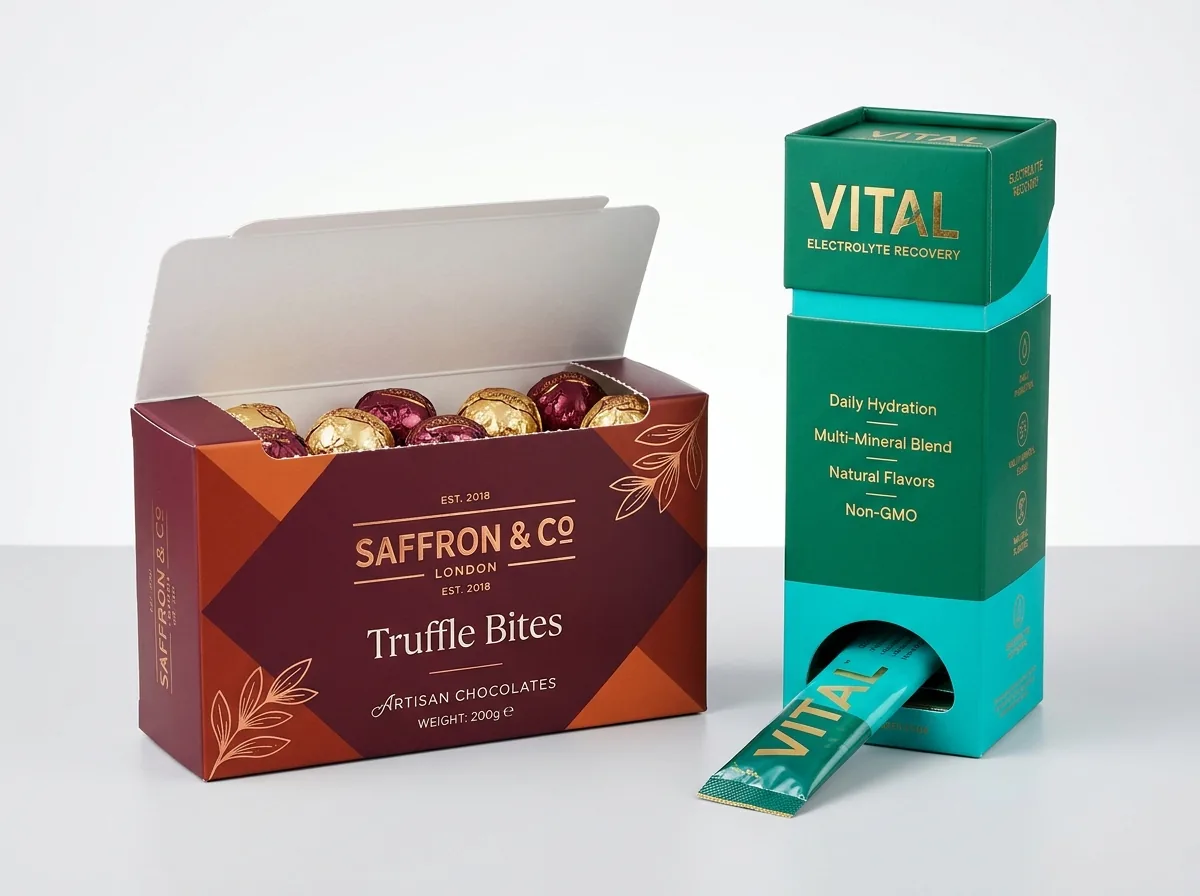
- Pick top pop-open hatches for tumbled shapes and drawers: Irregular twisted-wrap truffles, round mints, or laundry pods that do not stack flat pull effortlessly from a top oval or U-shaped tear hatch.
- Pick open counter trays or retail display boxes when shoppers compare multiple shades or flavors at once next to a cashier.
- Factor in inbound master-case packing density: Both vertical dispenser towers and flat-shipped counter trays fold completely flat along pre-glued side seams before filling, keeping warehouse pallet storage compact across 1,000-unit and 5,000-unit production runs.
- Test one-handed pull ergonomics: Office breakroom users frequently hold a mug or water bottle in one hand while grabbing a stick pack with the other, giving weighted bottom gravity towers a clear ergonomic edge over loose two-piece lidded boxes that require two hands to open and reclose.
| Selection factor | Bottom gravity-feed tower | Top / front pop-open hatch | Open counter display (CDU) |
|---|---|---|---|
| Stock rotation | True FIFO (load top, pull bottom) | LIFO (newest top items picked first) | Manual front-to-back restocking |
| Shelf / counter width | Ultra-narrow 3.5–6.0 in footprint | Horizontal 6.0–9.0 in footprint | Compact 4.5–10.0 in POS footprint |
| Dust & splash shield | 90% enclosed; 1 item at bottom mouth | Reclosable hinged top flap covers stock | Open top & front for rapid browsing |
| Internal insert | 25°–35° folded paperboard ramp | Zero insert needed (1-piece blank) | Die-cut hole grid or step riser |
| Best unit geometry | Flat sachets, sticks, masks, pods, bars | Tumbled wrapped candies, wipes, bites | Upright lip balms, pens, jars, bottles |
When should your dispenser box use a tuck top versus a glued seal-end top?
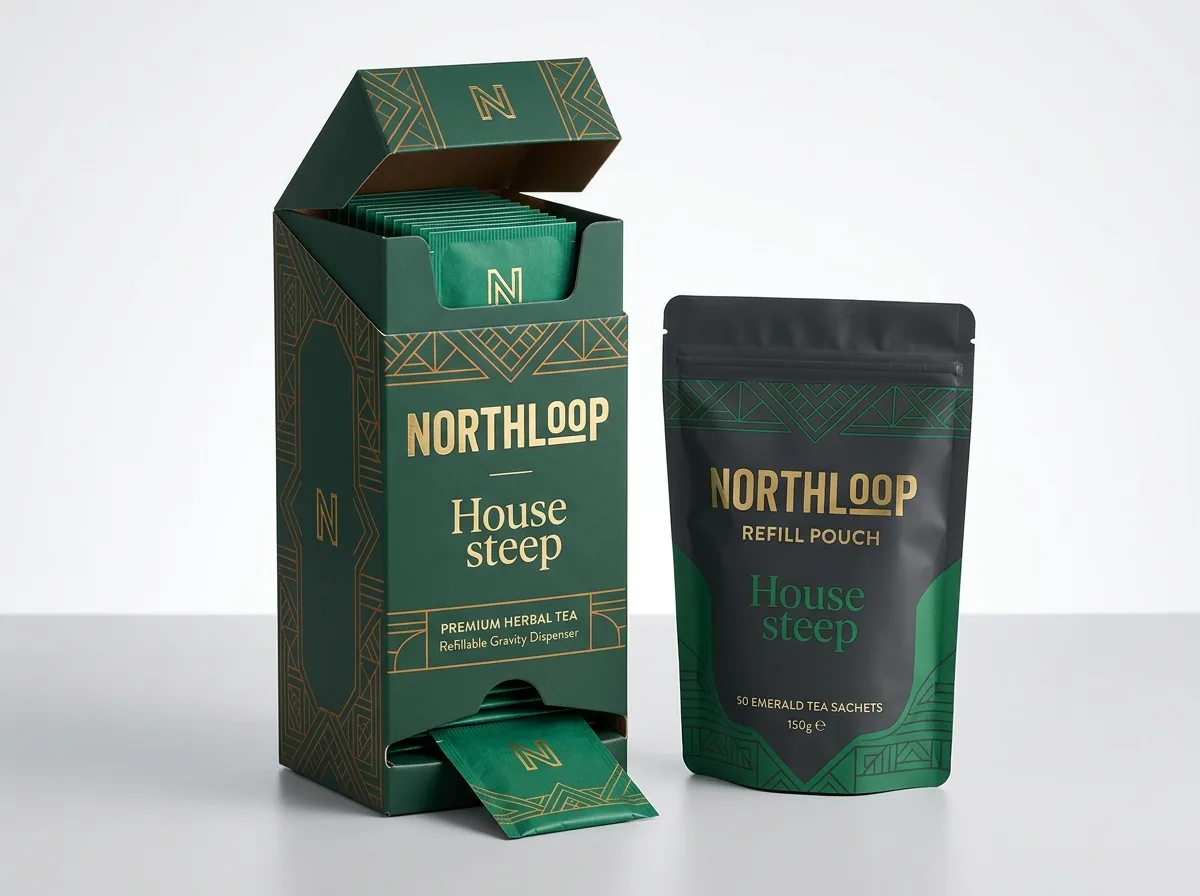
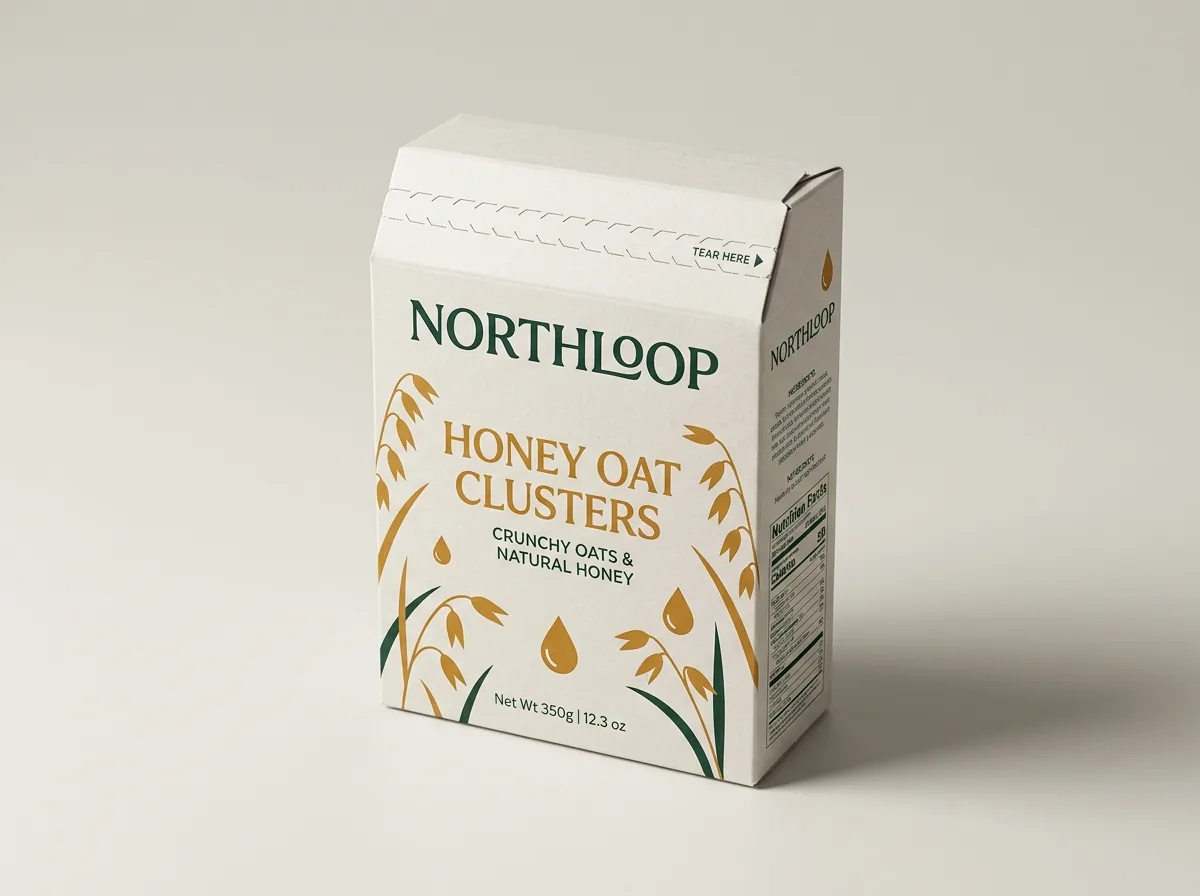
Once you decide on a bottom or front dispensing aperture for your perforated dispenser cartons, your next dieline decision is how the top of the tower closes after filling. Subscription wellness brands, office coffee suppliers, and boutique hotels increasingly ship a sturdy 24 pt matte-laminated dispenser tower on a customer's first order and follow up with lightweight kraft or foil refill pouches every month, a workflow that requires an easy-open top tuck flap that survives dozens of opening cycles without tearing. Supermarket, natural-grocery, and pharmacy chains, by contrast, mandate fiber-tearing tamper evidence on every shelf carton before purchase so shoppers know every single packet inside is untouched. Evaluating co-packing speed, retail buyer rules, and subscriber refill habits side by side makes the choice straightforward
| Top closure build | Fulfillment & packing method | Tamper & refill behavior | Best sales channel |
|---|---|---|---|
| Reverse / straight tuck top | Fast hand-packing or semi-auto tucking | Reopens cleanly for bulk pouch refills | DTC subscriptions, offices, cafes, hotels |
| Tuck top + security wafer seal | Hand-packed + clear tamper label | Shows tamper check at retail, then refills | Omnichannel brands selling DTC + boutique |
| Hot-melt glued seal-end top | High-speed automated cartoning lines | Permanent fiber-tear tamper resistance | Grocery chains, drugstores, club retail |
Which dispensing format wins across tea, coffee pods, snacks, gummies, and skincare?
Even within the same grocery aisle or vanity cabinet, single-unit stiffness and wrapper shape dictate which opening style feels effortless in the customer's hand. Flat rectangular foil sachets behave like a neat deck of cards that wants to slide forward down a 30-degree ramp, whereas pillowy twisted-wrap candies or round capsules need either a top-reach hatch or a folded catch lip so pieces never roll away. Across custom tea bag boxes, custom coffee pod boxes, custom candy boxes, custom snack boxes, and custom sample boxes, pairing your inner wrapper with the right opening keeps customers reaching for your branded carton every morning instead of hiding it inside a cupboard
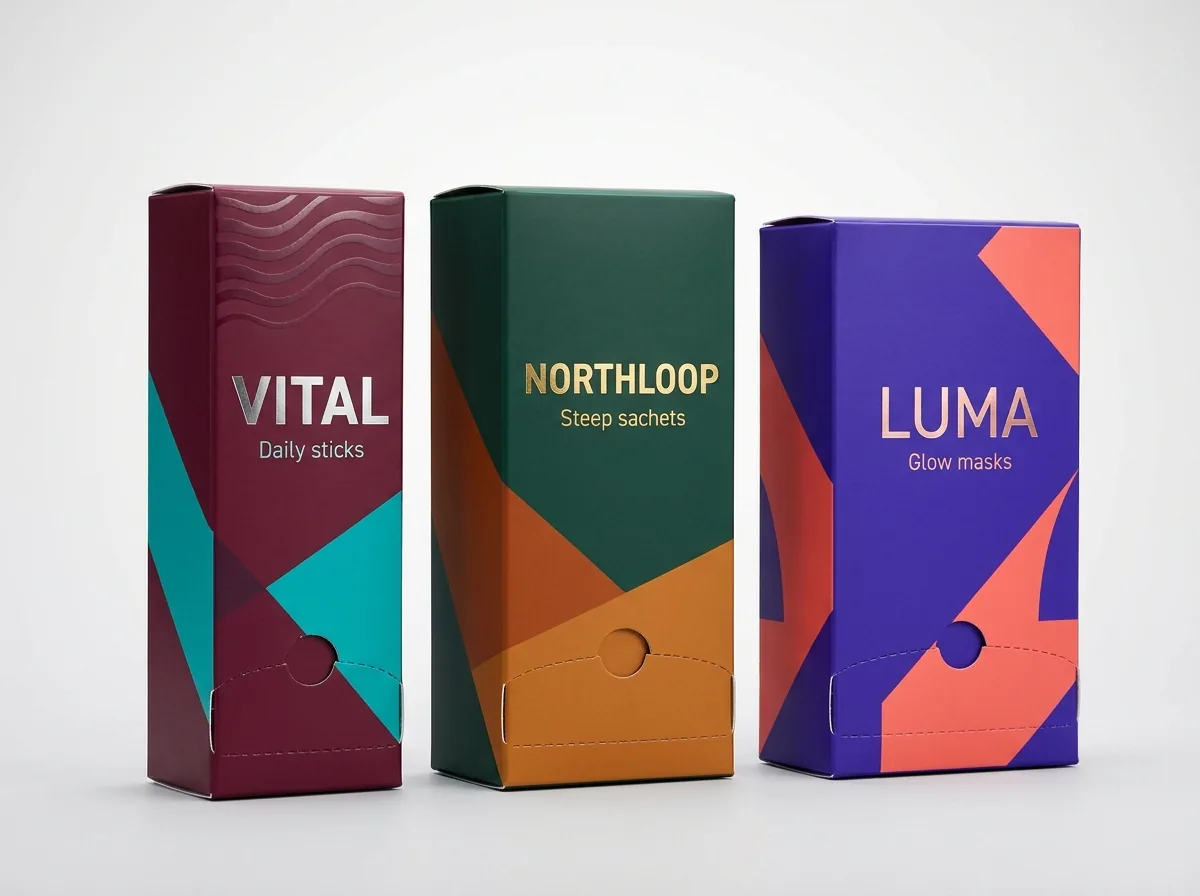
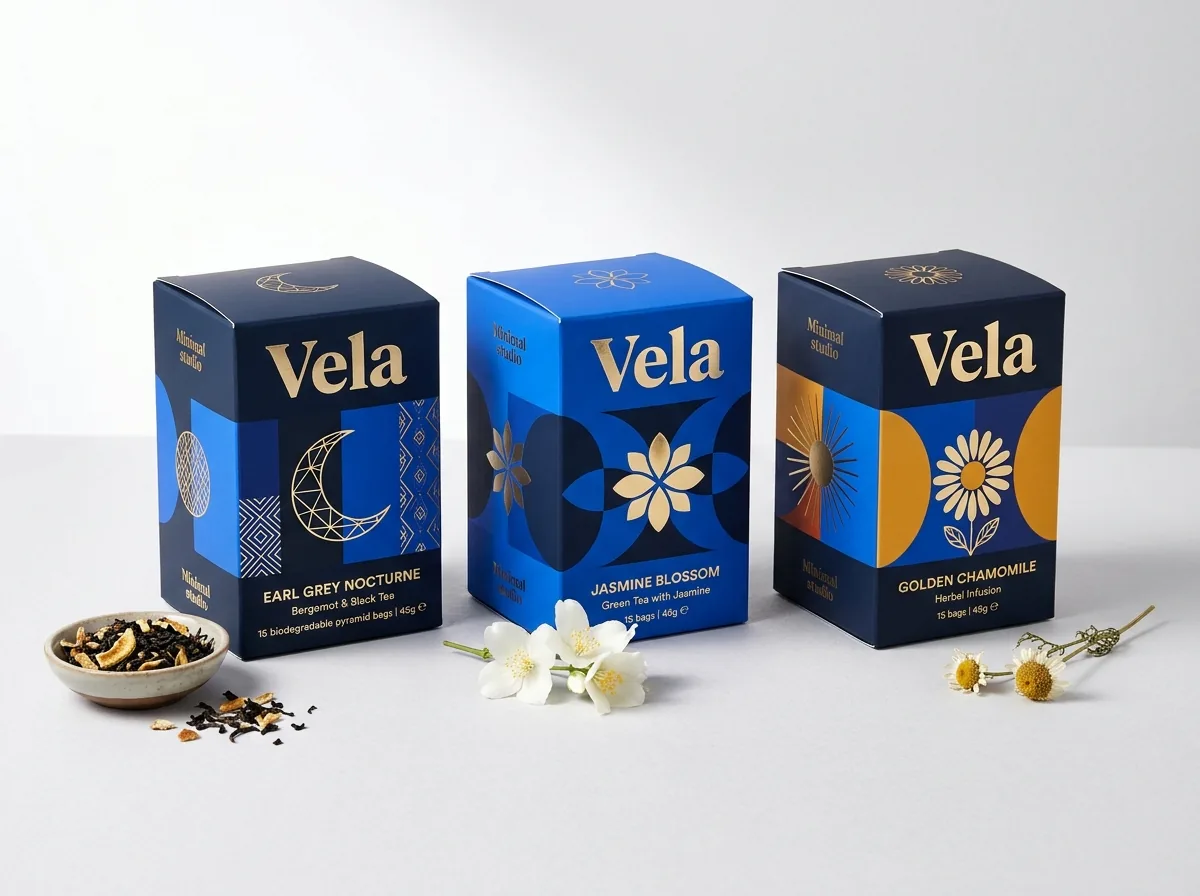
- Tea envelopes, electrolyte sticks, and hydrogel sheet masks: Bottom gravity-feed tower with a 30-degree uncoated ramp and 4-sided tear-out slot keeps flat foil packets stacked flat and dust-free.
- Aluminum and paper-ring espresso capsules: Tall dual-lane vertical tower with a hinged fold-down bottom scoop tray cradles round pods so they roll gently forward without rolling onto the floor.
- Individually wrapped chocolate squares, caramels, and mints: Horizontal top pop-open carton or hinged front scoop bin lets guests pick from tumbled assortments without needing a flat stack.
- Wrapped protein bars and oat bars: Sturdy 24 pt or E-flute bottom dispenser carton with a 25-degree ramp turns a 12-bar pantry multipack into a tidy grab-and-go gym shelf caddy.
- Multi-flavor wellness starter kits: Dual-chamber dispenser towers with a vertical center divider separate morning energy sticks from evening calm sticks inside one compact box.
Know your size? Compare pricing across up to 3 quantities.
Request a Quote →How do you finalize your dispenser structure before ordering 1,000 units?
Combine this architecture comparison with our companion guides on sizing gravity-feed dispenser slot heights and ramp angles and calibrating cut-tie perforation ratios and reclosable flap dielines, plus our coffee-industry breakdown of espresso capsule sleeves vs dispenser pod cartons. Walking through four practical questions with your fulfillment lead and retail buyer locks in the exact CAD template before graphic layout begins, saving extra proof rounds and ensuring your box fits standard shelf heights from day one
- 1. Does a single item stack flat or tumble loosely? Flat stacks belong in a bottom gravity tower with a 30-degree ramp; loose tumbled pieces belong in a top pop-open hatch or hinged scoop tray.
- 2. Will the box stand on an eye-level shelf or sit inside a low drawer? Shelves favor narrow vertical towers; drawers favor horizontal top-hatch cartons.
- 3. Will customers refill the carton from bulk pouches? Choose a reverse tuck top for refillable DTC/office programs, or seal-end closures for tamper-sealed grocery lines.
- 4. Ready to compare dielines? Request a quote from 1,000 boxes to get your free custom 2D CAD dieline and 3D proof in minutes, or test finishes first with our $50 sample kit (credited toward your first order).
What format mismatches hurt dispenser box usability?
Steer clear of these five structural mismatches when choosing between bottom slots, top hatches, and open trays
- Packing loose twisted-wrap candies into a flat-slot bottom gravity tower where twisted wrapper tails interlock and bridge across the chute.
- Designing a 12-inch-tall vertical dispenser tower for products customers store inside 5-inch-deep kitchen utility drawers.
- Using a wide open-top counter tray in dusty warehouse breakrooms or humid spa washrooms where enclosed dispenser walls keep sachets clean.
- Specifying permanent hot-melt glued top flaps on a hospitality tea tower meant to be refilled daily by staff.
- Forgetting a bottom scoop lip on round coffee capsules so pods roll off the counter as soon as the perforation opens.
Packaging for this
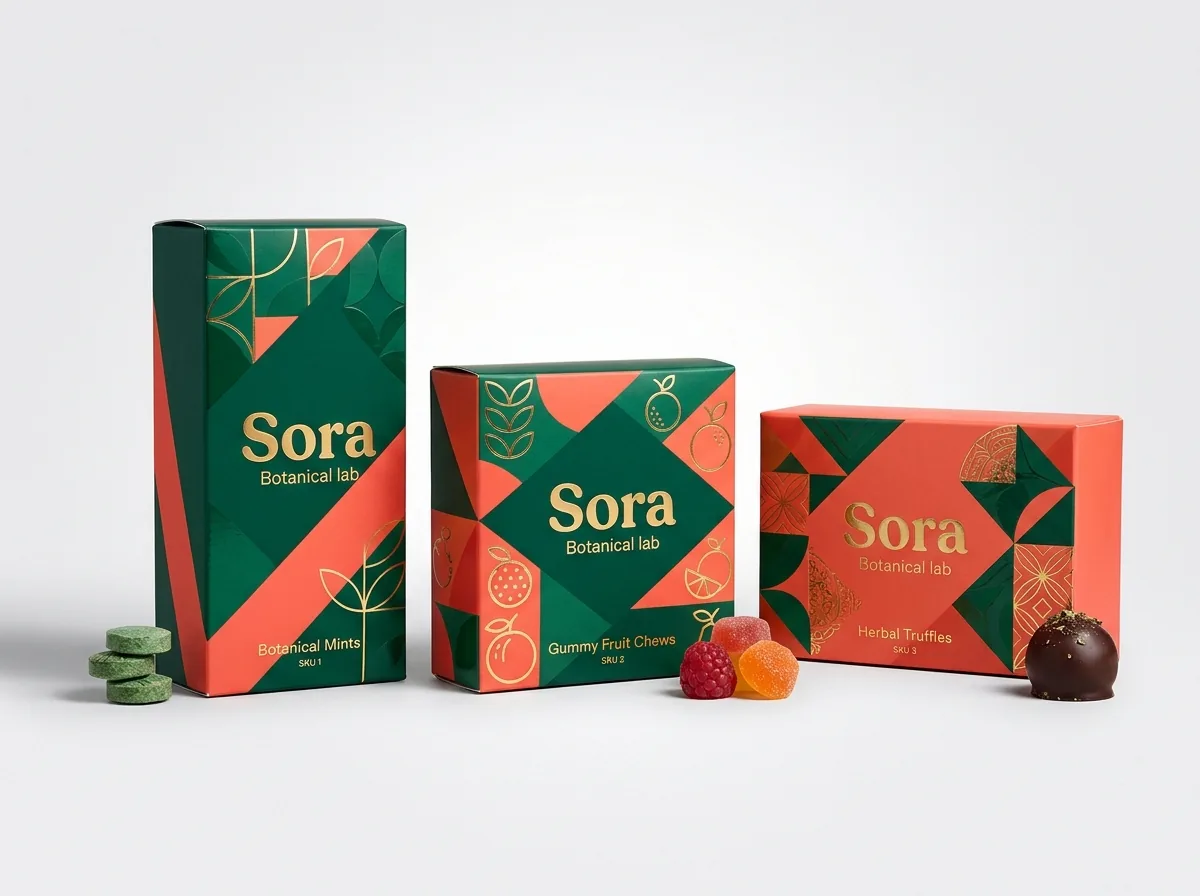
Ready to order dispenser boxes? Compare up to 3 quantities with a free 3D mockup.
Request a Quote →Questions about dispenser boxes
What does FIFO stock rotation mean in a bottom gravity dispenser box?
FIFO stands for first-in, first-out. When office managers or cafe staff open the top tuck lid to pour fresh tea bags or hydration sticks on top of remaining stock, users keep pulling the oldest packets from the bottom slot first so no pouches sit expired at the bottom.
Does a top pop-open dispenser carton cost less to pack than a gravity tower?
A horizontal top pop-open carton is a single-piece blank that requires no internal folded gravity ramp, making hand-packing slightly faster for tumbled candies or wipes. However, CubitPack charges zero extra die setup fees for gravity ramps when flat sachets need bottom feeding.
Can I order matching bottom-slot pantry dispensers and open POS counter trays together?
Yes. Many tea, gummy, snack, and cosmetic brands order 20-count gravity dispenser boxes for grocery aisles and DTC subscriptions alongside compact 12-count counter display boxes for cafe and boutique checkouts.
How do round coffee pods stay inside a bottom dispenser opening without rolling out?
Instead of tearing off a flat rectangular hole, we engineer a hinged fold-down scoop tray whose side gusset ears hold the flap at a 45-degree upward cradle angle, stopping each rolling capsule right at finger level.
What is the minimum order quantity for any of these three dispensing styles?
All custom folding carton dispenser styles, including bottom gravity-feed towers, top pop-open cartons, and checkout counter display trays, start at 1,000 units per structure, with 10–14 business day standard turnaround and free shipping across all 50 US states.
Still have a question? Ask a packaging specialist.
Request a Quote →Request your dispenser boxes quote
Tell us your size and quantities, and one dedicated account manager prepares pricing for each tier.
- Free design & AI-to-print studio + 3D mockup
- No die or plate charges · 4–5 day rush available
- Free shipping to all 50 states
- 10% off your first order
We compared ECMA Group A longitudinal tuck/seal dispenser skeletons, Group B/F point-of-purchase counter trays, FIFO refill workflows, and scoop-tray gusset stops against ECMA Folding Carton Design Codes, Paperboard Packaging Council (PPC) manuals, and TAPPI board standards. Spot something wrong? Tell us and we fix it.
Sources
What changed
- November 6, 2026: First published comparing bottom gravity-feed towers, horizontal top pop-open cartons, and open counter display trays.
More guides
New packaging guides by email
Sizes, materials and design tips. Unsubscribe anytime.