
Espresso capsule sleeves vs dispenser pod cartons vs variety mailers: which fits your roast?
Short answer: Match the box structure to your capsule format and sales channel: use a slim paperboard tube for 10 aluminum espresso capsules, a seal-end or auto-lock gravity dispenser carton for 10- to 24-count grocery custom coffee pod boxes, and an E-flute corrugated mailer or lane caddy for DTC subscriptions and breakrooms.
On this page
- How do the four main coffee pod box styles compare side by side
- Why do 10-count aluminum espresso capsules use slim square sleeves
- Seal-end vs auto-lock bottom dispenser cartons: which fits your packing line
- When should you use a tray-and-sleeve tasting flight or E-flute variety mailer
- Do coffee pod boxes need internal barrier coatings or special board
- Common mistakes
- FAQs
Request a custom quoteFree dieline & 3D mockup
Single-serve coffee buyers interact with the box every single morning until the last pod is brewed, which means a coffee pod carton is both a shipping container and a countertop kitchen organizer. Boutique espresso roasters selling 37 mm aluminum or plant-based capsules rely on slim 10-count square sleeves that stack like books in a cafe display or kitchen drawer. Roasters packing 51 mm filter cups for supermarket aisles use 12- and 24-count rectangular cartons with a micro-perforated lower front chute that turns the box into a gravity-feed dispenser beside the brewer. Meanwhile, direct-to-consumer (DTC) subscription brands and office coffee distributors step up to E-flute corrugated mailers and 4-lane breakroom caddies that survive parcel carriers without an outer overbox. At CubitPack, all styles start at 1,000 units in 10 to 14 business days with free design help and no die fees.
How do the four main coffee pod box styles compare side by side?
Before choosing your dieline for custom printed coffee pod boxes, evaluate how your capsules are filled, how the carton is closed on your packing line, and whether the box travels on a shrink-wrapped grocery pallet or individually through UPS and USPS parcel sorters. Use the comparison matrix below to weigh slim 10-capsule espresso sleeves, 12-count grocery dispenser cartons, two-piece tasting-flight drawers and E-flute corrugated variety mailers across capsule fit, packing speed, countertop behavior and board strength. Many specialty roasters launch with two complementary formats: a 12-count folding dispenser carton for retail grocery shelves and a 24- or 48-count E-flute variety mailer for online recurring subscriptions.
| Feature | Slim 10-capsule sleeve | 12/24-ct dispenser carton | E-flute variety mailer / caddy |
|---|---|---|---|
| Best capsule format | 37 mm aluminum / fiber espresso pods | 51 mm filter cups & 58 mm dome pods | 24 to 72 pods or 12-pod tasting flight |
| Recommended board stock | White SBS or kraft paperboard | Heavy white or kraft folding board | E-flute corrugated board |
| Typical closure | Straight tuck end + pull-tab chute | Seal end (glued) or auto-lock bottom | Roll-end tuck front or flip-top hood |
| Countertop dispensing | End-flap slot or drawer slide | Perforated bottom gravity-feed door | 4 vertical flavor lanes or face-up tray |
| Packing line method | Slide 10 capsules in end-to-end | High-speed cartoner or hand pack | Hand-pack or semi-automated lane load |
| Direct parcel shipping? | Requires outer mailer box | Ships in master case (or overbox) | Ships direct in the mail (no overbox) |
| Relative unit cost | Lowest (smallest board area) | Low to moderate (grocery workhorse) | Higher (corrugated board + dividers) |
Why do 10-count aluminum espresso capsules use slim square sleeves?
A 37 mm OriginalLine-style espresso capsule weighs only about 5.5 to 6 grams filled and has a rigid aluminum or molded-fiber frustum wall. Packing ten of those tiny capsules loosely in a cube box lets them rattle and dent their thin aluminum side walls. Instead, sliding ten capsules end to end inside a 1.50 × 1.50 × 11.00 inch straight tuck end box locks every capsule along a single axis. Because the four long panels of a 10-capsule sleeve act like narrow billboards, boutique roasters finish them in velvety soft-touch lamination with metallic gold, copper or bronze foil stamping matched to the anodized color of the capsule inside. Adding a small micro-perforated semicircle at the bottom end allows the customer to stand the sleeve vertically in a countertop rack and pull one capsule out from the bottom each morning. If you prefer a wider retail facing on shallow cafe shelves, we can also arrange ten 37 mm capsules in two parallel columns of five inside a 3.00 × 1.50 × 5.75 inch carton.
Seal-end vs auto-lock bottom dispenser cartons: which fits your packing line?
For 10-, 12- and 18-count grocery packs of 51 mm filter pods, your outer dimensions are nearly identical (around 6.0 × 4.0 × 5.875 inches for a nested 12-pack), but the bottom and top flap engineering depends entirely on who packs the pods. If your coffee is roasted and filled by a high-speed contract co-packer with automated horizontal or vertical cartoning equipment and hot-melt glue guns, order custom seal end boxes with full overlapping glue flaps and a top or bottom zipper tear strip. If you pack 1,000 to 5,000 boxes in-house at your roastery without hot-melt glue machinery, glue-sealed end flaps are slow and messy to seal by hand. Instead, order custom auto lock bottom boxes with a tuck top and a perforated lower front dispenser chute. Our folder-gluer pre-glues the bottom crash-lock floor before shipping flat to you, so your team simply squeezes the sides to pop the box open, loads two nested layers of six pods, and tucks the top lid shut in three seconds. To make your tuck-top auto-lock carton tamper-evident on supermarket shelves, simply bridge a custom printed roast seal sticker over the top tuck seam.
Know your size? Compare pricing across up to 3 quantities.
Request a Quote →When should you use a tray-and-sleeve tasting flight or E-flute variety mailer?
Standard folding paperboard cartons are engineered to travel to supermarkets inside corrugated master cases, not alone through parcel carrier conveyor belts. If you sell a DTC pod subscription, a 4-roast starter kit or a 48-count office breakroom box that ships directly to the customer's doorstep, upgrade to an E-flute corrugated custom mailer box or a partitioned breakroom caddy. Fine 1/16-inch E-flute board gives you a smooth outer clay-coated surface for offset or digital printing while absorbing corner drops in the mail. For 8-, 12- or 16-pod discovery kits and holiday gifts, pair an E-flute mailer or a two-piece tray and sleeve box with a die-cut paperboard cavity insert. Suspending each capsule foil-lid-up in its own labeled hole turns a commodity pod pack into a guided coffee tasting flight where every single-origin roast is identified right on the insert deck beside the cup. You can also include a printed custom insert card with tasting notes and a QR code for reordering the subscriber's favorite blend.
Do coffee pod boxes need internal barrier coatings or special board?
Because almost all single-serve coffee cups and aluminum espresso capsules are hermetically sealed with a nitrogen flush and a high-barrier foil lid, the pod itself provides the primary oxygen and moisture barrier. That means your outer folding carton or sleeve can use standard bleached white SBS paperboard, unbleached natural kraft board or 100% recycled paperboard without needing a plastic film liner. However, if you pack unwrapped filter-paper ESE (Easy Serving Espresso) pods or open-bottom plant-fiber mesh pods that are not individually foil-sealed, the outer box must help block moisture and aroma loss, or hold a sealed inner barrier pouch. Food-contact boards, grease/moisture barriers and certified partner facilities are available on request.
- Nitrogen-flushed foil-sealed pods: standard white card, kraft or recycled board works cleanly as secondary packaging.
- Unwrapped paper or mesh pods: pair the outer carton with a heat-sealed inner barrier bag or request food-contact barrier board.
- Refrigerated cold-brew concentrate pods: add matte or gloss film lamination on the outside to resist condensation in damp kitchens.
- Multi-roast SKU runs: keep all blends on one structural dieline to combine quantities across Light, Medium, Dark and Decaf roasts and lower unit cost.
What mistakes do roasters make when choosing a coffee pod box style?
Mismatched closures and thin parcel boards are the top causes of co-packer delays and crushed subscription deliveries. Avoid these five mistakes
- Ordering unglued seal-end cartons for a manual roastery packing line that has no hot-melt glue closer, instead of pre-glued auto-lock bottom cartons.
- Shipping 24- or 48-count thin paperboard grocery cartons directly through USPS or UPS without stepping up to crush-resistant E-flute corrugated.
- Packing 37 mm aluminum espresso capsules loosely in a wide box where the thin metal walls dent against each other instead of a snug 1.5 in square sleeve.
- Designing a 4-flavor 48-count variety box without internal lane dividers, so all four roasts mix into a single jumble as soon as the bottom dispenser opens.
- Leaving the end flaps of a 10-capsule sleeve blank so customers cannot tell Dark Roast from Decaf when sleeves are stacked in a pantry.
Find your size
Suggested inside size: 1.5 × 1.5 × 11.0 in
A starting point. Your account manager confirms the size with you before the proof.
Quote this size →Packaging for this
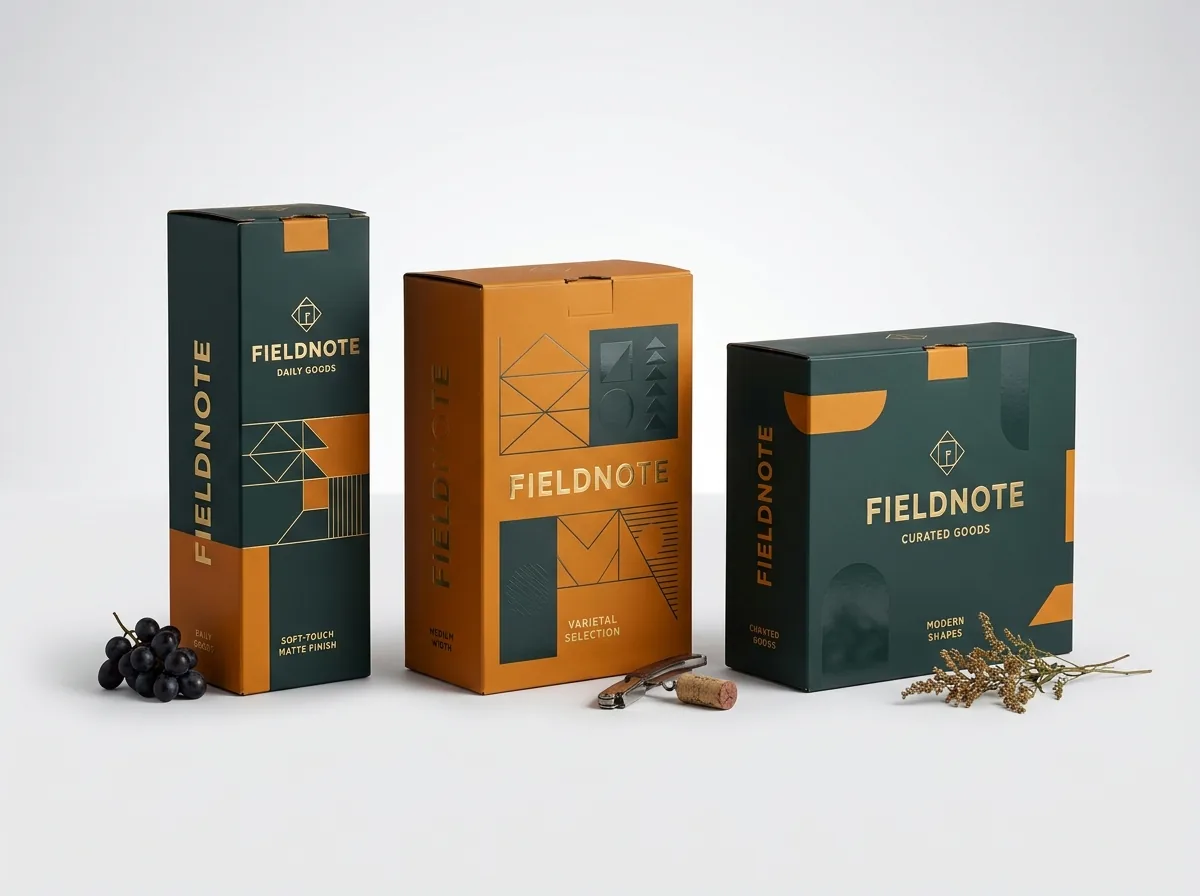
Ready to order coffee pod boxes? Compare up to 3 quantities with a free 3D mockup.
Request a Quote →Questions about coffee pod boxes
Should we order seal-end or auto-lock bottom cartons for our 12-count coffee pods?
Order seal-end cartons if your contract co-packer runs an automated cartoning line that seals flaps with hot-melt glue. Order auto-lock bottom cartons with a tuck top if your team packs boxes by hand and needs a pre-glued floor that pops open instantly.
Can a 12-count auto-lock bottom box still have a perforated bottom dispenser door?
Yes. We pre-glue the crash-lock bottom floor so it holds the weight of twelve or twenty-four pods, and we die-cut the micro-perforated gravity dispenser chute on the lower front panel just above the bottom score line.
What board material is best for a 48-count office breakroom coffee pod caddy?
Fine E-flute corrugated board is the standard choice for 36-, 48- and 72-count office breakroom caddies and club packs. It provides the vertical stacking strength needed for pallet transit and keeps four internal divider lanes rigid.
Can we print on the inside of a coffee pod variety mailer or tasting-flight box?
Yes. Inside printing in full CMYK or Pantone colors is available on all folding cartons, sleeves and E-flute mailers, making it easy to print origin maps, roast intensity charts and brewer compatibility notes inside the lid.
What is the minimum order quantity for espresso sleeves and pod dispenser cartons?
Our minimum order is 1,000 boxes across all folding carton and E-flute corrugated styles (and 50 units for luxury rigid gift boxes). You can split your run across multiple roast flavors that share the same structural dieline.
How long does it take to produce and ship custom coffee pod boxes?
Standard production takes 10 to 14 business days after you approve your free 2D digital proof and 3D mockup, with 4 to 5 business day rush available on request. Ground delivery is free across all 50 US states.
Still have a question? Ask a packaging specialist.
Request a Quote →Request your coffee pod boxes quote
Tell us your size and quantities, and one dedicated account manager prepares pricing for each tier.
- Free design & AI-to-print studio + 3D mockup
- No die or plate charges · 4–5 day rush available
- Free shipping to all 50 states
- 10% off your first order
This comparison is based on CubitPack's decided folding carton and corrugated specifications in our published product specifications (1,000-unit minimum, 10 to 14 business day turnaround, free design help and no die charges) and standard co-packer cartoning and parcel transit engineering. A packaging specialist verified every row. Spot an error? Tell us and we will fix it.
Sources
What changed
- October 22, 2026: First published.
- October 22, 2026: Updated specifications, terminology, and verified source links.
More guides
New packaging guides by email
Sizes, materials and design tips. Unsubscribe anytime.