
How do I design custom beer boxes for cold coolers and TTB labeling?
Short answer: Design custom beer boxes on 20 pt to 24 pt wet-strength CUK board with gloss or matte aqueous coating for 38 °F coolers, add rounded tear-arrest finger slots on top handles, include a base date window, and print all mandatory TTB 27 CFR Part 7 statements on enclosed outer cartons.
On this page
- What TTB mandatory statements must appear on an enclosed beer carton
- How do you engineer top finger holes and basket handles so heavy packs do not rip
- How do you lay out 12-pack fridge dispenser perforations and 'Canned On' date windows
- Which finishes survive cold-room sweat, and how do seasonal master windows work
- What prepress checklist should you run before sending beer box artwork to print
- Common mistakes
- FAQs
Request a custom quoteFree dieline & 3D mockup
Designing a production-ready craft beer carton requires coordinating structural engineering, moisture resistance, and federal beverage regulations on a single dieline. Whenever an outer 4-pack, 6-pack, or 12-pack carton completely obscures the cans or bottles inside at retail, TTB 27 CFR Part 7 requires the exterior box to display the brand name, class and type designation, brewer name and address, net contents, alcohol content where applicable, and the exact Government Health Warning statement. Structurally, heavy packs such as four 16 oz tallboys (4.4 lb) or six 12 oz glass bottles (7.2 lb) need rounded tear-arrest stress-relief cuts at the handle openings, fiber grain running perpendicular to vertical corner scores, and glue-free zones reserved for hot-melt or cold-set adhesive flaps. Pairing wet-strength CUK board with aqueous coating or lamination prevents ink scuffing when cold cans sweat.
What TTB mandatory statements must appear on an enclosed beer carton?
Under US Alcohol and Tobacco Tax and Trade Bureau (TTB) regulations in 27 CFR Part 7, any enclosed retail carton, sleeve, or carrier that blocks a shopper from reading the mandatory label information on the individual cans or bottles inside is treated as a retail container that must carry full mandatory labeling on the outside of the box. When you lay out artwork for custom printed beer boxes, missing a single required statement or formatting rule can hold up distribution or require sticker over-labeling in the warehouse. If you use an open-top 6-pack basket carrier or an enclosed 4-pack master carton with a die-cut side window specifically positioned so all mandatory statements on the inner container remain legible without opening the package, your outer carton does not need to repeat every beer-specific disclosure. For fully enclosed 4-, 6-, and 12-pack cartons, include every element in the checklist below on your dieline.
| TTB Outer Carton Element | Placement & Formatting Requirement | Design Prepress Tip |
|---|---|---|
| Brand name & class/type | Front/principal display panel (e.g., India Pale Ale, Ale, Lager, Malt Beverage) | Keep at least 2 mm minimum type height on packs over 8 fl oz |
| Name & address of brewer | Front, side, or back panel matching your Brewer's Notice | Can state city and state alone if printed on the can/bottle inside |
| Net contents statement | Front or bottom panel showing pack count and unit volume | Format clearly: '6 - 12 FL. OZ. CANS (72 FL. OZ.)' or '4 - 1 PINT CANS' |
| Alcohol content (% ABV) | Required by most states and when flavored/specialty claims appear | Format as 'ALC. X.X% BY VOL.'; leave a clean box for variable ink-jet if needed |
| Government Health Warning | 'GOVERNMENT WARNING:' in ALL CAPS and bold; body text in regular type | Set on a high-contrast solid background; never print over busy hop art |
| State deposit & recycling | Side or bottom panel (CA CRV, OR, MI, NY, CT, MA, ME, VT, IA, HI) | Group deposit text near the UPC barcode block on the bottom or lower side |
How do you engineer top finger holes and basket handles so heavy packs do not rip?
When a customer pulls a cold 4-pack of 16 oz tallboys (4.4 lb), a 6-pack of 12 oz glass longneck bottles (7.2 lb), or a 12-pack of cans (10.0 lb) off a wet 38 °F cooler shelf, the entire deadweight concentrates on two 1.0 to 1.25 inch finger openings or a center riser handle. If those handle cutouts end in sharp 90-degree corners or run parallel to the paperboard grain without reinforcement, the damp fibers tear straight out the top edge before the shopper reaches the checkout counter. On enclosed 4-pack and 6-pack can cartons, our design team builds two folded reinforcement flaps directly beneath the top panel and add curved J-hook or crescent tear-arrest notches at both ends of each finger hole. When the customer lifts the pack, the inner dust flaps fold upward against their knuckles, doubling the board thickness at the grip line and cushioning sharp cut edges, while the curved relief cuts redirect upward pull tension away from the top score lines.
- Double-ply knuckle flaps: Hinged inner tabs under top finger holes double the caliper from 20 pt to 40 pt right where fingers lift the carton.
- Curved J-hook tear-arrest cuts: 15-degree curved relief nicks at the corners of handle slots stop micro-tears from propagating across the top panel.
- Multi-ply basket riser handles: On open 6-pack custom drink carrier boxes, two or three laminated layers of wet-strength CUK create a 44 pt to 66 pt center grip bar.
- Auto-lock vs glue-end bottoms: Use custom auto-lock bottom boxes for hand-loaded bottle carriers and custom seal end boxes for high-speed end-load canning lines.
How do you lay out 12-pack fridge dispenser perforations and 'Canned On' date windows?
Two small die-cut details make a huge difference for distributors and beer drinkers: a bottom 'Canned On' date window on 4- and 6-packs, and a perforated refrigerator dispenser end on 12-packs. Most craft canning lines inkjet the 'CANNED ON' date, batch code, and witty tagline onto the concave bottom dome of each aluminum can before loading the cartons. Once four or six cans are sealed inside an enclosed paperboard box, distributor reps and bottle-shop buyers cannot check freshness unless they rip open a flap, or unless you add a 1.0 × 2.0 inch die-cut inspection cutout on the bottom panel aligned directly under one corner can base. On 12-pack (2 × 6) can cartons, designing a zip-rule tear strip across the upper two-thirds of the front end panel, leaving a 1.75 inch high retention lip across the bottom, turns the carton into an instant refrigerator dispenser. The customer tears off the upper corner flap and pulls out one cold can at a time while the 1.75 inch bottom dam stops the remaining eleven cans from rolling out onto the kitchen floor.
Know your size? Compare pricing across up to 3 quantities.
Request a Quote →Which finishes survive cold-room sweat, and how do seasonal master windows work?
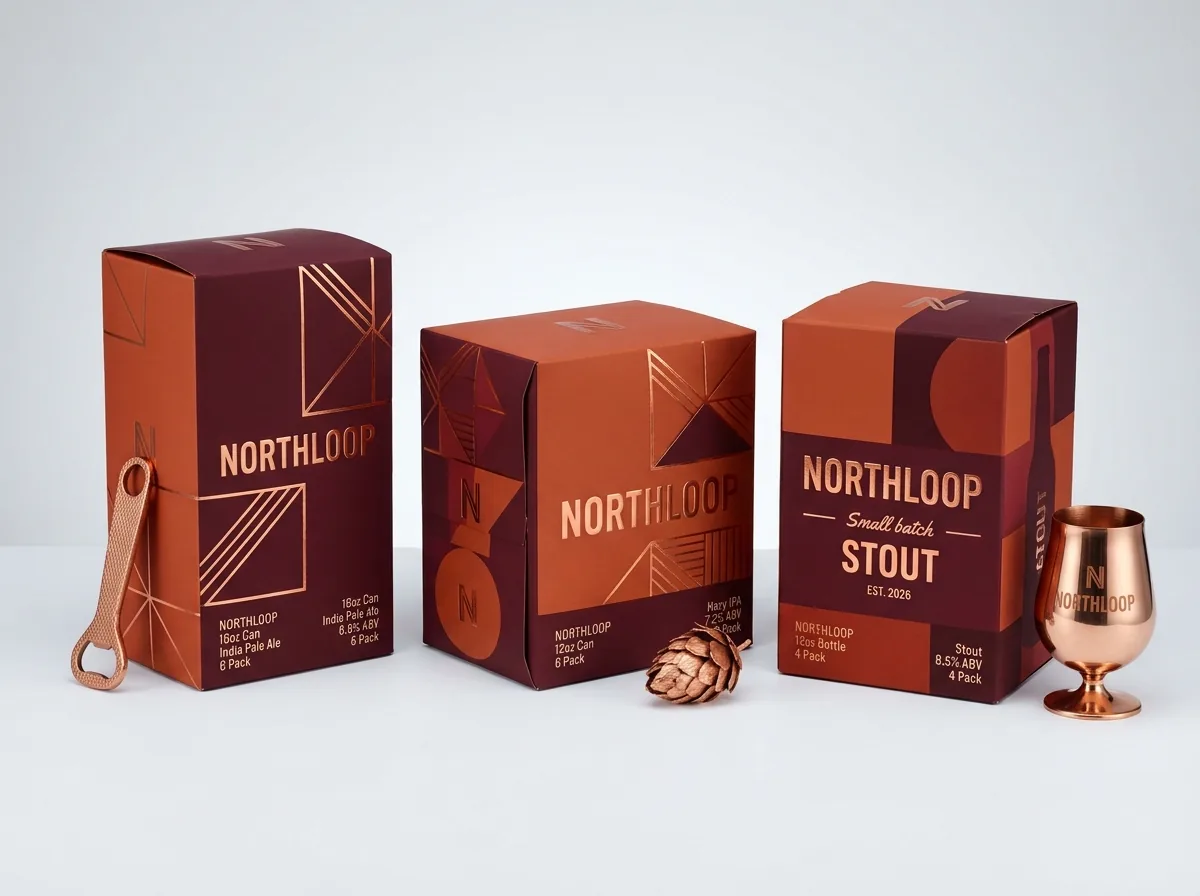
Craft beer cartons spend their shelf life cycling between 38 °F refrigerated walk-in coolers at 85% relative humidity and warm car trunks on the ride home. As soon as a cold carton leaves the cooler, moisture condenses on the outer surface, and adjacent cartons rub against each other inside grocery bags and master cases. To prevent dark stouts, rich blues, and saturated hop greens from scuffing or bleeding when damp, pair 20 pt to 24 pt wet-strength Coated Unbleached Kraft (CUK) board with an overall gloss or satin aqueous coating, or upgrade to matte or soft-touch film lamination for flagship and barrel-aged releases. If your taproom cans 10 to 20 rotating seasonal releases per year, design one master 4-pack 16 oz tallboy carton with a 2.0 × 4.5 inch vertical die-cut window on the side wall so each seasonal can label shows through clearly without ordering separate printed boxes.
- Gloss or satin aqueous coating: Fast-drying, curbside-recyclable protective seal that prevents ink rub in damp cold cases and master shippers.
- Matte or soft-touch lamination: Adds a velvet tactile finish and high moisture resistance for Imperial stouts, barrel-aged 22 oz bombers, and gift flights.
- Spot UV and metallic foil: Highlights hop cones, brewery crests, and tasting medals under bright grocery cooler LED strips.
- Die-cut side window for seasonal cans: Lets one printed master 4-pack carton work across 15+ rotating pressure-sensitive can labels.
What prepress checklist should you run before sending beer box artwork to print?
Before approving your PDF proof for production, verify your dieline against these five brewery prepress rules: 1. Extend all background artwork 0.125 inches (3 mm) past every exterior cut edge, and keep all TTB text, barcodes, and logos at least 0.125 inches inside score lines. 2. Set the UPC-A barcode at 80% to 100% magnification in 100% black ink on a high-contrast white or pale box, with the ladder bars oriented parallel to the direction the carton travels past the scanner. 3. Verify that all hot-melt glue flaps on end-load 4-, 6-, and 12-pack cartons are masked free of ink, varnish, and aqueous coating. 4. Check that your 'CANNED ON' bottom inspection hole aligns with the bottom dome of a corner can, and that any side seasonal window clears structural corner scores by at least 0.50 inches. 5. Confirm your exact inside dimensions against our beer box size chart for 12 oz cans, 16 oz tallboys and 6-packs and compare carrier styles in our guide to open 6-pack beer carriers vs enclosed can cartons and mailers.
What are the five most common beer box design and TTB prepress mistakes?
Check your artwork and structural dieline against these five costly brewery packaging errors before going to press
- Omitting mandatory TTB 27 CFR Part 7 disclosures or printing 'Government Warning:' in lowercase/non-bold type on an enclosed 4-, 6-, or 12-pack carton that hides the cans inside.
- Designing square-cornered top finger slots without inner knuckle flaps or curved tear-arrest relief cuts, causing heavy 16 oz tallboy 4-packs to rip when lifted from a damp cooler.
- Printing flood coat ink or aqueous varnish across the end-load glue flaps, preventing hot-melt adhesive from bonding into the raw CUK fibers on the canning line.
- Cutting the 12-pack refrigerator dispenser opening all the way down to the bottom score line instead of leaving a 1.75 inch bottom retention lip to hold the remaining cans inside.
- Forgetting a 1.0 × 2.0 inch bottom inspection cutout on enclosed 4- and 6-pack cartons, forcing distributors to tear open flaps to read the 'Canned On' date stamp.
Find your size
Suggested inside size: 3.125 × 3.125 × 11.25 in
A starting point. Your account manager confirms the size with you before the proof.
Quote this size →Packaging for this
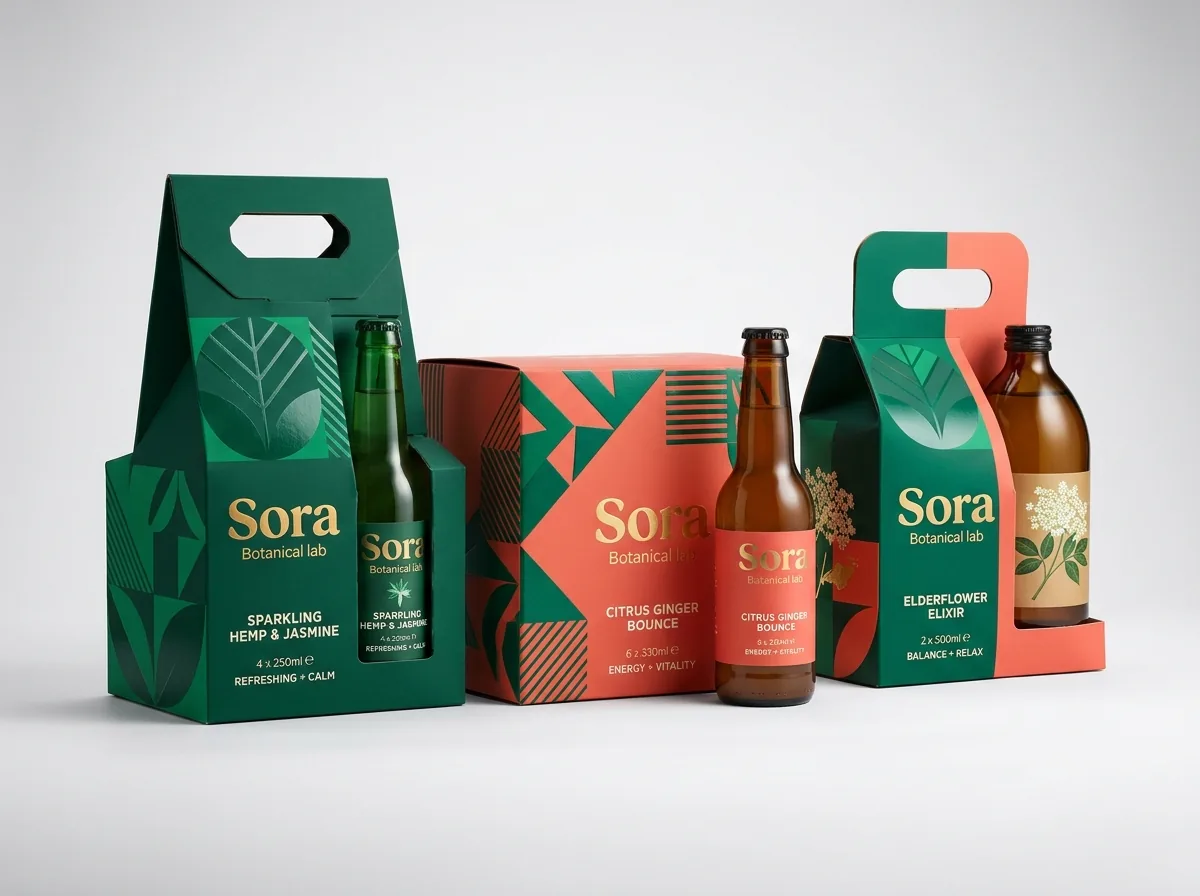
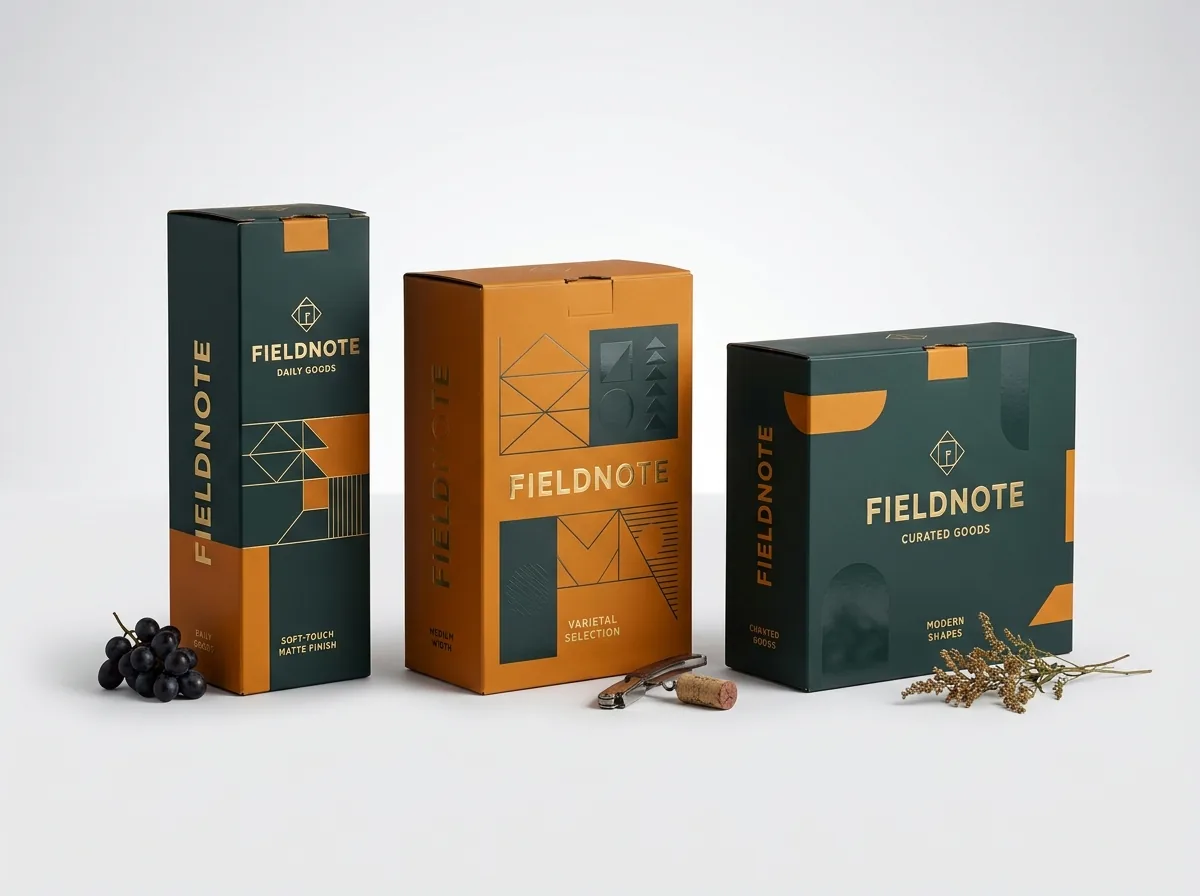

Ready to order beer boxes? Compare up to 3 quantities with a free 3D mockup.
Request a Quote →Questions about beer boxes
Does my enclosed 4-pack or 6-pack beer carton need the Government Health Warning on the outside?
Yes. Under TTB 27 CFR Part 7, whenever an enclosed outer carton blocks a retail shopper from reading the mandatory label information on the cans or bottles inside, the outer carton must display all mandatory disclosures, including the exact Government Health Warning with 'GOVERNMENT WARNING:' in bold capital letters.
Do open-top 6-pack bottle basket carriers require full TTB text on the carrier walls?
If all mandatory TTB label information on the bottles inside can be read clearly at retail without removing the bottles from the open carrier, or if a die-cut window exposes those statements, repeating every beer-specific disclosure on the carrier is not required, though most breweries still print brand, net contents, and warning text.
How do you stop top finger holes on 4-pack 16 oz tallboy cartons from tearing?
We engineer top finger openings with two structural reinforcements: hinged inner dust flaps that fold upward beneath the holes to double the board thickness against the customer's fingers, and curved J-hook tear-arrest relief cuts at the slot ends that redirect lifting stress away from the top score lines.
How tall should the bottom lip be on a 12-pack fridge dispenser beer box?
Leave a 1.625 to 1.875 inch (typically 1.75 inch) solid paperboard retention lip across the bottom of the dispenser end panel. That height is tall enough to stop lying-down 2.60 inch diameter cans from rolling out onto the floor while still letting fingers grip and lift out the front can easily.
Why must glue flaps on end-load beer cartons stay free of ink and coating?
High-speed brewery cartoning equipment uses hot-melt or cold-set adhesive that must penetrate directly into porous paperboard fibers within a fraction of a second. Ink, aqueous coating, or UV varnish seals the surface pores and causes end flaps to pop open in cold, humid walk-in coolers.
Can CubitPack check our beer carton artwork for bleed, glue masks, and window placement?
Yes. Every custom beer box order includes a free custom structural dieline and a full prepress check of your bleed, score clearances, barcode contrast, glue-free masks, and die-cut windows before production starts, with free shipping across the US.
Still have a question? Ask a packaging specialist.
Request a Quote →Request your beer boxes quote
Tell us your size and quantities, and one dedicated account manager prepares pricing for each tier.
- Free design & AI-to-print studio + 3D mockup
- No die or plate charges · 4–5 day rush available
- Free shipping to all 50 states
- 10% off your first order
This design guide is built on TTB 27 CFR Part 7 malt beverage labeling regulations, wet-strength CUK structural dieline standards, and brewery canning-line glue specifications. Checked by a CubitPack packaging specialist. Spot an error? Tell us and we will fix it.
Sources
What changed
- October 22, 2026: First published.
- October 22, 2026: Updated specifications, terminology, and verified source links.
More guides
New packaging guides by email
Sizes, materials and design tips. Unsubscribe anytime.