
How do you design custom spirits boxes for heavy bottles and TTB rules?
Short answer: Designing retail-ready custom spirits boxes requires three steps: reproducing all mandatory TTB 27 CFR Part 5 bottle disclosures (including the exact Government Warning) if the carton obscures the bottle label, engineering an auto-lock base and neck yoke for 4-pound glass shams, and separating vector foil and emboss layers on your dieline.
On this page
- What mandatory text does TTB 27 CFR Part 5 require on an enclosed spirits carton
- How do copper foil stamping, embossing, and soft-touch finishes work on dark spirits boxes
- How can a distillery share one master carton across multiple expressions
- What drives the cost of custom spirits boxes and how do you optimize your quote
- Where should the UPC barcode and batch stamp sit on a spirits retail carton
- Common mistakes
- FAQs
Request a custom quoteFree dieline & 3D mockup
A great spirits carton has to work hard in three places at once: on the bottling line, in the TTB compliance review, and on a dimly lit liquor store shelf. Under US Alcohol and Tobacco Tax and Trade Bureau (TTB) 27 CFR Part 5 rules, whenever an opaque folding carton, cylindrical tube, or rigid gift box covers a distilled spirits bottle at retail sale, the outer container must display every mandatory label element clearly - unless a die-cut window reveals the bottle's own compliant label inside. At the same time, dark navy, charcoal, or emerald carton artwork needs scuff-resistant soft-touch or matte lamination so case dividers do not rub ink off the corners, plus separate vector layers for copper foil stamping and multi-level embossing. Here is how our packaging specialists set up spirits dielines from 1,000 folding cartons or 50 rigid boxes.
What mandatory text does TTB 27 CFR Part 5 require on an enclosed spirits carton?
Under federal TTB distilled spirits labeling regulations (27 CFR Part 5, Subpart E), any opaque retail carton, sleeve, tube, or gift box that encloses a bottle sold to consumers is considered part of the packaging covering the container. If shoppers cannot read the mandatory information directly on the glass bottle while the carton is closed, you must print all mandatory disclosures on the outside of your custom printed spirits boxes. Use the checklist table below to place each required TTB element on your front, side, or back carton panels with proper minimum type size (typically at least 2 mm for containers over 200 ml) and high contrast against the background ink.
| TTB 27 CFR Part 5 element | Where it typically sits on the box | Key artwork & compliance rule |
|---|---|---|
| Brand name | Front display panel | Must match the bottle COLA brand name |
| Class and type designation | Front display panel | E.g., Kentucky Straight Bourbon Whiskey, London Dry Gin |
| Alcohol content (% ABV / Proof) | Front or back panel | Stated as % Alc. by Vol. (optional Proof alongside) |
| Net contents | Front or back panel | Standard metric fill (e.g., 750 mL, 700 mL, 375 mL) |
| Name & address (Distilled/Bottled by) | Back or side panel | City and state of distiller, rectifier, or importer |
| Country of origin & age/color statements | Back or side panel | Required for imported spirits (e.g., Tequila, Scotch) or aged claims |
| Health Warning Statement | Back or side panel | GOVERNMENT WARNING in bold all-caps, exact wording on contrasting ground |
How do copper foil stamping, embossing, and soft-touch finishes work on dark spirits boxes?
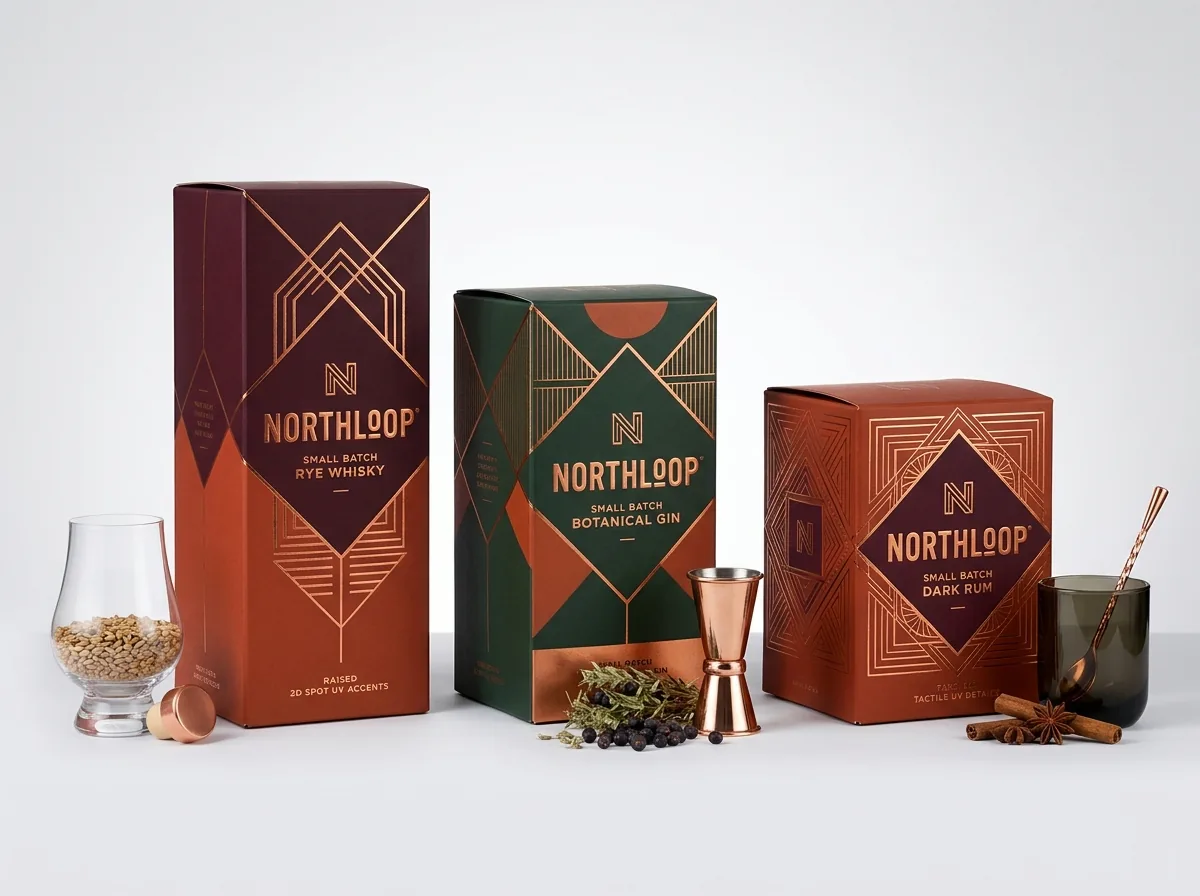
Spirits shoppers regularly pick up a bottle box to read the mash bill, botanical list, or barrel aging notes. Because deep charcoal, midnight navy, British racing green, and espresso brown are the dominant color palettes in whiskey, gin, and añejo tequila, unlaminated paperboard shows white crack lines along the fold scores and picks up fingerprints on the shelf. Wrapping the outer board in soft-touch lamination or matte lamination seals the dark ink, prevents score cracking, and creates a low-glare backdrop that makes metallic foil stamping pop. For bourbon and rye, copper and antique brass foils echo copper pot stills; for gin and vodka, silver and holographic foils highlight clean botanicals; for extra-añejo tequila and cognac, satin gold foil paired with multi-level embossing turns the distillery crest into a raised medallion.
- Supply foil stamping, embossing, and spot UV artwork on separate 100% K vector layers in Adobe Illustrator.
- Keep fine metallic foil lines at least 0.5 pt thick and leave 1 pt gaps between letters so hot foil never bridges.
- Stop raised embossing at least 0.25 inches away from fold score lines so the carton creases flat on the packing line.
- Leave a 1.5 × 1.0 inch matte un-varnished rectangle if your bottling crew hand-writes barrel and bottle numbers in ink.
How can a distillery share one master carton across multiple expressions?
Craft distilleries frequently bottle three to five expressions - such as Straight Bourbon, Rye Whiskey, Wheated Bourbon, and Single Barrel - in the exact same 750 ml glass mold. Ordering separate 1,000-unit carton runs for every small-batch expression ties up budget and warehouse space. A smart structural alternative is a master distillery window box. We die-cut a precision front aperture in the carton timed to the exact height and width of your bottle's front label (at zero extra die cost). Your distillery branding, heritage story, and TTB Government Warning live on the outer embossed carton, while the bottle inside displays its specific expression name, proof, batch number, and color through the front window.
Know your size? Compare pricing across up to 3 quantities.
Request a Quote →What drives the cost of custom spirits boxes and how do you optimize your quote?
While CubitPack never charges for custom dies, printing plates, or design setup, four structural and finishing variables shape your per-box unit cost. Understanding how each factor works lets you put your budget where customers actually see and feel it on the liquor store shelf. First is construction tier: a flat-shipped auto-lock bottom carton in heavy SBS paperboard or E-flute corrugated costs a fraction of a pre-assembled 2 mm magnetic closure rigid box or spiral tube. Second is order quantity: stepping up from 1,000 cartons to 2,500 or 5,000 spreads press make-ready across more boxes. Third is insert complexity: a one-piece folded paperboard neck yoke or corrugated glassware divider is much more economical than a multi-layer routed EVA foam bed. Fourth is the number of separate foil colors and embossing passes.
- Consolidate SKUs with a front label window or wrap-around batch belly band to reach the 2,500 or 5,000 quantity break.
- Use one metallic foil shade (such as copper or gold) plus CMYK/Pantone printing rather than two separate foil stamping passes.
- Choose a folded fifth-panel neck yoke built into the carton dieline instead of a separate loose insert piece.
- Request 3 quantities (for example 1,000, 2,500, and 5,000) in the shared quote form to see exact volume price breaks.
Where should the UPC barcode and batch stamp sit on a spirits retail carton?
Liquor store cashiers and distributor warehouse scanners need an unobstructed UPC-A barcode on the outside of every enclosed retail carton or holiday VAP gift box. If your bottle has a UPC barcode on its back label and your outer carton has a different case or gift-set SKU, make sure the bottle's inner barcode is not visible through a window where a checkout scanner could scan the wrong price. Place the retail carton's UPC barcode on the lower back panel or on the flat auto-lock bottom panel (away from the diagonal glue seam), printed in crisp 100% black bars on a high-contrast white or light cream box with at least 0.25 inches of quiet zone on both sides.
- Print UPC-A barcodes at 80% to 100% magnification in pure black ink on a non-reflective white background.
- On holiday bottle-and-glassware VAP sets, cover or rotate the bottle's single-bottle barcode so only the gift-set UPC scans.
- Include a writable or sticker-ready batch box on the side or back panel for barrel number, rickhouse location, and proof.
What are the most common spirits box artwork and prepress mistakes?
Delayed TTB approvals, cracked fold scores on dark cartons, and double-scanning barcodes are easy to prevent before press time. Check these five
- Enclosing a spirits bottle in an opaque carton or tube without reproducing the mandatory TTB 27 CFR Part 5 disclosures and exact bold all-caps GOVERNMENT WARNING on the outside.
- Printing dark black, navy, or forest green floods across fold score lines without matte or soft-touch lamination, leading to white fiber cracking along the box edges.
- Leaving a single-bottle UPC barcode visible through a window cutout on a holiday glassware VAP gift box, causing checkout scanners to ring up the single bottle instead of the gift set.
- Designing a front window carton without an internal neck yoke or base anti-rotation tab, allowing the bottle label to twist out of view in shipping cases.
- Applying slick soft-touch or gloss lamination over the batch/bottle number box where bottling staff need to hand-write with a marker.
Find your size
Suggested inside size: 7.5 × 4.75 × 2.0 in
A starting point. Your account manager confirms the size with you before the proof.
Quote this size →Packaging for this
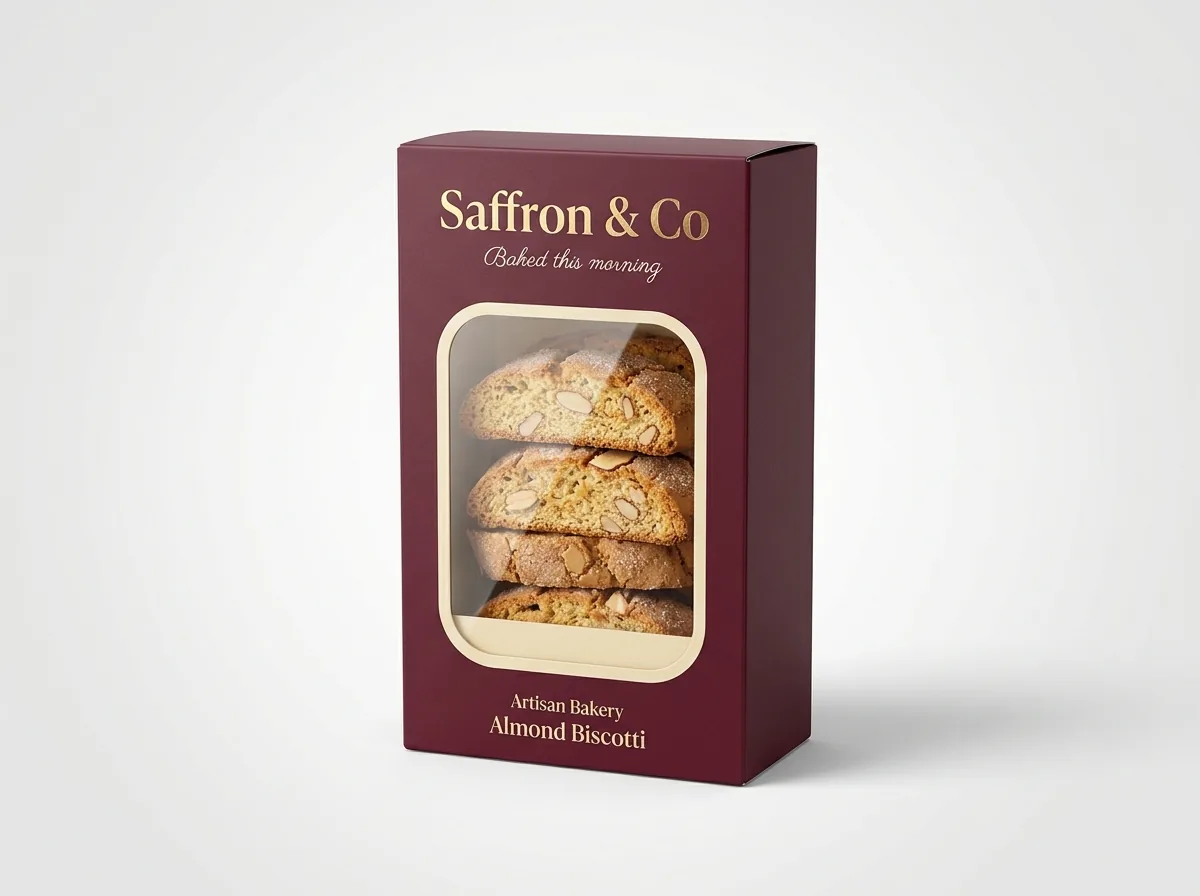
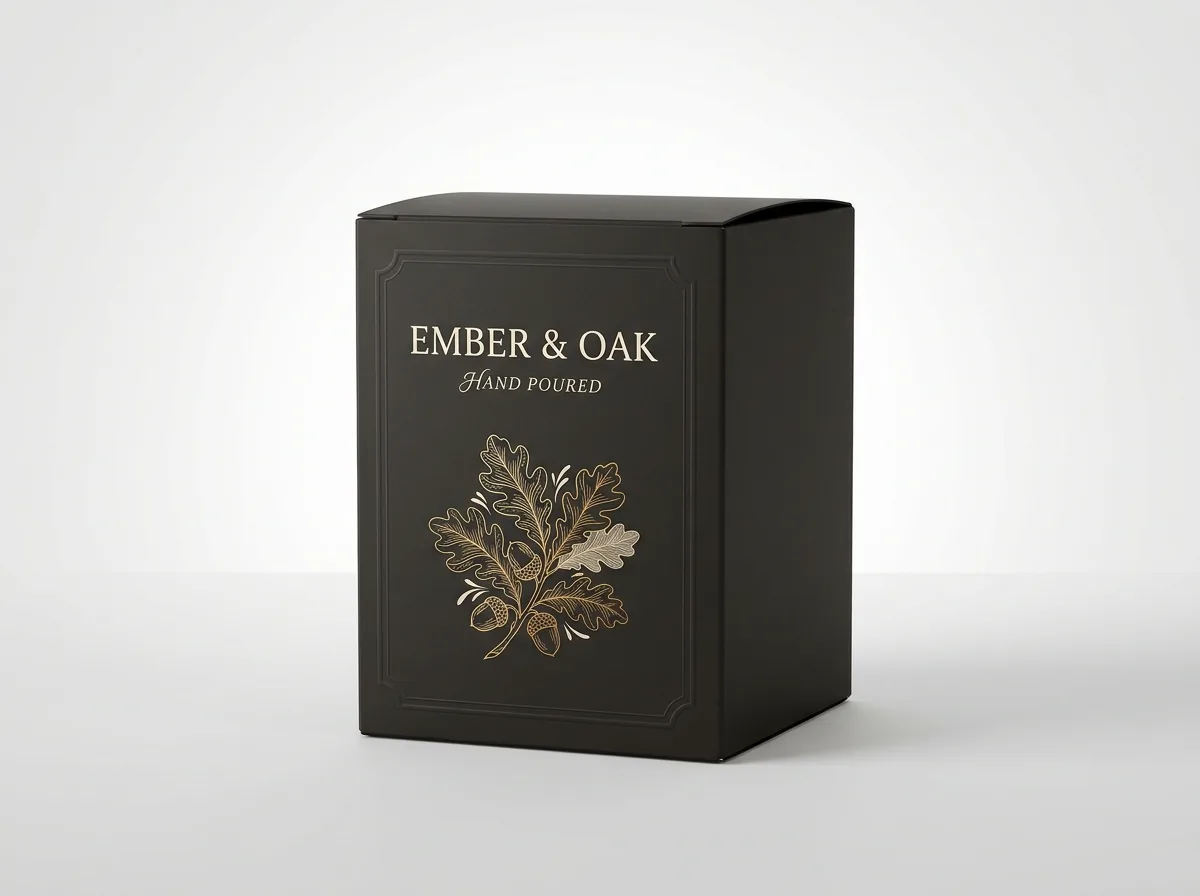
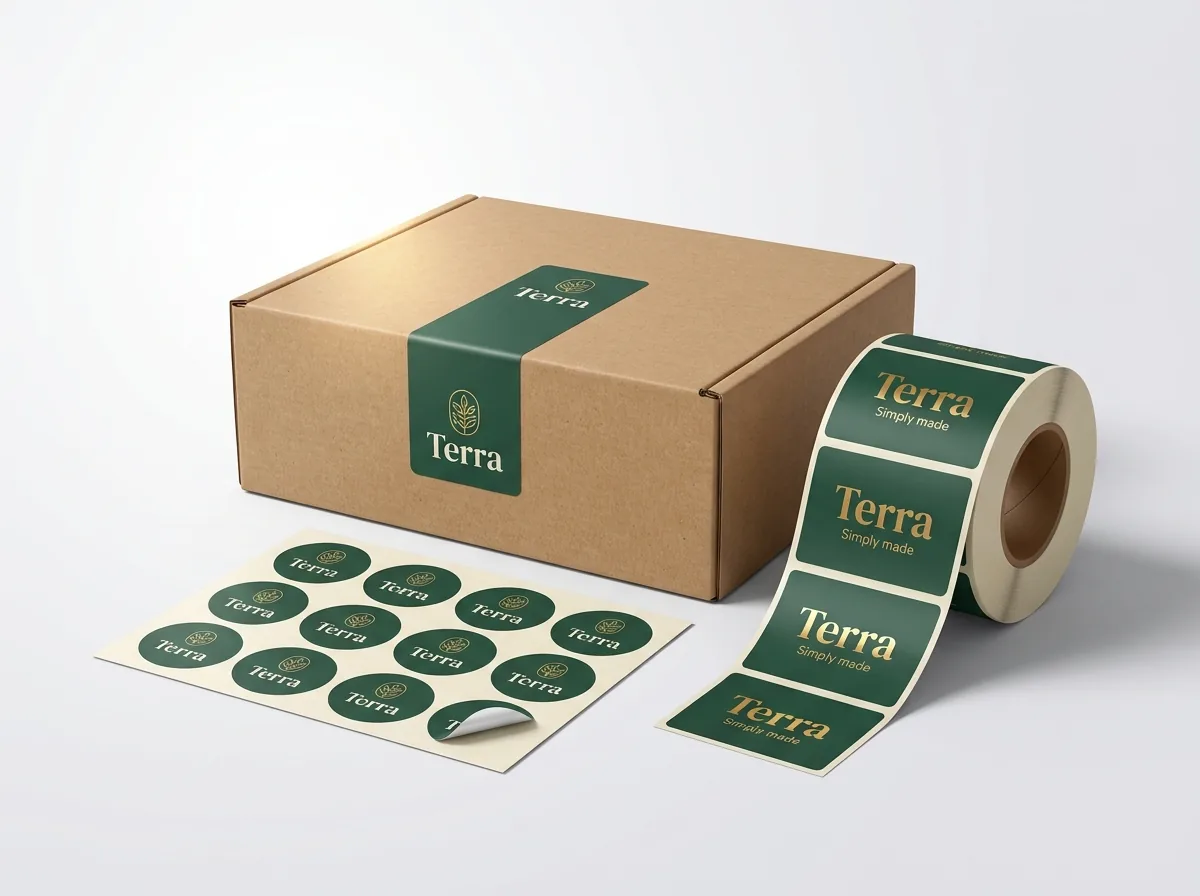
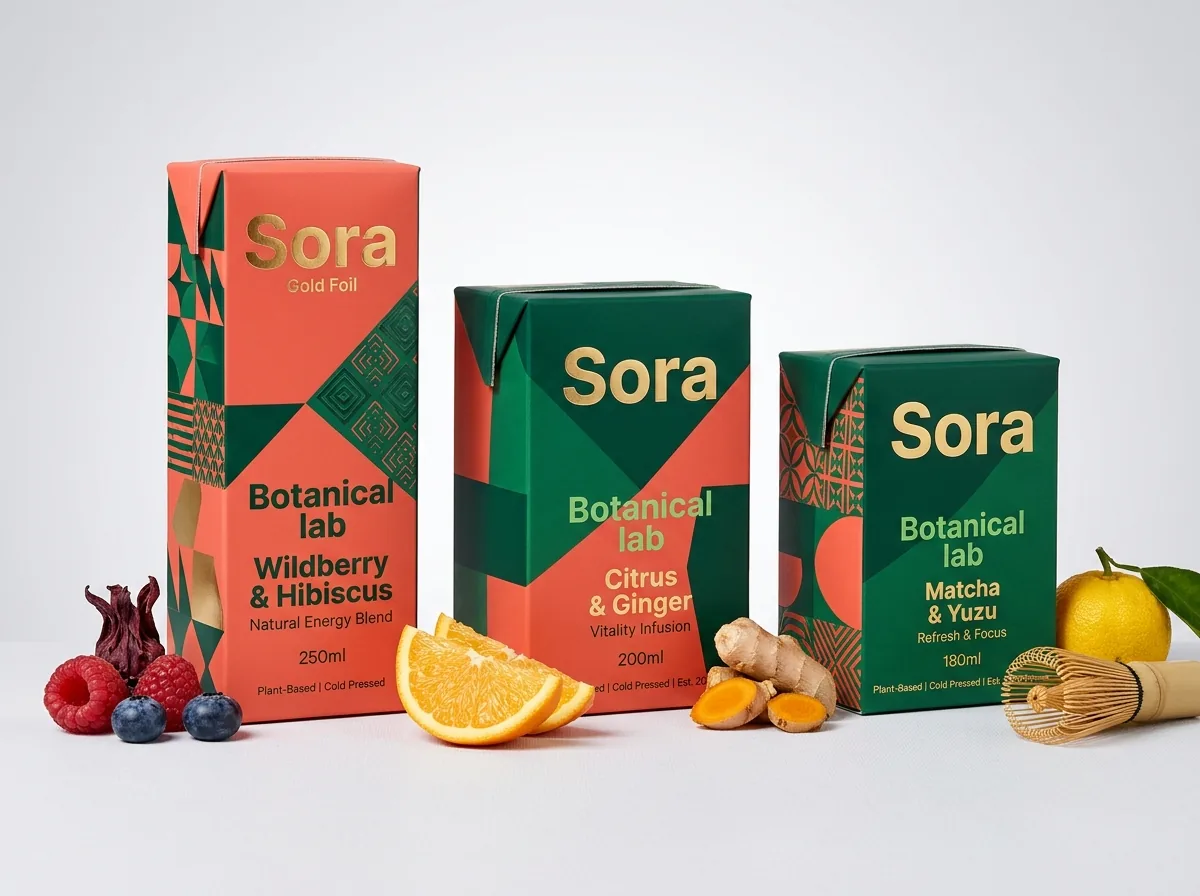
Ready to order spirits boxes? Compare up to 3 quantities with a free 3D mockup.
Request a Quote →Questions about spirits boxes
If our spirits box has a front window showing the bottle label, do we need TTB text on the box?
Under TTB 27 CFR Part 5 rules, if the outer carton has a transparent or open cutout window that leaves all mandatory information on the bottle label clearly visible without opening the package, you do not have to duplicate those statements. However, because back-label Government Warnings are hidden inside the box, most distilleries print the Government Warning and mandatory text on the back of the carton.
Does CubitPack charge plate or die fees for copper foil stamping and embossing?
No. CubitPack charges no die or plate fees on custom spirits boxes. Whether your artwork includes a custom window aperture, a fifth-panel T-cork neck yoke, metallic foil stamping, or raised embossing, all tooling is included in your unit quote.
Can we hand-write barrel numbers and bottle counts directly on a laminated spirits carton?
Standard gloss, matte, and soft-touch laminations can smear ballpoint or felt-tip ink. We can mask a knock-out window in the lamination or supply matching writable estate-paper batch stickers so your bottling crew can hand-number every barrel release cleanly.
What file format do I need to send for a spirits box with foil and embossing?
Once you approve your box size, we send you a free custom 2D dieline template. Place your print artwork on one layer and your foil stamping, embossing, or spot UV callouts on separate labeled vector layers in PDF or Adobe Illustrator (.ai) format - or let our team set it up with free design help.
Can you match the exact Pantone color and paper texture of our bottle labels?
Yes. Our Pantone (PMS) color match is guaranteed, and because CubitPack prints both custom spirits boxes and custom bottle labels, we can coordinate your label stock, metallic foil shade, and outer carton finish in one workflow.
Do I see a digital proof and 3D mockup before paying for my spirits boxes?
Yes. Every order includes a free 2D dieline proof and an interactive 3D mockup before payment so you can verify TTB text placement, window alignment, neck yoke position, and foil zones before production begins.
Still have a question? Ask a packaging specialist.
Request a Quote →Request your spirits boxes quote
Tell us your size and quantities, and one dedicated account manager prepares pricing for each tier.
- Free design & AI-to-print studio + 3D mockup
- No die or plate charges · 4–5 day rush available
- Free shipping to all 50 states
- 10% off your first order
This design guide was compiled from TTB 27 CFR Part 5 distilled spirits outer-carton labeling regulations, CubitPack prepress specifications for foil stamping, embossing, and soft-touch lamination, and decided project facts. Reviewed by a packaging specialist. Spot an error? Tell us and we will fix it.
Sources
What changed
- October 22, 2026: First published.
- October 22, 2026: Updated specifications, terminology, and verified source links.
More guides
New packaging guides by email
Sizes, materials and design tips. Unsubscribe anytime.