
How do I design custom wine boxes for wineries, clubs and corporate gifts?
Short answer: Anchor your box artwork around your permanent estate crest and Pantone palette, and either die-cut a front window so the bottle label shows through or leave a varietal badge zone. That lets one master custom wine boxes run serve multiple vintages and varietals without reprinting.
On this page
- How do I design one winery box that works across multiple varietals and vintages
- What belongs on each panel of a retail or gift wine box
- Which finishes and board stocks create a cellar-worthy presentation
- How do I design wine club mailers and corporate holiday gift boxes
- What drives custom wine box cost and how do I match my bottle labels
- Common mistakes
- FAQs
Request a custom quoteFree dieline & 3D mockup
Designing custom wine boxes requires balancing timeless vineyard branding with changing harvest years, varietals and alcohol percentages. Because wineries bottle new vintages every year across Cabernet, Pinot Noir, Chardonnay and Rosé, printing a specific vintage year or ABV percentage directly onto 1,000 outer cartons can leave you with obsolete boxes when the next harvest releases. Smart winery designers keep the outer box evergreen - featuring the estate crest in gold foil, vineyard maps and tasting notes inside the lid - and either die-cut a vertical front window that frames the bottle's own TTB-approved label or apply a matching varietal sticker. At CubitPack, our prepress team builds your box dieline, internal neck collar and 3D mockup for free, with no die or plate charges, guaranteed Pantone color matching across your cartons and bottle labels, and free shipping to all 50 states.
How do I design one winery box that works across multiple varietals and vintages?
Small and mid-sized wineries rarely want to stock separate 1,000-box runs for every single vineyard block and harvest year. By separating your permanent estate identity from vintage-specific details on your custom printed wine cartons, a single production run can package your entire tasting room lineup. You have three proven ways to handle multi-varietal flexibility. First, die-cut a vertical rectangular or arch-shaped window on the front panel timed to the exact height of your bottle's front label, so the bottle itself displays the varietal, appellation and vintage year. Second, print an evergreen estate box and leave a recessed or framed rectangle on the front face where your bottling line applies a matching custom wine label for that specific lot. Third, if you order 2,000 or 5,000 boxes across four flagship wines that share the exact same bottle mold, gang-run all four varietal designs together on one shared dieline with zero die or plate charges.
- Front label window: die-cut a 2.25 × 4.0 inch vertical window so the bottle's front label is readable without opening the box.
- Internal neck collar alignment: add a bottom base notch or tight neck ring so the bottle cannot spin its label away from the window.
- Evergreen outer artwork: print your winery monogram, foil crest, estate story and map on the carton, leaving vintage years off the box.
- Gang-run varietal color bands: swap only the Pantone wrap band and varietal title across shared-dieline runs.
What belongs on each panel of a retail or gift wine box?
Whether you are designing a tall single-bottle auto lock carton for bottle shops or a flat three-bottle corrugated mailer for wine club members, each face of the box has a distinct role in storytelling and compliance. Under US Alcohol and Tobacco Tax and Trade Bureau (TTB) rules, if an opaque closed carton covers the wine bottle at the point of retail sale, mandatory bottle label information (brand name, class/type designation, alcohol by volume, net contents, sulfite declaration, bottler name/address and the mandatory Government Warning statement) must either be visible through a window or be reproduced on the outer carton. Check your exact layout against current TTB wine labeling regulations. If your wine box is used purely as a tasting room carry-out tote or a shipping mailer after the customer has already selected the bottle, the outer carton can focus entirely on your vineyard story, cellar aging tips and food pairings.
| Box panel or zone | What to include on the artwork | Design & compliance tip |
|---|---|---|
| Front panel | Vineyard crest, brand name, front label window or varietal title, 750 ml net contents | Use metallic foil stamping or embossing on the crest for immediate shelf authority |
| Left & right side panels | Vineyard elevation map, barrel aging notes, food pairing icons (steak, cheese, seafood) | Keep typography clean with generous matte or kraft background breathing room |
| Back panel | Winemaker story, TTB mandatory statements (if opaque retail box), UPC barcode | Set the Government Warning in bold capitals with the required character spacing |
| Inside of top lid (mailers & rigid) | QR code to winemaker tasting video, cellar aging timeline, club welcome note | Turns opening a wine club shipment into a guided vineyard tasting experience |
| Internal neck tab or foam face | Short callout ('Uncork & Enjoy' or 'Cellar at 55°F') printed on the neck collar | Costs nothing extra when printed on the same sheet as the outer carton |
Which finishes and board stocks create a cellar-worthy presentation?
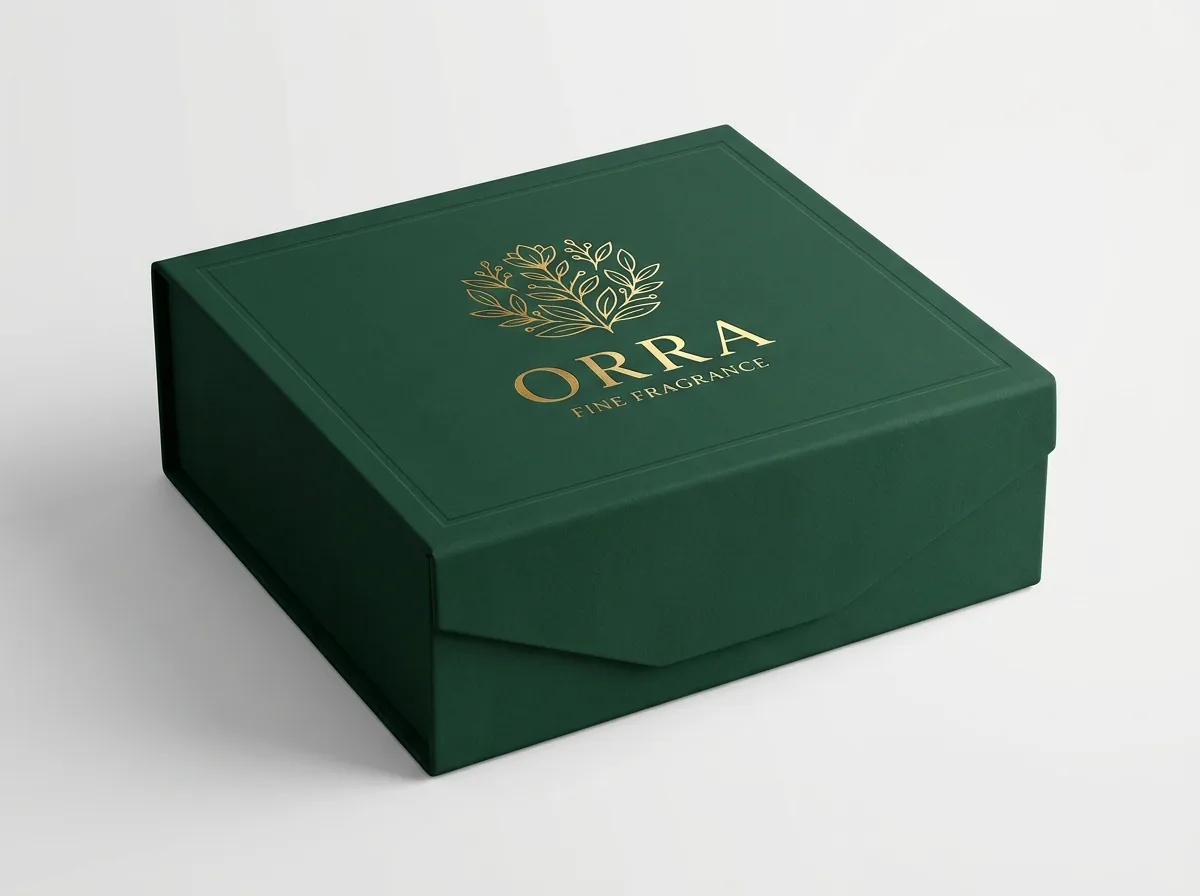
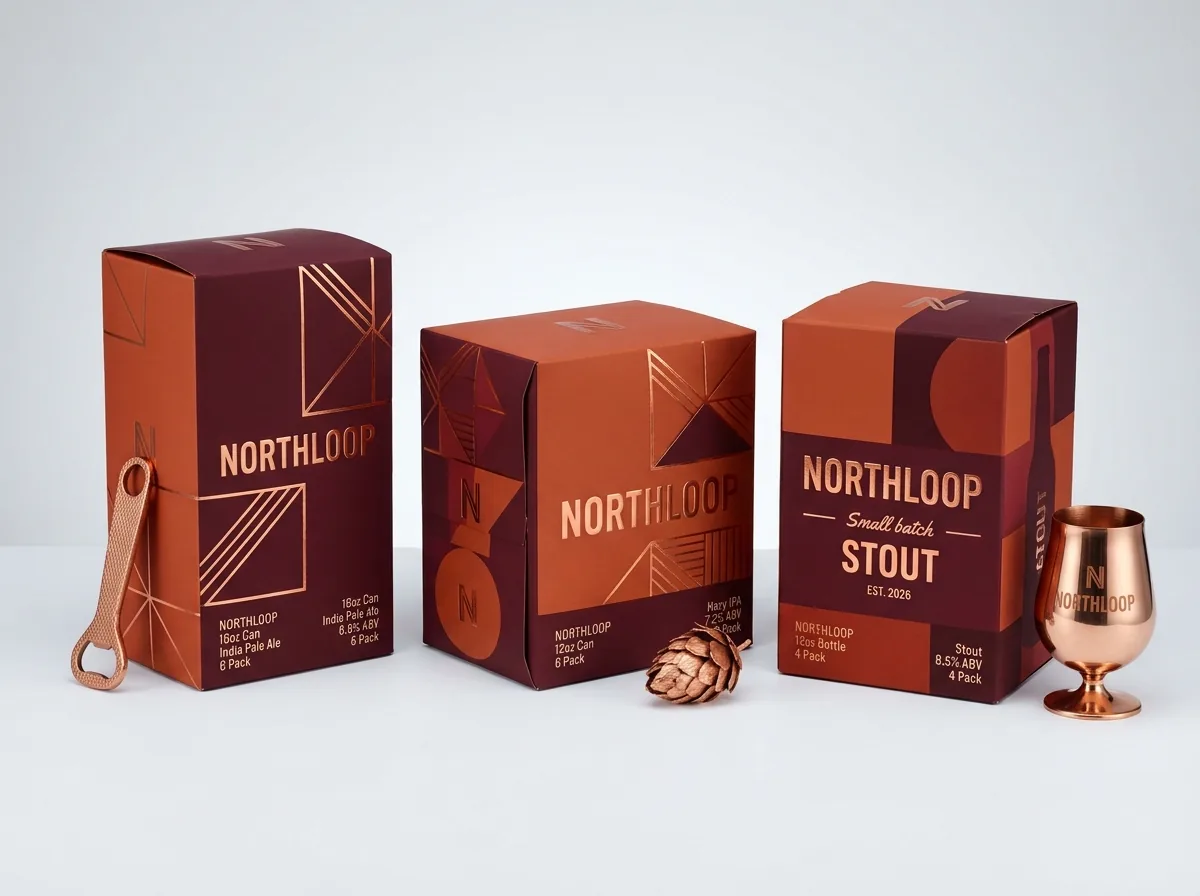
Wine buyers judge bottle quality by tactile cues before they ever read a tasting note. On deep burgundy, forest green, navy or charcoal cartons, pairing soft-touch lamination or matte lamination with warm gold or copper foil stamping replicates the feel of a heavy estate capsule and prevents white score-line cracking along the folds. If your winery focuses on organic, biodynamic or natural low-intervention wines, unbleached brown kraft board or textured paperboard printed with deep black and opaque white ink communicates an honest, agricultural craft aesthetic. You can also add blind embossing to raise your vineyard crest or topographical contour lines directly out of the paperboard, or apply spot UV over a matte charcoal background so subtle vine patterns catch the tasting room light without overwhelming your typography.
Know your size? Compare pricing across up to 3 quantities.
Request a Quote →How do I design wine club mailers and corporate holiday gift boxes?
Direct-to-consumer wine club shipments and corporate client gifts are opened on a kitchen island or office desk rather than a store aisle, making the interior unboxing view your most valuable canvas. On a two-bottle or three-bottle corrugated mailer box, printing full-color vineyard photography, tasting notes and a QR code inside the lid costs only a modest two-sided print upgrade while eliminating the need to print and stuff loose paper brochures. For corporate gifting agencies and Q4 executive gifts, our 50-unit minimum magnetic closure rigid boxes let you customize the outer lid with a client's gold-foil logo or holiday greeting while nesting the wine bottle, stemless glasses and corkscrew inside a tailored black EVA foam insert. You can even include a ribbon pull tab or a recessed card holder inside the upper lid to hold a personalized gift message or sommelier pairing card.
What drives custom wine box cost and how do I match my bottle labels?
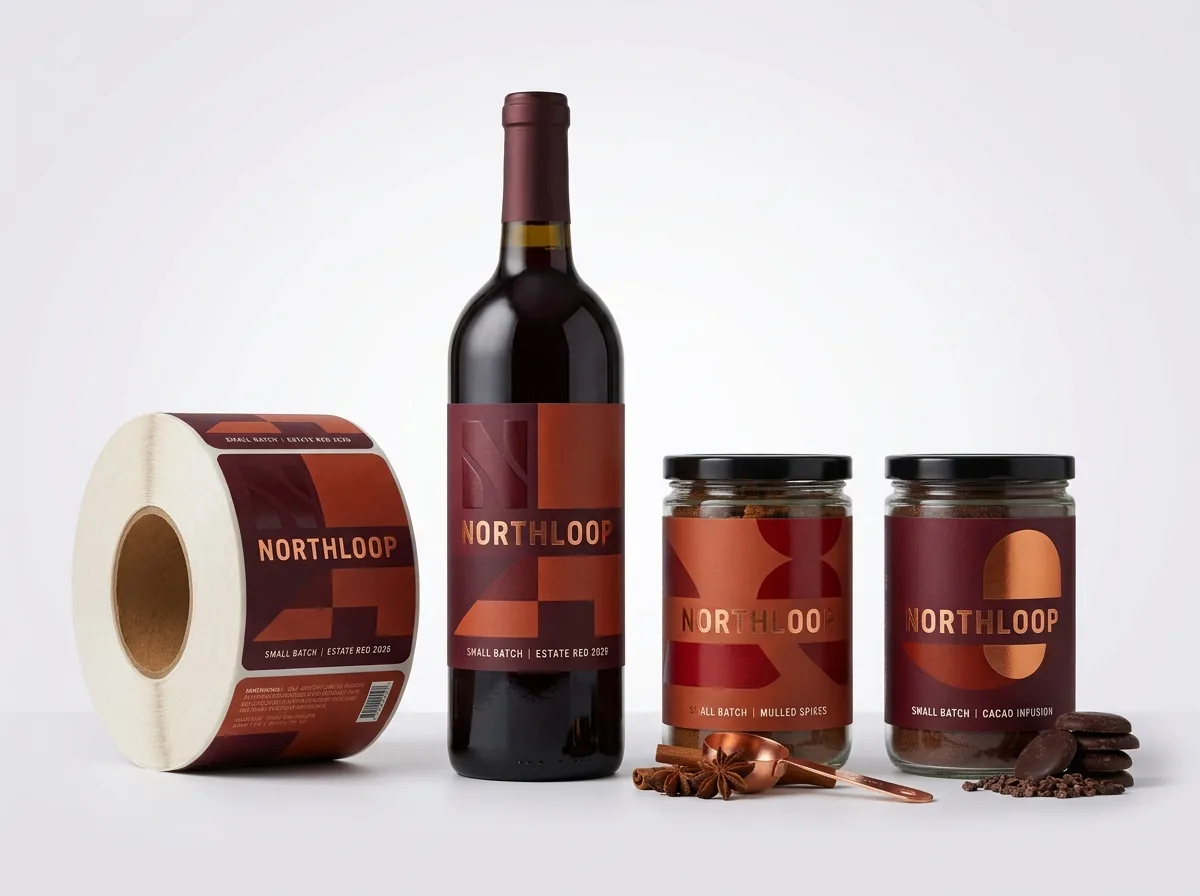
Your per-box price depends on four factors: structure (folding E-flute carton vs wrapped 2 mm rigid box), bottle capacity (single 750 ml vs multi-bottle kit), order quantity, and finishing passes. Because CubitPack never charges die or plate fees, you can add a custom front label window and an integrated fifth-panel neck collar to a folding carton without paying extra tooling costs. To keep your capsule, bottle label and outer carton cohesive, share your Pantone (PMS) color codes with our prepress team. We guarantee Pantone color matching and can print your custom bottle labels alongside your outer wine boxes so your burgundy, gold or estate cream matches across both substrates. Need help laying out the dieline? Design support is free, or our team can create a full brand identity package for $250 (or $50 with an order). Before any press plates are made, you receive a 2D dieline proof and an interactive 3D mockup to check how your front window, neck collar and foil crest line up from every angle.
- Use a front window or varietal sticker to consolidate 1,000+ boxes across multiple small-lot wines.
- Keep gold foil stamping focused on your front crest so one foil die covers your entire run.
- Order 1,000+ flat-packed E-flute cartons for everyday sales and 50+ magnetic rigid boxes for VIP reserves.
- Request a free 3D mockup to check window height against your bottle label placement before paying.
What are the most common custom wine box design mistakes?
Most winery artwork mistakes involve vintage obsolescence, window misalignment or missing TTB text on closed retail cartons. Check these five before approving your proof
- Printing a specific harvest year (such as '2024 Vintage') and exact ABV percentage on 2,500 outer boxes that you want to use across future harvests.
- Positioning a front die-cut window without measuring the exact height of the front label on your bottled wine.
- Selling a wine bottle inside a fully closed opaque retail carton without reproducing mandatory TTB label statements on the outside.
- Printing heavy dark flood coats on unlaminated cardstock, which scuffs inside 12-bottle master shipping cases.
- Designing a snug EVA foam bottle cavity without finger notches, forcing the recipient to pry the bottle out by the cork capsule.
Find your size
Suggested inside size: 2.75 × 2.75 × 10 in
A starting point. Your account manager confirms the size with you before the proof.
Quote this size →Packaging for this
Ready to order wine boxes? Compare up to 3 quantities with a free 3D mockup.
Request a Quote →Questions about wine boxes
If my wine bottle is inside a closed retail box, what information must be on the box?
Under TTB beverage alcohol regulations, mandatory label information (brand name, class/type, alcohol content, net contents, bottler name and address, sulfite declaration and the Government Warning) must not be obscured from the retail consumer. Either die-cut a window that shows the mandatory text or print it on the carton.
How do you prevent a wine bottle from spinning inside a window box?
We pair a snug inside base footprint with an upper fifth-panel neck collar that grips the bottle neck, and you can also add a small bottom dust-flap lock that engages the base punt recess so the front wine label stays facing the window.
Can I print tasting notes and a QR code inside a wine club mailer box?
Yes. Two-sided printing lets you print full-color vineyard maps, food pairings, cellar aging tips and a QR code linking to your winemaker's video right inside the top lid of your corrugated mailer or rigid gift box.
Can you match the exact Pantone burgundy or gold from our existing wine labels?
Yes. CubitPack guarantees Pantone (PMS) color matching. Give us the Pantone codes from your bottle labels or capsules - or mail us a printed label sample - and we will match the ink and metallic foil on your boxes.
Can you prepare print-ready box artwork from our vineyard logo or AI illustration?
Yes. Free design help is included with every order. Whether you have vector label files from your designer or an AI-generated vineyard illustration (via our Print Your AI Design service), we lay out the complete dieline and send a free 2D proof and 3D mockup.
Can I split a 1,000-box order across Cabernet, Pinot Noir and Chardonnay?
Yes, as long as all three varietals use the exact same box dieline, dimensions and board stock. If your Pinot Noir uses a wider 3.625 inch Burgundy bottle, size the shared dieline to 3.625 × 3.625 inches so every varietal fits and gang-runs together.
Still have a question? Ask a packaging specialist.
Request a Quote →Request your wine boxes quote
Tell us your size and quantities, and one dedicated account manager prepares pricing for each tier.
- Free design & AI-to-print studio + 3D mockup
- No die or plate charges · 4–5 day rush available
- Free shipping to all 50 states
- 10% off your first order
This guide synthesizes US TTB wine container labeling standards (27 CFR Part 4) with structural window placement, EVA foam cavity ergonomics and offset Pantone color matching practices. A CubitPack packaging specialist checked every section. Spot something that needs updating? Let us know and we will fix it.
Sources
What changed
- October 22, 2026: First published.
- October 22, 2026: Updated specifications, terminology, and verified source links.
More guides
New packaging guides by email
Sizes, materials and design tips. Unsubscribe anytime.