
Corrugated carriers vs folding cartons for juice boxes: which fits your drinks?
Short answer: Choose laminated folding paperboard cartons for single 12 oz bottles, 8-pack kids' juice pouches, and 12-count 2 oz shot displays under four pounds. Step up to E-flute or B-flute corrugated carriers for custom juice boxes holding six 16 oz cleanse bottles or 3-liter bag-in-box cider bladders.
On this page
- How do folding paperboard cartons and corrugated juice carriers compare
- At what liquid weight should I switch from paperboard to corrugated
- How do both boards handle 36-degree cooler humidity and bottle sweat
- Why do juice pouch fridge packs use paperboard while bag-in-box cider uses corrugated
- Which board is better for 2 oz ginger and immunity shot counter displays
- Common mistakes
- FAQs
Request a custom quoteFree dieline & 3D mockup
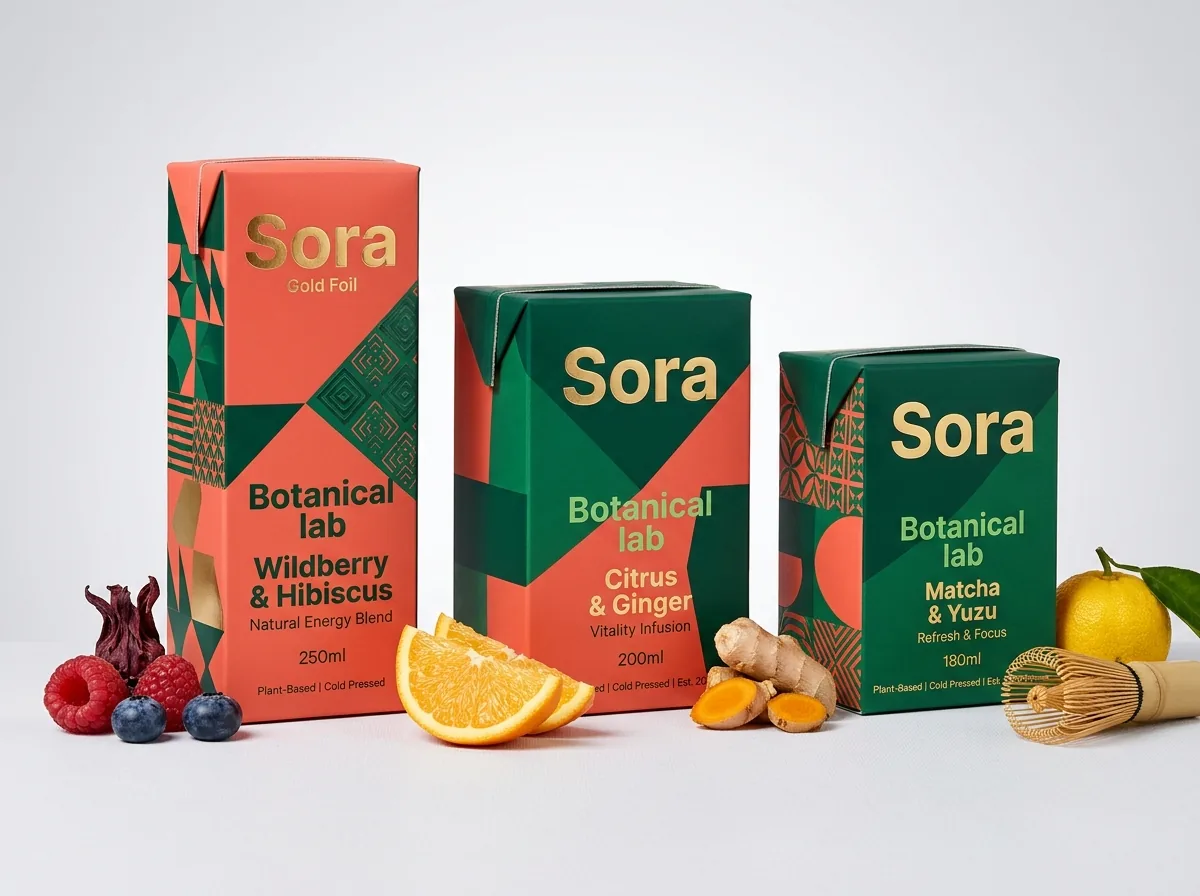
Choosing between folding paperboard cartons and corrugated carriers for juice packaging comes down to total liquid weight, cold-chain humidity exposure, and how the box is dispensed or carried. Virgin white or kraft paperboard with exterior film lamination folds cleanly into narrow refrigerator pouch sleeves, single-bottle retail cartons, and pop-up counter displays for two-ounce immunity shots where total package weight stays below three to four pounds. Once your pack holds four to six 12 oz or 16 oz cold-pressed bottles or a three-liter flexible cider bladder, liquid weight climbs to between five and seven pounds. At that weight, E-flute or B-flute corrugated board with a fluted air core and an interlocking cell partition prevents bottom blowouts, cushions glass or HPP bottles against parcel drops, and holds bag-in-box spigot valves rigid when pressed. CubitPack produces both styles starting at 1,000 boxes.
How do folding paperboard cartons and corrugated juice carriers compare?
Liquid is one of the densest products sold in retail grocery and direct-to-consumer packaging: every 16 fluid ounces of juice adds more than a pound of dead weight, plus the weight of the glass or PET bottle and any gel ice pack. At the same time, refrigerated juice moves repeatedly between 36-degree walk-in coolers, humid delivery vans, and ambient checkout counters, creating condensation on every bottle wall. When you request a quote for custom printed juice boxes, both paperboard folding cartons and corrugated carriers start at the same 1,000-unit minimum order quantity and ship in 10 to 14 business days. The side-by-side comparison below shows where each board family performs best across weight capacity, cold-case moisture resistance, dispensing features, and storage space.
| Packaging factor | Laminated folding paperboard | E-flute & B-flute corrugated |
|---|---|---|
| Ideal liquid load | Up to 3.5 lb (pouches, 2 oz shots, 1–2 bottles) | 4 lb to 12+ lb (6-bottle cleanses, 3 L & 5 L cider) |
| Board construction | Single-sheet virgin SBS or long-fiber kraft card | Two flat linerboards bonded to a fluted inner medium |
| Drop & impact cushioning | Minimal wall cushion; relies on tight fit | Fluted air channels absorb bottle-to-bottle shock |
| Fridge-pack tear perforations | Crisp, effortless zipper tear for kids' pouches | Stiffer tear; suited for bag-in-box spigot collars |
| Cold-case moisture defense | High when paired with gloss or matte BOPP lamination | High vertical crush resistance in humid walk-in coolers |
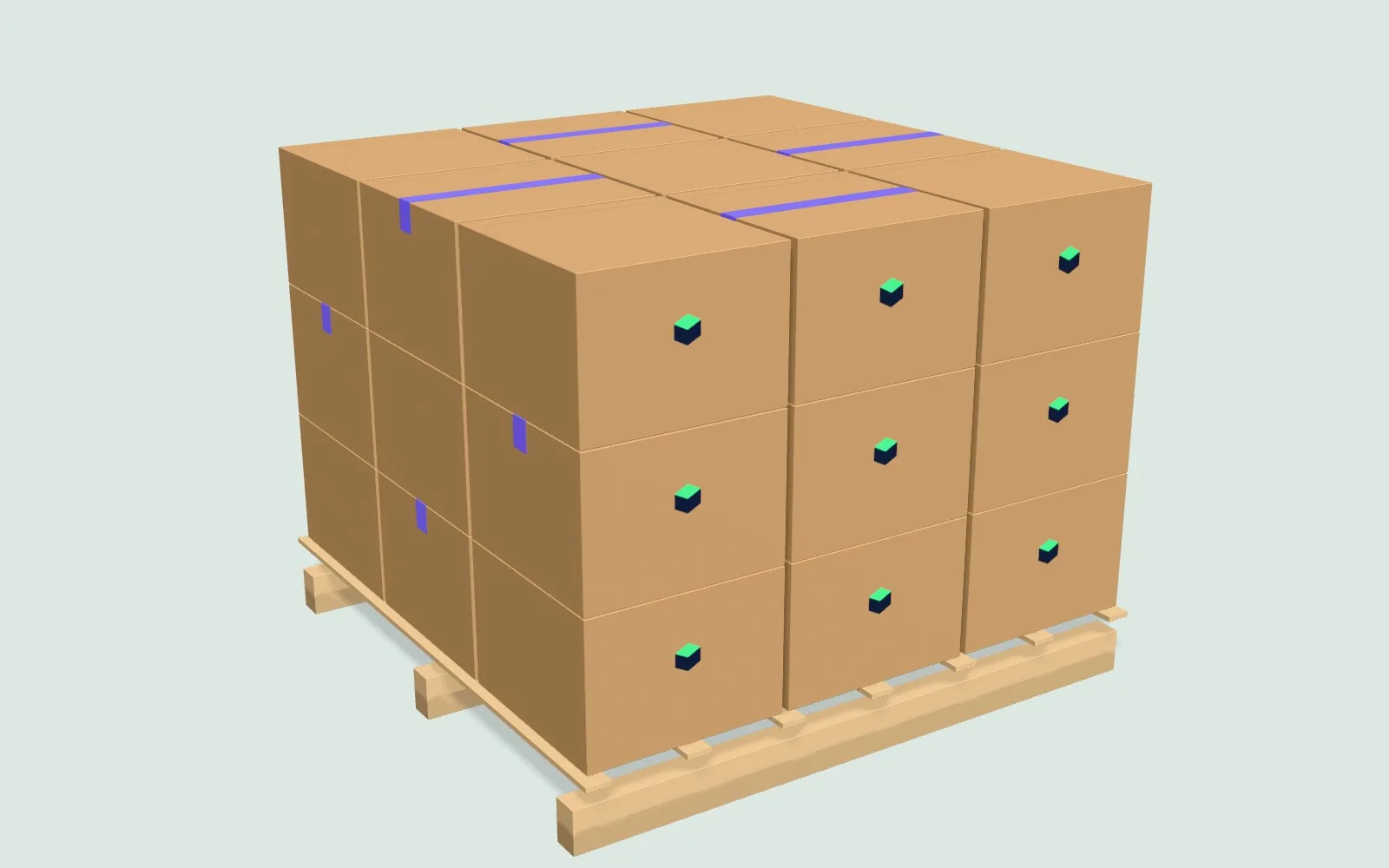
| Flat warehouse storage | Ships ultra-thin; 1,000 boxes fit in a few cases | Takes roughly 2.5× to 3× more pallet height flat |
| CubitPack minimum order | 1,000 boxes | 1,000 boxes |
At what liquid weight should I switch from paperboard to corrugated?
Three to four pounds of liquid is the practical crossover point between single-sheet folding paperboard and fluted corrugated board. An 8-pack of 6.75 oz kids' fruit juice pouches weighs 54 ounces (3.375 pounds), and that weight is spread evenly across a 9.5 × 4.25 inch floor because the flexible pouches sit flat from wall to wall. Laminated virgin paperboard with a glued seal end or auto lock bottom carries that distributed pouch load without sagging. By contrast, six 16 oz cold-pressed juice bottles weigh more than six pounds in PET plastic and nearly nine pounds in glass, and each bottle concentrates its weight on a narrow circular base ring. Lifting a six-bottle cleanse in a single-sheet paperboard box causes the floor and handle to bow. Switching to E-flute corrugated board in custom mailer boxes or gable carriers with an interlocking floor keeps the base flat and prevents bottom blowouts.
- Under 2 lb (single 12 oz bottle or 6-pack 2 oz shots): folding paperboard with an auto lock or reverse tuck bottom.
- 2 lb to 3.5 lb (8-pack 6.75 oz juice pouches or 12-count 2 oz shot PDQ): virgin paperboard with a pre-glued auto lock or seal end base.
- 4 lb to 7 lb (4-pack or 6-pack 12 oz / 16 oz juice bottles): E-flute corrugated carrier or mailer with a full-height 4-cell or 6-cell partition.
- 6.5 lb to 11+ lb (3 L and 5 L bag-in-box orchard cider or concentrate): heavy E-flute or B-flute corrugated box with glued seal end flaps.
How do both boards handle 36-degree cooler humidity and bottle sweat?
Cold-pressed juiceries and functional shot makers face a challenge that dry snack brands never see: thermal shock condensation. When bottles are filled at 36 degrees Fahrenheit, capped, rinsed, and packed into cartons, thin beads of moisture form on the exterior of the bottles as soon as the pallet crosses a loading dock or sits in an open grocery cold case. Uncoated recycled chipboard (gray board) wicks that moisture into its short fibers and loses up to 40 percent of its edge crush strength within hours. To keep folding cartons crisp in refrigerated displays, specify virgin solid bleached sulfate (SBS) white card or unbleached long-fiber kraft board laminated on the outside with a gloss or matte BOPP film. For multi-bottle cleanse shippers that hold a frozen gel pack inside the box for 24 to 48 hours, E-flute corrugated board paired with an outer film lamination gives you both structural beam stiffness and a water-shedding skin.
Know your size? Compare pricing across up to 3 quantities.
Request a Quote →Why do juice pouch fridge packs use paperboard while bag-in-box cider uses corrugated?
Both kids' pouch multipacks and 3-liter orchard cider cartons sit on refrigerator shelves and dispense drinks through the front panel, yet they rely on opposite board structures. On an 8-pack or 10-pack of 6 oz juice pouches, parents want a narrow sleeve that takes up minimal shelf width and opens with a clean one-handed zipper tear along the front face. Folding paperboard scores and perforates cleanly without ragged flute edges, leaving a neat dispenser window in custom dispenser boxes. A 3-liter or 5-liter bag-in-box cider carton works differently: the flexible inner bladder has zero shape of its own and pushes outward against all four walls as it fills with 6.6 to 11 pounds of liquid. Even more important, every time a customer presses the thumb tab on the plastic spigot valve, they push 3 to 5 pounds of force straight against the lower front panel of the box. E-flute or B-flute corrugated board gives the spigot collar the wall thickness and rigidity needed to hold the tap neck steady without tearing.
Which board is better for 2 oz ginger and immunity shot counter displays?
Two-ounce functional shots are impulse purchases placed beside espresso machines, smoothie registers, and grocery grab-and-go coolers. If you ship 12-count shot trays inside a larger master corrugated case that store staff unpack at the counter, heavy laminated paperboard with a fold-up billboard header and a die-cut bottle grid gives you razor-sharp typography, metallic foil accents, and compact storage. If you ship individual 12-count or 24-count shot trays directly through parcel carriers or wholesale club distribution where trays are stacked five high on refrigerated pallets, choose E-flute corrugated custom counter display boxes. E-flute is only 1/16 inch thick, so it prints fine graphics cleanly while supporting stacked tray weight in cold storage. Our design team can also add a perforated tear-away shipping hood that protects the shot caps in transit and lifts off in five seconds at the register.
- Cafe & juice bar counter trays (packed inside master cases): laminated white paperboard with a die-cut 12-hole bottle deck.
- Grocery cold-case shelf trays (stacked in humid coolers): laminated E-flute corrugated tray with a tear-away hood.
- Club store 24-count multipacks: E-flute corrugated tray with full-height interlocking cell dividers.
What are the most common mistakes when choosing between corrugated and paperboard juice boxes?
Most structural failures happen when a beverage brand chooses board thickness by unit cost alone without testing wet cooler stiffness or liquid floor load. Avoid these five mistakes
- Using single-sheet paperboard for a 6-bottle 16 oz juice cleanse, causing the floor and top handle to bow under six pounds of liquid.
- Ordering unlaminated recycled paperboard for refrigerated cold cases where 36-degree bottle sweat softens the corners.
- Building a 3-liter bag-in-box cider dispenser in thin folding card, which lets the flexible bladder bulge the side walls and loosen the spigot.
- Using thick B-flute corrugated board for a small 8-pack kids' pouch dispenser, making the front zipper perforation hard to tear cleanly.
- Skipping a full-height corrugated partition when shipping glass wellness shots or juice bottles in a mailer box.
Find your size
Suggested inside size: 2.625 × 2.625 × 6.75 in
A starting point. Your account manager confirms the size with you before the proof.
Quote this size →Packaging for this

Ready to order juice boxes? Compare up to 3 quantities with a free 3D mockup.
Request a Quote →Questions about juice boxes
Does CubitPack have different minimum orders for paperboard and corrugated juice boxes?
No. Both custom printed folding paperboard cartons and custom E-flute or B-flute corrugated juice carriers start at the exact same 1,000-box minimum order quantity, with 10 to 14 business day turnaround and free shipping across all 50 states.
Can E-flute corrugated juice boxes be printed with bright full-color fruit graphics?
Yes. E-flute corrugated board has 90 flutes per linear foot, giving it a smooth outer linerboard surface that accepts vibrant CMYK fruit photography, exact Pantone spot colors, inside-lid cleanse schedules, and gloss or matte film lamination without heavy washboarding.
Can I use a corrugated bottle divider inside a folding paperboard juice box?
Yes. Pairing a laminated folding paperboard auto lock carton on the outside with a die-cut E-flute corrugated 4-cell or 6-cell divider on the inside is a popular hybrid setup for 2 oz wellness shots and 8 oz glass elixirs.
Are food-safe boards available in both paperboard and corrugated styles?
Yes. While most juice boxes hold sealed primary bottles, pouches or bladders, food-safe board stocks, barrier coatings and low-migration inks are available on request across our partner network.
Which board is better when packing gel ice packs inside a juice cleanse box?
Always choose E-flute or B-flute corrugated board with exterior film lamination (or an insulated liner) when packing frozen gel packs inside a cleanse mailer. As the ice pack thaws in transit, corrugated flutes maintain their crush strength far better than single-sheet card.
How can I feel the difference between paperboard and E-flute before ordering 1,000 boxes?
You can order our $50 sample kit to inspect virgin white card, unbleached kraft, E-flute corrugated and laminated finishes in your hands, or request a paid physical prototype of your exact juice box dieline credited toward your full order.
Still have a question? Ask a packaging specialist.
Request a Quote →Request your juice boxes quote
Tell us your size and quantities, and one dedicated account manager prepares pricing for each tier.
- Free design & AI-to-print studio + 3D mockup
- No die or plate charges · 4–5 day rush available
- Free shipping to all 50 states
- 10% off your first order
The structural comparisons in this guide are based on CubitPack's decided minimums and turnaround policies in our published product specifications, paired with standard beverage weight calculations and cold-chain paperboard moisture principles. A CubitPack packaging specialist reviewed every section. Spot an error? Tell us and we will fix it.
Sources
What changed
- October 22, 2026: First published.
- October 22, 2026: Updated specifications, terminology, and verified source links.
More guides
New packaging guides by email
Sizes, materials and design tips. Unsubscribe anytime.