
How do I design moisture-resistant custom juice boxes for cold storage?
Short answer: Pair virgin white paperboard or E-flute corrugated board with exterior gloss or matte BOPP film lamination so 36°F cooler condensation beads off the carton. When designing custom juice boxes, place multi-pack nutrition panels on a flat back face and gang-run multiple fruit flavors on one master dieline.
On this page
- Which coatings and boards stop cold-case condensation from ruining juice boxes
- How do I lay out fridge-pack tear strips, bottle windows and BIB tap knockouts
- Where should the multi-pack Nutrition Facts panel, HPP notes and barcode go
- How do I gang-run multiple juice flavors and keep custom box costs down
- How do I prepare my custom juice box artwork files for prepress
- Common mistakes
- FAQs
Request a custom quoteFree dieline & 3D mockup
Designing a custom juice box for refrigerated distribution requires protecting both your structural corners and your printed artwork against bottle sweat and high cooler humidity. Start by selecting long-fiber virgin paperboard or E-flute corrugated board rather than short-fiber chipboard (gray board), then apply an exterior gloss or matte film lamination that seals the outer ink layer against condensation droplets. On the structural dieline, keep die-cut bottle windows, refrigerator tear-open strips, and bag-in-box spigot collars at least 0.5 inches away from vertical corner scores so the box maintains its column stacking strength. Place your multi-pack Nutrition Facts panel, allergen disclosures, and UPC barcode on a flat white back or bottom panel where curved bottle walls cannot distort scanner lines. At CubitPack, custom juice boxes start at 1,000 units with free design help, no die or plate charges, and food-safe materials available on request.
Which coatings and boards stop cold-case condensation from ruining juice boxes?
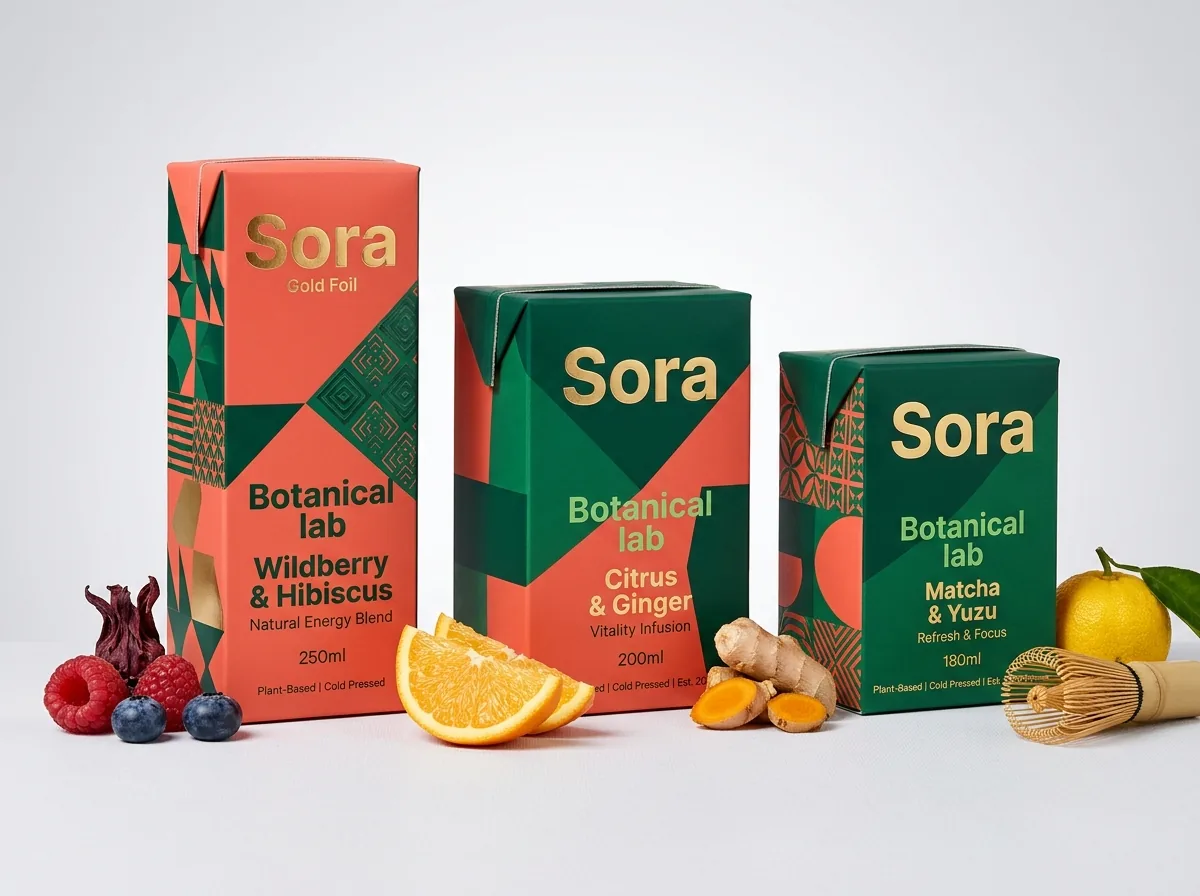
Cold-pressed juices, ginger shots, and chilled cider pouches spend their shelf life inside 34°F to 40°F commercial coolers and refrigerated delivery trucks. Every time a cold bottle or pouch carton meets warm room air during restocking or doorstep delivery, moisture condenses on the surface. If your carton is printed on uncoated recycled board, water droplets wick into the paper fibers along the fold scores, dulling dark inks and softening the bottom flaps. When you order custom printed juice boxes, our prepress team recommends pairing virgin white card or E-flute corrugated board with an exterior BOPP film lamination (gloss, matte, or soft-touch). Film lamination bonds a continuous polymer barrier across the printed sheet before the box is die-cut, so condensation beads up and wipes clean without scuffing your ink. For juice brands that want tactile shelf contrast, you can also print glossy Spot UV water droplets over matte lamination to give the carton a fresh-from-the-cooler look.
| Surface finish or board option | Cold-chain moisture protection | Best juice packaging use |
|---|---|---|
| Gloss BOPP film lamination | High water-beading barrier; wipes dry cleanly | 8-pack kids' fruit juice pouches & citrus cleanse boxes |
| Matte BOPP film lamination | High moisture shield with glare-free satin look | Organic cold-pressed juice cleanses & 2 oz shot PDQs |
| Matte lamination + Spot UV droplets | Full film barrier plus raised glossy condensation effect | Retail hero cartons for functional elixirs & tonics |
| Unbleached long-fiber kraft board | Natural wet stiffness; pair with light varnish | 3 L bag-in-box orchard apple cider & farmstand carriers |
| Food-safe board & low-migration ink | Produced on request in certified partner facilities | Secondary cartons requiring food-contact assurance |
How do I lay out fridge-pack tear strips, bottle windows and BIB tap knockouts?
Cutouts and perforations turn a static shipping box into a functional beverage dispenser, but placing them too close to a vertical fold line weakens the box's vertical crush resistance. On an 8-pack or 10-pack kids' juice pouch carton, design the perforated refrigerator dispenser door on the narrow 4.25-inch front panel, leaving at least 0.5 inches of solid board along the left and right corner scores and a 1.25-inch retaining lip along the bottom floor so pouches stay corralled inside the sleeve. On six-bottle cold-pressed juice cleanse boxes, narrow vertical slot windows on the front panel let customers see the vibrant beet, carrot, and kale colors inside without sacrificing corner strength. For 3-liter and 5-liter bag-in-box orchard cider cartons, place the circular perforated spigot knockout 1.25 to 1.5 inches above the bottom score line and include a secondary U-shaped locking tab that slides behind the plastic tap flange.
- Corner margin rule: keep all window cutouts and tear perforations at least 0.5 inches away from vertical fold scores.
- Fridge-pack pouch lip: leave 1.25 inches of solid board below the tear-out window so pouches do not roll out onto the fridge shelf.
- Cleanse bottle windows: use tall, narrow vertical slots (1.0 in wide) aligned with each cell column rather than one wide horizontal window.
- Bag-in-box tap collar: match the circular knockout diameter to your exact Vitop or Scholle valve neck (typically 1.375 in).
- Inside-lid cleanse guide: print numbered 1-to-6 drinking times and hydration tips on the inside top flap of cleanse mailers.
Where should the multi-pack Nutrition Facts panel, HPP notes and barcode go?
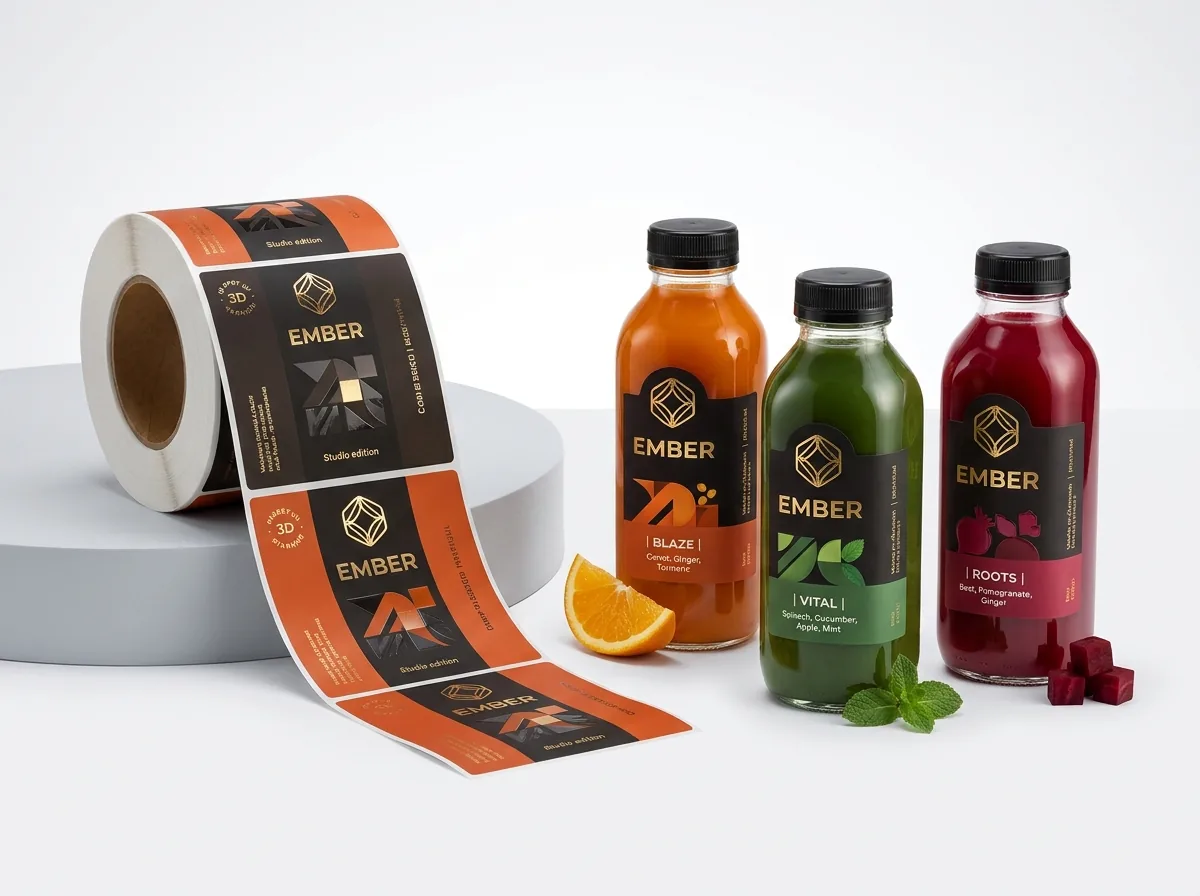
When you sell a sealed 8-pack of kids' juice pouches or a 6-bottle cleanse kit in retail grocery stores, shoppers cannot read the individual bottle or pouch labels until they open the carton. Retail buyers therefore require a complete multi-pack Nutrition Facts panel, ingredient list, juice percentage declaration, cold-storage warning ('Keep Refrigerated at or below 38°F'), and scannable UPC barcode on the outside of the box. Dedicate one full back or side panel to your Nutrition Facts table and ingredient list, set in high-contrast black ink on a clean white or cream background. Place your retail UPC barcode on the lower back or bottom panel with at least 0.25 inches of white quiet zone on the left and right sides, keeping it away from auto lock bottom glue seams. If your primary bottles also need waterproof pressure-sensitive labels, pair your cartons with custom juice labels and custom bottle labels printed on white or clear BOPP film.
Know your size? Compare pricing across up to 3 quantities.
Request a Quote →How do I gang-run multiple juice flavors and keep custom box costs down?
Most beverage brands launch three to five SKUs at once (such as Apple, Berry, and Tropical pouch multipacks, or Immunity, Glow, and Detox 2 oz shot displays). Ordering separate box structures for each flavor multiplies your setup work and splits your purchasing power. Instead, standardize your bottle or pouch count around one master box dieline and one internal divider dieline. When all of your flavors share the exact same flat dimensions, board caliper, and exterior lamination, we can gang-run your artwork across the production run and guarantee exact Pantone fruit color matching from batch to batch. Because CubitPack never charges cutting die or printing plate fees, launching a new seasonal orchard flavor or updating your cleanse schedule inside the lid never triggers re-tooling fees.
How do I prepare my custom juice box artwork files for prepress?
Once you send us your bottle or pouch dimensions, our design team send back a free custom 2D dieline template showing cut lines, fold scores, glue flaps, tear perforations, and window cutouts. Place your background fruit illustrations and Pantone color blocks on the artwork layer, extending all background colors 0.125 inches (1/8 in) past the outer cut lines for bleed, and keep all headlines, nutrition text, and barcodes at least 0.125 inches inside every score and perforation line. If you generated fruit illustrations or botanical patterns with an AI tool and need help converting them into print-ready 300 DPI CMYK + Pantone vectors, our team will clean up and lay out your files at no charge through our print your AI design service. You inspect both a 2D dieline proof and an interactive 3D mockup before you pay.
- Bleed: extend background colors 0.125 inches past all outer cut lines and into window cutouts.
- Safe zone: keep text, nutrition borders, and logos 0.125 inches away from fold scores and zipper perforations.
- Glue-free flaps: leave auto lock bottom glue tabs and side seam flaps free of ink and lamination so adhesive bonds deep into the fiber.
- Color mode: build artwork in CMYK and call out exact Pantone (PMS) codes for signature fruit flavor bands.
What are the most common custom juice box design and prepress mistakes?
Torn dispenser flaps, unscannable cold-case barcodes, and peeling bottom glue seams almost always start on the artwork dieline. Check these five details before approving your proof
- Placing die-cut bottle windows or fridge-pack perforations closer than 0.5 inches to a vertical corner score, which weakens box stacking strength.
- Running flood ink and film lamination across the auto lock bottom glue tabs, which prevents water-resistant packaging glue from bonding.
- Printing a low-contrast colored barcode without a white background box, causing grocery checkout scanners to fail when condensation forms.
- Omitting the 'Keep Refrigerated' callout and multi-pack Nutrition Facts panel on the outer carton of sealed cold-pressed cleanses.
- Designing the bottom lip of a pouch dispenser opening too low, letting the front pouch slide out onto the refrigerator floor.
Find your size
Suggested inside size: 2.625 × 2.625 × 6.75 in
A starting point. Your account manager confirms the size with you before the proof.
Quote this size →Packaging for this
Ready to order juice boxes? Compare up to 3 quantities with a free 3D mockup.
Request a Quote →Questions about juice boxes
What file format should I send for my custom juice box artwork?
Vector PDF, Adobe Illustrator (.ai), or EPS files with outlined fonts and embedded 300 DPI images work best. If you only have a logo file, a rough sketch, or an AI-generated fruit illustration, our design team builds your print-ready dieline layout for free.
How do you guarantee our citrus, berry and green juice colors match across reorders?
We print both full-color CMYK and exact Pantone (PMS) spot colors, and our Pantone color match is guaranteed. We record your exact PMS formulas and lamination specs on your master dieline so every reorder matches your existing cold-case display.
Should I use a clear plastic film window or an open die-cut window on juice boxes?
For refrigerated cold-pressed juice bottles and wellness shots, an open die-cut window without plastic film is usually better because cold-room condensation cannot fog up a film patch, and the rigid bottle wall is already sealed inside.
Are food-safe inks and barrier coatings available for custom juice boxes?
Yes. While most juice cartons hold sealed bottles, pouches or bladders, food-safe board stocks, barrier coatings and low-migration inks are available on request through our certified partner facilities.
Can I print inside our juice box at the same time as the outside?
Yes. Two-sided printing lets you print your 1-day or 3-day cleanse schedule, orchard story, or kids' games inside the carton lid while keeping the exterior focused on shelf impact and nutrition facts.
Do I see a proof of the perforations and window cutouts before paying?
Yes. Every order includes a free 2D dieline proof showing exact cut, score, and perforation lines alongside a rotatable 3D mockup before you pay a cent.
Still have a question? Ask a packaging specialist.
Request a Quote →Request your juice boxes quote
Tell us your size and quantities, and one dedicated account manager prepares pricing for each tier.
- Free design & AI-to-print studio + 3D mockup
- No die or plate charges · 4–5 day rush available
- Free shipping to all 50 states
- 10% off your first order
This prepress and structural guide combines CubitPack's decided policies in our published product specifications with cold-chain lamination practices, FDA multi-pack nutrition labeling rules, and structural perforation margins. A CubitPack packaging specialist reviewed every step. Spot an error? Tell us and we will fix it.
Sources
What changed
- October 22, 2026: First published.
- October 22, 2026: Updated specifications, terminology, and verified source links.
More guides
New packaging guides by email
Sizes, materials and design tips. Unsubscribe anytime.