
Bag-in-box coffee cartons vs custom coffee pouches: Which should roasters choose?
Short answer: Choose custom coffee boxes over inner valve bags when you want rigid vertical shelf billboards, zero slumping on café shelves, and fast SKU swaps for rotating single-origin micro-lots. Choose standalone custom printed pouches for high-volume evergreen blends that need resealable zippers in humid environments.
On this page
- How does a bag-in-box coffee carton work with an inner degassing valve bag
- How do bag-in-box coffee cartons and standalone coffee pouches compare side by side
- Why do specialty roasters with rotating single-origin lots prefer bag-in-box cartons
- How do cartons outperform pouches on grocery shelves and in DTC subscriptions
- When should you choose a coffee carton vs a pouch (or run both)
- Common mistakes
- FAQs
Request a custom quoteFree dieline & 3D mockup
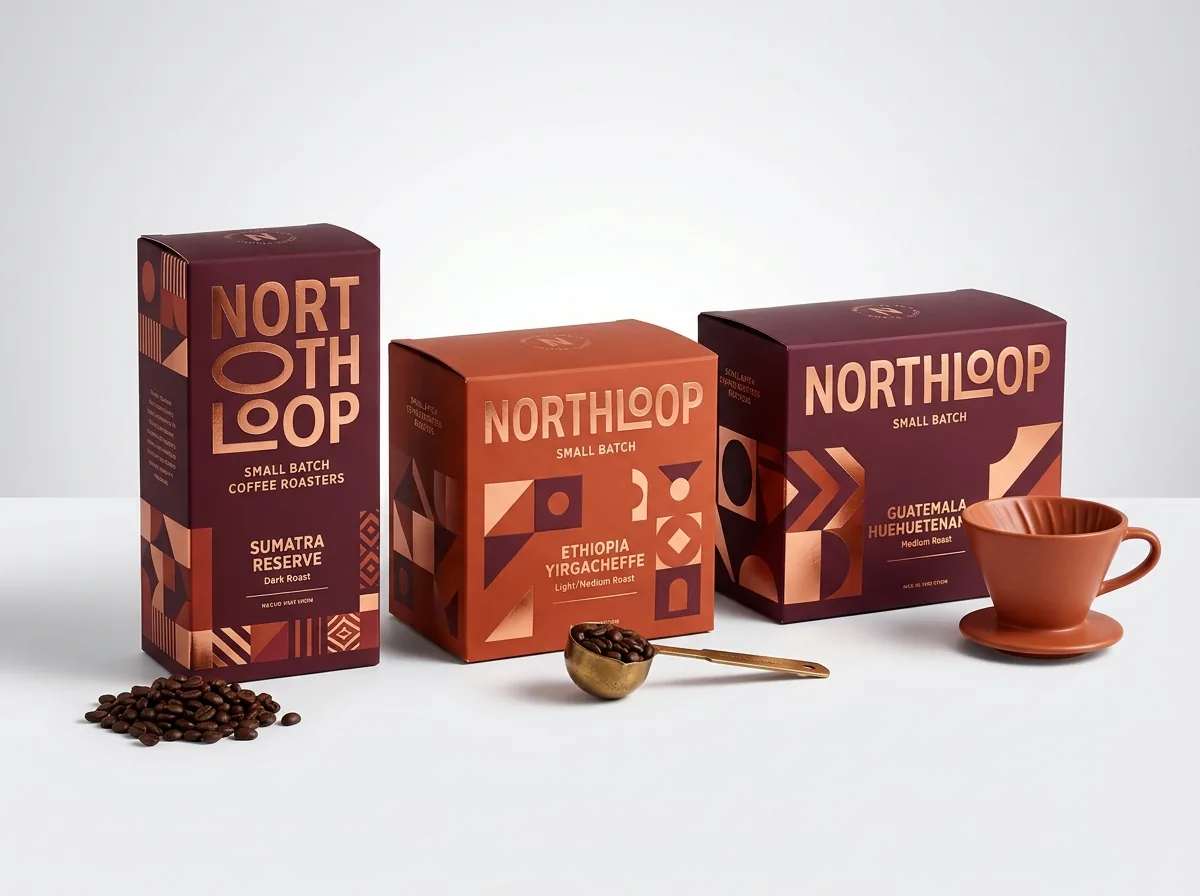
Walk into a third-wave coffee bar or specialty grocery aisle and you will notice top roasters switching from standalone flexible pouches to upright paperboard cartons. Importantly, a coffee box does not replace the gas-barrier bag inside: freshly roasted whole-bean coffee must still be heat-sealed inside a foil-lined or high-barrier inner bag with a one-way degassing valve to vent carbon dioxide (CO2) while blocking oxygen. The real choice is between a standalone custom-printed pouch and a two-part bag-in-box system pairing an unprinted stock inner valve bag with a custom printed 18 pt to 20 pt folding carton. Bag-in-box cartons stand dead square on retail shelves without slumping, give you four flat printable faces plus inside-lid real estate, and let roasters run 10+ seasonal micro-lots using one master carton with slide-in origin cards, starting at 1,000 boxes with zero die or plate fees.
How does a bag-in-box coffee carton work with an inner degassing valve bag?
A common misconception among new coffee brands is that switching to printed coffee cartons means pouring roasted beans directly into bare paperboard. Paperboard provides rigid structure and premium print surfaces, but untreated board breathes air and absorbs roasted coffee oils. Because freshly roasted coffee releases carbon dioxide (CO2) gas for days after roasting while going stale rapidly if exposed to oxygen or moisture, every bag-in-box coffee carton relies on a two-layer architecture. Inside the carton sits a food-safe, heat-sealed barrier bag - typically an unprinted stock silver foil, matte white, or metallized high-barrier gusseted pouch fitted with a one-way degassing valve. The inner valve bag handles aroma retention, oxygen barrier, and CO2 venting. Outside the pouch sits an 18 pt to 20 pt SBS or unbleached kraft custom auto-lock bottom boxes carton that delivers rigid shelf geometry, tactile embossing or foil stamping, and curbside paperboard recyclability once the inner bag is removed. If you want to compare the standalone flexible pouch route directly, review our custom coffee bags specs alongside this breakdown.
- Inner barrier pouch role: Heat-sealed high-barrier film with a one-way degassing valve vents CO2 and locks in volatile aromatics.
- Outer paperboard carton role: 18 pt to 20 pt rigid folding carton squares up the rounded bag, blocks UV light, and carries branding.
- Degassing vent alignment: Cartons do not need air-tight seals; normal tuck-flap tolerances let vented CO2 escape effortlessly.
- Two-stream disposal: Customers recycle the outer paperboard box in curbside paper bins after finishing the inner valve bag.
How do bag-in-box coffee cartons and standalone coffee pouches compare side by side?
Both packaging systems keep roasted coffee fresh when paired with a proper barrier film and degassing valve, yet they behave very differently on retail shelves, in e-commerce mailers, and across your seasonal roast calendar. When a café or specialty grocery buyer evaluates a new coffee line, the outer form factor determines how cleanly the product blocks on a wooden or wire shelf, how clearly a shopper can read origin elevation and tasting notes from five feet away, and how much storage space empty packaging occupies in the roastery before roast day. Both unprinted inner pouches and flat-shipped folding cartons store flat on pallets until packing day, but cartons pop open into rigid rectangular prisms that never tip forward when a customer pulls a bag from the front of a retail display row. Use the comparison matrix below to evaluate which format fits your coffee program.
| Packaging factor | Bag-in-box coffee carton (box + stock inner bag) | Standalone custom printed coffee pouch |
|---|---|---|
| Retail shelf posture | Stands 100% upright and square; forms a crisp billboard block | Can slump, lean, or crease at the gussets as bags are handled |
| Rotating single-origin SKU agility | High: buy blank stock valve bags in bulk + print short-run cartons or origin cards | Low: high minimum order quantities per printed film SKU |
| Printable surface & storytelling | 4 flat outer panels + top flap + inside-lid brewing guide + slide-in card slot | Curved front and back faces; side gussets crease over text |
| Tactile & specialty finishes | Soft-touch matte, raised embossing, debossing, metallic foil, textured uncoated stock | Matte/gloss film lamination and spot UV; no deep paper embossing |
| E-commerce parcel protection | Rigid carton corners protect the inner valve bag from puncture in transit | Flexible pouch can get crushed or punctured if shipped in soft poly mailers |
| Packing line workflow | Two steps: fill/seal inner valve bag, then pop open auto-lock carton and insert | One step: fill and heat-seal pouch (plus apply front/back labels if semi-custom) |
| Best coffee products | Specialty single-origin micro-lots, giftable roasts, pour-over drip packs, retail shelves | High-volume flagship blends, 2 lb–5 lb cafe bulk bags, damp kitchen counter use |
Why do specialty roasters with rotating single-origin lots prefer bag-in-box cartons?
If you roast a dozen seasonal single-origin micro-lots a year - five bags of a honey-process Costa Rica this month, a natural Ethiopian next month, and a washed Colombia the month after - custom-printed flexible pouches create an inventory headache. Custom-printed barrier pouches typically require high minimum runs per design or force you to hand-apply adhesive labels onto blank bags (which often bubble or peel over the degassing valve and side creases). With a bag-in-box setup, you purchase one bulk pallet of unprinted stock inner valve bags at commodity unit costs and pair them with short-run folding cartons starting at 1,000 boxes. Better yet, many specialty roasters print one master carton design in 18 pt SBS or kraft board featuring a die-cut front window or thumb-notch slot, then slide a color-coded paperboard tasting card inside the front face for each harvest lot. That lets you launch a new micro-lot in days without leftover pouch film going to waste, while keeping your warehouse pallet count lean and organized across dozens of seasonal releases. Even when you print dedicated full-bleed cartons for each origin, our digital and offset lines let you split a run across multiple roast varieties that share the same 4.0 × 2.75 × 7.25 inch dieline.
Know your size? Compare pricing across up to 3 quantities.
Request a Quote →How do cartons outperform pouches on grocery shelves and in DTC subscriptions?
On crowded grocery and café shelves, flexible stand-up and side-gusset pouches curve away from overhead store lighting, casting glare across glossy film or hiding typography inside folded gussets. When shoppers pick up a pouch and set it back down, it rarely stands straight. An upright 18 pt or 20 pt coffee carton presents a flat, dead-vertical 4.0 × 7.25 inch front billboard that stacks edge-to-edge into a continuous brand block. In direct-to-consumer (DTC) coffee subscriptions and mail-order gift sets, cartons also solve transit scuffing and bag punctures. When two or three whole-bean bags ship together inside an E-flute corrugated custom mailer boxes kit, boxed coffee bags slide neatly into rectangular cells without shifting or rubbing against each other's sharp heat-seal fins. Paperboard cartons also let you print inside the top lid or across the inner dust flaps, turning the moment a subscriber opens their monthly coffee box into a guided tasting experience with V60, Chemex, and espresso extraction ratios right at eye level.
When should you choose a coffee carton vs a pouch (or run both)?
You do not have to pick one format for every SKU in your roastery. Many growing coffee brands use a hybrid packaging architecture that matches the container to the channel and roast volume: 1. Choose bag-in-box coffee cartons for your single-origin micro-lots, reserve releases, grocery retail line, 3-bag tasting flights, and single-serve pour-over drip packets. Cartons give specialty roasts the gift-ready stature and tactile paper finish that justify higher retail price points while simplifying small-batch label changes. To get the exact carton measurements for each format, check our coffee box size chart for 12 oz bags, pods and drip packs. 2. Choose standalone custom coffee pouches for high-volume year-round house blends sold in 12 oz, 2 lb, and 5 lb bags where one-step filling speed, foodservice bulk handling, and a built-in press-to-close zipper are the top priorities. 3. Ready to lay out your carton panels, origin cards, and roast-date stamp spots? Read our step-by-step guide on how to design custom coffee boxes for single-origin and subscriptions.
What are the five mistakes roasters make when switching from pouches to boxes?
Avoid these five common packaging pitfalls when transitioning your coffee line into folding cartons
- Pouring whole beans directly into an unlined paperboard carton without an inner heat-sealed barrier valve bag, which lets oxygen stale the roast and coffee oils stain the board.
- Using a standard 1-2-3 tuck bottom instead of a pre-glued auto-lock bottom on 12 oz and 16 oz cartons, slowing down packing tables.
- Choosing thin 14 pt paperboard for 12 oz whole-bean bags, which allows the rounded inner pouch to bow the front and back carton panels.
- Forgetting to leave an unvarnished knockout rectangle on the back or base panel for thermal or ink-stamped ”Roasted On” dates.
- Ordering separate full-bleed cartons for tiny 200-bag single-origin micro-lots instead of using a master carton with swap-in origin cards or belly bands.
Find your size
Suggested inside size: 2.75 × 1.75 × 5.25 in
A starting point. Your account manager confirms the size with you before the proof.
Quote this size →Packaging for this
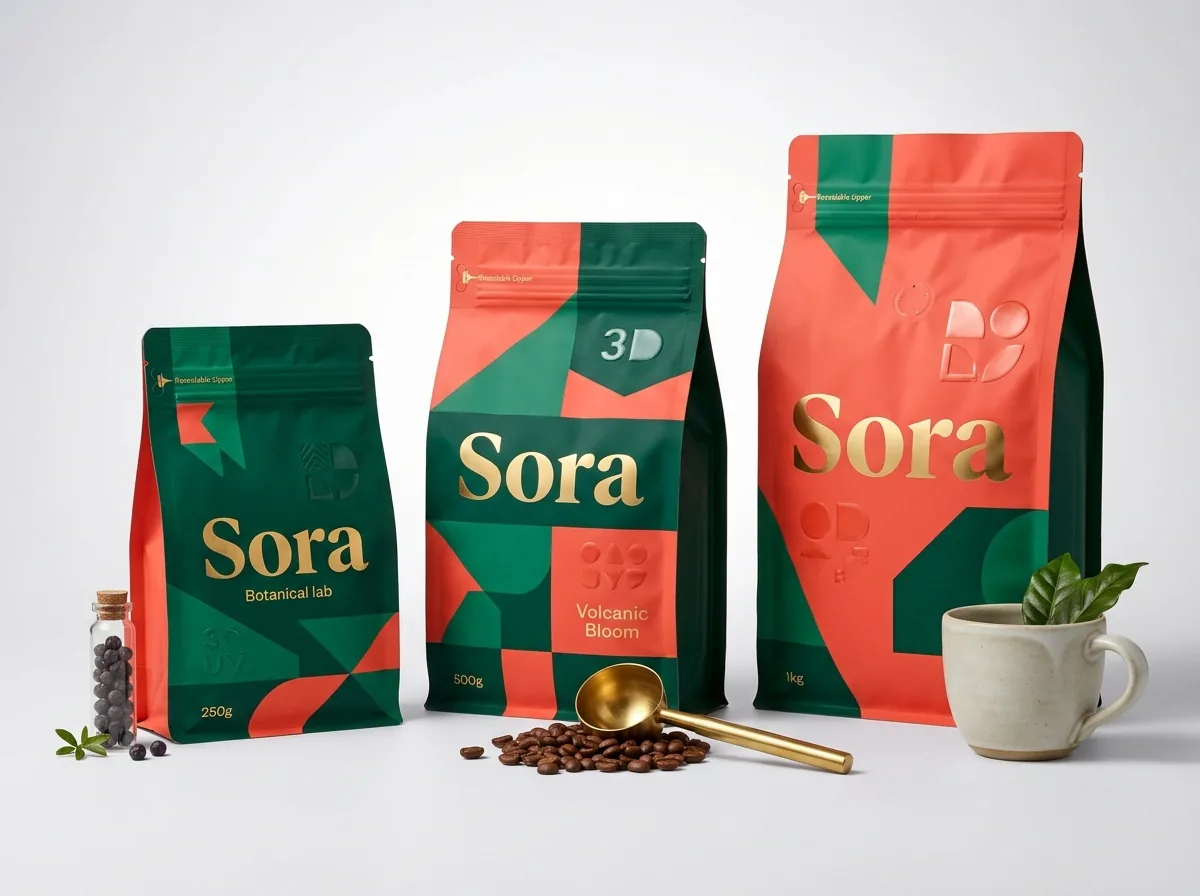
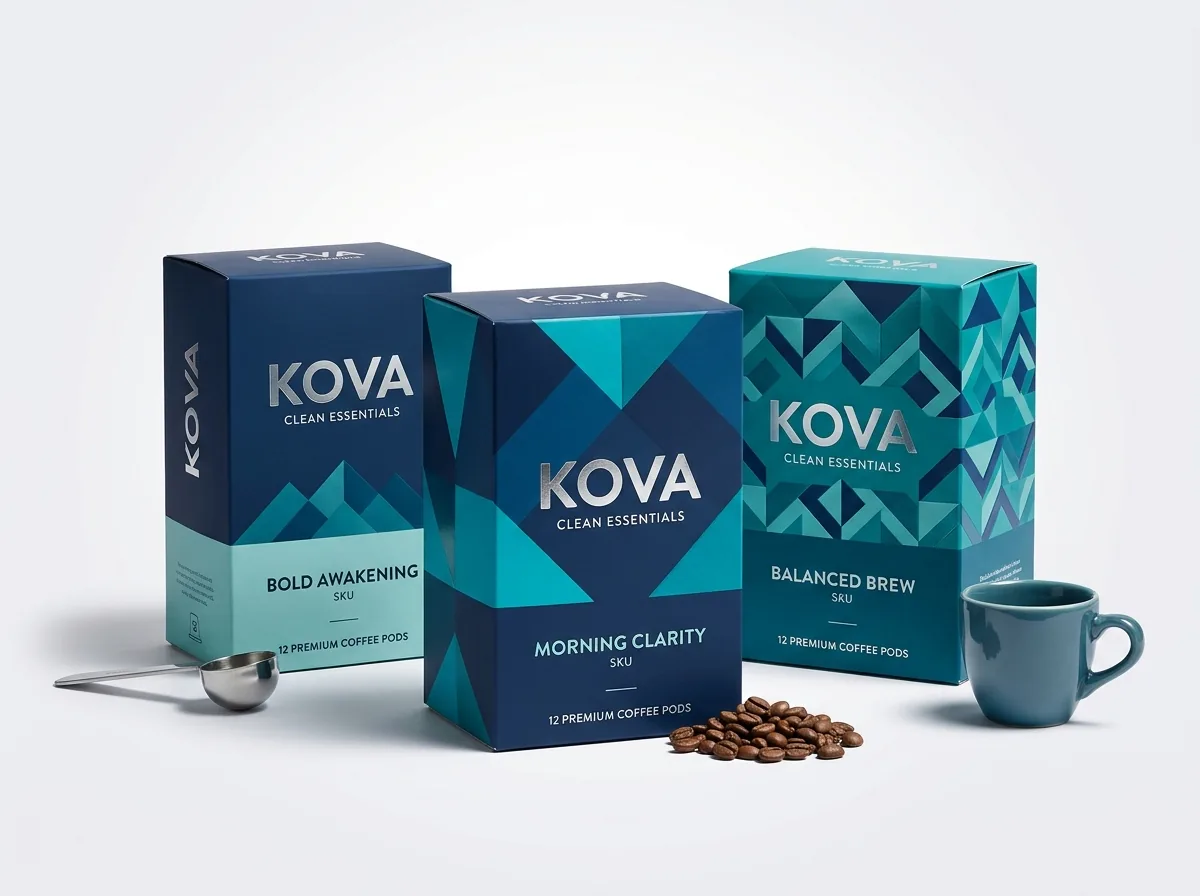
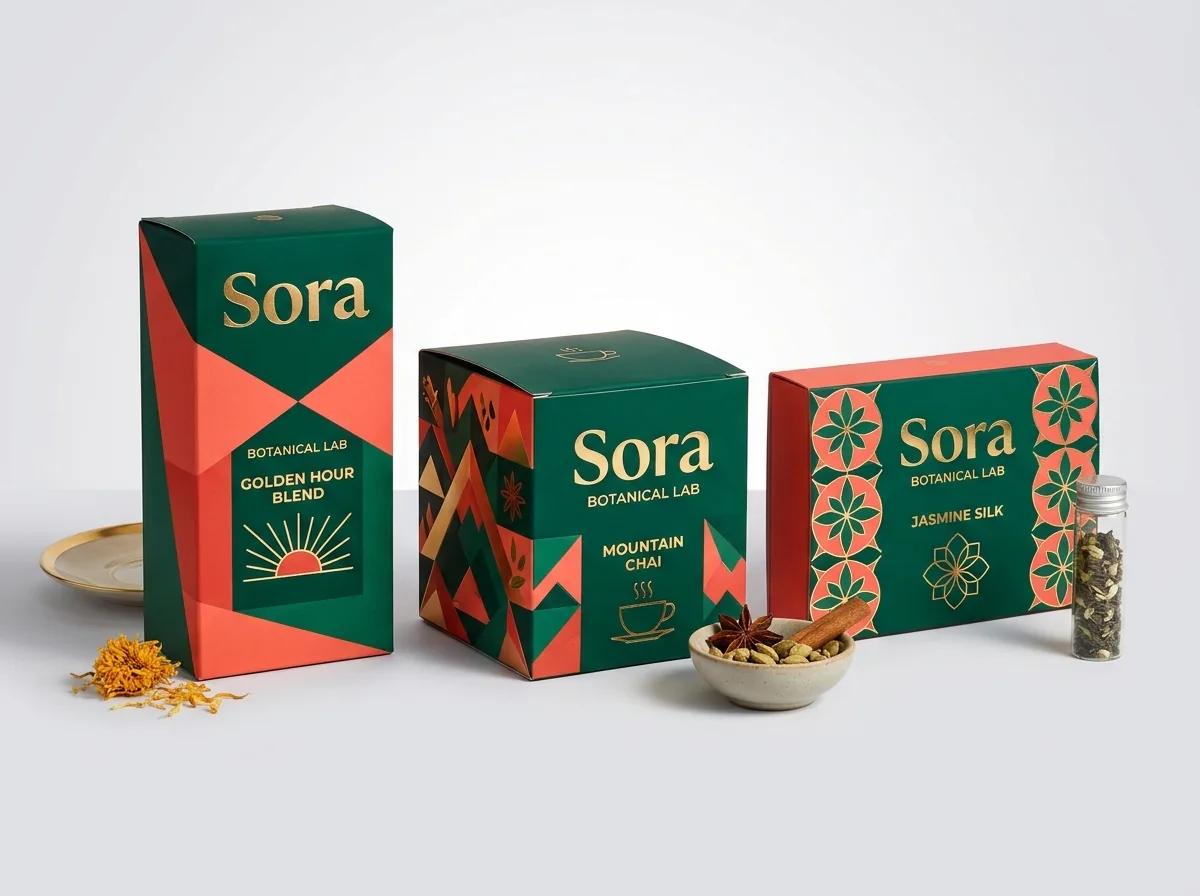
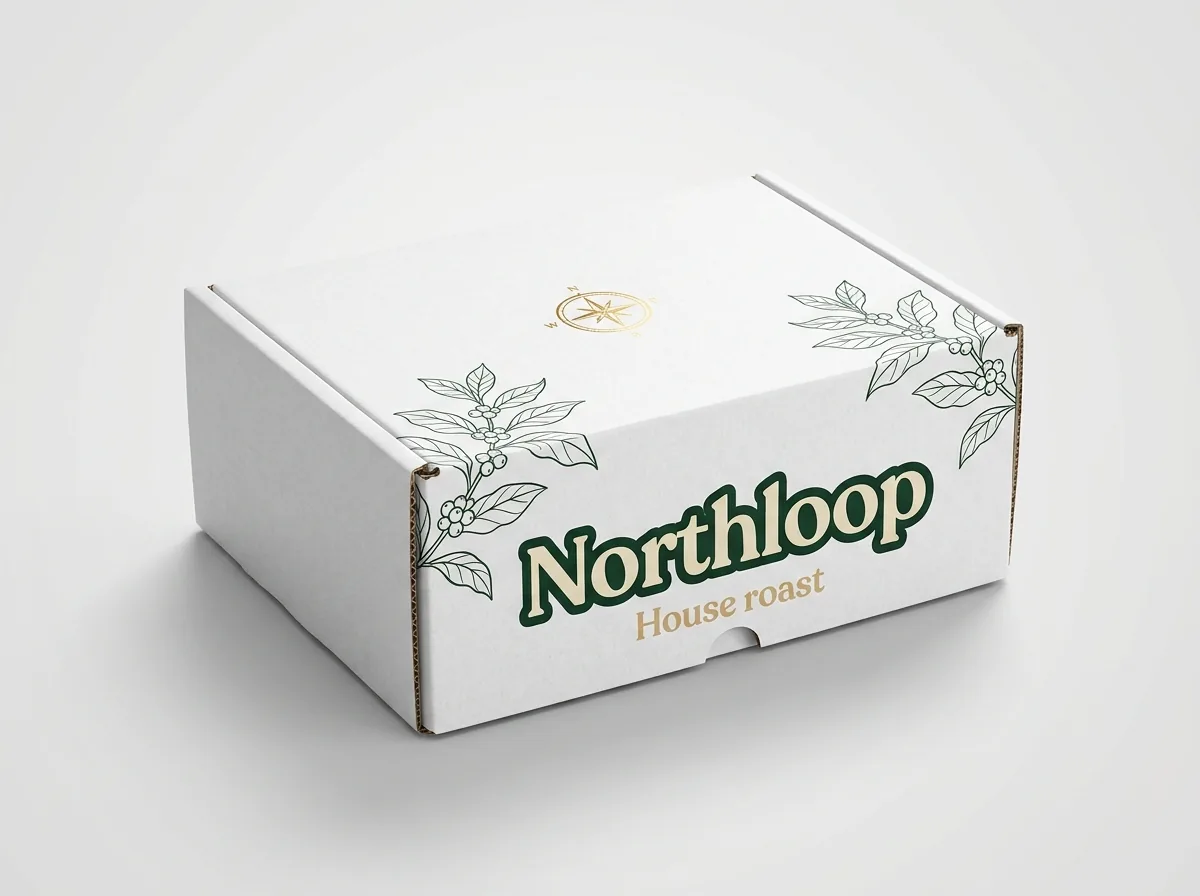
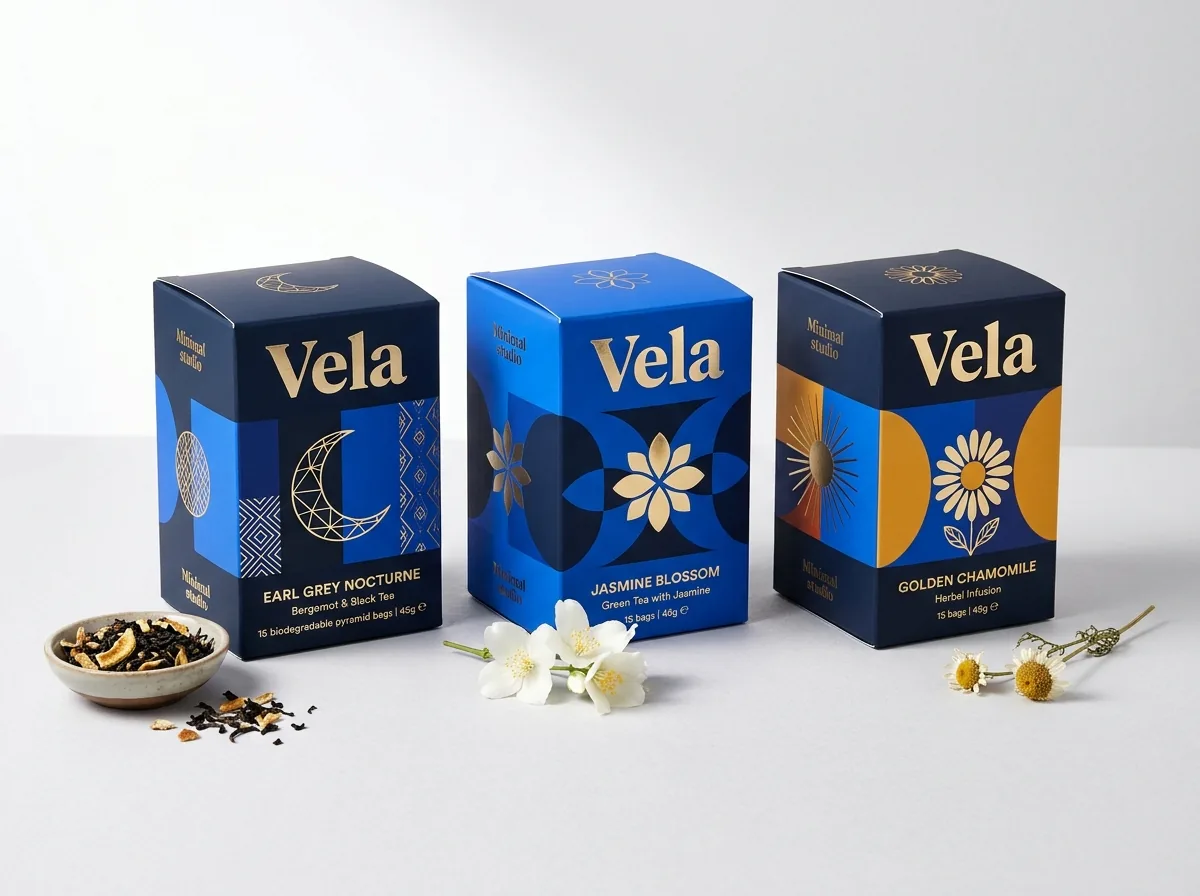
Ready to order coffee boxes? Compare up to 3 quantities with a free 3D mockup.
Request a Quote →Questions about coffee boxes
Do bag-in-box coffee cartons still need a one-way degassing valve on the inner bag?
Yes. Freshly roasted whole-bean coffee releases carbon dioxide gas for days after roasting. Sealing beans inside an inner high-barrier pouch with a one-way degassing valve vents excess CO2 into the carton while blocking outside oxygen.
Does the outer paperboard carton block the inner degassing valve from venting?
No. Folding cartons have natural air clearance around the top and bottom tuck flaps, so any CO2 gas released through the inner bag's one-way valve dissipates harmlessly without pressurizing the box.
Why do specialty coffee roasters pack foil bags inside paperboard cartons?
A paperboard carton turns a rounded, slumping flexible pouch into a crisp vertical billboard on retail shelves, unlocks tactile paper stocks and embossing, and lets roasters buy blank inner valve bags in bulk.
Are bag-in-box coffee cartons better for managing rotating single-origin micro-lots?
Yes. Instead of meeting high minimum order quantities for custom-printed barrier film on every micro-lot, roasters use one master folding carton and swap low-minimum printed tasting cards or belly bands for each harvest.
Can customers recycle a paperboard coffee carton at home?
Yes. Standard 18 pt to 20 pt SBS and unbleached kraft coffee cartons with aqueous coating or soy-based inks are curbside recyclable in standard paper bins once the inner barrier valve bag is removed.
What is the minimum order quantity for custom coffee boxes at CubitPack?
Our standard minimum order quantity is 1,000 custom coffee boxes, with short runs available on request. Every order includes a free digital dieline and 3D mockup before payment and zero die or plate charges.
Still have a question? Ask a packaging specialist.
Request a Quote →Request your coffee boxes quote
Tell us your size and quantities, and one dedicated account manager prepares pricing for each tier.
- Free design & AI-to-print studio + 3D mockup
- No die or plate charges · 4–5 day rush available
- Free shipping to all 50 states
- 10% off your first order
This comparison draws on production workflows from US specialty coffee roasters using stock inner degassing-valve pouches inside 18 pt to 20 pt folding cartons and E-flute subscription mailers. Verified by a CubitPack packaging specialist. Spot an error? Let us know and we will fix it.
Sources
What changed
- October 22, 2026: First published.
- October 22, 2026: Updated specifications, terminology, and verified source links.
More guides
New packaging guides by email
Sizes, materials and design tips. Unsubscribe anytime.