
Dispenser vs tuck-top tea boxes: which should you choose?
Short answer: Choose a perforated gravity dispenser box when packing individually wrapped flat tea envelopes for café counters, hotel buffets or office breakrooms. Choose a reclosable tuck-top or tear-strip seal end carton for pyramid sachets, inner loose-leaf pouches and home pantry custom tea boxes.
On this page
- How do dispenser, tuck-top and tear-strip seal end tea boxes compare
- How does a perforated gravity-feed tea dispenser box work
- When are straight tuck end tea boxes the better choice
- Why do supermarket tea brands use seal end boxes with tear-strip zippers
- Can I combine a top tuck lid with a bottom dispenser slot
- Common mistakes
- FAQs
Request a custom quoteFree dieline & 3D mockup
The choice between a bottom-perforated dispenser box, a reclosable tuck-top carton and a glued seal end box comes down to how your tea is wrapped inside and where customers reach for a bag. Gravity-feed dispenser boxes feature a zip-rule tear-out slot near the bottom of the front panel so baristas, hotel guests and office workers can pull out one individually sealed flat envelope at a time while the stack drops down cleanly. Straight and reverse tuck-top boxes open from the top lid and tuck closed repeatedly in a home kitchen cupboard, making them the first choice for pyramid infuser sachets and inner foil loose-leaf bags that do not stack flat. Glued seal end boxes with a perforated tear-strip zipper add factory tamper evidence for supermarket aisles while still converting into a reclosable flip lid at home after first opening.
How do dispenser, tuck-top and tear-strip seal end tea boxes compare?
All three carton structures fold from flat printed paperboard on the same die-cutting presses and carry the same 1,000-box minimum at CubitPack, with zero die or plate charges. However, each structure controls customer access, tamper security and shelf footprint differently. Before choosing your dieline for custom printed tea cartons, check two practical details: whether your tea bags are sealed inside individual flat envelopes (required for gravity dispensing) and whether your retail buyers require glued tamper-evident closures or accept a reclosable tuck flap with a clear tamper seal sticker. You should also consider how your fulfillment team packs the cartons: tuck-top boxes close by hand in seconds without equipment, whereas seal end boxes require hot-melt glue or double-sided tape on the top and bottom flaps.
| Feature | Perforated dispenser box | Straight / reverse tuck top | Seal end with tear strip |
|---|---|---|---|
| How it opens | Bottom zip-rule panel tears out into a tray slot | Top tuck flap lifts open and tucks back into a lock tab | Zipper strip pulls across the front to release a hinged lid |
| Best tea format | 25 to 50 flat individually wrapped paper or foil envelopes | 15 to 20 pyramid sachets or 100 g inner loose-leaf pouch | 20 to 40 flat tea bags (wrapped or in an inner poly bag) |
| Primary sales channel | Cafés, hotel breakfast bars, offices and home tea stations | Specialty grocers, boutiques, DTC subscriptions and gifts | Supermarket chains and high-volume grocery aisles |
| Tamper evidence | Perforated slot stays intact until popped open | Add a custom seal sticker over the top tuck seam | Glued top and bottom flaps; tear strip shows first opening |
| Packing method | Hand-loaded or machine-loaded from top or bottom | Fast hand-packing or semi-automatic tucking | Requires hot-melt or cold glue sealing on the flaps |
How does a perforated gravity-feed tea dispenser box work?
A gravity-feed custom dispenser box turns your shipping carton into an instant self-serve counter display. Inside the tall vertical tower, twenty-five to fifty individually sealed flat tea envelopes lie horizontal in a single neat chimney stack. Near the bottom of the front panel - and wrapping slightly around the left and right side edges - our die-cutter scores a U-shaped zipper perforation. When a barista or hotel guest pulls the thumb notch, the perforated strip tears away cleanly and folds a small lower lip inward or removes a 1.125-inch-tall window right above the bottom floor. Because the bottom floor supports the stack while the opening exposes only the lowest two envelopes, pulling one envelope out lets the entire column settle downward by one bag thickness without spilling.
- Keep the bottom retainer lip 0.5 to 0.625 inches tall above the base score so the lowest bag cannot slide out on its own.
- Size the dispenser slot opening to 1.0 to 1.25 inches tall - just enough room for two fingers to pinch one envelope.
- Only use gravity dispensers for flat, uniform envelopes; loose-leaf pouches and unwrapped pyramid sachets will catch on the slot.
- Add a hybrid top tuck flap if you want customers to have the option of opening the box from the top or the bottom.
When are straight tuck end tea boxes the better choice?
If you pack three-dimensional pyramid mesh sachets, loose-leaf tea inside a heat-sealed foil gusset bag, or a metal matcha tin, a straight tuck end box is the cleanest and most versatile structure. Because both the top and bottom flaps hinge from the rear panel and tuck toward the back, the front display face has uninterrupted folded side edges with no raw paperboard cut line visible. Unlike a bottom dispenser slot that stays permanently open once popped, a top tuck flap with slit locks recloses tightly after every morning brew. That makes tuck-top cartons ideal for 15-count and 20-count specialty retail boxes where pyramid infusers are packed loose inside an inner barrier bag. You can also print steeping temperature, brew time and origin notes across the inside of the top lid so the instructions appear right as the customer lifts the flap. If you prefer a slightly faster manual bottom assembly on your packing table, a reverse tuck end box alternates the top and bottom hinge panels so two cartons nest closer together on the press sheet.
Know your size? Compare pricing across up to 3 quantities.
Request a Quote →Why do supermarket tea brands use seal end boxes with tear-strip zippers?
Walk down a conventional grocery store tea aisle and you will see horizontal and vertical seal end boxes where all four top and bottom flaps are glued shut. Large supermarket chains favor glued seal ends because the carton cannot be opened in the aisle without breaking a paper fiber seal, eliminating the need for an extra shrink band or tamper label. To make a glued seal end box convenient in a customer's kitchen, we die-cut a double-parallel perforated tear strip across the front and side panels about 1.25 inches below the top score. Pulling the red or printed cardboard tab unzips the upper hood so it hinges backward on the rear score line like a flip-top chest, with a small front tongue that tucks into a lower slot to reclose the box between uses. That keeps tea bags shielded from kitchen humidity and dust even after the tamper-evident seal is broken.
Can I combine a top tuck lid with a bottom dispenser slot?
Yes - many specialty tea brands order a single hybrid dieline that serves both retail pantry shoppers and foodservice accounts. The carton is built as a vertical straight tuck end box at the top, while the lower front panel carries a scored zip-rule dispenser perforation. Home shoppers who store the box lying down in a drawer simply open the top tuck flap, while office managers and café baristas pop open the bottom dispenser slot and stand the tower upright next to the hot water urn. Using one hybrid dieline across both channels means you do not have to split your print run between a retail box and a foodservice box. Your warehouse stocks a single SKU for each tea flavor, and the end user chooses how to open it. Just keep your brand logo, blend name and FDA net weight statement above the perforated zone on the front face so tearing out the dispenser panel never removes important text. For gift assortments and tasting flights where you want all blends visible at once rather than stacked in a column, step up to a two-piece box with slotted paperboard partitions. Lifting the lid reveals four, six or eight flavors standing on edge so guests can browse every herbal and black tea envelope at a glance, making it a favorite for hotel suites, executive boardrooms and holiday gift sets.
What are the most common mistakes when choosing a tea box style?
Picking the wrong opening mechanism can cause tea bags to jam in foodservice counters or slow down your hand-packing line. Watch out for these five pitfalls
- Putting loose pyramid sachets inside a bottom-perforated dispenser box; pyramid infusers interlock and jam instead of dropping flat.
- Cutting a bottom dispenser slot all the way down to the floor score with no lower retainer lip, causing the bottom five envelopes to slide out.
- Ordering glued seal end cartons for a small hand-packed run without a glue applicator or tamper sticker alternative.
- Placing the brand logo or critical FDA net weight text directly over the perforated tear-out panel where it gets ripped off and discarded.
- Using a weak tuck bottom without an auto lock base when packing heavy metal tea caddies or ceramic matcha jars.
Find your size
Suggested inside size: 5.25 × 2.75 × 3.25 in
A starting point. Your account manager confirms the size with you before the proof.
Quote this size →Packaging for this
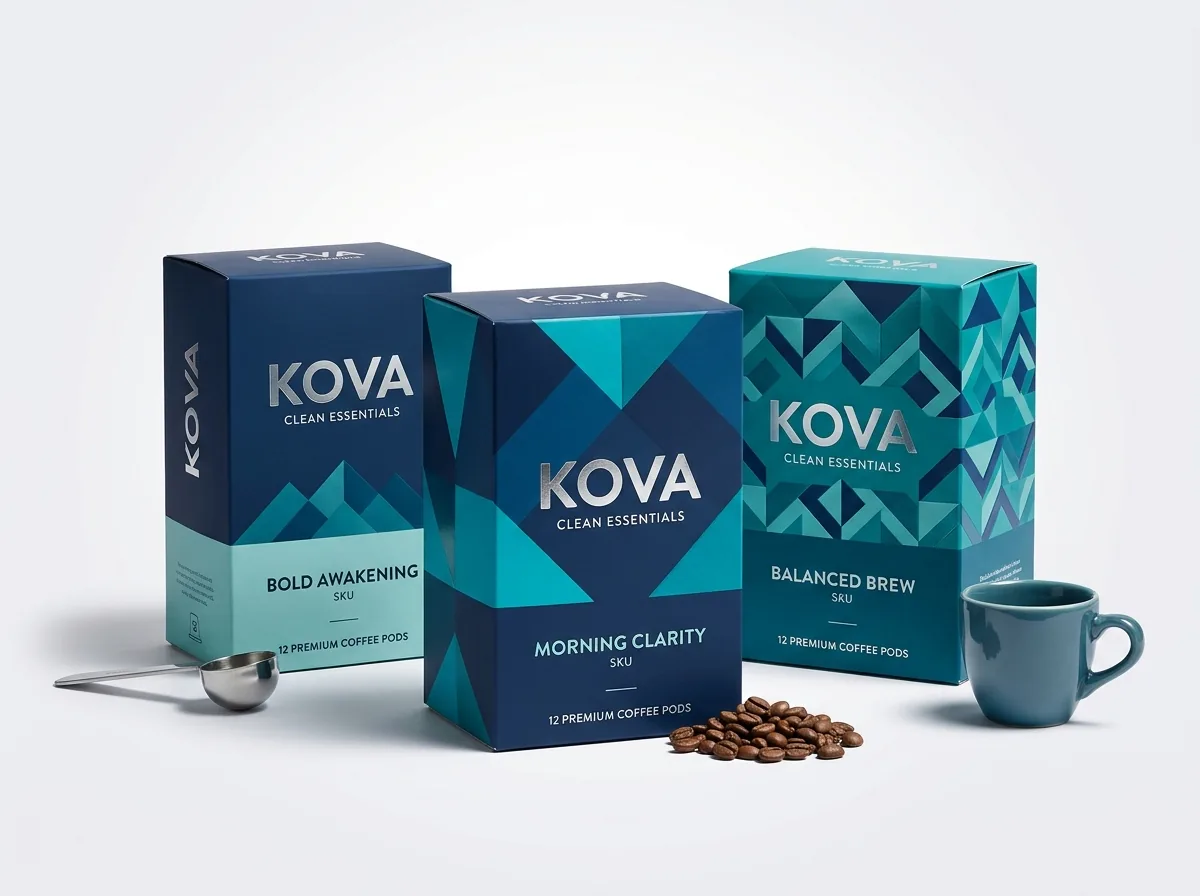
Ready to order tea boxes? Compare up to 3 quantities with a free 3D mockup.
Request a Quote →Questions about tea boxes
Does adding a perforated dispenser slot or tear-strip zipper cost extra?
No. Perforation rules and zipper tear strips are built directly into your cutting die, and CubitPack never charges die or plate fees. A perforated dispenser carton costs the same per square inch of paperboard as a standard tuck box.
Can I use a gravity dispenser box for pyramid tea sachets?
Gravity dispenser slots work reliably only when each tea bag or pyramid sachet is sealed inside a flat, stiff outer envelope that stacks horizontally without catching. Loose, unwrapped pyramid sachets tumble at angles and will bridge across the chute.
How do I make a straight tuck end tea box tamper-evident for grocery stores?
The easiest way for hand-packed runs is applying a custom clear or printed tamper-evident wafer seal sticker across the top tuck seam, or packing the tea bags inside a heat-sealed inner barrier pouch inside the tuck carton.
What board weight keeps a tall 50-count tea dispenser tower from leaning?
For tall 25-count to 50-count foodservice dispenser cartons, we recommend a stiffer white paperboard or unbleached kraft caliper so the side walls stay rigid around the bottom cutout after the perforated panel is removed.
Can you print instructions on the perforated tear-out tab?
Yes. Most brands print a dotted outline, a small arrow icon and a short prompt such as 'Push & pull to dispense tea bags' right on the removable perforated panel, while keeping the permanent brand logo and net weight above the slot.
Can I test the perforation tear strength before my full 1,000-box run?
Yes. Every order includes a free digital dieline proof and 3D mockup before payment, and you can also order a paid physical sample (credited to your full order) to test the exact zipper rule tooth pattern with your tea envelopes.
Still have a question? Ask a packaging specialist.
Request a Quote →Request your tea boxes quote
Tell us your size and quantities, and one dedicated account manager prepares pricing for each tier.
- Free design & AI-to-print studio + 3D mockup
- No die or plate charges · 4–5 day rush available
- Free shipping to all 50 states
- 10% off your first order
This comparison draws on structural dieline standards for zipper perforation rules, bottom retainer lips and tuck-flap slit locks used across retail and foodservice tea cartons. A CubitPack packaging specialist reviewed every specification. Spot a mistake? Let us know and we will fix it.
Sources
What changed
- October 22, 2026: First published.
- October 22, 2026: Updated specifications, terminology, and verified source links.
More guides
New packaging guides by email
Sizes, materials and design tips. Unsubscribe anytime.