
How do I design reclosable flip-top and dispenser custom tea bag boxes?
Short answer: Use a parallel zipper tear strip 3/4 inch below the top crease with a front tab-lock tongue for 20-count pantry cartons, keep a 3/4 to 1.0 inch bottom retaining lip on vertical gravity dispensers, and color-code both the front and narrow end panels. Explore dielines on our custom tea bag boxes page.
On this page
- How does a perforated tear strip turn a glued carton into a reclosable flip-top lid
- How do you design a bottom dispenser slot that feeds tea envelopes without spilling
- Why should your artwork repeat the blend name on both the front and narrow end panels
- Should a tea bag box use an FDA Nutrition Facts or Supplement Facts panel
- How do you set up 6 or 10 tea flavors to gang-run on one shared carton dieline
- Common mistakes
- FAQs
Request a custom quoteFree dieline & 3D mockup
Designing a custom tea bag box that delights customers every morning requires combining tamper-evident shelf security with one-handed pantry reclosure or self-serve dispensing. On horizontal 16-, 20-, and 40-count grocery cartons, a dual-perforated zipper tear strip running across the front and side walls lets the co-packer glue the flaps shut for tamper resistance while giving the customer a hinged flip-top lid whose front tongue clicks into a die-cut slot after opening. On vertical 25- and 50-count hospitality towers, a bottom perforated pull-out tray with a 3/4 to 1.0 inch retaining lip feeds one wrapped tea envelope at a time without spilling the stack. Pair that mechanical layout with dual-orientation front and end-panel flavor color coding, an inside-lid steeping chart, and the right FDA Nutrition Facts or Supplement Facts panel, all built by CubitPack with zero die or plate charges.
How does a perforated tear strip turn a glued carton into a reclosable flip-top lid?
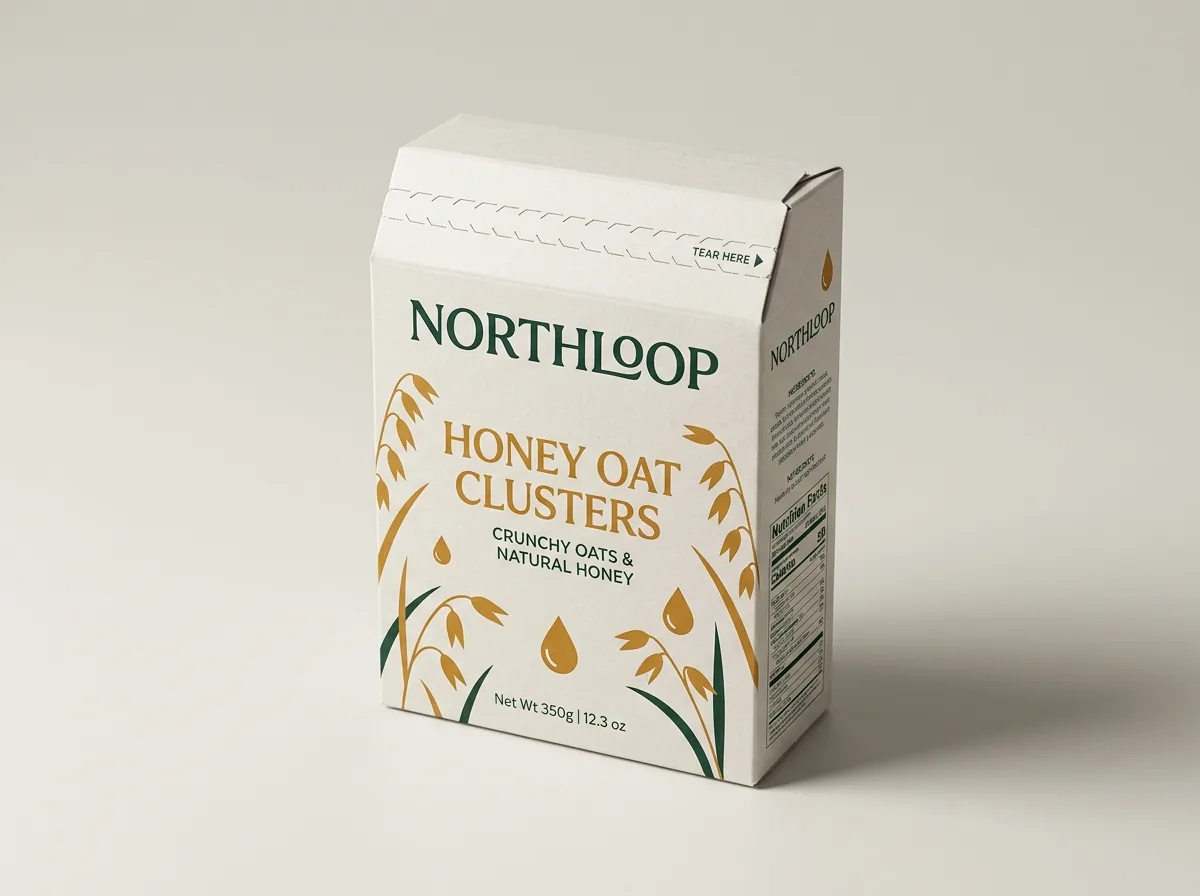
Look closely at the top of a national-brand 20-count tea bag box in the grocery aisle and you will see a clever piece of paperboard engineering. When brands order custom printed tea bag boxes for retail distribution, supermarkets prefer glued custom seal end boxes over loose tuck flaps because glued flaps prove the carton has never been opened on the shelf without requiring an outer plastic shrink film. To make a glued carton reclosable at home, our structural dieline places two parallel zipper-rule perforation lines roughly 3/4 inch below the top horizontal crease across the front panel and angled up toward the back hinge crease across both side panels. At the center of the tear strip, a curved pull tab invites the shopper to zip the strip off. Removing that 3/4 inch tear band exposes a rounded paperboard tongue extending down from the front lip of the hinged lid, plus a matching horizontal die-cut slot on the lower front wall. Every morning after pulling out a tea bag, the drinker pushes the tongue into the slot until it clicks shut.
- Back hinge score: A continuous horizontal fold crease across the rear panel acts as the living hinge for the flip-top lid.
- Parallel zipper tear strip: Two rows of angled die-cut nicks guide the tear cleanly across the front and side walls without ripping into your logo.
- Front tab-lock tongue & slot: A 1.25 inch wide rounded tongue on the lid locks into a Crescent-shaped slot on the lower front wall.
- Artwork safe zone: Keep critical typography, logos, and botanical focal points at least 3/16 inch away from the tear-strip path.
How do you design a bottom dispenser slot that feeds tea envelopes without spilling?
Vertical gravity-feed custom dispenser boxes are a favorite for hotel breakfast bars, office coffee stations, and home tea enthusiasts who stack cartons vertically on a counter. In a gravity dispenser, 25 to 50 individually wrapped tea envelopes sit flat in a vertical column, and a perforated panel near the base of the front wall tears out (or folds down into a small tray) so the lowest envelope can be pulled forward. Three dimensions control whether your dispenser feeds smoothly or dumps ten envelopes onto the counter at once: the bottom retaining lip height, the vertical slot opening height, and the side thumb-notch width. Use the engineering table below to set up your vertical dispenser dieline.
| Dispenser feature | Recommended dimension | Why it matters |
|---|---|---|
| Bottom retaining lip | 0.75 in to 1.0 in above base | Holds the lowest envelope back so the stack cannot slide out |
| Vertical slot opening height | 1.125 in to 1.375 in tall | Lets fingers pinch one 0.25 in envelope without pulling three |
| Center thumb notch | 0.875 in wide half-circle dip | Gives fingertips room to grip the front edge of the bottom packet |
| Side corner bridges | 0.5 in solid wall on left & right | Keeps the front corners rigid when the dispenser slot is torn open |
| Fold-down tray option | Scored bottom hinge + side wings | Folds out into a mini cradle instead of tearing off completely |
Why should your artwork repeat the blend name on both the front and narrow end panels?
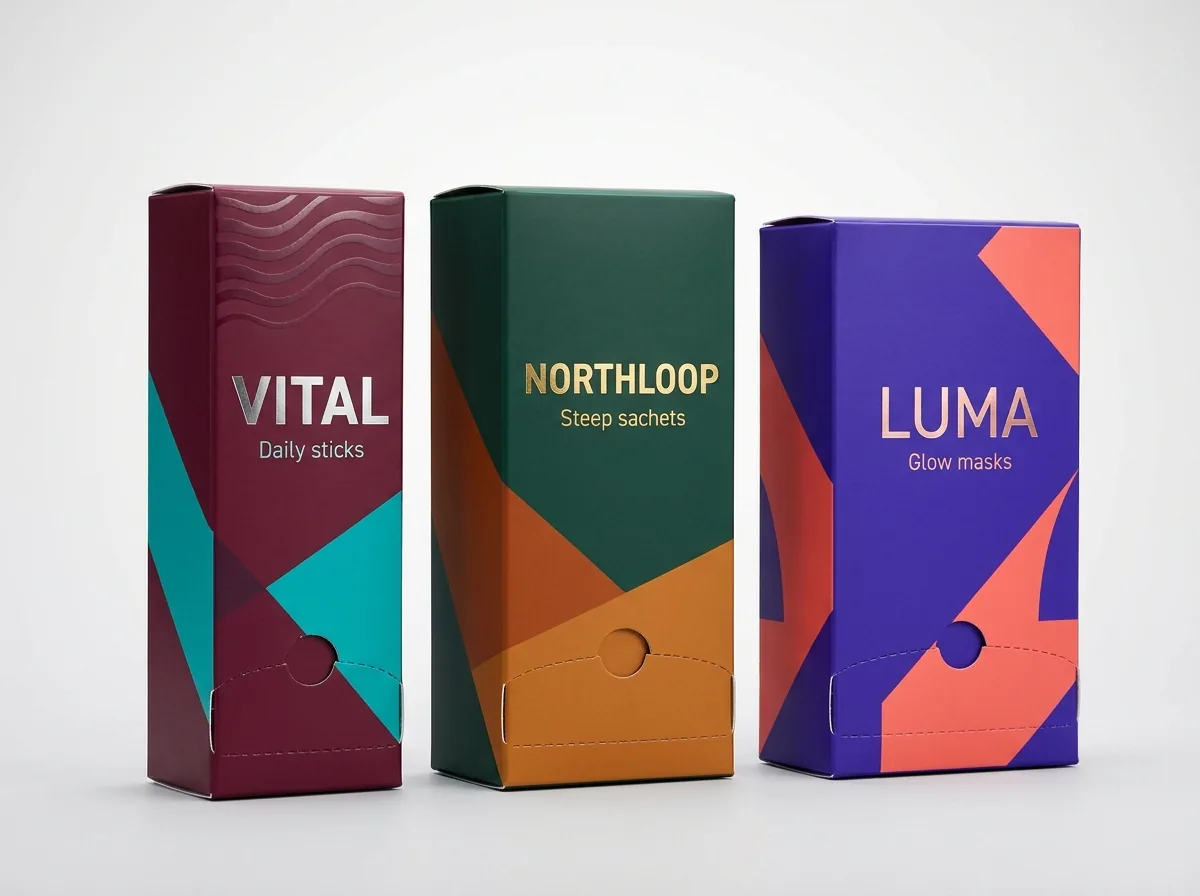
Walk down the tea aisle of any grocery store and you will notice two different merchandising habits: large supermarkets shelve 20-count tea bag cartons with the wide 5.25 × 3.125 inch front panel facing the shopper, while smaller natural-food co-ops - and almost every customer's kitchen cabinet at home - turn the carton 90 degrees so the narrow 2.75 × 3.125 inch end panel faces out like the spine of a book. If you only print your flavor title, caffeine badge, and color band on the wide front face, your box becomes anonymous the moment a store clerk or home tea drinker slots it sideways onto a crowded shelf. Designing a wraparound color band and repeating the blend name, bag count, and herbal icon on both narrow end panels guarantees instant recognition from every angle.
Know your size? Compare pricing across up to 3 quantities.
Request a Quote →Should a tea bag box use an FDA Nutrition Facts or Supplement Facts panel?
One of the most frequent prepress questions we help tea founders resolve is whether their 20-count carton needs an FDA Nutrition Facts box or a Supplement Facts box. Under US Food and Drug Administration labeling rules, the panel format depends on the botanical ingredients and the claims on your box: Conventional teas made from Camellia sinensis (black, green, oolong, white, and pu-erh tea) and culinary herbal infusions sold purely for flavor and refreshment use a standard FDA 21 CFR 101.9 Nutrition Facts panel (or qualify for the simplified zero-calorie tea format when unsweetened). By contrast, herbal wellness tisanes marketed with structure/function health claims (such as valerian sleepytime blends, echinacea immune teas, or senna digestive teas) are regulated as dietary supplements under 21 CFR 101.36 and require a Supplement Facts panel listing each botanical's Latin binomial, plant part (for example, 'Matricaria recutita flower'), and weight per tea bag in milligrams. Always reserve a clean, flat side or back panel with high-contrast dark type on a light background for your facts box, ingredient statement, packer address, and UPC barcode.
How do you set up 6 or 10 tea flavors to gang-run on one shared carton dieline?
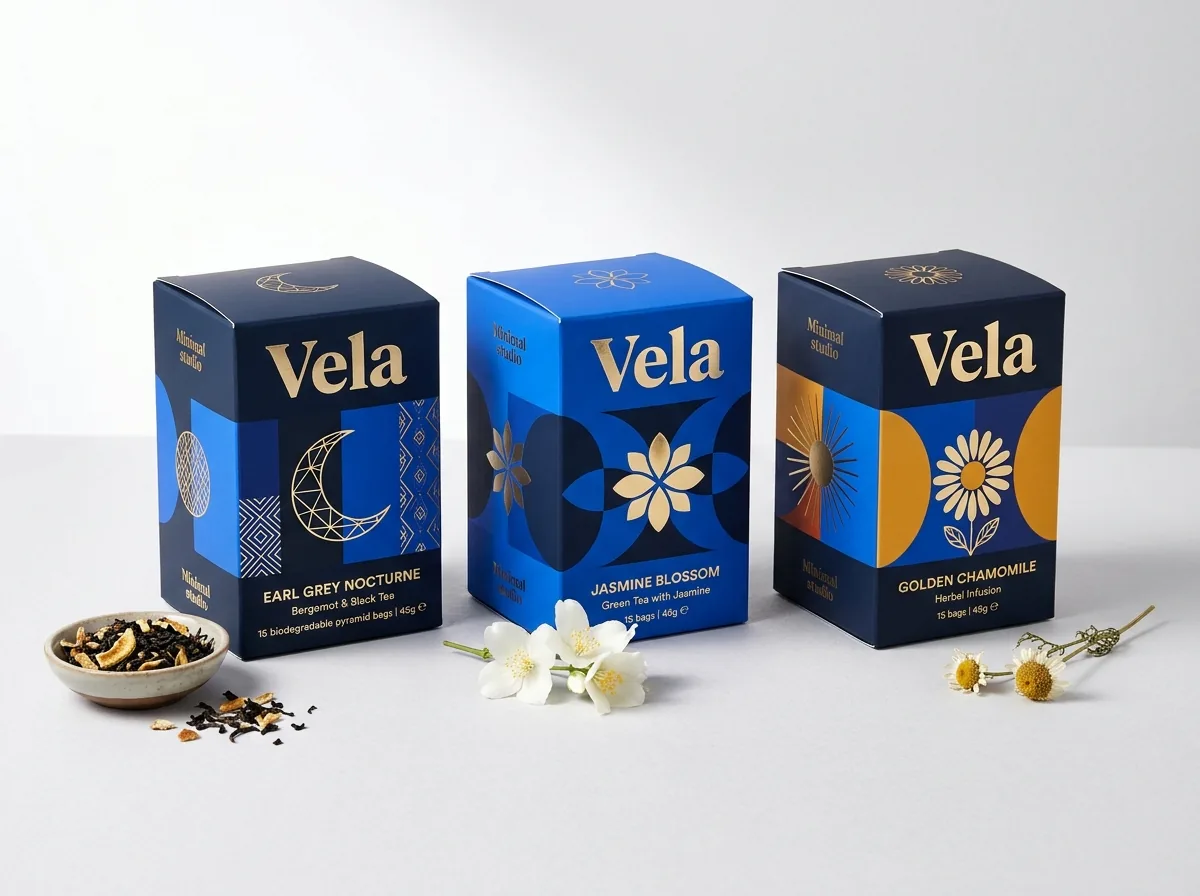
Most tea brands launch with four to ten distinct blends: English Breakfast, Earl Gray, Sencha Green, Peppermint, Chamomile Lavender, Ginger Turmeric, and Masala Chai. If every blend uses the exact same 5.25 × 2.75 × 3.125 inch 20-count dieline (or the same custom straight tuck end boxes carton), the press team can combine all your flavors into one shared production run to lower your per-box cost. To make your lineup look cohesive on the shelf while keeping prepress simple, lock your brand logo crest, tear-strip lines, tab-lock slot, and back-panel grid in identical positions across every file, and swap only the botanical illustration, flavor title, and Pantone accent band. Need to verify the exact dimensions of your 20-, 40-, or 100-count dieline first? Check our tea bag box size chart for 20-, 40- and 100-count envelopes, and compare inner wrapper options in overwrapped tea envelope boxes vs unwrapped filter bag cartons.
What are the five tea bag box design mistakes that frustrate tea drinkers?
Avoid these five structural and prepress mistakes before approving your tea bag carton proof
- Placing your brand logo or blend name right across the perforated zipper tear strip, so the title rips in half the first morning the customer opens the box.
- Making the bottom retaining lip on a vertical dispenser box shorter than 3/4 inch, allowing the stack of slick foil tea envelopes to slide out onto the counter.
- Leaving the narrow 2.75 inch end panels blank or generic, making the flavor impossible to identify when stored spine-out in a kitchen cabinet.
- Applying slick gloss or soft-touch lamination over the bottom lot-code and best-by date zone where the tea co-packer inkjets batch numbers.
- Forgetting to include the front die-cut slot below a flip-top lid, leaving the lid flapping open after the tamper-evident tear strip is removed.
Find your size
Suggested inside size: 4.25 × 2.75 × 3.125 in
A starting point. Your account manager confirms the size with you before the proof.
Quote this size →Packaging for this
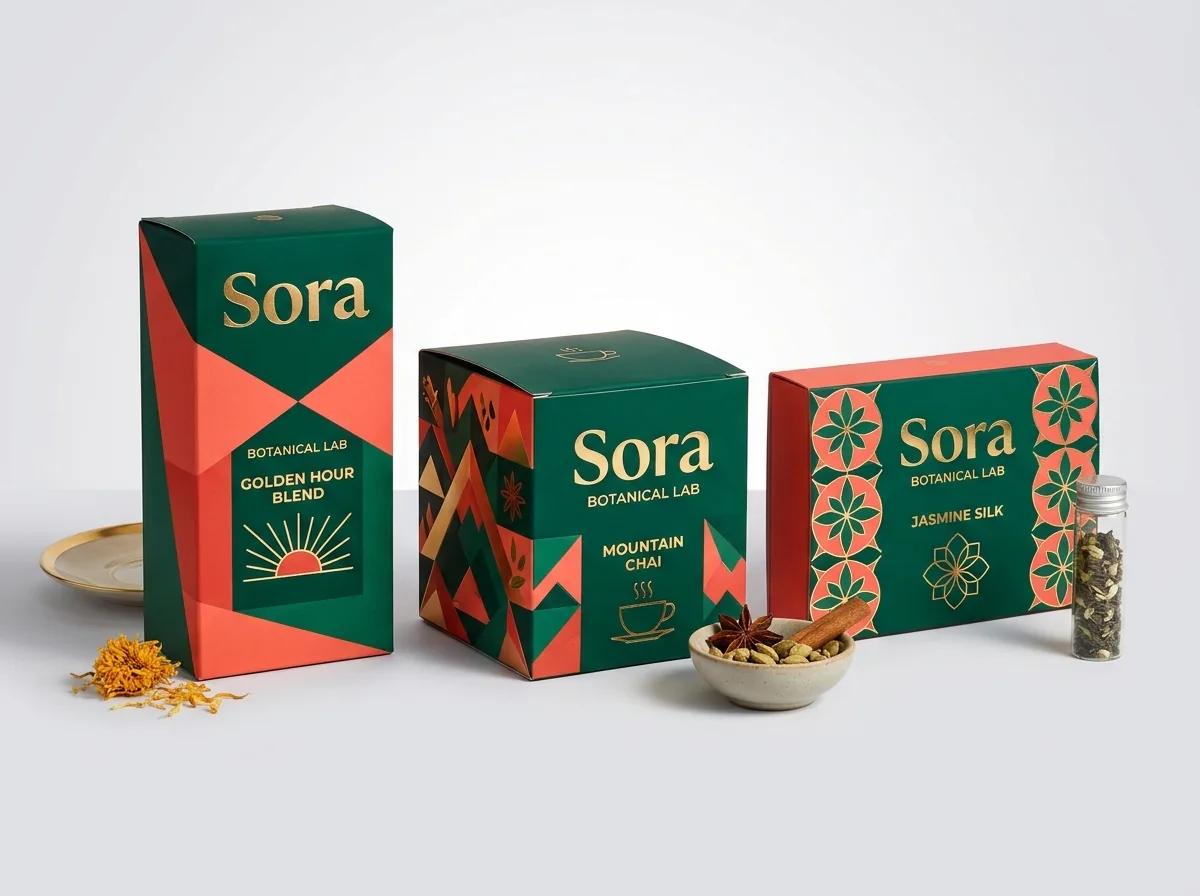
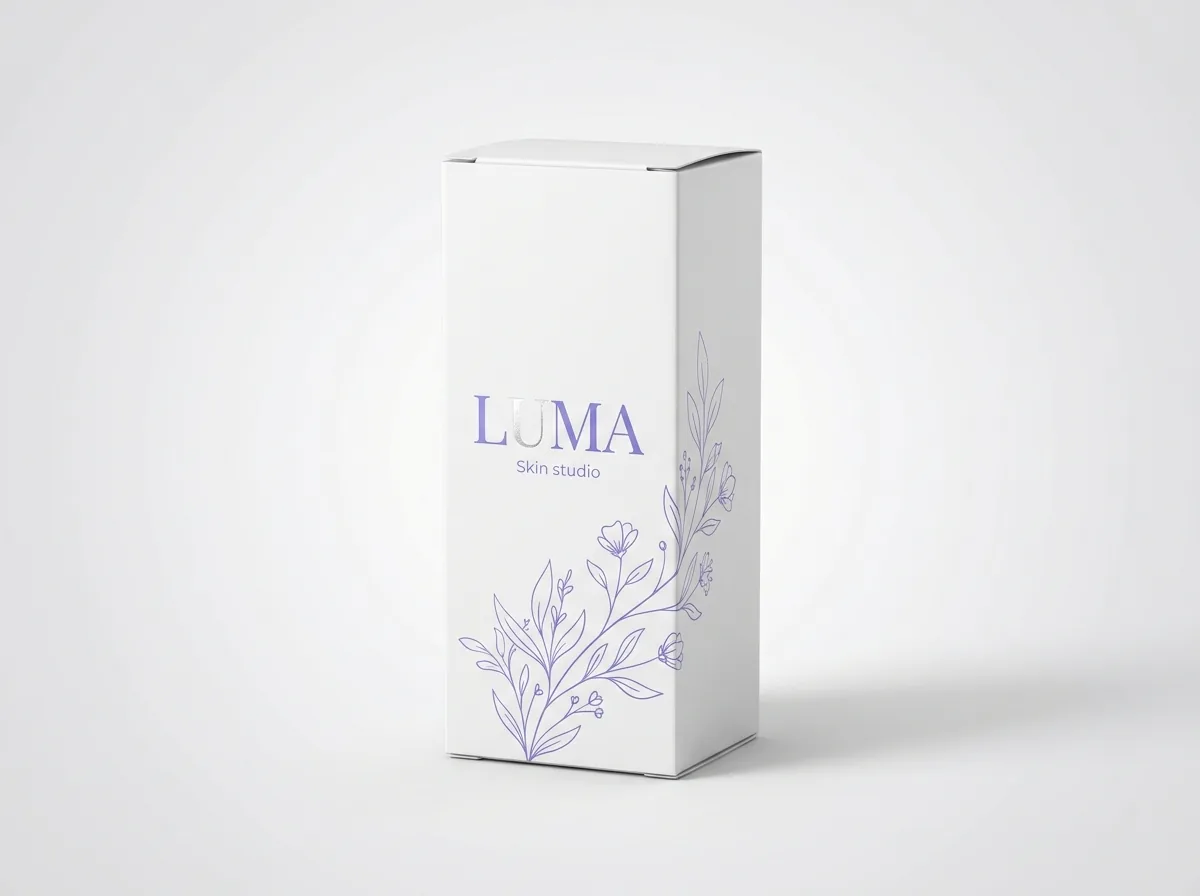
Ready to order tea bag boxes? Compare up to 3 quantities with a free 3D mockup.
Request a Quote →Questions about tea bag boxes
Does a perforated tear strip and tab-lock lid add die charges to my order?
No. CubitPack never charges die or plate fees on any custom tea bag box. Whether your dieline includes a parallel zipper tear strip, a front tab-lock reclosure slot, or a bottom gravity-feed dispenser opening, all perforation and cutting rules are included free.
How do I keep the tear strip from ripping crooked across the front of the box?
We use angled zipper-rule perforations (tiny alternating diagonal slits and paper bridges) rather than simple straight dashes. Zipper perforations guide the tear force strictly between the two parallel tracks so the strip pulls away cleanly without wandering into the lower front panel.
Can I print steeping instructions inside the flip-top lid of a 20-count box?
Yes. Inside printing lets you place water temperature, steeping minutes, and herbal tasting notes right on the underside of the hinged flip lid. Every time the customer opens the box, the brewing chart faces them directly.
Where should the UPC barcode and co-packer lot stamp go on a tea bag carton?
Place the UPC barcode and an unvarnished, unlaminated lot-code knock-out rectangle on the bottom panel (or one back corner) of the carton. Leaving the lot-code patch free of lamination ensures your co-packer's high-speed inkjet or thermal stamp dries immediately without smearing.
Can CubitPack create the dieline if I only have my tea envelope dimensions?
Yes. Tell us your single tea envelope width and height, the compressed length of 20 filled envelopes, and whether your co-packer loads from the top or the end, and our design team will build your 2D dieline and 3D mockup for free before payment.
Can you print my AI-generated botanical illustrations on custom tea bag boxes?
Yes. Send us your AI-generated chamomile, mint, or tea-garden artwork and our prepress team will upscale the resolution, convert colors to CMYK or Pantone, and wrap the illustration cleanly around all six panels at no extra cost.
Still have a question? Ask a packaging specialist.
Request a Quote →Request your tea bag boxes quote
Tell us your size and quantities, and one dedicated account manager prepares pricing for each tier.
- Free design & AI-to-print studio + 3D mockup
- No die or plate charges · 4–5 day rush available
- Free shipping to all 50 states
- 10% off your first order
This guide combines folding-carton zipper perforation rules, gravity-dispenser lip geometry, and FDA 21 CFR 101.9 / 101.36 tea and herbal labeling standards. Checked by a CubitPack packaging specialist. Spot an error? Tell us and we will fix it.
Sources
What changed
- October 22, 2026: First published.
- October 22, 2026: Updated specifications, terminology, and verified source links.
More guides
New packaging guides by email
Sizes, materials and design tips. Unsubscribe anytime.