
2-cup and 4-cup handle carriers vs pulp trays and gable boxes: which holds up best?
Short answer: Pop-open 2-cup and 4-cup handled custom drink carrier boxes brace cups 3.5 inches off the floor and let couriers carry drinks one-handed, whereas shallow molded-pulp trays require two hands and let tall 24 oz iced cups tip on car seats. Use gable combo boxes for drink-plus-pastry orders and E-flute boxes for 96 oz catering coffee.
On this page
- How do handled carriers, molded pulp trays, gable boxes, and 96 oz dispensers compare
- Why do pop-open handled paperboard carriers outperform molded pulp trays in delivery
- Should a cafe order separate 2-cup and 4-cup carriers or an interlocking 2-cup carrier
- When should you choose a gable combo box or a 4/6-pack bottle basket carrier
- Why do cafes use 96 oz corrugated dispenser boxes instead of reusable steel airpots
- Common mistakes
- FAQs
Request a custom quoteFree dieline & 3D mockup
Five years ago, most coffee shops handed out unprinted gray molded-pulp trays because customers walked only a hundred feet from the counter to their car cupholder. Today, third-party delivery couriers on bikes and cars, multi-drink boba and iced-latte orders, and office breakfast catering demand a carrier that can be lifted with one hand while holding a phone and a food bag in the other. A flat-packed, pop-open handled paperboard drink carrier stores in a fraction of the under-counter space of nested pulp stacks, grips tapered 12 oz to 32 oz cups above their center of gravity, and puts full-color cafe branding on every side panel. At CubitPack, custom printed drink carriers start at 1,000 units with zero die or plate charges, free structural dielines, 3D mockups before payment, and free shipping across all 50 states.
How do handled carriers, molded pulp trays, gable boxes, and 96 oz dispensers compare?
Each beverage carrier format solves a different service bottleneck between the espresso bar, drive-thru window, delivery courier handoff, and retail cold case. While commodity molded-pulp trays offer low-profile bottom cups for quick drive-thru handoffs, custom printed paperboard and corrugated drink carrier boxes deliver one-handed carrying, deep anti-tip cup retention, and high-visibility branding. Use the comparison matrix below to evaluate all five beverage carrier structures across delivery stability, under-counter storage footprint, wet tear strength, and branding surface.
| Carrier structure | Cup / bottle retention height | Carry style & storage profile |
|---|---|---|
| 2-cup handle carrier (with 4-cup clip) | 3.5 in high starburst deck (anti-tip) | 1-handed top handle · stores 100% flat |
| 4-cup corrugated delivery caddy | 3.75 in deep E-flute cup wells | 1-handed cross handle · stores 100% flat |
| Shallow molded-pulp 4-cup tray | 1.5 in shallow bottom sockets (tips easily) | Requires 2 hands · bulky nested stacks |
| Gable drink + pastry combo box | Internal cup rings + flat food bay | 1-handed gable handle · stores flat |
| 4/6-pack CUK bottle basket carrier | Full-depth 5.0 in bottle cell dividers | 1-handed 3/4-ply handle · stores flat |
| 96 oz Bag-in-Box coffee dispenser | Enclosed E/B-flute box + spout keyhole | 1-handed double handle · stores flat |
Why do pop-open handled paperboard carriers outperform molded pulp trays in delivery?
Standard molded-fiber pulp trays hold the bottom 1.5 inches of a cup. That works fine for a short 8 oz or 12 oz hot coffee cup carried carefully with two hands across a flat parking lot, but it fails systematically on modern 20 oz, 24 oz, and 32 oz iced lattes, smoothies, and dome-lid boba teas. Because a 24 oz iced cup stands 7.5 to 9.0 inches tall with ice floating at the top, its center of gravity sits roughly 4 inches above the floor - more than double the height of a pulp tray's socket wall. A pop-open handled paperboard or E-flute carrier raises the upper deck to 3.5 or 3.75 inches off the base and rings each hole with flexible starburst tabs. When lifted by the top handle, the weight of the two or four drinks pulls downward beneath the center grip point like a pendulum, naturally self-leveling the cups as a courier walks up stairs, rides an e-bike, or places the carrier inside an insulated delivery backpack.
- High 3.5 in deck braces tall 24 oz iced cups above their center of gravity so they cannot lever out of the socket.
- One-handed top handle leaves the customer's or courier's other hand free to open doors and carry food bags.
- Flat-folded paperboard carriers take up roughly 65% less under-counter storage space than nested molded-pulp stacks.
- Smooth unbleached kraft or white clay-coated panels print crisp CMYK logos, Pantone colors, and scannable QR codes.
Should a cafe order separate 2-cup and 4-cup carriers or an interlocking 2-cup carrier?
One of the smartest structural decisions a coffee shop or boba chain can make is choosing between a dedicated 4-cup (2 × 2) carrier and an interlocking 2-cup carrier with a rear butterfly clip. Both start at 1,000 units at CubitPack, and each shines in a different store layout. An interlocking 2-cup carrier lets you buy a single SKU (for example, 2,500 or 5,000 units to hit a lower per-piece price break) and store one flat stack under the register. For 1- or 2-drink orders, baristas pop open one carrier; for 3- or 4-drink orders, they clip two carriers back-to-back in two seconds. Conversely, high-volume drive-thrus, family smoothie bars, and courier-heavy ghost kitchens that fulfill dozens of 4-drink orders every hour often prefer a dedicated one-piece 4-cup corrugated box caddy that pops open all four cells in a single motion and distributes four heavy 24 oz or 32 oz cups across a wide square base.
- Interlocking 2-cup carrier: best when 70%+ of your takeout orders are 1 or 2 drinks and counter storage is tight.
- Dedicated 4-cup corrugated caddy: fastest single-motion setup for drive-thrus and family-sized delivery orders.
- Both formats ship 100% flat and pre-glued in compact master cartons.
Know your size? Compare pricing across up to 3 quantities.
Request a Quote →When should you choose a gable combo box or a 4/6-pack bottle basket carrier?
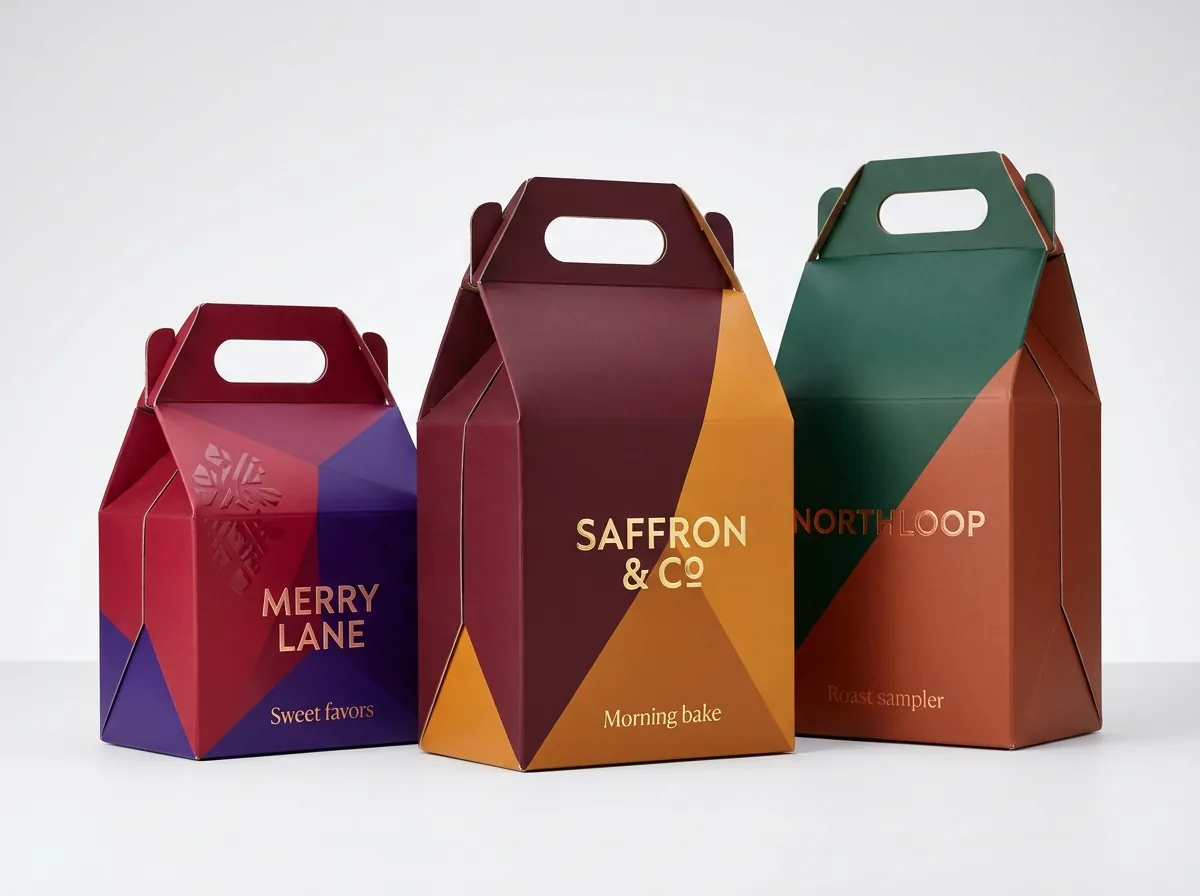
When your customers order a drink alongside a croissant, bagel, breakfast burrito, or slice of cake, handing over a loose pastry bag and a separate cup carrier forces two-handed juggling. A wide gable box fitted with a half-width internal cardboard insert locks one or two cups in circular cutouts on the left while cradling warm food on the right under one built-in top handle. If you bottle cold-pressed juices, kombucha, wellness shots, or craft sodas in 8 oz to 16 oz glass or PET bottles for grocery cold cases and farmer's markets, cup-taper carriers are not the right fit: straight-walled bottles need a flat floor and full-height cell dividers. We build 4-pack and 6-pack open-top basket carriers from wet-strength unbleached kraft (CUK) with pre-glued auto-lock bottoms and 3-ply or 4-ply handles that support 5 to 7 pounds of chilled glass.
- Gable combo carrier: ideal for cafe breakfast bundles, hospital/office catering box lunches, and stadium seat delivery.
- Open-top 4/6-pack bottle basket: built for straight-sided glass or PET bottles that rest flat on a pre-glued floor.
- Enclosed RTD can carton: top finger-grip holes and side peek windows for canned cold brew and mocktail multipacks.
Why do cafes use 96 oz corrugated dispenser boxes instead of reusable steel airpots?
Stainless steel pump airpots and cambro urns require deposits, customer return trips, and commercial dishwashing labor. A disposable 96 oz or 160 oz corrugated Bag-in-Box dispenser box lets offices, pharmaceutical reps, teachers' lounges, and tailgate hosts pick up hot brewed coffee or cold brew and recycle the outer box when finished. Because the metallized inner bladder collapses as coffee is poured without letting outside air in, a 96 oz E-flute or B-flute corrugated carrier keeps coffee hot and fresh-tasting for up to two hours while turning the meeting room table into a billboard for your roastery.
- Zero deposit tracking or urn pickup needed for office and event catering orders.
- Fluted E-flute or B-flute corrugated walls insulate hot 200°F coffee and protect hands at the top handle.
- Ships and stores completely flat alongside your 2-cup and 4-cup carriers until a catering order comes in.
What mistakes do cafes make when choosing a drink carrier structure?
Soggy handles, spilled courier deliveries, and cluttered espresso counters come from five structural mismatches
- Sending tall 24 oz iced boba or latte cups out with UberEats and DoorDash drivers in 1.5-inch shallow molded-pulp trays that tip over on car seats.
- Choosing dry recycled paperboard instead of wet-strength CUK kraft or laminated board for iced drinks that sweat heavily in summer humidity.
- Putting straight-sided glass cold-pressed juice bottles into a cup-taper carrier without a full-width bottom floor, letting bottles slip through.
- Using an unglued friction-tuck bottom on a 96 oz catering coffee dispenser box that holds over 6 pounds of hot liquid.
- Packing warm pastries directly against sweating iced cups inside a gable combo box without an internal moisture-barrier divider wall.
Find your size
Suggested inside size: 7.25 × 3.625 × 8.5 in
A starting point. Your account manager confirms the size with you before the proof.
Quote this size →Packaging for this
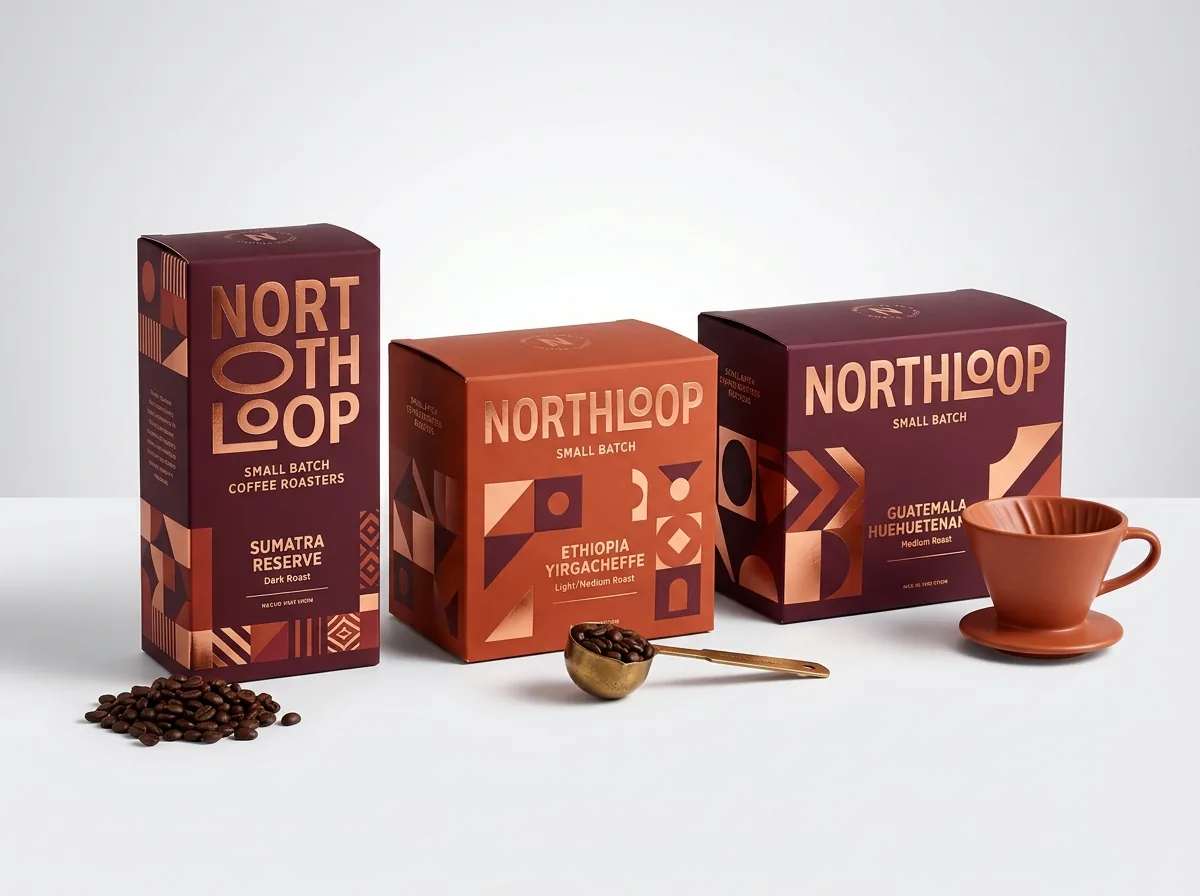
Ready to order drink carrier boxes? Compare up to 3 quantities with a free 3D mockup.
Request a Quote →Questions about drink carrier boxes
What is the minimum order for custom 2-cup carriers, gable combo boxes, and 96 oz coffee boxes?
At CubitPack, the minimum order for any custom printed paperboard or corrugated drink carrier box is 1,000 units. You can order 1,000 E-flute 96 oz catering coffee dispensers, 2,500 interlocking 2-cup takeout carriers, or 5,000 4-pack bottle baskets.
How fast does a pop-open handled 2-cup or 4-cup carrier set up during a morning rush?
Our 2-cup, 4-cup, and bottle basket carriers ship pre-glued and folded flat. During a morning espresso rush, a barista simply pinches the opposite diagonal corners - the carrier pops open and locks its floor in under two seconds.
Are paperboard drink carriers recyclable after use?
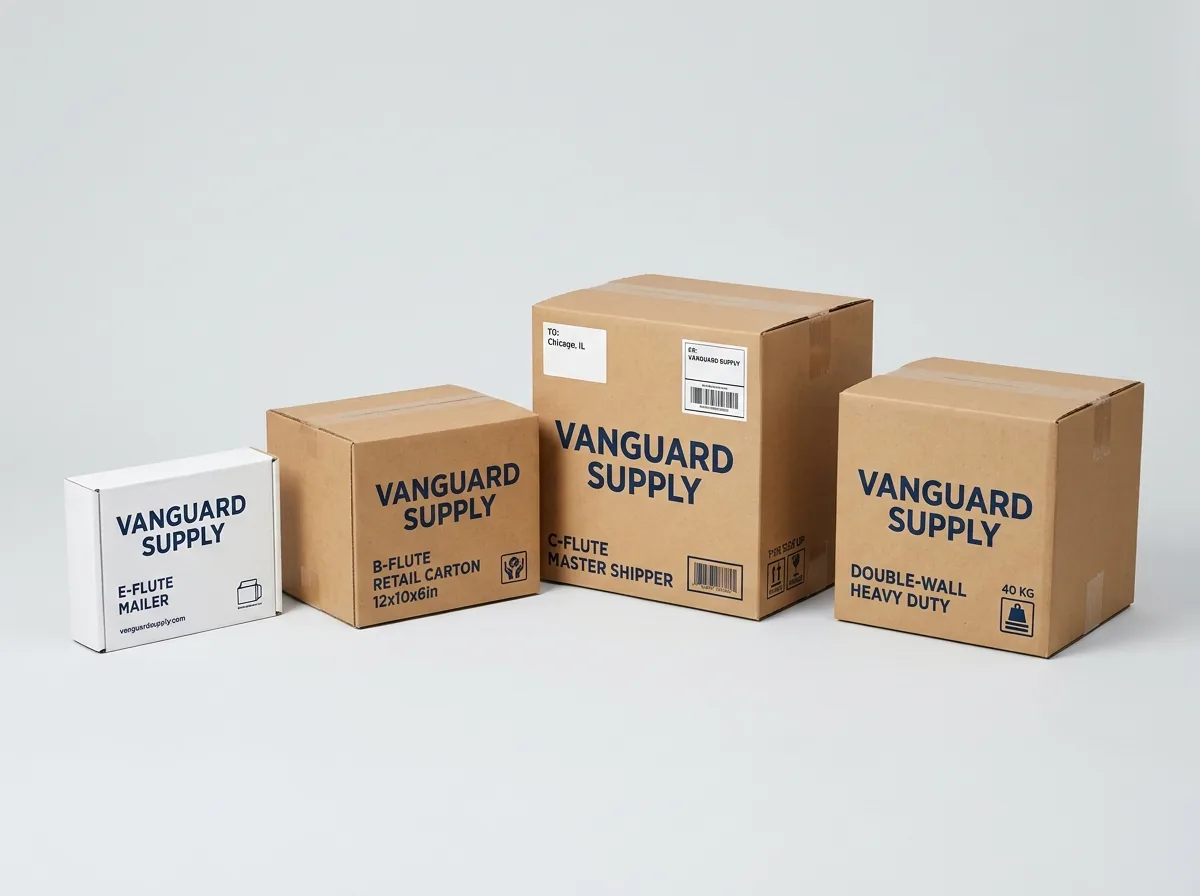
Unlaminated wet-strength kraft (CUK), bleached white SBS paperboard, and E-flute or B-flute corrugated drink carriers are made from recyclable wood fiber and can go into standard paper and cardboard recycling streams when clean and dry.
Can a 2-cup handled carrier hold a single drink without tipping to one side?
For single-drink delivery orders, baristas either place a pastry or snack bag in the second cup bay as a counterweight, or use a single-cup corrugated delivery tray/insert inside the paper bag. For two, three, or four drinks, the load balances naturally.
Which board is stronger for a 96 oz catering coffee box: E-flute or B-flute corrugated?
Both work well when paired with a pre-glued auto-lock bottom. Fine 1/16-inch E-flute corrugated prints sharper graphics directly or via litho-lamination for 96 oz boxes, while thicker 1/8-inch B-flute corrugated gives extra wall stiffness for large 160 oz (1 gallon) dispensers.
How long does production take for custom printed drink carrier boxes?
Standard production takes 10 to 14 business days after you approve your free 2D dieline proof and 3D mockup and complete payment, with 4 to 5 business day rush available and free ground shipping to all 50 US states.
Still have a question? Ask a packaging specialist.
Request a Quote →Request your drink carrier boxes quote
Tell us your size and quantities, and one dedicated account manager prepares pricing for each tier.
- Free design & AI-to-print studio + 3D mockup
- No die or plate charges · 4–5 day rush available
- Free shipping to all 50 states
- 10% off your first order
This structural comparison was written from CubitPack's decided minimums (1,000 boxes), turnaround windows, and foodservice packaging benchmarks for tapered cup retention, wet-strength CUK board, and 96 oz Bag-in-Box carriers. Verified by a packaging specialist. Spot an error? Tell us and we will fix it.
Sources
What changed
- October 22, 2026: First published.
- October 22, 2026: Updated specifications, terminology, and verified source links.
More guides
New packaging guides by email
Sizes, materials and design tips. Unsubscribe anytime.