
How Do You Choose Between 1200 GSM and 1800 GSM Rigid Box Cores?
Short answer: Rigid setup boxes utilize dense binderboard chipboard cores ranging from 1200 gsm (1.8 mm) for cosmetics and jewelry up to 1800 gsm (2.5 mm) for heavy spirits bottles and electronics. Precise 90-degree V-grooving creates sharp, non-collapsing upright box corners that provide immense structural crush protection.
On this page
- What are the structural differences between 1200, 1500, and 1800 GSM binderboard
- How does 90-degree V-grooving create razor-sharp box corners
- Why is corner staying tape critical for frame structural integrity
- How do adhesive formulations prevent moisture warping in rigid cores
- What wrap paper turn-in margins ensure clean interior aesthetics
- How do core density choices impact international air shipping freight
- How do collapsible rigid boxes solve warehouse storage constraints
- Common mistakes
- FAQs
Request a custom quoteFree dieline & 3D mockup
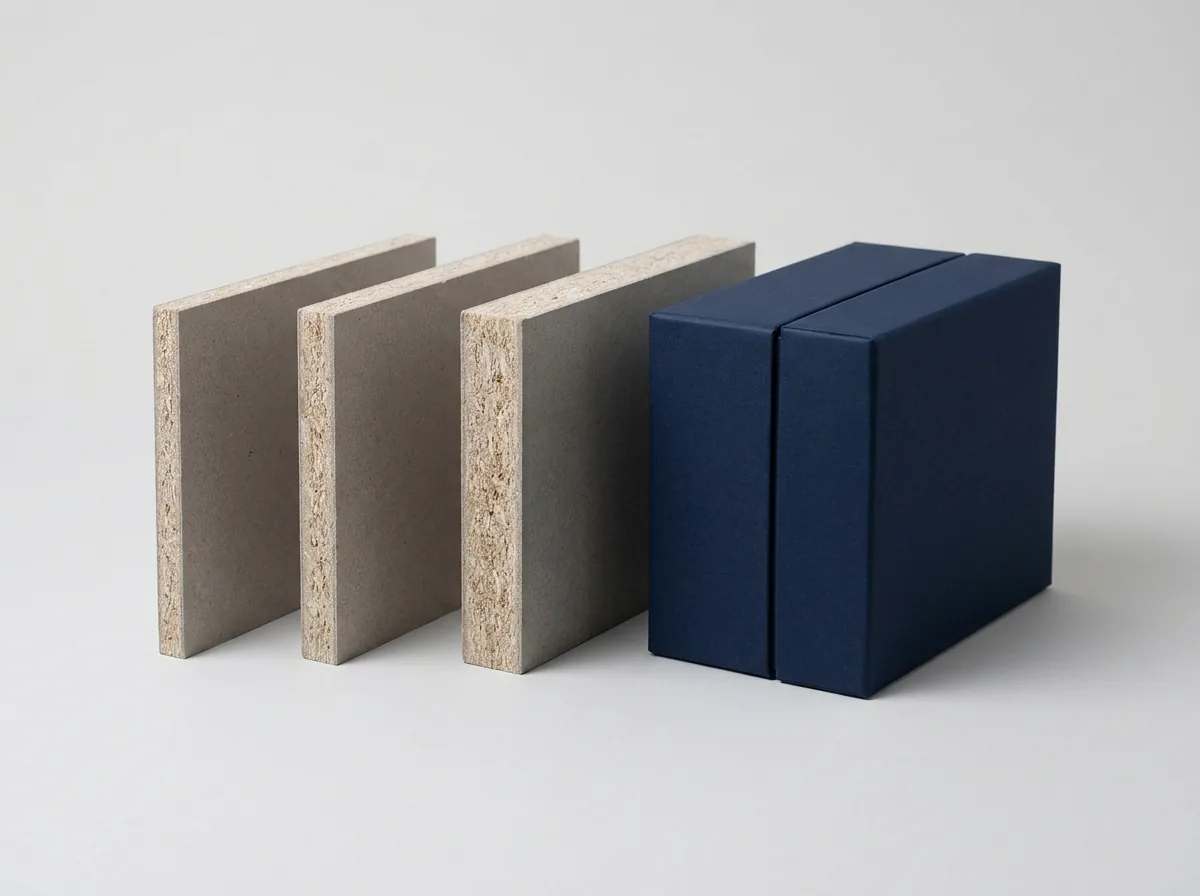
Selecting the proper binderboard core weight forms the engineering foundation of every luxury rigid setup container. When manufacturing custom luxury boxes, packaging converters specify dense, non-bending chipboard cores measured in grams per square meter (GSM) or caliper points. Standard luxury packaging utilizes three core density thresholds: 1200 gsm (approximately 1.8 mm thickness), 1500 gsm (2.0 mm thickness), and 1800 gsm (2.5 mm thickness). A 1200 gsm core provides exceptional rigidity for beauty cosmetics, confectionery, and lightweight jewelry. For heavier luxury items including premium spirits, timepieces, and high-end consumer electronics weighing over two pounds, upgrading to 1500 or 1800 gsm prevents wall deflection under vertical stacking pressure. When ordering bespoke luxury rigid boxes, our packaging specialists engineer precision 90-degree V-grooved scorelines that produce razor-sharp exterior corners, backed by free 2D CAD dielines and interactive 3D digital mockups.
What are the structural differences between 1200, 1500, and 1800 GSM binderboard?
Binderboard, commonly referred to as rigid chipboard or gray solid board in commercial converting, is manufactured by compressing recycled cellulose fibers under immense hydraulic pressure. The resulting substrate is a solid, non-pliable plate that does not crease like thin paperboard. A 1200 gsm core features a caliper of roughly 70 points (1.8 mm), delivering clean structural stiffness for products weighing under 16 ounces. Upgrading to 1500 gsm increases thickness to 80 points (2.0 mm), representing the gold standard across fine fragrance, luxury watches, and executive gifting. For heavy items like 750 ml liquor bottles or multi-piece electronics kits, 1800 gsm chipboard (100 points, 2.5 mm) provides impenetrable vertical stack strength capable of withstanding over one hundred pounds of top load force.
How does 90-degree V-grooving create razor-sharp box corners?
Traditional rigid box manufacturing used die-cut slotting, which leaves slightly rounded exterior corners when board panels are folded upright. In modern luxury packaging converting, computerized CNC V-grooving machines carve precise 90-degree triangular channels into the inner face of the flat chipboard sheet. The blade cuts precisely through 90% of the core thickness, leaving only a thin outer tissue layer intact. When the upright walls are folded, the beveled channel edges meet flush, forming a crisp, razor-sharp 90-degree exterior vertical edge. V-grooving creates immaculate geometric silhouettes favored by luxury European fashion and perfume houses.
Why is corner staying tape critical for frame structural integrity?
After flat chipboard blanks are V-grooved and folded into 3-dimensional trays, the four upright vertical corners must be bonded securely before paper wrapping begins. Quad-stayer machines apply high-tensile heat-activated kraft paper tape or reinforced zinc-coated wire stays across each exterior corner junction. Corner staying tape holds the vertical walls rigidly perpendicular under high tension, preventing corners from splitting outward when heavy contents shift inside. Modern converting lines utilize ultra-thin polyester-reinforced stays that provide immense tensile tear strength while remaining completely invisible beneath the final paper wrap.
Know your size? Compare pricing across up to 3 quantities.
Request a Quote →How do adhesive formulations prevent moisture warping in rigid cores?
Because binderboard chipboard consists of porous cellulose fibers, it is susceptible to ambient humidity absorption and moisture expansion. When exterior paper wraps are adhered using water-based PVA cold emulsion glues, excess moisture can penetrate the core and cause box walls to cup or warp outward during drying. Premium luxury box converters utilize specialized animal protein adhesives or fast-tack hot melt glues with low water content. In addition, automated drying tunnels apply controlled warm air circulation and compression rollers that cure the adhesive bond rapidly while maintaining dead-flat panel alignment.
What wrap paper turn-in margins ensure clean interior aesthetics?
The visual finish of a luxury rigid box depends on how cleanly the outer printed wrap folds over the top edge into the interior cavity. The turn-in margin represents the border of wrap paper that wraps around the top rim and adheres to the inner wall surface. High-precision automated rigid box wrapping machines require a minimum turn-in margin of 12 to 15 mm (approximately 0.5 to 0.6 inches). A generous turn-in margin guarantees that the raw edge of the interior chipboard core is completely concealed, even before an interior liner paper or custom foam insert is placed inside the container.
How do core density choices impact international air shipping freight?
While heavier chipboard cores provide superior protection and heirloom durability, they add substantial tare weight to finished packaging shipments. An empty 1800 gsm rigid box can weigh over 14 ounces before products are inserted, compared to just 8 ounces for a comparable 1200 gsm container. For brands shipping high-volume international direct-to-consumer orders via air freight, dimensional weight and scale weight directly impact carrier logistics costs. Structural packaging specialists evaluate product fragility against freight rate cards to find the optimal balance between luxury hand weight and cost-efficient postal transit.
How do collapsible rigid boxes solve warehouse storage constraints?
Traditional rigid setup boxes ship fully assembled, requiring substantial warehouse storage space and higher inbound transportation costs. For fast-growing brands with limited warehouse floor area, collapsible magnetic rigid boxes offer an ingenious engineering solution. A collapsible rigid box is built from six individual 1500 gsm chipboard panels mounted onto a continuous paper wrap spine. The container ships and stores completely flat. At the packing station, fulfillment workers pop the box upright and peel four adhesive corner strips that lock the rigid walls into place in under ten seconds, saving up to seventy percent in storage footprint. When specifying high-density chipboard cores for multi-SKU luxury collections, packaging engineers also evaluate moisture equilibrium and sheet flatness across seasonal warehousing cycles. High-caliper 1200 gsm to 1800 gsm solid chipboard is manufactured by laminating multiple plies of recycled cellulose fiber under heated hydraulic rollers until the sheet reaches a target density between 650 and 750 kg per cubic meter. If the core board is stored in an unconditioned warehouse before wrapping, differential moisture absorption between the core board and the outer specialty wrap paper can induce slight upward or downward panel bow after the animal-hide or PVA laminating adhesive cures. Balancing the grain direction of the outer 120 gsm to 150 gsm wrap sheet parallel to the long edge of the chipboard wall minimizes warp and keeps hinged magnetic lids closing flush against the base rim.
What are common mistakes to avoid in luxury box engineering?
Developing luxury rigid packaging requires balancing structural heft with fine aesthetic detailing. Packaging specialists identify four frequent errors
- Specifying lightweight chipboard cores under 1000 gsm for heavy glass bottles, causing box walls to buckle and dish inward under top load.
- Using conventional die-creasing instead of precision 90-degree V-grooving, resulting in rounded, sloppy box corners lacking crisp definition.
- Applying excessive water-based PVA adhesive during wrap mounting, leading to moisture warping and bubble formation across box faces.
- Designing interior wrap turn-in margins under 8 mm that peel away from the chipboard core during dry seasonal climate changes.
Packaging for this
Ready to order luxury boxes? Compare up to 3 quantities with a free 3D mockup.
Request a Quote →Questions about luxury boxes
What is the standard caliper of a 1500 gsm rigid box core?
A 1500 gsm chipboard core has a thickness of approximately 2.0 mm (80 pt caliper), representing the industry standard for luxury perfume, timepiece, and high-end cosmetic gift packaging.
Does CubitPack charge extra for custom core thicknesses?
No. We manufacture rigid setup boxes across 1200 gsm, 1500 gsm, and 1800 gsm specifications with zero additional tooling fees, tailoring board thickness to your product weight.
Are rigid chipboard cores made from recycled materials?
Yes. Our binderboard cores are manufactured from 100% recycled pre-consumer and post-consumer recovered paperboard fibers, providing exceptional rigidity and sustainable packaging alignment.
How does V-grooving compare to standard die-cut scoring?
Standard scoring crushes fibers along a fold line, creating a rounded corner. V-grooving carves away a 90-degree channel of material, allowing the rigid board to fold into a razor-sharp architectural edge.
Can I order a custom core sample before full production?
Yes. We provide unprinted physical white structural samples crafted with your exact specified core caliper and interior insert cavities for fit testing before full production runs.
What is the minimum order quantity for custom rigid setup boxes?
Our minimum order quantity for custom luxury rigid setup boxes starts from 250 units, with volume discount price tiers available at 500, 1,000, 2,500, and 5,000 units.
Still have a question? Ask a packaging specialist.
Request a Quote →Request your luxury boxes quote
Tell us your size and quantities, and one dedicated account manager prepares pricing for each tier.
- Free design & AI-to-print studio + 3D mockup
- No die or plate charges · 4–5 day rush available
- Free shipping to all 50 states
- 10% off your first order
Researched against Paperboard Packaging Council (PPC) rigid box guidelines, Idealliance G7 Master Color specifications, and Luxury Packaging Guild engineering standards. Verified by CubitPack packaging specialists.
Sources
What changed
- November 11, 2026: Published technical engineering guide for rigid-setup-box-cores-1200gsm-to-1800gsm-binderboard-guide with 5 CAD SVGs and structural standards.
More guides
New packaging guides by email
Sizes, materials and design tips. Unsubscribe anytime.