
How Do Plastic-Free Open Windows, Paper Tape, and Fiber Inserts Replace Synthetics?
Short answer: Plastic-free packaging alternatives replace synthetic films, plastic tapes, and foam inserts with mono-material paper solutions. Open die-cut windows provide sensory product previews, reinforced water-activated kraft tape bonds permanently to cartons, and molded paper pulp cradles fragile items for dependable curbside circularity.
On this page
- How do open die-cut windows eliminate plastic film patching while maintaining carton rigidity
- What adhesive mechanics make water-activated paper tape superior to plastic tape
- How do molded paper pulp trays replace plastic thermoformed blisters and foam
- What folding paperboard dividers provide rigid structural partitioning
- How does eliminating plastics reduce packaging compliance and EPR tax liabilities
- How do self-locking friction closures eliminate synthetic adhesive tapes
- What aqueous barrier chemistries resist grease and oil without poly coatings
- How do automated paper tape dispensers accelerate warehouse fulfillment rates
- Common mistakes
- FAQs
Request a custom quoteFree dieline & 3D mockup
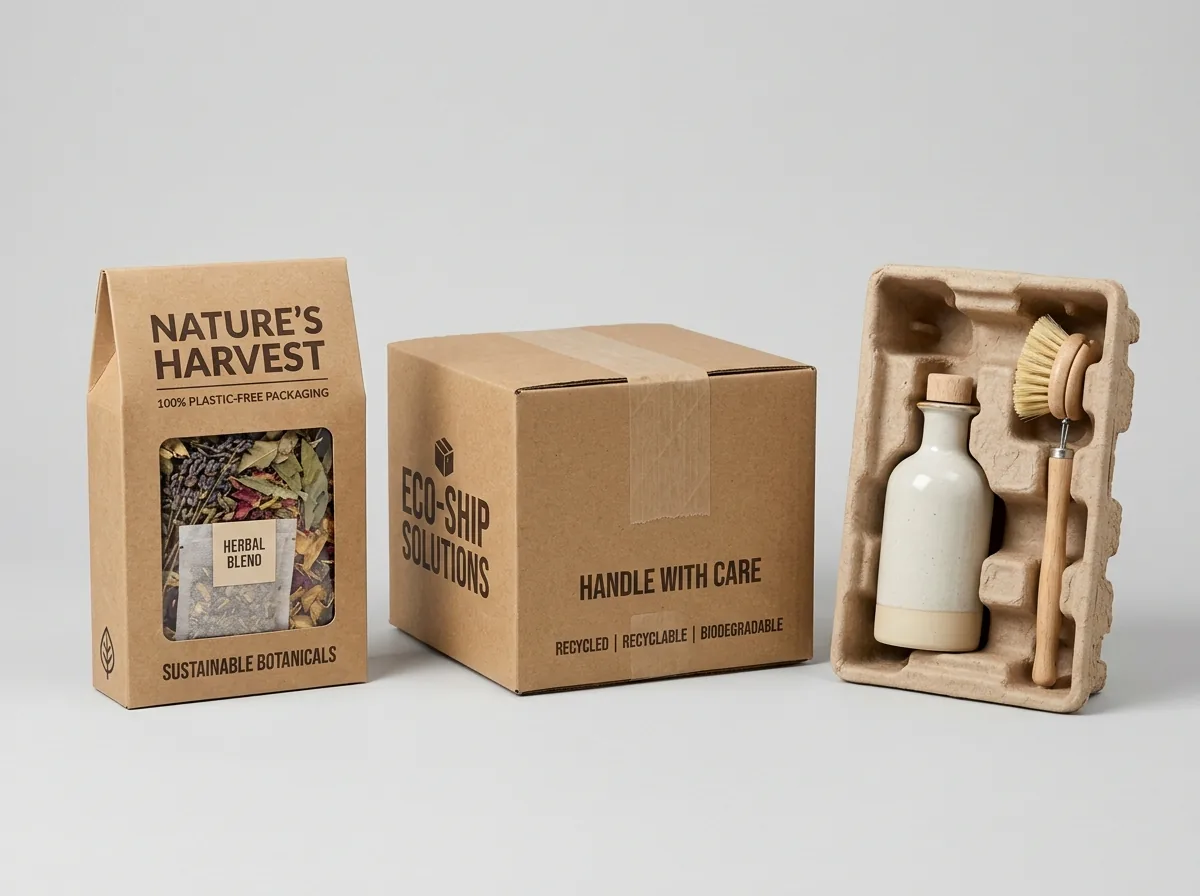
Transitioning to plastic-free commercial packaging requires re-engineering conventional carton components to eliminate synthetic polymers that contaminate municipal recycling streams. When specifying custom eco-friendly boxes, brand owners frequently struggle with clear plastic window patches, polypropylene packing tapes, and plastic foam inserts. Replacing clear polyethylene or PET film patches with precision open die-cut cutouts allows customers to see and smell artisanal soaps, candles, and textiles directly while keeping the carton 100% repulpable. In e-commerce shipping, replacing plastic pressure-sensitive tape with water-activated reinforced kraft paper tape creates a permanent molecular bond with corrugated liners, providing tamper-evident protection and complete recyclability. Internally, custom molded fiber pulp trays or folded paperboard inserts replace plastic thermoform blisters and foam peanuts. When configuring plastic free packaging boxes, our packaging specialists provide custom 2D CAD dielines, physical prototypes, and technical structural advice before starting production.
How do open die-cut windows eliminate plastic film patching while maintaining carton rigidity?
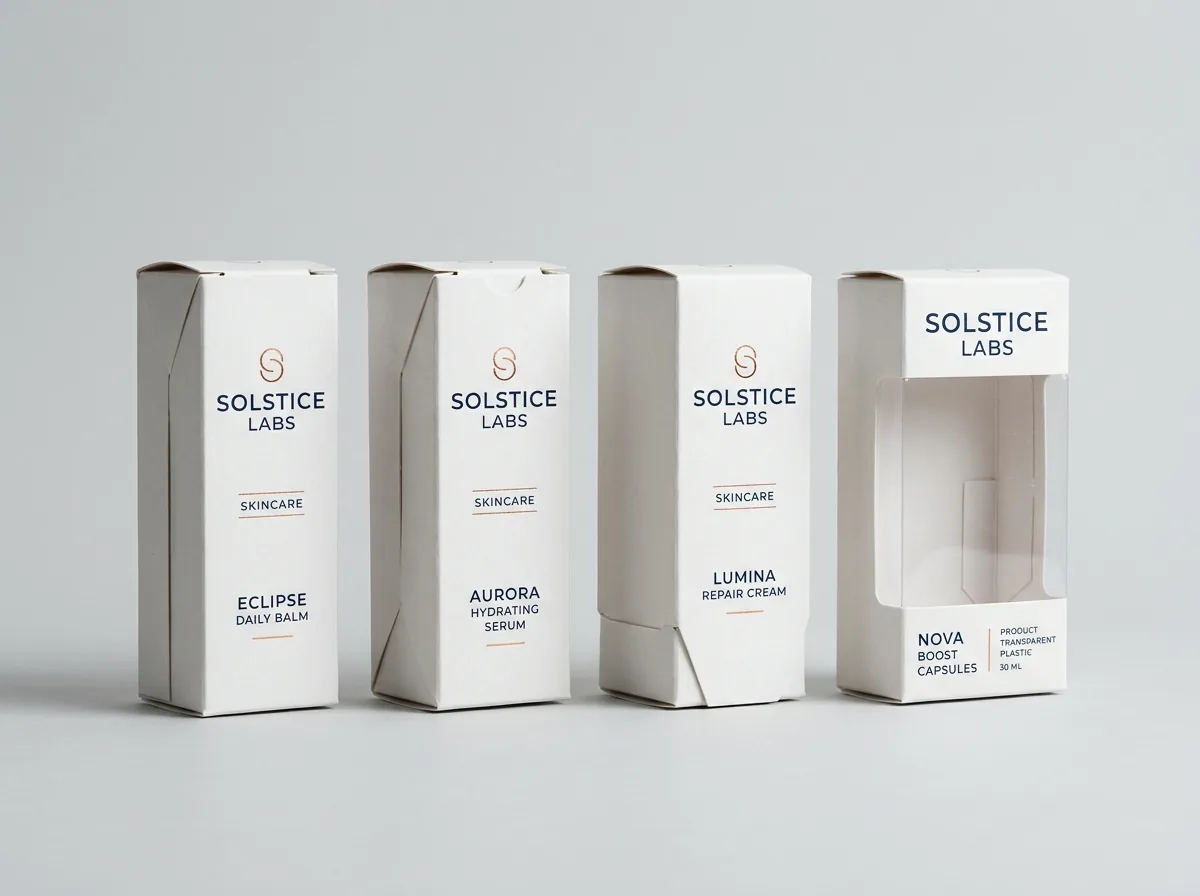
Traditional retail cartons with clear display windows utilize thin polyethylene terephthalate (PET) or polyvinyl chloride (PVC) film patched across a die-cut aperture with hot-melt glue. At paper recycling mills, these non-soluble plastic films clog hydrapulper screening grates, resulting in significant repulping yield loss. Open die-cut windows completely eliminate plastic film by leaving the aperture open, allowing consumers to interact directly with the texture, color, and aroma of artisanal soaps, essential oil candles, and organic cotton apparel. Structural engineers maintain carton rigidity by specifying a minimum 15 mm frame border around the window perimeter and applying rounded 3 mm corner radiuses that eliminate sharp stress concentration points. When combined with an internal paperboard retention cradle, the open window holds products securely behind the aperture without risking carton sidewall collapse during handling. Standard ASTM D685 conditioning at 23 °C and 50% relative humidity validates that 18 pt to 24 pt paperboard frames maintain beam deflection under 0.5 mm.
What adhesive mechanics make water-activated paper tape superior to plastic tape?
Pressure-sensitive packaging tape relies on a biaxially oriented polypropylene (BOPP) plastic carrier film coated with synthetic acrylic or hot-melt rubber adhesives. Under temperature swings, plastic tape stretches, dries out, and peels away from corrugated box flaps, creating security risks. In addition, plastic tape does not repulp cleanly, forcing recycling plants to skim plastic gum from fiber vats. In contrast, water-activated tape (WAT) consists of heavy unbleached kraft paper coated with natural cornstarch-based adhesive. When moistened by an automated dispenser, the starch adhesive liquefies and penetrates directly into the cellulose porous fibers of the corrugated carton liner. As it cures within seconds, the tape forms a permanent molecular fiber bond that cannot be removed without leaving obvious physical fiber tear evidence, delivering superior tamper-resistance alongside 100% curbside circularity. Standard FINAT FTM-1 peel adhesion testing confirms water-activated tape withstands 15 N/cm fiber tear force on 32 ECT corrugated board.
How do molded paper pulp trays replace plastic thermoformed blisters and foam?
Protecting fragile glass cosmetics, delicate electronics, and luxury ceramics traditionally required thermoformed plastic clamshells (PET or polystyrene) or expanded polyethylene (EPE) foam blocks. Molded paper pulp inserts offer an environmentally responsible alternative manufactured from 100% post-consumer recycled newsprint, corrugated offcuts, and water. Slurried fibers are vacuum-drawn onto precision CNC-machined aluminum mesh tooling and compressed under heated hydraulic drying presses. The resulting thermoformed molded pulp insert features smooth, velvety surfaces with sharp draft angles that cradle complex product contours with sub-millimeter precision. Ribbed compression arches absorb kinetic shock waves during courier drops, matching the impact damping capabilities of plastic foam while decomposing naturally in municipal paper recycling streams. Under ASTM D3332 shock testing, molded pulp cushions absorb 45 Gs of deceleration force across 36-inch drop impacts, meeting ISTA 3A distribution standards.
Know your size? Compare pricing across up to 3 quantities.
Request a Quote →What folding paperboard dividers provide rigid structural partitioning?
For multi-item product suites such as cosmetic skincare kits, tea samplers, and artisanal gift collections, folded paperboard dividers provide a versatile, plastic-free partitioning solution. Engineered from 18 pt to 24 pt virgin kraft or clay-coated recycled paperboard, die-cut divider inserts arrive knocked-down flat and pop into shape in seconds. Precision locking tabs slot into internal receiver notches, creating isolated internal compartments that prevent glass-on-glass collision and surface abrasion during parcel shipping. Because paperboard partitions share identical paper fiber metallurgy with the outer folding carton, the entire packaging suite constitutes a unified mono-material container that consumers can place directly into curbside recycling bins without disassembling components.
How does eliminating plastics reduce packaging compliance and EPR tax liabilities?
Municipalities and state governments across North America and Europe are rapidly enacting Extended Producer Responsibility (EPR) packaging laws that impose financial levies on brands based on the weight and recyclability of plastic packaging they distribute. States such as California, Oregon, Colorado, and Maine require brands to register packaging material data and pay escalating fees for non-recyclable multi-material packaging containing plastic laminations, window patches, or foam inserts. By redesigning packaging suites to utilize mono-material recycled paperboard, open die-cut windows, and water-activated paper tape, brands completely eliminate plastic weight from their annual reporting, avoiding costly EPR tax assessments while satisfying stringent retail partner sustainability scorecards.
How do self-locking friction closures eliminate synthetic adhesive tapes?
Rather than relying on exterior adhesive tapes to keep carton flaps closed, structural designers utilize self-locking friction closure mechanisms. Styles such as straight tuck end (STE), reverse tuck end (RTE), and FEFCO 0427 roll-end mailers feature extended tuck flaps with curved friction friction locks that slip tightly into precision creased receiver slots. The mechanical friction between paperboard panels keeps the box securely closed throughout handling while allowing customers to open the container effortlessly by lifting the closure tab. Eliminating packing tape on retail folding cartons streamlines assembly operations and delivers a pure, mono-material paper unboxing sequence.
What aqueous barrier chemistries resist grease and oil without poly coatings?
Artisanal bakery items, organic soaps, and botanical cosmetic creams frequently contain natural oils and fats that can migrate into raw paperboard, producing unsightly translucent grease stains. Conventional cartons combat oil staining by laminating paperboard with extruded polyethylene (PE) or fluorochemical PFAS coatings. Sustainable converters instead apply innovative bio-based water dispersion aqueous barrier coatings derived from vegetable starches and natural mineral pigments. These aqueous barriers form an oil-resistant surface seal rated up to Kit Level 8 grease resistance while remaining completely repulpable in standard paper recycling mills.
How do automated paper tape dispensers accelerate warehouse fulfillment rates?
Transitioning high-volume e-commerce fulfillment operations to water-activated kraft paper tape delivers substantial operational productivity gains. Electric desktop tape dispensers feature programmable keypad buttons that instantly moisten and dispense pre-measured lengths of reinforced paper tape at speeds exceeding 40 inches per second. Warehouse pack operators apply a single strip along the center carton seam in one smooth motion, eliminating the repetitive wrist strain and excessive multi-strip taping associated with manual plastic tape guns. Pack times decrease by up to 25%, while carton transit security increases dramatically.
What are common mistakes to avoid in plastic-free packaging design?
Eliminating plastics requires balancing structural integrity and moisture resistance. Packaging specialists highlight four frequent errors
- Designing open die-cut windows with razor-thin borders under 10 mm, causing carton face panels to warp and buckle during retail handling.
- Using non-reinforced paper tape on heavy parcel cartons exceeding 30 pounds, risking seam bursting under extreme conveyor drops.
- Assuming all plastic window films can be peeled off easily by consumers, leading to entire paperboard cartons being rejected at recycling sorting facilities.
- Failing to calibrate internal paperboard insert cavity dimensions, allowing heavy glass bottles to shift and strike carton sidewalls during transport.
Packaging for this
Ready to order eco-friendly boxes? Compare up to 3 quantities with a free 3D mockup.
Request a Quote →Questions about eco-friendly boxes
Do open die-cut windows expose products to dirt or dust on retail shelves?
For dry goods like cold-process soaps, glass candles, and bottled lotions, open windows provide clean product visibility without cleanliness issues. For delicate food items or sterile medical products, primary sealed paper wrapping is recommended.
Is water-activated paper tape strong enough for heavy e-commerce shipping boxes?
Yes. Reinforced water-activated paper tape features cross-woven fiberglass filament mesh embedded between two layers of heavy kraft paper, providing superior tensile strength capable of sealing cartons weighing over 40 pounds with a single strip.
How does the cost of molded paper pulp compare to plastic thermoform blister trays?
Molded paper pulp tooling requires upfront aluminum CNC mold fabrication, but unit production costs at commercial volumes (5,000+ units) are highly competitive with thermoformed plastic, while eliminating plastic EPR fees and consumer disposal complaints.
Can plastic-free cartons be printed with vibrant high-definition colors?
Yes. Using vegetable-based soy inks and water-based aqueous coatings, commercial offset presses achieve pristine 2400 DPI photographic fidelity and vibrant Pantone spot colors on clay-coated recycled paperboard without requiring synthetic plastic laminations.
What is the minimum order quantity for custom plastic-free packaging boxes?
Our minimum order quantity starts at 500 units for custom printed plastic-free folding cartons and 100 units for corrugated kraft mailer boxes, complete with free 2D CAD dielines, 3D proofing, and free US ground shipping.
How does water-activated paper tape behave in extreme hot or cold temperatures?
Because water-activated kraft tape forms a permanent molecular starch bond directly with corrugated box liners, it is completely unaffected by extreme warehouse heat, freezing carrier transit vans, or humid sorting environments where plastic tape adhesives soften and fail.
Still have a question? Ask a packaging specialist.
Request a Quote →Request your eco-friendly boxes quote
Tell us your size and quantities, and one dedicated account manager prepares pricing for each tier.
- Free design & AI-to-print studio + 3D mockup
- No die or plate charges · 4–5 day rush available
- Free shipping to all 50 states
- 10% off your first order
Researched against Sustainable Packaging Coalition mono-material design rules, ASTM D4169 transit testing protocols, and Fibre Box Association repulping standards. Verified by CubitPack packaging specialists.
Sources
What changed
- November 11, 2026: Initial publication of technical engineering guide on plastic-free packaging alternatives with 5 CAD SVGs.
More guides
New packaging guides by email
Sizes, materials and design tips. Unsubscribe anytime.