
How Do Brands Comply with FTC Green Guides When Claiming Box Sustainability?
Short answer: FTC Green Guides compliance requires brands to substantiate all environmental claims with documented scientific evidence. Unqualified recyclable claims demand verified 60% curbside community access, recycled content claims must specify exact post-consumer waste percentages, and vague eco-friendly buzzwords are strictly prohibited.
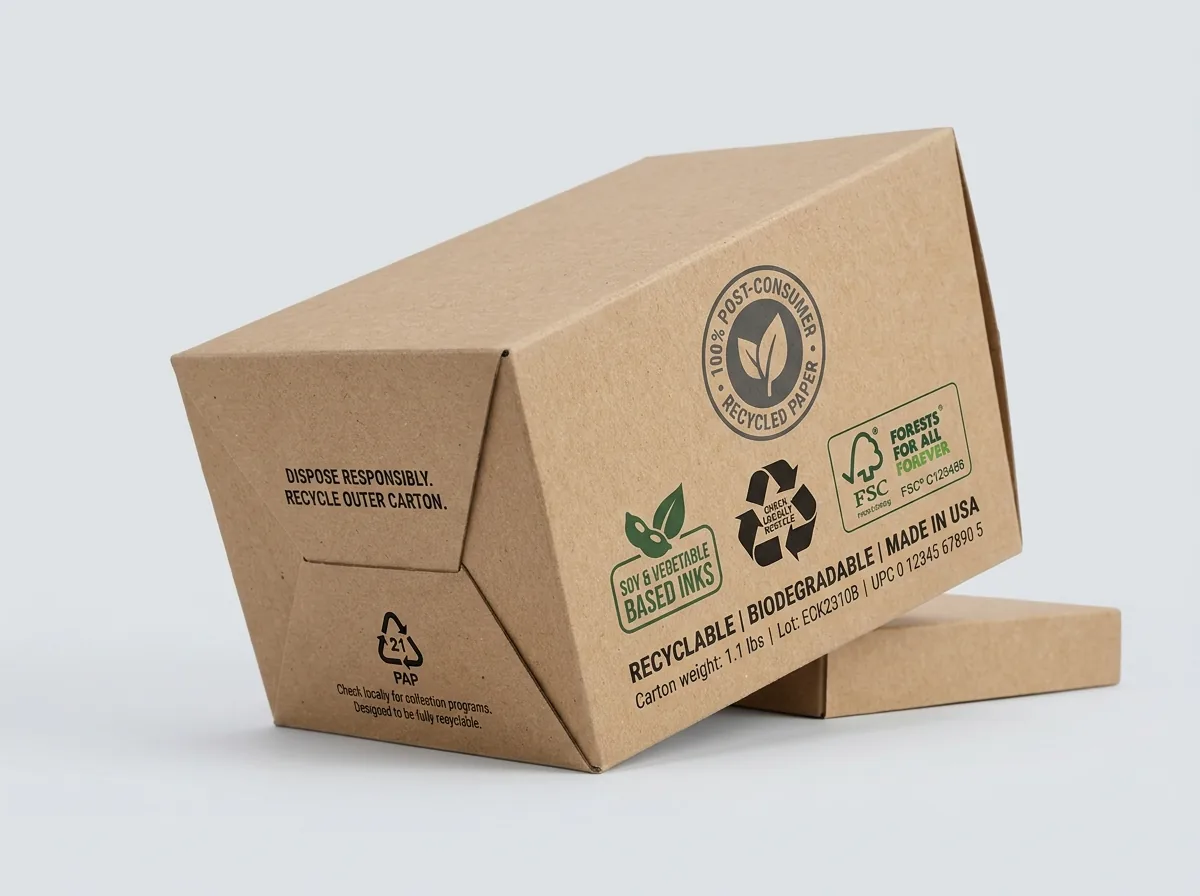
On this page
- What constitutes an illegal deceptive general environmental benefit claim
- How does the 60% curbside access threshold govern recyclable packaging claims
- What chain of custody documentation substantiates recycled content claims
- How do How2Recycle standardized on-pack labels protect brand reputation
- What are the legal liabilities and financial risks of deceptive green marketing
- How do state-level environmental packaging laws interact with federal FTC guides
- What substantiation is required for bio-based and renewable material statements
- How does third-party packaging sustainability certification reduce legal risk
- Common mistakes
- FAQs
Request a custom quoteFree dieline & 3D mockup
Marketing sustainable consumer packaging requires strict adherence to Federal Trade Commission regulations set forth in the Guides for the Use of Environmental Marketing Claims (16 CFR Part 260), commonly known as the FTC Green Guides. When designing custom eco-friendly boxes, brand managers must substantiate all on-pack environmental statements before printing artwork. Under federal law, making broad, unqualified environmental benefit claims like eco-friendly, green, or earth-positive is deceptive because it implies zero environmental footprint across the product lifecycle. Unqualified recyclable claims are only permissible if standard municipal curbside recycling facilities are accessible to at least 60% of consumers where the product is sold. In addition, claims regarding recycled fiber content must disclose the exact percentage of post-consumer waste (PCW) backed by documented mill chain of custody certificates. When configuring compliant sustainable boxes, our packaging specialists review artwork claims, provide verified material data sheets, and engineer 100% curbside recyclable dielines.
What constitutes an illegal deceptive general environmental benefit claim?
Section 260.4 of the FTC Green Guides explicitly states that general, unqualified claims of environmental benefit like eco-friendly, eco-safe, environmentally friendly, green, or sustainable are deceptive under Section 5 of the FTC Act. Marketers cannot substantiate broad general claims because consumers interpret them to mean that the packaging has zero negative environmental impact across every phase of raw material extraction, manufacturing, distribution, and disposal. The FTC requires brands to qualify all environmental statements by specifying the exact attribute being claimed, such as carton made from 80% post-consumer recycled paperboard or printed with non-toxic soy inks. Qualifying statements must be clear, prominent, and located directly adjacent to the claim, ensuring consumers understand the precise environmental scope without misleading exaggerations.
How does the 60% curbside access threshold govern recyclable packaging claims?
Section 260.12 outlines the strict evidentiary threshold for claiming an item is recyclable. An unqualified recyclable claim can only be made if recycling collection facilities are available to a substantial majority of consumers or communities where the package is sold, defined by the FTC as at least 60% of the population. Standard unbleached kraft and clay-coated recycled paperboard cartons meet this threshold because virtually all municipal residential curbside programs accept dry paperboard containers. However, if a paperboard carton includes non-separable plastic window films, synthetic polyethylene laminations, or metallic foil coatings covering more than 20% of the surface area, the package is no longer widely recyclable, and an unqualified claim violates federal trade law. In such cases, brands must qualify the claim with precise disposal guidance.
What chain of custody documentation substantiates recycled content claims?
Under Section 260.13, claims that a box contains recycled content must be substantiated with documented accounting records verifying that the materials were diverted from the solid waste stream. The FTC distinguishes between pre-consumer waste (industrial scrap generated during manufacturing, such as envelope offcuts and paper trim) and post-consumer waste (PCW, materials collected from residential and commercial recycling programs after consumer use). If a box contains less than 100% recycled content, the brand must prominently state the exact percentage on the carton, such as made with 70% post-consumer recycled fiber. Substantiation requires maintaining paper mill furnish certificates, mass-balance audit logs, and converter job tickets that demonstrate traceability from the recovered pulp bale to the finished carton run.
Know your size? Compare pricing across up to 3 quantities.
Request a Quote →How do How2Recycle standardized on-pack labels protect brand reputation?
To prevent consumer confusion and provide clear, compliant disposal instructions, thousands of leading consumer brands implement the standardized How2Recycle labeling system developed by the Sustainable Packaging Coalition. A How2Recycle label features a structured rectangular icon that explicitly identifies the packaging material, carton format, and disposal instructions. For standard paperboard boxes, the label specifies widely recyclable curbside bin instructions alongside the directive to flatten before recycling. If a packaging suite includes multiple materials, such as an outer paperboard carton holding an interior plastic pouch, the How2Recycle multi-component label clearly instructs consumers how to separate each element, ensuring total regulatory compliance under FTC Green Guides while boosting consumer recycling participation.
What are the legal liabilities and financial risks of deceptive green marketing?
Deceptive environmental packaging marketing exposes consumer brands to severe legal liabilities, regulatory enforcement actions, and devastating public relations crises. The Federal Trade Commission possesses statutory authority to issue cease-and-desist consent orders, demand consumer restitution, and initiate federal court litigation resulting in substantial civil financial penalties exceeding statutory penalties per violation. In addition, state attorneys general in states like California, New York, and Washington actively prosecute false green advertising under state consumer protection statutes, while class-action litigation law firms routinely file multi-million dollar class lawsuits targeting deceptive packaging claims. Ensuring rigorous prepress legal review of all on-pack environmental statements protects brand enterprise value and guarantees consumer trust.
How do state-level environmental packaging laws interact with federal FTC guides?
While the FTC Green Guides establish the nationwide baseline for environmental advertising truthfulness, individual states are enacting even stricter packaging statutory requirements. California's Truth in Recycling Act (SB 343) prohibits the use of the chasing-arrows recycling symbol on packaging unless the brand can prove that the material is collected and converted into new products in at least 75% of communities statewide. Similarly, Washington and Oregon penalize misleading environmental marketing under state consumer protection statutes. Packaging teams must cross-reference state statutory criteria alongside federal FTC benchmarks to ensure nationwide commercial distribution compliance.
What substantiation is required for bio-based and renewable material statements?
Section 260.16 addresses claims that packaging is made from renewable materials or bio-based feedstocks. Marketers cannot make unqualified renewable statements without explaining the specific material used, how it is sourced, and what percentage of the package it comprises. For example, a compliant claim states carton made from 100% renewable wood fiber sourced from certified sustainable tree farms. In addition, if the packaging requires significant non-renewable fossil fuel energy to convert or transport, brands must avoid implying that the overall manufacturing process is entirely renewable or carbon-free.
How does third-party packaging sustainability certification reduce legal risk?
Engaging recognized third-party auditing organizations provides brands with defensible evidentiary substantiation that withstands regulatory scrutiny. Certifications such as the Sustainable Forestry Initiative (SFI), Forest Stewardship Council (FSC), and How2Recycle conduct thorough physical lab testing, chain of custody mass-balance audits, and facility inspections. Earning formal certification allows brands to display verified on-pack certification badges accompanied by audited license numbers. These third-party credentials provide ironclad substantiation during federal FTC inquiries, state attorney general audits, and retail vendor scorecards.
What are common mistakes to avoid under FTC Green Guides?
Complying with environmental marketing regulations requires precision and verifiable facts. Packaging specialists identify four frequent errors
- Printing vague buzzwords like 100% eco-friendly, earth-friendly, or green without explicit qualifying statements.
- Claiming a multi-component carton is recyclable without instructing consumers to remove non-recyclable interior plastic components.
- Stating a box is degradable when it is destined for municipal solid waste landfills where lack of oxygen prevents organic decomposition.
- Over-claiming recycled content by including virgin wood scrap or general mill furnish without documented post-consumer audit records.
Packaging for this
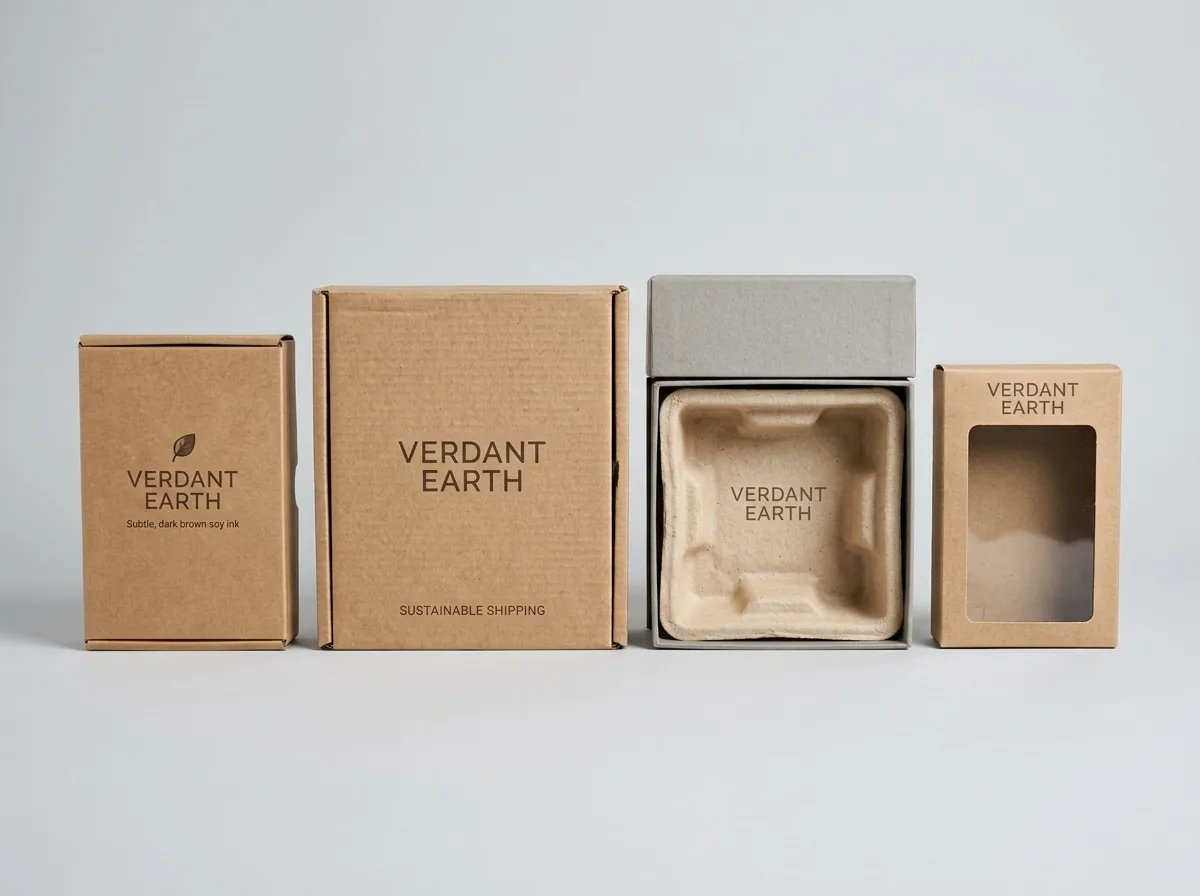
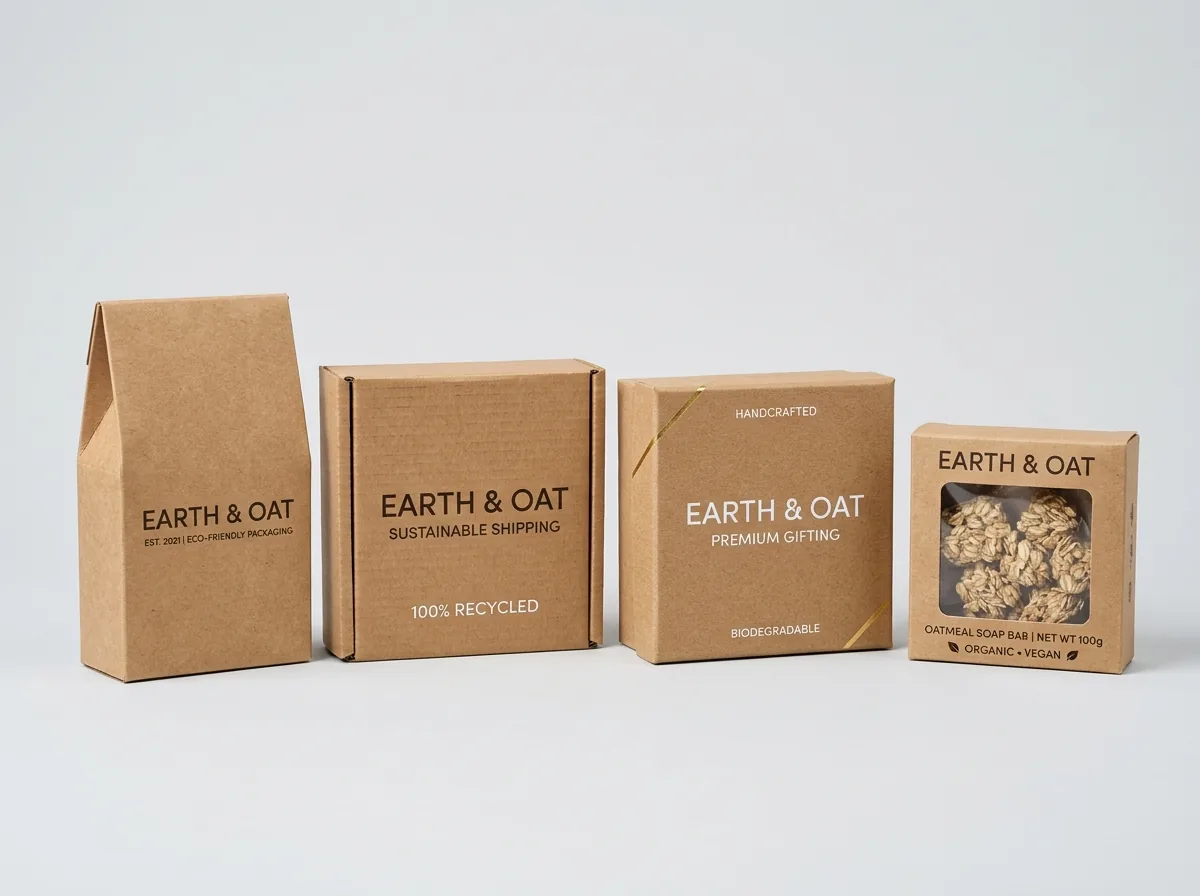
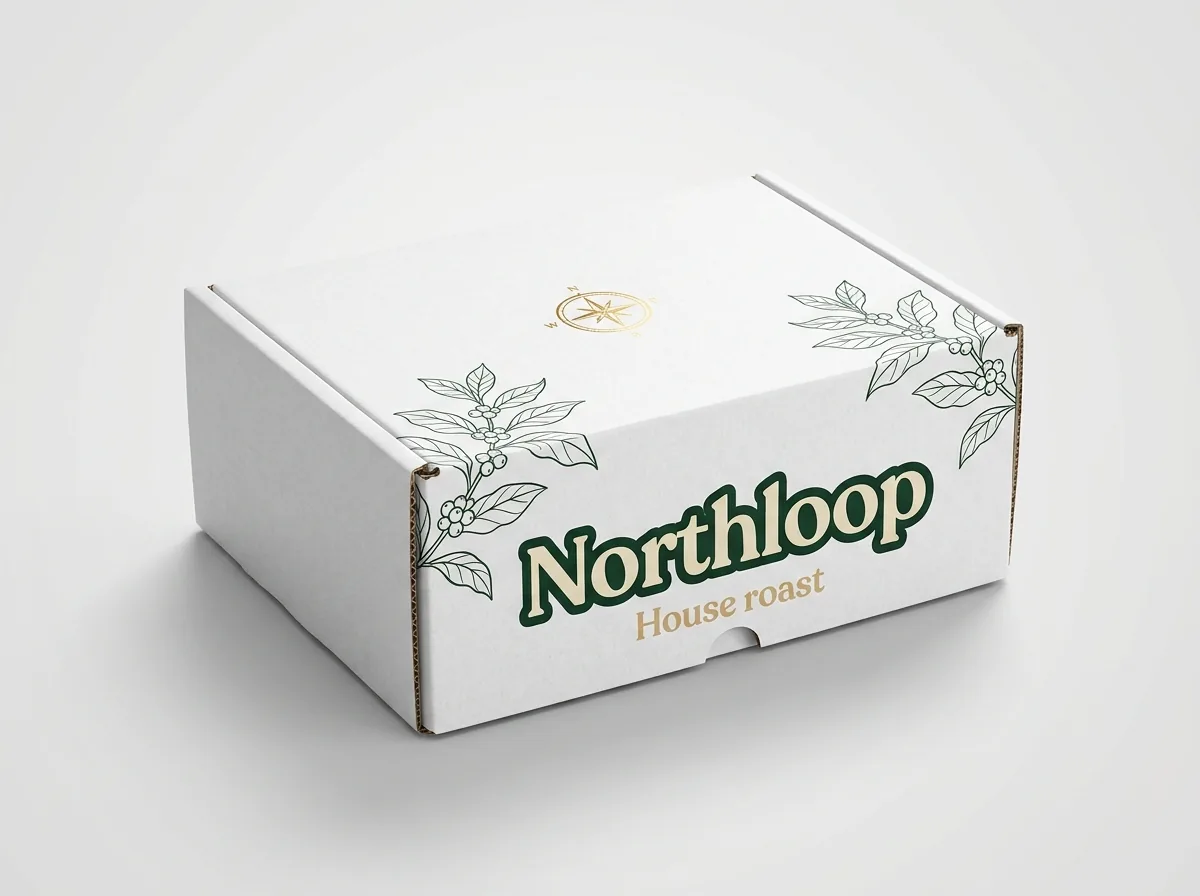
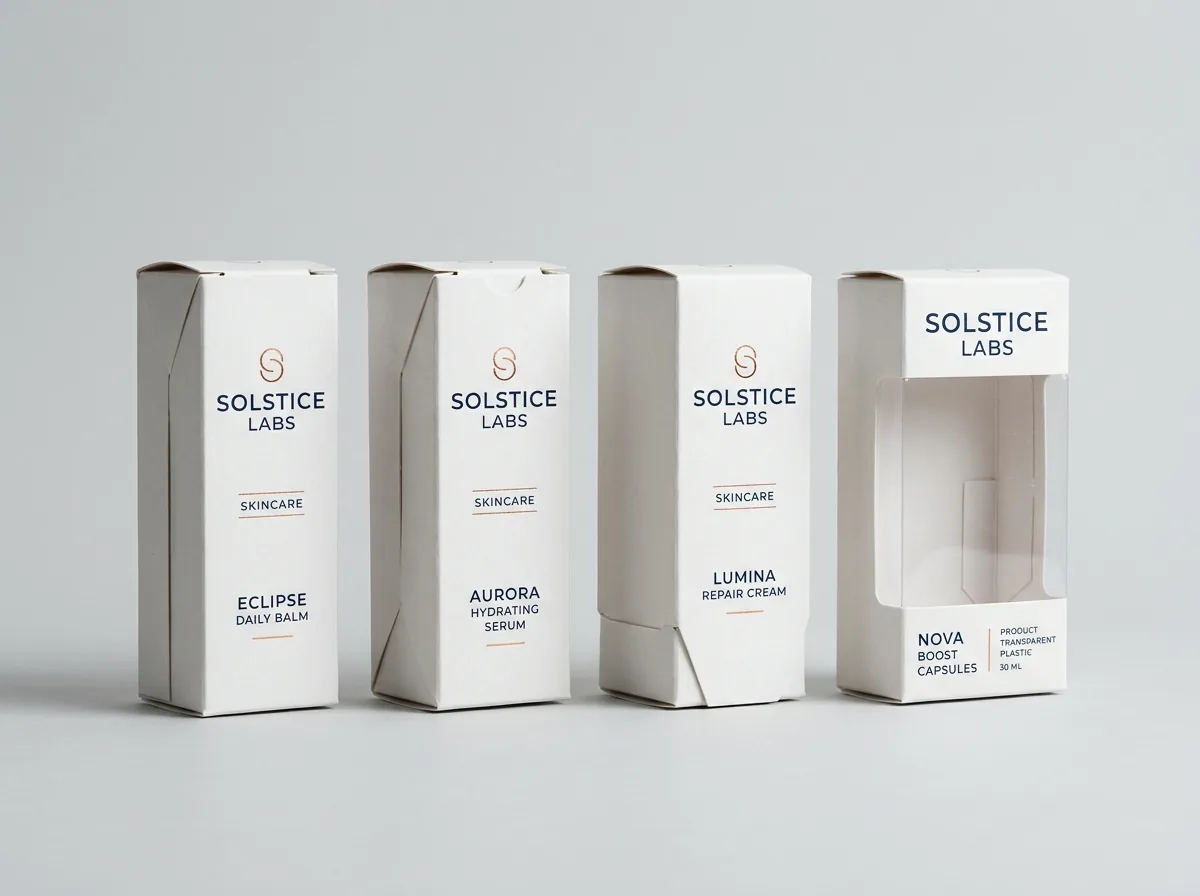
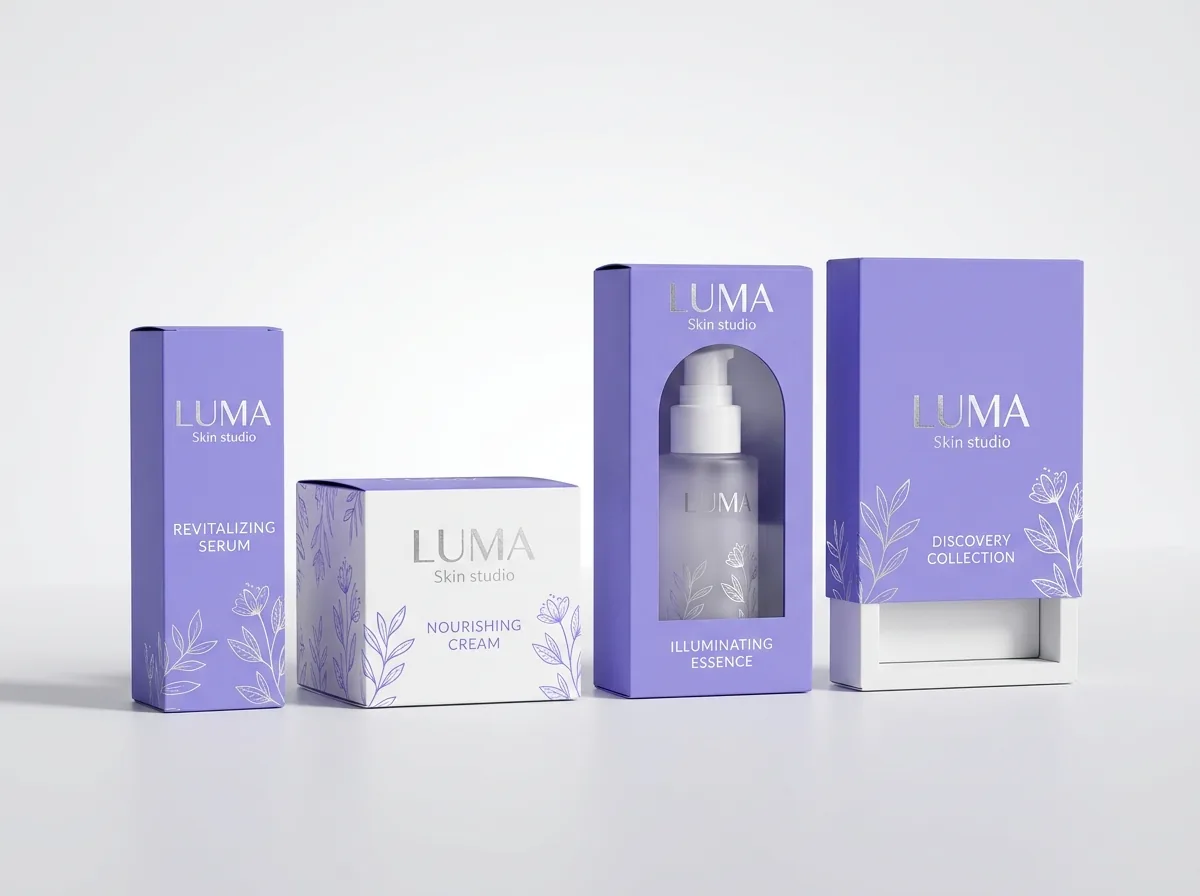

Ready to order eco-friendly boxes? Compare up to 3 quantities with a free 3D mockup.
Request a Quote →Questions about eco-friendly boxes
Can I claim my custom paperboard box is degradable under FTC rules?
No. The FTC Green Guides explicitly prohibit claiming customary packaging is degradable if it is disposed of in landfills, incinerators, or recycling facilities where cellulose fibers cannot break down within one year under customary municipal disposal conditions.
What is the difference between pre-consumer and post-consumer recycled content?
Post-consumer waste consists of paper goods recovered after consumer use through blue-bin recycling, while pre-consumer waste refers to manufacturing scrap such as factory trimmings that never reached the end consumer.
Do I have to register with the FTC before printing recyclable claims on my boxes?
No registration is required, but federal law mandates that brands possess competent and reliable scientific substantiation on file before making environmental claims to produce upon regulatory request.
How does How2Recycle certification substantiate on-pack claims?
How2Recycle conducts formal technical evaluations of carton dimensions, protective coatings, vegetable inks, and structural attachments against national recycling stream acceptance metrics to issue certified on-pack disposal instructions that satisfy federal regulators.
What is the minimum order quantity for FTC-compliant eco-friendly boxes?
Our minimum order quantity starts at 500 units for custom printed paperboard folding cartons and 100 units for corrugated kraft mailer boxes, complete with verified substrate data sheets and free US shipping.
What documentation must brands retain on file to substantiate environmental packaging claims?
Brands must maintain signed paper mill furnish certificates, chain of custody mass-balance audit logs, third-party laboratory test reports (such as repulpability and heavy metal assays), and national curbside access studies on file for the commercial life of the product.
Still have a question? Ask a packaging specialist.
Request a Quote →Request your eco-friendly boxes quote
Tell us your size and quantities, and one dedicated account manager prepares pricing for each tier.
- Free design & AI-to-print studio + 3D mockup
- No die or plate charges · 4–5 day rush available
- Free shipping to all 50 states
- 10% off your first order
Researched against Federal Trade Commission 16 CFR Part 260 regulations, Sustainable Packaging Coalition How2Recycle guidelines, and AF&PA community access data. Verified by CubitPack packaging specialists.
Sources
What changed
- November 11, 2026: Initial publication of technical regulatory guide on FTC Green Guides sustainable box claims with 5 CAD SVGs.
More guides
New packaging guides by email
Sizes, materials and design tips. Unsubscribe anytime.